How to Trap Live Bait for Ice Fishing
If you ice fish in Maine for more than a season or two, you know the sinking feeling of pulling up to the bait shop on a Saturday morning and finding the tanks empty, or paying more for a dozen shiners than you spent on gas. Trapping your own bait solves both problems, but only if you do it legally and keep the fish alive. This guide walks through how to do it right.
Why Maine Ice Anglers Trap Their Own Bait
Live bait is the backbone of Maine ice fishing. Tip-ups baited with shiners, suckers, or smelts account for a huge share of the togue, landlocked salmon, brook trout, pickerel, and bass caught through the ice each winter. If you want to understand which baits work best for which species, start with Best Bait for Maine Ice Fishing. The trouble is that live bait can be expensive, hard to find on busy weekends, and sometimes of questionable quality. Trapping your own fixes most of those problems at once.
Cost, Freshness and Reliability
The first reason most people start trapping is cost. A family running a full spread of tip-ups for a weekend can go through a surprising amount of bait. When you trap your own, your main expenses are a few traps, a bucket, an aerator, and your time. Over a season, the savings add up.
Freshness is the second reason. Bait that has been held in a crowded tank for days is often weak and pale by the time it reaches your tip-up. Fish you trapped yourself are usually stronger, livelier, and more natural looking, and that often translates into more flags. I have watched a lethargic store-bought shiner hang motionless under a tip-up for hours while a freshly trapped fish on the next hole kept the flag twitching all morning.
Reliability is the third. Bait shops in rural Maine sometimes run short during cold snaps, holidays, and derby weekends. Having your own supply means you are not at the mercy of a dealer’s delivery schedule.
Knowing the Local Water
There is also a less obvious benefit. Trapping teaches you about the water. You learn which coves hold baitfish in early winter, where springs and inlets keep water open, and how fish move under the ice. That knowledge often carries straight over to the fishing itself, because the places that hold bait often attract the predators you are trying to catch.
Which Baits Are Worth Trapping
Not every legal baitfish is worth the effort. Golden shiners are a favorite for tip-ups because they are lively, shiny, and attractive to almost every predator under the ice. Common shiners and fallfish make sturdy baits for togue and pickerel. White suckers are tough and stay alive on the hook for a long time, which makes them a solid choice for larger fish. Smaller fatheads and dace are handy for jigging rods and for brook trout, which often prefer a modest mouthful in cold water.
Smelts deserve their own mention. They are the natural forage in many of Maine’s best salmon and togue lakes, and predators key on them all winter. But smelts are delicate, they die quickly in a crowded bucket, and they are not usually taken in a minnow trap. Most anglers who use smelts either buy them or catch them by jigging small hooks through the ice where it is legal, keeping within the daily limit. For more on how smelts fit into the food chain, read Why Smelt Matter to Maine Salmon and Trout.
Understanding the Trade-Offs
Trapping is not for everyone. It takes time, it requires checking traps regularly, and it comes with legal responsibilities that bait shop customers do not have to think about. It also requires a way to keep bait alive at home or at camp. If you only fish a handful of times a winter, buying bait from a licensed dealer may make more sense. For a side-by-side look at bait versus lures, read Live Bait vs Artificial Lures in Maine.
Maine Baitfish Rules You Need to Know First
Maine regulates baitfish closely, and for good reason. Moving fish between waters is one of the main ways invasive species and fish diseases spread. Several of Maine’s most important wild trout and salmon waters have been damaged by illegal introductions, and the state works hard to prevent more. Before you set a single trap, make sure you understand the rules.
Legal Baitfish Species
Only certain species may be used as bait in Maine. The list commonly includes species such as golden shiners, common shiners, fathead minnows, creek chubs, fallfish, blacknose dace, white suckers, and rainbow smelts, along with several other minnows, dace, and killifish. Species that are not on the list cannot be used as bait, even if they turn up in your trap. Yellow perch, sunfish, and other game fish are not legal baitfish, so release them immediately.
Identification matters. Many small fish look similar, especially to beginners. Learn to identify the common species in your area, and if you are unsure about a fish, release it. For a closer look at the species you are likely to encounter, read Maine Baitfish and Smelt Species.
Waters Where Live Bait Is Prohibited
Many Maine waters prohibit the use of live fish as bait. These are often wild brook trout waters, waters with special regulations, and waters where invasive species are a concern. Some waters allow only artificial lures. Others allow dead bait but not live bait. Using live bait where it is prohibited can lead to a fine, and more importantly, it can harm a fishery.
Before you fish any lake or pond, check the specific regulations for that water. Our guide on How to Find Maine Fishing Regulations for a Specific Lake walks you through the process step by step.
Trap Rules, Limits and Transport
Maine’s rules address how baitfish may be taken for personal use, including the types of gear allowed and how that gear must be marked. Traps generally must be labeled with the owner’s name and address, and there are limits on trap size and the number of traps one person may use. There are also daily limits on certain species, such as smelts, and restrictions on where baitfish may be taken.
Transport is another important area. Moving live baitfish from one water to another is restricted, and importing live baitfish from out of state is generally prohibited. The safest practice is to use your bait in the same water body where you caught it unless you are certain the regulations allow otherwise. If you want to sell bait, you need a commercial bait dealer license, which comes with its own rules.
Regulations change, so always check the current Maine fishing law book or the Maine Department of Inland Fisheries and Wildlife before setting traps. For a broader look at ice fishing rules, read Maine Ice Fishing Rules Guide.
| Rule area | What it usually covers | Why it matters |
|---|---|---|
| Legal species | Only listed baitfish may be used | Prevents use of game fish and invasive species |
| Restricted waters | Some waters ban live bait or allow only artificial lures | Protects wild trout and sensitive fisheries |
| Trap marking | Name and address on each trap | Helps wardens identify gear and owners |
| Trap size and number | Limits on how large traps can be and how many you may use | Prevents overharvest and protects game fish |
| Species limits | Daily limits on certain baitfish such as smelts | Protects important forage populations |
| Transport | Restrictions on moving live bait between waters | Prevents the spread of invasive species and disease |
| Selling bait | Commercial license required | Regulates the bait trade |
How to Trap Live Bait Step by Step
With the rules in mind, you are ready to start trapping. The process is simple once you get the hang of it, but small details make a big difference in your catch.
Choosing the Right Trap
The classic minnow trap is a cylinder or box made of wire mesh or plastic with funnel-shaped openings at one or both ends. Fish swim in through the funnels and have trouble finding their way out. Traps come in different sizes, mesh sizes, and materials. Wire traps are durable and sink well. Plastic traps are lighter and less likely to rust, but they may need extra weight to stay on the bottom.
Mesh size matters. Small mesh holds small minnows like fatheads, while larger mesh lets small fish escape and keeps larger shiners and suckers. Choose a trap that matches the bait you want. Many anglers buy traps at local tackle shops or order them from Amazon, where you can compare designs, sizes, and materials. Make sure any trap you buy complies with Maine’s size limits.
| Trap type | Best for | Pros | Cons |
|---|---|---|---|
| Wire mesh cylinder | Shiners, chubs, dace | Durable, sinks easily | Can rust over time |
| Plastic trap | Small minnows | Light, rust-free | May need weight to sink |
| Collapsible mesh trap | Mixed baitfish | Packs flat for travel | Less durable in rough use |
| Homemade bottle trap | Small minnows | Cheap and easy to make | Smaller catch, less durable |
Picking a Trapping Location
Location is everything. In winter, baitfish often gather near inlets, outlets, springs, and shallow coves where water is slightly warmer or more oxygenated. Small streams that stay open through the winter can also be productive. Look for areas with some cover, such as weeds, rocks, or wood.
If you are trapping through the ice, drill holes in shallow water near the shore, inlets, or weed beds. In open water, set traps in slow-moving pools or along the edges of current. Avoid areas with heavy current, which can push traps around and make them less effective.
Safety comes first. Inlets, outlets, and springs often have thinner, weaker ice, even when the rest of the lake is safe. Check ice thickness frequently, and never take chances. For more, read How Thick Should Ice Be Before Fishing on It? and Early Ice Safety Tips for Maine Anglers.
Baiting and Setting the Trap
Baiting your trap draws fish in faster. Common trap baits include bread, crackers, dry dog food, and fish food. Some anglers put the bait in a small mesh bag so it lasts longer. Others crumble bread directly into the trap so the scent spreads quickly.
Follow these steps to set your trap:
- Check the regulations for the water you plan to trap, including any restrictions on live bait or trapping.
- Label your trap with your name and address, as required.
- Add bait to the trap, using a mesh bag if you want it to last longer.
- Tie a sturdy cord to the trap and secure the other end to a stake, tree, or object on the ice or shore.
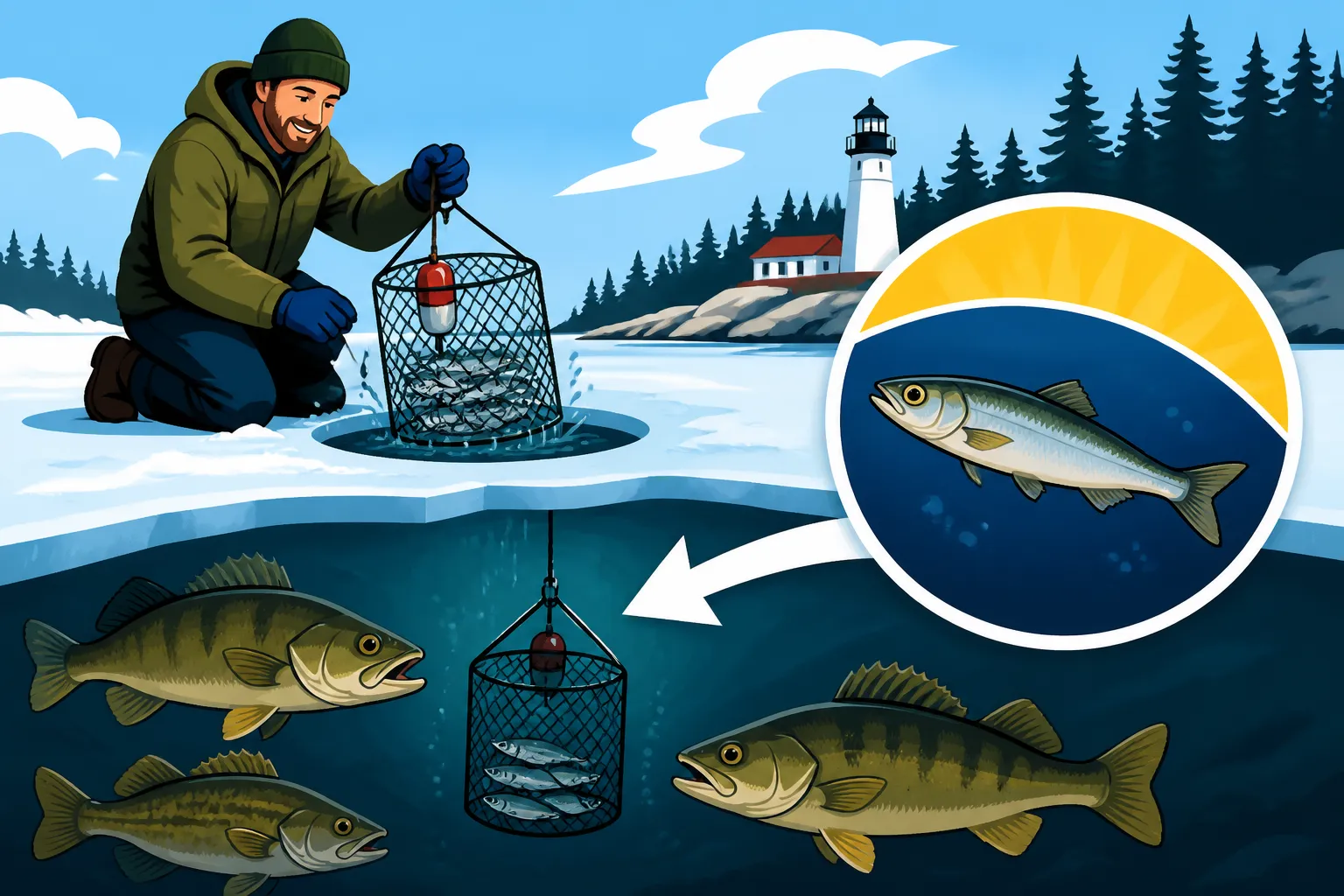
- Lower the trap into the water so it rests on the bottom, with the openings facing open water.
- If you are trapping through the ice, mark the hole so others can see it and you can find it again.
- Check the trap regularly, ideally at least once a day, or more often in cold weather.
- Remove legal baitfish and release anything that is not a legal baitfish species.
- Rebait the trap as needed and reset it.
Trapping Before Freeze-Up
Some of the easiest trapping of the year happens in late fall, before the lakes lock up. Baitfish are still active in the shallows, traps are simple to set from shore or a dock, and you do not have to chip open frozen holes every morning. Many Maine anglers stock up during this window and hold their bait at home or camp so they have a supply ready for the first safe ice.
If you trap early, plan your storage carefully, because you may need to keep bait alive for several weeks. A larger tank with good aeration, regular partial water changes, and light feeding become far more important when the gap between catching and fishing stretches out. Also remember that the bait you catch in one lake in November should be used on that same lake once it freezes, unless you are certain the rules allow otherwise.
How Long to Leave Traps
Traps can catch fish within a few hours, but many anglers leave them overnight for the best results. Checking traps frequently keeps baitfish healthier and reduces the chance of game fish getting stuck inside. In very cold weather, holes can freeze over quickly, so plan to reopen them when you check your traps.
Do not leave traps unattended for long periods. Fish trapped for too long can become stressed or die, and abandoned traps can continue catching fish indefinitely. If you are done trapping for the season, remove your traps completely.
Troubleshooting an Empty Trap
Every trapper pulls up an empty trap now and then. When it happens several times in a row, work through the usual causes one at a time. The most common problem is location. If a spot has not produced in two checks, move the trap to a different depth or a different part of the cove rather than waiting for fish to arrive. Baitfish often hold tight to cover in winter, so a trap set on a bare mud bottom a few yards from a weed bed can sit empty while the weeds are full of shiners.
The second culprit is bait. Bread breaks down quickly and can cloud the water, while dry dog food or fish food lasts longer and keeps putting out scent. Try switching baits if your catch drops off. The third issue is the trap itself. Funnel openings that are bent, crushed, or clogged with ice can keep fish out. Check the openings every time you pull the trap and straighten them if needed.
Finally, consider the timing. Baitfish activity often slows during the coldest stretch of midwinter and picks up again as days get longer and late-season melt water starts flowing into inlets. Trapping that seems hopeless in January can pick up noticeably in March.
Keeping Trapped Bait Alive Through the Winter
Catching bait is only half the job. Keeping it alive and healthy until you are ready to fish is just as important. Dead or weak bait is far less effective, and losing a whole bucket of bait overnight is frustrating.
Buckets, Aeration and Water Temperature
The most important factors are oxygen and temperature. Baitfish need cool, well-oxygenated water to survive. An insulated bait bucket helps keep water from freezing or warming too quickly. A battery-powered aerator adds oxygen and can keep bait alive for much longer. Many anglers pick up aerators and insulated buckets from Amazon or local tackle shops before the season starts.
Keep bait water cold but not frozen. Avoid sudden temperature changes, which can shock and kill baitfish. When adding fresh water, make sure it is close to the temperature of the water already in the bucket. Lake water is usually best. Chlorinated tap water can harm baitfish unless it is treated or allowed to sit before use.
Storing Bait at Home or Camp
For longer storage, many anglers use a larger tank or cooler with an aerator. Change part of the water every day or two, remove any dead fish immediately, and avoid overcrowding. A cool garage, basement, or shed can help maintain stable temperatures, as long as the water does not freeze.
Some anglers keep bait in a live box in open water, such as a spring-fed pool or stream. Make sure this is allowed under Maine regulations and that it does not involve moving bait between waters. For more storage tips, read Best Way to Store Live Bait and How to Keep Bait Alive on a Fishing Trip.
Feeding and Handling
Baitfish can survive for several days without food in cold water, but light feeding can keep them healthier for longer storage. Use small amounts of fish food and remove any uneaten food to keep the water clean. Handle baitfish as little as possible, and use a small net rather than your hands to remove them from the bucket.
When you get to the ice, keep your bait bucket out of the wind and away from direct sunlight. A small insulated cover can help prevent the water from freezing on very cold days. Many anglers use a small aerator in the bait bucket throughout the day.
Common Mistakes to Avoid
After years of trapping and talking with other ice anglers, I see the same mistakes again and again:
- Overcrowding the bucket, which uses up oxygen fast and kills bait overnight.
- Leaving the bucket in a hot truck cab or a freezing truck bed for hours.
- Adding tap water without letting it sit or treating it first.
- Forgetting to check whether live bait is allowed on the water they plan to fish.
- Keeping fish that are not on the legal baitfish list because they look like minnows.
- Leaving traps in the water too long or forgetting them altogether at the end of the season.
- Moving live bait from one lake to another without checking the rules.
Each of these is easy to avoid with a little planning, and avoiding them will keep your bait healthier and keep you on the right side of the law.
Putting Trapped Bait to Work
Once you have healthy bait, it is time to fish. Hook baitfish lightly so they stay lively, usually just behind the dorsal fin or through the lips. Match the size of the bait to your target species. Smaller shiners and smelts work well for brook trout and salmon, while larger shiners and suckers are often better for togue and pickerel.
For more on setting up tip-ups and rigging live bait, read Setting Up Tip-Ups for Ice Fishing and How to Set a Tip-Up for Togue. Many anglers order tip-ups, line, and terminal tackle from Amazon before the season starts so they are ready when the ice is safe.
When the day is done, dispose of unused bait properly. Do not dump leftover bait into a different water body, and never empty a bait bucket that has held fish from another source into a lake or stream. The safest practice is to dispose of leftover bait on land or in the trash, unless regulations specifically allow otherwise.
Disclaimer
This article is for general informational purposes only and does not constitute professional advice. Laws, prices and regulations vary by location and change over time. Consult a qualified professional for guidance on your specific situation.