Does the Moon Phase Affect Fishing?
It's a familiar feeling for any angler in Maine: you've got your gear, the weather looks decent, you're at a favorite spot, and the fish just aren't biting. We've all been there, scratching our heads, wondering what invisible force is at play. Could it be the moon? For centuries, anglers have looked to the sky, convinced that the moon's phases hold a secret to fishing success. This guide dives deep into how lunar cycles might influence your fishing in the beautiful waters of Maine, offering insights and practical advice to help you crack the code.
The Enduring Allure of Lunar Lore in Fishing
There's a mystical quality to the moon, isn't there? It controls our tides, illuminates our nights, and has fascinated humanity for millennia. It's only natural that anglers, ever seeking an edge, would look to this powerful celestial body to understand the rhythms of the fish they pursue.
Why Anglers Look to the Moon
We've all heard the old wives' tales, the seasoned old-timers swearing by the full moon or dismissing fishing during a new moon. It speaks to a deep-seated desire to find patterns, to unlock the mysteries of the natural world and gain a predictable advantage. When you've spent hours on the water, meticulously rigging your Best Bait for Landlocked Salmon or perfectly executing your Fly Fishing Techniques for Maine Rivers, only to come up empty-handed, it's easy to wonder if something beyond your control, like the moon, is responsible. This isn't just superstition; it's a quest for understanding in an often unpredictable sport.
For many, the moon provides a comforting framework. If fishing is slow, they might rationalize, "Ah, it's a waning crescent, that explains it." And when the bite is hot, "Of course, it's a full moon, just as I predicted!" This doesn't make the moon's influence scientific fact, but it certainly validates the feeling that there's more to fishing than just casting a line. The constant pursuit of knowledge and the connection to natural cycles are part of what makes fishing so captivating.
The Moon's Gravitational Pull and Tides
Scientifically, the moon's most undeniable influence on Earth is through its gravitational pull, which creates the tides. As the moon orbits our planet, its gravity pulls on the oceans, causing bulges of water that result in high and low tides. The sun also plays a role, either amplifying or dampening this effect depending on its alignment with the moon and Earth.
During new moons and full moons, the sun, moon, and Earth are roughly aligned, creating stronger gravitational pull and thus higher high tides and lower low tides. These are known as spring tides (not related to the season, but to the "springing forth" of the tides). More water movement often means more baitfish movement, more currents, and potentially more active feeding for predatory fish. Conversely, during the quarter moons, the sun and moon are at right angles to each other, which reduces the combined gravitational pull. This results in neap tides, characterized by less extreme tidal fluctuations. While this tidal effect is most pronounced in saltwater environments, some argue that the subtle gravitational shifts could still influence sensitive fish even in large freshwater bodies, though this is far more debated.
Deciphering the Major Moon Phases and Their Potential Impact
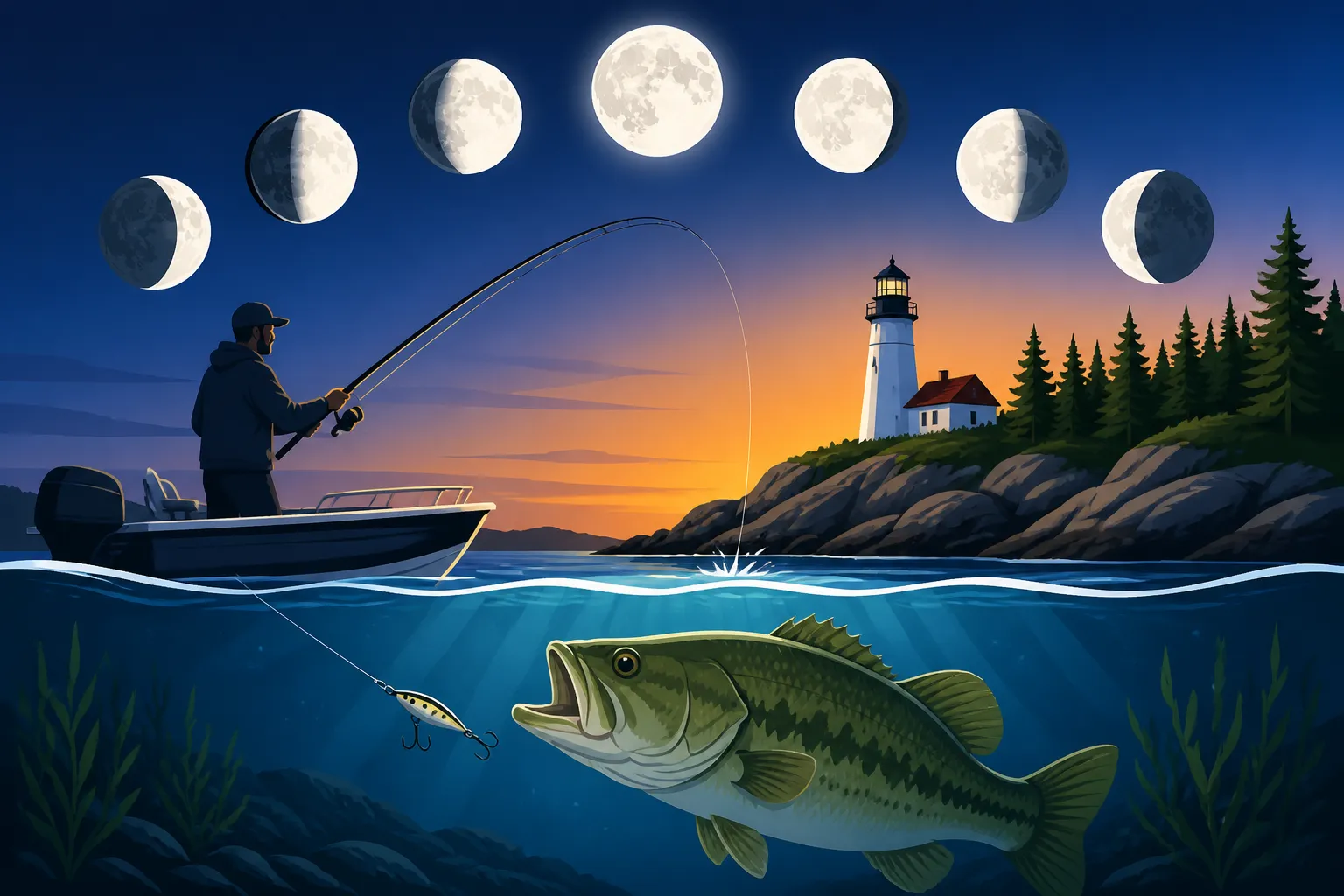
Let's break down the four primary moon phases and explore what anglers traditionally believe about their impact on fishing, keeping in mind that these are often theories and observations, not hard and fast rules.
New Moon: The Dark Secret
The new moon phase is when the moon is positioned between the Earth and the sun, making it appear dark or invisible from Earth. With minimal moonlight, the nights are at their darkest.
-
Common Theories: During the new moon, we experience spring tides, meaning stronger currents and more dramatic water movement, particularly in saltwater. Many anglers believe that this increased tidal activity stimulates baitfish, pushing them around more, which in turn can trigger predatory fish into a feeding frenzy. Without the bright moonlight, nocturnal predators might also be more inclined to feed during daylight hours, as their hunting advantage isn't diminished by bright nights. For species like striped bass along the Maine coast, the strong currents associated with a new moon can be prime time, especially in estuaries and tidal rivers where baitfish are swept through choke points.
-
Putting it into Practice: For those pursuing saltwater species, paying close attention to the tide charts during a new moon is crucial. Look for peak incoming or outgoing tides when the currents are strongest. In freshwater, the influence is less direct, but some still believe the overall gravitational pull might make fish more active, leading to more consistent bites during the day. It's often about the water movement, and a new moon delivers that in spades for our coastal fisheries. If you're planning a trip, be sure to check the Maine Fishing Season Dates Guide to ensure the species you're targeting are open for harvest.
Full Moon: Bright Nights, Active Fish?
The full moon is when the entire face of the moon is illuminated, creating bright, sometimes almost daylight-like, nights.
-
Common Theories: Like the new moon, the full moon also brings spring tides, so strong currents are still a factor in saltwater fishing. However, the bright moonlight is what truly defines this phase for many anglers. It's thought that the intense moonlight allows nocturnal predators to feed efficiently throughout the night. This might mean they're less active during the day, having already filled their bellies under the cover of moonlight. Conversely, for species that rely on sight to feed, the enhanced visibility could extend their feeding windows. Some also suggest that the moon's brightness can make fish more cautious and wary during daylight hours.
-
Putting it into Practice: If you're heading out during a full moon, consider adjusting your schedule. Night fishing can be incredibly productive for certain species, both in fresh and saltwater, as fish might be more comfortable feeding under the bright moon. For daytime fishing, you might need to employ more stealthy Maine Open Water Fishing Techniques Guide or focus on low-light periods like dawn and dusk. For instance, when targeting species like Maine Bass Fishing Limits by Zone, particularly smallmouth bass, a bright full moon might make them a bit skittish during the midday sun, pushing them deeper or into heavier cover. Always consult your specific Maine Fishing Regulations Explained for any waterbody you plan to fish, as rules can vary.
Quarter Moons: The In-Between Days
The first quarter and last quarter moons occur when the moon appears half-lit. During these phases, the sun and moon are at right angles to Earth.
-
Common Theories: These phases are associated with neap tides, meaning weaker currents and less dramatic tidal swings, particularly in saltwater environments. The general consensus among many anglers is that fishing can be slower during neap tides because the reduced water movement doesn't stir up baitfish or trigger feeding frenzies as effectively as spring tides. Fish might be less active, less predictable, and harder to locate. However, some argue that these calmer periods can make fish less wary and more willing to bite if you can find them.
-
Putting it into Practice: During quarter moons, especially in tidal waters, you might need to work harder to find active fish. Focus on structure, ambush points, and areas where currents are naturally concentrated, even during weaker tides. For freshwater fishing, where the direct tidal influence is minimal, these phases might have even less discernible impact. This is where other factors like water temperature, weather, and time of day often become paramount. It's a great time to focus on refining your casting techniques or experimenting with different lures, rather than relying on a lunar feeding frenzy.
Here’s a quick overview of how the moon phases are generally believed to influence fishing:
| Moon Phase | Tidal Strength | Moonlight at Night | Common Angler Belief | Suggested Strategy |
|---|---|---|---|---|
| New Moon | Strong (Spring Tide) | Dark | Increased bait movement and strong currents stimulate feeding. Dark nights may encourage more daytime feeding for nocturnal fish. Generally considered a good fishing period, especially for saltwater. | Focus on strong current areas (estuaries, river mouths). Be ready for active bites during peak tide changes. Consider fishing during the day for typically nocturnal predators. |
| First Quarter | Weak (Neap Tide) | Half | Reduced tidal movement may lead to slower fishing, as baitfish are less disturbed. Fish may be less active or scattered. | Fish structure more carefully. Target dawn/dusk. Focus on areas with consistent currents or freshwater where lunar tide is less impactful. |
| Full Moon | Strong (Spring Tide) | Bright | Strong tides can stimulate feeding, but bright nights may lead to nocturnal fish feeding more at night, making them less active during the day. Daytime fish might be warier due to increased visibility. | Consider night fishing. For daytime, focus on low-light periods (early morning, late evening) or seek deeper, shadier spots. Use stealthier approaches. |
| Last Quarter | Weak (Neap Tide) | Half | Similar to First Quarter, weaker tides can result in slower fishing. Fish activity might be reduced, making them harder to locate. | Patience is key. Focus on known productive spots or try new techniques. This is a good time to experiment with Trolling Techniques for Maine Lakes at different depths to find active fish. |
Practical Considerations for Maine Anglers
While the moon phase is a fascinating element, it’s rarely the only factor, or even the most important one, especially here in Maine where conditions can change on a dime.
Saltwater vs. Freshwater Influence
It's crucial to distinguish between how the moon might affect saltwater versus freshwater fishing. In Maine's extensive coastline and tidal rivers, the moon's impact on tides is undeniable. Stronger tides during new and full moons mean more water movement, which directly impacts baitfish patterns and the feeding behavior of predators like striped bass, bluefish, and even bottom-dwelling species. Anglers targeting these species often swear by the moon's influence on the tides. If you're looking into coastal fishing, understanding the Maine Saltwater Fishing Registry Guide and tidal charts is just as important as the moon phase.
However, once you move inland to Maine's countless lakes, ponds, and non-tidal rivers, the direct gravitational pull on the water column is minimal to non-existent. While some theories suggest a subtle effect on fish behavior due to changes in barometric pressure or other unknown factors, it's far less pronounced and scientifically proven than tidal influence. For these waters, factors like water temperature, oxygen levels, and prey availability usually dominate. For example, knowing the Reading Water Temperature for Maine Trout is often far more critical than the moon phase when chasing brook trout in a mountain pond.
Beyond the Moon: Other Critical Factors
As much as we love to ponder the moon's mysteries, any veteran Maine angler will tell you that a host of other factors often have a much more immediate and measurable impact on fishing success.
- Weather Conditions: A sudden cold front, a shift in wind direction, or a prolonged rain spell can dramatically alter fish behavior, often overriding any lunar influence. Fish respond strongly to changes in light, barometric pressure, and water temperature.
- Water Temperature: This is perhaps the single most important factor for freshwater species. Each fish species has an optimal temperature range for feeding and activity. Too cold, and they're sluggish; too warm, and they seek deeper, cooler water.
- Time of Day: Dawn and dusk are universally recognized as prime fishing times, regardless of the moon phase, due to lower light levels and often cooler temperatures. Checking the Best Time of Day to Fish in Maine is a fundamental practice.
- Water Clarity: Clear water often means fish are warier and spook easily. Murky water can reduce visibility, making fish rely more on scent and vibration.
- Bait Availability: Where there's food, there are fish. Understanding local forage patterns, like the Maine Smelt Run Timing, can be far more productive than solely relying on lunar predictions.
- Fishing Pressure: Heavily fished waters can make fish more cautious, no matter what the moon is doing.
Consider these factors first. The moon can be a supplementary consideration, but rarely the primary determinant of success. You can find robust fishing gear, weather apps, and even specialized fish finders on platforms like Amazon, which can help you track these more tangible environmental variables.
Tracking Lunar Cycles and Your Fishing Log
If you're truly interested in seeing if the moon influences your local fishing spots, the best thing you can do is become an observer. Keep a detailed fishing log! This isn't just a fun way to document your adventures; it's a powerful tool for learning.
What to include in your log:
- Date and Time: Obvious, but essential.
- Location: Be specific (e.g., "North end of Sebago Lake, near Frye Island").
- Moon Phase: Note whether it's a new moon, full moon, or a quarter phase. Many apps can tell you this instantly.
- Tide Information: If saltwater fishing, record high/low tide times and height.
- Weather: Air temperature, cloud cover, wind speed and direction, any precipitation.
- Water Conditions: Water temperature (if you have a thermometer), clarity, depth fished.
- Gear & Bait: What lures, flies, or bait you used.
- Results: How many fish caught, species, size, and notable observations about their behavior.
Over time, you might start to see patterns emerge that are specific to your fishing spots and your target species. Perhaps bass on your favorite pond are indeed more active during certain moon phases, or maybe striped bass in your estuary bite better on a specific tide during the full moon. This self-discovery is one of the most rewarding aspects of angling. Don't be afraid to consult a Hiring a Maine Fishing Guide as they often keep meticulous records and have generational knowledge about how local conditions affect fish.
Integrating Lunar Wisdom into Your Maine Fishing Strategy
So, how can you use this lunar knowledge without letting it overshadow all the other important factors? Think of it as another tool in your angler's toolkit, a potential guide rather than a strict set of rules.
Adjusting Tactics for Different Moon Phases
Instead of passively accepting what the moon dictates, use it to inform your tactics.
- New and Full Moons (Strong Tides): In coastal areas, these are prime times for targeting species that thrive on current. Think about fishing those "choke points" where currents accelerate, creating ambush opportunities for predators. For example, for Maine Striped Bass Fishing Techniques, strong tides can bring bait right to the fish. Focus your efforts during the peak of the tide change, whether it's incoming or outgoing, as this is when water movement is most dynamic. Consider using heavier lures or weights to combat the strong currents.
- Quarter Moons (Weak Tides): When tides are weaker, fish might spread out more, or hold tighter to structure. This might call for a slower, more methodical approach. In freshwater, where tidal influence is negligible, focus intently on factors like cover, depth transitions, and bait concentrations. You might need to make more casts to cover water or switch to more subtle presentations.
- Full Moon Nights: If allowed by regulations (always check your local Maine Fishing Laws for Beginners), full moon nights can offer unique opportunities for nocturnal feeders. Think about fishing for brown trout or bass, which can be surprisingly active under the bright moonlight. Use dark-colored lures or flies that create a strong silhouette against the moonlit surface.
The "Major and Minor" Feeding Times
Beyond the four main phases, many anglers consult "solunar tables." These tables predict specific "major" and "minor" feeding times based on the moon's position relative to your location, even during daylight hours. Major periods typically occur when the moon is directly overhead or directly underfoot (opposite side of the Earth). Minor periods occur when the moon is halfway between these points (on the horizon).
The theory suggests that even when the moon isn't directly creating tides, its subtle gravitational pull or other unseen influences can trigger short bursts of feeding activity. While there's no widespread scientific consensus validating solunar tables for general fishing, many dedicated anglers swear by them. It's another layer of complexity that can add intrigue to your fishing. Think of it as a suggestion for when fish might be more active, rather than a guarantee. It encourages you to be on the water during these windows, which often align with natural dawn/dusk feeding anyway.
The Skeptic's Approach: Observing and Learning
Ultimately, the best approach for any Maine angler is one of informed skepticism and personal observation. Don't let lunar charts dictate whether you go fishing. The greatest joy in fishing often comes from being out on the water, soaking up the natural beauty, and the unexpected thrill of a strike, regardless of what the moon is doing.
Use moon phase information as a guide, not a gospel. Combine it with your knowledge of local waters, current weather conditions, water temperatures, and the Best Time of Year to Fish in Maine for your target species. Pay attention to what works for you and what doesn't. Every lake, every river, and every stretch of coastline has its own personality, and the fish within them respond to a unique combination of factors. The more you observe, experiment, and log your experiences, the better you'll understand the true rhythms of your favorite Maine fishing spots. Happy fishing!
Disclaimer
This article is for general informational purposes only and does not constitute professional advice. Laws, prices and regulations vary by location and change over time. Consult a qualified professional for guidance on your specific situation.