Maine Striped Bass Fishing Techniques
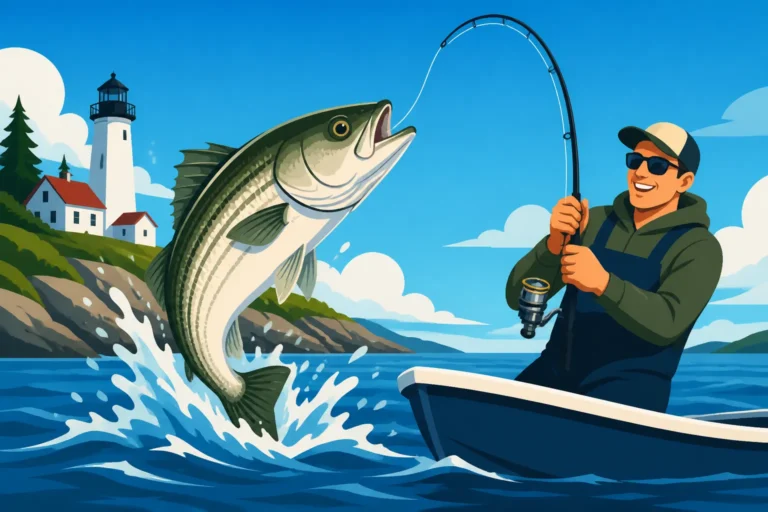
Few experiences in Maine can stir the soul quite like the relentless pull of a striped bass on the end of your line. Yet, for many anglers, especially those new to our rocky coast, consistently finding and hooking these powerful fish feels like a mystery. The ever-changing tides, the sprawling coastline, and the often-elusive nature of stripers can lead to plenty of frustrating days with an empty cooler. This comprehensive guide is designed to unravel those mysteries, equipping you with the tried-and-true techniques and local knowledge you need to confidently target and successfully catch striped bass along Maine's beautiful and challenging shores.
Understanding Maine's Striped Bass Behavior and Habitat
To consistently catch striped bass in Maine, you first need to think like a striper. These are migratory, opportunistic predators, and their movements and feeding habits are deeply intertwined with the seasons, the local geography, and the availability of their preferred forage. Understanding these fundamental behaviors is the cornerstone of successful fishing.
Seasonal Migrations and Timing
Striped bass embark on extensive migrations along the Atlantic coast, and their arrival in Maine marks the true beginning of our coastal fishing season. Typically, the vanguard of stripers starts to appear in our southern waters, like around Casco Bay, as early as late May, with the main body of fish moving in through June. These are usually the smaller "schoolie" stripers, often a blast on light tackle. As summer progresses, larger fish tend to spread out along the coast, following baitfish into estuaries, river mouths, and even shallow rocky coves.
The peak season for striped bass in Maine generally runs from late June through September, when water temperatures are favorable and bait is abundant. By October, as water temperatures begin to drop and days shorten, stripers start their southbound migration, often congregating in deeper channels and river mouths before making their push back to warmer southern waters. Knowing these patterns helps you anticipate where the fish might be at any given time, allowing you to focus your efforts in the most productive areas. You can get more details on when to expect the fish by checking out the Maine Striped Bass Season and Limits guide.
Preferred Habitats and Structure
Maine's coastline offers a diverse range of habitats that striped bass absolutely love. They are structure-oriented fish, always looking for places to ambush prey or find refuge from strong currents. This means you should be keenly observing the environment for these key features. Rocky shorelines, ledges, and submerged boulders are prime real estate, creating current breaks and eddies where baitfish gather, and stripers wait in ambush. Look for areas with a mix of shallow and deep water, where they can move up to feed and then retreat to comfort.
Estuaries and river mouths are also critical habitats. These brackish waters provide a rich buffet of food sources, from herring and mackerel to crabs and worms. The confluence of fresh and saltwater creates nutrient-rich zones that attract a plethora of baitfish, making these areas incredibly productive, especially during incoming and outgoing tides. Furthermore, man-made structures like jetties, docks, bridge pilings, and even moored boats can provide excellent cover and current breaks, making them hot spots for targeting stripers. When you’re trying to figure out where to cast, remember to consider the Best Striped Bass Spots on the Penobscot River or the Best Striped Bass Spots on Casco Bay for some local insight.
Striped Bass Diet and Forage
Striped bass are voracious, opportunistic feeders with a diet that largely dictates their presence and activity in specific areas. Their primary food source in Maine includes various baitfish like mackerel, herring, sand eels, and menhaden. They also readily consume crustaceans such as crabs, and even worms, especially in muddy or silty bottom areas. Observing what baitfish are active in the area you're fishing is crucial. If you see schools of small baitfish showering on the surface, or birds diving, it's a sure sign that stripers are nearby, actively feeding.
Matching your lure or bait to the predominant forage is often the key to success. If the stripers are feasting on small sand eels, a slender, imitative soft plastic lure will likely outperform a large topwater plug. Conversely, if big mackerel are around, a larger, more aggressive presentation might be what it takes to trigger a strike from a trophy-sized fish. Understanding this "match the hatch" principle is fundamental to choosing the right offering and getting your presentation in front of hungry stripers.
Essential Gear for Maine Striped Bass
Having the right tackle can make all the difference between a productive day on the water and one filled with frustration. Maine's striped bass can range from small schoolies to hard-fighting forty-pounders, and the rugged environment demands gear that can stand up to the challenge. Don't skimp on quality; investing in reliable equipment will pay dividends.
Rods, Reels, and Line Selection
For shore fishing or light boat action, a medium-heavy to heavy spinning rod, typically 7 to 9 feet in length, is a versatile choice. This length provides the casting distance needed to reach feeding fish from shore or cover a good spread from a boat, while still offering the backbone to handle larger stripers. For boat anglers focusing on trolling or jigging heavier lures, a shorter, more stout rod might be preferred. A general all-around rod for Maine striper fishing is often a 7'6" to 8' rod with a fast action, capable of handling lures from 1/2 oz to 2 oz.
Pair your rod with a reliable spinning reel in the 4000 to 6000 size range, known for its smooth drag system and sufficient line capacity. Look for reels that are sealed or built with corrosion-resistant materials, as saltwater is incredibly harsh on fishing gear. When it comes to line, braided line is the overwhelming favorite for striped bass fishing. Its minimal stretch offers incredible sensitivity, allowing you to feel even the most subtle bites, and its thinner diameter for a given breaking strength provides longer casting distances. A 20 to 40-pound test braided line is a good starting point for most scenarios. Always remember to tie on a fluorocarbon leader (20-50 lb test, 2-4 feet long) to your braid using a strong knot like an FG knot or an Albright knot. The leader offers abrasion resistance against rocks and sharp teeth, and its near-invisibility in water can often be the difference when fish are finicky. You can find a fantastic selection of reliable rods and reels on platforms like Amazon, often with helpful reviews from other saltwater anglers.
Lure and Bait Recommendations
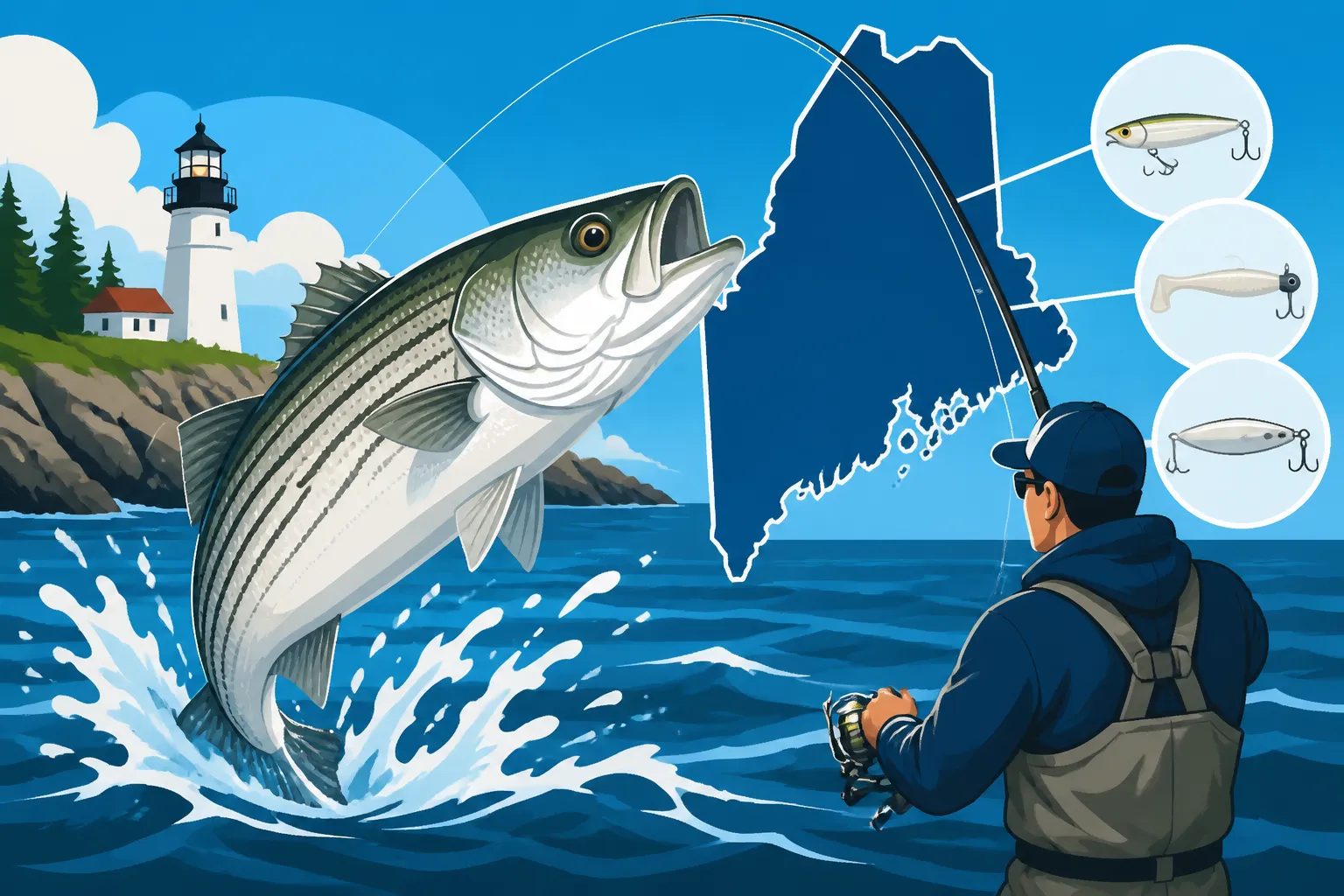
The world of striped bass lures is vast, but a few categories consistently produce in Maine. Topwater plugs like poppers and walk-the-dog baits are incredibly exciting when stripers are actively feeding on the surface, creating explosive strikes. Subsurface plugs, such as lipped swimmers or minnow imitations, are excellent for imitating baitfish just below the surface or when fish are holding slightly deeper. Soft plastic paddle tails or jerk shads rigged on jig heads (1/2 oz to 2 oz) are perhaps the most versatile, mimicking a wide variety of baitfish and effective in various depths. Metal lures like casting jigs or diamond jigs can be deadly when fish are feeding on sand eels or when you need to reach deeper water quickly.
| Lure Type | Best Conditions | Target Depth | Key Action |
|---|---|---|---|
| Topwater Plugs | Calm water, low light (dawn/dusk), active surface feed | Surface | Walk-the-dog, popping, splashing |
| Lipped Swimmers | Moderate chop, imitating wounded baitfish | 1-5 feet | Erratic swimming, wobbling |
| Soft Plastics | Versatile, clear to murky water, various retrieves | Bottom to mid-water | Jigging, steady retrieve, twitching |
| Metal Jigs | Deep water, strong currents, vertical jigging, casting | Mid-water to deep | Fast retrieve, jigging, yo-yo action |
| Spoons | Imitating fleeing baitfish, casting distance needed | Surface to mid-water | Fluttering retrieve, occasional erratic twitch |
When it comes to natural bait, fresh or frozen mackerel, herring, or menhaden (cut into chunks or fished whole) are top choices. Clams, sandworms, and bloodworms can also be incredibly effective, especially when fishing from shore or in areas with a soft bottom. Live bait, such as mackerel or eels, are often irresistible to larger stripers and can be fished under a float or drifted naturally. Always check Maine Fishing Regulations Explained for rules on bait collection and use.
Essential Accessories and Safety Gear
Beyond your rod and reel, several accessories are crucial for a successful and safe striped bass outing. A good pair of pliers or a split ring tool is essential for removing hooks safely and quickly, especially from a thrashing striper. Lip grippers or a landing net can aid in handling fish, minimizing stress on both the fish and the angler. Always carry a measuring tape or ruler to ensure your catch meets the legal Maine Striped Bass Slot Limit Explained requirements.
Safety should never be overlooked, especially when fishing around potentially dangerous water. If you're fishing from a boat, always have personal flotation devices (PFDs) for everyone onboard. Even for shore anglers, especially those venturing onto slippery rocks, studded wading boots or cleats are highly recommended. A headlamp or flashlight is vital for low-light conditions or night fishing. Consider a waterproof dry bag for your phone, keys, and other essentials. Remember, conditions on the Maine coast can change rapidly, so dressing in layers and being prepared for varying weather is always a good idea. For a multi-day trip, a reliable cooler to keep your bait fresh and your eventual catch cold is a must-have, and you can find many highly-rated options on Amazon.
Top Techniques for Shore-Based Striped Bass Fishing
Shore-based striped bass fishing in Maine offers incredible accessibility and rewarding challenges. From sandy beaches to rugged rock points, mastering a few key techniques can dramatically increase your success rate without needing a boat.
Casting Plugs and Soft Plastics
Casting artificial lures from shore is arguably the most popular and effective method for targeting Maine stripers. The key is to select lures that imitate the local baitfish and match them to the conditions. When fish are actively chasing bait near the surface, topwater plugs like poppers or walk-the-dog baits can create exhilarating, explosive strikes. Work them with a retrieve that mimics a wounded or frantic baitfish—a few quick twitches, then a pause, or a steady walking motion.
For fish holding slightly deeper or when surface activity is minimal, subsurface plugs and soft plastics rigged on jig heads are your best friends. Lipped swimmers that dive a few feet can be cast out and retrieved steadily, often with an occasional twitch to add erratic movement. Soft plastic paddle tails or jerk shads are incredibly versatile. Cast them out, let them sink to the desired depth, and retrieve with a slow, steady crank, or a jigging motion that makes them "swim" or dart. Vary your retrieve speed and depth until you find what the fish are reacting to. Remember to cast beyond any visible structure and retrieve your lure through it, as stripers often hide behind rocks or ledges waiting to ambush prey. This is a foundational skill, and our guide on How to Fish for Striped Bass From Shore offers even more detail.
Live Bait and Chunking Strategies
While artificial lures are great, sometimes live bait or fresh cut bait (chunking) is simply irresistible to stripers, especially larger ones. Live mackerel or eels, if available, can be fished effectively from jetties, rock points, or deeper beaches. Rig a live baitfish with a single hook through the nose or back, allowing it to swim naturally. You can fish it under a bobber or simply let it drift with the current, relying on the fish's natural instincts to find it.
Chunking involves using fresh cut pieces of oily baitfish like mackerel, herring, or menhaden. This method relies on the scent trail to attract stripers to your offering. Use a sturdy circle hook (appropriate for the size of your bait and target fish) threaded through a piece of bait, often fished on a fish-finder rig with an appropriate weight to hold the bottom. Cast it out into a likely feeding lane or current seam and let the scent do the work. It's often a waiting game, but when a big striper picks up the scent, the strike can be brutal. This method is particularly effective in river mouths and channels where stripers are actively searching for food.
Reading the Tides and Structure from Shore
Understanding the tides is paramount to successful shore fishing in Maine. Striped bass are highly influenced by tidal currents, which move baitfish and provide ambush opportunities. Generally, the incoming and outgoing tides, especially the first and last two hours of each, are the most productive. During an incoming tide, stripers will move into shallower areas, estuaries, and river mouths, following baitfish that are pushed in by the rising water. On an outgoing tide, they tend to congregate in deeper channels or at the mouths of rivers, ambushing baitfish being swept out.
Beyond the tides, learning to "read" the water and identify structure from shore is critical. Look for rips, eddies, current seams, and areas where currents collide or slow down—these are prime holding spots for stripers. Identify visible structures like rock piles, jetties, points, and even subtle changes in bottom contour (which you might infer from wave patterns or water color). Even submerged rocks or a sudden drop-off can create a perfect ambush point. Focusing your casts around these features, understanding how the current interacts with them, and anticipating where the fish might be staging or feeding will greatly enhance your chances. Many experienced anglers dedicate time simply observing the water before making their first cast. Our in-depth guide on How to Read Tides for Striped Bass Fishing can give you an edge.
Effective Boat-Based Striped Bass Tactics
Fishing for striped bass from a boat opens up a world of possibilities, allowing you to access prime fishing grounds, cover more water, and employ a wider range of techniques that aren't feasible from shore. Whether you own a small skiff or charter a larger vessel, boat-based fishing often leads to encounters with bigger, more aggressive fish.
Trolling and Drifting Techniques
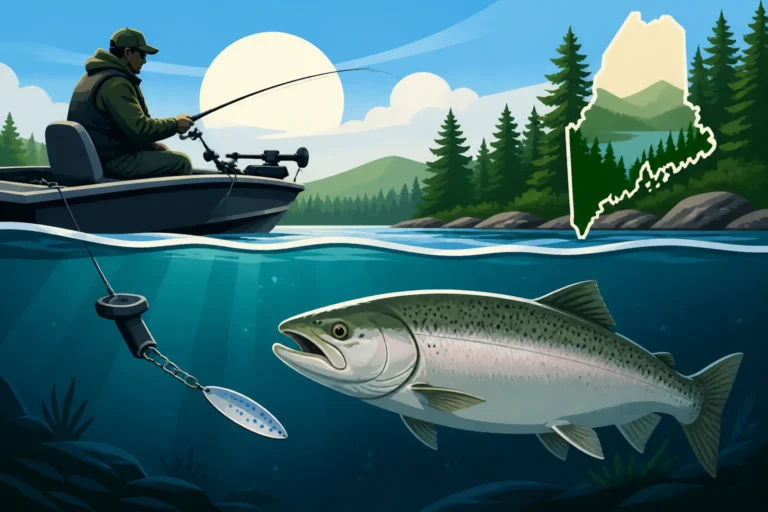
Trolling is an incredibly effective way to locate and catch striped bass, especially when they are scattered or holding over vast areas. This method involves dragging lures or baits behind a moving boat, covering a lot of ground and presenting your offering to fish that might not be visible on the surface. For stripers, tube-and-worm rigs are legendary in Maine. These consist of a long, soft plastic tube (often red or chartreuse) with a worm threaded on the hook, retrieved slowly. Other effective trolling lures include lipped swimming plugs designed for specific depths, or spoons. Vary your trolling speed (typically 2-4 knots) and depth until you find what triggers bites. Copper wire or lead core lines, or even downriggers, are often used to get lures down to the desired depth, especially in deeper lakes. You can learn specific methods for this by exploring Trolling Tube and Worm Rigs for Striped Bass.
Drifting is another productive boat-based technique, particularly useful when fish are concentrated in a specific area or holding near structure. This involves allowing your boat to be carried by the wind or current over a known fishing ground. You can deploy live bait, chunk bait, or artificial lures (like soft plastics or jigs) and let them drift naturally with the current. This presents a very natural offering and can be highly effective in channels, river mouths, or over submerged rock piles. Pay close attention to your fish finder during drifting to identify schools of bait or stripers, and adjust your drift or re-position the boat as needed.
Jigging and Vertical Fishing
When striped bass are holding in deeper water, particularly around structure or schools of bait, jigging can be incredibly productive. This technique involves dropping a weighted lure (a jig) down to the fish and imparting an erratic, vertical motion to entice a strike. Metal jigs, like diamond jigs or Hogy Epoxy Jigs, are popular choices, mimicking fleeing baitfish. Soft plastic swimbaits rigged on heavy jig heads (e.g., a "paddle tail" or "jerk shad" style) also work exceptionally well.
The key to successful jigging is to get your lure to the exact depth where the fish are holding, which is where a quality fish finder becomes invaluable. Drop your jig to the bottom, then reel up a few feet. Then, use a series of sharp rod lifts and drops, allowing the jig to flutter and fall. Strikes often occur on the fall, so pay close attention to your line for any subtle taps or changes in tension. This technique is particularly effective when targeting fish that are schooled up tight or when they are lethargic and less willing to chase horizontal presentations.
Targeting Stripers in Estuaries and Rivers
Maine's many estuaries and rivers provide unique and often highly productive environments for targeting striped bass from a boat. These brackish water systems offer a rich food source and numerous ambush points that stripers favor. From a boat, you have the advantage of navigating into shallow backwaters, exploring marsh edges, and getting closer to structure that shore anglers simply can't reach.
Focus your efforts around current seams, oyster beds, bridge pilings, and the mouths of smaller creeks that feed into the main river or estuary. Trolling shallow-running plugs or soft plastics can be effective for covering ground, especially during an incoming tide as fish move upstream. Anchoring up-current from a productive spot and deploying live or chunk bait can also be deadly. Pay attention to changes in water temperature and salinity, as stripers will often seek out specific conditions. Early mornings, especially at dawn, often provide the best action in these areas as fish are actively feeding under low light conditions. You might consider booking a Maine Fishing Charters Guide if you want to explore these areas with an expert.
Mastering Advanced Striped Bass Strategies
Once you've got the basics down, you might be looking for ways to push your striped bass fishing to the next level. Advanced techniques often involve a deeper understanding of fish behavior, environmental factors, and precise presentation methods that can yield bigger fish or more consistent results, especially when conditions are challenging.
Night Fishing for Stripers
Night fishing for striped bass is a game-changer for many experienced anglers and can be incredibly rewarding. Stripers, particularly larger ones, often become much more active and less wary under the cover of darkness. They move into shallower water to feed on baitfish that are also less visible at night, making them more susceptible to a well-placed lure.
The techniques often mirror day fishing, but with some key adaptations. Topwater plugs that create a lot of noise and commotion are excellent, as the fish rely on sound and vibration to locate their prey. Dark-colored lures (black, purple, dark blue) are often favored by night anglers, as they create a stronger silhouette against the moonlight or dim ambient light. Soft plastics, worked slowly, are also highly effective. Focus your efforts around areas with artificial light sources like bridges or docks, which can concentrate baitfish, or known rips and rocky structures where stripers will hunt. Safety is paramount when fishing at night, so always be aware of your surroundings, wear a headlamp, and let someone know your plans. For further tips, check out Night Fishing Tips for Bass.
Reading Water Conditions and Weather
Experienced striped bass anglers are keen observers of their environment. They don't just fish; they interpret. Learning to read water conditions goes beyond just knowing the tide. Pay attention to water clarity—murky water might call for noisy, high-vibration lures, while crystal clear water might require more subtle, natural presentations and longer fluorocarbon leaders. Surface chop can be a good thing, breaking up the water and making fish less wary, while flat calm conditions often make fish more skittish.
Weather patterns also play a significant role. Stable weather with consistent barometric pressure is generally favorable, while sudden cold fronts or rapidly dropping pressure can shut down a bite. Wind direction and strength are also critical, as they can create current rips, push bait into specific areas, or make boat control challenging. For instance, a persistent easterly wind can often make fishing tougher along the Maine coast. By combining your knowledge of tides, structure, and weather, you can make more informed decisions about where to fish, when to fish, and what techniques to employ, rather than just blindly casting. Understanding concepts like How Wind Affects Lake Fishing can be applied to coastal areas as well.
Best Practices for Catch and Release
While catching striped bass is thrilling, practicing proper catch and release techniques is vital for ensuring the sustainability of this incredible fishery in Maine. Many anglers choose to release most, if not all, of their striped bass, especially the larger breeding-size fish. When you do catch a striper, try to minimize the fight time, bringing the fish to hand as quickly as possible without overstressing it.
Use barbless hooks or crimp down the barbs on your hooks to make hook removal easier and faster. When handling the fish, avoid touching its gills or eyes, and support its body horizontally. If you plan to release the fish, keep it in the water as much as possible, especially if you're taking a quick photo. Use a tool like a dehooker or a good pair of pliers to remove the hook gently. If the fish seems sluggish, hold it upright in the water, facing into a gentle current, until it regains its strength and swims away on its own. Releasing fish responsibly ensures that future generations of anglers can also experience the thrill of a Maine striper. Remember to always be mindful of the current Maine Fish Bag Limits Guide and the unique Maine Striped Bass Slot Limit Explained which are put in place to protect these valuable fish stocks.
Disclaimer
The information provided in this guide is for general informational purposes only and is subject to change. Always consult the most current Maine Department of Inland Fisheries and Wildlife (MDIFW) regulations and local ordinances before fishing. Fishing conditions and regulations can vary, and it is the angler's responsibility to ensure compliance with all applicable laws.