Night Fishing Tips for Bass
If you've spent a scorching summer day on a Maine lake, baking under the sun, battling the boat traffic, and wondering where all the bass went, you're not alone. Those trophy smallmouths and largemouths often get shy during the bright, busy hours, retreating to deeper, cooler waters or thick cover. But when the sun dips below the horizon, a whole new world opens up, and that's exactly what this guide is here to unravel: the thrilling, often more productive, and certainly more peaceful art of night fishing for bass in the Pine Tree State.
Why Night Fishing for Bass in Maine is a Game Changer
There’s a certain mystique about fishing under the stars, isn’t there? The air cools, the sounds of loons carry across the water, and the bustle of recreational boaters fades away. But beyond the serenity, there are some very practical and compelling reasons why pursuing bass in Maine after dark can transform your fishing experience and significantly improve your catch rates.
Beating the Heat and the Crowds
Let's be honest, summer in Maine is glorious, but it also means crowded lakes and rivers. Jet skis, pleasure cruisers, and swimmers can turn prime fishing spots into a chaotic mess during the day, scattering fish and making it hard to concentrate. Plus, those dog days of summer can be downright uncomfortable for anglers, not to mention tough on the fish once caught and released.
When you venture out at night, you’re stepping into a different world. The oppressive heat gives way to crisp, cool air, making for a much more pleasant experience for you and for the bass you're targeting. More importantly, the crowds vanish. You'll find yourself with vast stretches of water all to yourself, allowing you to move freely, explore new areas without interruption, and focus entirely on the rhythm of your retrieve. This reduced pressure is a huge advantage, as undisturbed fish are generally more willing to bite. It's a chance to truly connect with the water, just you and the fish, under a blanket of stars.
The Bass's Behavior Shift
Bass, both smallmouth and largemouth, are opportunistic predators, and their behavior changes dramatically as light levels drop. During the bright daylight, especially in clear Maine waters, they can be wary and less inclined to expose themselves, often retreating to deep cover or hugging structure. They rely heavily on their eyesight, which can be a disadvantage when the sun is high and shadows are stark.
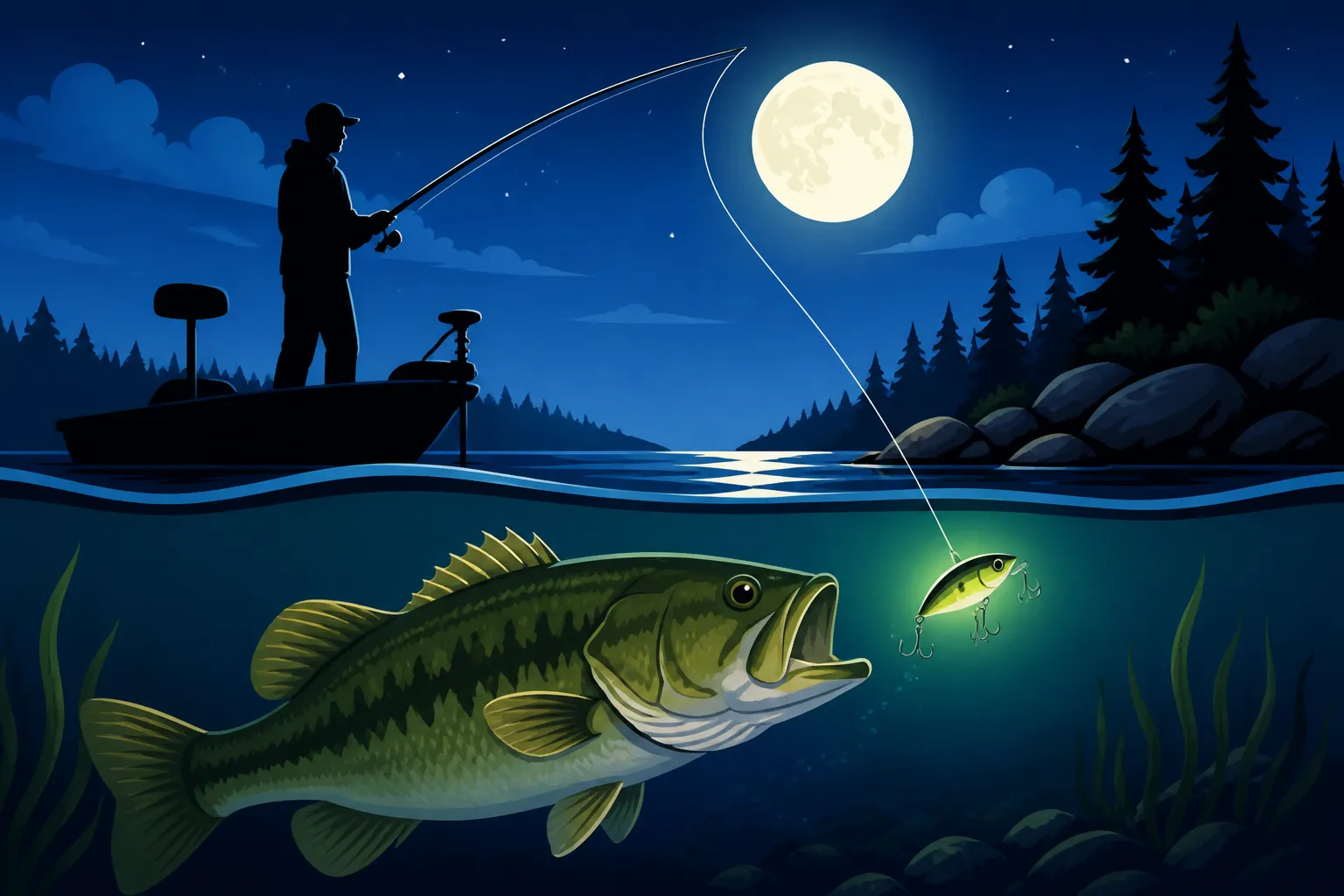
However, as dusk settles and night takes over, bass often become much more active and aggressive feeders. Their incredible lateral line system, which detects vibrations in the water, and their enhanced low-light vision become major assets. They move out of their daytime hiding spots and into shallower areas, congregating around points, weed lines, and rock piles, looking for an easy meal. This means they are often more accessible and less cautious than they are during the day. You’ll find them feeding heavily on crayfish, baitfish, and frogs that are also more active under the cover of darkness. This shift in behavior means that your chances of hooking into a trophy-sized bass can increase significantly, especially for those larger, more experienced fish that have learned to avoid the daytime hustle and bustle.
Essential Gear and Setup for Maine Night Bass Angling
Okay, so you’re convinced that chasing Maine bass under the moonlight is the way to go. But before you cast your first line in the dark, you need to make sure you're properly equipped. Night fishing isn't just daytime fishing with a flashlight; it requires some specialized gear and a thoughtful approach to safety and efficiency.
Lighting the Way (Safely)
Your most crucial piece of gear, besides your rod and reel, will be your lighting. It’s not just for seeing your line; it’s for safety and navigation.
- Headlamps: A good quality headlamp is non-negotiable. Look for one with multiple settings, including a red light option. Red light preserves your night vision much better than white light, which can temporarily blind you once turned off. A powerful white beam is great for tying knots or navigating, but for general fishing, red is your friend. You can find excellent, durable headlamps on platforms like Amazon that are waterproof and have long battery lives.
- Boat Lights and Navigation: If you’re fishing from a boat, ensure all your navigational lights are in perfect working order. This includes bow and stern lights. Consider adding a powerful spotlight or floodlight for identifying hazards or retrieving hung-up lures, but use it sparingly to avoid startling fish.
- Ambient Lighting: Some anglers like to use small, dim LED lights in their boat for just enough ambient light to see their tackle box or tie a knot without destroying their night vision. Battery-operated lanterns or glow sticks can also provide a subtle light source if you're shore fishing or need to mark a spot. Always make sure your lighting is sufficient for both your fishing needs and, more importantly, for safe operation on the water.
Rods, Reels, and Line Choices for the Dark
While you can certainly use your daytime bass setups, some adjustments can make night fishing more productive and enjoyable.
- Rods and Reels: Consider a slightly heavier action rod than you might use during the day. This is because strikes can be more violent at night, and you'll often be fishing around heavier cover where a stout backbone helps extract fish quickly. A medium-heavy to heavy power rod, typically 6'6" to 7'3" in length, is a solid choice for both smallmouth and largemouth. Pair it with a reliable baitcasting or spinning reel, depending on your preference. Smooth drags are always critical, especially when fighting fish that might make unexpected runs in the dark.
- Line: Braided line is often a favorite for night fishing. Its lack of stretch provides excellent sensitivity, allowing you to feel subtle bites that you might otherwise miss. Plus, its strength is a huge advantage when fishing around snags. Many anglers will tie a fluorocarbon leader to their braid for invisibility, but at night, this can be less critical. However, fluorocarbon’s abrasion resistance is still a big plus when fishing around rocky areas or heavy cover. Monofilament can also be used, especially if you prefer its stretch for certain presentations, but you'll sacrifice some sensitivity. Always check your line regularly for nicks and abrasions, as losing a fish in the dark due to faulty line is incredibly frustrating.
For those interested in what restrictions apply, you might want to review the article on Maine Open Water Line Limits.
The Right Lures and Baits for Nighttime Bass
This is where night fishing truly diverges from its daytime counterpart. Visual appeal takes a back seat to vibration, sound, and scent.
- Dark Colors: Forget those natural, subtle patterns you painstakingly matched to the forage during the day. At night, dark silhouettes are key. Black, blue, purple, and junebug are all fantastic choices. These colors provide a stark contrast against the dim sky, making them easier for bass to see. If you’re using jigs or plastic worms, go with these darker shades.
- Noisy Lures: Lures that create a lot of commotion are highly effective. Buzzbaits, chatterbaits, and topwater lures like Whopper Ploppers or Jitterbugs create surface disturbance that bass can home in on using their lateral line. Even crankbaits with rattles can be extremely productive. Bass at night are often less hesitant to attack a noisy meal.
- Scented Baits: Soft plastics imbued with scent, or traditional live baits like worms and shiners, add another layer of attraction. When a bass can't rely solely on sight, scent becomes a powerful trigger. You can even add scent to your artificial lures for an extra edge. The key is to appeal to all of their senses, not just one. For more ideas on what works, check out our guide on Best Lures for Maine Open Water Fishing.
- Glow Lures: While not always necessary, some anglers swear by glow-in-the-dark or UV-reactive lures, especially in very dark conditions or murky water. You'll need a UV flashlight to "charge" these lures periodically to keep them glowing.
Mastering Night Fishing Techniques for Maine Bass
Night fishing isn't just about the gear; it's about adapting your approach. The rhythm of the retrieve, the choice of casting targets, and your overall demeanor on the water all play a significant role in your success.
Stealth and Presentation
In the quiet of the night, every sound travels farther and every disturbance can be magnified. This means stealth is paramount.
- Quiet Approach: When approaching a spot, cut your main engine well in advance and use your trolling motor at its lowest setting, or better yet, paddle or drift in. Avoid banging tackle boxes, dropping items in the boat, or loud conversations. Think of yourself as a hunter, moving silently through the wilderness.
- Casting Accuracy: This is often the biggest challenge for new night anglers. Without clear visibility, it's easy to misjudge distances or snag your line. Practice casting during the day to target specific structures or areas. At night, rely on your memory of the lakebed, feel, and perhaps a dim headlamp to get your lure where it needs to go. Focus on making smooth, controlled casts rather than long, powerful ones that might result in tangles or snags. Remember that fish in shallow water can be easily spooked by a poorly placed cast.
- Setting the Hook: With reduced visibility, feeling the bite becomes even more critical. Pay close attention to any subtle taps, pulls, or changes in line tension. When you feel that tell-tale strike, don’t hesitate. A strong, decisive hookset is necessary to ensure the hook penetrates properly.
Slow and Steady Retrieves
Unlike aggressive daytime power fishing, night fishing for bass often rewards patience and a slower presentation.
- Slower Pace: Bass are less likely to chase down a fast-moving bait in the dark. A slower retrieve gives them more time to locate your lure using their other senses and decide to strike. This is especially true for topwater baits; let them sit for a few seconds after splashdown before starting your retrieve, and then work them with long pauses.
- Feeling the Bottom: When fishing jigs, worms, or crankbaits, maintain constant contact with the bottom or structure. A slow, methodical retrieve allows you to feel every rock, log, and weed clump, which is exactly where bass will be ambushing their prey. This tactile feedback is crucial when your eyes can't provide the same information.
- Vary Your Retrieve: While slow is often key, don't be afraid to experiment. Sometimes a sudden twitch or a brief burst of speed can trigger a reaction strike from an otherwise hesitant bass. The important thing is to be intentional with your retrieve and note what patterns are successful. Different times of the season and different water temperatures can influence their preference, so it's always good to be adaptable. You can learn more about how fish behave in different conditions by checking out How Barometric Pressure Affects Fish Behavior.
Targeting Structure in the Dark
Bass don't just swim aimlessly at night; they still relate to structure, albeit sometimes different structures than during the day.
- Shallow Cover: As mentioned, bass often move shallower at night. Target weed edges, lily pad fields, submerged timber, and rocky points that lead into deeper water. These are prime ambush points.
- Docks and Piers: Lights from shore or docks can attract baitfish, which in turn attract bass. Pitching jigs or soft plastics around lighted docks can be incredibly effective. Even unlit docks provide excellent overhead cover and structure.
- Drop-offs and Ledges: These areas act as highways for bass moving between deep and shallow water. Focus on the shallower edges of these structures, particularly where they intersect with other cover. If you're new to a lake, learning How to Find Drop-Offs on a New Lake can be a great starting point for daytime scouting.
- Fan Casting: Since your vision is limited, fan casting (making casts in a wide arc) from a stationary position can help you cover more water and locate active fish. Once you get a bite, you can then focus your efforts on that specific area.
Safety First: Important Considerations for Night Fishing
While the allure of peaceful night fishing is strong, safety should always be your absolute top priority. The Maine outdoors, especially on the water, can be unforgiving in the dark if you're not prepared.
Navigational Awareness
Operating a boat or even moving along the shoreline at night carries inherent risks that aren't present during the day.
- Know Your Water: Only fish familiar waters at night. This is not the time to explore a new lake or river. You need to know where the submerged rocks, stumps, shallow spots, and other hazards are. Using GPS units with detailed mapping features is highly recommended, but never rely on technology alone. Your personal knowledge of the area is invaluable.
- Reduced Visibility is Key: Even with the best lights, your depth perception and ability to spot obstacles are significantly reduced. Operate your boat at a much slower speed than you would during the day. Be extra vigilant for unlit buoys, floating debris, or other boaters who may also be out there. Always have a designated spotter if possible.
- Tell Someone Your Plan: Before you head out, always inform a family member or friend of your exact fishing location and your expected return time. This simple step can be a lifesaver if something unexpected happens. For more general advice on staying safe, consider reading Safety Tips for Fishing Alone in Maine.
Preparing for the Unexpected
Even on familiar waters, things can go wrong. Being prepared can make all the difference.
- Essential Safety Gear: Beyond your lights, ensure you have all required safety gear:
- Life Jackets: Wear them, don't just have them on board. Accidents happen fast, and finding a life jacket in the dark can be impossible.
- First-Aid Kit: A well-stocked kit for cuts, scrapes, and minor emergencies.
- Communication Device: A fully charged cell phone (in a waterproof bag) or a marine radio.
- Backup Light Sources: Always carry a spare headlamp and extra batteries, or a handheld flashlight.
- Whistle or Air Horn: To signal for help if needed.
- Anchor: For boats, a reliable anchor can keep you from drifting into danger if you lose power or need to stop suddenly.
- Weather Watch: Always check the forecast thoroughly before heading out. Night temperatures can drop dramatically, and unexpected storms are even more dangerous in the dark. If there's any doubt, reschedule.
- Dress in Layers: Even if the day was warm, nights can get chilly quickly in Maine. Dress in layers, including waterproof outer layers, to stay comfortable and prevent hypothermia.
- Don't Go Alone (If Possible): While sometimes you'll be solo, bringing a buddy for night fishing significantly enhances safety. Two sets of eyes and hands are always better than one in an emergency.
Here's a quick comparison of factors when considering day versus night fishing for bass:
| Feature | Daytime Bass Fishing | Nighttime Bass Fishing |
|---|---|---|
| Visibility | Excellent | Limited |
| Fish Activity | Often deeper, wary, less aggressive in heat | Often shallower, more aggressive, less wary |
| Crowds | High boat traffic, many anglers | Minimal boat traffic, peaceful, solitary |
| Temperature | Can be hot, uncomfortable | Cooler, more pleasant |
| Lure Choice Focus | Visual appeal, natural colors | Vibration, sound, dark silhouettes, scent |
| Retrieve Speed | Varies, often faster or reaction baits | Slower, methodical, more pauses |
| Target Depth | Often deeper, in heavy cover | Often shallower, moving to ambush points |
| Sensitivity Required | Good, but visual cues help | High, rely on feel and sound |
| Safety Concerns | Sun exposure, dehydration | Navigation hazards, limited visibility, unexpected events |
| Best Season | Spring, Fall (cooler temps) | Summer (when daytime is tough) |
Night fishing for bass in Maine offers a unique and often incredibly rewarding experience. With the right preparation, gear, and techniques, you can unlock a whole new dimension to your angling adventures. The peace, the solitude, and the thrill of a big bass striking in the dark are truly something special. Remember to always prioritize safety and respect the environment. Happy casting under the stars! You'll find that navigating the Maine Fishing Season Calendar will show you that summer is an excellent time to plan these nocturnal adventures, especially when seeking out large Smallmouth Bass Fishing in Maine.
Disclaimer
This article is for general informational purposes only and does not constitute professional advice. Laws, prices and regulations vary by location and change over time. Consult a qualified professional for guidance on your specific situation.