Striped Bass Slot Limit in Maine
There's nothing quite like the powerful pull of a striped bass on your line, especially here in Maine, where these magnificent fish chase bait right into our rivers and along our rocky coast. But landing a striper often brings up a crucial question: is it a keeper? Navigating Maine's striped bass slot limit can sometimes feel a bit confusing, leaving many anglers wondering exactly what sizes are legal to harvest and what fish need to be safely returned. This guide is designed to unravel those complexities, helping you understand the specific rules, the reasons behind them, and how to fish for striped bass responsibly and within the law.
Decoding the Striped Bass Slot Limit: What It Means for Anglers
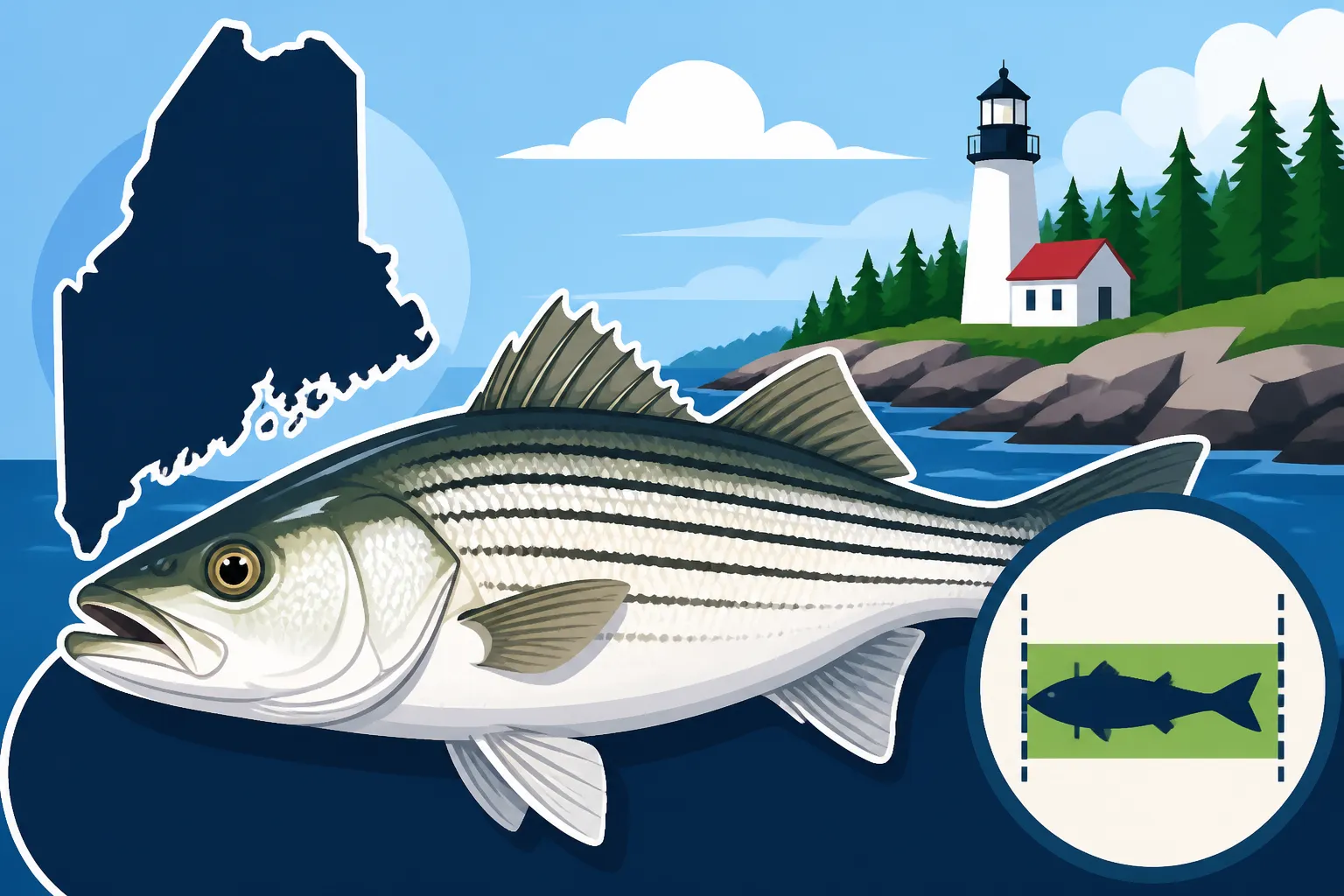
The term "slot limit" is something you hear a lot in recreational fishing circles, and it's particularly important when you're targeting striped bass here in Maine. Unlike a simple minimum length or a maximum length, a slot limit defines a range of sizes within which you are allowed to keep a fish. Any fish smaller than the minimum size must be released, and any fish larger than the maximum size also must be released. It's like finding a sweet spot, a "slot" where keeping a fish is permissible.
Understanding the "Keeper" Window
Imagine you're out fishing in Casco Bay or casting from the shores of the Kennebec River, and you reel in a beautiful striper. Your first instinct, after admiring its silver flanks and powerful tail, should be to measure it. The slot limit creates a very specific window: fish that are too small are often juveniles, still growing and contributing to the future of the population. Fish that are too large are typically the mature breeders, the ones that are vital for producing the next generation of striped bass. By protecting these two ends of the spectrum, the slot limit aims to ensure a healthy and sustainable fishery for years to come. It’s a conservation tool, pure and simple, designed to balance angler opportunity with the long-term health of the species.
The Science Behind Slot Limits
This isn't just a random rule; there's a good deal of scientific thought that goes into setting these limits. Fishery biologists study population dynamics, growth rates, spawning success, and angler harvest data to determine the most effective slot. For striped bass, the goal is often to protect the smaller fish until they've had a chance to spawn at least once, and to protect the largest, most prolific breeders who contribute significantly to the genetic diversity and sheer number of eggs produced. It's a strategic approach to managing a highly sought-after species, recognizing that not all fish contribute equally to the overall health of the stock. Without such careful management, we could quickly see declines in fish populations, impacting future fishing opportunities for everyone.
The Crucial Role of Conservation: Why Maine Has a Striped Bass Slot Limit
Maine's waters are an important part of the Atlantic striped bass migration, with countless fish passing through and feeding along our coast from spring through fall. The decision to implement a slot limit, which you can learn more about in Maine Fishing Regulations Explained, wasn't made lightly. It's a direct response to broader regional conservation efforts for striped bass, a species that has faced significant pressures over the decades. This limit is about ensuring that these incredible fish continue to thrive in our waters for generations of anglers to come.
Protecting Spawning Stock and Juvenile Fish
One of the primary reasons for the slot limit is to safeguard both the juvenile fish and the mature spawning stock. Think about it: the smaller fish haven't had a chance to reproduce yet. By letting them grow past a certain size, we give them the opportunity to contribute to future generations. Conversely, the largest striped bass, often referred to as "trophy fish," are usually the most fecund, meaning they produce the most eggs. Allowing these big, healthy breeders to remain in the water to spawn is critical for robust population recovery and stability. Imagine a male and female striped bass, both mature and full of potential. The slot limit ensures that many fish get to fulfill that potential, rather than being removed from the ecosystem before they can reproduce effectively. This careful balance is key to ensuring that Striped Bass Fishing in Maine remains excellent.
Regional Management and Fishery Health
Striped bass are migratory, traveling extensively along the Atlantic coast. This means that management decisions in one state can directly impact fish populations in others. Maine's slot limit is part of a larger, coast-wide management plan orchestrated by interstate commissions, aiming for consistent conservation efforts across their range. It’s a shared responsibility to ensure the long-term health of the entire stock. If Maine, or any other state, were to have wildly different, less restrictive rules, it could undermine the efforts of other states and the overall goal of sustainability. So, when you're following Maine's slot limit, you're not just adhering to local rules; you're playing a vital role in a much larger regional conservation strategy that benefits every angler along the East Coast. You can find more details about these broader rules and specific dates in Maine Striped Bass Season and Limits.
Navigating Maine's Current Striped Bass Slot Limit
Knowing the exact numbers for Maine's striped bass slot limit is paramount for any angler. These regulations can change, so it's always critical to check the most up-to-date Maine Department of Inland Fisheries and Wildlife (MDIFW) regulations before you head out. However, generally speaking, Maine follows the broader Atlantic States Marine Fisheries Commission (ASMFC) guidelines, which often set the slot limit for striped bass.
The Specific Numbers
Currently, the most common regulation for striped bass in Maine’s waters specifies that anglers can retain one fish per person per day within a particular slot size. For instance, the slot might be between 28 inches and less than 31 inches. This means a fish measuring 28 inches exactly is a keeper, a fish measuring 30.9 inches is a keeper, but a fish measuring 27.9 inches must be released, and a fish measuring 31 inches exactly or larger must also be released. It’s a tight window, and precision in measurement is absolutely vital. If you’re unsure, it’s always better to release the fish. Remember, these numbers are illustrative and could have changed, so always consult the latest MDIFW rulebook or website.
Here’s a quick guide to understanding what to do based on your fish's length:
| Fish Length Measured | Action Required | Reason |
|---|---|---|
| Less than 28 inches | Release | Undersized. These are juvenile fish that need to grow and mature. |
| 28 inches to < 31 inches | Keep (1 per angler/day) | Within the legal slot limit. These fish are generally mature enough to have spawned but not the largest, most critical breeders. |
| 31 inches or greater | Release | Oversized. These are typically the largest, most prolific breeders vital for population health. |
Note: The specific slot limit can change, so always verify the current regulations with the Maine Department of Inland Fisheries and Wildlife.
How Regulations Are Communicated and Why They Matter
Maine, like other states, communicates these regulations through various channels: their official website, printed rulebooks available at license vendors, and sometimes even through local fishing shops. It’s your responsibility as an angler to be aware of and adhere to these rules. Ignoring them, even unintentionally, can lead to serious consequences, which we'll discuss later. These regulations are designed not to make fishing harder, but to ensure that everyone can enjoy the thrill of catching striped bass now and in the future. The rules about size and bag limits are carefully considered, and understanding them is a fundamental part of being a responsible angler in Maine.
Measuring and Handling Striped Bass Properly for Release
Successfully navigating the striped bass slot limit isn't just about knowing the numbers; it's also about knowing how to measure your catch accurately and how to handle fish that need to be released in a way that maximizes their survival. Improper handling can kill a fish, even if it's released, defeating the purpose of the slot limit.
Accurate Measurement Techniques
When you land a striper, the clock starts ticking, especially if you're planning to release it. You need a reliable measuring device. A soft, flexible measuring tape or a rigid bump board is essential. Many anglers prefer a bump board for its accuracy, as you can gently push the fish's nose against the end and read the measurement quickly and clearly. Always measure from the tip of the jaw (with the mouth closed) to the tip of the tail (with the tail compressed or pinched together for maximum length). Do this quickly and efficiently. Avoid trying to stretch the fish or bend it in unnatural ways. A good quality, easy-to-read measuring tape or bump board is a worthwhile investment and can be easily found on platforms like Amazon.
Holding the fish horizontally, supporting its belly, is crucial. Avoid holding a fish vertically by its jaw or gills, as this can cause internal damage. Wet your hands before touching the fish to protect its slime coat, which is vital for its immune system against disease and parasites.
Best Practices for Catch and Release
For any fish that falls outside the slot limit and needs to be released, or if you simply choose to practice Catch and Release Best Practices in Maine, doing so properly is incredibly important.
- Minimize Fight Time: Bring the fish in as quickly as possible without "horsing" it. A prolonged fight can exhaust the fish, making it harder for it to recover.
- Use Appropriate Gear: Heavy enough tackle will help you land the fish faster.
- Barbless Hooks or De-barbed Hooks: Consider using barbless hooks, or simply pinch down the barb on your existing hooks with pliers. This makes hook removal much easier and quicker, reducing stress and injury to the fish.
- Keep the Fish Wet: If possible, keep the fish in the water while you remove the hook. If you must lift it, do so gently, supporting its entire body. Avoid letting it flop around on rocks or boat decks.
- Quick Hook Removal: Use needle-nose pliers or a hook remover tool to quickly and carefully extract the hook. If the hook is deeply swallowed, it’s often better to cut the line as close to the hook as possible rather than trying to dig it out, which can cause fatal damage.
- Revive if Necessary: If the fish seems sluggish, hold it gently in the water, facing into a gentle current (or slowly move it back and forth if there's no current) until it regains its strength and can swim away on its own. It's truly rewarding to watch a fish swim off strongly, ensuring it can continue its journey. You can find more in-depth guidance in How to Handle Fish Without Hurting Them.
By following these practices, you're not just complying with regulations; you're actively contributing to the health and abundance of Maine’s striped bass population.
The Repercussions: Penalties for Violating the Slot Limit
It's easy to think of fishing regulations as mere guidelines, but in Maine, the wardens take them very seriously. Violating the striped bass slot limit, whether intentionally or accidentally, can lead to significant penalties. These aren't just minor slaps on the wrist; they can impact your wallet and your fishing privileges. Understanding the potential consequences reinforces why being diligent about the rules is so important.
Fines and Loss of Privileges
If you're caught with a striped bass outside the legal slot limit, or more fish than the daily bag limit allows, you could face hefty fines. These fines vary depending on the severity of the offense, but they are often substantial enough to make you think twice about cutting corners. Beyond the financial hit, a violation can also lead to the suspension or revocation of your fishing license. This means you might not be able to fish in Maine for a period of time, which for passionate anglers, is a truly painful consequence. Imagine missing an entire season of Maine Striped Bass Fishing Techniques because of a simple oversight. The law is designed to deter poaching and ensure compliance, and the wardens are out there specifically to enforce it. For specific details on what happens, you can refer to Penalty for Keeping an Undersized Fish in Maine.
Enforcement and Warden Presence
Maine's Inland Fisheries and Wildlife Wardens are highly dedicated and knowledgeable. They patrol our coastal waters, rivers, and lakes, often interacting with anglers to ensure compliance and educate the public. They're not just looking for violations; they're also a great resource for clarification on regulations if you're unsure. However, when a violation occurs, they are empowered to take action. Their presence is a constant reminder that these regulations are serious and are actively enforced to protect our natural resources. So, whether you're casting from a beach How to Fish for Striped Bass From Shore or trolling from a boat How to Fish for Striped Bass From a Boat, always assume you could encounter a warden and be prepared to demonstrate that you are fishing legally and responsibly.
It's always better to be overly cautious than to risk a fine or lose your fishing privileges. When in doubt, measure twice, and if there's still uncertainty, or if the fish is too close to a boundary, release it. Your careful adherence to the slot limit contributes directly to the sustainability of the fishery, showing respect for the fish and fellow anglers. If you ever have questions or need to report a violation, knowing Maine Fish and Wildlife Warden Contact Information is invaluable.
Tips for Successfully Fishing Within the Slot Limit
Fishing specifically for fish within a slot limit adds an extra layer of challenge and skill to your angling. It's not just about catching fish; it's about catching the right size fish and safely releasing the others. Here are some strategies and considerations to help you succeed while respecting Maine's striped bass slot limit.
Gear Selection and Bait Choices
The type of gear you use can actually influence your success with slot limits. While you want tackle strong enough to land a fish quickly to minimize exhaustion, you also want to avoid gear that's prone to deep hooking. Circle hooks, for example, are highly recommended when using bait, as they are designed to hook fish in the corner of the mouth, making for easier and safer release. Many anglers also opt for artificial lures over live bait when targeting striped bass, as they can sometimes reduce the chances of deep hooking. When choosing your lures, consider a variety of Best Lures for Striped Bass in Maine and how they might affect the strike zone of the fish. Always carry a hook removal tool, like a de-hooker or long-nose pliers, and a reliable measuring device—you can find excellent options for both on Amazon.
Furthermore, consider the size of your bait or lure. While big baits can catch big fish, they can also be swallowed by smaller fish, leading to deep hooking. Balancing lure size with target fish size can be a subtle art, but it's worth exploring if you find yourself constantly deep-hooking undersized fish.
Maximizing Release Survival
Beyond simply knowing how to measure, proactive steps can significantly increase the survival rate of released fish.
- Practice Quick Releases: Get into a rhythm of unhooking and releasing fish efficiently. The less time a fish spends out of water, the better its chances of survival.
- Avoid Handling Gills: The gills are extremely delicate and vital for respiration. Never grab or put your fingers into a fish's gills, especially if you intend to release it.
- Support the Fish: If you must take a photo, do it quickly, support the fish horizontally with two hands (one under the head, one under the tail/belly), and keep it low over the water. A quick "grip-and-grin" is okay, but extended photo sessions are detrimental.
- Educate Others: If you're fishing with friends or family, share these best practices. The more anglers who understand and implement proper catch and release techniques, the better for the striped bass population. This also applies to understanding the importance of the Striped Bass Slot Limit in Maine Explained in general.
Understanding Fish Behavior and Location
Striped bass, like most fish, tend to group by size. While you'll always encounter a mix, sometimes certain areas or depths will hold more smaller fish, while others might attract larger ones. Paying attention to what sizes you're catching in a particular spot can help you adjust your strategy. If you're consistently catching undersized fish, consider moving to a different location or trying a different presentation. Larger striped bass often prefer deeper water or stronger currents, particularly during certain tides. Learning about Best Tide for Striped Bass Fishing in Maine can help you target fish more effectively. By honing your understanding of fish behavior and habitat, you can potentially increase your chances of finding fish within the legal slot, reducing the number of undersized or oversized fish you handle. This adaptive approach to fishing not only makes you a more skilled angler but also a more effective conservationist.
Disclaimer
This article is for general informational purposes only and does not constitute professional advice. Laws, prices and regulations vary by location and change over time. Consult a qualified professional for guidance on your specific situation.