Maine Fish Species Identification Guide
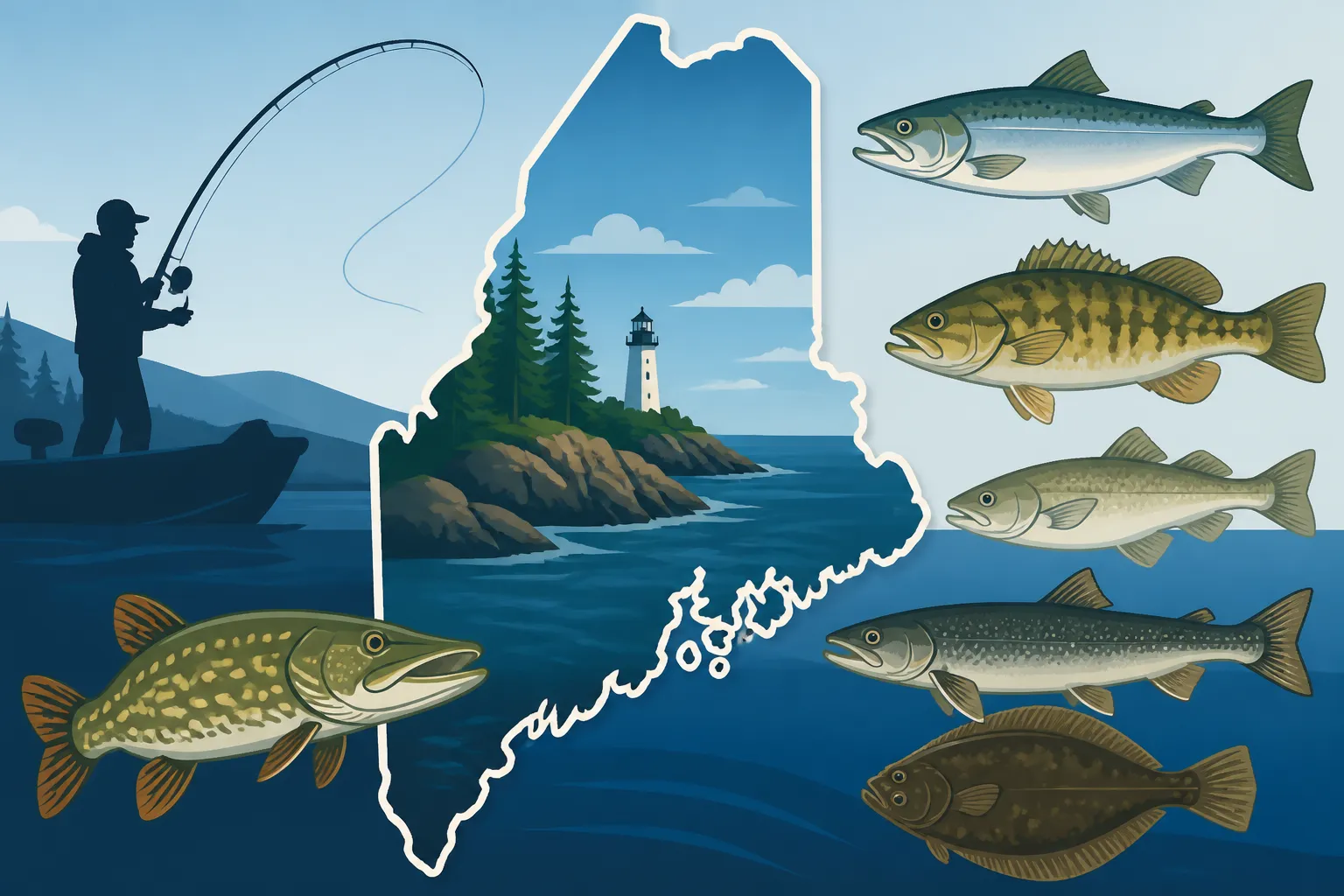
There's nothing quite like the thrill of a tug on your line in Maine's pristine waters, but sometimes, the excitement quickly turns to a moment of confusion. You've landed a fish, but what is it, exactly? Knowing your catch isn't just about curiosity; it's absolutely crucial for following regulations, protecting our beloved fisheries, and truly appreciating the diverse aquatic life that calls Maine home. This comprehensive guide is here to unravel the mystery, helping you confidently identify the many incredible fish species you might encounter, from the smallest brook trout to the largest striped bass.
Why Identifying Maine Fish Species Matters
When you're out on a lake or river, rod in hand, the focus is often on the fight, the beauty of the surroundings, and the simple joy of being outdoors. But after the initial excitement of a catch, a vital step often comes into play: identification. It might seem like a small detail, but knowing precisely what you've reeled in has a ripple effect that touches everything from conservation to compliance.
Beyond the Catch: Understanding Ecosystems
Every fish species plays a unique role in its aquatic environment. Some are apex predators, keeping populations of smaller fish in check. Others are bottom feeders, acting as nature's clean-up crew. Still others are forage species, providing crucial sustenance for larger game fish, birds, and even mammals. When you learn to identify different fish, you start to understand the intricate web of life beneath the surface. For example, recognizing a wild brook trout versus a stocked one tells you something about the health of that particular stream. Or, spotting certain baitfish might clue you into why the larger predators are holding in a certain area. It’s like learning the local language of the water, giving you a deeper appreciation for Maine’s natural heritage and the delicate balance that sustains it all.
Staying Legal: Regulations and Bag Limits
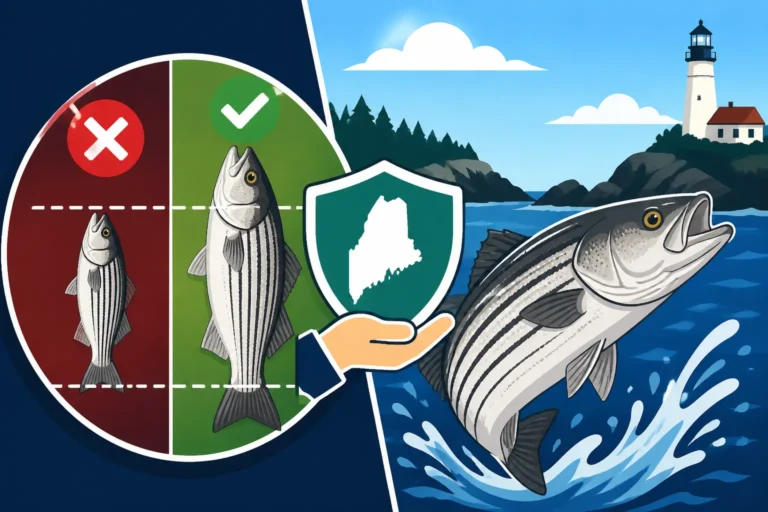
This is where identification truly becomes non-negotiable. Maine has incredibly detailed and specific fishing regulations, and they often vary wildly from one species to another, and even from one water body to another. Knowing the difference between a landlocked salmon and a brown trout, or a smallmouth bass and a largemouth bass, can be the difference between a legal catch and a hefty fine. Each species has its own minimum length, daily bag limit, and sometimes even seasonal restrictions. For instance, the slot limit for striped bass means you can only keep fish within a certain size range, requiring accurate measurement and identification. Trying to navigate these rules without proper identification skills is like trying to drive a car blindfolded – you're almost guaranteed to run into trouble. Always remember to check the latest Maine Fishing Regulations Explained and Maine Fish Bag Limits Guide before heading out. It's not just about avoiding penalties; it's about being a responsible angler and doing your part to conserve fish populations for future generations.
Enhancing Your Angling Experience
Beyond the legalities, accurate fish identification simply makes you a better angler. When you know what fish you're targeting, you can tailor your gear, bait, and techniques to their specific behaviors and habitats. For example, if you're consistently catching juvenile landlocked salmon when you're aiming for a trophy lake trout, understanding why you're catching salmon can help you adjust your depth or lure to find those deep-water togue. It also allows you to brag truthfully about your catches! Imagine telling a story about a magnificent brook trout, only to find out later it was a brown trout. The subtle differences matter to seasoned anglers. Being able to confidently identify your catch, understanding its habits, and knowing its role in the ecosystem enriches every moment you spend on the water, turning a simple fishing trip into a truly informed and engaging adventure. For beginners, a good field guide, perhaps one you ordered from Amazon, can be an invaluable companion on your journey to becoming a seasoned Maine angler.
Key Freshwater Game Fish of Maine
Maine's freshwater systems are a diverse wonderland, offering incredible opportunities for anglers chasing everything from leaping salmon to hard-fighting bass. But to truly unlock these waters, you need to know your players. Here are some of the most sought-after freshwater game fish and how to tell them apart.
Landlocked Salmon: The Inland Leaper
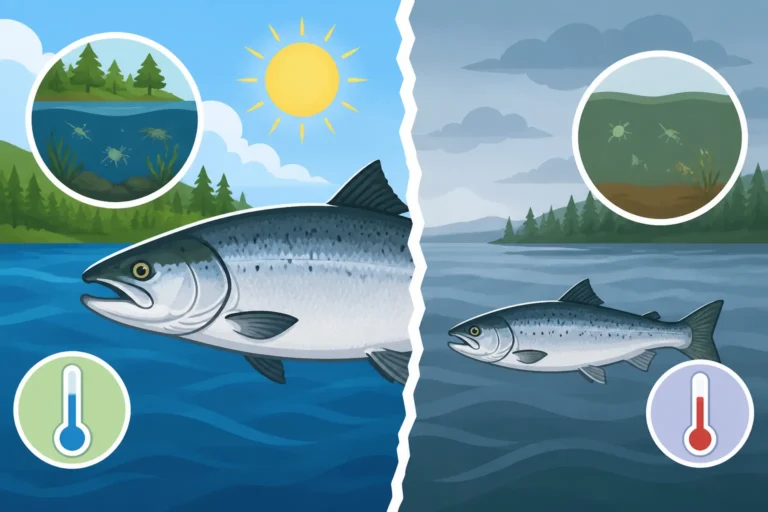
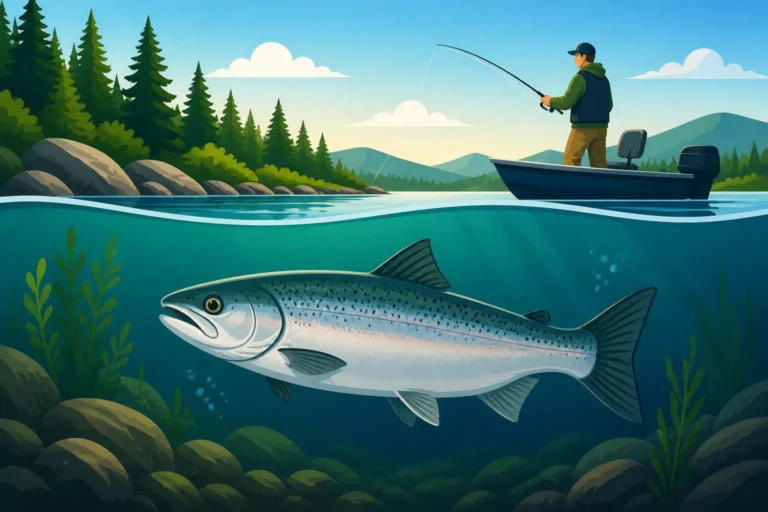
Ah, the landlocked salmon – often considered the crown jewel of Maine's freshwater fisheries. These fish are essentially Atlantic salmon that, through geological changes or damming, became cut off from the ocean and adapted to live their entire lives in freshwater lakes and rivers. They're renowned for their acrobatic jumps and powerful runs once hooked, making them a favorite target for many anglers.
When you're trying to identify a landlocked salmon, look for its sleek, torpedo-shaped body. They typically have a silver coloration, sometimes with a slight brownish or greenish tint on the back, fading to white on the belly. A key feature is their small, dark spots, which are usually X-shaped or irregular, primarily above the lateral line. Unlike many trout, these spots typically do not extend onto the tail fin. Their tail fin is noticeably forked, almost V-shaped, which helps them in their fast, open-water pursuits. The adipose fin (the small, fleshy fin between the dorsal and tail fins) is also present, a common trait among salmonids. While they resemble Atlantic salmon, their freshwater existence often means they're a bit smaller and lack the vibrant blue-green hues sometimes seen in sea-run fish. If you want to dive deeper into their identification, take a look at our guide How to Identify a Landlocked Salmon.
They thrive in large, cold, deep lakes with access to cool, flowing tributaries for spawning. Lakes like Sebago, Moosehead, and the Rangeley Lakes are prime examples of their habitat. Anglers often target them by trolling streamer flies or baitfish imitations, especially in the spring and fall when they're more active near the surface. In summer, they retreat to deeper, cooler waters.
Brook Trout: Maine's State Fish
The brook trout holds a special place in the hearts of Mainers, not just because it's our official state fish, but because it represents the wild, pristine nature of our northern woods. Finding a wild brook trout in a remote pond or stream is an experience that connects you deeply to Maine's natural heritage. They are, without a doubt, one of the most beautiful fish you'll ever see.
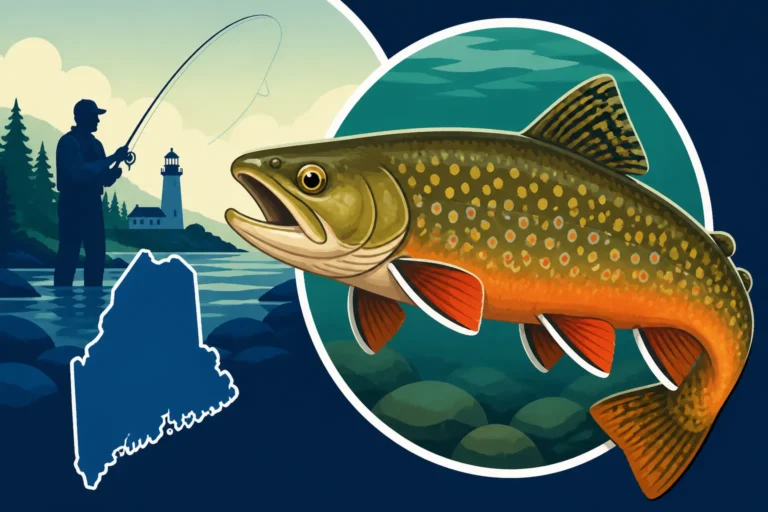
Identifying a brook trout involves looking for a kaleidoscope of colors. Their backs are usually dark olive-green, often with distinctive worm-like (vermiculated) patterns that can range from light green to yellow. Their sides are typically darker, adorned with vibrant red spots, often surrounded by blue halos (these are called "areolae"). The belly can be creamy white, but during spawning season, males in particular will develop intensely orange-red undersides. A definitive characteristic is their lower fins (pelvic, pectoral, and anal fins) which have a distinct white leading edge, backed by black, and then often a reddish or orange tint. Their tail fin is usually square or slightly emarginate (slightly concave), not deeply forked. The body shape is generally stockier than a salmon, and they have a relatively large mouth. Keep in mind that coloration can vary dramatically depending on the water body, diet, and time of year. For a full breakdown, check out How to Identify a Brook Trout.
Brook trout are native to Maine and prefer cold, clear, well-oxygenated water. You'll find them in small streams, remote ponds, and the upper reaches of many rivers. The Brook Trout Native Range in Maine extends across much of the state, especially in the North Woods. They feed on insects, small fish, and crustaceans. Fly fishing with dry flies, nymphs, or small streamers is a popular and effective method, as is spin fishing with small spinners or worms. They are notoriously wary, making a wild brook trout catch a true badge of honor.
Lake Trout (Togue): Deep Water Giants
In Maine, what many folks outside the state call "lake trout" we affectionately refer to as "togue" (pronounced "toe-g"). These are the true giants of Maine's deep, cold lakes, a fish that embodies strength and resilience. They're a char, not a true trout, but share many characteristics with their salmonid cousins.
Togue are built for deep-water dominance. They possess a long, slender body, often with a grayish-green to dark brown coloration on their backs, fading to lighter sides and a white belly. Their most distinguishing feature is the profusion of light, irregular spots (often white or yellowish) that cover their entire body, including their head, fins, and deeply forked tail. This heavily spotted pattern is a key differentiator from landlocked salmon. Their mouth is large, extending beyond the eye, and they have sharp teeth indicative of their predatory nature. Their tail is distinctly and deeply forked, much more so than a brook trout, enabling them to move quickly through the expansive depths. While they are often mistaken for lake trout, in Maine, the term "togue" is commonly used. To really nail down the differences, our guide How to Identify a Togue vs Lake Trout is a must-read.
Togue thrive in the deepest, coldest parts of large oligotrophic lakes, such as Moosehead Lake, Sebago Lake, and countless others across the state. They are primarily piscivorous, meaning they eat other fish, and will actively hunt smelt, cusk, and other baitfish. They are often targeted by trolling deep with heavy gear or by jigging through the ice during the winter. It’s worth noting that technically, the togue is a char, similar to brook trout, but it’s often grouped with trout due to its common name and fishing methods. Learning What Is the Difference Between a Char and a Trout? can be quite interesting for a dedicated angler!
Smallmouth Bass: Feisty Fighters
The smallmouth bass is a beloved game fish throughout Maine, known for its tenacious fight and hard-hitting strikes. They might not be native to all Maine waters, but they've certainly found a home here and provide fantastic angling opportunities, especially in warmer waters.
The smallmouth bass has a bronze-brown to olive-green coloration on its back, fading to lighter sides with vertical bars or blotches. These bars are often more pronounced in younger fish. Its body is robust and laterally compressed. The absolute best way to distinguish a smallmouth from its largemouth cousin is by its mouth: when the mouth is closed, the upper jaw (maxillary) typically does not extend past the middle of the eye. They also have a continuous dorsal fin, but with a slight dip in the middle. The eyes tend to be reddish. They lack the distinct dark lateral line often seen on largemouths. Our article How to Identify Smallmouth vs Largemouth Bass offers a detailed comparison to help you tell them apart easily.
Smallmouth bass prefer clear, cool-to-warm water with rocky bottoms and plenty of structure. You'll find them in many of Maine's larger lakes and rivers, including portions of the Penobscot, Kennebec, and Androscoggin rivers, as well as lakes like Sebago and the Belgrade Lakes. They are aggressive feeders, preying on crayfish, insects, and smaller fish. Anglers target them with a variety of lures, including spinnerbaits, crankbaits, jigs, and soft plastics.
Largemouth Bass: Structure Dwellers
While perhaps not as iconic as the smallmouth in some Maine circles, the largemouth bass offers an equally exciting challenge, particularly for those who enjoy fishing heavy cover. These fish are masters of ambush, lurking in dense vegetation or submerged timber.
The largemouth bass is generally darker green on its back, often fading to a lighter green or yellowish belly. The most unmistakable identifying feature is the prominent, irregular dark lateral line running horizontally along its side, though this can sometimes be broken or faded. And, as its name suggests, its mouth is significantly larger than a smallmouth's: when the mouth is closed, the upper jaw (maxillary) extends well past the back of the eye. Its dorsal fin is also distinctly separated or nearly separated into two parts. Its body tends to be a bit stockier and less compressed than a smallmouth.
Largemouth bass prefer warmer, shallower, and often murkier waters with abundant aquatic vegetation, submerged logs, and lily pads. They are common in many southern and central Maine lakes and ponds, thriving in habitats where they can hide and ambush prey. They have a voracious appetite, eating everything from insects and frogs to small fish and even ducklings. Flipping jigs, pitching soft plastics, and working topwater lures are popular techniques for enticing these ambush predators out of cover. When you're stocking up on lures for either bass, you'll find a wide selection available on Amazon.
Brown Trout: Introduced Hard-Hitters
Brown trout are an introduced species to Maine, originating from Europe, but they have established themselves in many of our rivers and lakes, offering another exciting target for anglers. They are known for their resilience and often grow to impressive sizes, providing a strong fight.
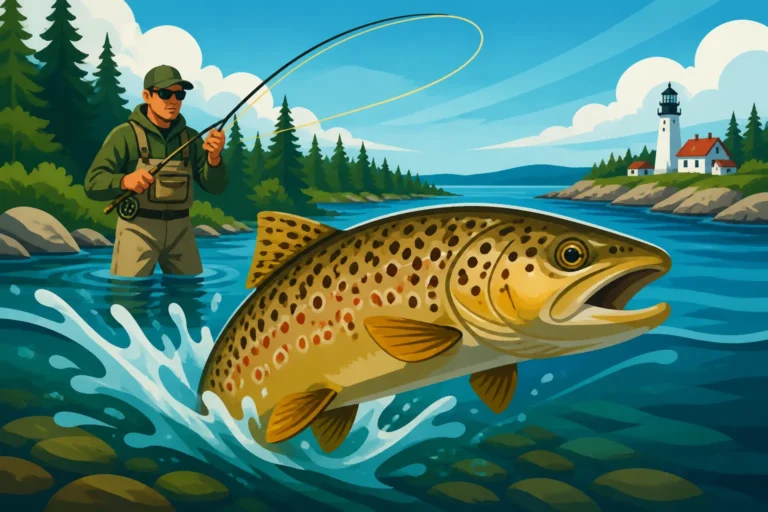
Identifying a brown trout can sometimes be tricky, as they share some similarities with brook trout and even landlocked salmon. Look for a generally golden-brown to olive-brown body, often with larger, darker spots on its back and sides. These spots are usually ringed with a lighter halo (but typically not blue like a brook trout's spots). A key distinguishing feature is that some of these dark spots will often extend onto the adipose fin and even the tail fin, which is typically squared or slightly emarginate. Unlike brook trout, their lower fins do not have the prominent white leading edge. They usually have a cream-colored or yellowish belly. They have a fairly large mouth, with the upper jaw extending back to or slightly beyond the eye.
Brown trout are more tolerant of warmer water temperatures and slightly less pristine conditions than brook trout, which is one reason they've thrived in some areas. You'll find them in a mix of rivers and lakes, particularly those that receive annual stockings. They are opportunistic feeders, preying on insects, crayfish, and other fish. They can be caught using a variety of methods, including fly fishing with nymphs and streamers, spin fishing with lures like Rapalas or Mepps spinners, and even bait fishing with worms or minnows. They are known for their strong runs and deep dives once hooked.
Common Saltwater Species in Maine
Maine's rugged coastline and rich offshore waters provide an entirely different angling experience, teeming with a fascinating array of saltwater species. From the inshore estuaries to the deep ocean, there's a whole new world of fish to identify.
Striped Bass: Coastal Chargers
The striped bass, or "striper" as it's affectionately known, is perhaps the most iconic saltwater game fish along the Maine coast. These powerful, migratory fish make their way north to our cooler waters each summer, providing thrilling action for anglers from shore and boat alike.
Identifying a striped bass is usually straightforward due to its distinctive pattern. They have a sleek, elongated, silver body with a darker, often greenish or bluish-gray back. The most unmistakable feature is the seven or eight prominent, unbroken dark horizontal stripes running along their sides from gills to tail. Their head is relatively large with a slightly protruding lower jaw. The dorsal fin is separated into two distinct parts: a spiny front section and a softer-rayed back section. Their tail is moderately forked. Young stripers will show these stripes very clearly, and even the largest adults retain them, though they might be less defined on older, battle-scarred fish. For more detailed identification points, check out our guide How to Identify a Striped Bass.
Striped bass are found in coastal waters, estuaries, and tidal rivers, often seeking out structure like rocky points, jetties, and mussel beds, or congregating around baitfish schools. They are powerful predators, feeding on a wide range of prey including mackerel, herring, sand eels, and crabs. Anglers use a variety of techniques, from casting plugs and soft plastics from shore, to trolling live bait or tube-and-worm rigs from a boat. Catching a large striper is an unforgettable experience, thanks to their incredible fighting strength.
Mackerel and Pollock: Abundant & Energetic
While perhaps not the trophy fish that striped bass are, mackerel and pollock are incredibly important species in Maine's coastal ecosystem, and they provide some of the most consistent and exciting fishing action, especially for families and beginners. They're also excellent table fare!
Mackerel: Atlantic mackerel are identifiable by their streamlined, torpedo-shaped bodies, typically dark blue-green on the back with distinct, wavy, dark vertical stripes. Their sides are silvery, and their bellies are white. They have two widely separated dorsal fins and a deeply forked tail. Mackerel are schooling fish, often found in immense numbers near the surface, chasing baitfish. They are fast swimmers and very energetic when hooked. They're often caught on small, shiny lures like sabiki rigs or Kastmasters, and are fantastic bait for larger species.
Pollock: Pollock are another schooling fish, related to cod and haddock, but generally more slender and often found higher in the water column. They have a dark greenish-brown back, silvery sides, and a white belly. A key identifying feature is their pale lateral line, which is prominent and curves slightly upward over the pectoral fin. They have three dorsal fins and two anal fins, characteristic of the cod family, and a distinctly forked tail. Their lower jaw protrudes slightly. Pollock can grow quite large, offering a decent fight. They’re often caught jigging with metal jigs or fishing with bait over rocky areas, ledges, and offshore humps. They are excellent eating fish, with firm, white flesh.
Both mackerel and pollock provide fast-paced fun, making them ideal for kids or anyone looking to bend a rod consistently. They're also vital forage fish for many larger predators, including tuna and striped bass, making them a crucial part of the food chain.
Groundfish: Cod, Haddock, and Cusk
When you head out on a deep-sea fishing charter from one of Maine's coastal towns, you're often targeting "groundfish" – a category that includes several bottom-dwelling species like cod, haddock, and cusk. These fish are known for their delicious white meat and strong pulling power from the depths.
Cod: Atlantic cod are iconic bottom-dwellers. They have a mottled, brownish-green to grayish coloration on their backs and sides, which helps them camouflage with the ocean floor, fading to a white belly. They are stout-bodied with a large head. Key features include three distinct dorsal fins, two anal fins, and a square or slightly rounded tail fin. Most notably, they have a prominent white lateral line that arches strongly over the pectoral fin, and a distinct barbel (whisker-like organ) on their chin, which they use to feel for food on the bottom. Cod can grow to very impressive sizes.
Haddock: Haddock are similar in shape to cod but generally more slender. They have a distinct purplish-gray back, silvery sides, and a white belly. The most defining identification mark is the prominent black lateral line that runs along its side, accompanied by a distinctive large black "thumbprint" or "devil's mark" just above the pectoral fin. They also have three dorsal fins and two anal fins. Haddock also have a small chin barbel, but it's less pronounced than a cod's.
Cusk: Cusk are a fascinating and less common groundfish, often mistaken for a large eel or a strange type of cod. They have a long, elongated, almost eel-like body with a continuous dorsal fin that runs nearly the entire length of its back, merging with the tail and anal fin. Their coloration is typically mottled brownish to reddish-brown. They have a prominent single chin barbel and a large mouth. Cusk are strictly bottom dwellers, preferring rocky crevices and ledges. They are a prized catch for their firm, flavorful meat, often caught incidentally while targeting cod or haddock.
These groundfish require specific tackle and techniques, often involving heavy sinkers and multiple baited hooks fished directly on or near the seafloor. They are powerful fighters from the deep, and reeling them up can be quite a workout!
Other Notable Freshwater Species
Maine's waters are home to more than just the prime game fish. A variety of other species play crucial roles in the ecosystem and offer different, often overlooked, angling opportunities. Understanding these fish adds another layer to your knowledge of Maine's aquatic life.
Chain Pickerel: Aggressive Ambush Predators
The chain pickerel is a common and aggressive freshwater fish found in many of Maine's lakes and ponds, particularly in shallower, weedy areas. While sometimes considered a "nuisance" by anglers targeting trout or bass, they provide consistent action and are surprisingly good to eat if prepared properly.
Identifying a chain pickerel is quite straightforward. They have a long, slender, torpedo-shaped body, perfectly designed for ambushing prey from cover. Their most distinctive feature is the intricate, chain-like pattern of dark markings on a greenish or yellowish-green background, which gives them their name. The entire cheek and gill cover are fully scaled. They have a duck-bill shaped snout with a mouth full of sharp, needle-like teeth, making them formidable predators. Their single dorsal fin is set far back on the body, close to the tail, allowing for sudden bursts of speed.
Pickerel thrive in weedy, warm, and often somewhat murky waters, where they can hide among vegetation and ambush smaller fish, frogs, and insects. They are abundant in many of Maine's less-developed ponds and the shallower sections of larger lakes. They are incredibly aggressive and will strike at almost anything that moves, making them a fun target for novice anglers. Spinnerbaits, spoons, and live bait (like shiners) are highly effective. Be careful when handling them due to their sharp teeth!
White Perch and Yellow Perch: Panfish Favorites
Perch are schooling fish that offer excellent light-tackle fun and are highly regarded for their delicious white flesh. Both white and yellow perch are abundant throughout Maine and provide accessible fishing opportunities for anglers of all ages.
White Perch: Despite their name, white perch aren't true perch; they're actually a type of temperate bass. They have a robust, silvery-white to silvery-green body with a slightly darker back. They lack the distinct vertical bars of yellow perch. Their most notable feature is their dorsal fin, which is deeply notched but usually not completely separated into two distinct parts. They have a relatively small mouth and a somewhat compressed body. White perch are found in both fresh and brackish waters (where fresh and salt water mix), making them common in coastal rivers, estuaries, and many inland lakes. They school heavily and are known for their aggressive feeding binges. They are excellent table fare and provide fantastic action on light spinning gear with small jigs, worms, or pieces of clam.
Yellow Perch: Yellow perch are true perch and are easily recognizable. They have a distinctive yellow-gold body with 6-8 prominent, dark vertical bars running down their sides. Their fins, especially the lower ones, often have an orange or reddish tint. They have two distinct dorsal fins, with the first being spiny and the second soft-rayed. Their body is somewhat humped, especially in larger specimens. Yellow perch are found exclusively in freshwater, preferring clear to moderately turbid lakes and slow-moving rivers with plenty of vegetation. They are classic panfish, providing consistent action for anglers using small lures, worms, or minnows. They are also incredibly popular for ice fishing, often caught by the bucketful. Both types of perch can provide a fun day on the water, and you can pick up some great perch lures on Amazon to add to your tackle box.
Smelt: Essential Baitfish and Table Fare
Smelt are small, silvery fish that might not be targeted as often as larger game fish, but they are incredibly important to Maine's ecosystems and cultural traditions, particularly ice fishing. They serve as a primary food source for many of Maine's most prized game fish, including landlocked salmon, togue, and brook trout.
Smelt are easily identified by their slender, silvery body, often with a translucent quality. They have a prominent adipose fin, similar to salmon and trout, and a deeply forked tail. A key characteristic is the presence of small, sharp teeth in their jaws and on their tongue. When freshly caught, many smelt have a distinctive cucumber-like smell, which is often used as an identification clue. They are typically small, ranging from a few inches to about eight inches in length.
Rainbow smelt are found in both freshwater lakes and brackish coastal waters, often making spectacular spawning runs up rivers in the early spring. During the winter, they are a primary target for ice anglers, who brave frigid temperatures to fish for them through the ice. "Smelt shacks" are a common sight on many frozen Maine lakes and coastal rivers. They are caught using tiny hooks tipped with bait like pieces of clam or artificial bait. Beyond their role as forage, smelt are considered a delicacy, often fried whole. The annual Maine Smelt Run Timing is a much-anticipated event for many anglers!
Suckers and Chubs: Unsung Ecosystem Heroes
While not typically targeted by recreational anglers, various species of suckers and chubs are widespread in Maine's waters and play crucial, if often unnoticed, roles in maintaining healthy aquatic ecosystems.
Suckers: Maine is home to several species of suckers, including the white sucker, which is the most common. These fish are characterized by their subterminal (underslung) mouth with thick, fleshy lips, adapted for sucking up food from the bottom. They have a long, cylindrical body, typically dark olive-brown to black on the back, fading to lighter sides and a white belly. Their scales are relatively large. Suckers are bottom feeders, consuming detritus, algae, insects, and small invertebrates. They are found in a wide variety of habitats, from large lakes and rivers to small streams, tolerating a range of water quality conditions. While not generally fished for sport, they are a vital food source for larger predators and help keep water bodies clean.
Chubs: Various species of chubs, such as creek chubs and fallfish, are common in Maine's streams and smaller rivers. Fallfish are the largest of the North American minnows and can grow to respectable sizes, occasionally attracting attention from anglers. They have a long, silvery body with relatively large scales. Their mouth is terminal (at the end of the snout) and somewhat large. Creek chubs are smaller, with a more streamlined body and a dark spot at the base of the dorsal fin. Chubs are opportunistic feeders, eating insects, small fish, and plant matter. They are important forage fish and indicators of healthy stream environments. While usually caught incidentally on small hooks or flies, fallfish can put up a surprisingly good fight on light tackle.
These species may not generate the same excitement as a leaping salmon, but their presence is a testament to the rich biodiversity of Maine's waters and their contribution to the overall health of these systems is invaluable.
Identifying Maine's Invasive Fish Species
While Maine boasts an incredible array of native fish, like our beloved brook trout, the unfortunate reality is that some non-native, invasive species have made their way into our waters. These invaders can wreak havoc on native populations and ecosystems, making their identification and proper handling critically important for every angler. Knowing what you've caught, especially if it's something unusual, is your first line of defense.
Northern Pike: The Voracious Invader
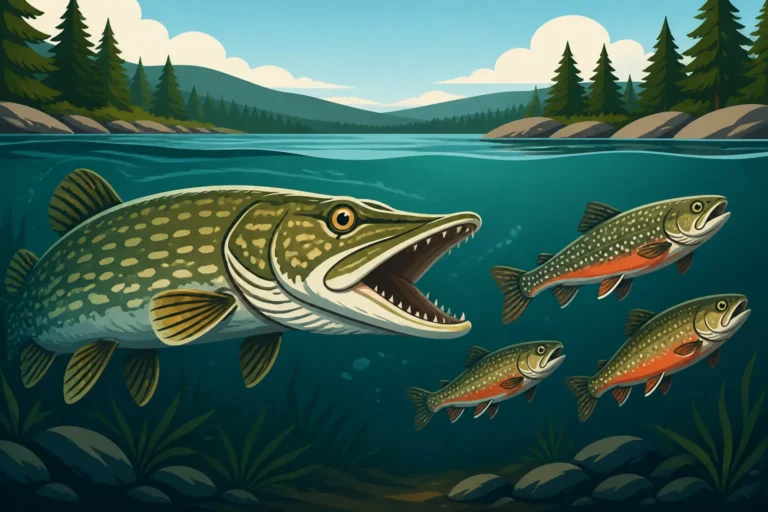
Perhaps the most notorious invasive fish in Maine is the northern pike. These highly predatory fish were illegally introduced into several Maine water bodies and pose a serious threat to native salmonid populations, especially landlocked salmon and brook trout. If you catch a northern pike, it's crucial to identify it correctly and understand the regulations.
Northern pike are unmistakable for their long, cylindrical, "gator-like" bodies, perfectly adapted for ambush predation. They have a distinctively duck-bill shaped snout and a large mouth filled with incredibly sharp, backward-pointing teeth. Their coloration is typically dark green to olive-brown on the back, fading to lighter sides with characteristic bean-shaped or bar-like yellowish-white spots or markings. The entire cheek is fully scaled, but the lower half of the gill cover is scaleless. Like the chain pickerel, their single dorsal fin is set very far back on the body, close to the deeply forked tail, allowing for explosive bursts of speed. They can grow to very large sizes, making them a powerful adversary on the line.
The presence of northern pike in a lake can drastically alter the food web, as they consume vast quantities of other fish, often outcompeting or preying directly on native species. If you catch a northern pike in Maine, particularly in a body of water where they are considered invasive, the regulations typically encourage or require their immediate removal. You should always consult the latest Maine fishing regulations, but often, there is no bag or size limit on pike in infested waters, actively promoting their harvest to protect native fish. It’s important to educate yourself on whether Are Invasive Fish in Maine Lakes? in your favorite fishing spots.
Other Potential Concerns: Dealing with the Unwanted
While northern pike are the most significant invasive threat in Maine's freshwater, anglers should also be aware of other potential non-native species that could appear or establish themselves. These can include certain types of carp, or other species that might be introduced through illegal stockings or bait bucket releases.
The general rule of thumb for any unusual or unfamiliar catch is: if you don't know what it is, don't release it without checking. Photograph the fish clearly, note where you caught it, and try to identify it using resources like the Maine Department of Inland Fisheries and Wildlife (MDIFW) website or a reputable field guide. Local bait shops are often knowledgeable sources, and sometimes even a quick search on Amazon for Maine fish identification guides can help you determine if your catch is a common species or something more concerning.
The key takeaway is vigilance. Anglers are often the first line of defense against invasive species. By being able to correctly identify fish, especially those that don't belong, you play a vital role in protecting Maine's cherished native fisheries for everyone. If you suspect you've caught an invasive species or found one in a new location, reporting it to the MDIFW is crucial. You can find contact information for wardens and biologists in our Maine Fish and Wildlife Warden Contact Information guide.
Tips for Accurate Fish Identification on the Water
Identifying fish on the fly, especially when you're excited about a catch, can be tricky. But with a little practice and knowing what key features to look for, you can become a pro at identifying your catch quickly and accurately. This isn't just about showing off; it's about being a responsible angler and understanding the species you're interacting with.
Anatomy 101: What to Look For
Before you even start looking at colors or spots, familiarize yourself with the basic anatomy of a fish. Knowing the names of different fins and body parts will make it much easier to use field guides or online resources for identification.
- Dorsal Fins: These are the fins on the fish's back. Many fish have one, but some, like cod and haddock, have three. Some fish, like bass, have two distinct dorsal fins, one spiny and one soft-rayed. The presence or absence of a notch between them is a key identifier.
- Adipose Fin: This is a small, fleshy, rayless fin located between the dorsal fin and the tail fin. Its presence is characteristic of salmonids (trout, salmon, char) and smelt, but absent in most other fish families like bass or perch.
- Pectoral Fins: These are the pair of fins located on either side of the fish, usually just behind the gills, analogous to arms.
- Pelvic Fins: These are the pair of fins located on the underside of the fish, typically beneath or behind the pectoral fins, analogous to legs.
- Anal Fin: This is the single fin on the underside of the fish, between the anus and the tail. Some fish, like cod, have two.
- Caudal Fin (Tail Fin): The tail fin's shape is a critical identifier. Is it deeply forked (like salmon or togue)? Square (like some brook trout or brown trout)? Rounded?
- Lateral Line: This is a sensory organ visible as a faint line running horizontally along the side of the fish, from head to tail. Its pattern (straight, curved, broken, continuous) is often a distinguishing feature, especially for bass.
- Maxillary: This is the upper jaw bone. How far back it extends relative to the eye is a primary difference between smallmouth and largemouth bass.
- Barbel: A whisker-like sensory appendage found on the chin of some fish, like cod and cusk, used to feel for food on the bottom.
Having a small, laminated fish identification card or a simple app on your phone can be a huge help here. Practice identifying these parts on fish you've caught or even just by looking at pictures online.
Coloration and Markings: Nature's Fingerprints
Coloration is often the first thing we notice about a fish, and while it can vary, specific patterns and hues are critical identifiers.
- Spots: Are they large or small? Red, black, or light? Are they ringed with a halo? Do they extend onto the fins? Brook trout have their distinct red spots with blue halos, while togue have lighter, irregular spots all over. Landlocked salmon have darker, often X-shaped spots mostly above the lateral line.
- Stripes/Bars: Striped bass are named for their prominent horizontal stripes. Smallmouth bass often have vertical bars, while yellow perch have strong vertical bands.
- Vermiculations: These are the worm-like patterns often seen on the backs of brook trout.
- Overall Hue: Is the fish predominantly silver, golden-brown, dark green, or mottled? This can give you a general category. Remember that fish coloration can change based on diet, water clarity, depth, and spawning season, so don't rely solely on color. Look for the patterns of color and markings.
For example, a strikingly beautiful fish with a dark green back, red spots with blue halos, and white-edged lower fins is almost certainly a brook trout. If it's a sleek, silvery fish with distinct dark horizontal stripes, you've likely got a striped bass.
Fin Counts and Shape: Subtle but Crucial Clues
Beyond just identifying the presence of fins, their exact count, shape, and structure can provide definitive identification.
- Tail Fin Shape: This is one of the most reliable features. Is it deeply forked (salmon, togue, mackerel, pollock)? Square or slightly emarginate (brook trout, brown trout)? Rounded (many panfish)?
- Dorsal Fin Continuity: Is the dorsal fin continuous, or is it separated into two distinct parts (as in bass)? Is there a deep notch in the middle? The separation of the spiny and soft-rayed dorsal fins is a key indicator for differentiating bass species.
- White Leading Edges: The brilliant white leading edges on the lower fins of a brook trout are an almost unmistakable characteristic. Brown trout lack this.
- Adipose Fin: Again, the presence of this small fleshy fin immediately tells you it's a salmonid or smelt, narrowing down your options significantly in Maine's waters.
If you have a digital camera or smartphone, snapping a quick, clear photo of the fish, especially its fins and overall body shape, can be incredibly helpful for later identification if you're unsure on the spot. Just be sure to handle the fish gently and return it to the water quickly if you plan to release it.
Mouth and Teeth: Predator Pointers
The mouth of a fish offers valuable clues about its diet and species.
- Mouth Size: Does the jaw extend past the eye? This is the classic differentiator between largemouth and smallmouth bass.
- Jaw Position: Is the mouth terminal (at the end of the snout), or subterminal (underslung, like a sucker)?
- Teeth: Are they sharp, needle-like (pickerel, pike)? Small and rasp-like (smelt)? Or are there pharyngeal teeth (in the throat), which are harder to observe?
- Chin Barbel: As mentioned, the presence and size of a barbel on the chin is a definitive characteristic for species like cod and cusk.
A quick look inside the mouth can confirm if you have a toothy predator or a more docile feeder. Just be cautious when examining the mouth of a fish, especially if you suspect it's a pike or pickerel – their teeth are incredibly sharp! A pair of long-nosed pliers or a fish gripper can be invaluable tools for safe handling and hook removal, items you can easily find on Amazon.
Resources for Further Identification
Even the most seasoned angler can encounter an unfamiliar fish from time to time. Luckily, there are excellent resources available to help you confirm your identification and deepen your understanding of Maine's aquatic life. Don't be shy about using them – every bit of knowledge makes you a more informed and responsible steward of our natural resources.
Field Guides and Online Databases
One of the best tools an angler can have, especially when exploring new waters or encountering new species, is a reliable fish identification guide.
- Printed Field Guides: These compact, waterproof books are designed to be taken with you into the field. They usually feature clear illustrations or photographs, descriptions of key identifying features, typical sizes, habitats, and sometimes even tips for fishing. Look for guides specifically focused on freshwater or saltwater fish of the Northeastern United States or, even better, Maine itself. A good field guide, perhaps from the Peterson Field Guide series, is something you can keep in your tackle box or boat bag.
- Online Databases and Websites: The internet offers a wealth of information. The Maine Department of Inland Fisheries and Wildlife (MDIFW) website is an invaluable official resource. They often have dedicated sections for fish species, including detailed descriptions, photos, and up-to-date regulations. Many other reputable angling websites and conservation organizations also maintain comprehensive fish identification databases that can be accessed via your smartphone on the water. Just be sure to cross-reference information from multiple reliable sources to ensure accuracy, especially since local names can sometimes be confusing (like "togue" for lake trout).
- Apps: There are a growing number of smartphone apps designed for fish identification. Some use image recognition technology (though these can sometimes be hit-or-miss), while others are digital versions of field guides. Having one on your phone can be incredibly convenient for quick look-ups right when you've made a catch.
When using any resource, remember to look for multiple distinguishing features rather than relying on just one. The combination of fin shape, spot patterns, mouth structure, and lateral line characteristics will give you the most accurate identification.
Local Bait Shops and Warden Services
Sometimes, there's nothing quite like getting advice from a local expert or a professional.
- Local Bait and Tackle Shops: These are often community hubs for anglers and can be treasure troves of local knowledge. The folks who run these shops usually spend a lot of time on the water, know the local fish populations inside and out, and are often happy to help you identify a tricky catch. If you have a photo, they might be able to confirm it on the spot. They can also provide insights into common local species and any recent changes in regulations or fish behavior. Don't hesitate to stop in and ask for help – it’s a great way to connect with the local angling community.
- Maine Fish and Wildlife Wardens/Biologists: For truly unusual or questionable catches, especially if you suspect it might be an invasive species or an out-of-place fish, contacting the MDIFW or a local game warden is the most responsible course of action. They are the ultimate authorities on Maine's fish populations and regulations. They can provide definitive identification and advise you on the proper handling of the fish. Reporting unusual catches or potential invasive species helps them monitor and protect Maine's aquatic environments. You can usually find contact information for your local warden service through the MDIFW website, and our guide Maine Fish and Wildlife Warden Contact Information can help you find who to call. Remember, they are there to help protect our resources and are a vital part of Maine's conservation efforts.
By leveraging these resources, you'll not only become more adept at identifying fish but also gain a deeper appreciation for the complex and beautiful aquatic world that Maine offers. Every identified fish is a step closer to becoming a truly knowledgeable and responsible angler.
Disclaimer
This article is for general informational purposes only and does not constitute professional advice. Laws, prices and regulations vary by location and change over time. Consult a qualified professional for guidance on your specific situation.