What Is the Difference Between a Char and a Trout?
You're out on a peaceful Maine lake, maybe casting for brook trout in a clear mountain stream, or perhaps trolling the depths of a vast expanse like Moosehead for a monster togue. You hook a fish, bring it in, and proudly declare your catch, only to hear another angler pipe up, "Nice char you've got there!" Suddenly, you're left scratching your head. Aren't brook trout, well, trout? And what even is a char? It's a common point of confusion, one that many of us Maine anglers have faced, trying to decipher the scientific classifications from the local vernacular. This guide is here to clear up that mystery, helping you understand the often subtle, but distinct, differences between char and trout so you can talk like a seasoned pro and appreciate the unique qualities of every fish you encounter in our beautiful state.
Understanding Trout: The Widespread Salmonid Family
When most people think of "trout," they picture sleek, spotted fish darting through cold, clear waters. It's a broad category that includes many beloved species across the globe. In Maine, we certainly have our share of trout species that are highly sought after by anglers. However, the term "trout" itself can be a bit of a catch-all, sometimes leading to scientific misnomers that even seasoned anglers might miss.
General Characteristics of True Trout
From a scientific standpoint, "true trout" generally belong to the genus Oncorhynchus (Pacific trout and salmon, including rainbow trout) or Salmo (Atlantic salmon and brown trout). These fish are typically known for their torpedo-shaped bodies, relatively large scales compared to their char cousins, and often sport a variety of spots that can range from black to red, sometimes with light halos. Their coloration varies widely depending on habitat, diet, and even breeding conditions, making identification a fun, albeit sometimes tricky, puzzle.
They are cold-water fish, thriving in oxygen-rich rivers, streams, and lakes, and their diets usually consist of insects, crustaceans, smaller fish, and even small rodents or amphibians if the opportunity arises. True trout are often quite resilient and adaptable, which is why species like rainbow trout have been successfully introduced to many waters outside their native ranges. In Maine, while we value our native fish, we also have excellent fishing for species that have been introduced and thrived.
Common True Trout Species in Maine
When we talk about true trout in Maine, the most prominent species that fall under this classification are the brown trout and, if we consider their close evolutionary ties and similar angling experience, rainbow trout.
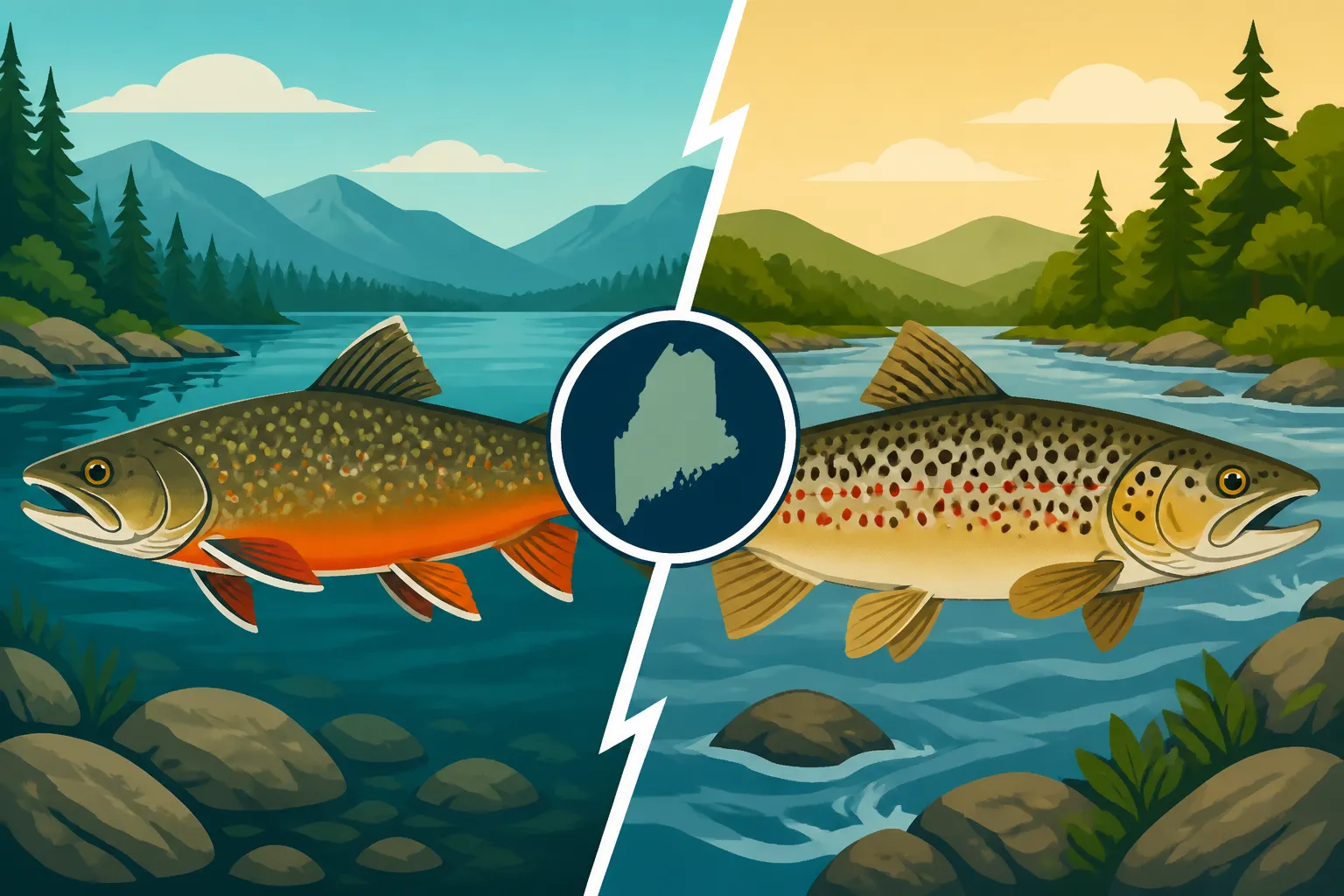
Brown trout (Salmo trutta) are a fantastic game fish, known for their wary nature and hard fights. They are easily recognized by their usually olive-brown to golden-brown backs, often fading to creamy flanks, and distinct dark spots, some with reddish halos. They tend to prefer slightly warmer water than some of our other trout and char species, making them adaptable to a wider range of habitats, from larger rivers to many of our productive lakes. You can often find them lurking near structure, waiting to ambush prey. Catching a large brown trout is a real trophy for many, and they offer a different challenge than some of our other cold-water species. For those looking to target them, understanding their habits can be key.
While less common than brown trout in terms of widespread wild populations, rainbow trout (Oncorhynchus mykiss) are regularly stocked in many Maine waters, providing excellent opportunities for anglers, especially in put-and-take fisheries. They get their name from the iridescent, reddish-pink band that often runs along their sides, especially prominent during spawning. Their bodies are typically silver with a scattering of small black spots. Many anglers enjoy pursuing rainbow trout due to their energetic fights and willingness to strike a variety of lures and flies. You might even find some excellent resources on Amazon for learning more about identifying these various species or picking up the right gear to target them.
Delving into Char: A Distinct Branch of Salmonids
Now, let's talk about char. This is where the confusion often begins, especially in Maine, because two of our most iconic and beloved cold-water species are, in fact, chars, not true trout, despite their common names. Scientifically, char belong to the genus Salvelinus. While they share a family with true trout (Salmonidae), they have distinct features that set them apart.
General Characteristics of Char
Chars are generally characterized by their smaller, deeply embedded scales, which can make their skin appear smoother or more "rubbery" to the touch compared to trout. They often have light spots (white, yellow, orange, or red) on a darker background, rather than dark spots on a lighter background, which is a common visual cue to differentiate them from many true trout. Their mouths are typically larger, extending back past the eye in many species, and they often have a more pronounced fork in their tail.
Habitat-wise, chars are kings of the cold. They thrive in the purest, coldest, most oxygenated waters, often found in northern latitudes, high-elevation lakes, and deep, clear glacial lakes. Their physiology is perfectly adapted to these frigid environments, allowing them to excel where other fish might struggle. Their diet is similar to trout, though they are often more opportunistic predators, especially larger specimens.
Common Char Species in Maine
This is the big reveal for many Maine anglers: our cherished brook trout and the mighty togue (Maine's name for lake trout) are both species of char.
The Illustrious Brook Trout (Salvelinus fontinalis)
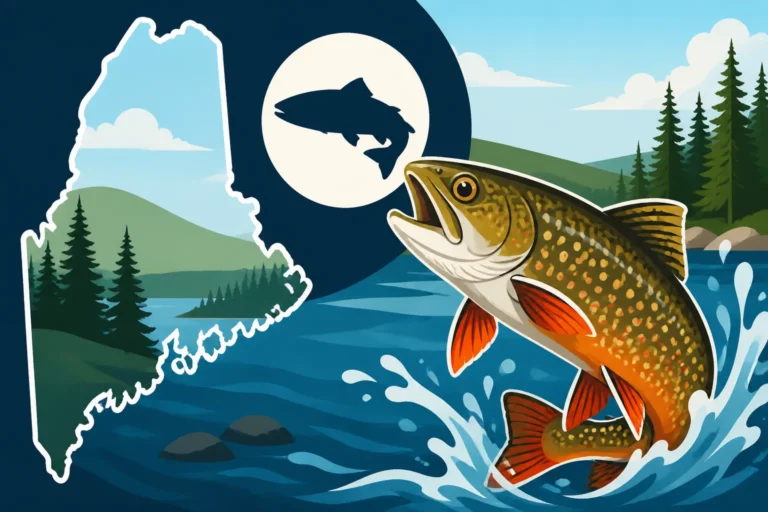
Yes, our state fish, the magnificent Brook Trout Fishing in Maine, is scientifically a char! This revelation often surprises anglers who have spent their lives calling them "brookies." They are instantly recognizable by their vibrant coloration: worm-like markings (vermiculations) on a dark olive-green or brown back, speckled sides with red spots often ringed with blue halos, and striking white leading edges on their lower fins, backed by black. These white edges, sometimes called "streamers," are a dead giveaway for identification.
Brook trout are quintessential cold-water residents. You'll find them in the pristine, cold streams, remote ponds, and headwater lakes across Maine, often congregating around springs or where feeder streams bring in fresh, cool water. They are incredibly sensitive to water quality and temperature, making their presence an indicator of a healthy ecosystem. Understanding the Brook Trout Native Range in Maine helps you appreciate why they are so vital to our state's angling heritage. They may not grow as large as some other species, but their beauty and aggressive strikes make them a truly prized catch. For tips on how to identify them quickly, check out How to Identify a Brook Trout.
The Deep-Dwelling Togue (Lake Trout, Salvelinus namaycush)
Another powerhouse of the char family found in Maine's deeper lakes is the togue. While many call them "lake trout," in Maine, we affectionately and accurately refer to them as "togue." These are true giants of the cold, deep waters. Togue have a generally dark grey to olive-green body, covered in light, irregular, worm-like spots or blotches. Their deeply forked tail is a key identification feature, along with their large mouths.
Togue prefer the deepest, coldest parts of our larger lakes, such as Moosehead Lake, Sebago Lake, and the Rangeley Lakes. They are built for hunting in the dark, cold abysses, often preying on smelt and other forage fish. Catching a large togue is a battle of endurance and strength, a true test for any angler. If you're wondering What Is a Togue the Same Fish as a Lake Trout? or Is a Togue Technically a Char?, the answer is a resounding yes on both counts. Their incredible adaptations to deep-water living make them a fascinating species to target, especially through ice fishing or deep trolling. You can find more specific details on Lake Trout and Togue Fishing in Maine for these powerful chars.
Spotting the Difference: Key Identifiers for Maine Anglers
Knowing the scientific classifications is one thing, but being able to differentiate between a char and a true trout when you've got one in your hands is what really counts on the water. While there can be some overlap, a few key visual and behavioral cues can help you make the distinction every time.
Physical Differences You Can See and Feel
The easiest way to tell a char from a true trout is often by their appearance, particularly their spots and scales.
- Spotting Pattern: This is perhaps the most reliable visual clue. True trout (like brown trout) typically have dark spots on a lighter body background. Think of a leopard's spots. Chars (like brook trout and togue) almost always have light spots (white, yellow, red, orange) on a darker body background. Imagine a starry night sky. The brook trout's red spots with blue halos are a classic example, as are the pale, irregular spots on a togue.
- Scales: Chars have much smaller, more deeply embedded scales that make their skin feel smooth, almost velvety or leathery. True trout have larger, more easily visible scales that can feel rougher to the touch. This difference is subtle but noticeable if you run your finger along the fish's flank.
- Tail Shape: While not universal, many char species, especially larger ones like togue, exhibit a more deeply forked tail compared to the straighter or slightly emarginate (notched) tails often seen on true trout. Brook trout, while not having as deep a fork as togue, still tend to have a less squared-off tail than many true trout.
- Leading Edge of Fins: For brook trout, those white leading edges on their lower fins (pectoral, pelvic, and anal fins), often followed by a thin black line, are an unmistakable char characteristic. No true trout in Maine will have this exact pattern.
- Mouth Size: Chars, particularly togue, often have a larger mouth that extends well past the eye, indicative of their predatory nature. While brown trout also have fairly large mouths, this feature is often more pronounced in chars.
Here's a quick comparison table to keep handy:
| Feature | True Trout (e.g., Brown Trout) | Char (e.g., Brook Trout, Togue) |
|---|---|---|
| Spotting | Dark spots on a lighter body | Light spots on a darker body |
| Scales | Larger, more visible, less embedded | Smaller, deeply embedded, smoother skin |
| Tail Shape | Straighter or slightly notched | Often more deeply forked (especially Togue) |
| Lower Fins | Typically uniform coloration | Often have white leading edges (especially Brook Trout) |
| Scientific Genus | Salmo (Brown), Oncorhynchus (Rainbow) | Salvelinus (Brook Trout, Togue) |
You can see how important these small details are when you're trying to figure out your catch. Sometimes, having a good field guide can make all the difference, and you can often find excellent, detailed ones, complete with illustrations, on Amazon.
Habitat and Behavior Differences
Beyond the physical appearance, chars and true trout often exhibit different preferences for their environment and how they behave within it. These ecological distinctions are just as crucial for anglers.
- Temperature Tolerance: Chars are generally more stenothermal, meaning they require a narrower range of very cold temperatures. This is why you find them in the deepest, coldest parts of lakes or in the purest, spring-fed streams. True trout, while still preferring cold water, can sometimes tolerate slightly warmer temperatures, giving them a broader distribution in certain systems. For example, during summer, togue will retreat to the cold abysses of lakes, while you might still find brown trout active in shallower, slightly warmer zones if there's enough oxygen.
- Depth Preference: Togue are the ultimate deep-water dwellers, perfectly adapted to the dark, cold pressures of profound lake basins. Brook trout, while found in diverse habitats, will also seek out the coldest pockets, whether that's a spring hole in a pond or the shade of an undercut bank in a stream. True trout like brown trout, while they can go deep, are often found in a wider variety of depths and structures, including rocky shoals, submerged timber, and along current seams in rivers. Understanding What Depth Do Togue Hold at in Summer? can be critical for success.
- Spawning Habits: While both are salmonids, their spawning behaviors can differ. Brook trout, for instance, are fall spawners that often seek out areas of groundwater upwelling in streams or shallow lake shoals to deposit their eggs. The exact timing and location can be very specific to their char lineage.
Knowing these subtle habitat preferences can give you a significant advantage when you're planning your fishing strategy. If you're fishing a deep, cold lake, chances are you're targeting char, while a mid-sized river might hold more true trout.
Why This Distinction Matters: Fishing Smart in Maine
So, why go through all the trouble of learning the difference between a char and a true trout? It's not just for impressing your fishing buddies with your newfound knowledge (though that's a nice bonus!). Understanding these distinctions directly impacts your fishing success, adherence to regulations, and appreciation for Maine's incredible aquatic biodiversity.
Regulatory Compliance and Conservation
Maine has specific regulations for different fish species, and these rules often differentiate between char and trout. For instance, bag limits, length limits, and even terminal tackle restrictions can vary. If you can't tell a brook trout (a char) from a brown trout (a true trout), you might inadvertently violate a regulation. Many of our waters have special regulations designed to protect specific populations, especially our native brook trout. Knowing what you've caught is the first step in ensuring you're fishing legally and contributing to conservation efforts. This is especially true for our beloved brook trout, which are a cornerstone of Maine's cold-water fisheries management. Always consult the Maine Fishing Regulations Explained before you head out, and pay close attention to the rules for specific water bodies, as they can vary greatly.
Targeted Fishing Strategies
Different fish, different techniques! Chars and true trout often respond to different baits, lures, and fishing presentations based on their typical diet, habitat, and behavior.
- For Togue (Char): Because they live in deep, cold water, you'll often use methods like deep trolling with downriggers or lead core lines, jigging heavy spoons or soft plastics, especially during ice fishing season. Their diet often includes smelt, so lures imitating these baitfish are key. Knowing How to Jig for Lake Trout in Winter can be incredibly effective.
- For Brook Trout (Char): These native beauties often fall for traditional fly patterns, small spinners, worms, or small minnows in streams and ponds. They can be found in shallower, more accessible waters, making them a favorite for fly anglers and those who enjoy exploring remote ponds. Understanding Best Bait for Brook Trout or Best Flies for Brook Trout in Maine Streams will increase your chances.
- For Brown Trout (True Trout): Brown trout can be elusive and often respond well to crankbaits, jerkbaits, larger streamers, or live bait fished near structure. They are often targeted during low light conditions or after dark. Their preference for certain types of cover and slightly different feeding habits means you might approach fishing for them differently than you would for a char.
By understanding what type of fish you're targeting, you can select the most appropriate gear and technique, saving you time and increasing your catch rate. Whether you're researching new lures on Amazon or tying your own flies, having this knowledge makes your efforts more focused.
Appreciating Maine's Biodiversity
Ultimately, understanding the difference between char and trout allows you to appreciate the incredible diversity of fish species that call Maine home. Each species has its own ecological niche, its own beauty, and its own unique challenge for the angler. From the vibrant brook trout to the powerful togue, and the cunning brown trout, our waters offer a rich tapestry of fishing experiences. Learning these distinctions enriches your entire outdoor experience, deepening your connection to the environment and the fish you pursue. The next time you land a fish, you'll be able to confidently identify it, knowing not just its common name, but also its scientific lineage and what makes it truly special in the wild waters of Maine.
Disclaimer
This article is for general informational purposes only and does not constitute professional advice. Laws, prices and regulations vary by location and change over time. Consult a qualified professional for guidance on your specific situation.