What Is a Slot Limit and Why Does Maine Use One for Stripers?
Many anglers, especially those new to the vibrant fishing scene here in Maine, often find themselves scratching their heads over terms like "slot limit." It's not as straightforward as a simple minimum or maximum size, and understanding why these specific rules exist, particularly for a beloved species like striped bass, can feel like trying to untangle a particularly stubborn fishing knot. This guide is here to unravel that mystery, explaining what a slot limit is and why Maine has embraced this strategy for managing its iconic striped bass population, helping you fish responsibly and successfully.
Understanding the Concept of a Fishing Slot Limit
When you head out onto the water, whether it's the vast expanse of the ocean or a quiet inland lake, you're bound to encounter various fishing regulations. Minimum sizes, bag limits, season dates – they all play a part in managing fish populations. But then there's the slot limit, a regulation that often sparks the most questions because it feels a little counter-intuitive at first glance.
What Exactly is a Slot Limit?
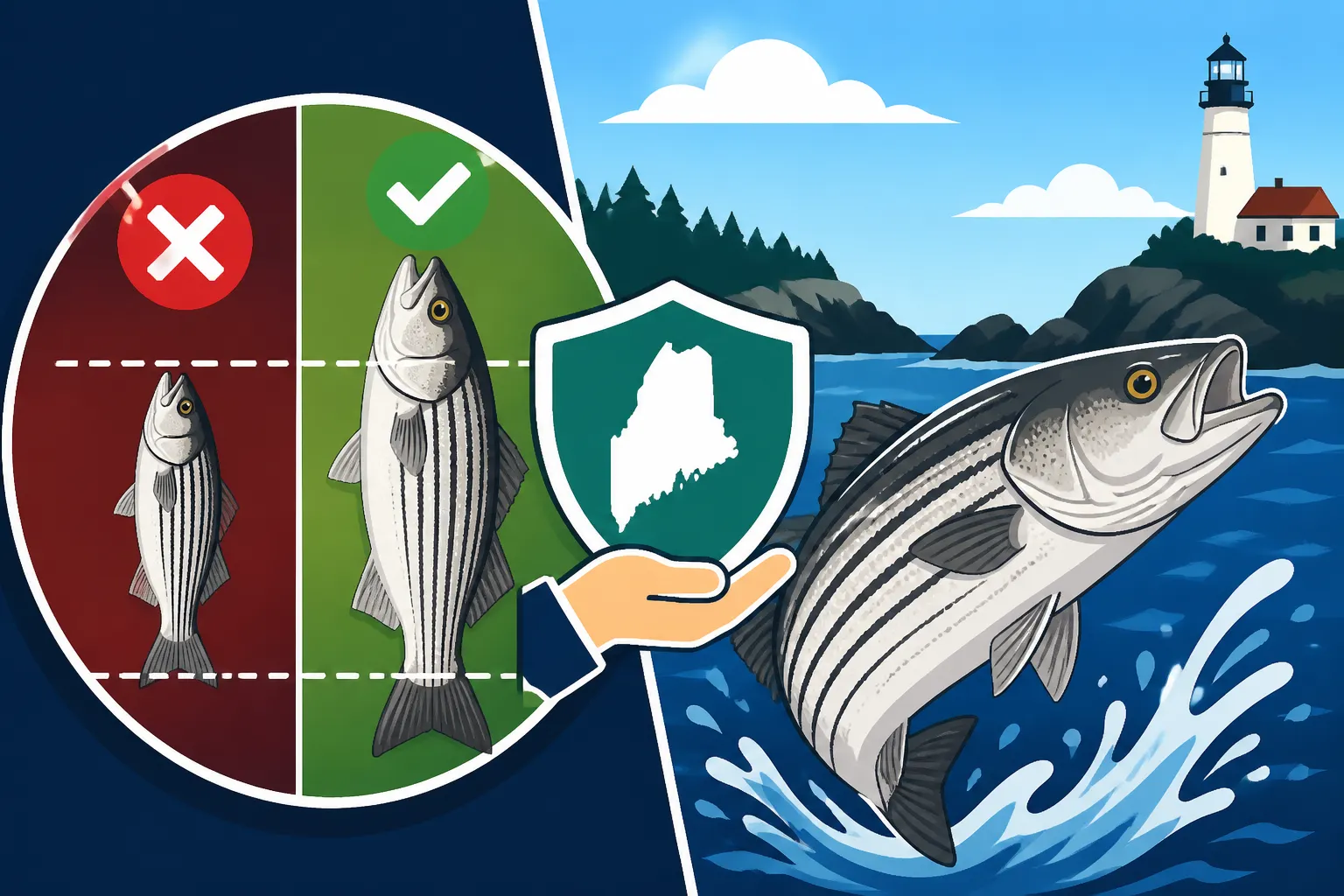
At its core, a slot limit is a fishing regulation that allows anglers to keep fish only within a specific size range, or "slot." Fish that are too small must be released, and, crucially, fish that are too large must also be released. Imagine it like a window: only fish that fit through that window can be kept. For instance, a slot limit might be "28 to 31 inches." This means you can keep any striped bass that measures between 28 and 31 inches (inclusive), but if you catch one smaller than 28 inches or larger than 31 inches, it has to go back into the water.
This differs significantly from a simple minimum size limit, where you can keep anything above a certain length, or a maximum size limit, which protects only the very largest fish. The slot limit is a more nuanced tool designed for very specific conservation goals. It's a way for fisheries managers to be highly selective about which fish are removed from the population.
How Slot Limits Differ from Minimum or Maximum Size Limits
To really grasp the power of a slot limit, it helps to see how it stands apart from other common regulations:
- Minimum Size Limit: This is probably the most familiar rule. You can only keep fish that are at least a certain length. The primary goal here is to allow fish to grow to maturity and spawn at least once, ensuring they have a chance to reproduce before being harvested. It protects the younger, smaller fish.
- Maximum Size Limit (or Reverse Slot Limit): Less common, this rule dictates that you can only keep fish below a certain length. The goal is often to protect the largest, most prolific breeders in a population, especially for species where older, larger fish contribute disproportionately to spawning success.
- Slot Limit: This combines aspects of both. By requiring the release of both very small and very large fish, it aims to:
- Protect young fish until they've had a chance to reproduce.
- Protect the largest, most genetically valuable, and often most prolific spawning fish.
- Allow for the harvest of mid-sized fish, which are often numerous and provide excellent table fare without significantly impacting the reproductive potential of the population.
Think of it as creating a "sweet spot" for harvest, allowing sustainable recreational fishing while safeguarding the future of the species.
The Biological Benefits of a Slot Limit
The elegance of a slot limit lies in its biological advantages. It’s a scientifically backed approach to fisheries management that can yield significant benefits for fish populations:
- Protecting Spawners: By requiring the release of large, mature fish, slot limits directly protect the most important breeders in the population. These big fish, especially females, produce a huge number of eggs and often have superior genetics, contributing disproportionately to the next generation. Removing them can have a much larger negative impact than removing several smaller, younger fish.
- Promoting Age Diversity: A healthy fish population isn't just about total numbers; it's about having a good mix of different age classes. By selectively harvesting mid-sized fish and protecting both the young and the old, slot limits help maintain a balanced age structure, making the population more resilient to environmental changes and disease.
- Enhancing Growth Rates: In some cases, removing a portion of the mid-sized fish can reduce competition for food, potentially allowing the remaining fish to grow faster and healthier. This isn't always the primary goal, but it can be a positive side effect in certain fisheries.
- Building Resilience: A population with robust spawning stock and diverse age classes is simply more resilient. It can better withstand fishing pressure, environmental fluctuations, and other challenges, ensuring that there are fish for future generations to enjoy. This proactive approach helps avoid the boom-and-bust cycles that can plague poorly managed fisheries.
It's a testament to careful scientific management, aiming to strike that delicate balance between recreation and conservation.
Why Maine Implements a Slot Limit for Striped Bass
Maine's coastal waters are a haven for striped bass, a fish that draws anglers from far and wide. However, the popularity of this species, combined with its migratory nature and historical overfishing, means that careful management is absolutely crucial. The slot limit for striped bass isn't just a random rule; it's a strategic decision rooted in the biology of the fish and the broader conservation efforts along the Atlantic coast.
Protecting the Spawning Stock
The primary reason Maine, along with other Atlantic states, uses a slot limit for striped bass is to protect the species' spawning stock. Striped bass are long-lived fish, and the largest, oldest females are the most prolific egg producers. They don't just lay more eggs; their eggs are often healthier, leading to higher survival rates for the larvae.
Imagine a fishing season where there's only a minimum size limit. Anglers would naturally tend to keep the biggest fish they catch, because, well, who doesn't want to show off a monster striper? But if everyone keeps the biggest fish, you quickly deplete the very individuals that are most vital for producing future generations. By imposing an upper limit on the size of fish that can be kept, the slot limit ensures that these "broodstock" fish remain in the water to continue their crucial role in reproduction. This safeguards the genetic diversity and reproductive capacity of the entire population, which is especially important for a species that faces significant fishing pressure. It's about thinking long-term, not just about the current season's catch.
Managing an Iconic but Vulnerable Species
Striped bass are an integral part of Maine's coastal ecosystem and fishing heritage. They are fierce fighters, beautiful fish, and a culinary delight, making them incredibly popular with anglers. However, their popularity also makes them vulnerable. They are pursued by both recreational and commercial fishermen along their entire migratory route from North Carolina to Maine. This widespread pressure means that robust, coordinated management across state lines is essential.
Maine, as one of the northernmost states in the striped bass range, plays a critical role in their migration. Our cool, oxygen-rich waters provide important feeding grounds as these fish move north in the warmer months. Historically, striped bass populations have faced significant declines due to overfishing, and while they've made a remarkable comeback, they are far from being out of the woods. The slot limit is a proactive measure to ensure that this iconic species doesn't regress to its past vulnerable state. It acknowledges that while we love to catch them, we love having them around even more.
Regional Conservation Efforts
It's important to remember that striped bass don't respect state borders. The fish you catch in Maine might have spawned in the Chesapeake Bay or the Hudson River. This migratory nature necessitates a coordinated management approach along the entire Atlantic coast. The Atlantic States Marine Fisheries Commission (ASMFC) is the body responsible for developing and coordinating the management plans for species like striped bass across multiple states.
The slot limit currently in place in Maine is largely a result of these regional management efforts, designed to ensure consistency and effectiveness across state jurisdictions. Changes to the slot limit, bag limits, or season dates are often made in response to coast-wide stock assessments that indicate whether the population is healthy, overfished, or recovering. For example, if a stock assessment shows that the spawning stock biomass is declining, states might collectively implement stricter slot limits or reduced bag limits to accelerate recovery. These decisions aren't made lightly; they involve extensive scientific research, public input, and collaboration among all the states involved. This shared responsibility is key to the long-term health of the striped bass fishery. If you're curious about the general rules, you can read up on Maine Fishing Regulations Explained.
Navigating Maine's Striped Bass Slot Limit in Practice
So, you understand why the slot limit is in place for Maine's striped bass, but how does it actually work when you're out on the water? Navigating these regulations takes a bit of preparation and careful attention, but it's entirely manageable. Being a responsible angler means not just knowing the rules, but also practicing good catch-and-release techniques to ensure the fish you do release have the best chance of survival.
Deciphering the Current Striped Bass Slot Limit
The specific slot limit for striped bass can change, so always check the most recent regulations published by the Maine Department of Inland Fisheries and Wildlife (MDIFW) or the Marine Resources. Typically, you'll find it clearly stated in terms of a minimum and maximum length.
Let's use a common hypothetical example: a slot limit of 28 to 31 inches. This means:
- If your striped bass is shorter than 28 inches: It must be immediately released, gently and carefully.
- If your striped bass is between 28 and 31 inches (inclusive): You are permitted to keep it, provided you haven't exceeded your daily bag limit (which is usually one fish per person per day within the slot).
- If your striped bass is longer than 31 inches: It must also be immediately released. These are often the invaluable "trophy" breeders that we want to keep in the water.
Measuring your fish accurately is paramount. Always measure from the tip of the snout to the end of the tail (with the tail compressed, meaning squeezed together to get the maximum length). A reliable measuring device is a must-have for any striped bass angler. Don't eyeball it; a few inches can be the difference between a legal fish and a violation.
It's also worth noting that Maine's regulations align with the regional management efforts, so checking the Maine Striped Bass Season and Limits and Maine Striped Bass Slot Limit Explained for the most up-to-date information is always your best bet before heading out.
Best Practices for Catching and Releasing Stripers Outside the Slot
Since you'll likely be releasing a fair number of fish when fishing under a slot limit, mastering proper catch-and-release techniques is vital for the health of the striped bass population. Even fish you intend to keep should be handled with care until you're certain they're within the legal slot.
Here are some key tips:
- Use Appropriate Tackle: Don't "out-tackle" the fish. Using gear that's too light can lead to excessively long fights, exhausting the fish and reducing its chances of survival after release. Match your rod, reel, and line to the size of stripers you expect to encounter.
- Minimize Fight Time: Bring the fish in as quickly as possible without "horsing" it. The longer a fish fights, the more lactic acid builds up in its muscles, leading to exhaustion and a higher mortality rate post-release.
- Handle with Care:
- Keep it Wet: Try to keep the fish in the water as much as possible, especially if you're just measuring. If you must bring it aboard, use a wet net or wet hands. Never lay a fish on hot, dry surfaces.
- Support Its Body: If you lift a striper, support its body horizontally, especially larger fish. Holding a large fish vertically by the jaw can damage its internal organs and spine.
- Avoid the Gills and Eyes: Never put your fingers into a fish's gills or squeeze its eyes.
- Use Barbless Hooks or De-hookers: Crushing the barb on your hook makes removal much easier and quicker. If you don't use barbless hooks, a de-hooking tool (like a long-nosed pliers or a specialized de-hooker) can help you remove hooks without ever touching the fish, especially if it's deeply hooked. This can be a real lifesaver for the fish.
- Cut the Line (if deeply hooked): If a fish is deeply hooked in the gills or gut and you can't remove the hook easily without causing major damage, cut the line as close to the hook as possible. Studies show that hooks left in can often rust out or be encapsulated by the fish's body, giving it a better chance than trying to violently remove a deeply embedded hook.
- Revive if Necessary: If a fish looks sluggish upon release, gently hold it upright in the water, facing into the current (or move it gently back and forth to force water over its gills) until it regains strength and swims away on its own.
Essential Gear for Responsible Striper Fishing
Having the right gear isn't just about catching fish; it's about doing so responsibly and sustainably, especially when adhering to slot limits.
Here's a quick checklist of essential gear for striped bass fishing in Maine, with an eye towards responsible catch-and-release:
| Gear Item | Purpose | Why it's Important for Slot Limits |
|---|---|---|
| Measuring Tape/Board | Accurate measurement of fish length. | Crucial for determining if a fish is within the legal slot. |
| De-hooking Tool | Quickly and safely remove hooks from a fish's mouth without excessive handling. | Minimizes injury and handling stress, especially for released fish. |
| Landing Net (Rubberized) | Safely land fish, especially larger ones. Rubberized nets protect fish slime coat better than knotted nylon. | Reduces injury and keeps fish calmer during measurement and release. |
| Fishing Pliers/Cutters | For cutting line if a fish is deeply hooked, or for crimping barbs. | Essential for safe hook removal and minimizing stress on fish. |
| Strong Rod & Reel | Allows for quicker fights, reducing fish exhaustion. | Faster landing means less stress, improving post-release survival. |
| Circle Hooks | Often hook in the corner of the mouth, reducing gut-hooking. | Greatly increases the survival rate of released fish. |
| Cooler with Ice | If you plan to keep a legal fish, it ensures quick and ethical dispatch and preservation. | Keeps your legal catch fresh and respects the resource. |
| Sunscreen & Hat | Protect yourself during long days on the water. | A comfortable angler is a more focused and responsible angler! |
You can find many of these items, like a quality tape measure, de-hooking tools, or even barbless hooks, readily available through online retailers like Amazon or at your local tackle shop here in Maine. Having these tools on hand means you’re prepared for any scenario and can ensure that both the fish you keep and the fish you release contribute to a thriving fishery.
The Future of Striped Bass Management in Maine
The world of fisheries management is anything but static. Fish populations ebb and flow, environmental conditions change, and scientific understanding evolves. For a species as important and widely pursued as the striped bass, managers are constantly reviewing data, consulting with experts, and listening to anglers to ensure the regulations remain effective.
Adapting to Changing Fish Populations
The slot limit for striped bass isn't set in stone. It's a dynamic tool that can be adjusted as needed to respond to the health of the stock. For instance, if a coast-wide stock assessment indicates a decline in the striped bass population, particularly in the number of spawning females, regulators might decide to narrow the slot limit, making it harder to keep fish, or even eliminate the slot for a period to protect more fish. Conversely, if the population is booming and the spawning stock is robust, there might be discussions about widening the slot or increasing bag limits, allowing for more harvest.
These changes are often the result of complex modeling and analysis by biologists, factoring in everything from spawning success to recruitment (how many young fish survive to maturity) to fishing pressure from both recreational and commercial sectors. Decisions are typically made at the regional level by the Atlantic States Marine Fisheries Commission, with each state, including Maine, then implementing the agreed-upon measures. This adaptive management approach is critical for ensuring that regulations remain relevant and effective in the face of natural fluctuations and human impact. It's why staying updated on the Maine Fishing Regulations Explained each year is so important.
The Role of Anglers in Conservation
Anglers are not just participants in the fishery; they are vital stakeholders and, indeed, stewards of the resource. Our actions on the water, both individually and collectively, have a direct impact on the future of striped bass and other fish species. Understanding the purpose behind regulations like the slot limit is the first step towards embracing a conservation-minded approach to fishing.
Here's how anglers play a crucial role:
- Compliance: Adhering strictly to slot limits, bag limits, and season dates is paramount. Each fish released outside the slot, especially a large breeding female, is a contribution to future generations. Fishing without a license or outside the regulations, as discussed in Fishing Without a License in Maine, can undermine conservation efforts.
- Responsible Catch and Release: As discussed earlier, using proper techniques for handling and releasing fish significantly increases their survival rates. This ensures that the fish you send back into the water can continue to grow and reproduce.
- Reporting Violations: If you witness illegal fishing activity, reporting it to Maine's wardens helps protect the resource for everyone. Poaching and disregard for regulations can quickly undo years of conservation efforts.
- Providing Feedback: Fisheries managers often seek public input when considering changes to regulations. Participating in surveys, attending public meetings, or providing constructive feedback based on your experiences on the water can help shape future policies.
- Supporting Conservation Organizations: Many local and national organizations work to protect striped bass habitat, conduct research, and advocate for sustainable management. Supporting them with your time or resources is another way to contribute.
Ultimately, the slot limit for striped bass in Maine is a partnership between regulators and anglers. It's a recognition that by making a small sacrifice today – by releasing that oversized trophy fish – we are investing in a healthier, more vibrant fishery for tomorrow. It's about respecting the resource that gives us so much joy and ensuring that the thrill of hooking a powerful striper remains a cherished part of the Maine fishing experience for generations to come.
Disclaimer
This article is for general informational purposes only and does not constitute professional advice. Laws, prices and regulations vary by location and change over time. Consult a qualified professional for guidance on your specific situation.