Where Do Blueback Trout Live in Maine?
For many anglers, the thought of landing a blueback trout in Maine is like chasing a ghost – a beautiful, shimmering specter of a fish that seems to exist more in legend than in reality. You might have heard whispers of these incredibly rare and stunning fish, but trying to pinpoint where they actually live can feel like an impossible task. This guide is here to unravel some of the mystery, helping you understand not just their habitat requirements, but also the crucial role you play in their conservation if you're ever lucky enough to venture into their remote, fragile world.
The Elusive Nature of Maine's Blueback Trout
Maine is a state renowned for its incredible coldwater fisheries, but even within that rich tapestry, the blueback trout stands apart. They're a fish of myth and legend, captivating anglers with their striking appearance and extreme rarity.
A Brief History and Identification
So, what exactly is a blueback trout? Scientifically, it's considered a subspecies of the Arctic Char ( Salvelinus alpinus oquassa ), making it a close cousin to the brook trout and lake trout, both of which are also chars. Historically, bluebacks were more widespread in the deep, cold lakes of Maine, but their numbers have dwindled drastically over time. Visually, they are absolutely breathtaking. When you think of a brook trout, you picture vibrant red and orange spots, maybe some worm-like markings. Bluebacks, however, often display a stunning, almost iridescent blue hue along their backs, transitioning to silver sides and a white belly. Their fins can have a reddish tint, edged in white. They are generally smaller than many other trout and salmon species found in Maine, typically ranging from 6 to 12 inches, though larger specimens have been caught. This distinct coloration is how they earned their evocative name, and it's what makes them such a sought-after, albeit rarely seen, prize. For anyone interested in identifying different Maine fish species, a good field guide, perhaps one you can find on Amazon, is an invaluable tool.
Why Are They So Rare and Special?
The rarity of blueback trout isn't just about their limited numbers; it's deeply tied to their incredibly specific and demanding habitat requirements. Unlike the more common Brook Trout Fishing in Maine or even Landlocked Salmon Fishing in Maine which can tolerate a wider range of conditions, bluebacks are hyper-specialized. They need lakes that are exceptionally deep, consistently cold year-round, and possess very high levels of dissolved oxygen, particularly in the deeper parts of the water column during summer. These are conditions typically found in ancient, glacial lakes, often nestled in remote, pristine wilderness areas far from human disturbance. Their survival depends on these delicate ecological balances. They are also highly sensitive to competition from other fish species, especially those introduced by humans. If a lake gets too warm, too shallow, or introduces aggressive non-native species, the bluebacks simply cannot thrive, or even survive. This extreme pickiness makes them incredibly vulnerable to environmental changes and emphasizes why their remaining habitats are so precious.
The Thrill of the Chase
For dedicated anglers, the allure of the blueback trout isn't about filling a creel; it's about the profound connection to wilderness, the challenge, and the sheer privilege of encountering such a rare and beautiful creature. Many anglers will spend years, even a lifetime, exploring the remote corners of Maine, hoping for just a glimpse. It's not about the fight, which is often described as subtle given their size, but about the story, the journey, and the knowledge that you've found a truly special place. The pursuit requires a deep respect for nature, an understanding of Maine Fishing Regulations Explained, and an acceptance that success is far from guaranteed. It’s an adventure that demands patience, resilience, and a love for the wild heart of Maine.
Pinpointing Their Sanctuary: Specific Lake Characteristics
If you're wondering Where Do Blueback Trout Live in Maine?, the answer isn't a simple list of popular fishing spots. Their existence is tied to some very specific, often subtle, environmental factors.
The Ultra-Cold, Ultra-Deep Requirements
Blueback trout are coldwater stenotherms, meaning they have a very narrow temperature range in which they can survive and reproduce. This translates to an absolute need for deep, thermally stratified lakes. During the warmer months, these lakes form distinct layers: a warmer surface layer (epilimnion), a transition zone with rapidly changing temperatures (thermocline), and a deep, cold, stable layer (hypolimnion). Bluebacks must retreat to this hypolimnion during summer to escape lethal surface temperatures. What's more, this deep, cold water must also be rich in dissolved oxygen. Some deep lakes can become anoxic (lacking oxygen) at depth during summer, making them unsuitable. The few lakes that support bluebacks are characterized by their remarkable clarity, low nutrient levels (oligotrophic), and often, a small ratio of surface area to maximum depth, allowing for that crucial cold, oxygenated deep-water refuge. These aren't the bustling waters you'd find on a typical list of Best Fishing Lakes in Maine.
Geology and Geography: Where to Find the "Right" Water
The geography of Maine, shaped by ancient glaciers, played a significant role in creating these unique habitats. Many of the lakes that historically or currently support blueback trout are located in the most remote, mountainous, and heavily forested regions of the state, primarily within what is known as the "North Zone" for fishing regulations. These are often small to medium-sized ponds, sometimes called "headwater ponds," meaning they are at the very top of a watershed, fed by springs and small streams rather than large rivers. The surrounding wilderness acts as a natural buffer, protecting them from runoff and excessive warming. Think of deep basins carved into granite, surrounded by dense spruce and fir forests. Access to these areas can be challenging, often requiring long hikes, canoe portages, or even float plane access. This natural isolation has inadvertently been a key factor in their survival. Understanding the distinction between the Maine North Zone vs South Zone Fishing Rules is critical when considering any remote fishing trip, especially for sensitive species.
Names Whispered in the Wind: Known Habitats
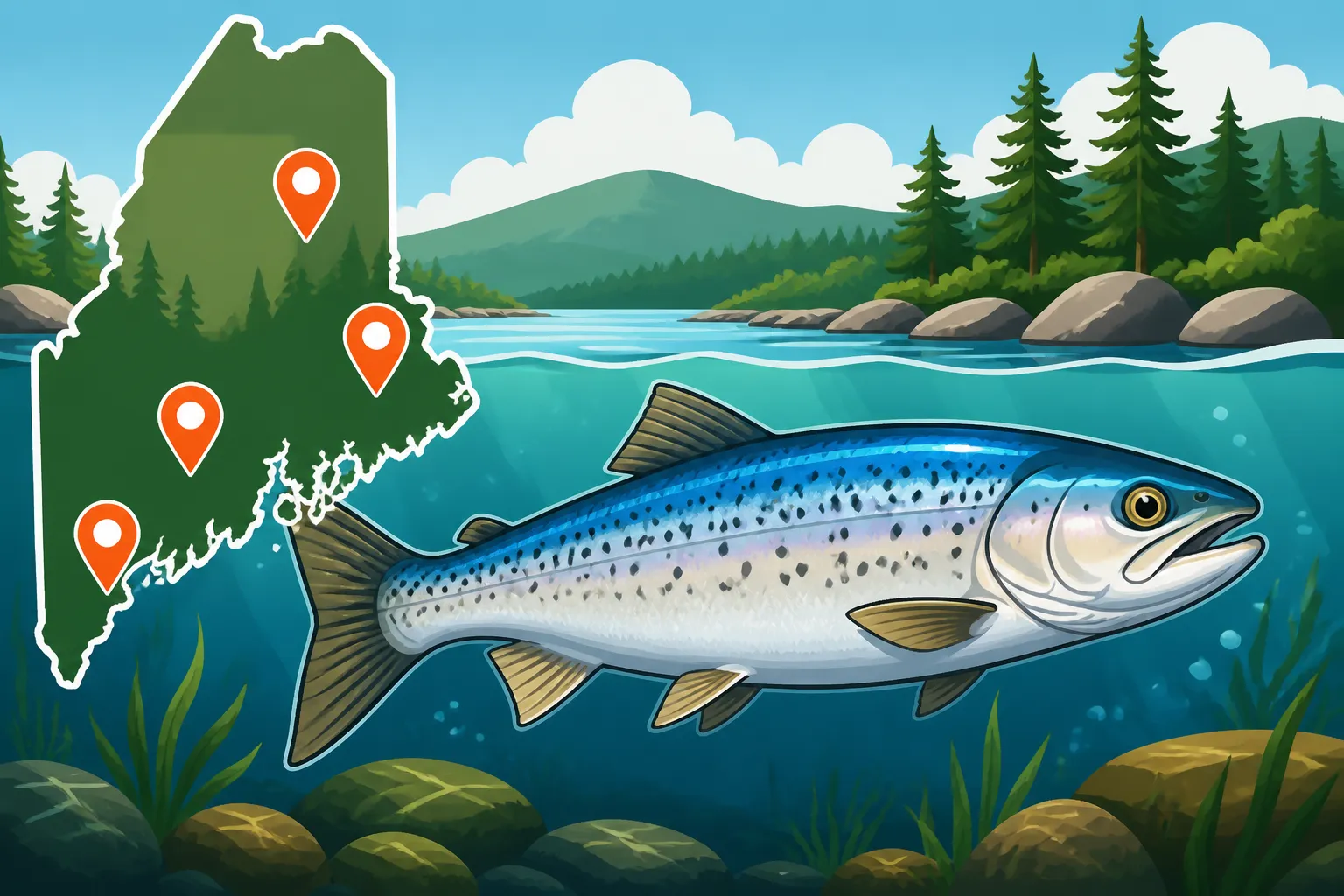
While state agencies generally avoid publicizing specific blueback trout waters to protect them, it's widely understood that their remaining populations are confined to a very limited number of remote ponds in northern Maine. Historically, some of these char populations were found in lakes like Floods Pond, which serves as a municipal water supply, hence its extreme protection and limited access. Other whispers point to specific, isolated waters in Aroostook County or the western mountains. It's important to understand that these aren't "fishing holes" in the conventional sense. They are delicate ecosystems under constant monitoring. Anglers who are passionate about seeking out these rare fish often rely on decades of local knowledge, extensive research, and a commitment to venturing far off the beaten path. This extreme discretion is a cornerstone of responsible angling for species this sensitive. Rather than asking for a definitive list, it's more about understanding the type of water they inhabit and then using tools like detailed topographical maps (which you can often find a wide selection of on Amazon) to identify potential, but still extremely rare, candidates.
Here's a quick comparison of general trout lakes versus blueback trout havens:
| Feature | General Maine Trout Lake | Blueback Trout Haven |
|---|---|---|
| Depth | Varies; can be shallow to moderately deep | Consistently very deep |
| Water Temperature | Wide range; warmer surface temps in summer | Stays ultra-cold (below 55°F) at depth year-round |
| Dissolved Oxygen | Adequate for various trout species | Critically high levels required, especially at depth |
| Location | Accessible; near towns, roads | Extremely remote; wilderness settings, headwaters |
| Nutrient Level | Mesotrophic to Oligotrophic | Oligotrophic (low nutrients, very clear water) |
| Competition | May have various introduced species (bass, pickerel) | Highly sensitive to competition; few other species present |
| Access | Easy, public boat launches | Challenging; hike, paddle, bushwhack, or fly-in |
| Angling Focus | Catching various species for sport/consumption | Conservation, rare sighting, catch & immediate release |
Conservation and the Future of Maine's Bluebacks
The very existence of blueback trout in Maine hangs in a delicate balance. Their future is inextricably linked to the actions of conservationists, scientists, and, crucially, responsible anglers.
Strict Protections and Angler Responsibilities
Due to their extreme rarity and vulnerability, blueback trout are afforded the highest level of protection under Maine's fishing regulations. These special regulation waters are almost universally designated as "catch-and-release only" for all fish species, or have highly restrictive gear limits, often allowing only artificial lures or flies. The intent is to minimize any stress or harm to these precious fish. It’s absolutely vital that any angler venturing into these sensitive areas adheres strictly to Maine Fishing Regulations Explained, including specific rules for Maine Catch and Release Only Waters List. This means using barbless hooks, handling fish minimally with wet hands, and releasing them as quickly as possible without removing them from the water. Even a brief exposure to air can be fatal for cold-stressed fish. Moreover, practicing good wilderness ethics, such as "Leave No Trace" principles, is paramount to preserving the pristine conditions these fish require.
The Role of Science and Management
The Maine Department of Inland Fisheries and Wildlife (MDIFW) plays a critical role in the ongoing monitoring and management of blueback trout populations. This includes scientific surveys to assess population health, genetic studies to understand their unique lineage, and habitat protection initiatives. Efforts are continuously made to prevent the introduction of invasive species, which pose an existential threat to bluebacks by outcompeting them for food and habitat. Sometimes, careful interventions like barrier placements or even controlled eradication of competing species might be considered in extreme cases to safeguard these native char. This scientific vigilance, coupled with strict regulatory frameworks under the Maine Fishing License Guide, is the backbone of blueback conservation. These aren't just fish; they're living relics of Maine's glacial past, and their survival is a testament to dedicated conservation efforts.
Becoming a Steward for Maine's Rarest Trout
For anglers, becoming a steward for blueback trout means more than just following the rules; it means being an advocate and an educator. It involves understanding why these fish are important, sharing that knowledge responsibly, and leading by example. This might mean keeping precise locations to yourself if you're fortunate enough to find them, to prevent overfishing or increased pressure. It also means actively supporting conservation organizations and initiatives aimed at preserving coldwater habitats. If you do encounter a blueback, appreciate it for the incredible gift that it is, snap a quick photo if you must (while the fish is still in the water!), and then release it quickly and gently. Your actions, or inactions, have a direct impact on the survival of these truly magnificent and rare creatures. Respecting all Maine Fishing Laws for Beginners is a great start, but for bluebacks, an extra layer of caution and reverence is required.
Preparing for a Journey to Blueback Country
Venturing into blueback trout habitat is less about a casual fishing trip and more about a wilderness expedition. It requires thorough preparation, respect for the environment, and a deep understanding of the unique challenges involved.
Essential Gear for Remote Expeditions
If you plan to explore the remote corners of Maine where blueback trout might still exist, proper gear is not just a convenience, it's a necessity. You'll need reliable navigation tools, whether it's a high-quality GPS unit or detailed topographical maps (perhaps a robust, waterproof map from Amazon) and a compass, and the skills to use them. Cell service is often non-existent in these areas. Layered clothing suitable for rapidly changing weather, even in summer, is crucial. Think waterproof outerwear, warm base layers, and sturdy hiking boots. A reliable water filter or purification tablets are essential, as is enough food and emergency supplies. For fishing, a lightweight pack rod and reel with a simple setup for small lures or flies is all you'll need. Remember, the focus is on the experience and conservation, not hauling in a trophy. Consider a small, ultralight fishing kit for these remote adventures, easily transportable in a backpack that you might find on Amazon.
Navigating Regulations and Access
Before you even dream of casting a line, you absolutely must research the specific regulations for the water body you intend to visit. Many of these remote ponds fall under special regulations that supersede the Maine General Fishing Law Definition Explained. You can often find detailed information by consulting the Maine Department of Inland Fisheries and Wildlife website or their annual fishing law book. Learning How to Find Maine Fishing Regulations for a Specific Lake is non-negotiable. Access can also be a significant hurdle. Some remote ponds might be surrounded by private land, requiring permission from landowners. Others are within public lands like Baxter State Park or Public Reserved Lands, which may have their own unique access rules, camping permits, or even daily entry limits. Always check these details well in advance to avoid disappointment or, worse, trespassing.
The Mindset of the Responsible Angler
Finally, approaching blueback trout country requires a particular mindset. It’s one of deep respect, humility, and patience. The likelihood of catching a blueback trout is incredibly slim, even in known habitats. The true reward lies in the journey itself: the pristine wilderness, the challenge of self-reliance, and the chance to witness an ecosystem largely untouched by human interference. Be prepared for solitude, for bugs, and for the possibility of seeing no other person for days. Embrace the "Leave No Trace" principles wholeheartedly – pack out everything you pack in, and leave the environment exactly as you found it. The cold, clear waters that sustain blueback trout are a finite and precious resource. By adopting this mindset, you not only increase your chances of having a profound wilderness experience, but you also become a true guardian of Maine's rarest and most beautiful fish. Consider reading up on Best Remote Ponds for Brook Trout in Northern Maine for inspiration, keeping in mind the additional care required for blueback habitat.
Disclaimer
This article is for general informational purposes only and does not constitute professional advice. Laws, prices and regulations vary by location and change over time. Consult a qualified professional for guidance on your specific situation.