Landlocked Salmon Size Slot in Maine Explained
Navigating the ins and outs of fishing regulations can feel like a maze, especially when you encounter terms like "size slot." It's not just about knowing if you need a license; it's about understanding the specific rules for each fish species, in each waterbody, and what those rules mean for how you enjoy your time on the water. For us anglers who love chasing Maine's spirited landlocked salmon, grasping the concept of a "size slot" is absolutely crucial not just for staying legal, but for doing our part to protect these magnificent fish. This guide is here to demystify the landlocked salmon size slot in Maine, helping you understand why it exists, what it entails, and how to confidently adhere to it on your next fishing adventure.
What is a Size Slot Limit, Really?
Let's cut right to it: a size slot limit isn't just another arbitrary rule. It's a carefully crafted conservation tool used by fisheries managers to achieve specific goals, often to protect breeding stock, promote larger fish, or manage the overall health of a fish population. Think of it as a Goldilocks zone for fish – some are too small to keep, some are too big, but some are just right.
Moving Beyond Minimums and Maximums
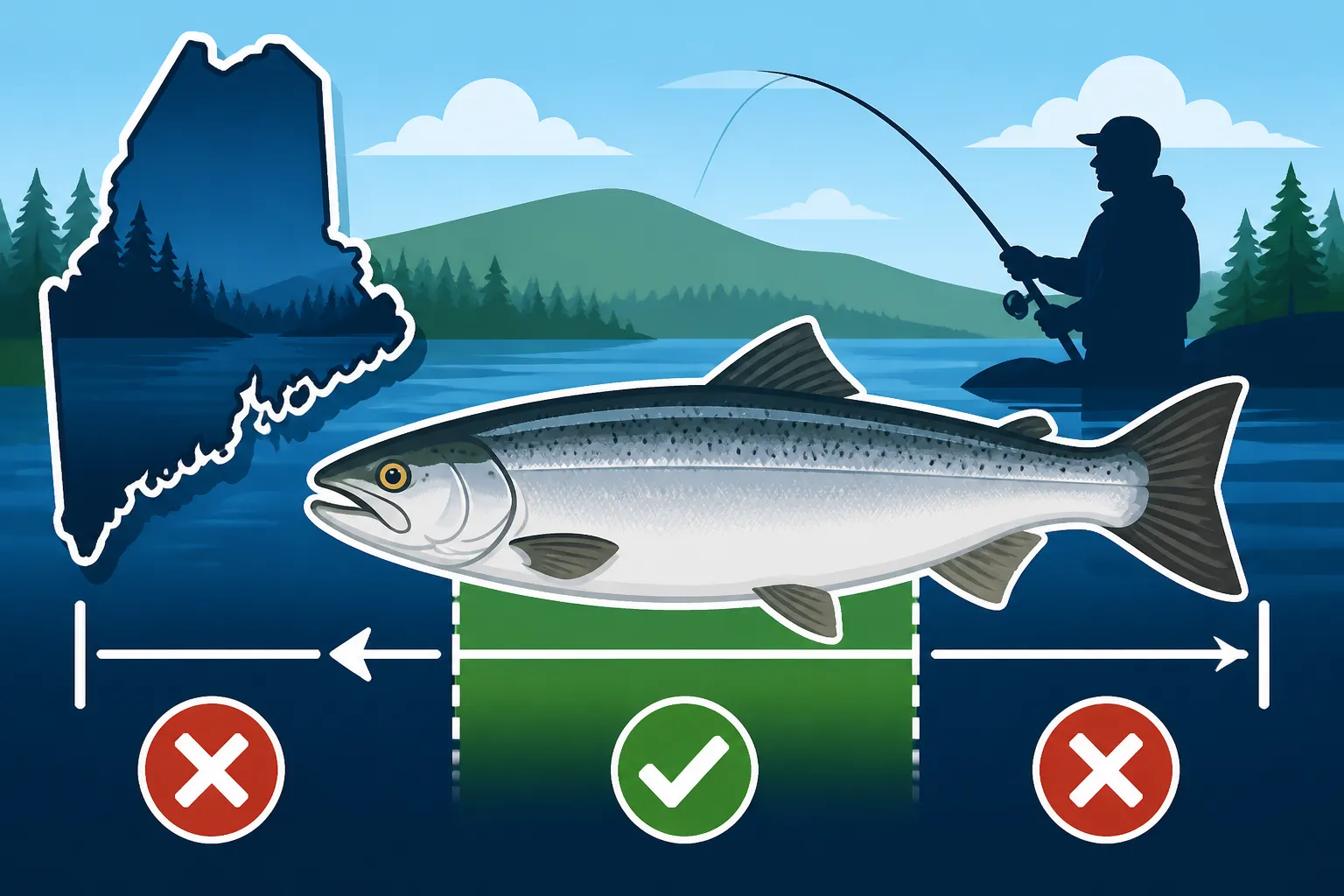
Most anglers are familiar with minimum length limits (you can't keep a fish shorter than X inches) or maximum length limits (you can't keep a fish longer than Y inches). A slot limit, however, combines these ideas into a specific "slot" or range of sizes that are legal to harvest. Fish that fall below the minimum length must be released, and, crucially, fish that fall above the maximum length of the slot also must be released.
For example, a typical slot limit might say something like "14 to 18 inches." This means any fish shorter than 14 inches must go back, any fish longer than 18 inches must go back, and only fish between 14 and 18 inches can be kept. It's a bit different than just a minimum, and it takes a moment to wrap your head around if you're used to simpler rules. This approach allows biologists to fine-tune the removal of fish from the population, ensuring that the smaller, developing fish have a chance to grow, and the largest, most prolific breeders are protected to continue spawning. It's all about balancing angler opportunity with long-term ecological health. You'll find these nuances explained further in the broader Maine Fishing Regulations Explained.
Why Slot Limits for Landlocked Salmon in Maine?
Maine's landlocked salmon are a prized sport fish, known for their powerful runs and aerial acrobatics. They're a significant part of our freshwater fishing heritage and a huge draw for anglers. The decision to implement slot limits for these specific fish is often driven by the desire to protect the species' reproductive potential and foster a healthy age structure within the population.
By releasing the largest salmon, which are typically the most successful breeders, the fishery ensures that the genes for strong, healthy growth continue to be passed on. Simultaneously, protecting the smaller salmon allows them to grow into that desirable "slot" size, providing a consistent angling experience. It's a proactive measure to prevent overharvesting of key demographic groups within the salmon population, ensuring that these iconic fish remain plentiful for generations of anglers to come. This careful management is a cornerstone of maintaining Maine's fantastic Landlocked Salmon Fishing in Maine opportunities.
Maine's Landlocked Salmon Size Slot Explained
Now, let's get down to the brass tacks of what the landlocked salmon size slot typically looks like in Maine. It's vital to remember that regulations can, and often do, vary by specific lake or river, so always double-check the current rulebook for the waterbody you plan to fish. However, there's a "General Law" that often applies unless superseded by a special regulation.
The General Law for Landlocked Salmon
Under Maine's General Fishing Laws, the typical rule for landlocked salmon states:
"Daily Bag Limit: 1 fish; Minimum Length: 14 inches; all salmon greater than 18 inches must be immediately released."
Let's break this down:
- Daily Bag Limit: 1 fish. This means you can only keep one landlocked salmon per day. No matter how many fall within the slot, you can only bring one home.
- Minimum Length: 14 inches. If you catch a salmon that is shorter than 14 inches, it's considered too young or too small, and you must release it immediately and carefully.
- All salmon greater than 18 inches must be immediately released. This is the "upper" part of the slot. If you hook into a true trophy salmon that measures 18.01 inches or longer, it's considered a valuable breeder, and it must go back into the water.
So, combining these, you can only keep one landlocked salmon per day, and that fish must measure between 14 and 18 inches, inclusive. This means a 14-inch salmon is legal to keep, an 18-inch salmon is legal to keep, but a 13.9-inch one or an 18.1-inch one is not. It's a tight window, and it demands precise measuring. This is the general guideline, but again, always refer to the specific rules for your chosen fishing location, as some lakes have unique regulations designed to meet their specific management goals. For a general overview of limits, check out Maine Fish Bag Limits Guide.
Navigating Special Regulations and Exceptions
While the General Law provides a good baseline, Maine is famous for its diverse waters, and many of them have "Special Regulations" that override the general rules. These special regulations are often put in place for specific management reasons, like protecting a recovering population, creating a trophy fishery, or dealing with unique ecological conditions.
For landlocked salmon, a special regulation might modify the slot limit, change the bag limit, or even designate a water as "catch and release only" for salmon. For example, some lakes might have a slot like "12-16 inches" or permit two fish if they meet certain criteria, while others might have a slightly different maximum length. It's also common to see these rules tied to specific seasons or even gear types. This is why having the latest Maine fishing law book, or using the online resources from the Maine Department of Inland Fisheries and Wildlife (MDIFW), is non-negotiable before you cast a line. Never assume the General Law applies everywhere; always verify the rules for your target waterbody. It's also worth noting that rules can sometimes differ between the Maine North Zone vs South Zone Fishing Rules.
Consider a hypothetical scenario: you're planning a trip to a certain lake known for its salmon. You might consult the MDIFW regulations and find that for this particular lake, the landlocked salmon slot limit is actually 12 to 16 inches, with a daily bag limit of two fish. This is a significant departure from the General Law. If you weren't aware, you could inadvertently break the law by keeping an 18-inch salmon that would have been legal under General Law but is oversized for that specific lake. The takeaway here is clear: knowledge is power, and diligence saves you from potential fines and, more importantly, helps preserve our fisheries. Always know How to Find Maine Fishing Regulations for a Specific Lake.
Practical Tips for Adhering to the Salmon Slot Limit
So, you've studied the rules, you understand the slot, and you're ready to hit the water. But how do you actually make sure you're compliant in the heat of the moment, when that beautiful salmon is thrashing at the side of your boat or through the ice? It takes a bit of preparation and good practice.
Accurate Measuring is Key
This might seem obvious, but having a reliable and accurate measuring device on hand is absolutely essential. A soft tape measure can work in a pinch, but a hard, flat measuring board (often called a "bump board") is ideal. These boards have a fixed end that you can "bump" the fish's nose against, ensuring a precise measurement to the tip of the tail.
Here’s how to do it effectively:
- Keep it Wet: Always wet your hands and the measuring board before handling the fish. This helps protect the fish's slime coat, which is vital for its health.
- Gentle Handling: Support the fish horizontally, ideally without removing it from the water entirely if possible. If you must lift it, support its belly and tail, avoiding squeezing.
- Quick Measure: Place the fish on the wet measuring board with its nose against the bump. Gently lay the fish flat and pinch its tail to get the total length. Note the measurement quickly.
- Confirm the Slot: Immediately determine if the fish falls within the legal slot. Is it 14 inches or more? Is it 18 inches or less? Make your decision to keep or release.
You can find a variety of reliable measuring boards and tapes at most outdoor stores or online retailers like Amazon. Having one readily accessible, especially when fishing for landlocked salmon, will save you a lot of guesswork and potential heartache.
Mastering Catch-and-Release for Out-of-Slot Fish
Given the strict slot limit, you'll likely be releasing a lot of landlocked salmon – both the eager youngsters and the impressive breeders. Your ability to release them unharmed is just as important as knowing the rules. Poor handling can lead to delayed mortality, negating the purpose of the slot limit entirely.
Here are some best practices for healthy release:
- Minimize Fight Time: Use appropriate tackle that allows you to land the fish relatively quickly, reducing exhaustion. While not always possible, stronger line and a stiffer rod can help.
- Wet Hands Only: As mentioned, always wet your hands before touching the fish. Dry hands can remove the protective slime layer, making the fish susceptible to disease.
- Keep Them in the Water: If you can unhook the fish while it's still in the water, do so. Minimizing air exposure is critical, especially for coldwater species like salmon.
- Use Barbless Hooks: Consider using barbless hooks or pinching down the barbs on your trebles. This makes unhooking much easier and faster, causing less damage to the fish.
- Tools for Success: Carry a pair of long-nosed pliers or a de-hooking tool. These allow you to remove hooks quickly and with minimal stress to the fish, especially if the hook is deep.
- Revive Gently: If a fish is exhausted, hold it gently in the water, facing upstream (into the current), until it regains its strength and can swim away under its own power. Never throw an exhausted fish back into the water.
These techniques are not just good sportsmanship; they are vital for the health of the fishery. Practicing Catch and Release Best Practices in Maine ensures that the salmon you release have the best chance of survival. For more specific guidance, read up on How to Handle Fish Without Hurting Them.
Gear Considerations to Help with Compliance
While the landlocked salmon themselves aren't specifically targeted with "slot-specific" gear, certain choices can make your fishing more enjoyable and help you comply with regulations. For instance, using single, barbless hooks on your lures can make releasing undersized or oversized fish much quicker and less damaging. Similarly, having a sturdy net with rubberized mesh can be incredibly gentle on a salmon's delicate fins and scales compared to traditional knotted nylon nets.
When choosing baits and lures, think about what might cause deep hooking. Treble hooks can often be replaced with single hooks, especially if you plan on releasing many fish. If you're using live bait, consider how it's rigged to minimize the chances of a fish swallowing the hook. These small adjustments contribute significantly to the overall health of the salmon population, particularly those that fall outside the legal slot. A deeper dive into suitable options can be found in resources like Best Bait for Landlocked Salmon.
By understanding the "why" behind the landlocked salmon size slot and implementing these practical tips, you're not just following the rules; you're actively participating in the conservation of one of Maine's most cherished freshwater fish. It's a small effort that contributes to the larger picture of sustainable fishing for everyone.
Why These Regulations Matter for Maine's Fisheries
It's easy to sometimes feel overwhelmed by the sheer volume of fishing regulations, but each rule, especially those as nuanced as a size slot limit, exists for a powerful reason: the long-term health and vitality of Maine's precious aquatic ecosystems and the recreational opportunities they provide. For landlocked salmon, these regulations are a cornerstone of their management, reflecting a deep understanding of their biology and the pressures they face.
Sustaining Future Generations of Salmon
The primary goal of the landlocked salmon size slot is to ensure that enough fish survive to reproduce, thereby sustaining the population for future generations. By releasing the largest salmon, we're protecting the "trophy" fish that have proven their ability to survive, grow large, and often possess superior genetics for reproduction. These are the fish that contribute significantly to the next class of salmon, whether they're wild fish in a pristine river or part of a carefully managed stocking program in a major lake.
Conversely, releasing the smallest salmon allows them to mature and reach their full growth potential. This ensures a healthy recruitment of fish into the middle-sized, harvestable slot in subsequent years. Without these regulations, there's a risk that anglers could disproportionately harvest a certain size class, leading to an imbalance in the population structure that could take years, if not decades, to correct. Maine's fisheries biologists work tirelessly to monitor these populations and adjust rules as needed, all with the goal of ensuring a robust and thrilling landlocked salmon fishery for years to come.
Enhancing the Angler Experience
Beyond conservation, these regulations also directly contribute to the quality of the angling experience. By protecting the largest and smallest fish, the slot limit helps maintain a healthy distribution of sizes within the fishery. This means that when you go fishing for landlocked salmon, you're more likely to encounter fish of various sizes, including those within the prime "keeper" slot.
Imagine a fishery where all the big fish were removed – it would quickly become less exciting. Or a place where all the small fish were kept, leaving fewer opportunities for them to grow into impressive catches. The slot limit acts as a buffer, creating a more dynamic and rewarding experience for anglers. It encourages a mindset of stewardship, where every catch is an opportunity to appreciate the fish, measure it, and make an informed decision based on conservation principles. This respect for the resource is what defines responsible angling in Maine, and it's why we have such incredible places to fish. And don't forget, a valid Maine Fishing License Guide is your first step to being part of this important system. Getting yours is easy; you can even learn How to Buy a Maine Fishing License Online.
Ultimately, the landlocked salmon size slot in Maine is more than just a rule to follow; it's an investment in the future. It’s a testament to Maine’s commitment to balancing the thrill of the catch with the responsibility of preserving our natural resources. So, the next time you're out on the water, measuring that beautiful landlocked salmon against your bump board, you'll know that you're not just fishing – you're actively contributing to the enduring legacy of Maine's premier freshwater sport fish.
Disclaimer
This article is for general informational purposes only and does not constitute professional advice. Laws, prices and regulations vary by location and change over time. Consult a qualified professional for guidance on your specific situation.