Do You Need a License to Fish on a Maine Charter?
One of the most common head-scratchers for folks planning a fishing trip to Maine, especially if they're considering a guided experience or a charter, is whether they still need to fork out for their own fishing license. It's a valid question, and honestly, the answer isn't always a simple "yes" or "no." This guide is here to untangle the confusion, explaining when your captain's credentials might cover you and when you definitely need to secure your own permits before wetting a line.
Understanding Maine's Fishing License Landscape
Before we dive into the specifics of charters, it’s really helpful to understand the lay of the land when it comes to fishing licenses in the great state of Maine. Like most places, Maine takes its fisheries management seriously, and licenses are a cornerstone of that effort. They help fund conservation, stocking programs, and enforcement, ensuring that future generations can enjoy the same incredible fishing we do today.
The Basics of Maine Fishing Licenses
Generally speaking, almost everyone who fishes in Maine needs a license. This applies whether you're a seasoned local or a visitor hoping to experience our pristine waters. There are different types of licenses available, catering to various needs: annual resident licenses, non-resident options (including short-term versions like 1-day, 3-day, 7-day, or 15-day permits for those just visiting), and even special licenses for seniors and those with disabilities. Each of these has its own set of rules and costs, designed to be flexible for different anglers.
If you were just heading out on your own, grabbing a rod and reel to fish from a dock, a stream bank, or your own boat, you would absolutely need a valid Maine Fishing License Guide. It's the standard entry ticket to enjoy Maine's diverse fishing opportunities. The Department of Inland Fisheries and Wildlife (MDIFW) is the authority for freshwater fishing, while the Marine Resources Department handles saltwater. This distinction is really important, as you’ll soon see.
Freshwater vs. Saltwater: A Key Distinction
Maine is unique in that it offers both incredible freshwater and saltwater fishing experiences, often within a short drive of each other. However, the licensing requirements for each are distinctly different, and this is where some of the confusion often begins, especially when considering charter trips.
For freshwater fishing – think chasing brook trout in a clear mountain stream, trolling for landlocked salmon on a vast lake, or casting for bass in a pond – you'll need a traditional Maine fishing license, issued by the MDIFW. This license covers you for all inland waters. For example, if you're planning a weekend chasing smallmouth bass on Sebago Lake or targeting brook trout in the North Woods, a freshwater license is essential.
On the other hand, for saltwater fishing – picture reeling in striped bass along the coast, jigging for mackerel in a bay, or heading offshore for cod and haddock – the requirements shift. Instead of a traditional "license," most recreational saltwater anglers need to register with the Maine Saltwater Fishing Registry. This registry, managed by the Department of Marine Resources, is often free for Maine residents and typically carries a modest fee for non-residents. It’s crucial to understand that a freshwater license does not cover saltwater fishing, and vice-versa. There are often certain brackish waters where rivers meet the sea where rules can get tricky, so it’s always best to check the Maine Fishing Regulations Explained or ask a local expert. The presence of these two distinct systems plays a huge role in whether your charter covers your fishing privileges.
The Charter Exemption: A Closer Look
Alright, now for the good news that many anglers looking at guided trips in Maine are hoping for: often, when you book a legitimate fishing charter or guide service, you, as the passenger, may not need to purchase your own individual fishing license. This is a huge convenience, and it’s one of the unsung benefits of hiring a professional.
When a Charter Covers Your License
The primary reason this exemption exists is that the charter captain or registered guide themselves holds a specific commercial license or guide license that allows them to take clients fishing. This is their professional credential, certifying their knowledge of regulations, safety, and fishing practices. Essentially, their license extends to cover their paying clients for the duration of the guided trip.
For freshwater trips with a Registered Maine Guide, their guide license often covers their clients. This means if you hire a guide for a day of fly fishing for brook trout on the Kennebago River or trolling for salmon on Moosehead Lake, you likely won't need your own MDIFW freshwater license. The guide is responsible for ensuring all fishing activities adhere to Maine Fishing Season Dates Guide and Maine Fish Bag Limits Guide, and their license provides the legal umbrella for your participation.
For saltwater charters, the situation is often even more clear-cut. Most reputable charter boats operating in Maine coastal waters, especially those targeting species like striped bass or heading offshore for groundfish, operate under a federal permit or a state commercial license that covers all passengers on board. This means you won't need to sign up for the Maine Saltwater Fishing Registry Guide yourself. The vessel and captain meet stringent requirements, and that permit is what allows you to legally fish. Platforms like FishingBooker often make it easy to see which charters provide licenses or ensure you're covered, taking one less thing off your planning plate.
This exemption is a huge relief for visitors, as it simplifies the process significantly. You can focus on the excitement of the trip rather than navigating the intricacies of different license types and application processes.
Types of Charters and Their License Implications
While the general rule of "the charter covers you" is often true, it's worth understanding how it might apply to different kinds of fishing experiences in Maine.
- Deep Sea Fishing Charters: These are perhaps the most straightforward. If you're heading out of a port like Portland or Boothbay Harbor for cod, haddock, or even tuna, the boat will almost certainly operate under a federal or state commercial permit that covers all passengers. You won't need your own saltwater registry.
- Striped Bass Charters: Whether you're casting in Casco Bay or along the rocky shores further north, striped bass charters generally fall under the same umbrella as deep-sea charters. The captain's commercial license covers you for catching those thrilling stripers.
- Lake and Pond Fishing Guides: For freshwater expeditions, especially those focused on species like landlocked salmon, lake trout (togue), or brook trout, you'll be fishing with a Registered Maine Guide. Their guide license is what typically extends to cover your freshwater fishing privileges.
- Fly Fishing Guides (Freshwater): Similarly, if you're hiring a guide specifically for fly fishing on rivers or streams, their Registered Maine Guide status covers your freshwater license needs. They'll know the specific rules for those waters, including any special regulations for fly-fishing-only sections.
- Ice Fishing Guides: Yes, even in the depths of winter, if you're heading out onto a frozen lake with a professional Maine Ice Fishing Guides, their guide license will typically cover your fishing activities, meaning you don't need your own personal ice fishing license.
It's clear that the state wants to make it easy for folks to experience Maine's incredible fishing under the watchful eye of a professional, and removing the individual license burden is a big part of that. Just remember, a guide's license doesn't usually cover you if you decide to wander off and fish on your own after the guided trip ends.
When You Still Need Your Own License
While the charter exemption is a fantastic perk, it’s absolutely critical to understand that it's not a blanket pass for every fishing scenario. There are specific situations where you will still need to purchase your own fishing license, even if you’re planning to spend some time on a charter. Overlooking these exceptions can lead to an awkward conversation with a warden and potentially a fine, which is definitely not the memory you want from your Maine fishing vacation!
Navigating Exceptions and Specific Scenarios
The key here is communication and clarity. The exemption relies on the premise that you are actively participating as a client under the direct supervision and responsibility of the licensed captain or guide, for the duration of the trip.
Here are some scenarios where you might still need your own license:
- Fishing Before or After the Charter: If you're planning to arrive a day early or stay a day late and want to do some casual fishing from shore, a public dock, or rent a small boat on your own, the charter's coverage does not extend to these independent activities. Your charter license exemption is only valid while you are an active participant on the guided trip.
- Independent Fishing During a Multi-Day Trip: Perhaps you've booked a multi-day guided trip to a remote lodge, and part of the experience involves structured guided fishing, but there are also free periods where you can fish independently. In these "free time" moments, if you’re not directly under the guide’s supervision as part of the paid guiding service, you would need your own license. Always clarify the exact scope of the guide's coverage for multi-day excursions.
- Misunderstanding the Scope (Freshwater vs. Saltwater): Let's say you book a freshwater guide who only possesses a freshwater Registered Maine Guide license, but you also plan to hit the coast on your own for striped bass. The freshwater guide's license won't cover your saltwater exploits. You'd need to register for the Maine Saltwater Fishing Registry separately.
- Charter Captains Who Don't Cover Licenses: While most do, it's not a universal guarantee. Some smaller, informal operations might expect clients to have their own licenses. This is rare for legitimate, established charters, but it’s precisely why asking upfront is so important.
The golden rule is: when in doubt, ask your charter captain or guide directly! A reputable professional will be completely transparent about what their service covers. If they give you a vague answer, that’s a red flag.
Personal Gear, Shore Fishing, and Multi-Day Trips
Let's expand a bit on those scenarios to make sure we're covering all our bases.
Imagine you've booked a fantastic striper charter out of Casco Bay for a full day. The captain's commercial license covers you completely while you're on his boat. However, that evening, you decide to try some Shore Fishing Access Points in Maine near your hotel. Maybe you brought your own surf rod, or you bought a cheap spinning rod at a local shop. In this instance, because you're fishing independently and not as a paying client on the charter, you would need to have completed your Maine Saltwater Fishing Registry Guide. The same logic applies if you bring your own kayak to explore a quiet cove – the charter's coverage doesn't extend to your personal adventure.
For multi-day trips, particularly those that involve remote camps or lodges with a guide, clarity is paramount. You might be guided on specific excursions, perhaps a canoe trip down a river or a trek to a remote trout pond, where your guide's license covers you. But if the itinerary includes "free fishing time" at the main lodge, where you're casting off the dock or taking a rowboat out on your own, that's when your personal license needs to kick in. Good guides and lodge operators will explain this upfront, but it's always wise to confirm.
Ultimately, Maine's regulations are designed to be fair and conserve resources. If you're utilizing the state's natural resources for recreation, there's usually a permit involved. The charter exemption is a specific carve-out for professional services, not a general waiver. If you fish without a valid license when one is required, you could face What Happens If You Fish in Maine Without a License?, so it's always better to be safe than sorry.
Verifying Your Charter and Guide Credentials
Choosing a reputable charter or guide isn't just about finding someone who knows where the fish are; it's also about ensuring they are legally operating and that you, as a client, are protected and compliant with all state and federal regulations. This is where understanding their credentials becomes vital.
The Importance of a Registered Maine Guide
In Maine, particularly for freshwater fishing, the term "Registered Maine Guide" isn't just a title – it's a specific, legally recognized credential. These individuals have undergone rigorous training, passed comprehensive exams covering everything from first aid and navigation to fish and wildlife identification and state regulations. They are licensed by the Maine Department of Inland Fisheries and Wildlife.
When you book a trip with a Registered Maine Guide, you're not just paying for their fishing expertise; you're also benefiting from their professional standing. Their guide license is what typically provides the exemption for their clients from needing an individual freshwater fishing license. This is why it's so important to confirm that your guide is indeed "Registered." You can even look up their credentials through the MDIFW website, offering peace of mind.
A true Registered Maine Guide will be proud to display their license and discuss their qualifications. They understand that their professionalism contributes to the overall safety and enjoyment of your trip, including ensuring all legalities are handled. You can learn more about Maine Registered Guide License Requirements if you're curious about what goes into becoming one of these respected outdoors professionals.
Confirming Coast Guard and Vessel Requirements
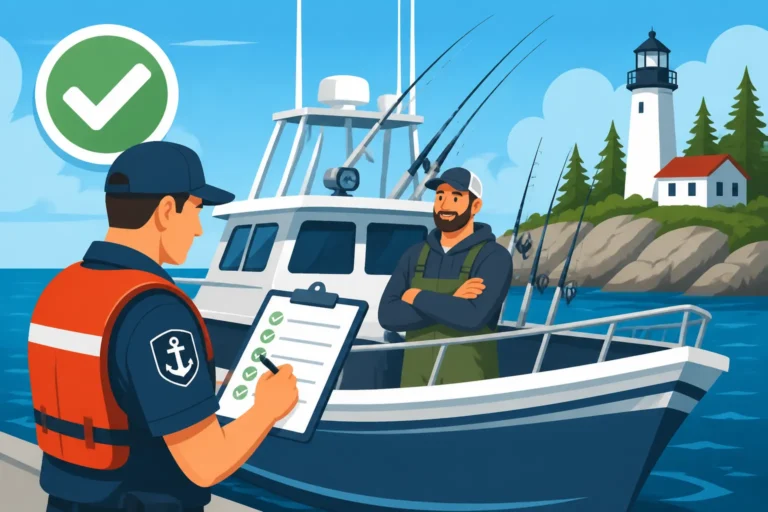
For saltwater fishing charters, especially those heading out into coastal or federal waters, there's an additional layer of professional credentialing: U.S. Coast Guard licensing and vessel inspection. This is absolutely critical for your safety and also ties into the fishing license exemption.
A legitimate saltwater charter captain must hold a valid Merchant Mariner Credential, often referred to as a "Coast Guard license," which authorizes them to operate a passenger-carrying vessel for hire. Depending on the size of the boat and the number of passengers, their vessel may also undergo regular Coast Guard inspections to ensure it meets strict safety standards, including carrying proper safety equipment.
The federal or state permits that these Coast Guard-licensed captains hold for their commercial fishing operations are what typically cover the fishing privileges for all passengers on board. This means you generally don't need your own Maine Saltwater Fishing Registry Guide for the duration of a trip on a federally permitted charter boat.
This dual layer of credentialing – a Registered Maine Guide license for freshwater, and a Coast Guard license plus commercial fishing permits for saltwater charters – is what makes the license exemption possible for clients. It’s a system designed to encourage safe, regulated, and professionally led fishing experiences. When you're searching for a charter, whether through a local marina or a service like FishingBooker, checking for these credentials or asking about them directly is always a good idea. Knowing that your captain is properly licensed and permitted means not only a worry-free fishing experience but also one where your safety and legal compliance are prioritized. It's truly a win-win.
Ask Before You Book: Essential Questions for Your Charter Captain
The best way to avoid any confusion or last-minute surprises regarding fishing licenses is to have a clear conversation with your charter captain or guide before you finalize your booking. Don't be shy – reputable professionals expect these questions and are happy to provide clear answers. This due diligence ensures a smooth, stress-free start to your fishing adventure.
Key Questions About Licensing
When you're reaching out to a potential charter or guide, here are the absolute must-ask questions regarding fishing licenses:
- "Does your charter/guide service cover the fishing license requirements for all passengers for the duration of our trip?" This is the big one. Get a direct, unambiguous answer.
- "Are we fishing freshwater or saltwater, and does the coverage apply to both if applicable to our trip?" Confirm the type of water you'll be on and that the coverage is appropriate. If you're doing a multi-species trip that might span both, clarify.
- "Do I, or anyone in my party, need to purchase a personal Maine fishing license or register for the Maine Saltwater Fishing Registry beforehand?" Specifically ask if you need to do anything. This helps cover those edge cases where a personal license might still be required.
- "What specific license or permit does your operation hold that covers my fishing activity?" A good captain or guide should be able to tell you they are a "Registered Maine Guide" (for freshwater) or that their vessel holds a "federal permit" or "state commercial license" (for saltwater).
- "If I plan to fish on my own before or after the trip, do I still need a separate license for those times?" This addresses the independent fishing scenarios we discussed earlier.
It might seem like a lot of questions, but trust me, it's far better to ask now than to find yourself in a bind later. Most captains understand this concern, especially from out-of-state visitors.
What to Expect from a Reputable Charter
When you ask these questions, a reputable Maine fishing charter or guide will respond with confidence, clarity, and professionalism. Here’s what you should expect:
- Clear and Concise Answers: They won't waffle or seem unsure. They'll know their licensing status inside and out and can explain it simply.
- Transparency: They might even proactively state their licensing status on their website or in their booking confirmation. Services like FishingBooker often include this information directly on the captain's profile, making it easier to verify.
- Willingness to Educate: A good guide loves to share knowledge. If you're confused, they'll take the time to explain the nuances of Maine's regulations and how their service fits in. They'll also tell you if there are any specific local regulations or catch limits to be aware of during your trip, like those for Maine Bass Fishing Limits by Zone or Maine Togue and Lake Trout Limits.
- Focus on Your Experience: Their goal is for you to have a fantastic, worry-free time. Handling the license aspect is just one part of that comprehensive service.
If you encounter a captain who seems evasive, rushes your questions, or can't clearly articulate their licensing, that should be a warning sign. While it's rare, it's not worth risking your legal compliance or your safety for a potentially dubious operation. Choosing to hire a Hiring a Maine Fishing Guide is an investment in your experience, so ensure you're choosing a professional who meets all legal and safety standards.
Planning Your Trip: Beyond the License
Once you've got the license question sorted, you can really dive into the exciting part: preparing for your actual fishing adventure in Maine! While your captain or guide will handle many of the logistical details, there are still a few things you can do to ensure you have the best possible experience. After all, a successful fishing trip isn't just about catching fish; it's about making memories.
What to Bring on a Maine Fishing Charter
Even if the charter provides all the fishing gear, there are several personal items you should always bring along to maximize your comfort and enjoyment.
- Appropriate Clothing: Maine weather can be unpredictable, even in summer. Layers are key! Bring waterproof outerwear, even if the forecast looks clear. A hat, sunglasses, and comfortable, non-slip shoes are also essential. For winter ice fishing trips, extreme cold weather gear is a must, including insulated boots and warm gloves.
- Sun Protection: Sunscreen, lip balm with SPF, and a wide-brimmed hat are crucial, even on cloudy days. The sun's reflection off the water can be intense.
- Food and Drinks: While some charters might offer snacks or beverages, it's always a good idea to bring your own water, snacks, and perhaps a packed lunch, especially for longer trips.
- Medication: If you're prone to seasickness on saltwater charters, take preventative medication before you board. Bring any other personal medications you need.
- Camera: You'll want to capture those trophy fish and beautiful Maine scenery! Just make sure it's waterproof or well-protected.
- Cooler: If you plan to keep your catch, bring a cooler to transport your fish home. Many charters will clean and fillet your fish for you, but it’s always good to have a way to keep them fresh.
- Cash for Tips: Tipping your captain and crew is customary if you've had a good experience.
Always check with your specific charter beforehand, as they may have a list of recommended items or restrictions on what you can bring aboard. You can find more comprehensive advice in articles like What to Bring on a Maine Fishing Charter.
Understanding Maine's Fishing Regulations
Even though your charter captain or guide is responsible for ensuring the trip adheres to all regulations, it’s incredibly empowering and helpful for you, as an angler, to have a basic understanding of Maine’s fishing laws. This includes knowing about specific Maine Fish Bag Limits Guide for the species you’re targeting, minimum length requirements, and Maine Fishing Season Dates Guide.
For example, if you're fishing for striped bass, you'll want to be familiar with the "slot limit" (a specific size range of fish that can be legally kept). If you're targeting brook trout, you should know the daily possession limits and any specific regulations for the water body you're on, as these can vary significantly from one lake or stream to another. Your guide will certainly instruct you, but having a general awareness helps you participate more actively and understand why certain decisions are made on the water.
Knowing these details reinforces the idea of responsible angling and helps preserve Maine's precious fisheries for everyone. A good captain will be an excellent resource for this information, but a little homework on your part never hurts!
| Scenario | Do You Need Your Own License? | Notes |
|---|---|---|
| On a Maine Saltwater Charter | No | Captain's commercial license/federal permit typically covers all passengers. Always confirm with the captain. |
| On a Maine Freshwater Guide Trip | No | Registered Maine Guide's license typically covers clients. Always confirm with the guide. |
| Fishing from shore before/after a charter | Yes | The charter exemption only applies when you are an active client on the guided trip. If fishing independently, you need the appropriate freshwater license or saltwater registry. |
| Fishing from your own boat (not chartered) | Yes | Whether freshwater or saltwater, you need your own license/registry when operating independently. |
| Multi-day guided trip (during "free time") | Yes (likely) | If you're fishing independently during non-guided portions of a multi-day trip, your own license/registry is usually required. Confirm specific arrangements with your guide. |
| Targeting species not covered by guide's specialty | Yes (possibly) | Rare, but if a guide specializes in freshwater and you want to independently fish saltwater (or vice-versa), their license won't cover your other activities. |
| Kids under 16 | No | In Maine, youth under 16 years of age do not need a fishing license for either freshwater or saltwater recreational fishing, whether on a charter or fishing independently. |
Disclaimer
This article is for general informational purposes only and does not constitute professional advice. Laws, prices and regulations vary by location and change over time. Consult a qualified professional for guidance on your specific situation.