How to Use a Downrigger for Lake Trout
There’s nothing quite like the thrill of chasing Maine’s elusive lake trout, affectionately known as togue, but for many anglers, reaching those deep-water giants feels like an impossible task. You spend hours trolling, trying different weights, only to come up short because your lure isn't quite hitting that perfect depth where the big fish lurk. This comprehensive guide will pull back the curtain on using a downrigger, giving you the precision and control needed to consistently put your bait right in the togue's strike zone, turning frustrating days into unforgettable catches.
Why Downriggers are Essential for Maine Togue Fishing
Maine's large, deep lakes are absolute havens for togue, but their very nature—deep, cold, and often vast—makes these fish notoriously challenging to target effectively. Traditional methods often leave anglers guessing, or simply not reaching the depths where the most active fish are feeding. This is where the downrigger truly shines, becoming an indispensable tool for serious togue enthusiasts.
Understanding Togue Behavior and Habitat
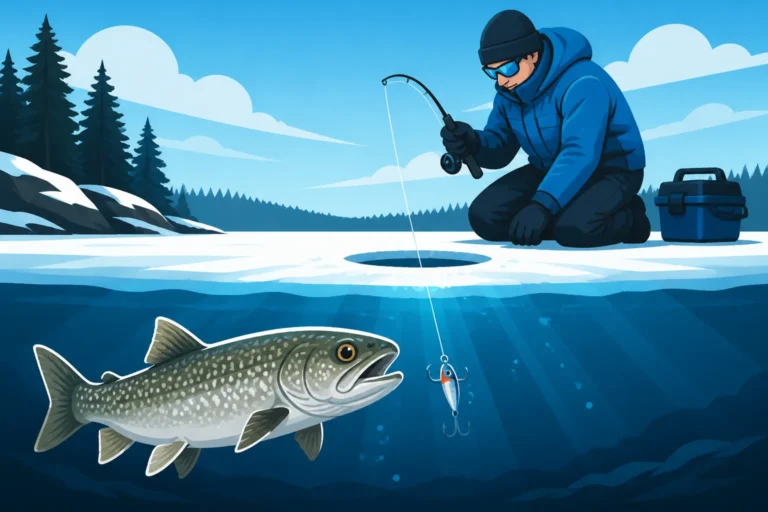
Togue, or lake trout, are cold-water fish, pure and simple. As soon as surface temperatures begin to rise in late spring and early summer, these magnificent fish retreat to the deepest, coolest, and most oxygenated parts of the lake. They thrive in water temperatures typically ranging from the low 40s to the mid-50s Fahrenheit, which in many of Maine's prominent fishing destinations, means depths of 40 feet or more, sometimes even over 100 feet in the dog days of summer.
Consider a massive water body like Moosehead Lake or Sebago Lake; these aren't just deep in spots, they have vast stretches of deep water. Togue will often congregate around underwater structures like humps, drop-offs, and deep points, or suspend in the open water column, following baitfish schools. Being able to consistently place your lure precisely at these depths, sometimes just a few feet off the bottom or directly in a baitball, is the key to success. Without a method for absolute depth control, you're essentially just hoping your lure drifts into their path, which is a low-percentage game when the fish are concentrated and unwilling to move far for a meal. Understanding this behavior, and knowing that these fish aren't just anywhere, but at specific depths, highlights the downrigger's importance. If you want to dive deeper into their behavior, check out our guide on Where Togue Live in Deep Maine Lakes.
The Limitations of Traditional Deep-Water Techniques
Many anglers try to get their lures down deep using various conventional methods, and while these can work in certain situations, they come with significant drawbacks, especially when targeting togue that might be suspended or holding a precise depth.
- Snap Weights: These are weights that clip onto your main line, adding resistance to pull your lure down. The problem is, you never truly know your exact depth. Factors like boat speed, line diameter, and current all dramatically affect how deep your lure runs. You might think you're at 60 feet, but you could easily be 10 feet shallower or deeper, missing the strike zone entirely.
- Lead Core Line: This specialized line has a lead core wrapped in a braided sheath, designed to sink. While effective for getting lures deep, it's cumbersome to use. Each "color" (usually 10 yards) of lead core sinks to a generally known depth at a specific speed, but again, precision is an issue. Fighting a fish on lead core is like reeling in a brick – it has very little stretch and sensitivity, making it hard to feel subtle bites and resulting in a less dynamic fight. Plus, storing and managing long lengths of lead core can be a headache.
- Heavy Trolling Sinkers: Running heavy inline or three-way swivel sinkers can get your lure down, but like snap weights, precise depth control is elusive. You also introduce a lot of drag and resistance directly on your main line, which can kill the action of your lure and make it harder to detect bites. The direct connection to a heavy weight means less finesse and often, less fish.
These methods lack the pinpoint accuracy that a downrigger provides. When togue are finicky, or when you've pinpointed them on your fish finder at a specific depth, the ability to put your bait exactly where they are, and keep it there, is paramount. This level of control is simply not achievable with traditional deep-water techniques, making the downrigger a game-changer for Maine's deepest dwellers.
Getting Started with Downriggers: Components and Setup
Venturing into downrigger fishing might seem a bit daunting at first, with all the moving parts and specialized terminology. But trust me, once you understand the basic components and how they fit together, you’ll realize it’s a relatively straightforward system designed for efficiency and precision.
Key Downrigger Components Explained
Before you even think about dropping a line, let's break down the essential pieces of a downrigger. Knowing what each part does will make setup and operation much clearer.
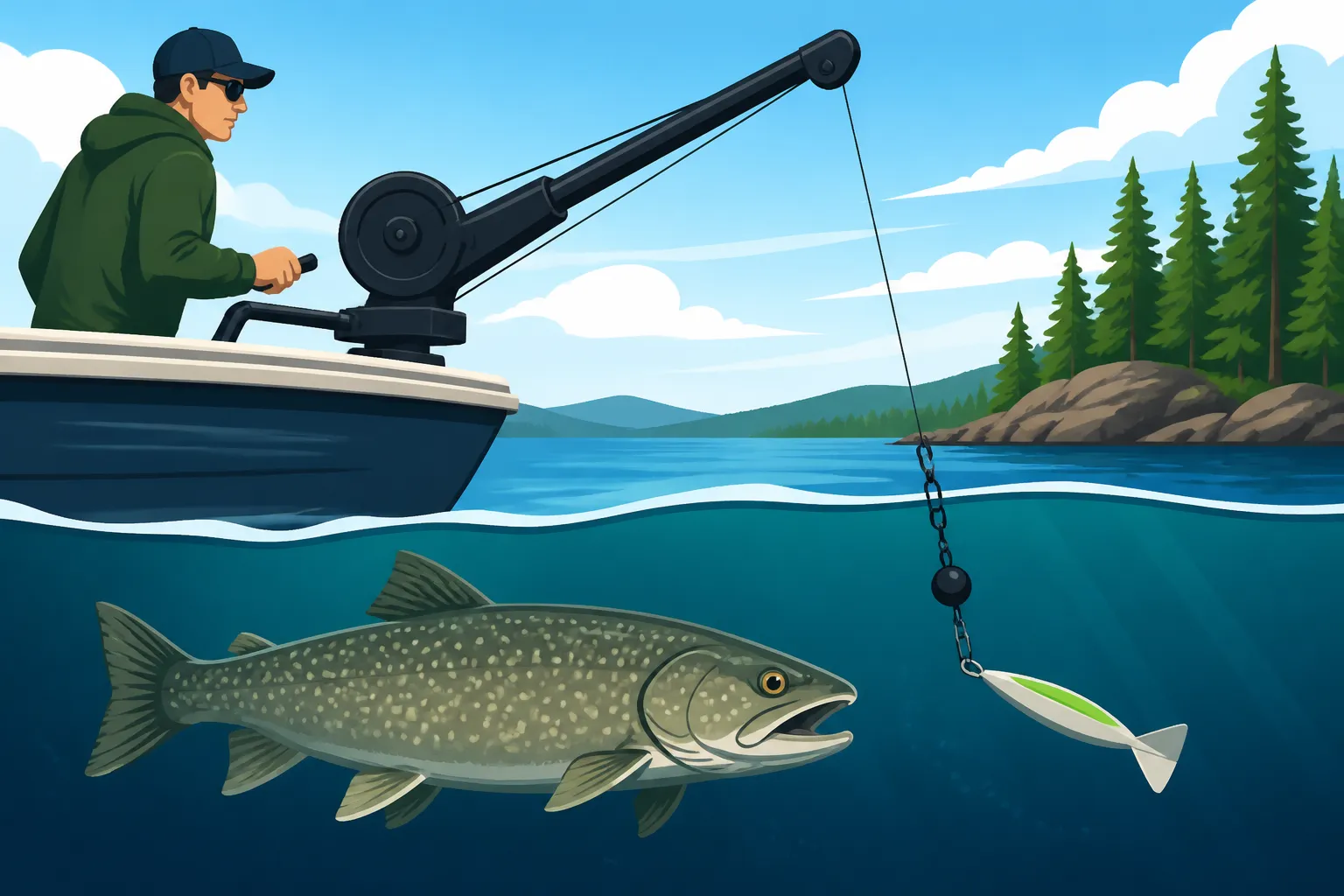
- The Boom: This is the arm that extends out from the main body of the downrigger. It needs to be sturdy because it handles all the stress of the cannonball's weight and the trolling action. Booms come in various lengths, with longer booms helping to spread lines out and keep them clear of the boat's prop wash.
- The Retrieval Crank/Motor: This is how you raise and lower the cannonball. Manual downriggers have a hand crank, while electric models feature a motor that does the heavy lifting, a real luxury on larger lakes or when checking baits frequently. If you're planning extended trips on Moosehead Lake Fishing Guide or Sebago Lake Fishing Guide, an electric model purchased from a retailer like Amazon might save your arms!
- The Depth Counter: Absolutely crucial for precision, this gauge tells you exactly how much cable you've deployed, indicating your cannonball's depth. It's usually a mechanical counter that measures rotations of the spool.
- The Cable (or Braid): This is typically stainless steel wire or heavy-duty braided line that holds your cannonball. Stainless steel is common for its strength and minimal stretch, but braid is gaining popularity for its zero stretch and reduced hum in the water.
- The Cannonball (Weight): This is the heavy lead weight, usually shaped like a ball or a fish, that pulls your line down. Weights typically range from 6 to 12 pounds, with 8 to 10 pounds being common for most Maine applications. Heavier weights help reduce "blowback" (the angle of the cable in the water due to speed and current).
- The Release Clip: This small but mighty device is where your fishing line connects to the downrigger system. It holds your line under a set tension. When a fish strikes, the tension from the bite "releases" your line from the clip, allowing you to fight the fish directly without the cannonball attached. There are various types, from adjustable tension clips to specialized stacker clips.
Mounting and Rigging Your Downrigger
Proper mounting is essential for safety and effective operation. A downrigger exerts considerable force, so it needs to be securely attached to your boat.
-
Mounting Options:
- Clamp-on Mounts: These are great for smaller boats or if you want portability. They clamp directly onto the gunwale. Make sure the clamp is extremely secure and periodically check for tightness.
- Flush Mounts: For a more permanent and robust installation, flush mounts are drilled into the boat's gunwale, providing a solid base. This is often preferred for larger boats or if you're frequently tackling big waters.
- Swivel Bases: Many downriggers attach to a swivel base, allowing you to rotate the downrigger 360 degrees. This is incredibly useful for deploying and retrieving the cannonball, as well as for clearing lines.
-
Spooling the Cable/Braid: Load your downrigger reel with either stainless steel cable or specialized downrigger braid. Follow the manufacturer's instructions for winding it on tightly and evenly. Leave enough room on the spool so that when your cannonball is fully deployed to the deepest depths you expect to fish (e.g., 100-150 feet), there's still plenty of line left on the spool.
-
Attaching the Cannonball: Securely attach your chosen cannonball to the end of the downrigger cable using a strong snap swivel or direct knot, depending on the cable type. Always double-check your knots and connections here; losing a cannonball is no fun!
-
Setting Up the Release Clip: This is where your actual fishing line will interact with the downrigger. The release clip attaches to the downrigger cable, usually a few feet above the cannonball. You'll run your fishing line through the clip, then clip it onto the downrigger cable. The tension on the clip should be adjustable. You want it tight enough to hold your line without releasing it prematurely from boat motion, but loose enough that a fish's strike will pull your line free. Experiment with the tension; too tight and you might lose fish that hit lightly, too loose and you'll get false releases. Many anglers purchase additional clips, sometimes found on Amazon, to experiment with different tensions.
Choosing the Right Downrigger for Maine Lakes
When selecting a downrigger, consider the typical depths you'll be fishing, the size of your boat, and your budget.
- Manual vs. Electric:
- Manual Downriggers: More affordable and simpler, these require you to hand-crank the cannonball up and down. They are perfectly adequate for smaller boats and occasional use, especially if you're not going extremely deep or constantly checking your lines.
- Electric Downriggers: A significant upgrade in convenience, electric models allow you to raise and lower the weight with the push of a button. They are a godsend when fishing deep water consistently, on larger lakes where you might be running multiple lines, or when fishing solo. The initial cost is higher, but for avid togue anglers, the investment is often well worth it for the ease of use.
- Boom Length: Longer booms (2-4 feet or more) are beneficial for larger boats, helping to keep your lines spread out and away from the boat, especially important when running multiple downriggers or avoiding prop wash. Shorter booms are fine for smaller boats where space is limited.
- Weight Capacity: Most modern downriggers can handle cannonballs up to 12-15 pounds, which is more than enough for the depths you’ll encounter in Maine. Ensure your chosen model is rated for the weight of cannonball you plan to use to avoid stress on the components. For a solid all-around choice for a beginner, a manual model from a brand like Scotty or Cannon that can handle an 8-10 pound cannonball is often a great starting point and readily available online, perhaps even from Amazon sellers.
Mastering Downrigger Techniques for Maine Togue
Now that your downriggers are set up, it's time for the exciting part: putting your lures in front of those deep-dwelling togue. This isn't just about dropping a weight; it's about a careful ballet of boat control, depth management, and presentation.
Deploying and Retrieving Your Lure
The actual act of getting your lure down into the strike zone with a downrigger is a precise sequence that, once mastered, becomes second nature.
- Set Your Lure: First, let out your desired lure—whether it's a spoon, stickbait, or live bait rig—behind the boat. The distance you let it out is called your "setback." A common setback is 20-50 feet, but this can vary depending on water clarity and the shyness of the fish. In clear Maine lakes, a longer setback might be beneficial.
- Attach to the Release Clip: Once your lure is at the desired setback, take your fishing line and attach it to the downrigger release clip. Ensure the clip is firmly holding the line but isn't so tight that it damages it.
- Lower the Cannonball: Begin slowly lowering the cannonball using the downrigger's crank or motor. As the cannonball descends, your fishing rod tip will start to bend, or "load up." This is the tension from the cannonball pulling your line and lure down. Watch your depth counter closely.
- Reach Desired Depth: Stop lowering the cannonball when you reach the depth where you expect the togue to be, often identified using your fish finder.
- Engage the Rod Holder: Place your fishing rod into a sturdy rod holder, ensuring the rod tip is pointed towards the water and the downrigger. The rod should maintain a good bend, indicating that your line is still securely held by the release clip and pulling your lure at the downrigger's depth.
Retrieving is essentially the reverse process: reel in your fishing line until slack, unclip it from the downrigger, then retrieve the cannonball. This systematic approach ensures your lure is always presented cleanly and at the right depth.
Achieving Precise Depth Control
The beauty of a downrigger lies in its precise depth control. You're not guessing; you're placing your lure exactly where you want it. This is where your fish finder and understanding of lake thermoclines become invaluable.
- Match the Depth Counter to the Fish Finder: Your fish finder is your eyes underwater. Use it to locate baitfish, schools of togue, or interesting underwater structures like drop-offs and humps. Once you identify a promising depth, use your downrigger's depth counter to position your cannonball—and thus your lure—exactly at that depth. For example, if you see a dense school of baitfish with larger arches beneath them at 75 feet, set your downrigger to 75 feet.
- Targeting the Thermocline: In summer, the thermocline (the boundary between warm surface water and cold deep water) is often where togue and their prey congregate. It's an area with stable temperatures and good oxygen. Your fish finder will often show this as a distinct layer. Aim to place your lures just above, in, or just below this layer. For further details on how temperature influences fish, read our guide on How to Fish Deep Water for Summer Trout.
- Adjusting for Blowback: Even with a heavy cannonball, your downrigger cable won't hang perfectly vertical in the water, especially at faster trolling speeds or in strong currents. This angle is called "blowback." The faster you go, the more the cable blows back, meaning your cannonball is shallower than what your depth counter indicates. Compensate by letting out a few extra feet of cable for every knot of speed over about 1.5 mph. More advanced fish finders might even show the downrigger ball itself, allowing for real-time adjustments.
Reading Your Fish Finder with a Downrigger
Your fish finder isn't just for locating fish; it's a critical tool for understanding your entire subsurface presentation when using a downrigger. For more general fish finder tips, see Reading a Fish Finder on Maine Lakes.
- Locating Your Cannonball: Many modern fish finders can actually pick up the downrigger cannonball. This is an incredible advantage as it shows you the actual depth of your weight, helping you account for blowback accurately. If your unit doesn't show the ball, assume some blowback and adjust.
- Identifying Structure and Fish: Look for distinct contours, ledges, and humps on the bottom. Togue often relate to structure. Pay close attention to fish arches—are they scattered, or are they concentrated? Are they holding tight to the bottom, or are they suspended in the water column? Your lure should be presented where the fish are most active.
- Spotting Bait Schools: Togue are predators, so locating schools of baitfish like smelt is paramount. If you see dense clouds of bait, chances are the togue are nearby. Position your downrigger ball and lure to run directly through or just below these bait schools for the best results.
Lure Selection and Presentation for Togue
While the downrigger gets your lure to the fish, the lure itself still needs to be enticing! Togue can be particular, so having a selection and varying your presentation is key.
- Spoons: These are classic togue catchers. Popular choices in Maine include the Mooselook Wobbler, Sutton Spoons, and DB Smelt. Silver, blue/silver, and black/silver are often productive. Trolling spoons at varied speeds will give them different actions.
- Stickbaits/Plugs: Long, slender plugs mimicking baitfish can be very effective, especially for larger togue. Brands like Rapala, Yo-Zuri, and Bomber make excellent choices. Again, natural baitfish colors (silver, perch patterns, bluegill) are often best.
- Live Bait Rigs: A lively shiner or smelt trolled on a small hook with a minimal weight (or no weight, just relying on the downrigger) can be irresistible to togue. Check Maine Fishing Regulations Explained for rules on live bait use in specific waters.
- "Setback" Distance: As mentioned, this is the distance your lure trails behind the cannonball. Typically, 20-50 feet is a good starting point. If the fish are wary or the water is extremely clear, a longer setback might be necessary to ensure they aren't spooked by the cannonball. Conversely, if fish are aggressive, a shorter setback can keep your lure in the strike zone longer as you maneuver.
- Speed and Action: Vary your trolling speed. Sometimes a slow, methodical crawl is best, letting your lure wiggle subtly. Other times, a faster troll can trigger a reactionary strike. Watch your rod tip; the subtle vibration it transmits tells you if your lure is swimming correctly. If you're using multiple downriggers, consider staggering your lures at different setbacks and depths. For more on how to present your lures effectively, consult Trolling Techniques for Maine Lakes and Best Lures for Maine Open Water Fishing.
The Art of the Strike and Fight
When a togue hits a downrigger setup, it's a distinct experience. You'll feel a sudden thump or see your rod snap upright as your line releases from the clip.
- The Release: The moment a fish strikes, the tension created by the bite pulls your line free from the downrigger release clip. Your deeply bowed rod will immediately spring straight up or significantly reduce its bend. This sudden change is your signal!
- Grabbing the Rod: Quickly grab the rod from the holder. Don't reel immediately; the fish is already hooked and pulling against a relatively short line. A good, solid sweep of the rod tip to the side can help set the hook even deeper if needed, but often, the force of the strike and release is enough.
- Fighting the Fish: Now you're fighting the fish directly on your rod and reel, without the drag of the cannonball. Togue are strong, deep fighters. They'll often make powerful runs, especially towards deeper water. Keep steady pressure, pump the rod to gain line, and be ready for their head shakes near the boat. Patience is key. Remember that Maine Togue and Lake Trout Limits apply, so be mindful of the rules as you bring your catch to the boat.
Advanced Tips and Troubleshooting for Downrigger Success
Once you've got the basics down, there are always ways to refine your downrigger game to increase your success rate and make your time on the water even more productive.
Multiple Downrigger Spreads and Stacking
For serious togue anglers, especially on larger boats, running multiple downriggers is common. This allows you to present a wider array of lures at different depths simultaneously, increasing your chances of finding the fish's preferred depth and bait.
- Running Multiple Downriggers: Most boats can comfortably run two downriggers, one on each side. If you have the space and the stability, some anglers run three or even four (two off the stern, two off the sides). The key is to stagger them—run one shallower, one deeper, and perhaps one with a longer setback. This creates a "spread" that covers more water column horizontally and vertically.
- Stacking Lines: This is an advanced technique where you run two separate fishing lines off a single downrigger cable. You use two release clips. One clip is attached a few feet above the cannonball (for your deepest lure), and a second "stacker" clip is attached higher up on the downrigger cable, perhaps 15-25 feet above the first. This allows you to target two different depths with one downrigger, doubling your presentation. Ensure both clips have appropriate tension settings for their respective lures and target species. Running a stacker can be a fantastic way to cover more of the water column, especially if you're not quite sure What Depth Do Togue Hold at in Summer?.
Dealing with Blowback and Current
Blowback is the enemy of precise depth control, but it can be managed. This occurs when the force of the boat moving through the water, combined with currents, pushes your downrigger cable backward, causing your cannonball to ride shallower than the depth counter indicates.
- Boat Speed is Key: The faster you troll, the more blowback you'll experience. Keep your trolling speed consistent and adjust it based on the conditions. For togue, slower speeds (1.5-2.5 mph) are often effective, which naturally reduces blowback. Use a GPS to monitor your actual speed over ground.
- Heavier Cannonballs: Using a heavier cannonball (e.g., 10-12 pounds instead of 8 pounds) can help mitigate blowback, allowing the weight to cut through the water more vertically.
- Cable Type: Some anglers claim that braided downrigger line, due to its thinner diameter compared to steel cable, experiences slightly less blowback.
- Factor in Currents: Strong subsurface currents, common in some river-fed lakes or areas where wind pushes water, can also cause blowback. Monitor your fish finder to see if your cannonball is showing up at the expected depth, or make educated adjustments. If you're still struggling, consider our tips for Reading Water Temperature for Maine Trout, which might give you insight into current layers.
Common Downrigger Problems and Solutions
Even with the best equipment, issues can arise. Knowing how to quickly troubleshoot can save your fishing day.
- Tangled Lines: This is the most common frustration. It often happens during deployment, retrieval, or when making sharp turns.
- Solution: Deploy one downrigger at a time, ensuring your lines are well-spaced. Avoid sharp turns. If using multiple downriggers, keep your outer lines shallower or with longer setbacks to minimize tangles with inner, deeper lines.
- Premature Release: Your line keeps popping out of the clip without a fish.
- Solution: Check the tension on your release clip; it might be too loose. Adjust it tighter. Also, check for any nicks or burrs on the clip that could be catching the line incorrectly. Heavy boat wakes or erratic boat movement can also cause this.
- Cannonball Hanging Up: Your cannonball gets stuck on the bottom.
- Solution: First, try to gently rock the boat or make a slight turn to dislodge it. If that doesn't work, reel up firmly but gently. If it's truly snagged, you might have to break the downrigger cable, which is why having spares or understanding how to re-rig quickly is important. Always fish a few feet above any known bottom structure shown on your fish finder to avoid snags.
- Cable Fraying: Over time, especially with steel cable, fraying can occur, leading to potential breaks.
- Solution: Regularly inspect your downrigger cable, especially the last 10-20 feet, for any signs of wear, kinks, or fraying. Replace it immediately if you see damage. You can find replacement cables and other downrigger accessories on sites like Amazon.
- Electric Downrigger Battery Drain: For electric models, a dead battery means no downrigger.
- Solution: Ensure your marine battery is fully charged before each trip. Consider carrying a spare battery, especially for long days or multi-day excursions. Have backup fuses readily available.
| Feature | Manual Downrigger | Electric Downrigger |
|---|---|---|
| Cost | Lower initial cost | Higher initial cost |
| Ease of Use | Requires manual cranking | Push-button operation, much easier for deep fishing |
| Speed/Efficiency | Slower deployment/retrieval | Faster deployment/retrieval, better for checking lures |
| Battery Req. | None | Requires a 12V marine battery |
| Maintenance | Simpler, fewer electrical components to fail | More complex, requires battery and wiring checks |
| Best For | Smaller boats, occasional use, shallower depths | Larger boats, frequent deep fishing, multiple lines |
| Physical Effort | High, especially when fishing deep | Low |
Disclaimer
Please be aware that fishing regulations in Maine are subject to change. Always consult the latest rules and regulations published by the Maine Department of Inland Fisheries and Wildlife (MDIFW) before heading out on the water. This guide is for informational purposes only and does not constitute legal advice.