Can You Target Striped Bass in Federal Waters Off Maine?
Oh, the allure of the open ocean! Many of us, myself included, have stood on Maine's beautiful coastline, looking out at that vast blue expanse and wondered: "Can I just keep going and find some striped bass out there in federal waters?" It’s a completely natural thought, especially when you’re chasing a powerful, migratory fish like a striper. But the truth about targeting striped bass in federal waters off Maine isn’t quite as straightforward as it might seem, and understanding it can save you a headache (and a fine!). This guide is all about clearing up that confusion, explaining why federal waters are generally off-limits for stripers, and focusing on where you can effectively and legally target these magnificent fish in Maine.
Understanding the Jurisdictional Lines for Maine Fishing
Fishing in Maine, like anywhere with a diverse coastline, means navigating a bit of a maze when it comes to legal boundaries. You’ve got state waters, federal waters, and sometimes even specific local ordinances to consider. It’s enough to make your head spin, especially when you’re just trying to enjoy a peaceful day on the water. The core of the confusion often lies in understanding that invisible line where state control ends and federal oversight begins.
These lines aren't just bureaucratic red tape; they exist to manage and conserve fish populations effectively, often recognizing that different species behave and thrive in different environments, and some require broader, regional management. For us anglers, it means knowing not just what we can catch, but where we can legally pursue them.
The Inland/Coastal Divide
Maine's coastline is a masterpiece of coves, islands, bays, and river mouths. It's not a straight shot, which can make things tricky. What many anglers consider "coastal" fishing might still be entirely within state jurisdiction. For example, the expansive waters of Casco Bay, while feeling like the open ocean, are largely considered state waters. The same goes for the vast majority of our tidal rivers and estuaries, like the Kennebec or the Penobscot, which are prime striped bass habitat.
These areas, stretching from the shore out to three nautical miles (about 3.45 land miles) from the coastline, fall under the purview of the Maine Department of Marine Resources (DMR). Within this zone, state laws dictate everything from species-specific regulations to gear restrictions. It’s where most recreational fishing for popular inshore species, including striped bass, takes place.
Defining Federal Waters Off Maine
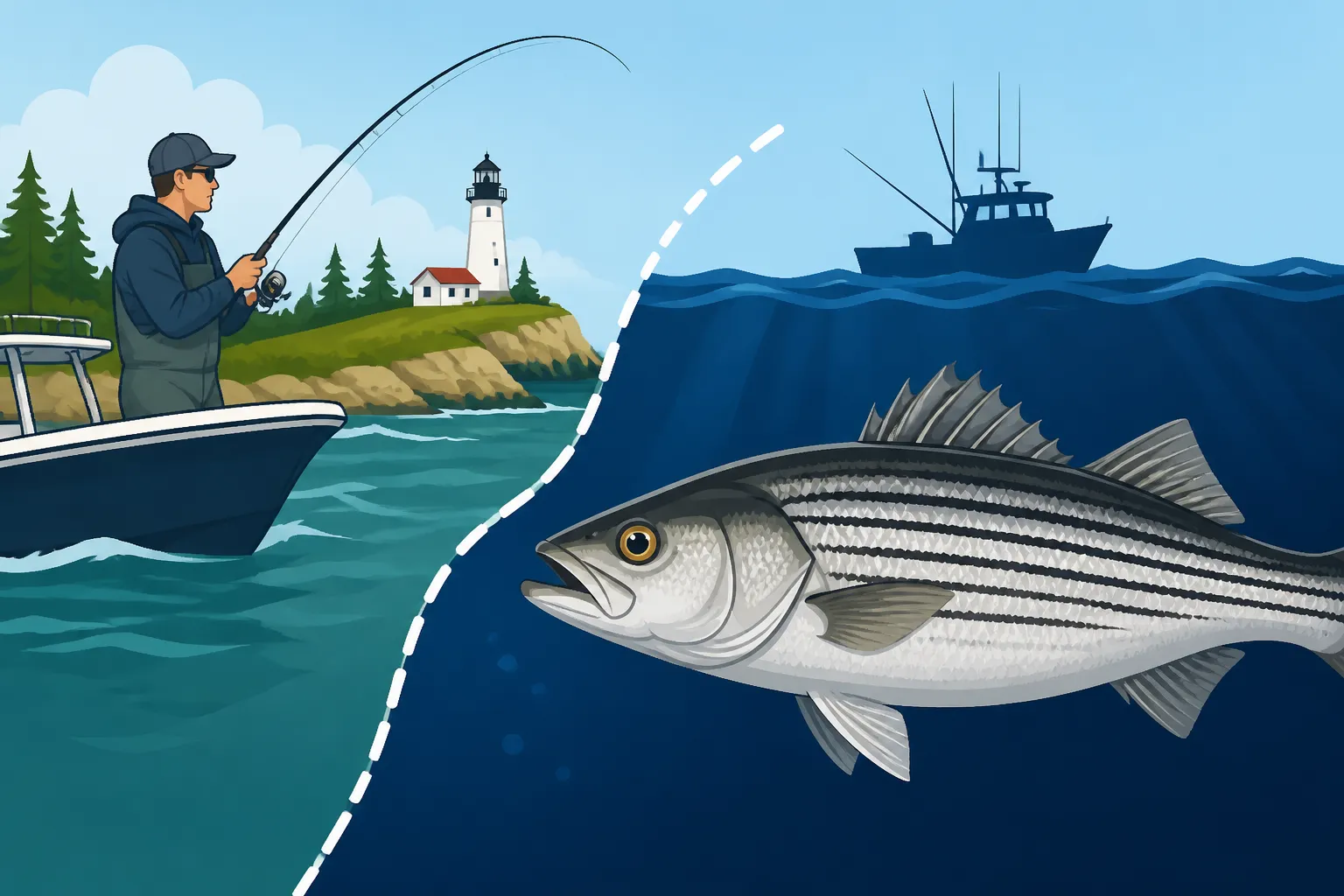
So, if state waters extend out three miles, what exactly are federal waters? Simply put, federal waters begin beyond that three-nautical-mile line and stretch out to the edge of the Exclusive Economic Zone, which is 200 nautical miles from shore. This vast expanse of ocean is managed by federal agencies, primarily the National Oceanic and Atmospheric Administration (NOAA) Fisheries, under various federal laws and fishery management plans.
Federal waters are where you'd typically go for true offshore adventures: deep-sea fishing for tuna, cod, haddock, or even swordfish. These are species that either spend their entire lives far from shore or undertake long migrations that take them well beyond state jurisdiction. Understanding this distinction is crucial, because the rules change dramatically once you cross that invisible boundary, especially for certain species that have very specific management plans.
The Striking Truth About Striped Bass and Federal Waters
Now, let's get to the heart of the matter: can you target striped bass in federal waters off Maine? The short answer for recreational anglers is a resounding no, at least not in any practical or legal sense. While it’s tempting to imagine a vast striper fishery far offshore, the reality is that striped bass are primarily managed as a coastal, inshore species, and federal regulations reflect that.
This isn't just a quirky Maine rule; it's part of a larger, cooperative management effort along the entire Atlantic coast. The Atlantic States Marine Fisheries Commission (ASMFC), an interstate compact, coordinates the management of migratory fish species like striped bass across their range. This means that individual states, like Maine, adopt regulations that are consistent with the ASMFC's coastwide management plans. These plans largely confine the recreational and commercial harvest of striped bass to state waters.
Why Stripers Stay (Mostly) in State Waters
The reason for this inshore focus is rooted in the biology and behavior of the striped bass itself. Stripers are anadromous, meaning they spend most of their adult lives in saltwater but return to freshwater rivers to spawn. They thrive in brackish estuaries, bays, and nearshore coastal environments where they can ambush baitfish, forage along structure, and find suitable temperatures. They aren’t typically deep-ocean dwellers.
While striped bass undertake extensive migrations up and down the Atlantic coast, these migrations generally occur within the coastal shelf, rarely venturing far enough offshore to be consistently in federal waters. You might catch a rogue striper a little further out on a reef or structure that crosses the 3-mile line, but targeting them specifically in federal waters is generally not feasible or legal. Their preferred habitat for feeding and schooling keeps them predominantly in the shallower, food-rich state waters.
The Regulatory Framework for Striped Bass
Because striped bass are managed as an inshore, coastal species, the regulations you need to worry about are almost exclusively state-level. Maine's Department of Marine Resources (DMR) enforces specific rules regarding size limits, bag limits, and seasons for striped bass. These rules are designed to protect the breeding stock and ensure a sustainable fishery for future generations.
It's vital for any angler to be completely up-to-date on Maine Striped Bass Season and Limits before heading out. These regulations are updated periodically based on scientific assessments of the population and coastwide management goals. Ignoring them, even accidentally, can lead to serious penalties. So, while federal waters might hold other exciting species, for striped bass, your focus must remain squarely on Maine's state waters and the rules governing them.
Practical Implications for Anglers: Where to Fish for Stripers in Maine
Given that federal waters are effectively a no-go for targeting striped bass, the good news is that Maine offers an incredible abundance of prime striper fishing within its state waters. From rocky shorelines to expansive river systems, there are countless opportunities to hook into these hard-fighting fish. The key is to understand where they like to hang out and how to approach those spots effectively.
It's all about playing by the rules and making the most of the fantastic coastal access we have here in Maine. Focus your energy and your gear on the areas where stripers naturally thrive, and you'll find plenty of success without ever needing to worry about crossing that federal line.
Prime Striper Grounds in Maine's State Waters
Maine’s coastline is a mosaic of excellent striped bass habitats. Our tidal rivers and estuaries are absolute hotbeds, drawing in stripers that follow the baitfish. The Kennebec River, for example, is renowned for its incredible striper fishing, particularly around the productive "stripes" of the lower river. Similarly, the Penobscot River system offers fantastic opportunities, especially during the spring and fall migrations. Penobscot River Striped Bass Run in Maine is a real spectacle for local anglers.
Bays like Casco Bay, and the myriad coves and inlets all along the coast, provide sheltered feeding grounds. Look for structure: rocky outcroppings, mussel beds, jetties, and even bridge pilings. Anywhere baitfish can hide or be funneled by currents, stripers won't be far behind. Tidal currents play a huge role; fishing the moving water around high or low tide, especially when it funnels through a narrow choke point, can be incredibly productive. For more detailed information on specific locations, checking out Maine Coastal Fishing Spots for Striped Bass can give you a great head start.
Gear and Techniques for Maine Stripers (within state waters)
To successfully fish for Striped Bass Fishing in Maine within state waters, you'll want to be prepared with the right tackle and techniques. For most shore-based or boat-based fishing in rivers and bays, a medium-heavy spinning rod or baitcasting setup, roughly 7-9 feet long, is a good choice. Pair it with a reel spooled with 20-30 lb braided line, which offers excellent casting distance and sensitivity. For terminal tackle, keep it simple with fluorocarbon leaders to reduce visibility.
When it comes to lures and baits, variety is key. Live bait like mackerel, pogies (menhaden), or eels are always effective, especially when fished near structure or in current. For artificials, think about replicating the baitfish in the area. Soft plastics rigged on jig heads, swimming plugs, topwater poppers, and even bucktail jigs are all staples. You can find a huge array of options online, from popular brands to more niche tackle, often available on platforms like Amazon. Don't be afraid to experiment with different colors and sizes to see what the stripers are hitting on any given day. To help you choose, have a look at our guide on Best Lures for Striped Bass in Maine.
Techniques vary:
- Casting from shore or boat: Ideal for working plugs, jigs, or soft plastics around structure or into feeding fish. This is where How to Fish for Striped Bass From Shore can come in handy.
- Trolling: Effective from a boat, often using tube-and-worm rigs or deep-diving plugs to cover larger areas or target deeper holding fish.
- Soaking bait: Using live or cut bait on a bottom rig or under a bobber can be deadly when stripers are holding in specific spots, especially during strong currents.
Remember, the goal is to present your offering naturally and where the fish are actively feeding. Pay attention to tides, water temperature, and signs of baitfish, and you'll be well on your way to a successful striper outing.
| Fishing Location Type | Typical Habitat Features | Best Techniques | Recommended Bait/Lures | Key Considerations |
|---|---|---|---|---|
| Tidal Rivers/Estuaries | Mudflats, rocky banks, current breaks, bridges | Casting, soaking bait, light trolling | Soft plastics, plugs, worms, live mackerel/pogies | Strong currents, tide charts, identifying bait schools |
| Bays/Inlets | Rocky shores, islands, coves, mussel beds | Casting, light trolling, live lining | Topwater plugs, swimming plugs, bucktail jigs, eels | Structure, current seams, dawn/dusk feeding times |
| Nearshore Coast | Rocky points, jetties, surf zones | Surf casting, casting from boat | Heavy lures for distance, natural baitfish imitations | Wave action, understanding rips and cuts, safety |
Navigating the Rules and Avoiding Penalties
Fishing is about relaxation and enjoyment, but nothing sours a trip faster than a run-in with the law because you unknowingly violated a regulation. This is especially true when dealing with boundaries like state and federal waters, or specific species regulations. It's not enough to assume; you have to know. A little homework before you cast your first line can save you a lot of grief and ensure you're contributing to sustainable fishing practices in Maine.
Wardens aren't out there to ruin your day; they're protecting the resource for everyone. Understanding the regulations and respecting them is the mark of a responsible angler.
How to Confirm Jurisdictional Boundaries
The simplest way to stay compliant is to know where you are at all times. Modern technology makes this much easier than it used to be. A good GPS unit on your boat or even a reliable fishing app on your smartphone can clearly show you your position relative to the three-nautical-mile line. Many reputable chartplotters, especially those designed for marine use, will have these boundaries marked.
Beyond technology, local knowledge is invaluable. Talk to bait shop owners, experienced local anglers, or even marine wardens (in a non-confrontational way, of course!) before you venture into an unfamiliar area. They can often provide insights into specific spots or nuances of the local regulations. The Maine Department of Marine Resources (DMR) website is also your official source for the latest regulations and any advisories. Always consult it directly. For a broad overview of what you'll encounter, you can read our guide on Maine Fishing Regulations Explained.
What Happens If You Cross the Line?
So, what if you accidentally (or intentionally) target striped bass in federal waters? Or, what if you're fishing for something else in federal waters, and you happen to catch a striper? The consequences can range, but they are generally not good. Marine wardens, both state and federal, patrol these waters and are well-versed in the regulations.
If you are caught targeting or possessing striped bass in federal waters, you could face significant fines, confiscation of your catch, and potentially even your gear. These penalties are designed to deter violations and protect a species that is under careful management. It's a bit like getting a speeding ticket; ignorance of the law isn't usually an acceptable excuse. For example, possession limits are strict, and you should always know How Many Striped Bass Can You Keep in Maine? within state waters, let alone federal.
Furthermore, if you are found to be fishing without the proper licenses or in closed areas, the penalties can escalate. Our article, What Happens If You Fish in Maine Without a License?, gives a stark look at the consequences of not adhering to basic licensing requirements, and similar principles apply to jurisdictional violations. It's simply not worth the risk. Stick to state waters for striped bass, know the rules, and enjoy your fishing knowing you're doing it right.
Disclaimer
This article is for general informational purposes only and does not constitute professional advice. Laws, prices and regulations vary by location and change over time. Consult a qualified professional for guidance on your specific situation.