What Depth Do Landlocked Salmon Hold at in Summer?
One of the biggest head-scratchers for anglers heading out onto Maine's beautiful lakes in the summer is trying to figure out where the heck the landlocked salmon have gone. You spent all spring catching them relatively close to the surface, and now they seem to have vanished! It's not that they've packed up and left the state; they've simply retreated to the specific comfort zones that the summer heat dictates. Pinpointing these elusive depths is key to a successful summer salmon outing, and this guide is going to walk you through exactly how to do it.
The Summer Depth Zone for Maine Landlocked Salmon
When the long, sunny days of a Maine summer really start to bake our beautiful lakes, things change dramatically below the surface. Landlocked salmon, being cold-water fish, don't much care for the warm bath that the upper layers of water become. Instead, they seek out a specific sanctuary where the temperatures are just right and oxygen is still plentiful. Understanding this crucial thermal shift is the foundation for finding them.
Thermal Stratification and the Thermocline's Role
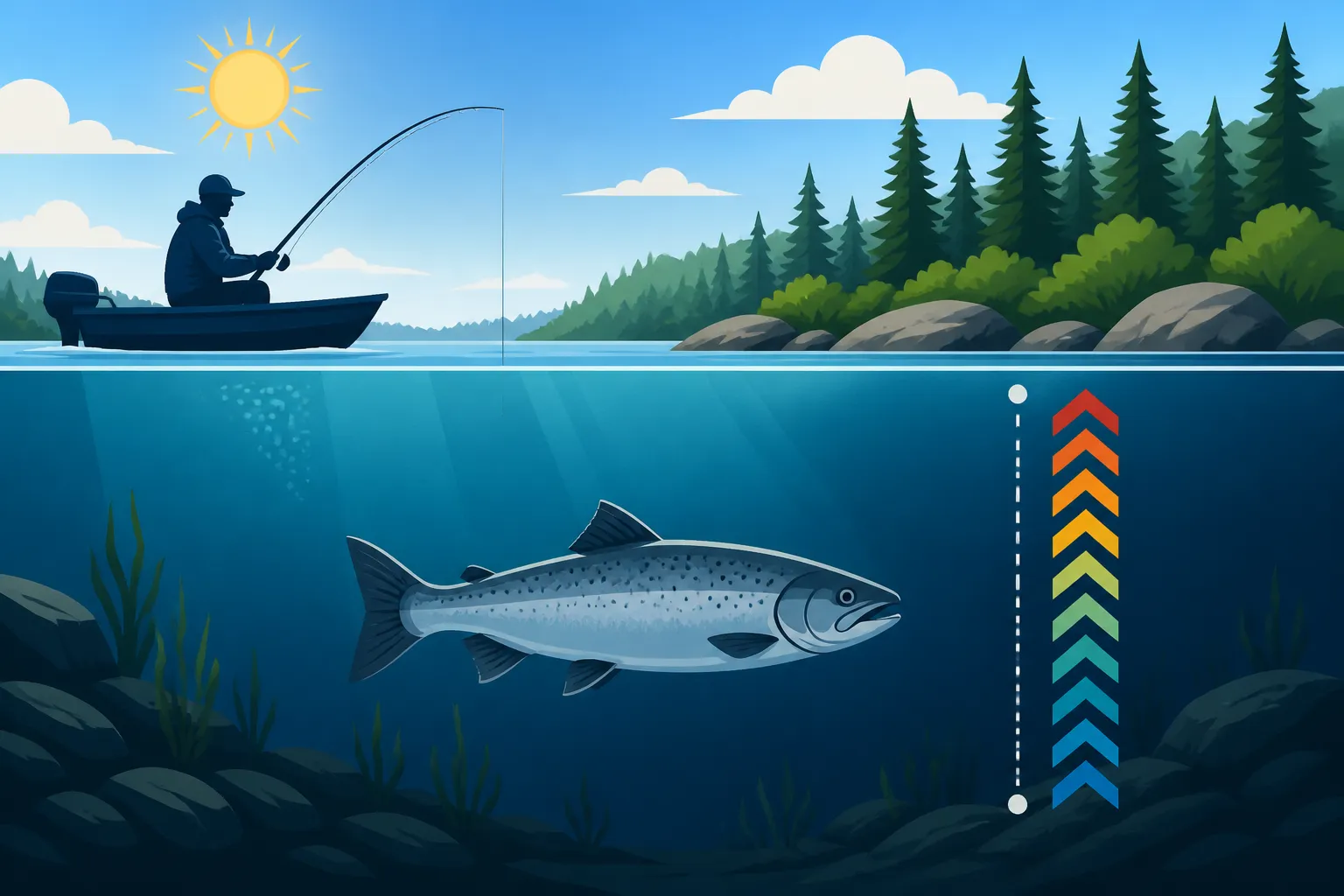
During the summer months, most deep Maine lakes undergo a process called thermal stratification. This means the lake water separates into distinct layers based on temperature. You've got the warm, sunny upper layer (epilimnion), the cold, deep bottom layer (hypolimnion), and sandwiched right in between is the magical place we call the thermocline.
The thermocline is that narrow band where the water temperature changes rapidly from warm to cold. It’s essentially a "false bottom" for many fish species, and for landlocked salmon, it's often their happy place in the summer. They're looking for water that's typically in the 48-55 degree Fahrenheit range. This zone offers that perfect blend of cooler temperatures to keep them comfortable and sufficient dissolved oxygen to keep them healthy and active. Above the thermocline, the water gets too warm and often has less oxygen at the very surface due to biological processes. Below it, while the water might be cold enough, oxygen levels can quickly dwindle, creating a "dead zone" where fish can't survive. Locating this thermocline with your electronics is absolutely critical for successful summer salmon fishing. It's like finding a hidden highway that only the salmon know about!
Typical Depth Ranges in Maine Lakes
While the thermocline is the general rule, the exact depth at which you'll find landlocked salmon can vary quite a bit depending on the specific lake, its depth, elevation, and even the weather patterns of a given summer. Generally speaking, in most of Maine's deeper, stratified lakes, you can expect to find salmon holding anywhere from 20 to 60 feet deep during the peak summer months.
Think about a crystal-clear lake like Sebago or one of the Rangeley Lakes. On a bright, sunny day, those salmon will likely be pushed deeper into that 40-60 foot range, seeking both cooler water and refuge from the intense sunlight. In a slightly shallower lake, or on an overcast day, they might be a bit higher, perhaps 20-30 feet down. What really matters is finding that intersection of ideal temperature and adequate oxygen. If you're targeting fish on a new body of water, it's always a good idea to check the regulations for that specific lake, as some "special regulation waters" might have unique conditions or rules that affect how you approach Landlocked Salmon Fishing in Maine. Don't be afraid to experiment with your depths within this general range until you start marking fish or getting strikes. Every day, and every lake, can be a little different, keeping us anglers on our toes! For more on specific habitats, you might want to read Where Landlocked Salmon Live in Maine Lakes.
Factors Influencing Salmon Depth Preferences
It’s not just the calendar hitting July that sends salmon deep. There’s a whole host of environmental cues and necessities that dictate exactly where these fish will choose to hang out. Ignoring these factors is like trying to find a specific house without knowing the street name!
Water Temperature: The Primary Driver
As we touched on, water temperature is undeniably the biggest influence on where landlocked salmon will hold in the summer. These fish are remnants of arctic char, and they've retained that preference for frigid conditions. Once the surface water temperature creeps much above 60 degrees Fahrenheit, salmon become stressed and actively seek out colder water. They need that consistent 48-55 degree band to thrive.
Imagine it from their perspective: the surface layers are like a scorching hot tub, not a place they want to spend their time. As the summer progresses and the sun continuously heats the upper water column, the thermocline deepens, and with it, the salmon follow. This is why late summer often means the deepest fishing. A prolonged heatwave will push them down, while a cooler, rainy spell might allow them to move up a bit. Experienced anglers pay close attention to air temperatures and historical lake data to predict these movements. Without the right temperature, they simply won't be there, no matter how good your lure looks.
Dissolved Oxygen and Forage Availability
Beyond just temperature, two other critical factors heavily influence salmon depth: dissolved oxygen (DO) and the presence of their primary food source, smelt. While the thermocline provides that perfect temperature, it can also become a trap if oxygen levels below it start to deplete. As organic matter breaks down on the lake bottom, it consumes oxygen. In some deeper areas, especially later in the summer, the hypolimnion (the cold, bottom layer) can become anoxic, meaning it has little to no oxygen. Even if the temperature is ideal, salmon cannot survive there. This means they are often squeezed into a relatively narrow band of water that offers both sufficient oxygen and proper temperature.
This narrow band also happens to be where their main food source, smelt, often congregate. Smelt are also cold-water fish and will seek out similar thermal refuges. So, salmon aren't just looking for comfort; they're looking for a pantry! When you're scanning your sonar, you're not just looking for individual fish; you're looking for clouds of baitfish that signify a healthy ecosystem at that depth. Finding schools of smelt can be a dead giveaway that salmon are nearby, actively feeding. Understanding Maine Baitfish and Smelt Species and Why Smelt Matter to Maine Salmon and Trout is really key here.
Light Penetration and Time of Day
Think about how you feel on a really bright, sunny day – sometimes you just want to get indoors or into the shade. Salmon feel similarly about intense sunlight. Their eyes are highly adapted for low-light conditions, and direct, bright sunlight can make them uncomfortable, pushing them deeper into the water column or into shadowed areas.
This means that on a clear, blue-sky summer day, you'll generally find landlocked salmon holding at the deeper end of their preferred range, perhaps 40-60 feet down. However, during periods of low light, like early morning, late evening, or on heavily overcast or rainy days, they might feel more comfortable moving shallower. It's not uncommon to see salmon breaking the surface or caught in 15-20 feet of water during these prime low-light periods. This diurnal movement is an important consideration when planning your fishing strategy. If you're heading out at dawn, you might start shallower and gradually drop your gear as the sun climbs higher.
Strategies for Locating Deep Summer Salmon
Finding salmon in the summer isn't about guessing; it's about employing smart strategies and utilizing the right tools. You wouldn't navigate a new city without a map, and you shouldn't try to find deep salmon without understanding how to "read" the water.
Using Electronics: Sonar and Downriggers
This is where your investment in good electronics really pays off. A quality fish finder is your absolute best friend when trying to locate summer salmon. You're not just looking for arches that indicate fish; you're looking for patterns. The most crucial thing to identify is the thermocline itself. Many modern fish finders will display it as a distinct, often blurry, band on the screen where the density of the water changes. Once you locate this, you've narrowed your search tremendously.
Next, look for baitfish. Smelt schools will show up as dense clouds of dots or marks, sometimes very close to the thermocline. If you see those bait balls, you can be pretty confident that salmon are lurking nearby, ready to ambush. Finally, look for those tell-tale individual arches, preferably just below, within, or just above those baitfish schools. This is often where you’ll find the salmon themselves. Don't be afraid to adjust your sonar settings to get a clearer picture of the water column. If you're in the market for a new unit or just need accessories, you can find a huge selection of fish finders and related gear on Amazon.
Once you've located the depth, a downrigger becomes invaluable. These devices allow you to precisely control the depth of your lure, ensuring it stays right in the strike zone, whether that's 25 feet or 55 feet down. Without a downrigger, holding a consistent depth, especially while trolling, is incredibly difficult, and you could be fishing above or below the active fish.
Trolling Techniques and Lure Selection
Trolling is by far the most effective method for targeting landlocked salmon in Maine during the summer. Once you know the depth, you need to present your lure effectively. Slow and steady wins the race with summer salmon. Trolling speeds typically range from 1.5 to 2.5 miles per hour. This speed allows your lure to have a natural, enticing action and gives the salmon enough time to react. For a deep dive into specific methods, check out Trolling Techniques for Maine Lakes.
When it comes to lures, a variety of options can be effective. Small, slender spoons that imitate smelt are often top producers. Popular choices include Mooselook wobblers, Sutton spoons, and DB Smelt. These should be paired with a dodger or a flasher placed a few feet in front of the spoon to add attraction and draw fish in. Stickbaits, like Rapalas or Rebels, can also be very effective, especially those in natural baitfish patterns. Color choices can sometimes matter; silver, blue, green, and black are common producers, mimicking the natural forage. For precise depth control without a downrigger, consider using lead core line or copper line. These specialized lines sink at a predictable rate, allowing you to estimate your lure's depth based on how much line you have out and your trolling speed. However, they require heavier tackle and different rod setups. If you're wondering how deep to start, our guide on How Deep Should You Troll for Salmon in Summer? has even more details.
Observing Surface Activity and Shoreline Clues
Even though the salmon are holding deep, you can still gather clues from what's happening on the surface and around the shoreline. Keep an eye out for birds, especially gulls, diving on the water. This often indicates schools of baitfish, like smelt, being driven to the surface by predators from below. While salmon typically hunt deeper, they can sometimes push bait up, or other predatory fish might be present. This activity can point you toward a general area where the food chain is active.
Also, pay attention to the contours of the shoreline and any visible underwater structure on your charts. While salmon are often found in open water, they'll gravitate towards deep points, drop-offs, underwater humps, or old river channels. These features can act as ambush points or provide thermal refuge. Think about where the deep water meets shallower structure, as these transition zones are often high-traffic areas for fish. For example, if you see a prominent point on shore, imagine that extending underwater – it likely creates a varied bottom structure that could hold fish. Sometimes, even the presence of a few small boats anchored in a certain area can signal that a productive spot has been found, though always be respectful of other anglers' space!
Key Maine Lakes and Their Summer Salmon Depths
Maine is blessed with an abundance of fantastic lakes, many of which hold thriving populations of landlocked salmon. While the general principles of summer depth fishing apply across the board, each lake has its own unique characteristics that can influence where you find these beautiful fish. Knowing these nuances can give you a significant edge.
Sebago Lake: A Deepwater Haven
Sebago Lake, one of Maine's largest and deepest lakes, is a true gem for landlocked salmon fishing. In summer, its sheer depth provides ample cold-water refuge for salmon, pushing them consistently into deeper zones. On Sebago, it's not uncommon to find salmon holding anywhere from 30 to 70 feet deep, depending on the week and the weather. The lake's vast, open expanses mean you'll often be targeting fish over deep basins, but don't overlook its numerous underwater humps and prominent points that drop off into significant depth.
Many anglers on Sebago will focus their efforts around the "Big Indian" area, or the deeper waters off Frye Island, where the thermocline establishes itself reliably. The lake's clear waters also mean light penetration is significant, often driving fish deeper on sunny days. If you're visiting Sebago, talking to local tackle shops or guides can offer invaluable, up-to-the-minute information on where the fish are currently holding. Sebago's salmon are known for their strong fights, making the effort of finding them truly worthwhile. For an in-depth look, check out our Sebago Lake Fishing Guide and Where to Catch Landlocked Salmon on Sebago Lake.
Rangeley Lakes: Cold and Productive
The Rangeley Lakes region, nestled in the western mountains of Maine, is renowned for its spectacular scenery and robust landlocked salmon fishery. These lakes, including Rangeley Lake itself, Mooselookmeguntic, and Aziscohos, are typically colder than their southern counterparts due to their higher elevation. This means that while salmon still go deep in summer, their exact depth might be slightly shallower or more stable for longer periods compared to lower-elevation lakes.
On the Rangeley Lakes, summer salmon can often be found in the 25-50 foot range. The smaller, more intimate nature of some of these lakes, combined with abundant structure like islands, rocky points, and submerged timber, can offer more defined holding areas. Trolling a classic Rangeley streamer fly behind a lead core line or with a downrigger is a time-honored tradition here. The cold, clear waters make for feisty salmon that fight hard. The experience of fishing these pristine waters, often surrounded by towering pines and distant mountain peaks, is truly unforgettable. Our Rangeley Lakes Landlocked Salmon Fishing in Maine guide provides extensive details on this area.
Moosehead Lake: Northern Depths
As Maine's largest lake, Moosehead Lake offers an immense challenge and reward for summer salmon anglers. Located in the north-central part of the state, its size and depth allow for excellent cold-water habitat throughout the summer. The fishing pressure can be spread out across its many coves, islands, and vast open water expanses, giving you plenty of room to explore.
Salmon on Moosehead often follow similar depth patterns as Sebago, frequently holding in the 30-60 foot zone during the summer. However, given its northern location, the water might not warm as quickly or as intensely as lakes further south, potentially offering a slightly longer window for shallower fishing early in the summer. Areas around the islands, deep drop-offs near points, and the open basins are prime targets. Because of its size, covering water efficiently with multiple lines set at varying depths (if legal and manageable) can be very productive on Moosehead. A good GPS and depth sounder are absolutely essential when navigating and fishing this colossal lake. Take a look at our Moosehead Lake Fishing Guide for more area-specific advice.
Remember, these are general guidelines, and local conditions always play a role. Being flexible and paying attention to your electronics, as well as observing any surface activity, will be your best approach on any of these incredible Maine salmon waters.
Here's a quick overview of typical summer landlocked salmon depths across some popular Maine lakes:
| Lake Name | Typical Summer Depth Range (Feet) | Key Factors Influencing Depth | Primary Forage (Indication of Bait Depth) |
|---|---|---|---|
| Sebago Lake | 30-70 | Very deep, clear water, consistent thermal stratification. Light penetration. | Smelt |
| Moosehead Lake | 30-60 | Large, deep lake, northern location, varied structure. | Smelt, Minnows |
| Rangeley Lake | 25-50 | High elevation, cold, clear water, numerous islands. | Smelt, Insects |
| China Lake | 20-40 | Moderate depth, slightly warmer, but good cold pockets. | Smelt, Alewives |
| Great Pond (Belgrade Lakes) | 20-35 | Moderate depth, can warm faster, look for spring holes. | Smelt, Perch |
This table provides a snapshot, but always remember to use your electronics and adapt to real-time conditions.
Disclaimer
This article is for general informational purposes only and does not constitute professional advice. Laws, prices and regulations vary by location and change over time. Consult a qualified professional for guidance on your specific situation.