What Is the Daily Limit for Landlocked Salmon in Maine?
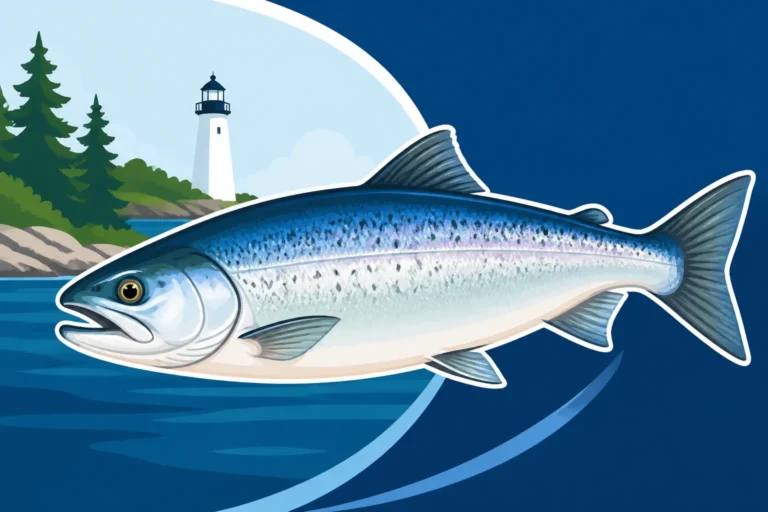
It's a common scenario in Maine: you've finally hooked into that magnificent landlocked salmon, the reel screaming, the fish leaping, and your heart pounding. As you bring it to the net, the excitement is palpable, but then a little voice in the back of your head pipes up: "Wait, what's the limit again for this lake?" Figuring out the exact daily limit for landlocked salmon in Maine can feel like navigating a maze, especially with all the varied regulations. This guide is here to untangle that confusion, breaking down the rules so you can fish with confidence and fully enjoy your time on our beautiful Maine waters.
Deciphering Maine's Daily Limits for Landlocked Salmon
Fishing regulations in Maine are designed to protect our precious fisheries while still allowing anglers to enjoy the sport. When it comes to landlocked salmon, a highly sought-after game fish, understanding these limits is crucial. It’s not just about avoiding a fine; it’s about being a responsible steward of our natural resources.
The General Law on Landlocked Salmon
For most waters across the vast expanse of Maine, there's a "General Law" that sets the baseline for landlocked salmon. This is the rule of thumb you can expect unless a specific body of water is listed with its own unique regulations. Under the General Law, you're typically allowed to keep a certain number of landlocked salmon per day. This standard limit aims to provide a reasonable harvest opportunity while safeguarding the overall health of the salmon population. It's the starting point for every angler, whether you're a seasoned veteran or just starting out. Always carry a copy of the current Maine Fishing Regulations Explained or keep a digital version handy on your phone.
However, it's vital to remember that "general" doesn't mean "universal." Many anglers, especially those new to a specific lake or pond, make the mistake of assuming the general law applies everywhere. This oversight can lead to accidental violations and contribute to pressure on local fish populations. Think of the General Law as your fallback, but always be prepared to find something different.
Beyond the Basics: Special Regulation Waters
Here's where it gets a little more complex, but also incredibly interesting from a conservation perspective. Maine has numerous "Special Regulation" waters, each with its own tailored set of rules for landlocked salmon. These special regulations are put in place by the Maine Department of Inland Fisheries and Wildlife (MDIFW) for very specific reasons, often to protect unique genetic strains of fish, manage population densities, or enhance trophy fisheries. For instance, a particular lake might have a lower daily limit than the general law, or perhaps a different size restriction, to allow more fish to reach maturity and spawn.
Imagine fishing on a remote pond in northern Maine where the MDIFW is trying to establish a self-sustaining population of wild landlocked salmon. They might implement a "catch and release only" rule for salmon, or a very restrictive one-fish daily limit to protect those critical breeding fish. Conversely, a highly stocked lake might have slightly more liberal rules to encourage harvest. You absolutely cannot assume. Before casting your line, especially on a new body of water, it is your responsibility to check the specific regulations. Websites and publications like the Maine Fishing Law Book Where to Get One are indispensable tools for this research. These special regulations are truly the backbone of Maine's adaptive fisheries management, ensuring that each unique ecosystem gets the attention it needs.
Understanding the "Possession Limit"
While the "daily limit" refers to the number of fish you can legally harvest in a single day, the "possession limit" is equally important. This rule dictates the total number of fish you can have in your possession at any given time, regardless of when they were caught. For landlocked salmon, the possession limit often mirrors the daily limit, meaning you can only possess the same number of fish you're allowed to catch in one day.
However, complications can arise if you're on a multi-day fishing trip. Let's say you caught your daily limit on Monday and properly stored them. If the possession limit is the same as the daily limit, you cannot go out and catch another daily limit on Tuesday and still be legal, because your total possession would exceed the allowed amount. This rule prevents anglers from accumulating large numbers of fish over several days, which could put undue pressure on the fishery. It's about preventing overharvest and ensuring fair access for all. Always double-check if the possession limit is different from the daily limit for the specific body of water you're fishing. For instance, if you're staying at a remote sporting camp for a week, you'll need to be mindful of your total haul from day to day to ensure you stay within both the daily and possession limits. This can sometimes feel tricky, but it's another layer of protection for the fish.
Size Matters: Length Restrictions for Landlocked Salmon
Beyond just the number of fish, Maine's regulations also frequently dictate the size of the landlocked salmon you can legally keep. This isn't just a quirky rule; it's a fundamental conservation strategy aimed at ensuring healthy, self-sustaining populations.
The Minimum Length Requirement
One of the most common length restrictions is the minimum length requirement. For landlocked salmon under General Law, there is usually a minimum length that a fish must meet to be legally kept. Any salmon shorter than this specified length must be immediately released back into the water unharmed. The reasoning behind this is straightforward: it allows juvenile fish to grow, mature, and ideally, spawn at least once before being harvested. This helps ensure that future generations of salmon are strong and plentiful.
Imagine you're out trolling for Landlocked Salmon Fishing in Maine and you hook a beautiful, vibrant salmon, but it measures just under the legal minimum. While it might be tempting to keep it, adhering to this rule is paramount. Proper measurement involves placing the fish on a flat surface or using a bump board, with its mouth closed and tail gently compressed to determine the total length. Many anglers keep a simple, foldable tape measure or a fishing ruler from brands like Amazon in their tackle boxes to make this easy. If it's short, a quick, gentle release is in order, giving that fish a chance to contribute to the fishery.
Slot Limits: A Conservation Strategy
Slot limits are a more nuanced approach to length restrictions, and they are increasingly common in certain Maine waters managed for trophy fish or specific population structures. Instead of just a minimum length, a slot limit specifies a range of lengths within which fish can be kept. Any fish shorter than the minimum of the slot must be released, and critically, any fish longer than the maximum of the slot must also be released.
For example, a special regulation might state: "The daily limit is one landlocked salmon, 16 to 18 inches in length." This means you can only keep a salmon if it falls within that specific 2-inch window. Fish under 16 inches are too small, and fish over 18 inches are considered valuable breeding stock or trophy fish that the MDIFW wants to protect to enhance the gene pool or provide larger fish for other anglers to encounter. This strategy is excellent for fostering a robust population, as it protects both the young, immature fish and the large, reproductively mature individuals. Understanding Landlocked Salmon Size and Bag Limits in Maine is crucial here, as these slot limits can vary significantly from one lake to another. This is where your pre-trip research truly pays off.
Identifying "Wild" vs. "Hatchery" Fish and Length Rules
In some instances, Maine regulations might even differentiate between wild and hatchery-reared landlocked salmon, often imposing different length or bag limits based on their origin. Hatchery fish are typically raised in state hatcheries and stocked into lakes to supplement natural populations and provide additional angling opportunities. Wild fish, on the other hand, are born and raised in the natural environment.
How do you tell the difference? Hatchery-reared salmon often have a clipped fin (most commonly the adipose fin, a small fleshy fin on the back near the tail) to identify them. This fin clip is a deliberate mark made before stocking. Regulations might allow for a higher daily limit on fin-clipped hatchery fish in certain waters, encouraging their harvest to reduce competition with wild populations or to make room for new stockings. Conversely, wild, unclipped salmon might have stricter limits or even be designated "catch and release only" to protect their genetic integrity and reproductive potential. This level of detail underscores the MDIFW's commitment to nuanced fisheries management. Learning How to Identify a Landlocked Salmon is a valuable skill that helps you comply with these rules and appreciate the conservation efforts in play.
Why These Regulations Exist: Protecting Maine's Prized Fishery
It's easy to sometimes feel bogged down by rules and regulations, but when it comes to Maine's landlocked salmon, every single one of those rules has a purpose. These aren't arbitrary decrees; they are carefully crafted guidelines designed to safeguard a truly special resource.
Sustaining the Population for Future Generations
The most fundamental reason for daily limits and size restrictions on landlocked salmon is conservation. Maine's landlocked salmon are a prized sport fish, attracting anglers from all over. Without thoughtful management, their populations could easily be depleted. These regulations ensure that enough salmon survive to reproduce, maintaining healthy stocks year after year. Think about it: if every angler kept every salmon they caught, regardless of size or number, our beautiful lakes would quickly become barren.
The MDIFW constantly monitors salmon populations, studying their growth rates, reproductive success, and overall health. When you abide by the daily limits and release undersized fish, you're directly contributing to the long-term viability of this fishery. You're helping to ensure that your children, grandchildren, and future generations of anglers will also have the opportunity to experience the thrill of battling a strong Maine salmon. It’s about more than just one fish; it’s about a living legacy. Engaging in Catch and Release Best Practices in Maine for fish that don't meet the regulations is a crucial part of this stewardship.
Balancing Angler Opportunity and Resource Health
There's a delicate balance to strike between allowing anglers to enjoy the sport and harvest fish, and ensuring the health of the fishery. Maine's regulations for landlocked salmon aim to achieve this balance. Anglers want to keep fish for the dinner table – there’s nothing quite like fresh-caught salmon. However, the MDIFW must ensure that the total harvest doesn't exceed what the population can sustain.
This is where the nuances come in. On some lakes with robust populations or where stocking efforts are significant, the limits might be a bit more generous. On other, more fragile waters, or those with unique wild strains, the limits will be much tighter, sometimes even catch-and-release only. This adaptive management approach ensures that each body of water is treated as an individual ecosystem, with regulations tailored to its specific needs. It's a testament to the scientific approach our state takes, striving to maximize recreational opportunity without compromising the future of the species. When planning a trip, consider which of the Best Fishing Lakes in Maine align with your goals, whether that's harvesting a few fish or targeting trophy-sized, catch-and-release only specimens.
The Ever-Changing Nature of Regulations
One of the most important things to understand is that fishing regulations are not set in stone forever. They are dynamic, evolving with the health of the fish populations, environmental changes, and new scientific data. What was legal last year might not be legal this year on a particular lake. Population surveys, angler feedback, and environmental factors like water temperature and baitfish availability all play a role in how these rules are adjusted.
Because of this, it is absolutely essential to check the most current regulations every single time you plan a fishing trip, especially if you haven't fished a particular body of water recently. Relying on old knowledge or anecdotal advice can easily lead to unintentional violations. The MDIFW provides its law book online and in print, and it's your best friend for staying informed. Think of it like checking the weather forecast – you wouldn't head out without it, and you shouldn't head out fishing without checking the current rules. This dynamic approach ensures that the rules are always serving the best interests of the fish and the anglers. You can often find detailed information for specific bodies of water by researching How to Find Maine Fishing Regulations for a Specific Lake.
Practical Advice for Anglers Targeting Landlocked Salmon
Navigating fishing regulations can sometimes feel like a chore, but with a bit of preparation and common sense, you can ensure your fishing experience for landlocked salmon in Maine is both enjoyable and fully compliant.
Before You Go: Research is Key
I can't stress this enough: your fishing trip starts long before you ever cast a line. The single most important thing you can do to ensure you're within the legal limits for landlocked salmon is to research the specific waters you plan to fish. Don't rely on general knowledge or what you remember from last year. Grab the current Maine Open Water & Ice Fishing Laws and Rules booklet. It’s available at most license agents, or you can find it digitally on the MDIFW website. This booklet clearly lists all the general laws and, crucially, provides a detailed section on "Special Fishing Laws by Waters."
Take a few minutes to look up your intended lake, pond, or river. Scan for landlocked salmon regulations, specifically noting the daily limit and any length restrictions, including slot limits. You might even want to print out the specific page or bookmark it on your phone for quick reference on the water. Many anglers find it useful to laminate these pages or put them in a waterproof sleeve in their tackle box. A small, durable notebook and pen, or even a waterproof tablet cover, are great ways to keep notes. For instance, if you’re heading to a popular lake like Sebago, you'll want to verify its unique Maine Landlocked Salmon Bag Limits as it's often under special management. Brands like Amazon offer a wide array of waterproof cases and portable binders that are perfect for keeping these vital documents safe and accessible.
On the Water: Measuring and Handling Your Catch
Once you're out on the water and you've hooked into a landlocked salmon, how you handle it is just as important as knowing the limits. First and foremost, have your measuring device ready. A simple, sturdy tape measure or a fishing bump board is essential. Lay the fish gently on the board or beside your tape, closing its mouth and gently compressing its tail to get an accurate length. If the fish doesn't meet the minimum length, or falls outside a specific slot limit, it needs to be released immediately.
When releasing, handle the fish as little as possible. Wet your hands before touching it to protect its slime coat. Avoid squeezing it around the gills or belly. If it’s hooked deeply, consider cutting the line as close to the hook as possible rather than tearing the hook out, especially if you're using barbless hooks, which are far kinder to the fish. Lower the fish gently back into the water, allowing it to swim away on its own. For detailed guidance, review resources on Catch and Release Best Practices in Maine. The goal is for that fish to have the best possible chance of survival and continue to contribute to the fishery.
When You Catch Your Limit: What Next?
So, you've legally harvested your daily limit of landlocked salmon – congratulations! Now what? The ethical angler doesn't just keep fishing for that species once they've reached their limit. This is where you have a few options. You could switch gears and target a different species of fish that has its own separate limits (always double-check that this is permitted and that you also comply with those limits). For example, if you caught your salmon limit, you might then switch to bass fishing, if local regulations allow.
Alternatively, you can switch to "catch and release only" for landlocked salmon. This means you continue to fish for them, but any salmon you catch after reaching your limit are immediately and gently released, regardless of their size. This is a great way to extend your fishing day and continue enjoying the thrill of the catch without impacting the resource further. Just ensure you're still practicing excellent fish handling. For the fish you've kept, make sure they are properly cared for – ideally, immediately placed on ice in a cooler to maintain their freshness. This ensures that your harvest is not only legal but also delicious. When selecting a cooler or insulated bag, remember Amazon has a vast selection of options to keep your catch fresh for the journey home.
Summary of Landlocked Salmon Daily & Size Limits (General Law Example)
To help you visualize, here’s a simplified overview based on typical General Law for landlocked salmon in Maine. Remember, always check specific water regulations as these can and do change.
| Rule Category | General Law (Example) | Key Consideration |
|---|---|---|
| Daily Bag Limit | 1 fish per day | May be lower or catch & release on special waters. |
| Minimum Length | 14 inches | Allows fish to mature; measure carefully. |
| Possession Limit | 1 fish | Total number you can possess, even over multiple days. |
| Fin Clipping Rules | N/A (check special regs) | Some waters differentiate between wild/hatchery fish. |
| Slot Limits | N/A (check special regs) | Common on managed trophy waters (e.g., 16-18 inches). |
| Fishing Season | Check Maine Fishing Season Dates Guide | Seasons vary, especially for specific species. |
This table is illustrative. Always consult the official Maine fishing regulations for the most current and specific rules for your chosen fishing location. Remember, obtaining your Maine Fishing License Guide is the first step, and understanding the nuances of the law is the next!
Disclaimer
This article is for general informational purposes only and does not constitute professional advice. Laws, prices and regulations vary by location and change over time. Consult a qualified professional for guidance on your specific situation.