Is a Freshwater License Enough for Maine Rivers?
It’s a common scenario: you’re standing by a beautiful Maine river, rod in hand, ready to cast, and a nagging question pops into your head – "Is my freshwater license really enough here, or do I need something else?" The truth is, Maine's diverse waterways, especially those flowing into the ocean, can create genuine confusion for even seasoned anglers. This guide aims to clear up that exact frustration, helping you understand the nuances of Maine's fishing regulations so you can focus on the joy of the catch, not the worry of a fine.
Understanding Maine's Dual Fishing License System
Maine is truly a gem for anglers, boasting thousands of miles of rivers and streams, countless lakes and ponds, and a stunning coastline. However, this incredible diversity also means a two-tiered system for fishing permissions that can be a little tricky to navigate, especially when you're talking about rivers. We don't have one single "river license" here; instead, it depends on the type of water you're fishing.
The Core Freshwater License
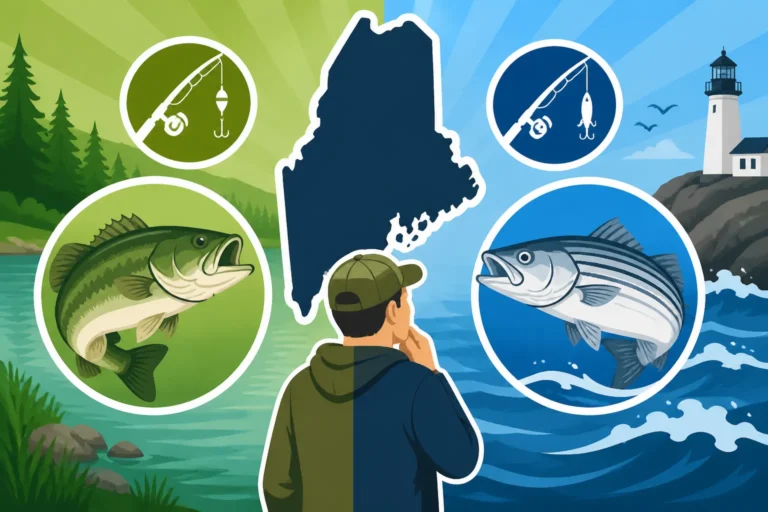
When most people think about fishing in Maine, they probably picture themselves on a tranquil lake or a rushing inland river, chasing after brook trout, landlocked salmon, or smallmouth bass. For these adventures, you absolutely need a Maine Fishing License Guide (which is what we typically refer to as a freshwater license). This license covers all of Maine's inland waters – think lakes, ponds, and the vast majority of our rivers and streams that aren't influenced by the ocean's tides.
If you’re planning a trip to a spot like Moosehead Lake or a remote pond in the North Woods, or even the upper reaches of the Kennebec River far from the coast, your freshwater license is your golden ticket. It's designed to manage fishing pressure and fund conservation efforts for species that live their entire lives, or the majority of their lives, in freshwater. Most of the time, securing your freshwater license is a straightforward process, whether you do it online, through a local agent, or directly from the Maine Department of Inland Fisheries & Wildlife (MDIF&W). Just remember, this license is usually valid for the calendar year, so make sure you check the expiration date.
The Maine Saltwater Fishing Registry
Now, let's talk about the salty side of things. If your angling dreams involve targeting striped bass, bluefish, mackerel, or groundfish in the open ocean, tidal bays, or estuaries, then you'll need to be registered with the Maine Saltwater Fishing Registry Guide. This isn't a traditional "license" in the same way the freshwater one is; it's more of a mandatory registration that helps the state monitor recreational saltwater fishing and comply with federal requirements.
The saltwater registry is crucial for coastal fishing. If you're dropping a line off a pier in Portland, casting from a beach in Kennebunkport, or venturing out on a deep sea charter from Boothbay Harbor, this registration is a must. The funds collected through this registration also contribute to the management of our valuable marine fisheries. It’s important to understand that even if you're on a charter boat where the captain has a commercial license, you, as the individual angler, might still need to be registered, depending on the specifics. Always confirm with your charter captain beforehand to avoid any last-minute surprises. This registry is often free for Maine residents, but there might be a small fee for non-residents, and it’s typically easy to complete online.
The Overlap: Tidal Rivers and Estuaries
Here's where the confusion often kicks in – what about those rivers that connect directly to the ocean? Maine has many beautiful rivers that are freshwater for miles upstream but then transition into tidal, brackish (a mix of fresh and salt), and finally full saltwater environments as they approach the coast. These zones, often called estuaries, are incredibly productive ecosystems, but they create a bit of a gray area for license requirements.
Consider the lower sections of rivers like the Penobscot, Kennebec, or Saco. In these areas, you might find traditionally freshwater species like smallmouth bass swimming alongside anadromous fish (those that migrate between fresh and salt water) like striped bass, alewives, or even sea-run brook trout. This overlap means that depending on where exactly you cast your line, you could technically be fishing in waters that require either a freshwater license, a saltwater registry, or even both! The challenge is knowing exactly where that invisible line is drawn, and it's not always obvious by just looking at the water. Many anglers have found themselves scratching their heads, wondering if the fish they just spotted is "salty" enough to warrant a different set of paperwork. This is precisely the frustration we want to help you avoid.
Navigating the Tidal Zone Quandary
The line between freshwater and saltwater in a river isn't always marked with a sign. It can be a dynamic boundary, shifting with the tides, rainfall, and even the time of year. Understanding this fluid transition is key to staying compliant with Maine's fishing regulations.
Identifying Tidal Influence in Rivers
So, how do you know if you're in a section of a river where a saltwater registry might be needed? There are several clues you can look for, both before you go and while you're on the water:
- Check Tide Charts: If the water level in the river visibly rises and falls with the ocean tides, you're almost certainly in a tidal zone. Even subtle changes in water flow or depth can indicate tidal influence. You can easily find tide charts for specific coastal towns and river mouths online or sometimes in local bait shops.
- Observe Fish Species: Are you catching or seeing fish typically associated with saltwater, like striped bass, mackerel, or even small flounder? If so, you're in tidal waters. Conversely, if you're only seeing freshwater species like bass, trout, or perch, you're likely further upstream in a purely freshwater zone.
- Water Clarity and Salinity: While not always obvious to the naked eye, tidal waters tend to be murkier than clear freshwater rivers due to suspended sediments. In some areas, you might even be able to discern a slight briny smell if the saltwater influence is strong. You won't be tasting the water, of course, but keen observation can help.
- Local Knowledge and Signage: The best resource is often local anglers, bait shop owners, or Maine game wardens. They know the rivers intimately and can tell you exactly where the tidal zones begin and end. Sometimes, you might even find official signage from MDIF&W or local municipalities indicating specific regulations for a particular stretch of river. When in doubt, a quick call to MDIF&W can clarify things.
- River Maps and Navigational Charts: Detailed maps often indicate the "head of tide" or show depths that change with tidal cycles, which can be a strong indicator. Navigational charts for boaters will clearly delineate channels and depths that are influenced by the ocean. You can find these online, or purchase waterproof versions from retailers like Amazon for easy use on the water.
Specific Examples of Maine Tidal Rivers
Let's look at some real-world examples to illustrate this point:
- Kennebec River: This is a prime example. The upper Kennebec, especially above Waterville, is undeniably freshwater, famous for its smallmouth bass and landlocked salmon. However, once you get downstream of Augusta, the river becomes increasingly tidal. By the time you reach Bath and Popham Beach, it's full-blown saltwater, teeming with striped bass during their seasonal runs. Anglers targeting striped bass in the lower Kennebec would absolutely need their saltwater registry, in addition to a freshwater license if they plan to venture upstream for other species. This river is a fantastic illustration of why understanding the specific section you're fishing is so vital.
- Penobscot River: Similarly, the Penobscot, Maine's largest river, undergoes a dramatic transition. While its upper reaches near Baxter State Park are wild trout and salmon waters, the lower Penobscot, particularly below Bangor, is heavily influenced by tides. This area is a crucial habitat for migrating fish like alewives and serves as a popular spot for striped bass fishing. So, if you're casting lures in downtown Bangor for stripers, your saltwater registry is definitely in play. However, if you're upstream, say around Orono, for smallmouth bass, then a freshwater license is typically sufficient.
- Saco River: Flowing through southwestern Maine, the Saco also exhibits this tidal phenomenon. Upstream, it’s a classic freshwater river, offering great opportunities for bass and trout. But as it approaches Saco and Biddeford, it broadens into an estuary before meeting the Atlantic. Anglers here can find themselves targeting stripers near the mouth or casting for freshwater species further upstream. The changing tides bring in marine fish, making the saltwater registry necessary for those pursuing them.
These examples highlight that a "Maine river" isn't a monolithic entity when it comes to licensing. Each stretch can have unique characteristics and, therefore, different requirements. This can feel like a lot to keep track of, but a little research goes a long way.
What Happens If You Fish Without the Right License?
Nobody wants to get into trouble while enjoying a peaceful day on the water. Fishing without the appropriate license or registration in Maine is a violation of state law. While the specific penalties can vary based on the nature of the infraction and the discretion of the warden, you're generally looking at fines. These fines can range from modest to significant, and they certainly add an unwelcome sour note to your fishing trip.
Beyond the monetary cost, there's the inconvenience and potential embarrassment of dealing with a game warden, who are simply doing their job to protect Maine's natural resources. It’s not a pleasant experience for anyone. The MDIF&W website and their annual Maine Fishing Regulations Explained guide are your best friends here. They lay out all the rules, zones, and requirements in detail. Trust me, it's far easier and cheaper to spend a few minutes understanding the regulations and purchasing the correct license or registry than to face the consequences of not doing so. Always prioritize being prepared and compliant.
Getting the Right Coverage for River Fishing in Maine
Navigating the fresh and saltwater divide in Maine’s rivers doesn’t have to be a headache. With a bit of planning and knowledge, you can ensure you’re always properly covered, allowing you to fully enjoy the incredible fishing opportunities.
When to Get Both Licenses
Given the complexity of tidal rivers, the safest and most stress-free approach for many anglers who plan to explore these transitional waters is to simply obtain both a freshwater fishing license and complete the saltwater fishing registry. This "belt and suspenders" method ensures you're covered, regardless of where the fish lead you within these ambiguous zones.
Think about it this way: if you're fishing the lower Kennebec River for striped bass (requiring the saltwater registry) but then decide to try a tributary upstream for brook trout (requiring a freshwater license), having both means you don't have to pack up and move or worry about switching locations. This is especially true for those targeting anadromous species like striped bass, alewives, or even certain salmon strains that spend parts of their life in both environments. Even if you only think you might drift into a tidal zone, getting both provides peace of mind. It's often the most practical solution for comprehensive river fishing in Maine.
Where to Purchase Your Licenses and Registry
Maine makes it relatively easy to get your fishing credentials. You have a few convenient options:
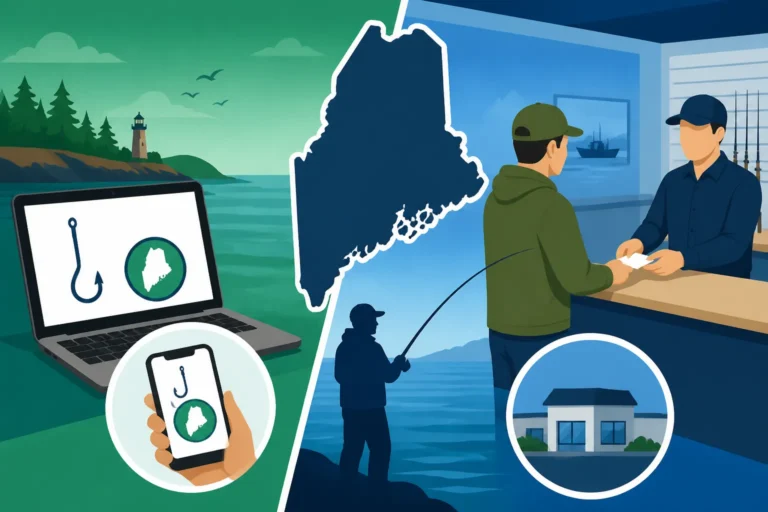
- Online: This is often the quickest and easiest way. The Maine Department of Inland Fisheries & Wildlife (MDIF&W) website allows you to purchase your freshwater license and complete your saltwater registry from the comfort of your home. You can often print a temporary license immediately and receive the official one in the mail. This is particularly handy for planning trips in advance.
- Local Agents: Many sporting goods stores, bait shops, and even some general stores across Maine are authorized license agents. This is a fantastic option if you prefer to speak with someone in person, ask questions, and get some local tips on fishing spots. Plus, supporting local businesses is always a good thing! Often, these agents can provide current information on Maine Fishing Season Dates Guide or Maine Fish Bag Limits Guide too.
- MDIF&W Offices: You can also visit one of the MDIF&W regional offices during business hours. While less convenient for most, it's an option if you need specific guidance or have unique circumstances.
Before you head out, always make sure your license and registration are valid for the current year. You can also look into options like a Combination Hunting and Fishing License Options if you enjoy both activities, which can sometimes offer savings.
Tools and Resources for Clarity
Beyond just buying your licenses, there are invaluable resources available to help you understand the specific regulations for any given body of water in Maine:
- MDIF&W Website: The official source for all Maine Fishing Regulations Explained. They have interactive maps, FAQs, and detailed information on specific waters.
- Annual Fishing Law Book: Every year, MDIF&W publishes a comprehensive rule book. This small booklet is packed with information on general laws, special regulations for specific waters (and there are many special regulations in Maine, often tied to specific rivers or lakes!), bag limits, and season dates. You can usually pick one up for free wherever licenses are sold, or view it online. Having a physical copy can be incredibly helpful when you're out in the field and don't have cell service. Consider getting a waterproof pouch for it, or downloading a PDF to your phone if you plan to rely on a digital version. Retailers like Amazon offer a variety of sturdy, waterproof cases for electronics and documents.
- Local Bait Shops and Guides: As mentioned, these folks are goldmines of information. They often know the intricate details of local waters, including where tidal influences start and stop, and which licenses are typically required for different species in their area. Hiring a Maine Fishing Charters Guide or a local Hiring a Maine Fishing Guide is an excellent way to learn the ropes and ensure you're fishing legally and effectively. A good guide will always ensure you have the correct documentation for the waters you're fishing.
- Fishing Apps: Several fishing apps (some paid, some free) provide detailed maps with public access points, fish species, and sometimes even a summary of regulations for specific bodies of water. While these are helpful, always cross-reference with the official MDIF&W resources, as app data may not always be perfectly up-to-date with the latest regulatory changes.
By utilizing these resources, you can cast your line with confidence, knowing you're fully prepared for whatever Maine's beautiful rivers have to offer, whether it's a feisty landlocked salmon or a hard-fighting striped bass.
Here's a quick reference table to help clarify the main distinctions:
| Feature | Maine Freshwater Fishing License | Maine Saltwater Fishing Registry |
|---|---|---|
| Primary Coverage | All inland lakes, ponds, and non-tidal rivers/streams. | Coastal waters, estuaries, and tidal portions of rivers. |
| Species Targeted | Brook trout, landlocked salmon, bass, perch, pickerel, etc. | Striped bass, mackerel, bluefish, flounder, cod, pollock. |
| Typical Water Type | Still waters (lakes/ponds), flowing non-tidal rivers. | Ocean, bays, harbors, tidal river mouths. |
| Purpose | Funds inland fisheries management & conservation. | Funds marine fisheries management & federal compliance. |
| Cost (Resident) | Varies by age/type (e.g., annual, 3-day). | Often free. |
| Cost (Non-Resident) | Varies by age/type (e.g., annual, 3-day). | Small fee. |
| Validity | Typically calendar year (Jan 1 – Dec 31). | Typically calendar year (Jan 1 – Dec 31). |
| How to Obtain | Online (MDIF&W), local agents, MDIF&W offices. | Online (MDIF&W). |
| Required for Tidal Rivers | Potentially, if targeting freshwater species or mixed zones. | Potentially, if targeting saltwater species or mixed zones. |
| Peace of Mind (Mixed Waters) | Best to have both if fishing tidal rivers with mixed species. | Best to have both if fishing tidal rivers with mixed species. |
Disclaimer
Please note that fishing regulations in Maine can change. While this guide provides comprehensive information based on current knowledge, it is always your responsibility to consult the most recent official regulations published by the Maine Department of Inland Fisheries & Wildlife (MDIF&W) before you go fishing. This content is for informational purposes only and should not be considered legal advice.