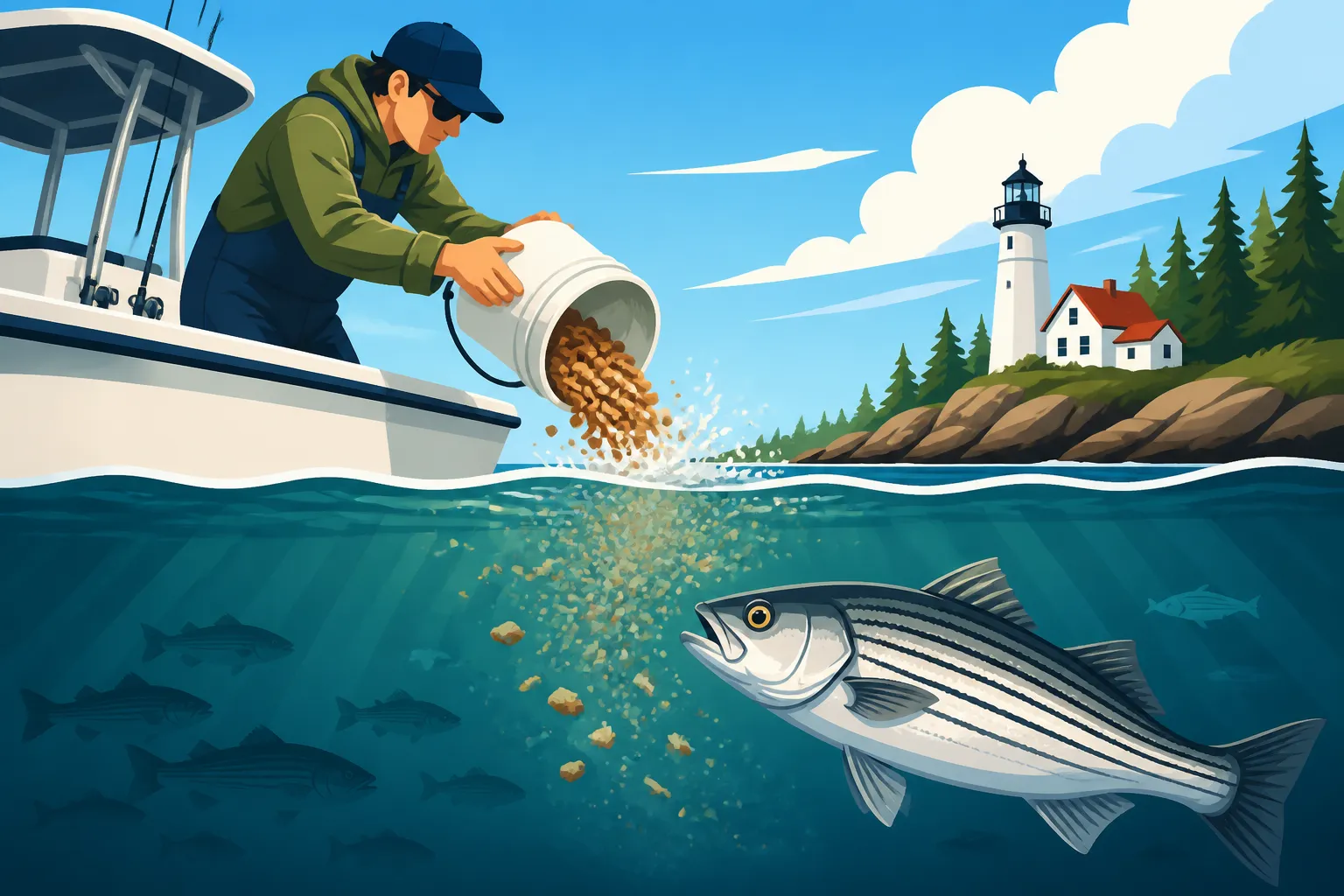
How to Chum for Striped Bass
Many anglers know the frustration of seeing striped bass boiling on the surface just out of casting range, or worse, knowing they’re in the general area but just not hitting your presentation. It feels like a guessing game sometimes, especially when you’re trying to lure them in closer to your boat or even from shore. This comprehensive guide is dedicated to unlocking the power of chumming, a time-tested technique that can dramatically improve your success rate for striped bass here in Maine, turning those frustrating days into memorable catches.
What is Chumming and Why It Works for Striped Bass?
Chumming for striped bass isn't just about throwing food into the water; it's a strategic way to leverage a fish's innate senses to bring them directly to you. It creates an irresistible invitation, making your fishing experience much more interactive and often more rewarding.
The Science Behind Striped Bass Attraction
At its heart, chumming is the practice of creating an olfactory, or scent, trail in the water to attract fish. Imagine a subtle, delicious aroma wafting through the water, leading hungry fish right to your waiting hooks. Fish, especially predators like striped bass, possess an incredibly sophisticated sense of smell. Their nostrils detect minute concentrations of chemicals in the water, allowing them to track down prey over considerable distances. Think of it like a bloodhound following a scent trail, but underwater.
Beyond smell, fish also rely on their lateral line system. This sensory organ runs along the sides of their bodies and detects changes in water pressure and vibrations. When you introduce a stream of cut bait, mashed up fish, or even fish oils into the water, you're not only creating a scent trail but also a subtle disturbance and particulate matter that can be detected by this lateral line. This combination acts as a powerful beacon, signaling an easy meal is nearby. For striped bass, which are opportunistic feeders always on the lookout for an easy meal, this combination of scent and subtle visual cues is often too tempting to ignore.
Why Maine Stripers Respond to Chum
Maine's coastal waters, while beautiful and productive, can sometimes present challenges for anglers. The water can be clear, allowing fish to be quite selective, and baitfish schools can be widespread, making it tough to pinpoint where the stripers are feeding. This is precisely where chumming shines.
Striped bass in Maine feast on a variety of local baitfish, including mackerel, herring, sand eels, and menhaden (often called "pogies"). When you chum with these very same species, you’re mimicking a natural feeding event. You're essentially creating a concentrated, easy-to-access "dinner bell" that calls them in. Instead of having to actively hunt down scattered baitfish, they can simply follow the scent trail to a continuous buffet you've set up. This is particularly effective when the stripers are spread out or not actively chasing large schools of bait.
Chumming helps to concentrate scattered fish, turning a wide expanse of ocean into a focused feeding zone. Picture a big area where stripers might be lurking. By establishing a consistent chum slick, you’re drawing them out of hiding and bringing them into a tighter group, making them much easier to target with your bait or lures. This technique can be a game-changer, especially on those days when the fish seem reluctant to commit or are holding deeper in the water column. You might be surprised at how quickly a seemingly barren spot can come alive with feeding stripers once a good chum slick is established. If you're looking to learn more about the specifics of enticing these fish, our guide on Maine Striped Bass Fishing Techniques offers additional valuable insights.
Choosing the Right Chum and Essential Gear
The success of your chumming operation largely hinges on two factors: the quality of your chum and having the right tools to deploy it effectively. Just like baking, the ingredients matter!
Natural Bait Options for Chum
When it comes to the best chum, often the freshest and most natural options are right under your nose. The key is to use what the striped bass are already eating in Maine's waters. Mackerel, menhaden (pogies), and herring are absolute top contenders. These oily fish release a strong, attractive scent that stripers simply can't resist.
To prepare your natural chum, freshness is paramount. If you're able to catch your own mackerel or pogies, that's ideal. Even fresh ones from a local fish market can work. You'll want to chop them into small, manageable pieces. Some anglers prefer to run them through a grinder for a finer, more consistent consistency that creates a wider, more persistent slick. Others like a mix of finely ground bits and larger chunks. The larger chunks offer a visual appeal and can entice bigger fish that are looking for a more substantial meal, while the finer particles create the long-distance scent trail. Remember, the goal isn't to feed the fish until they're full, but to tease them with a consistent stream of tantalizing scent and small morsels. You can learn more about these crucial baitfish in our article on Maine Baitfish and Smelt Species.
Even if you're not intentionally catching bait for chum, don't discard the scraps from filleting your keeper fish. Those heads, tails, and guts are gold for chumming! Simply chop them up and add them to your chum bucket. This ensures nothing goes to waste and provides an ultra-fresh, hyper-local chum source that matches what the fish in the area are already familiar with.
Commercial Chum Products and Additives
For those times when fresh bait isn't readily available, or you want to supercharge your natural chum, commercial chum products and additives are fantastic options. Many local bait and tackle shops throughout Maine, from Kittery to Ellsworth, carry frozen chum blocks. These are typically made from ground-up menhaden or other oily fish and are incredibly convenient. You simply unwrap them, put them in a chum bag, and deploy them. Brands like "Baitmasters" are popular and effective choices.
Beyond frozen blocks, you can find a variety of fish oils and scent attractants. Menhaden oil, often simply called "pogy oil," is a staple. It's a thick, potent oil that can be drizzled into your chum mixture or directly into the water. Anise oil is another old-school favorite, thought to mask human scent and add an appealing aroma. You can find these oils at many fishing supply stores or easily order them from online retailers like Amazon. Some anglers even experiment with commercially available "fish attractant" sprays or gels, which can be applied to your bait or directly to your chum for an extra boost. Combining natural chum with these commercial additives can create a truly irresistible scent trail, enhancing both the reach and potency of your slick. When purchasing, look for high-quality, pure fish oils for the best results.
Essential Chumming Gear
To execute a successful chumming operation, you'll need a few specialized pieces of gear. First and foremost, a sturdy chum bucket or a dedicated chum bag is essential. Chum buckets are typically plastic containers with holes that allow water to circulate, slowly dispersing the chum. Chum bags, often made of robust mesh, are designed to hold chum (especially frozen blocks or larger chunks) and allow the scent and small particles to leach out into the water. You can find excellent, durable chum bags on Amazon that will withstand repeated use and the demands of saltwater fishing.
If you're using fresh bait, a chum grinder can be incredibly useful. Manual grinders are perfect for small operations, while electric grinders can process larger quantities quickly. Don't forget a sharp, reliable knife for chopping bait if you're not grinding it. A good quality, non-slip fillet knife works wonders. You'll also need strong, durable rope to attach your chum bucket or bag to your boat or a fixed structure if shore fishing. Heavy-duty gloves are also a must to protect your hands from bait oils and sharp edges, as well as a dedicated cooler for storing your fresh bait and chum to keep it from spoiling. Having all your gear organized before you head out will make the process much smoother and more efficient.
| Chum Type | Pros | Cons | Best Use Case |
|---|---|---|---|
| Fresh Cut Bait | Strongest, most natural scent | Requires preparation, can be messy | When you have access to fresh mackerel, pogies, herring |
| Frozen Chum Block | Convenient, consistent release, widely available | Less potent than fresh, can be expensive | Quick setup, consistent slick in most conditions |
| Fish Oil/Additives | Boosts existing chum, long-lasting scent | Doesn't provide solid food particles | Enhancing any chum, subtle slick for finicky fish |
| Ground Bait | Creates fine, wide-spreading slick | Requires grinder, very messy | Drawing fish from a distance, rapid scent dispersion |
Strategic Chumming Techniques for Maine Waters
Chumming isn't just about tossing bait overboard; it's an art that requires understanding currents, wind, and fish behavior. Tailoring your technique to your fishing location, whether from shore or a boat, will make all the difference in attracting those Maine stripers.
Shore-Based Chumming Strategies
Chumming from shore presents unique challenges compared to boat fishing, primarily due to limited mobility and the need to work with prevailing currents. However, it can be incredibly effective when done correctly. The key is to choose your location wisely. Look for natural funnels like jetties, rock outcroppings, or bridge pilings where currents naturally flow. These spots act as highways for baitfish and, consequently, for striped bass. In areas around the mouth of the Kennebec River or along the rocky coast of Casco Bay, these features are abundant.
When shore-chumming, you often can't deploy a large, continuous chum slick like you can from a boat. Instead, think about smaller, more targeted approaches. One effective method is to use a small mesh chum bag tied to a heavy sinker, which you can cast out and retrieve, or simply let sit in a good current flow. Another option is to create small "chum balls" made of ground bait mixed with a binder (like oats or breadcrumbs) that you can hand-toss into the water. Cast these up-current from your fishing spot, allowing the scent to drift back towards your lines. You're aiming to create a subtle, enticing trail that leads stripers from deeper water or further down the shore right into your casting range. Remember to cast your actual fishing bait into the edge of that scent trail, so it appears as another easy meal. For a deeper dive into fishing from land, check out our guide on How to Fish for Striped Bass From Shore.
Boat-Based Chumming for Stripers
Chumming from a boat offers significantly more control and flexibility, allowing you to create a more consistent and effective chum slick. You have the advantage of mobility, enabling you to follow the action or precisely position your boat to maximize the slick's impact.
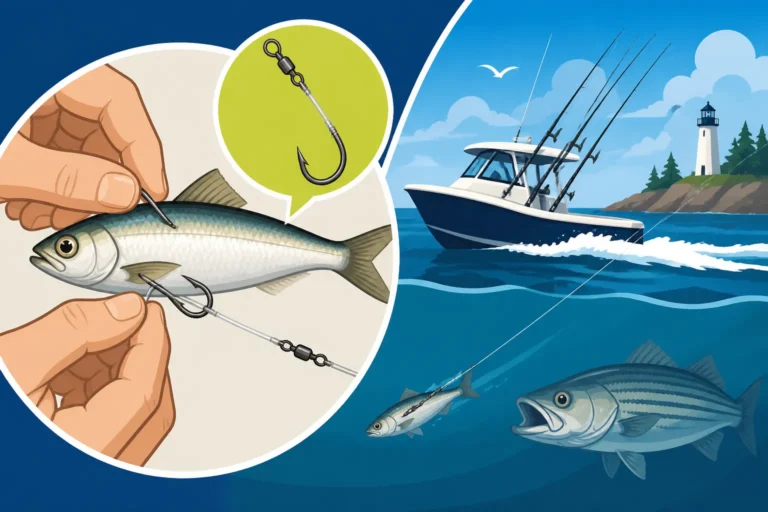
There are two primary methods for boat-based chumming: anchoring and drifting. If you find a promising spot—perhaps a rocky reef, a channel edge, or an area where you've marked baitfish—anchoring allows you to establish a consistent, long-term chum slick. Deploy your anchor and then set out your chum bag (or bucket) off the stern, letting the current carry the scent away from your boat. Adjust the depth of your chum bag so it’s in the same water column where you expect the stripers to be. This continuous flow will draw fish to your boat, and you can then present your baits (live or cut) directly in the chum slick.
Alternatively, drifting with the current while chumming can be incredibly effective, especially when searching for scattered fish or covering a wider area. Instead of anchoring, you allow your boat to drift with the tide or wind, deploying your chum bag off the stern as you go. This creates a moving slick, essentially "trolling" a scent trail that hungry stripers will pick up on. As you drift, keep an eye on your fish finder for signs of activity. The moment you see some marks, you can either continue drifting over them or quickly re-anchor to concentrate your efforts. Understanding the local currents is paramount here, as detailed in our article on Reading Tides for Striped Bass Fishing. Whether anchored or drifting, always present your baited hooks within or just on the edge of your chum slick, making them indistinguishable from the other tasty morsels flowing out. If you're planning a trip by boat, read up on How to Fish for Striped Bass From a Boat to make the most of your time on the water.
Mastering the Chum Slick
The "chum slick" isn't just a random dispersion of bait; it's a carefully cultivated, continuous trail of scent and small food particles that acts as an underwater highway for fish. Mastering this slick is what separates successful chumming from just wasting bait. The fundamental principle is consistency: you want a steady, subtle stream of chum, not a massive dump.
Over-chumming is a common mistake. If you put too much food in the water at once, you risk satiating the fish before they even get to your baited hook. The goal is to tease them, to draw them in with the promise of food and keep them interested, making them more likely to grab your hooked offering. Think of it like a persistent, low-volume drip rather than a gush. This means using chum bags that release slowly or manually tossing small handfuls of ground bait every few minutes.
Reading the current and wind is absolutely critical for maintaining a proper slick. The direction and strength of the tide will dictate where your chum goes. You need to position your boat or cast your chum up-current so that the scent trail drifts into your fishing zone. Wind can also play a significant role, affecting your boat's drift and the surface currents. On a windy day, your chum might disperse differently, or your boat might drift faster than the current, leading to a disconnected slick. Pay close attention to how your chum is dispersing; sometimes a simple shift in boat position or a slight adjustment to your chum bag's depth can make all the difference. Knowing the Best Tide for Striped Bass Fishing in Maine will greatly assist you in planning your chumming strategy.
Important Considerations and Regulations for Chumming in Maine
While chumming is a highly effective technique, it's crucial to approach it with an understanding of local regulations, environmental responsibility, and safety. Ignoring these aspects can lead to fines, harm to the environment, or even personal injury.
Understanding Maine Regulations
Before you even think about putting chum in the water, it's vital to be aware of Maine's fishing regulations. While there aren't specific "chumming permits," all general fishing laws apply. This includes possessing a valid Maine Saltwater Fishing Registry Guide for saltwater fishing, understanding bait harvest rules, and adhering to fish size and bag limits. For striped bass, Maine has very specific rules, including a slot limit, which means you can only keep fish within a certain size range. This is designed to protect both juvenile and large breeding fish. Our article on Maine Fishing Regulations Explained provides a comprehensive overview, and specifics about Maine Striped Bass Season and Limits and the Striped Bass Slot Limit in Maine are particularly important. Always double-check the current year's regulations from the Maine Department of Marine Resources (DMR) before you head out, as rules can change. You certainly don't want to get a ticket for a violation! Also, be mindful of how many fish you can take home by checking How Many Striped Bass Can You Keep in Maine?.
Environmental Responsibility
As anglers, we have a responsibility to be stewards of the environment. When chumming, this means being mindful of what you're introducing into the water. Always use natural, biodegradable chum materials. Avoid using anything that contains plastics, chemicals, or non-biodegradable fillers. This includes ensuring your chum bags are free of synthetic materials that could break down and pollute the ocean.
Cleanliness is paramount. Never leave trash, discarded chum containers, or any other pollutants behind, whether you're fishing from shore or a boat. Pack out everything you pack in. Also, be considerate of other water users. Avoid chumming directly into swimming areas, near public beaches, or in heavy boat traffic zones, as the scent could attract unwanted attention or create a nuisance. Remember, the goal is to enhance your fishing experience without negatively impacting the natural environment or other people enjoying Maine's beautiful coast.
Safety While Chumming
Safety should always be your top priority on the water. When preparing chum, especially if you're chopping fresh bait, exercise extreme caution with sharp knives. Always cut away from your body and consider wearing cut-resistant gloves to protect your hands from accidental slips. Fresh bait can also be slippery, so ensure you have a stable surface to work on.
If you're chumming from a boat, be acutely aware of your surroundings. When anchored, ensure your anchor is properly set and holding, especially if you're in an area with strong currents or tides. Keep a lookout for other vessels, swimmers, and hazards. Always have your personal flotation devices (PFDs) readily accessible and consider wearing one, particularly in colder water or if you're fishing alone. A reliable communication device, such as a VHF radio or a fully charged cell phone in a waterproof case, is also crucial in case of an emergency. While the excitement of a good bite is exhilarating, a safe return home is always the most important part of any fishing trip.
Disclaimer
The information provided in this guide is for general informational purposes only and should not be considered a substitute for consulting the official Maine fishing regulations. Anglers are responsible for understanding and adhering to all current laws and regulations set forth by the Maine Department of Marine Resources. Fishing conditions and fish behavior can vary, and success is never guaranteed.