How Many Lines Are Legal for Maine Ice Fishing?
There's nothing quite like the crisp air and quiet solitude of ice fishing in Maine, but the last thing anyone wants is to unknowingly break a rule and face a hefty fine. Many anglers, especially those new to the state or trying ice fishing for the first time, often wonder about the legalities surrounding how many lines they can use. It can feel like you need a law degree to understand all the nuances, but don't worry – this guide will break down exactly how many lines are legal for Maine ice fishing and help you stay on the right side of the regulations.
The General Rule for Ice Fishing Lines in Maine
Navigating fishing regulations can sometimes feel like trying to untangle a stubborn fishing line – confusing and frustrating. However, when it comes to the number of lines you can use while ice fishing in Maine, there's a pretty straightforward general rule. Understanding this is your first step to a worry-free day on the ice.
The Standard Six-Line Limit
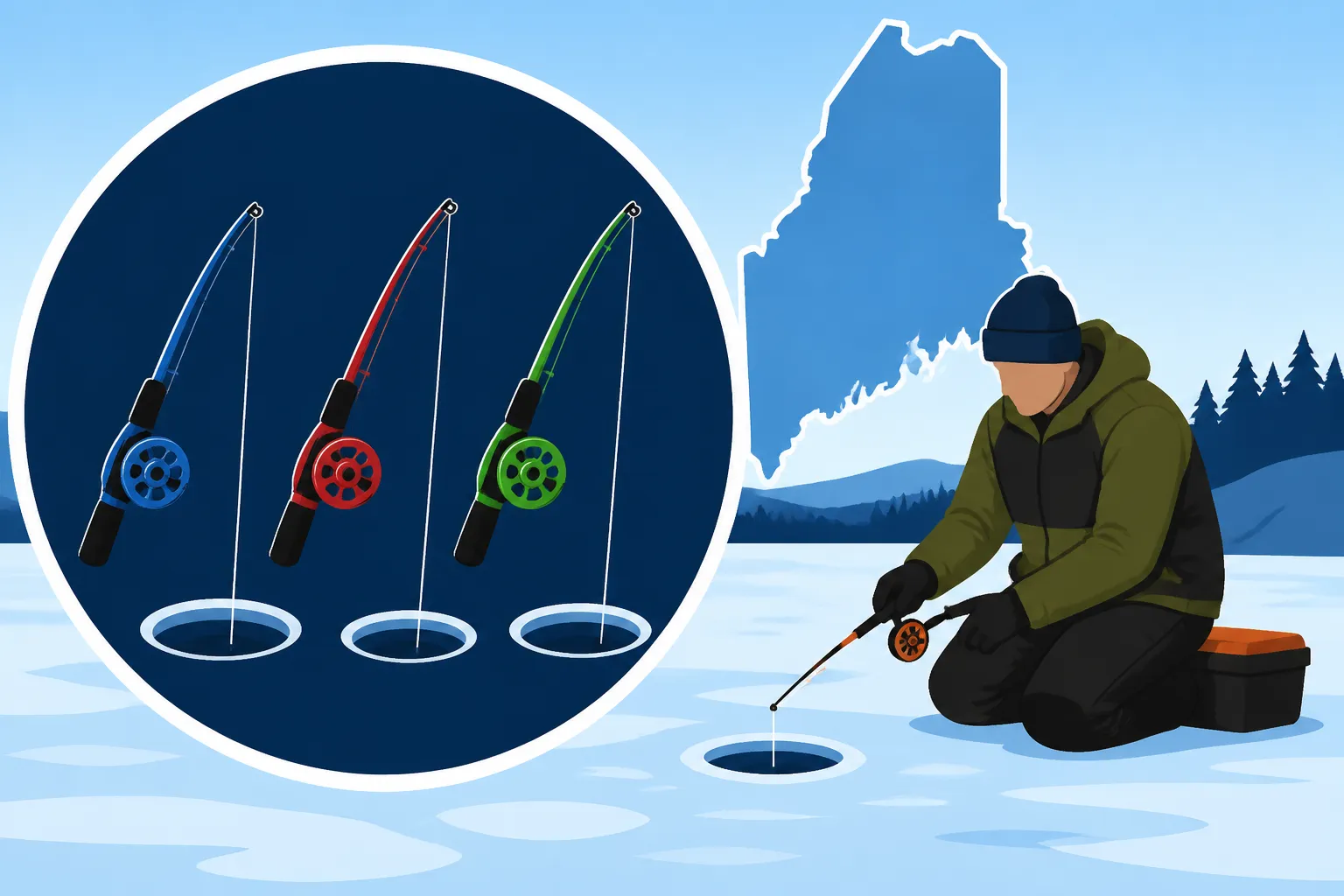
Under Maine's general fishing laws, when you're out on the hard water, you are typically allowed to fish with up to six lines at any given time. This means six separate fishing devices, whether they are traditional tip-ups or jigging rods. This limit is set to ensure fair chase and prevent overharvesting, balancing the opportunity for a good catch with the sustainability of Maine's precious fish populations. Imagine trying to manage more than six lines by yourself, especially when a flag goes up on one and you're already jigging another – it quickly becomes a chaotic scene! This limit allows you to spread out your efforts across a small area without becoming overwhelmed or putting undue pressure on the fish.
It's important to realize that this "six lines" rule is per individual angler. So, if you and a buddy are out together, you can each have up to six lines, for a total of twelve lines between the two of you, as long as you each hold a valid Maine Fishing License Guide. This is fantastic for covering more water and increasing your chances, especially when targeting elusive species like togue or landlocked salmon that might be cruising at different depths or in varying parts of a cove. Just remember, each angler must be actively tending to their own set of lines, and it’s not a free-for-all where one person sets out all twelve.
What "Attended" Truly Means
Here's where it gets a little more specific and where many anglers can mistakenly run into trouble: the concept of "attended lines." Maine law stipulates that all lines you are fishing must be under your immediate personal control and kept within your sight. What does "immediate personal control" really mean? It implies that you must be close enough to your lines to be able to get to them quickly and set the hook, or retrieve the fish, as soon as a flag goes up or you feel a bite. You should also be able to oversee the integrity of your setup and ensure no snags or issues arise.
This "attended" rule prevents anglers from setting out lines and then wandering off to another part of the lake for an extended period, or worse, leaving them overnight. It's about responsibility and ethical angling. If you've got six tip-ups spread across a football field-sized area, and you're huddled by your ice shack enjoying a hot cocoa while one is way out of sight, you're likely in violation. A good rule of thumb is to set your lines close enough that you can easily see all of them, hear any tip-up flags pop, and respond promptly. This often means staying within a reasonable distance, typically within 100-200 feet, depending on visibility and terrain. Think of it like watching your kids on a playground – you might not be right next to each one, but you always have them in sight and can reach them quickly if needed.
Special Waters and Local Exceptions
Just when you think you've got the general law figured out, Maine reminds you that it’s a state of endless diverse waters, each with its own charm and, sometimes, its own rules! While the six-line limit is the baseline, Maine's Department of Inland Fisheries and Wildlife (MDIFW) has the authority to implement specific regulations for individual lakes, ponds, and even sections of rivers to protect particular fish populations or manage unique habitats.
Navigating Maine's Inconsistent Regulations
It’s true, the regulations aren't always consistent, and that can be a source of real frustration for anglers. You might be fishing a small pond with the standard six-line limit one weekend, and the next, head to a larger lake only to find that you're restricted to two lines, or even just one! This isn't done to make your life harder, but rather to serve very specific conservation goals. For example, some sensitive trout ponds might have tighter restrictions to reduce fishing pressure on native Brook Trout Fishing in Maine populations, while other lakes managed for trophy Landlocked Salmon Fishing in Maine might encourage more lines to allow anglers to cover more water for these roaming predators.
These special regulations are often a response to biological data, angler surveys, or management goals for specific fisheries. They might affect not only line limits but also things like Maine Fish Bag Limits Guide, length limits, and even the types of bait or lures you can use. So, while it can feel like a moving target, it's essential to accept that these variations are part of responsible fisheries management in a state as rich and varied as Maine.
Checking Specific Lake and Pond Rules
Given the variability, the most critical piece of advice for any Maine ice angler is to always check the specific regulations for the waterbody you plan to fish before you even drill your first hole. You can't just assume the general law applies everywhere. The MDIFW provides a comprehensive rule book, often referred to as the "Law Book," which is updated annually. You can pick up a physical copy at most bait shops, outdoor retailers like Cabela's, or town offices where licenses are sold. However, the most convenient and up-to-date resource is their official website, which usually offers a searchable digital version and specific amendments.
When you're looking up a waterbody, pay close attention to the section titled "Special Regulations." This is where you'll find any deviations from the general law regarding line limits, seasons, or species-specific rules. For instance, some popular spots might have a "two-line maximum" specifically for ice fishing, or even require only one line on certain days. Don't rely on what you heard from a friend's cousin's neighbor's dog walker – always go straight to the official source. Making this a routine part of your planning, just like checking the weather or making sure you have enough bait, will save you a lot of potential headaches and unwelcome visits from a game warden. It also helps you understand the bigger picture of Maine Fishing Regulations Explained.
Practical Tips for Managing Your Legal Line Limits
Successfully managing your legal quota of lines while ice fishing isn't just about avoiding a fine; it's about maximizing your efficiency and enjoyment on the ice. With up to six lines, you can truly cover a lot of ground, but it requires a bit of strategy and organization.
Choosing the Right Gear for Multiple Setups
When you're running multiple lines, having the right gear is paramount. Most experienced ice anglers opt for a combination of tip-ups and jigging rods. Tip-ups are fantastic for passive fishing; you bait them, set them, and wait for the flag to signal a bite. Many anglers, including myself, have a collection of quality tip-ups from brands like Heritage Lures or Jack Traps, which are renowned for their durability in Maine's harsh winters. You can often find great deals on these, and other essential ice fishing supplies, on Amazon. For active fishing, a good jigging rod allows you to work a lure, enticing bites and getting a feel for the fish below.
Consider using different bait and lure combinations on your various lines. For example, you might set some tip-ups with live bait like shiners or smelt for Lake Trout and Togue Fishing in Maine or landlocked salmon, while jigging another hole with a spoon for perch or brook trout. This strategy helps you figure out what the fish are biting on that particular day. When you are getting ready to set up, make sure your gear is organized. A good tip-up bag or bucket system can keep everything tidy and prevent tangles, especially when you're moving between holes. For jigging, having a few rods pre-rigged with different lures can save precious time when the bite turns on. Don't forget, when rigging up your lines, a secure knot is key. You can find many strong and reliable lines, often at a discount, on Amazon to ensure you're ready for any size catch.
Staying Organized and Compliant
Keeping track of six lines, especially if they're spread out, requires a system. One common method is to use brightly colored flags or reflective tape on your tip-ups so they're easily visible, even from a distance or in low light. Some anglers even use small LED lights on their flags for night fishing, which can be immensely helpful. Always make sure your name and address are clearly marked on each tip-up, as required by law. This isn't just a regulation; it's also helpful if a piece of your gear goes missing and someone finds it.
It's also a good idea to group your lines in a way that allows you to tend to them efficiently. For instance, if you're fishing a point, you might spread your lines out along the contour, but keep them within a reasonable walking or sledding distance. If you're using an Choosing the Right Ice Auger to drill many holes, try to place them strategically to cover different depths or structures, always remembering the "attended" rule. Staying organized also extends to knowing your limits – literally. If you're out with a group, ensure everyone understands their individual line limit and that you're not exceeding the total allowed per person. It’s also wise to keep an eye on your Maine Fish Bag Limits Guide throughout the day, so you're not caught off guard.
| Aspect | General Ice Fishing Law in Maine |
|---|---|
| Maximum Lines Per Angler | Six (6) |
| Attendance Rule | All lines must be under immediate personal control and within sight. |
| Marking Requirement | Each tip-up or device must be clearly marked with angler's name & address. |
| Special Regulations | Check specific waterbody rules; exceptions commonly exist. |
| Purpose | Conservation, fair chase, and responsible angling. |
Why These Regulations Matter
Understanding and abiding by Maine's ice fishing regulations isn't just about avoiding a penalty; it's about being a responsible steward of our natural resources and preserving the tradition of fishing for future generations. These rules are put in place for very good reasons, often stemming from decades of scientific research and community input.
Conservation and Fair Chase Principles
At the heart of all fishing regulations are the twin principles of conservation and fair chase. The six-line limit, along with the "attended" rule, is designed to ensure that fish populations are not overexploited. If anglers were allowed an unlimited number of unattended lines, it would be far too easy to harvest fish indiscriminately, leading to depleted stocks. Consider a scenario where one angler sets 20 lines and checks them only occasionally. Fish could be hooked for extended periods, suffering undue stress or even dying before being retrieved, leading to wasted resources. These regulations help maintain healthy fish populations for species like Brook Trout Daily Bag Limits and Maine Landlocked Salmon Bag Limits, ensuring that the fishing remains good year after year.
The fair chase principle ensures that the fish have a reasonable chance to escape. It's about respecting the quarry and the sport. By requiring lines to be attended, anglers are actively participating in the fishing process, rather than simply setting a trap. This also plays into the overall management strategy that considers various factors like Maine North Zone vs South Zone Fishing Rules which dictate different approaches based on geographical and ecological differences. When you're bundling up to brave the elements, don't forget essential gear like warm layers, which you can easily find on Amazon to help you stay comfortable while tending your lines.
Avoiding Fines and Ensuring a Smooth Trip
Let's be realistic: nobody wants a ticket when they're trying to enjoy a peaceful day on the ice. Violating Maine's fishing regulations, including line limits or the unattended rule, can result in significant fines and even forfeiture of your gear. Game wardens are out on the ice, especially in popular spots, and they are very knowledgeable about the rules. It's their job to protect Maine's natural resources, and they take it seriously. A quick check of the regulations before you go can save you hundreds of dollars and a whole lot of hassle.
Beyond the legal implications, following the rules simply makes for a more enjoyable and smooth trip. Imagine you're out ice fishing, enjoying the scenery, and suddenly a warden approaches. If you've done your homework and are compliant, it's a quick, friendly interaction. If you're in violation, that relaxing day can quickly turn stressful and expensive. Taking the time to understand things like Setting Up Tip-Ups for Ice Fishing properly, knowing your Maine Ice Fishing Rules Guide inside and out, and familiarizing yourself with Ice Fishing Shack Removal Rules (if you're using a shack) ensures that your focus remains on the joy of fishing and the beauty of Maine's winter landscape. It's about respecting the system, the fish, and your fellow anglers, ensuring that the magic of Maine ice fishing continues for everyone.
Disclaimer
The information provided in this guide is for general informational purposes only and does not constitute legal advice. Fishing regulations in Maine are subject to change, and specific rules can vary greatly by water body, season, and species. It is the responsibility of each angler to consult the most current official Maine Department of Inland Fisheries and Wildlife (MDIFW) fishing law book or their official website before engaging in any fishing activities. Reliance on any information in this guide is solely at your own risk.