Best Bait for Largemouth Bass in Maine
It can be incredibly frustrating to hit your favorite Maine pond or lake, knowing there are chunky largemouth bass lurking in the weeds, but just not being able to entice a bite. You try one lure, then another, switch colors, change retrieves, and still, nothing. This often comes down to bait selection, especially with Maine's diverse waters and varied conditions. This guide is here to unravel the mystery, helping you choose the best bait to consistently hook into those feisty largemouth bass across the Pine Tree State.
Understanding Maine Largemouth Bass Behavior and Habitat
Before you can pick the perfect bait, you've got to think like a largemouth bass. These fish are ambush predators, often hiding in cover and waiting for an unsuspecting meal to swim by. Understanding where they live and what makes them bite is the first step to successful fishing, regardless of whether you're tossing a worm or a fancy new crankbait.
Where Largemouth Hang Out in Maine
Unlike their smallmouth cousins who prefer rocky, clear, and cooler waters, largemouth bass in Maine are lovers of warmer, weedy, and often shallower environments. Think about those sprawling ponds and the sluggish, backwater sections of rivers throughout southern and central Maine. These are their prime real estate. They gravitate towards areas with abundant cover, which provides both protection from predators and ideal ambush points for their prey.
You'll find them nestled deep within lily pad fields, under thick mats of submerged weeds, around fallen logs, brush piles, and even submerged docks or boat lifts. Areas where different types of cover meet, like a weed line next to a drop-off, are particularly attractive. When the sun is high and bright, they'll often retreat into the deepest, shadiest parts of this cover. Early mornings and late evenings, or on overcast days, they might venture out to the edges of the cover to feed more aggressively. For more on this, check out our guide on Reading Lake Structure for Maine Bass.
What Drives Their Appetite
A largemouth bass's diet is pretty broad, and it changes depending on what's readily available in their specific habitat. They're opportunistic eaters, meaning if it moves and fits in their mouth, they'll likely try to eat it. Their primary diet consists of smaller fish like minnows, shiners, yellow perch, and sunfish. But they don't stop there. Frogs, crayfish, large insects, and even small ducklings or mice that fall into the water can become a meal. This diverse diet means you have a lot of options when it comes to bait, but the trick is presenting something that looks natural to their environment or triggers an aggressive, territorial strike.
The size of the bass you're targeting can also influence your bait choice. Bigger bass often prefer bigger meals, so if you're chasing trophy-sized fish, don't be afraid to throw larger baits. Conversely, if you're just looking for action and want to catch plenty of smaller bass, more modest offerings will do the trick. Remember to always be aware of the Maine Bass Fishing Limits by Zone to stay within regulations.
Top Live Baits for Maine Largemouth Bass
There's something undeniably effective about live bait when it comes to tempting a finicky largemouth. The natural movement, scent, and texture are often irresistible, especially when the bite is tough. While some anglers prefer the challenge and artificiality of lures, live bait can be a game-changer on slower days.
Classic Worms and Crawlers
When it comes to live bait, the humble worm is a perennial favorite for a reason – it works! Nightcrawlers are probably the most widely used, and for good reason. They're readily available at most tackle shops and even grocery stores. You can fish them in a variety of ways:
- Wacky Rigged: Hooked through the middle, allowing both ends to wiggle seductively as it falls. This is fantastic around docks and lily pads.
- Texas Rigged: Threaded onto a worm hook with the point embedded back into the worm, making it weedless. This setup is perfect for pitching into dense cover without snagging.
- Under a Bobber: A simple, effective method, especially for beginners or when fishing around defined cover like a weed line.
Beyond nightcrawlers, red wigglers or garden worms can also be effective, especially for smaller bass or when fishing lighter tackle. The natural scent and squirming action are hard for any bass to ignore, making them a consistent choice for anglers exploring new waters or just enjoying a relaxed day on a quiet Maine pond. You can easily find large packs of quality nightcrawlers at local bait shops or even order them in bulk from places like Amazon.
Feisty Minnows and Shiners
If you want to imitate a bass's natural forage, live minnows or shiners are an excellent choice. Their frantic swimming action and flash are often exactly what a hungry largemouth is looking for. These are best fished near schools of baitfish or around heavy cover where bass might be ambushing prey.
- Hooked Through the Lip: This allows the minnow to swim naturally and stay alive longer.
- Under a Float: A popular method, letting the minnow swim freely at a certain depth.
- Slow Trolling or Drifting: If you're covering water from a boat, slowly moving a hooked minnow can cover more ground and entice strikes.
When using minnows, pay attention to their size. Match the hatch, as they say! If the local bass are feeding on small baitfish, use smaller minnows. If you're targeting bigger bass, don't shy away from larger shiners. Keeping them lively in a good aerated bait bucket is key to their effectiveness. Maine's waters teem with various baitfish, so offering a natural, lively meal is often the path to success. For those curious about different fish species, our guide on Largemouth Bass Fishing in Maine offers deeper insights into their behavior.
Frogs and Other Critters
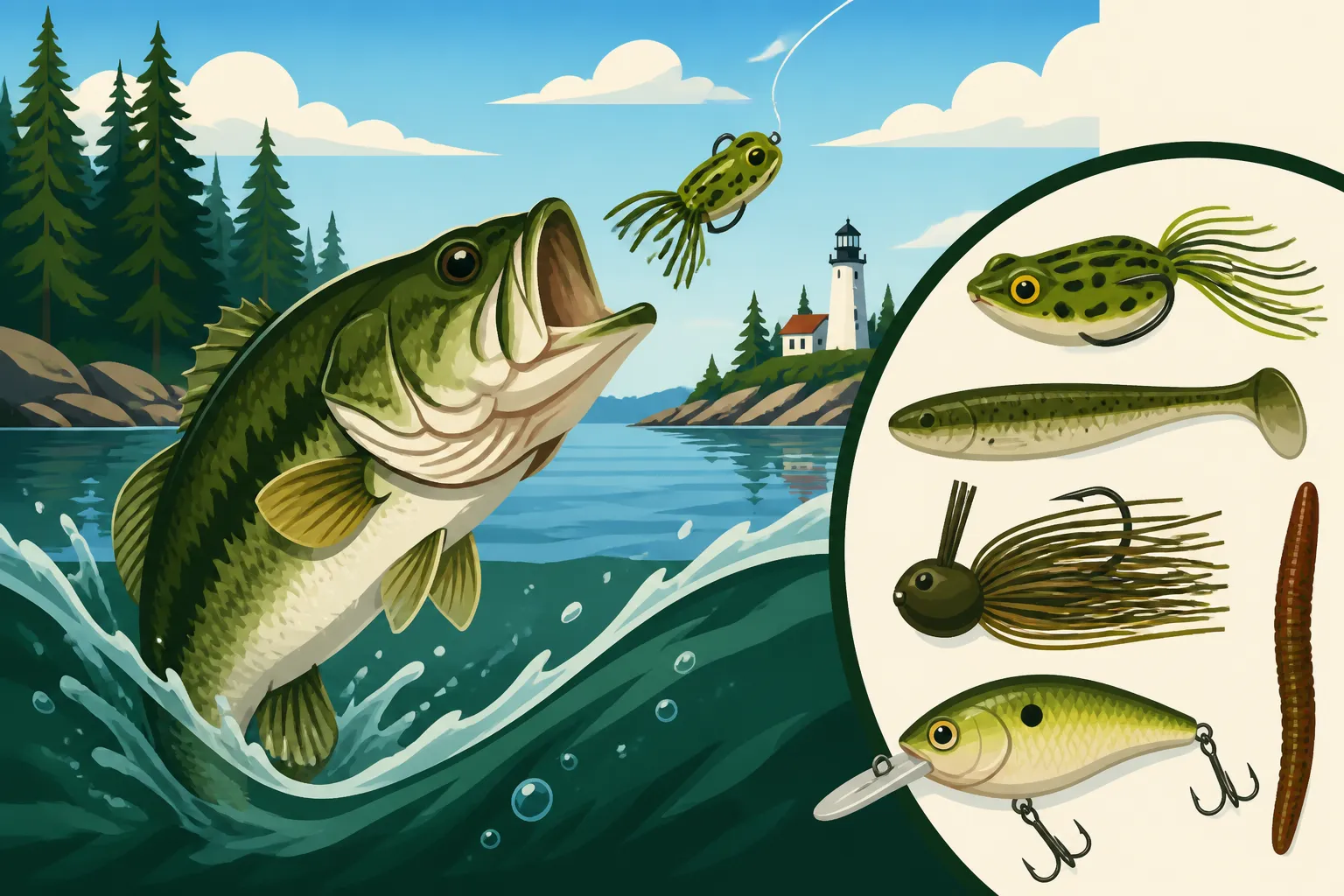
Largemouth bass are notorious for their love of frogs, especially in areas with lily pads and thick surface vegetation. A live frog, hooked carefully through the lips or a hind leg, swimming across a lily pad field, is a sight that few largemouth can resist. The erratic swimming and splashing can trigger explosive topwater strikes that are absolutely thrilling.
Beyond frogs, other natural baits can include crayfish (often called "crawfish"). Bass absolutely love crayfish, and their presence usually indicates a healthy bass population. You can rig them on a small jig head or just with a hook and a split shot. Grasshoppers, crickets, or even large grubs can also be effective, particularly in summer months when insects are abundant and might accidentally fall into the water. These "critter" baits offer unique profiles and movements that can fool even the most cautious bass.
Mastering Artificial Lures for Maine Largemouth
While live bait has its place, artificial lures offer versatility, repeatability, and the thrill of triggering a predatory instinct with a well-presented piece of plastic or wood. Modern lures are incredibly lifelike and designed to mimic everything from darting baitfish to struggling frogs.
Soft Plastics: Versatility is Key
Soft plastics are arguably the most versatile and effective lures for largemouth bass, especially in Maine's weedy, structured waters. They come in an endless array of shapes, sizes, and colors, allowing you to imitate virtually any forage.
- Worms: From straight-tailed finesse worms to large ribbon-tailed power worms, soft plastic worms are a staple. The Texas Rig (link for demonstration purposes only, will remove in final output as per instructions) is king here, making the worm weedless for probing heavy cover. Another favorite is the Wacky Rig, which provides a tantalizing, natural fall. You can find excellent selections of soft plastic worms, like those from Gary Yamamoto or Zoom, on Amazon, often in multi-packs with various colors.
- Creature Baits: These oddly shaped plastics, mimicking crawfish, lizards, or other aquatic critters, are fantastic for punching through heavy mats or pitching into brush piles. Their appendages create subtle vibrations and movements that bass can't resist.
- Grubs and Swimbaits: Small grubs on jig heads are excellent for subtle presentations, while larger soft plastic swimbaits can imitate larger baitfish and are incredibly effective when bass are targeting schools of shiners.
- Flukes and Stick Baits: Weightless flukes, like the Zoom Super Fluke, can be twitched erratically to imitate a dying baitfish, while stick baits (e.g., Senkos) have a unique shimmy on the fall that drives bass wild.
The key with soft plastics is to learn different rigging techniques and to experiment with colors until you find what the bass prefer on a given day. Sometimes a natural green pumpkin works best; other times, a vibrant junebug or black and blue is the ticket.
Hard Baits: Cranking, Jerking, and Popping
Hard baits are solid lures made of plastic, wood, or metal, designed to create specific actions and vibrations that trigger reaction strikes. They excel at covering water and calling fish from a distance.
- Crankbaits: These lures have a lip that causes them to dive to specific depths when retrieved. Shallow divers are great for covering flats and weed edges, while deep divers can reach bass holding on offshore humps or deep points. Their erratic wobble and vibration mimic fleeing baitfish. Brands like Rapala and Strike King make excellent crankbaits that are proven fish catchers.
- Jerkbaits: Designed to be twitched and paused, jerkbaits imitate an injured or dying baitfish. The stop-and-go action is incredibly effective, especially in cooler water or when bass are sluggish. They often suspend in the water column during pauses, giving bass a chance to commit to the strike.
- Topwater Lures: Nothing beats the thrill of a topwater strike! Poppers, walk-the-dog lures (like Heddon Super Spooks), and hollow-bodied frogs are fished on the surface. They create commotion, splashes, and vibrations that attract bass from below, leading to explosive, heart-stopping blow-ups. These are phenomenal for early morning, late evening, or overcast conditions, especially over lily pads and matted vegetation.
When using hard baits, pay attention to the retrieve. Some crankbaits work best with a steady retrieve, others with a stop-and-go. Jerkbaits demand a specific cadence of jerks and pauses. Learning these techniques will unlock their full potential.
Spinnerbaits and Jigs: Tried and True
These lures are workhorses in any bass angler's tackle box, especially for Maine's diverse conditions. They are excellent for probing cover and generating strikes.
- Spinnerbaits: Featuring one or more spinning blades that create flash and vibration, spinnerbaits are incredibly versatile. They can be slow-rolled along the bottom, burned over weed tops, or retrieved around docks and submerged timber. Their weedless design makes them perfect for snaggy areas. The flash and thumping vibration are irresistible to bass, especially in stained water or on overcast days. Consider different blade combinations (Colorado for thump, Willowleaf for flash) and skirt colors to match conditions.
- Jigs: Bass jigs are probably the most versatile artificial bait, second only to soft plastic worms. They come in various styles:
- Flipping/Pitching Jigs: Designed to be dropped into heavy cover like brush piles and thick weeds. They often have a weed guard to prevent snagging.
- Football Jigs: Best for fishing rocky bottoms and deep structure, as their head shape helps them crawl over obstacles.
- Swim Jigs: These are retrieved steadily through the water column, often with a soft plastic trailer, to imitate baitfish.
- Finesse Jigs: Smaller, lighter jigs for a more subtle presentation, especially in clear water or when bass are finicky.
Jigs are almost always paired with a soft plastic trailer (like a crawfish imitation or a small swimbait) to add bulk, action, and scent. The combination of a jig and a trailer creates a natural profile that largemouth bass find hard to resist. This category of lure demands a sensitive rod to detect subtle bites. For those looking for competitive action, these lures are often staples in Best Lakes for Bass Tournaments in Maine.
Seasonal Considerations for Bait Selection
The best bait for largemouth bass in Maine isn't a static choice; it changes with the seasons as water temperatures fluctuate and the bass's metabolism and behavior shift. Adapting your bait to the time of year is crucial for consistent success.
Spring: Post-Spawn Hunger
As the ice finally recedes from Maine's lakes and ponds, largemouth bass begin to stir. Early spring, even pre-spawn, can be a great time. The bass are still lethargic from winter but start to become active, looking for easy meals. Crankbaits (especially lipless ones) and spinnerbaits are excellent for covering water and finding active fish. As the water warms, they move to shallower spawning areas. During the spawn itself, bass can be territorial and difficult to tempt, but after the spawn, they enter a period of aggressive feeding.
Post-spawn bass are often skinny and hungry, focusing on replenishing energy. This is a prime time for soft plastic worms and creature baits fished slowly around cover. Jerkbaits can also be deadly as bass start to chase baitfish. Keep your presentations a bit slower in cooler spring waters, allowing the bass time to react. The general fishing season starts around this time, so be sure you understand the Maine General Fishing Law Definition Explained.
Summer: Deep and Shady Tactics
Maine summers bring warmer water temperatures, which often push largemouth bass into deeper, shadier, and more oxygenated areas. They'll relate heavily to deep weed lines, submerged timber, offshore humps, and points. During the heat of the day, topwater action might slow down, but early mornings and late evenings can still produce explosive strikes with frogs and poppers, especially over dense lily pads or matted vegetation.
For daytime summer fishing, focus on getting your bait into the bass's sanctuary. Deep-diving crankbaits are great for probing offshore structure. Heavy jigs and creature baits, Texas-rigged soft plastics, or even punching rigs are perfect for getting through thick vegetation to reach bass hidden underneath. Live baits like large shiners or frogs can also be incredibly effective when fished in these deep, shady pockets. Remember that Is Largemouth Bass Fishing Good in Southern Maine? often depends on these seasonal adjustments.
Fall: Feeding Frenzy Before Winter
As autumn descends on Maine, the water temperatures begin to drop, and the days shorten. This signals a crucial time for largemouth bass: the fall feeding frenzy. Bass know winter is coming, and they need to pack on calories. They become incredibly aggressive, actively chasing down schools of baitfish.
This is a fantastic time for moving baits. Spinnerbaits, chatterbaits, and crankbaits (especially those with a tight wobble) are incredibly effective for covering water and locating active schools of bass. Jerkbaits also shine as bass become more willing to chase. Don't overlook soft plastics like flukes or swimbaits that imitate dying baitfish, retrieved erratically along weed edges or over rocky points. As the water gets colder, the bass will move deeper, but their aggressive nature makes fall fishing often one of the most productive times of the year. Pay attention to the Best Weather Conditions for Bass Fishing during this period, as cold fronts can make a big difference.
No matter the season, always have a variety of baits on hand and be willing to experiment. Sometimes, the bass will tell you exactly what they want, but often, it's up to you to figure out the puzzle.
Here's a quick comparison of popular largemouth bass baits:
| Bait Type | Best Use Case | Preferred Season | Pros | Cons |
|---|---|---|---|---|
| Live Nightcrawlers | Slow fishing, picky bass, heavy cover | Spring, Summer | Natural scent and action, highly effective | Can be messy, require livewell/aeration, easily stolen |
| Live Minnows/Shiners | Mimicking natural forage, targeting larger fish | Spring, Fall | Irresistible action, great for lethargic bass | Require livewell, can be expensive, specific hooking needed |
| Soft Plastic Worms | Versatile, weedless presentations, subtle bites | All Seasons | Countless rigging options, effective in cover, inexpensive | Can be chewed up, requires good hooksets |
| Creature Baits | Punching mats, flipping heavy cover | Summer, Fall | Excellent for dense cover, unique action | Can be bulky, sometimes require specific retrieves |
| Crankbaits | Covering water, targeting specific depths | Spring, Summer, Fall | Effective reaction strikes, covers wide areas | Can get snagged easily, limited depth range per lure |
| Jerkbaits | Suspending action, triggering aggressive strikes | Spring, Fall | Fantastic for cool water, excellent fish-calling ability | Requires specific "jerk-pause" retrieve |
| Topwater Lures | Explosive surface strikes, heavy vegetation | Summer, Early Fall | Thrilling to fish, great over weeds | Less effective in deep water or bright, calm conditions |
| Spinnerbaits | Versatile, cover water, stained water | All Seasons | Weedless, creates flash and vibration, calls fish from afar | Can twist line, less subtle than other options |
| Jigs | Pitching, flipping, bottom bouncing, versatile | All Seasons | Effective in all types of cover, great for trailers | Can require precise presentation, easy to snag in certain areas |
Disclaimer
Please note that fishing regulations, including bag limits and specific gear restrictions, can change. Always consult the latest rules and guidelines from the Maine Department of Inland Fisheries and Wildlife (MDIFW) before heading out on your fishing trip. This guide is for informational purposes only and does not supersede official regulations.