How Many Lines Can You Ice Fish With in Maine?
One of the most common questions and, let's be honest, points of confusion for ice anglers in Maine, especially those new to the sport or visiting from out of state, revolves around how many lines you're actually allowed to have in the water. It can be frustrating trying to set up your spread for a day on the hard water, only to second-guess if you're abiding by the rules. This comprehensive guide will clear up all the ambiguities surrounding Maine's ice fishing line limits, ensuring you're fully informed and ready for a legal, enjoyable day on the ice.
Understanding Maine's General Ice Fishing Line Limit
When you’re out on a frozen lake or pond in Maine, the general rule of thumb for how many lines you can use is pretty straightforward, but it's crucial to understand the nuances. Maine's Department of Inland Fisheries and Wildlife (MDIFW) has specific regulations in place to manage our precious fisheries, ensuring both conservation and fair sport.
The Standard Five-Line Rule
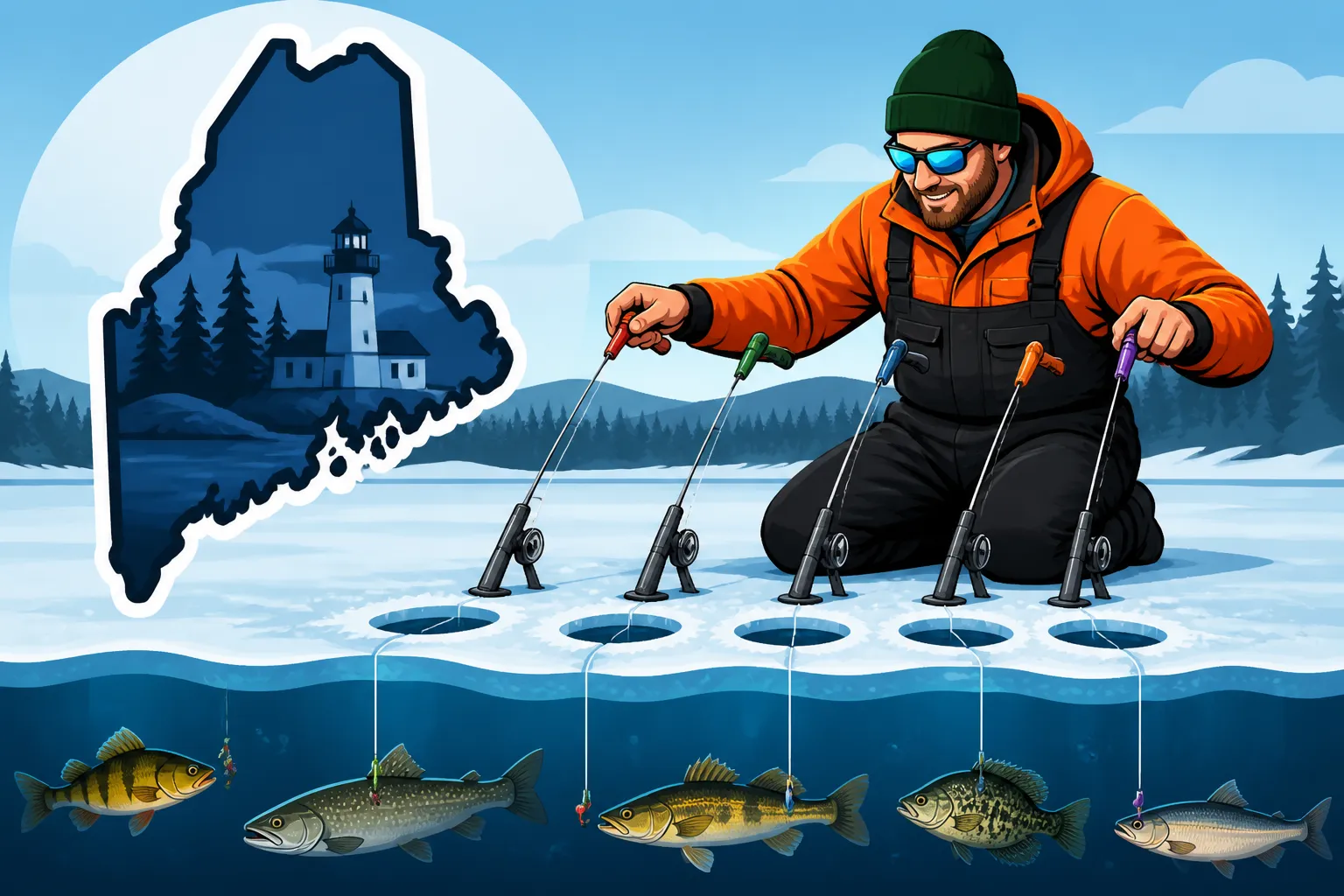
Under Maine's general fishing laws, an individual angler is permitted to fish with no more than five lines at any given time while ice fishing. This limit applies to most waters across the state, acting as the foundational rule you should always assume unless you've confirmed otherwise for a specific body of water. Each of these five lines can be a traditional fishing rod or a tip-up, which are those ingenious devices that signal a bite with a flag.
It's important to remember that these lines must be under your immediate control and within your sight. You can't just set up five tip-ups and wander off to another cove for an hour. The idea is that you're actively monitoring your lines and can respond if a fish bites. This rule helps prevent lost gear and, more importantly, ensures that fish aren't left on the hook for extended periods, increasing their chances of survival if you're practicing catch and release. This is a fundamental aspect of the broader Maine Fishing Regulations Explained.
Comparing Ice Fishing to Open Water Limits
It's worth noting how this differs from open water fishing in Maine. When you're out on a boat or fishing from shore during the open water season, the rules are typically more restrictive regarding the number of lines. Generally, you're limited to two lines per angler during the open water season. This stark difference between open water and ice fishing line limits often catches newcomers off guard. The reason for this discrepancy often comes down to the nature of the fishing itself. Ice fishing, with its stationary setup and the use of tip-ups that allow for a broader spread, is traditionally viewed differently than active casting or trolling during warmer months. Understanding this distinction is key to navigating all of Maine’s fishing seasons.
What Exactly Counts as a "Line" on the Ice?
The definition of a "line" might seem obvious, but in the context of Maine's ice fishing regulations, it's important to be crystal clear. Misinterpretations can lead to unintentional violations, and nobody wants to spend their day dealing with a game warden when they're just trying to enjoy the tranquility of a frozen lake.
Tip-Ups, Rods, and Handlines
When the regulations refer to a "line," they are encompassing any method by which you are presenting bait or a lure to catch a fish. This includes:
- Fishing Rods: The classic setup, where you're actively jigging a lure or holding a bait under a bobber. Each rod counts as one line. If you're using two rods, that's two lines toward your five-line limit. Many anglers prefer lightweight, sensitive rods for jigging through the ice, and you can find a great selection of Best Rods for Ice Fishing online.
- Tip-Ups: These are the iconic pieces of ice fishing equipment. A tip-up is a device that holds a baited line, usually with a flag that "tips up" when a fish takes the bait. Each individual tip-up you deploy counts as one line. So, if you have five tip-ups out, you've reached your limit. If you're new to them, learning Setting Up Tip-Ups for Ice Fishing properly is a game-changer.
- Handlines: While less common than rods or tip-ups, a handline – essentially a line held directly in your hand without a rod or reel – also counts as a line under the regulations.
The critical takeaway here is that any device or method you're using to fish, if it has a line extending into the water with a hook, counts toward your five-line total.
The Number of Hooks Per Line
Another important distinction is the difference between "lines" and "hooks." Maine's general law specifies that each line can only have one baited hook or one artificial lure. You cannot attach multiple hooks to a single line, like a dropper rig with three hooks, and still consider it "one line." That would be illegal.
This rule is designed to prevent excessive harvest and to ensure fair sport. While an artificial lure might have multiple points (like a treble hook on a spoon), that entire lure counts as one presentation. However, if you were to attach two separate single hooks to the same line, each with bait, that would be a violation of the "one baited hook or one artificial lure per line" rule. Always double-check your rig before dropping it down the hole. For example, some common jigs for ice fishing might technically have two hooks, but if they are integrated into a single lure body, they are generally considered a single lure. When in doubt, simpler is usually safer.
Special Regulations and Exceptions to the Rule
While the five-line limit is the general law, Maine is known for its diverse waterways, and with that diversity come specific regulations for certain lakes, ponds, and even rivers. This is where it's absolutely crucial to do your homework before heading out.
Designated Special Regulation Waters
Maine has many bodies of water that fall under what are called "Special Regulations." These regulations can modify everything from bag limits and length limits to, yes, the number of lines you're allowed to use. For example, some waters might restrict you to fewer than five lines, or they might even allow more in very specific, designated circumstances, though this is far less common.
The MDIFW publishes a comprehensive rule book each year, available online and at most outdoor recreation vendors. This book is your bible for specific water bodies. Always look up the particular lake, pond, or river you plan to fish in. You can also find detailed information on what constitutes a What Is a Maine Special Regulation Water? on the MDIFW website. Don't rely solely on word-of-mouth or what you remember from last year, as regulations can and do change. A quick check of the current Maine Fishing Regulations Explained before each trip can save you a lot of hassle.
The Impact of Fishing Derbies and Events
Sometimes, organized fishing derbies or events, particularly ice fishing tournaments, might operate under a special permit that temporarily alters certain regulations, including line limits. However, this is exceptionally rare for line limits and usually involves specific conditions set by MDIFW. It's far more common for derbies to focus on different Maine Fish Bag Limits Guide or length requirements.
If you're participating in a derby, always verify the rules set by the event organizers and confirm they align with any special permits issued by the state. Never assume that a derby's rules automatically override state law without explicit confirmation. For instance, events like the popular Maine Valentine's Weekend Free Ice Fishing Days generally adhere to standard regulations, but it's always smart to check the specifics for that particular year.
Youth and Beginner Considerations
Maine is a fantastic place to introduce youngsters to the joys of ice fishing. The state encourages youth participation, but the line limits generally apply to all anglers, regardless of age, once they reach the age where a Maine Fishing License Guide is required.
However, a great way for beginners or kids to get started without needing a full five lines of their own is to fish alongside an adult. As long as the adult is within their legal limit, and the child is learning and supervised, it's generally fine. Just remember, once a child is old enough to hold their own license (16 years old for residents and non-residents), they are subject to the same five-line limit as any adult. The focus for youth is often on safety and proper technique, rather than maximizing lines.
Practical Application and Best Practices on the Ice
Managing five lines on the ice can feel like a circus act, especially if you're alone or with inexperienced partners. But with a bit of strategy and the right gear, it's perfectly manageable and can significantly increase your chances of success.
Setting Up Your Spread Effectively
When you have five lines at your disposal, you can truly experiment with different depths, baits, and locations. Many seasoned ice anglers will deploy a mix of tip-ups and jigging rods.
- Tip-Up Strategy: Space your tip-ups out strategically to cover different depths or structural features. For example, you might place one in shallow water near a weed line, another on a breakline, and a third over deeper water. This allows you to explore where fish are holding. Remember, each tip-up should be clearly visible and within a reasonable distance for you to attend to it quickly.
- Jigging Rod Strategy: While your tip-ups are doing the "passive" work, you can actively jig with one or two rods. This allows you to stay warm in a shelter, target specific depths, and present a variety of lures. You can experiment with different jigging patterns and lure colors. For instance, if you're trying to figure out How to Fish for Togue Through the Ice, you might jig one rod vigorously while another tip-up is set with a dead bait.
The goal is to maximize your coverage without spreading yourself so thin that you can't properly manage a bite on any given line. A well-organized hole layout and knowing your gear are crucial.
Staying Within Reach and Sight
Maine law requires that your lines remain "under the immediate supervision of the person who set them" and "within that person’s sight." This isn't just a legal formality; it's a responsible angling practice.
- Immediate Supervision: This means you should be able to get to any of your lines quickly if a flag goes up or a rod bends. If you're fishing with friends, ensure everyone is clear on whose lines are whose, and who is responsible for responding. You can't delegate your supervision requirement to someone else unless they are also a licensed angler and the line counts towards their limit.
- Within Sight: On a large, open lake, visibility can be excellent. However, factors like snow squalls, fog, or even large ice shacks can obscure your view. Always position yourself and your lines so that you maintain clear visual contact with all five. This helps prevent fish from swallowing hooks too deeply, or even worse, swimming off with your gear. Safety is paramount, especially when fishing unfamiliar waters, so always keep Early Ice Safety Tips for Maine Anglers in mind.
Essential Gear for Managing Multiple Lines
Having the right equipment can make managing five lines a breeze instead of a headache.
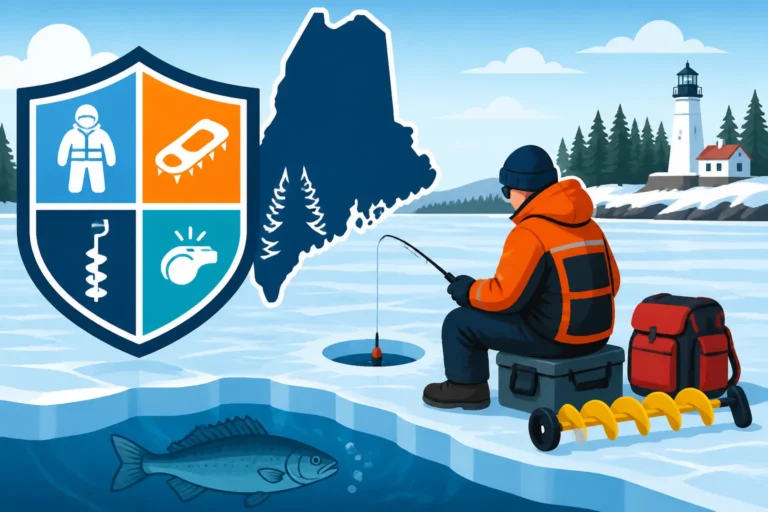
- Ice Auger: A good quality ice auger is essential for drilling all those holes efficiently. Whether you prefer a hand auger, a propane-powered model like those from Amazon, or a powerful electric auger, a reliable tool will save you time and energy. You can get more details on Choosing the Right Ice Auger.
- Sled or Portable Shelter: A sled is invaluable for transporting your tip-ups, rods, bait bucket, and other gear. If you use a portable ice fishing shelter, you can set it up to allow easy access to your jigging holes while keeping an eye on external tip-ups.
- Bait Bucket: A well-insulated bait bucket with an aerator will keep your live bait (like shiners) lively throughout the day, ensuring it's fresh for all your tip-ups.
- Rod Holders: For your jigging rods, small rod holders that attach to your bucket or sit over the hole can keep your hands free while you manage tip-ups. You can find many practical accessories on Amazon to help with organization.
- Flag Markers: If fishing with multiple people or in low visibility, consider using small flags or markers for your holes, especially around your tip-ups, to prevent tripping or accidental re-drilling.
Penalties for Exceeding Line Limits
Nobody wants to have their fishing trip interrupted by a game warden for a violation. Understanding the potential consequences of exceeding line limits is important for responsible angling.
The Role of Maine Game Wardens
Maine Game Wardens are dedicated to conserving the state's natural resources and ensuring that everyone enjoys them safely and legally. They patrol lakes and ponds regularly, checking licenses, bag limits, and, yes, line counts. Their presence isn't meant to be punitive but rather to enforce regulations that protect fisheries for future generations.
If a warden approaches you on the ice, be polite, cooperative, and have your Maine Fishing License Guide readily available. They are a valuable resource for answering questions about specific regulations for the water you're on. They often know the local waters and their nuances better than anyone. They also serve as a crucial point of contact if you need to report any suspicious activity or violations, helping maintain the integrity of our fishing opportunities.
Fines and Consequences
Fishing with more lines than legally allowed in Maine is a violation of state law. The penalties can vary depending on the severity of the offense, whether it's a first-time violation, and other factors. However, typically, exceeding the line limit can result in a fine. These fines can range from a few hundred dollars for a minor infraction to more significant amounts if multiple lines are involved or if there are other accompanying violations.
Beyond monetary fines, repeated offenses or severe violations can lead to more serious consequences, such as the suspension of your fishing privileges. This means you could be prohibited from fishing in Maine for a certain period. The best way to avoid these unpleasant outcomes is simple: know the rules, respect the limits, and always err on the side of caution. If you're ever unsure about a specific regulation, consult the official MDIFW rule book or their website before you drop a line.
| Regulation Aspect | Open Water Fishing (General Law) | Ice Fishing (General Law) | Special Regulation Waters (Varies) |
|---|---|---|---|
| Lines Per Angler | 2 lines | 5 lines | Can be more or fewer than 5, check specifics |
| Hooks Per Line | 1 baited hook or 1 artificial lure | 1 baited hook or 1 artificial lure | Generally 1, but always verify |
| Supervision Req. | Immediate control and within sight | Immediate control and within sight | Immediate control and within sight |
| Primary Gear Type | Rod & Reel, Fly Rod | Tip-ups, Rod & Reel, Handlines | Varies (can restrict gear types) |
| Common Misconception | Can use 3+ lines if trolling | Can use unlimited lines if "checking" | All lakes follow general law |
Conclusion
Ice fishing in Maine offers a truly unique and rewarding experience, a chance to enjoy the quiet beauty of winter while pursuing some incredible fish. Understanding the rules, especially the five-line limit, is fundamental to being a responsible and successful angler. By respecting these regulations, checking for special rules on specific waters, and managing your gear effectively, you're not just avoiding a fine – you're contributing to the conservation of Maine's invaluable fisheries for generations to come. So, pack your gear, drill your holes, and enjoy the magic of hard water angling, knowing you're doing it the right way.
Disclaimer
Please note that fishing regulations are subject to change. While this guide provides current information based on Maine's general laws, it is essential to consult the most recent Maine Department of Inland Fisheries and Wildlife (MDIFW) rule book or website before any fishing trip to ensure you are compliant with all applicable regulations for the specific body of water you intend to fish.