Maine Night Fishing Techniques
Ever felt like the fish just vanish once the sun climbs high, or that your favorite spot is just too crowded to enjoy? The bright light, the boat traffic, the heat of the day – it can all make for some truly frustrating fishing experiences. But what if I told you that some of the best fishing action in Maine happens when most folks are tucked into bed? This guide is going to walk you through the exciting world of night fishing in Maine, covering everything you need to know to turn those after-dark hours into memorable angling adventures.
Why Embrace the Night for Fishing in Maine?
Fishing under the cloak of darkness might seem a bit unconventional, but for many seasoned Maine anglers, it's not just a novelty – it's a strategic choice that often leads to incredible success. There are distinct advantages to casting your lines when the stars are out, offering a completely different fishing experience than daylight hours.
Escaping the Heat and Crowds
One of the most immediate and appreciated benefits of night fishing, especially during the peak summer months, is the escape from the oppressive heat and the bustling crowds. Imagine hitting a popular lake like Sebago Lake or Moosehead Lake during the day in July. You're contending with pleasure boats, jet skis, swimmers, and countless other anglers all vying for the same prime spots. The water temperature can rise significantly, pushing many desirable fish species into deeper, cooler, and often harder-to-reach haunts.
At night, that all changes. The air cools, the surface of the water becomes calmer, and most of the recreational traffic clears out. This creates a much more serene and focused fishing environment. You'll find yourself able to access areas that might be too busy or noisy during the day, and you'll often have stretches of shoreline or open water all to yourself. This tranquility isn't just about comfort; it plays a huge role in fish behavior.
Bolder Fish and Prime Feeding Opportunities
Many fish species, particularly larger predatory fish, become significantly more active and less wary under the cover of darkness. Just like deer venturing out into open fields at dusk, fish feel safer from predators (including human anglers!) when visibility is low. This emboldens them to move from their deep, daytime refuges into shallower waters, closer to shorelines, and into areas rich with baitfish and other food sources.
For species like Smallmouth Bass Fishing in Maine or Largemouth Bass Fishing in Maine, the night can trigger intense feeding frenzies as they ambush unsuspecting prey that also become more active. The low light reduces their visual reliance, making them more receptive to vibrations, scents, and silhouettes. This means that a lure or bait presented correctly can be incredibly effective, often eliciting more aggressive strikes than during the day. This shift in behavior offers anglers a unique window to target trophy-sized fish that might be notoriously difficult to fool in broad daylight.
Essential Gear for Maine Night Fishing Adventures
Heading out onto the water after dark without the right equipment isn't just inefficient; it can be downright dangerous. Night fishing requires a specific set of tools that go beyond your typical rod, reel, and tackle box. Prioritizing safety and visibility, alongside specialized fishing aids, will make your experience much more enjoyable and productive.
Lighting and Navigation Tools
Visibility is your number one concern when night fishing. A reliable light source is absolutely non-negotiable. Forget flimsy flashlights; you'll want a quality headlamp with multiple brightness settings and, crucially, a red light option. The red light helps preserve your night vision, allowing your eyes to adjust to the darkness without being temporarily blinded every time you switch on a bright white beam. Many excellent waterproof headlamps can be found on Amazon, offering different battery lives and lumen outputs.
Beyond personal lighting, if you're on a boat, navigation lights are legally required and paramount for safety. Ensure your boat's bow and stern lights are functioning perfectly before you even think about launching. For land-based anglers, a lantern can be useful for illuminating your immediate area, making rigging and baiting much easier without constantly shining your headlamp directly into your eyes. Consider battery-powered LED lanterns, which are much safer and more convenient than gas-powered alternatives.
- Headlamp: Hands-free lighting, red light option for night vision preservation.
- Boat Navigation Lights: Required by law, critical for preventing collisions.
- Lantern: Area lighting for rigging, baiting, and organizing gear.
- GPS/Map: Even if you know the water well during the day, features look drastically different at night. A reliable GPS on your phone or a dedicated unit (perhaps one sourced from Amazon) can prevent disorientation.
Specialized Tackle and Baits
While your standard fishing gear will work, some modifications and additions can significantly enhance your night fishing success. Lures that are highly visible or emit light or sound are key. Glow-in-the-dark lures, soft plastics charged with a flashlight, or those with internal rattle chambers become much more effective when visual cues are minimized. Black or dark-colored lures can also create a strong silhouette against the moonlit surface or shallower illuminated water, making them easier for fish to detect.
Bait choices should also lean towards those with strong scents. Nightcrawlers, shiners, or even cut bait release powerful odors that fish can track using their heightened sense of smell in the dark. Consider using floats with chemical light sticks (often called "glow sticks") for still fishing, allowing you to easily see when a fish takes your bait. Remember, fish at night are relying more on their lateral line and olfactory senses, so vibration, scent, and silhouette trump bright colors. For more on general lure choices, check out our guide on Best Lures for Maine Open Water Fishing.
| Gear Item | Purpose | Why It's Crucial at Night |
|---|---|---|
| Headlamp | Hands-free illumination | Essential for tying knots, baiting, and navigating in darkness. |
| Waterproof Flashlight | Backup light source | Always have a spare for emergencies. |
| Red Light Filter | Preserves night vision | Prevents temporary blindness from bright white light. |
| Boat Navigation Lights | Legal requirement, safety | Avoid collisions on the water. |
| Lantern (LED) | Area illumination for boat/shore | Makes rigging and organization easier. |
| Glow-in-the-Dark Lures | Increased visibility for fish | Fish detect them more easily in low light. |
| Rattling Lures | Creates sound/vibration | Fish use lateral line to locate prey in darkness. |
| Scented Baits | Enhanced olfactory attraction | Fish rely on smell when vision is limited. |
| Glow Sticks (for floats) | Visual strike indicator | Clearly see bites on still fishing setups. |
| Personal Flotation Device (PFD) | Safety | Non-negotiable, especially for boat fishing in low light. |
| Bug Spray | Comfort | Mosquitos and black flies are often more active at night. |
| Warm Layers | Comfort, protection | Nights can get surprisingly cold, even in summer. |
| First-Aid Kit | Safety | Minor cuts and scrapes are harder to see and treat in the dark. |
Comfort and Safety Essentials
Beyond fishing-specific gear, your personal comfort and safety should be paramount. Nights in Maine, even in summer, can get surprisingly chilly, especially on the water or in open areas. Layered clothing, including a waterproof outer shell, is a must. A good quality bug spray will be your best friend against mosquitoes and black flies, which often come out in force after dusk.
A fully charged cell phone is important for emergencies, but don't rely solely on it for light or navigation due to battery drain. A portable power bank (you can find robust options on Amazon) can be a lifesaver. Always inform someone of your fishing plans – where you're going, when you expect to return. And a comprehensive first-aid kit should be part of every angler's essential pack, ready for minor cuts, scrapes, or other unexpected incidents that are harder to manage in the dark. For more on staying safe, check out our guide on Safety Tips for Fishing Alone in Maine.
Top Fish Species to Target After Dark in Maine
While many fish species can be caught after sunset, some are notoriously more active and aggressive once daylight fades, making them prime targets for the night angler. Understanding which fish thrive in low-light conditions is key to planning a successful night outing in Maine.
Smallmouth and Largemouth Bass
Without a doubt, smallmouth and largemouth bass are two of the most popular and rewarding species to target at night in Maine's freshwater lakes and ponds. During the day, these fish can be finicky, especially in clear waters, often retreating to deep cover or becoming extremely wary. But when the sun goes down, a switch flips. They move into shallower waters, around rocky structures, weed beds, and docks, actively hunting.
Largemouth bass, known for their ambush predation, often patrol the edges of lily pads and submerged timber, waiting for unsuspecting prey. Smallmouth bass, on the other hand, might cruise rocky points and shoals. Both species become much more aggressive, striking at lures and baits with startling force. They rely on vibration and scent, making dark-colored spinnerbaits, Jitterbugs, plastic worms, or even live shiners incredibly effective. The thrill of a powerful bass strike breaking the silence of the night is an unforgettable experience. For detailed insights into catching these fighters, refer to our guides on Smallmouth Bass Fishing in Maine and Largemouth Bass Fishing in Maine.
Landlocked Salmon and Togue (Lake Trout)
For those looking for a colder water challenge, landlocked salmon and togue (also known as Lake Trout and often just called "togue" by Maine locals) can also offer exciting night fishing opportunities, especially during warmer months. While these fish typically prefer deep, cold water during the day, they will often rise in the water column or move into shallower feeding areas at night, particularly after a long, hot summer day.
Trolling with large minnow imitations or spoons at shallower depths than you would during the day can be effective for both species. For salmon, they might chase smelt or other baitfish closer to the surface. Togue, being opportunistic predators, will follow baitfish into shallower rock piles or ledges. Jigging over deeper humps and structure where they might be staging before their nocturnal ascent can also produce bites. The cooler night temperatures make these big fish more comfortable venturing out of the thermocline. Many dedicated anglers pursue these species at night on large lakes like Moosehead Lake or Sebago Lake. Our articles on Togue and Lake Trout Fishing in Maine and Landlocked Salmon Fishing in Maine provide excellent background on these magnificent fish.
Striped Bass
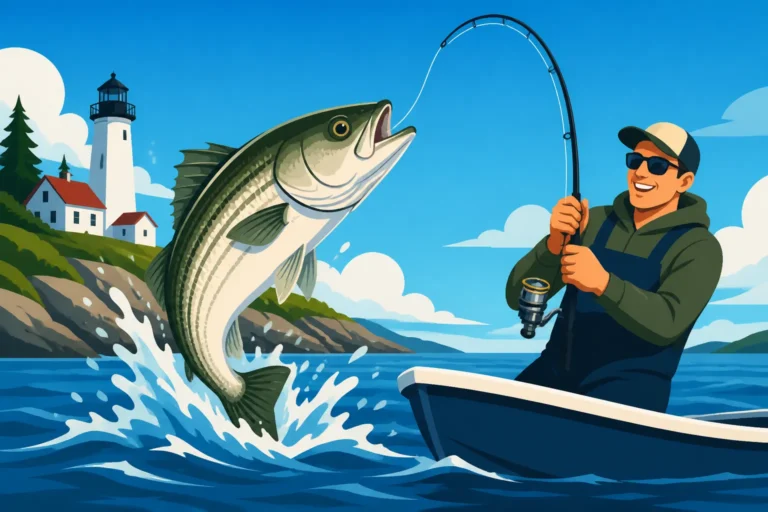
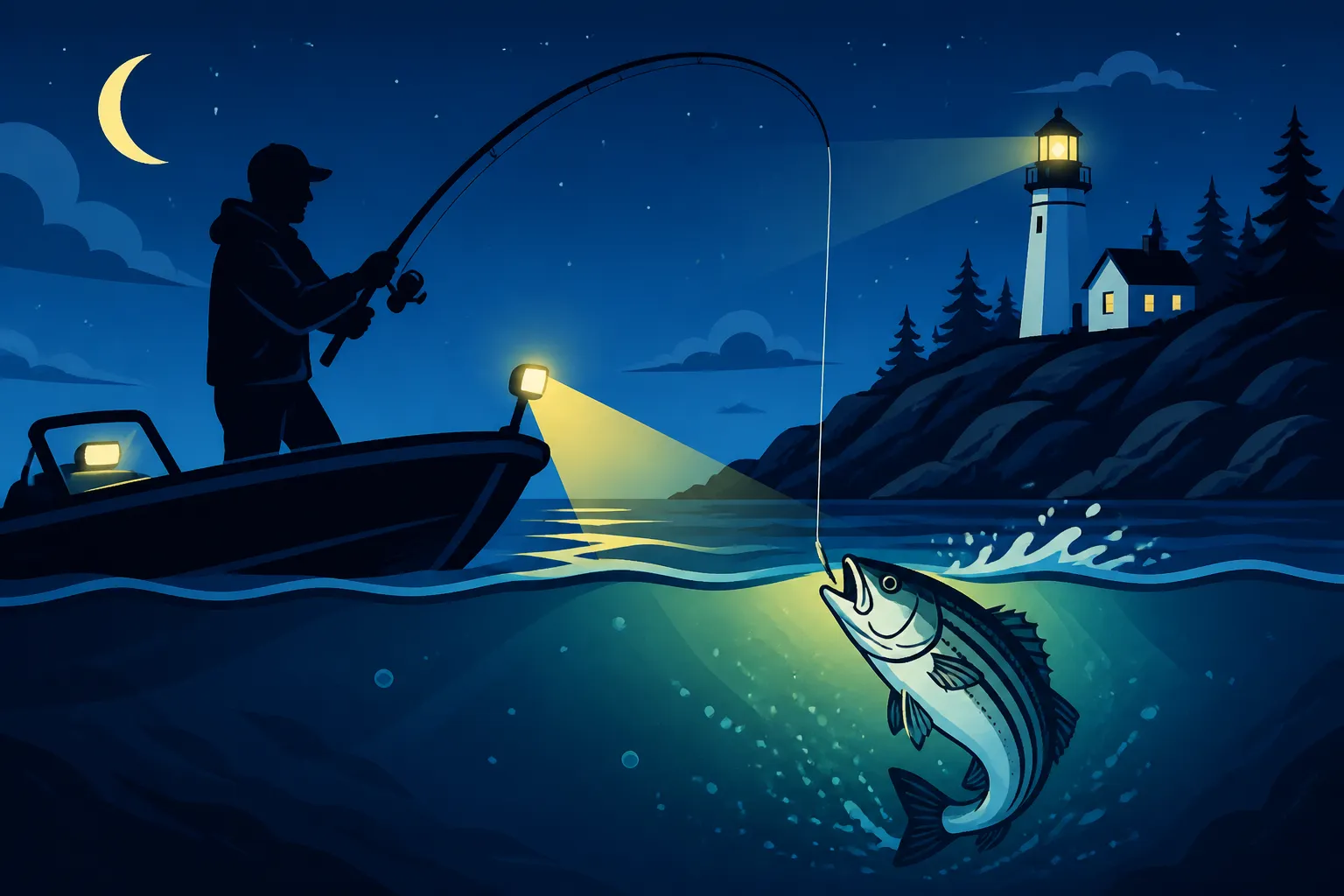
Shifting to saltwater, the king of Maine's coastal night fishing is undoubtedly the striped bass. Stripers are legendary for their nocturnal feeding habits. From late spring through early fall, when Maine's coastline comes alive with baitfish, stripers will hunt aggressively in the dark, often moving right up into the shallowest parts of estuaries, rocky shores, and tidal flats.
Nighttime offers stripers the perfect ambush conditions. They'll actively chase mackerel, herring, or even crabs, using the low light to their advantage. Anglers targeting stripers at night often use large, dark-colored topwater lures like poppers or walk-the-dog baits, which create a disturbance on the surface that mimics a struggling baitfish. Subsurface swimmers, soft plastics on jig heads, or live eels fished from shore, docks, or boats can also be incredibly effective. The sheer power of a big striper hitting your lure in the pitch black is an adrenaline rush like no other. Check out our in-depth guide to Striped Bass Fishing in Maine for more details.
Techniques for Successful Night Fishing
Night fishing isn't just about showing up after dark; it requires adapting your approach, understanding fish behavior in low light, and choosing techniques that maximize your chances of success. It's a different game, and mastering it can lead to some truly epic catches.
Still Fishing with Scented Baits
One of the most straightforward and often productive night fishing techniques is still fishing with highly scented natural baits. As mentioned earlier, fish rely heavily on their sense of smell in the dark. This method is particularly effective for bass, catfish (where present), or even opportunistic panfish.
To set up, find a promising spot – perhaps a calm cove with weed lines, a dock with some ambient light spill, or a rocky point. Use a simple bottom rig or a slip bobber. The key is to use fresh, active bait like large nightcrawlers, shiners, or even cut bait like mackerel for saltwater stripers. If using a bobber, attach a small chemical light stick to it so you can easily spot it when a fish tugs it under. Cast your bait out, let it settle, and then pay close attention. Bites can be subtle at first or incredibly aggressive. This technique allows you to cover a specific area with a strong scent trail, drawing fish in from a distance. It's also a great relaxed way to enjoy the peace of the night.
Casting Lures with Sound and Vibration
When it comes to active lure fishing at night, lures that create sound, vibration, or a strong silhouette are your best friends. These elements help fish locate your offering when visual cues are limited.
- Topwater Lures: For bass and stripers, topwater lures like Jitterbugs, poppers, or prop baits are exceptional. The commotion they make on the surface mimics struggling prey and attracts aggressive strikes. Cast them near structure, weed lines, or current breaks, and work them slowly, allowing the fish to home in on the sound.
- Spinnerbaits and Buzzbaits: The thumping and flashing blades of spinnerbaits and the gurgling of buzzbaits create irresistible vibrations that bass can detect from afar. Dark colors (black, blue) or those with glow elements can be highly effective.
- Soft Plastics and Jigs: Rigging soft plastics like worms, creature baits, or swimbaits on a jig head can also be deadly. For bass, slowly drag or hop a scented plastic worm along the bottom near cover. For stripers, a weighted soft plastic like a Hogy or a Slug-Go on a jig head can be cast and retrieved slowly, mimicking a wounded baitfish. Add some fish attractant spray to enhance the scent profile.
The retrieval speed is crucial; generally, a slower retrieve gives the fish more time to locate and commit to the lure. The key is to create enough disturbance for the fish to find your lure without overwhelming their senses.
Trolling for Coldwater Species
For our deeper-dwelling coldwater species like landlocked salmon and togue, trolling can be a highly effective night technique, especially in larger lakes. While they might be deep during the heat of the day, these fish will often move into shallower depths or cruise specific structures under the cover of darkness to feed.
Start by targeting areas you know hold baitfish during the day, or structures like underwater humps, points, and ledges. Instead of the deep-water setups used in the daytime, consider running your lures higher in the water column. Flatlining with long lines, using planer boards to spread out your offerings, or even just letting out more line can get your lures into the feeding zone. Lures that shimmer, reflect what little light is available, or have a subtle glow can be very effective. Large spoons, stickbaits, and minnow-imitating plugs are excellent choices. Adjust your speed to a slower pace than daytime trolling, giving the fish more time to react to your presentation. Don't forget to consult the Maine Fishing Season Calendar to ensure your target species is in season.
Safety Considerations for Night Fishing
While the allure of catching big fish under the stars is strong, safety must always be your absolute top priority when fishing after dark in Maine. The environment changes drastically once the sun sets, and what might be a minor inconvenience during the day can become a serious hazard at night.
Visibility and Navigation Hazards
The most obvious challenge is reduced visibility. What seems like a clear path or an easily identifiable landmark during the day can completely disappear in the dark.
- Obstacles: Fallen logs, rocks, uneven terrain on shorelines, and submerged hazards in the water become invisible. Always move slowly and deliberately, shining your headlamp ahead of you to scout your path. If you're wading, shuffle your feet to feel for bottom changes or obstacles.
- Boating Safety: If you're on a boat, the risks are amplified. Ensure all your navigation lights are working – bow and stern lights are not just suggestions, they are legal requirements and crucial for avoiding collisions. Keep a vigilant watch for other boats, buoys, or debris that might be harder to spot. Carry backup lights, whistles, and flares. Familiarize yourself with the waterway in daylight before attempting to navigate it at night. Even a slight fog or mist can turn a familiar lake into a bewildering maze.
Weather and Environmental Risks
Maine weather can be notoriously unpredictable, and changes are often harder to detect and prepare for at night.
- Temperature Drops: Even a warm summer day can lead to surprisingly chilly nights, especially on the water. Hypothermia is a real risk. Always dress in layers and bring more warm clothing than you think you'll need. A waterproof outer layer is essential against unexpected rain or heavy dew.
- Sudden Storms: A clear evening sky can quickly turn stormy. Without visual cues, it can be harder to gauge approaching weather fronts. Monitor weather forecasts meticulously before heading out, and if there's any doubt, err on the side of caution and stay ashore. The sound of thunder is often your first warning sign at night.
- Insects and Wildlife: Mosquitos and black flies are often most active at dusk and dawn. Heavy-duty insect repellent is a must. Furthermore, nocturnal wildlife is more active. While most animals will leave you alone, being aware of your surroundings, especially in remote areas, is wise. Avoid leaving food out that might attract unwanted furry visitors.
Personal Preparedness and Communication
Being prepared for the unexpected is key to a safe night fishing trip.
- Buddy System: Whenever possible, fish with a buddy. There's safety in numbers, and an extra pair of eyes and hands can be invaluable in an emergency. If you must fish alone, always inform someone of your exact fishing location, your planned route, and your expected return time. Stick to that plan.
- Emergency Gear: Always carry a fully charged cell phone (in a waterproof case!), a portable battery pack, a whistle, a basic first-aid kit, and enough water and snacks. Consider a small signal mirror or a bright distress light for extreme emergencies. A Personal Flotation Device (PFD) is non-negotiable for boat anglers and a very wise choice for shore anglers, especially when wading in unfamiliar waters.
- Know Your Limits: Don't push yourself. Fatigue can set in quickly in the dark, impairing judgment and reaction time. If you start to feel tired or disoriented, pack it in and head home. There's always another night to fish. Adhering to Maine Fishing Regulations Explained and understanding Maine Fish Bag Limits Guide are also part of responsible and safe angling.
Prime Locations for Maine Night Fishing
Knowing the techniques and having the right gear is one thing, but knowing where to apply them is just as crucial. Maine boasts an incredible diversity of waters, from vast inland lakes to rocky coastlines, offering fantastic night fishing opportunities for various species.
Inland Lakes and Ponds
Maine's freshwater bodies truly come alive at night, especially for bass and sometimes for the larger coldwater species.
- For Bass: Look for lakes and ponds with abundant shallow-water structure: weed beds, lily pad fields, submerged timber, and rocky shorelines. Docks and boat ramps, especially those with some ambient light, can be hotspots as they attract baitfish and provide cover for predatory bass. Many smaller, less pressured ponds can offer incredible action after dark when the bass are less wary. Lakes in the Belgrade Lakes region, like Great Pond or Long Pond, are fantastic for this, as are many of the smaller waters throughout Southern Maine.
- For Salmon and Togue: On larger, deeper lakes like Moosehead Lake, Sebago Lake, or the Rangeley Lakes, salmon and togue will often cruise shallower depths at night. Focus on areas where deep water quickly transitions to shallower feeding flats, or around prominent underwater structures like humps and points. The inlets and outlets of major tributaries can also be productive, as baitfish move through these areas. While specific spots change with conditions, these general areas are good starting points. Always remember to check Maine Fishing Regulations Explained for specific water bodies as rules can vary.
Coastal Waters and Estuaries
The Maine coast offers thrilling night fishing for striped bass, and sometimes other species like bluefish or even mackerel.
- Rocky Shorelines and Beaches: Many of Maine's rugged coastlines and sandy beaches provide excellent shore access for striper fishing after dark. Look for areas with current, rips, and structures like submerged rocks or jetties that break up the flow and create ambush points for stripers. Popular spots include areas around Casco Bay, the Kennebec River estuary, and various points along the Midcoast.
- Piers and Docks: Public piers and docks, especially those with lights that shine into the water, can be magnets for baitfish, and consequently, for stripers. They offer easy access and often deep water close to shore. Always check local rules and regulations regarding fishing from piers at night.
- Estuaries and River Mouths: Rivers like the Kennebec, Penobscot, and Saco offer prime striper action, particularly in their lower reaches where saltwater meets freshwater. Stripers follow baitfish far up these rivers, and the tidal currents create excellent feeding opportunities at night. Focus on outgoing tides around river mouths and marshy areas, where bait is flushed out. Remember, you might need a Maine Saltwater Fishing Registry Guide in addition to a freshwater license for these brackish waters.
Choosing the right spot often comes down to scouting during the day, observing baitfish activity, and understanding the general patterns of the fish you're targeting. Local bait shops are also invaluable resources for up-to-date information on hot night fishing spots.
Navigating Maine's Night Fishing Rules
Just because it's dark doesn't mean the rules disappear. Maine has specific regulations that govern fishing, and these apply 24/7. Understanding and adhering to them is part of being a responsible angler and helps ensure the health of Maine's fisheries.
Licenses and Registries
First and foremost, you need to have the appropriate licenses. For freshwater night fishing in Maine, you'll need a valid Maine Fishing License Guide. Whether you're a resident or a non-resident, daily, weekly, or annual licenses are available. For saltwater night fishing, while Maine does not have a traditional saltwater license, residents and non-residents are required to register with the Maine Saltwater Fishing Registry Guide if fishing recreationally for marine species. This registration is generally free but mandatory. Always carry proof of your license or registration with you.
Season Dates and Bag Limits
Night or day, all fishing in Maine is subject to specific season dates and bag limits. The Maine Fishing Season Calendar outlines when particular species can be targeted and kept. For instance, while bass fishing might be open year-round in some areas, there might be specific catch-and-release only periods, or limits on how many fish you can keep.
The Maine Fish Bag Limits Guide is critical. These limits specify the number of fish of a certain species you can keep per day, and often include minimum or maximum length requirements. For striped bass, for example, there's a specific slot limit, meaning you can only keep fish within a certain size range. Keeping an undersized or oversized fish can result in hefty fines. It's imperative to know the regulations for the specific body of water and species you are targeting. This includes understanding the differences between the Maine North Zone vs South Zone Fishing Rules and specific regulations for individual lakes or rivers.
Gear Restrictions and Other Laws
Maine also has rules about the gear you can use, and some of these might feel especially pertinent to night fishing.
- Line Limits: There are regulations on how many lines you can legally fish with at one time. For example, in Maine open water fishing, you are generally limited to two lines unless otherwise specified. Familiarize yourself with Maine Open Water Line Limits.
- Lead Tackle Ban: Maine has been phasing in restrictions on lead tackle. The use of lead sinkers and jigs weighing one ounce or less is prohibited in freshwater. This is to protect loons and other wildlife. Always use lead-free alternatives.
- Artificial Light: While using a headlamp or boat lights is necessary for safety and navigation, you cannot use artificial lights to "chum" or attract fish to your bait in some areas. Always check the specific regulations for the water body you are fishing. For example, shining a spotlight directly into the water to attract fish might be prohibited.
- Designated Waters: Some lakes or sections of rivers might have special regulations that are different from the general law. These could include catch-and-release only rules, fly-fishing-only restrictions, or different season dates. Always consult the Maine Department of Inland Fisheries and Wildlife (MDIFW) open water fishing law book or their online resources for the most up-to-date information for your chosen fishing spot.
Always be sure of the rules before you cast your first line, especially when fishing in the dark where it's easier to inadvertently violate a regulation. A quick check of the MDIFW website or a stop at a local bait shop can save you a lot of trouble.
Disclaimer
Fishing, particularly at night, carries inherent risks. This guide provides general information and recommendations. Always exercise caution, adhere to all local, state, and federal regulations, and prioritize your personal safety. Weather conditions, water levels, and fish behavior can change rapidly. The author and publisher are not responsible for any accidents, injuries, or legal infractions incurred while engaging in fishing activities. It is your responsibility to be informed, prepared, and safe on the water.