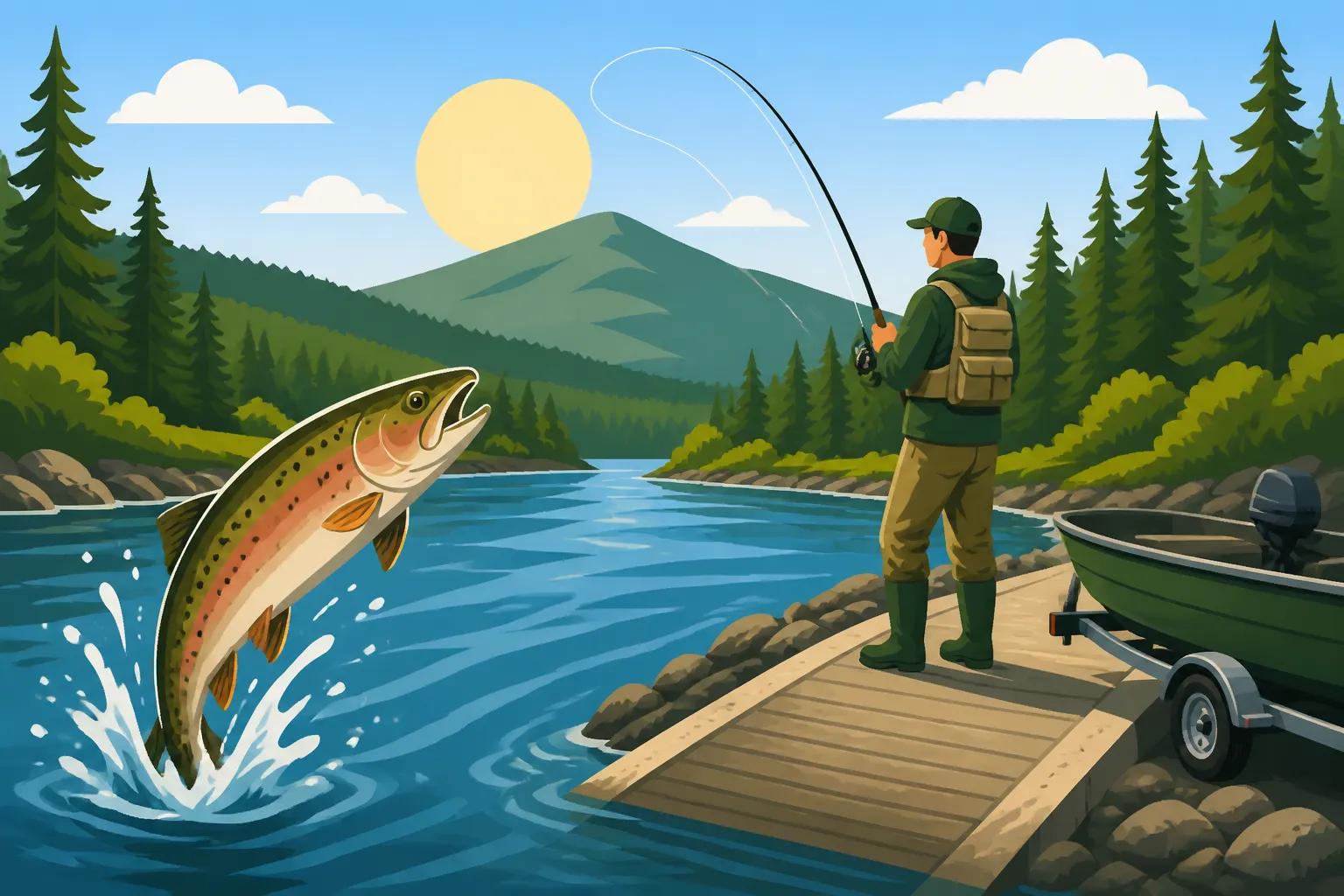
Kennebago River Fishing Access
The Kennebago River, a jewel in Maine's western mountains, holds a legendary status among anglers seeking wild brook trout and landlocked salmon. However, for many dreaming of casting a line into its pristine waters, the biggest challenge isn't the fish — it's figuring out how to actually get to the river. This guide will cut through the confusion, explaining the unique access realities of the Kennebago, and equipping you with the knowledge to plan a truly unforgettable fishing trip.
The Allure of Kennebago River Fishing
The Kennebago River isn't just another waterway; it's a testament to Maine's wild heritage, flowing through some of the most beautiful and remote country in the state. Its reputation as a premier cold-water fishery is well-earned, drawing anglers from all corners eager to experience its magic.
A Pristine Wild Fishery
What truly sets the Kennebago apart is its status as a largely wild fishery. Unlike many waters that rely heavily on stocking programs, the Kennebago River boasts thriving populations of naturally reproducing brook trout and landlocked salmon. This natural abundance is a direct result of its clean, cold water, complex habitat, and, crucially, the relatively limited public access that has protected it from excessive pressure. The river's ecosystem is remarkably healthy, supporting a rich insect life that forms the base of the food chain for its prized fish. When you cast a line here, you're connecting with a piece of wild Maine that feels largely untouched by the modern world, a truly special experience that validates the effort to reach it.
Target Species and Their Haunts
Anglers flock to the Kennebago primarily for two magnificent species: the native Brook Trout Fishing in Maine and the magnificent Landlocked Salmon Fishing in Maine. These fish thrive in the river's varied currents, deep pools, and gravelly runs.
- Brook Trout: Maine's state fish, the brook trout, are abundant in the Kennebago. These vibrant, speckled beauties can be found throughout the river system, often favoring the smaller feeder streams and the shallower, oxygenated riffles. They are opportunistic feeders, ready to strike at a well-presented dry fly during a hatch or a nymph drifting naturally. The solitude of the Kennebago provides an ideal habitat for these trout to grow to impressive sizes, making every catch a thrilling reward.
- Landlocked Salmon: While salmon are more commonly associated with larger lakes in Maine, the Kennebago River is a critical spawning and nursery ground for the landlocked salmon that spend most of their lives in Kennebago Lake. During certain times of the year, particularly in spring and fall, these powerful fish migrate into the river, offering incredible sport. They prefer the deeper, faster-moving sections of the river, often holding in the heads of pools or behind significant structure. Landing a Kennebago salmon on a fly rod is a true accomplishment, requiring skill, patience, and a bit of luck. Understanding their migratory patterns and preferred holding lies is key to success on this remarkable river.
Navigating the Kennebago River Access Puzzle
Now, let's get to the heart of the matter: how do you actually reach this hallowed water? The Kennebago River, while a public resource in terms of its fishery, flows predominantly through private land, creating unique access challenges that can frustrate newcomers.
Understanding Private Land Realities
The majority of the land surrounding the Kennebago River is privately owned, much of it by large timber companies or private estates. This isn't unusual for remote areas of Maine, but it means that navigating to the river isn't as simple as pulling off a state road. Many access roads are gated and locked, or permission is required to traverse private property. Disregarding these private land rules can lead to trespassing charges, which no one wants when they're simply trying to enjoy a day of fishing. This private ownership has, in many ways, helped preserve the river's pristine nature, but it undeniably creates a barrier for independent anglers. It's crucial to understand that "public water" doesn't always mean "public access." Respect for landowners is paramount to ensure future opportunities for all anglers.
Access Through Private Sporting Camps and Lodges
For many, the most practical and reliable way to fish the Kennebago River is by booking a stay at one of the established sporting camps or lodges in the region. These operations often have long-standing agreements or ownership of land that grants direct access to prime stretches of the river.
- Guided Experiences: Many camps, like the historic Kennebago Lake Camps or Bosebuck Mountain Camps, offer guided fishing trips that include transportation to and from the river, expert advice, and sometimes even a shore lunch. This is an excellent option, especially for those new to the area, as guides possess invaluable local knowledge about fish habits, successful techniques, and, crucially, where to access the river legally and safely. These guides are often Registered Maine Guides, highly experienced and capable of leading incredible adventures. If you're looking for a guided trip, online platforms like FishingBooker can be a great resource to browse available guides and services in the Rangeley Lakes region, often specifying if they offer Kennebago access.
- Self-Guided Stays: Even if you prefer to fish independently, staying at a camp can provide the necessary access. Many lodges allow their guests to use their private roads and trails to reach the river on their own, provided they adhere to the camp's specific rules and regulations. This offers a balance of convenience and independence, allowing you to explore the river at your own pace while still respecting private property. It's always best to call ahead and inquire about their specific access policies and any daily fees that might apply.
Limited Public Access Avenues
While private access dominates, there are a few, albeit limited, public avenues to consider. These often require more effort and a deeper understanding of the local geography.
- Public Roads and Easements: Some smaller, less developed public roads or historic easements might offer very remote access to certain stretches of the river, usually far from the main lake. These spots are typically unsigned, require significant hiking, and often traverse challenging terrain. You'll need detailed maps (like those from DeLorme, now owned by Garmin) and a strong sense of direction. It's vital to research thoroughly and always be aware of private property boundaries. For the upper stretches of the Kennebago, beyond the immediate vicinity of Kennebago Lake, public access can sometimes be found via logging roads that may be open seasonally, but these often change yearly and are subject to active logging operations. Always check with the Maine Department of Inland Fisheries and Wildlife (MDIFW) or local sporting goods stores for the most up-to-date information on road access.
- Wade Access from Public Lands: In rare instances, you might find a piece of state-owned public land or a public access point on a tributary that allows you to wade into the Kennebago. However, these points are not common or well-advertised for the main river itself. The majority of the Kennebago's most productive and celebrated waters are indeed within the privately managed areas. Don't expect easy drive-up public access along the most sought-after sections. For more general information on accessing Maine's waters, the Maine Open Water Line Limits guide might offer some helpful context on where you can legally cast a line once you're on public water.
| Access Type | Description | Pros | Cons |
|---|---|---|---|
| Private Camps/Lodges | Stay at a camp, often includes guided trips or self-guided access. | Guaranteed access to prime spots, local expertise, convenience. | Can be expensive, requires booking, less independent exploration. |
| Guided Services | Hire a Registered Maine Guide for a day trip. | Expert knowledge, access permits, gear provided, no planning stress. | Cost, less flexibility, often booked in advance (check FishingBooker). |
| Remote Public Land | Long hikes via logging roads or undeveloped public tracts. | Free, true wilderness experience, solitude. | Very limited, difficult to find, often requires extensive research, challenging terrain, no amenities. |
| Tributary Access | Access a smaller public stream flowing into the Kennebago, then wade up/down. | Potentially free, less crowded. | Very limited, can be difficult wading, not guaranteed main river access, requires extensive research. |
Gear, Techniques, and Etiquette for Kennebago Waters
Once you've secured your access, knowing how to approach the Kennebago with the right gear and mindset will significantly enhance your experience. This is a special river that demands respect and a thoughtful approach.
Fly Fishing Essentials
The Kennebago River is predominantly a fly-fishing destination, and for good reason. The wild trout and salmon respond incredibly well to a proper presentation.
- Rods, Reels, and Lines: For brook trout, a 3-weight or 4-weight fly rod, 7.5 to 8.5 feet long, is perfect. It offers delicate presentation and is a joy to fight even smaller fish. For the powerful landlocked salmon, you might want to step up to a 5-weight or 6-weight, 9-foot rod for more backbone. A good quality, smooth-drag reel loaded with a weight-forward floating line will cover most situations. Remember to bring extra leaders and tippet in various sizes (e.g., 4x, 5x, 6x). For those interested in improving their casting, resources like Casting Techniques for Beginners can be incredibly helpful before a trip.
- Go-To Flies: Successful fly patterns for the Kennebago often mimic the local insect hatches.
- Dry Flies: Classic Maine patterns like the Parachute Adams, Elk Hair Caddis, Stimulator, and various mayfly patterns (Hendrickson, Green Drake, Sulphur) are staples. During specific hatches, "matching the hatch" is crucial.
- Nymphs: Gold Ribbed Hare's Ear, Pheasant Tail, Prince Nymph, and stonefly patterns are effective when fish are feeding sub-surface. Often, drifting a nymph under a dry fly indicator or a larger dry fly (dry-dropper rig) works wonders.
- Streamers: For the larger salmon and aggressive trout, don't forget streamers. Patterns like the Black Ghost, Grey Ghost, Muddler Minnow, and various smelt imitations are incredibly productive, especially in deeper pools or during low light conditions. The Best Flies for Brook Trout in Maine Streams provides further detail on specific patterns that can work well.
- Wading Gear: Chest waders are essential for accessing prime water and staying comfortable in the often-chilly Kennebago. Felt-soled wading boots or rubber soles with studs provide the best grip on slippery rocks. Always carry a wading staff for safety, especially in strong currents.
Responsible Angling and Conservation
Fishing on the Kennebago comes with a responsibility to protect this precious resource. Practicing ethical angling ensures the river remains healthy for generations to come.
- Catch and Release: Much of the Kennebago is managed as a wild, "catch and release only" fishery, or with very restrictive bag limits. Always check the current Maine Fishing Regulations Explained for the specific section you are fishing. Even where keeping fish is permitted, many anglers choose to release their catch to maintain the robust population. When practicing catch and release, handle fish gently with wet hands, keep them in the water as much as possible, and use barbless hooks to minimize harm. For a deeper dive into preserving fish populations, refer to Catch and Release Best Practices in Maine.
- Leave No Trace: Pack out everything you pack in, and perhaps even a little more. This includes all trash, broken line, and discarded bait containers. The Kennebago's beauty is part of the experience; let's keep it pristine. Avoid disturbing stream banks or natural vegetation.
- Respect Private Property: We've covered access, but it bears repeating: always respect private land boundaries, posted signs, and the wishes of landowners. If you're accessing through a camp, adhere to their rules without exception. This cooperative approach is vital for maintaining access privileges for everyone.
Planning Your Kennebago Adventure
A successful trip to the Kennebago River requires a bit of forethought and planning. It’s not a spontaneous last-minute outing, but the rewards are well worth the effort.
Optimal Timing and Seasonal Considerations
The Kennebago offers different experiences throughout the fishing season, which typically aligns with Maine's general open water season from April 1 to September 30, though specific rules apply to specific bodies of water. Always consult the Maine Fishing Season Dates Guide for precise dates and special regulations for the Kennebago River and Kennebago Lake.
- Spring (Ice-Out through May): This is often prime time for landlocked salmon as they become very active after ice-out, feeding heavily. Brook trout also begin to stir. Water levels can be high from snowmelt, which can be challenging for wading but also brings fresh fish into the system. Early spring can be chilly, so layering is key.
- Summer (June through August): As the water warms, brook trout fishing can be excellent, particularly in the mornings and evenings when insect hatches are prevalent. Salmon may retreat to deeper, cooler sections or back into Kennebago Lake, but can still be caught. July and August can see lower water levels, making wading easier but requiring more stealth and careful presentation. This is when you'll truly appreciate the cooling power of the river's cold spring feeds.
- Fall (September through October): The cooler temperatures of fall bring renewed activity. Both brook trout and landlocked salmon become aggressive as they prepare for spawning. The foliage is spectacular, making for a beautiful backdrop to your fishing. Some regulations may change for salmon during spawning, so always check. For a broader overview of seasonal fishing opportunities, check out Best Time of Year to Fish in Maine.
Essential Regulations and Permits
Fishing in Maine, especially on renowned waters like the Kennebago, comes with specific responsibilities, first and foremost being a legal Maine fishing license.
- Maine Fishing License: Every angler 16 years of age or older needs a valid Maine Fishing License Guide. Licenses can be purchased online, at authorized agents throughout the state, or at many sporting goods stores. Make sure you have it on you at all times while fishing.
- Kennebago-Specific Regulations: The Kennebago River often has special regulations that differ from the general law. These can include reduced bag limits, size restrictions (like minimum or maximum lengths), or even "fly fishing only" and "catch and release only" sections. It is critical to obtain and read the most current Maine Open Water & Ice Fishing Laws summary booklet, available from MDIFW or license agents, and specifically look up the rules for the Kennebago River and Kennebago Lake. Do not rely on general knowledge; verify the rules for your specific dates and intended fishing locations. Penalties for violations can be steep.
- Private Land Permits: If you are accessing the river through private land not associated with a commercial camp where you are staying, you may need specific permission or a permit from the landowner. Always inquire and obtain these beforehand if required. When hiring a guide, they will typically handle these permissions as part of their service. Platforms like FishingBooker allow you to see what services guides include, often covering such permits.
Staying Safe and Respectful
Beyond the fishing itself, ensuring your safety and showing respect for the environment and others is crucial for a positive experience.
- Weather and Conditions: Weather in Maine's mountains can change rapidly. Be prepared for rain, cold, and sudden temperature drops, even in summer. Carry extra layers, rain gear, and a first-aid kit. Be aware of water levels; heavy rains can quickly make wading dangerous.
- Wildlife Awareness: You are in wild country. Be aware of wildlife, including moose, bear, and other creatures. Store food properly and make noise when hiking to avoid surprising animals.
- Emergency Preparedness: Cell service is spotty to non-existent in many remote areas around the Kennebago. Inform someone of your plans, carry a map and compass (and know how to use them), and consider a satellite communication device for emergencies.
- Sporting Camps Etiquette: If staying at a camp, be mindful of other guests, respect quiet hours, and follow any specific guidelines they have for fishing or general conduct. Remember that many people come to the Kennebago for peace and quiet.
Disclaimer
Please note that fishing regulations, access policies, and local conditions can change. Always consult the official Maine Department of Inland Fisheries and Wildlife (MDIFW) resources for the most current information before planning your trip. This guide is for informational purposes only and does not replace official publications.