Groundfish Spots Off the Coast of Maine
Figuring out where the best groundfish spots are off the sprawling coast of Maine can feel like an overwhelming task, especially when you're dreaming of a successful deep-sea trip. Many anglers struggle to pinpoint those productive ledges and rocky bottoms, often wasting precious fishing time in barren waters. This comprehensive guide is designed to cut through that frustration, providing you with practical insights into the top groundfishing locations and the essential know-how to make your next offshore adventure a memorable one.
Understanding Maine's Groundfish Fishery
Maine's coastline is legendary for its beauty, but beneath the waves lies an equally rich and diverse ecosystem, particularly when it comes to groundfish. These are the species that primarily live on or near the seabed, making the rocky, nutrient-rich bottom structure of the Gulf of Maine an ideal habitat. For many anglers, targeting groundfish offers a true test of skill and a rewarding experience, often resulting in delicious table fare.
What are Groundfish?
When we talk about groundfish in Maine, we're generally referring to a collection of species that inhabit the deeper, colder waters and rocky structures of the ocean floor. Unlike pelagic species that roam the open water column, groundfish are inextricably linked to the seabed. This means understanding underwater topography – ledges, reefs, wrecks, and rocky outcrops – is key to finding them. They rely on these structures for shelter, food, and spawning grounds. The cold, oxygen-rich waters off Maine provide perfect conditions for many of these robust species, which often grow to impressive sizes.
Key Groundfish Species You'll Encounter
The bounty of Maine's groundfish fishery is quite diverse. You're likely to hook into a variety of species, each with its own characteristics and fighting style.
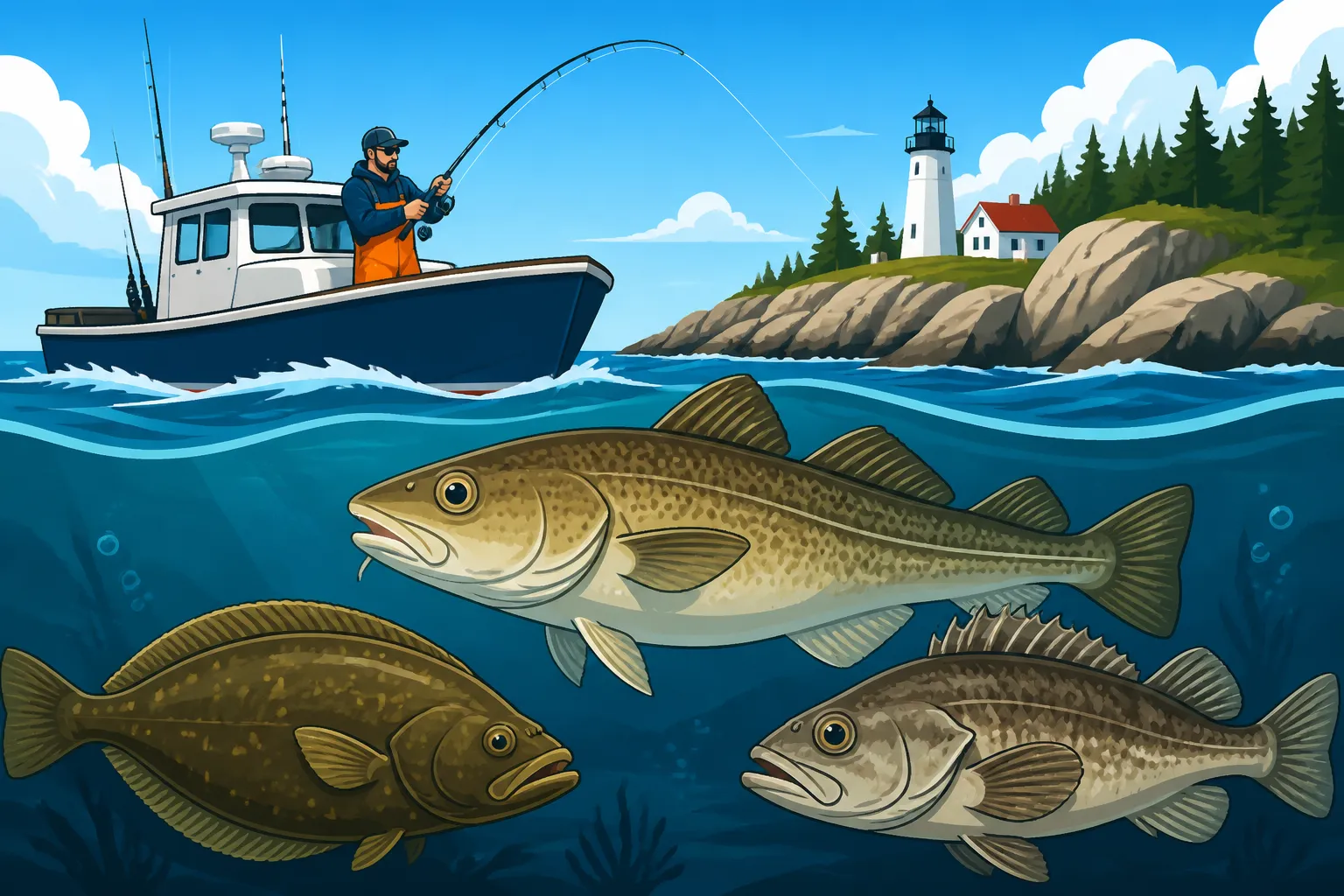
- Cod (Gadus morhua): The quintessential groundfish, cod are highly sought after for their mild, flaky white meat. They're typically found over rocky bottoms and ledges, often in cooler water. Maine cod can range from smaller "market" fish to substantial specimens.
- Haddock (Melanogrammus aeglefinus): Similar to cod but with a distinctive black lateral line and a "thumbprint" spot above the pectoral fin, haddock are another excellent eating fish. They often prefer slightly softer, gravelly bottoms but can be found alongside cod.
- Pollock (Pollachius virens): While often found higher in the water column when feeding on baitfish, pollock are technically groundfish and can be caught jigging near structure. They're strong fighters and offer a good challenge, especially the larger ones. Their meat is darker than cod or haddock but still very tasty.
- Hake (Urophycis spp.): Various species of hake, such as red hake and white hake, are common groundfish. They tend to have softer bodies and are often found in deeper mud or sand bottoms near structure. They are excellent eating, particularly when fried.
- Cusk (Brosme brosme): A unique-looking member of the cod family, cusk have an elongated body and a single dorsal fin. They are bottom-dwellers, preferring rocky crevices and ledges, and are considered a delicacy by many.
- Ocean Pout (Macrozoarces americanus): While not as popular for consumption due to their appearance, ocean pout are definitely groundfish, often found hunkering down on muddy or rocky bottoms. They're interesting to catch, if nothing else!
Knowing what you're targeting helps you select the right gear and approach, and it's always good to be prepared for any of these fantastic fish to take your bait. Remember to consult the Maine Fish Bag Limits Guide before you head out, as regulations can change.
Why Maine is Prime for Groundfishing
Maine's coastal geography and position within the Gulf of Maine create a perfect storm, so to speak, for groundfishing. The offshore waters are a complex mosaic of underwater mountains, deep canyons, ledges, and rocky reefs left behind by ancient glaciers. This varied topography provides an abundance of habitat and feeding grounds for groundfish. Furthermore, the cold, nutrient-rich waters fueled by currents and upwellings support a robust food chain, from tiny plankton to vast schools of baitfish, which in turn sustain the larger predators like cod, haddock, and pollock. The historic fishing grounds off Maine have produced generations of impressive catches, and with careful management, they continue to offer incredible opportunities for recreational anglers looking to tangle with some serious bottom dwellers.
Top Groundfish Spots Off the Coast of Maine
When it comes to groundfishing in Maine, it's all about location, location, location. The vastness of the Atlantic can be intimidating, but experienced captains and savvy anglers know that certain areas consistently hold fish due to their unique underwater features. Whether you're planning a full-day charter or venturing out on your own boat, knowing these general hotspots will significantly increase your chances of success.
Nearshore Spots: Finding Fish Without Going Too Far
You don't always need to steam for hours to find good groundfish. There are productive areas closer to shore, especially for haddock and smaller cod, particularly during certain times of the year when they move into shallower waters. These spots are often characterized by rocky ledges and humps that break up the otherwise sandy or muddy bottom.
- Casco Bay ledges: Just outside Portland and Freeport, Casco Bay offers numerous ledges and rocky structures that can hold haddock and smaller cod, especially in late spring and early summer. Look for depths ranging from 80 to 150 feet. Areas like the "Eastern Ledges" and other unnamed bumps picked up on a good fish finder can be goldmines. These spots are also popular for Maine Coastal Fishing Spots for Striped Bass during their season, showcasing the diverse fishery here.
- Jeffrey's Ledge: While portions of Jeffrey's Ledge extend further offshore, its western edge can be reached from southern Maine ports like Wells and Kennebunkport with a shorter run. This massive, complex underwater structure is a renowned hotspot for cod, haddock, and pollock. Focus on the areas where the bottom structure changes dramatically, creating deep pockets and sharp drop-offs.
- Isles of Shoals area: While technically straddling the Maine-New Hampshire border, the ledges and rocky bottom around the Isles of Shoals, particularly on the Maine side, can offer good groundfishing for those departing from southern Maine ports. Again, look for depths between 80 and 200 feet and focus on sharp contour changes.
Always pay close attention to your fish finder in these areas. Groundfish aren't always stacked up like cordwood, but often you'll see "marks" or bait balls indicating activity on or near the bottom.
Offshore Gully and Ledge Systems: Deeper Waters, Bigger Fish
For those truly aiming for the larger groundfish and willing to make the longer run, the deeper offshore gully and ledge systems are where the real trophies often reside. These trips typically require a capable vessel and a good weather window.
- Platts Bank: Northeast of Jeffrey's Ledge, Platts Bank is another vast and famous groundfishing ground. It features a varied bottom of sand, gravel, and rock, with numerous ledges and depressions that attract a wide array of groundfish. Depths here can range from 150 to over 300 feet. This is a classic area for large cod, haddock, and sometimes substantial pollock.
- Ammen Rock and Fippennies Ledge: Further offshore from Portland, these are legendary deep-sea fishing grounds. Ammen Rock is a prominent submerged rock formation, while Fippennies Ledge is a sprawling area of rocky terrain. Both are deep, often exceeding 200-300 feet, and require heavy tackle. They are prime locations for trophy cod, big pollock, and plenty of haddock. If you're going this far out, consider Hiring a Maine Fishing Guide or a charter to maximize your chances and ensure safety. A reputable guide service found on platforms like FishingBooker can make all the difference for such remote trips.
- The Outer Ledges off Midcoast Maine: As you move up the coast towards Boothbay Harbor and Port Clyde, there are numerous lesser-known but highly productive offshore ledges. These often aren't named on common charts but are known to local charter captains. They offer similar fishing to Platts and Fippennies, with excellent opportunities for cod, haddock, and pollock in deeper waters. This is where local knowledge truly shines.
These offshore areas demand more robust gear and a keen understanding of depth, current, and bottom structure. A good marine chart plotter with detailed bathymetry is indispensable.
Specific Geographic Regions and Their Offerings
Maine's coast can be generally broken down into regions, each offering unique groundfishing opportunities based on proximity and access.
- Southern Maine (Kittery to Portland): This region offers relatively quicker access to areas like the western edge of Jeffrey's Ledge and the nearshore ledges outside of Casco Bay. It's a great starting point for those new to groundfishing or looking for a shorter run. Ports like Ogunquit, Kennebunkport, and Portland are popular departure points for both private boats and Maine Deep Sea Fishing Charters. Many anglers use FishingBooker to find local charters operating from these ports.
- Midcoast Maine (Portland to Penobscot Bay): This stretch, encompassing areas around Boothbay Harbor, Damariscotta, and Port Clyde, provides access to a wealth of offshore ledges and deeper banks, including the central portions of Platts Bank and other productive, unnamed structures. This region is fantastic for full-day trips targeting a variety of groundfish.
- Downeast Maine (Penobscot Bay to Canadian Border): While traditionally known for lobster and tuna, Downeast Maine also offers significant groundfishing potential, particularly further offshore. The waters here are deeper and colder, holding robust populations of cod and pollock. The remote nature means less pressure, but also fewer readily available charter services. If you're fishing these waters, make sure you understand the Maine Fishing Regulations Explained thoroughly, as some areas may have specific rules.
Essential Gear and Techniques for Maine Groundfishing
Successfully landing a big cod or a hefty pollock requires not just knowing where to fish, but also how to fish for them and with what equipment. Maine groundfishing often means dealing with strong currents, deep water, and potentially large, hard-fighting fish. Having the right gear and employing effective techniques will make your trip much more enjoyable and productive.
Rods, Reels, and Line Setup
The key word for groundfishing gear is "heavy-duty." You're dropping baits and jigs hundreds of feet down, often in strong currents, and fighting fish that can easily top 20 pounds.
- Rods: Look for a stout, fast-action boat rod in the 6 to 7-foot range with a medium-heavy to heavy power rating. Graphite or composite rods are ideal as they offer sensitivity to detect subtle bites in deep water while providing the backbone needed to lift heavy fish and sinkers. A good example might be a rod rated for 30-80 lb line and capable of handling 8-16 oz of weight.
- Reels: A high-quality conventional (star drag or lever drag) reel is almost a necessity. It needs to hold a lot of line and have a strong drag system. Look for reels in the 4/0 to 6/0 size range, or equivalent. Brands like Penn, Daiwa, or Shimano are reliable choices. Make sure your reel has a smooth, consistent drag that won't seize up under pressure.
- Line: Braided line has become the standard for groundfishing due to its incredible strength-to-diameter ratio and lack of stretch. This zero-stretch quality is crucial for feeling bites in deep water and getting a solid hookset. Spool up with 50-80 lb test braided line. You'll want a monofilament or fluorocarbon leader of 60-100 lb test, typically 3-6 feet long, connected to your main line with a strong knot like an Albright or FG knot. This leader provides abrasion resistance against rocky bottoms and toothy fish. For more on line limits, especially for freshwater, check out Maine Open Water Line Limits, though offshore rules differ slightly.
Baits and Lures That Work
Groundfish aren't overly picky, but some offerings are far more effective than others. It's often a combination of natural scent and visual appeal.
- Natural Bait: Fresh is always best. Cut bait, particularly strips of mackerel, herring, or squid, are incredibly effective. These baits release strong scent trails that attract groundfish from a distance. Clam bellies are another highly prized bait for cod and haddock, though they can be messy to work with. Present these on a two-hook rig (often called a "haddock rig" or "chod rig") with a heavy sinker at the bottom.
- Jigs: Heavy metal jigs, ranging from 8 oz to 24 oz or more depending on depth and current, are excellent for targeting groundfish, especially pollock and cod. Vertical jigging involves dropping the jig to the bottom and then lifting and dropping it repeatedly to simulate an injured baitfish. Jigs in chrome, blue/silver, or glow patterns are popular. For specific recommendations, see Best Lures for Maine Open Water Fishing. Tipping your jig with a piece of clam or squid can significantly increase its effectiveness by adding scent.
- Teasers: Small plastic grubs, shrimp imitations, or brightly colored tubes tied above your main bait or jig can add extra appeal. These "teasers" often entice fish that might be hesitant to hit the main offering.
Fishing Techniques for Different Depths
The primary technique for groundfishing is bottom fishing, but there are nuances depending on depth and target species.
- Drifting: Often, the most effective method is to drift over productive ledges or banks. This allows you to cover more ground and present your bait to a wider area of fish. You'll need to use enough weight (sinker) to ensure your bait reaches and stays on the bottom. In strong currents, this can mean a pound or more of lead. As you drift, constantly monitor your fish finder for changes in depth and marks indicating fish.
- Anchoring: In areas with very strong currents or a highly concentrated spot, anchoring directly over a piece of structure can be effective. This allows you to precisely target a specific hole or hump. However, anchoring in deep water with strong currents is a skill in itself and requires appropriate tackle like a heavy anchor, plenty of chain, and several hundred feet of anchor rode.
- Jigging: While bait fishing is often paramount, vertical jigging is a fantastic way to target pollock, which often suspend slightly off the bottom, and can also be very effective for cod. Drop your jig to the bottom, reel up a few feet, and then aggressively snap the rod tip up and let it fall. The action of the jig on the fall often triggers a strike.
No matter your technique, the goal is always to keep your bait or lure as close to the bottom as possible, where the groundfish are feeding.
Navigating Regulations and Conservation
Fishing in Maine, especially for popular species like groundfish, comes with important rules and a strong emphasis on conservation. Understanding these regulations isn't just about avoiding fines; it's about contributing to the health and sustainability of Maine's incredible marine resources for future generations. Ignoring them is a surefire way to jeopardize your trip and the fishery itself.
Understanding Bag Limits and Seasons
Regulations for groundfish can be complex and are subject to change based on stock assessments and management decisions by federal and state agencies. It's crucial to get the most up-to-date information before every trip.
- Federal vs. State Waters: Most significant groundfishing takes place in federal waters, which begin three miles offshore. Federal regulations, set by the National Oceanic and Atmospheric Administration (NOAA) Fisheries, typically dictate minimum sizes, possession limits (bag limits), and sometimes even seasonal closures for species like cod and haddock. Maine state regulations apply within three miles of shore.
- Cod and Haddock Limits: Historically, cod have faced stricter regulations due to stock declines, often with very low or even zero possession limits for recreational anglers in certain areas or times of year. Haddock regulations tend to be more generous, though still with clear limits on how many fish you can keep and their minimum size. Always check the latest NOAA Fisheries guidelines, often available through the New England Fishery Management Council (NEFMC) website. This is similar to how you'd check Maine Striped Bass Season and Limits for coastal fishing – diligence is key.
- Pollock and Other Species: Regulations for pollock, hake, and cusk are generally more liberal, but minimum sizes and bag limits still apply. Never assume; always verify.
- Season Dates: While many groundfish are available year-round, specific seasons can be implemented for certain species to protect spawning aggregations or recovering stocks. For an overview of how seasons work generally in Maine, consider reading the Maine Fishing Season Dates Guide.
You are required to hold a Maine saltwater fishing registry if you're fishing recreationally for groundfish. This is a federal requirement managed by the state, and it’s important to ensure you're compliant. More details can be found in the Maine Saltwater Fishing Registry Guide.
Conservation Efforts and Best Practices
As responsible anglers, we all play a role in conservation. Groundfish populations, particularly cod, have faced significant challenges over the years, making sustainable practices more important than ever.
- Catch and Release: For fish that are undersized, over the bag limit, or species you don't intend to keep, practice proper catch and release. This means handling fish gently, minimizing their time out of water, and using dehooking tools when necessary. Avoid deep-hooking by using appropriate hook sizes.
- Barotrauma Mitigation: When bringing fish up from deep water (typically anything over 50-60 feet), they can suffer from barotrauma – a pressure-related injury caused by the rapid change in depth. Signs include a distended belly, bulging eyes, and a protruding stomach. If you intend to release such a fish, consider using a descending device (like a seaqualizer or a weighted hook) to return it quickly to depth, allowing its swim bladder to recompress. This significantly increases their survival rate.
- Respecting Marine Life: Be mindful of other marine life you encounter, including marine mammals and seabirds. Avoid discarding trash or fishing gear overboard.
- Reporting Violations: If you witness fishing violations, report them to the Maine Marine Patrol or the NOAA Fisheries Office of Law Enforcement. Protecting these resources is a shared responsibility.
By adhering to these guidelines and embracing a conservation-minded approach, we can ensure that groundfishing off the coast of Maine remains a vibrant and rewarding activity for generations to come.
Disclaimer
The information provided in this guide is for general informational purposes only and is subject to change. Fishing regulations, season dates, and bag limits are dynamic and can be updated by state and federal authorities without notice. It is the responsibility of every angler to verify current regulations before engaging in any fishing activity. Always prioritize safety on the water and be prepared for changing weather conditions.