Best Tuna Fishing Grounds Off the Maine Coast
The dream of hooking into a powerful bluefin tuna off the coast of Maine is an exhilarating one, but knowing where to cast your line in such vast waters can feel overwhelming. Many anglers spend countless hours poring over charts and reports, only to feel lost when it comes to pinpointing those truly productive grounds. This comprehensive guide will cut through the confusion, revealing the premier tuna fishing grounds off the Maine coast and equipping you with the knowledge needed to pursue these magnificent pelagic predators successfully.
The Allure of Tuna Fishing in Maine's Offshore Waters
Maine's deep, cold waters hold a mystique for anglers, especially those chasing big game like tuna. While the state is famous for its lobster, its offshore fishing opportunities, particularly for bluefin tuna, are nothing short of world-class. It’s a pursuit that combines strategy, endurance, and a deep respect for the ocean's most powerful inhabitants.
A Brief History of Maine Bluefin Tuna
Maine's connection to bluefin tuna runs deep, steeped in a history of both traditional harpooning and, more recently, rod-and-reel angling. For generations, skilled fishermen navigated the treacherous Gulf of Maine, honing techniques to intercept these massive fish as they migrated through rich feeding grounds. Early methods were often commercial, focusing on sustenance and market sales, reflecting a deep understanding of the tuna's habits and movements passed down through families.
As recreational fishing gained traction, so too did the fascination with landing a giant bluefin on tackle. The sheer power and speed of these fish made them the ultimate angling challenge. This shift brought new technologies and refined techniques, but the core respect for these incredible creatures remained. Today, Maine’s bluefin fishery is heavily regulated to ensure sustainability, a critical balance between the thrill of the catch and the long-term health of the species. It’s a fishery where every fish hooked is a testament to both angler skill and robust conservation efforts.
Understanding Maine's Tuna Season and Species
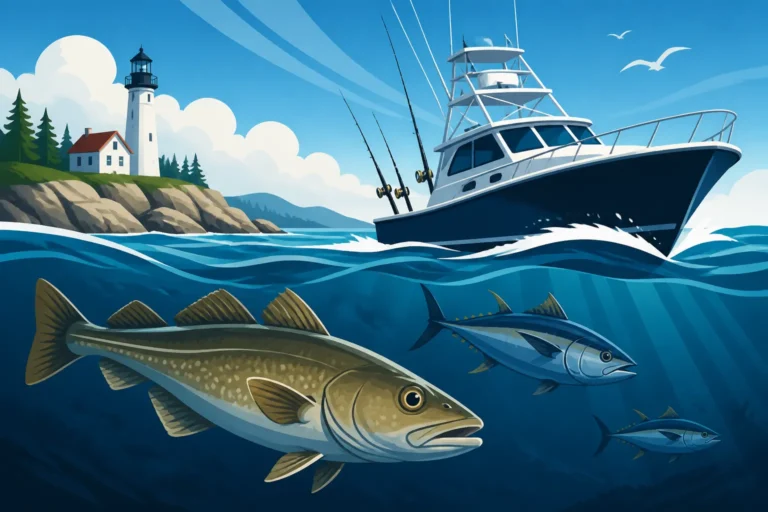
When we talk about tuna fishing in Maine, we're primarily focused on the formidable bluefin tuna ( Thunnus thynnus). These are the giants, the highly migratory titans that draw anglers from across the globe. While other tuna species like smaller yellowfin tuna ( Thunnus albacares) and even thresher sharks are sometimes encountered in the warmer waters further offshore, bluefin are the main event in the Gulf of Maine.
The bluefin tuna season in Maine typically kicks off in late spring, usually around late May or early June, as warmer water pushes into the Gulf and brings with it their primary forage. However, the peak of the bluefin season generally runs from mid-summer through early fall, often extending well into October, sometimes even November, depending on baitfish availability and water temperatures. This period offers the most consistent action for larger fish.
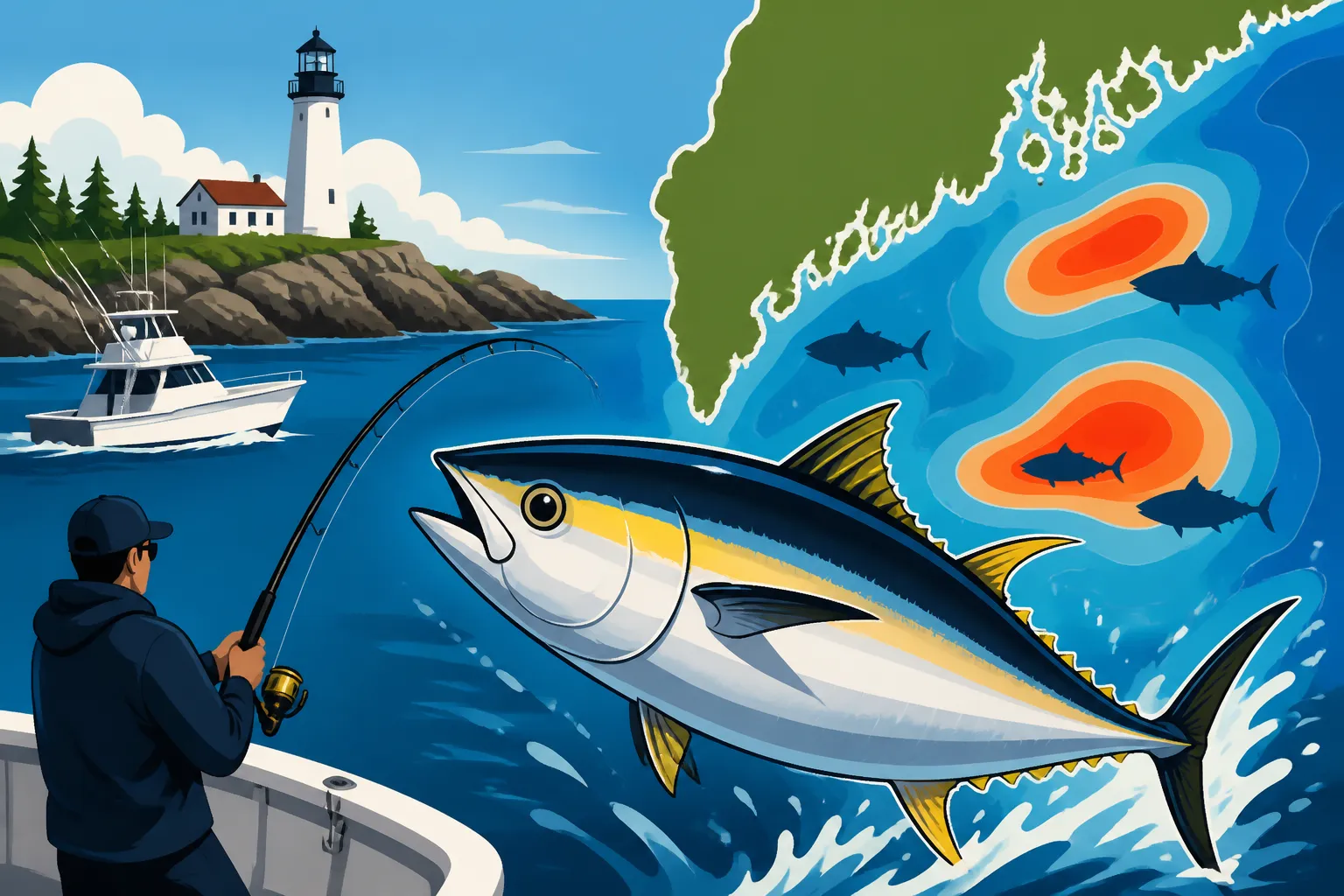
Water temperature is the most critical factor influencing tuna movements. Bluefin are highly sensitive to temperature breaks and currents, often congregating where cooler, nutrient-rich waters meet warmer currents. These zones create upwellings that concentrate baitfish like mackerel, herring, and whiting, which are the lifeblood of the tuna's diet. Keeping a close eye on sea surface temperature (SST) charts is paramount for any serious tuna angler, as these subtle changes dictate where the fish will be feeding.
Prime Bluefin Tuna Fishing Grounds Off the Maine Coast
Maine's offshore landscape is a mosaic of underwater topography, from expansive banks to deep canyons, all of which can hold the key to finding giant bluefin. Knowing these spots and why they attract tuna is crucial for a successful trip.
Cashes Ledge and Stellwagen Bank
When it comes to legendary tuna grounds in the North Atlantic, Cashes Ledge and Stellwagen Bank are often mentioned in the same breath. While Stellwagen Bank lies primarily off the coast of Massachusetts, its influence extends into the southern reaches of the Gulf of Maine, and it's a critical feeding ground for highly migratory species like bluefin. Cashes Ledge, on the other hand, is a series of underwater peaks and valleys located about 80 miles southeast of Portland, Maine. Both are truly special places.
These areas are essentially submerged mountains and plateaus that rise dramatically from the ocean floor, creating complex current patterns and upwellings. This unique topography pushes deep-sea nutrients towards the surface, fostering an incredibly rich ecosystem. The result is an abundance of baitfish – everything from massive schools of mackerel and herring to pollock and squid – which in turn attracts apex predators like bluefin tuna. This concentration of food makes these banks prime hunting grounds.
Fishing these banks, however, comes with its own set of challenges. The sheer distance from shore means a long boat ride and a significant commitment to fuel and time. Weather can change quickly, making good seamanship and a well-equipped vessel essential. For those looking to experience the thrill without owning an offshore battlewagon, many excellent Maine Deep Sea Fishing Charters operate out of ports like Portland and Kennebunkport, specializing in these distant but rewarding trips. These charters have the local knowledge and specialized gear to safely navigate and fish these productive waters.
The Gulf of Maine's Offshore Canyons and Eddies
Beyond the banks, the continental shelf off Maine plunges into a series of impressive offshore canyons, such as Hydrographer Canyon and Veatch Canyon. While these are a significant run from Maine's coastline, they represent the true blue water frontier for tuna and other pelagic species. These canyons are massive underwater ravines that serve as highways and feeding grounds for a vast array of marine life.
What makes these canyons particularly attractive to bluefin tuna are the warm water eddies that periodically spin off the Gulf Stream. These swirling masses of warmer, nutrient-rich water push into the colder Gulf of Maine, creating distinct temperature breaks and concentrating baitfish along their edges. Tuna, being highly migratory and opportunistic feeders, will follow these warm water intrusions, sometimes venturing far from their usual haunts. It’s here that you might find not only bluefin but also a greater chance of encountering other pelagic species like swordfish or even mahi-mahi in the warmer months.
Targeting these areas requires even greater planning and capability, often involving multi-day trips and vessels designed for extended offshore operations. Anglers will typically focus on the edges of the canyons or the areas where the warm water eddies are most pronounced, often at depths ranging from the surface down to several hundred feet, depending on bait concentration. Specialized satellite imagery, showing sea surface temperatures and chlorophyll levels (an indicator of plankton, and thus baitfish presence), becomes an invaluable tool for pinpointing these elusive, productive zones.
Nearshore Hotspots and Transitional Zones
While the big banks and canyons offer incredible opportunities, it's a common misconception that all big tuna fishing happens hundreds of miles offshore. Maine also has several nearshore hotspots and transitional zones where bluefin tuna, especially the medium-sized "schoolie" bluefin and sometimes even giants, can be found. These areas are typically within 20-50 miles of the coast and often include humps, ledges, and channels that concentrate bait.
Areas off major coastal cities like Portland, for instance, can surprise anglers with productive tuna fishing. The waters surrounding Casco Bay and out towards islands like Monhegan are known to hold bait schools that attract bluefin. Similarly, regions off Boothbay Harbor and further east often see bluefin move in closer to shore when baitfish such as mackerel are abundant. Charters operating from Portland Maine Deep Sea Charters or Boothbay Harbor Fishing Charters often target these closer-in grounds, especially for day trips.
The key to success in these nearshore zones is often about observation and adaptability. Spotting large schools of baitfish on your fishfinder, noticing diving birds, or seeing active feeding frenzies on the surface are all tell-tale signs that tuna might be in the vicinity. These transitional areas, where deep water meets shallower structure or where currents create rips, can act as natural ambush points for bluefin. Never underestimate the possibility of a world-class catch closer to home.
| Fishing Ground | Primary Tuna Species | Best Season | Key Features & Notes |
|---|---|---|---|
| Cashes Ledge | Bluefin | Mid-Summer – Fall | Submerged peaks, rich ecosystem, abundant bait. Long run from shore. |
| Stellwagen Bank | Bluefin | Mid-Summer – Fall | Underwater plateau, northern edge influences Maine waters. Concentrated bait. |
| Offshore Canyons | Bluefin, Yellowfin | Late Summer – Fall | Deep water structures, influenced by Gulf Stream eddies. Very long run, multi-day potential. |
| Nearshore Ledges (e.g., off Portland, Boothbay) | Bluefin | Summer – Early Fall | Closer to shore, structure and bait concentrations. Easier day trips. Look for bird activity. |
Gear, Techniques, and Essential Preparations for Tuna
Tuna fishing isn't your average day on the water. These are powerful, intelligent fish that demand specific gear, refined techniques, and meticulous preparation.
Heavy Tackle for Heavy Hitters
When targeting bluefin tuna, especially the larger variety, your gear needs to be robust enough to withstand immense pressure and prolonged fights. This isn't the time for lightweight spinning rods; we're talking about heavy-duty tackle. Expect to use stand-up rods in the 80-130 lb class, paired with massive conventional reels capable of holding 500-1000 yards of heavy braided line (80-130 lb test), often with a monofilament top shot for abrasion resistance and stretch. Brands like Penn, Shimano, and Accurate are popular choices among serious tuna anglers.
Terminal tackle is equally crucial. You'll need heavy-duty leaders, typically 150-400 lb test monofilament or fluorocarbon, connected to razor-sharp, strong hooks (e.g., 8/0 to 16/0 circle hooks). Swivels, snaps, and all connection points must be rated for extreme stress. Any weak link in the chain will almost certainly lead to a heartbreaking loss.
Beyond rods and reels, safety equipment for the angler is paramount. Fighting a large tuna can be physically demanding and dangerous. A proper fighting harness and gimbal belt are essential for distributing the immense pressure of the rod and allowing you to leverage your body weight effectively. Many boats also carry specialized gaffs, harpoons (used commercially or by permitted recreational anglers to dispatch a landed fish quickly), and flying gaffs, which all require careful handling and expertise. Remember, safety first, always.
Popular Tuna Fishing Techniques
Bluefin tuna are pursued using a variety of methods, each effective under different conditions. The most common and often most successful technique in Maine is trolling. This involves dragging an array of baits or lures behind a moving boat, covering large expanses of water. Anglers typically deploy spreader bars, rigged ballyhoo, or artificial lures like skirted plastics or cedar plugs at varying depths and distances from the boat. The goal is to imitate a school of baitfish, enticing the tuna to strike. Mastering Maine Deep Sea Trolling Techniques can make a huge difference in your success rate.
Live baiting is another highly effective method, especially when tuna are finicky or concentrated on a specific forage. This involves presenting live mackerel, herring, pollock, or even squid on heavy tackle, often drifted or slow-trolled. The natural movement and scent of live bait can be irresistible to a wary tuna. Finding and keeping healthy live bait is an art in itself, often requiring specialized bait wells and cast nets or sabiki rigs.
For more active and visually thrilling encounters, jigging and popping can be incredibly effective when tuna are actively feeding on the surface. Heavy metal jigs are dropped to depth and worked aggressively, while large topwater poppers are cast and retrieved to mimic fleeing baitfish. These methods are physically demanding but offer an incredible adrenaline rush when a tuna explodes on your lure just feet from the boat.
Interpreting the Ocean: Electronics and Environmental Factors
Modern tuna fishing is as much about technology and data as it is about traditional angling skill. High-end sonar (fishfinder), radar, and GPS units are indispensable tools. Sonar helps you identify bait balls, structure, and even individual tuna in the water column. Radar can help spot working birds (a huge indicator of feeding tuna) at a distance and navigate in fog. GPS is vital for marking productive spots and navigating safely offshore.
Beyond on-boat electronics, interpreting environmental factors is crucial. Sea Surface Temperature (SST) charts available from various online sources are gold. Tuna often congregate along temperature breaks where warm and cold water masses meet. Chlorophyll charts, which show areas of high plankton concentration, can indicate where baitfish are likely to be feeding, thus attracting tuna. Understanding current breaks and underwater topography, often visualized through detailed bathymetric charts, helps identify ambush points.
Finally, never underestimate the power of visual cues. Diving seabirds, especially shearwaters and gulls, are often a dead giveaway that baitfish are being pushed to the surface, and hungry tuna might be underneath. The sight of a bluefin crashing through a bait ball, or even just rolling on the surface, sends shivers down an angler's spine and indicates it's time to get a bait in the water.
Planning Your Successful Maine Tuna Expedition
Tuna fishing in Maine is an investment of time, effort, and money. Proper planning is essential to maximize your chances of success and ensure a safe and enjoyable trip.
The Value of a Good Tuna Charter
For many anglers, especially those without their own offshore-capable vessel and specialized gear, booking a reputable tuna charter is the most practical and often the most successful way to experience Maine tuna fishing. A good charter provides not only the boat and tackle but, more importantly, the invaluable expertise of a seasoned captain and crew. They know the local grounds, understand the ever-changing fish patterns, and possess the specialized knowledge to put you on fish.
When looking for a charter, don't be afraid to ask questions. Inquire about the captain's experience, the boat's safety equipment, the type of tackle used, and what’s included in the price. Reputable charters prioritize safety and customer satisfaction. Platforms like FishingBooker can be an excellent resource for finding reputable operations, allowing you to browse different boats, compare pricing, and read reviews from past clients. Many anglers utilize online booking platforms, including FishingBooker, to compare options and secure their trips well in advance, especially during peak season.
Understanding the costs involved is also important. Maine Charter Fishing Cost Guide reveals that tuna charters are typically more expensive than inshore trips due to the fuel, specialized gear, and expertise required. However, for a chance at a fish of a lifetime, many find the investment well worth it. Ensure you understand what's covered – bait, tackle, and ice are usually included, but check on licenses, food, and drinks.
Weather, Safety, and Regulations
The offshore environment in Maine can be unforgiving. Weather monitoring is non-negotiable. Always check marine forecasts before and during your trip. A responsible captain will prioritize safety and won't hesitate to cancel or reschedule if conditions are unfavorable. Safety equipment such as life rafts, EPIRBs (Emergency Position Indicating Radio Beacons), VHF radios, and adequate life jackets are legally required and absolutely essential.
Beyond safety, understanding the regulations governing bluefin tuna fishing in Maine (and federally, as tuna are highly migratory) is paramount. Bluefin tuna are managed under strict quotas and size limits, with specific reporting requirements. Anglers must possess a valid federal Highly Migratory Species (HMS) permit, in addition to any state fishing licenses. The rules can change year-to-year, so always consult the latest guidelines from NOAA Fisheries and the Maine Department of Marine Resources. For more general guidelines, you can review the Maine Fishing Regulations Explained. Catch and release practices, especially for fish not meeting size requirements or if quotas are met, should always follow Catch and Release Best Practices in Maine to ensure the survival of these magnificent fish.
Preparing for the Big Day
A successful tuna trip starts long before you leave the dock. Physical and mental preparation are key. Fighting a large bluefin can take hours and is incredibly strenuous. Ensure you are well-rested and hydrated. Pack plenty of water, snacks, and a hearty lunch. Dress in layers, as offshore temperatures can fluctuate dramatically. Sun protection (hat, sunglasses, sunscreen) is critical, and for those prone to seasickness, preventative medication should be taken well in advance.
Pack a change of clothes, a waterproof bag for personal items, and a camera to capture those unforgettable moments. If you're on a charter, confirm what you need to bring and what the boat provides. When booking through services like FishingBooker, you can often read reviews from past clients, which sometimes offer practical tips on what to bring or expect on a specific charter. Most importantly, bring a positive attitude and a sense of adventure. The ocean is unpredictable, and success is never guaranteed, but the experience itself is truly special.
Disclaimer
Please note that fishing regulations, seasons, and conditions can change rapidly. Always consult the latest official information from the Maine Department of Inland Fisheries and Wildlife (MDIFW) and NOAA Fisheries before planning any fishing trip. This guide is for informational purposes only and should not replace official sources or professional advice.