Cost Comparison of Guide vs Charter vs DIY Fishing in Maine
Planning a fishing trip to Maine often brings up one big question: how much is this going to set me back? It's a completely valid concern, whether you're a seasoned angler dreaming of trophy salmon or a family just looking for a fun day on the water. The truth is, there's no single answer, as costs vary wildly depending on whether you go it alone, hire a local expert, or jump on a charter. This guide will help you unpack the financial differences and what to expect from each type of Maine fishing adventure, so you can make the best choice for your budget and angling dreams.
Understanding Your Maine Fishing Options: DIY, Guided, or Chartered
Before we even talk dollars and cents, let's get a clear picture of what each fishing approach actually entails. They offer vastly different experiences, and understanding these differences is key to appreciating their respective costs.
The Self-Guided (DIY) Approach: Freedom and Frugality
The do-it-yourself (DIY) fishing trip is often seen as the most budget-friendly option, and for many, it absolutely is. This is where you pack up your own gear, plan your own route, and hit the water entirely on your own terms. You're the captain of your own adventure, responsible for everything from selecting your fishing spots to packing your lunch. It's the quintessential independent experience, allowing you to explore at your own pace and truly connect with the solitude of Maine's vast wilderness or coastlines.
The appeal of DIY is strong for those who already own their fishing equipment, have some experience, and enjoy the research and planning process. You might spend hours poring over maps, studying Maine Fishing Regulations Explained, and scouting out public access points. This approach offers unparalleled flexibility – if you wake up and decide you want to chase brook trout instead of bass, you can simply pivot. It's also ideal for those who prefer to keep their trips intimate, perhaps just with a close friend or family member, without the presence of a professional guiding the way.
However, the "frugality" aspect can sometimes be deceptive. While you avoid guide or charter fees, you're responsible for all other expenses, which can accumulate rapidly. Think about all the little things: the gas in your truck, the cost of your fishing license, bait, lures, snacks, drinks, and potentially even boat rentals if you don't own one. If you're traveling from out of state, lodging and dining costs also fall squarely on your shoulders. The freedom comes with a significant amount of personal legwork and a potential for unforeseen expenses or, let's be honest, less successful fishing if you're unfamiliar with the waters.
Hiring a Registered Maine Guide: Expertise on the Water
For many anglers, especially those new to a specific area or targeting a challenging species, hiring a Registered Maine Guide is an invaluable investment. These are local experts who live and breathe Maine's outdoors. They know the secret coves, the best times to hit a particular river, and exactly what flies or lures the fish are biting on. A guide is essentially your personal fishing professor and concierge rolled into one, designed to maximize your chances of success and enjoyment while minimizing your stress.
When you book a guided trip, you're not just paying for someone to drive a boat; you're paying for decades of accumulated knowledge about fish behavior, local weather patterns, and specific water conditions. Guides typically provide all the necessary fishing gear, from rods and reels to bait and tackle, which can be a huge relief if you don't own specialized equipment or are flying in from afar. They also handle the logistics, often picking you up, transporting you to prime locations, and even preparing a shore lunch.
A guided trip is particularly beneficial if you have specific goals, such as learning new techniques, targeting a trophy fish like a landlocked salmon on Rangeley Lake, or exploring remote ponds that require specialized access and navigation skills. The instruction you receive can dramatically improve your angling abilities, turning a simple fishing trip into a genuine learning experience. It's a way to unlock Maine's fishing potential without years of trial and error.
Booking a Fishing Charter: The Full-Service Ocean Experience
If your dreams involve saltwater, offshore giants, or cruising the vast expanse of the Maine coast, a fishing charter is likely your best bet. Charters are typically larger boats, often captained by licensed professionals, designed to take groups out for inshore or deep-sea fishing adventures. While some guides operate smaller boats on lakes and rivers, "charter" usually refers to a more substantial vessel, crew, and a focus on coastal or open-ocean fishing.
The charter experience is all about comfort, convenience, and accessing waters that are difficult, if not impossible, to reach on your own. Imagine heading out of a harbor like Portland or Boothbay for a day of chasing striped bass in Casco Bay or groundfish offshore. The boat is fully equipped with advanced sonar, navigation systems, and safety gear. The crew handles everything: setting up lines, baiting hooks, gaffing fish, and even cleaning your catch at the end of the day. All the specialized rods, reels, and bait for ocean fishing are provided, eliminating any need for you to invest in expensive saltwater gear.
Charters often cater to various group sizes, from private trips for families or friends to "open boat" trips where individuals can join a shared excursion. They are excellent for those seeking a hassle-free, exciting day on the ocean, whether you're a beginner who needs a lot of assistance or an experienced angler looking for specific offshore species. The larger boat and professional crew provide a sense of security and a higher likelihood of reaching prime fishing grounds, especially for species that reside further from shore.
Breaking Down the Costs: A Detailed Look
Now that we understand the different types of fishing experiences, let's get into the nitty-gritty of what each one actually costs. It’s important to remember that these are general ranges, and prices can fluctuate based on location, season, duration, and specific services.
The True Cost of DIY Fishing
While the per-day outlay for a DIY trip might seem minimal, the cumulative costs can be surprisingly high, especially if you're starting from scratch. First and foremost, you'll need a Maine Fishing License Guide, and depending on your residency and age, the price will vary. Beyond that, the initial investment in gear can be substantial. A decent rod and reel combo might cost you a hundred dollars or more, and that's just the start. You'll need tackle boxes filled with lures, hooks, sinkers, line, and a net. If you're traveling, a cooler is essential, as is proper outdoor clothing suitable for Maine's unpredictable weather.
Then there are the consumable costs: bait, which can be purchased from local bait shops or sporting goods stores, and replacement lures or flies that get lost or broken. Fuel for your vehicle to get to your chosen fishing spot and back adds up, especially if you're exploring multiple locations. If you plan to use a boat, whether it's your own or a rental, you'll have fuel costs, launch fees, and potentially a boat registration. For overnight trips, camping fees or cabin rentals become a significant expense. Don't forget food and drinks for your trip; while packing your own sandwiches saves money over restaurants, it still has a cost. The time spent researching, driving, and troubleshooting can also be considered a "cost" in terms of your personal investment.
| Expense Category | Low Estimate | High Estimate | Notes |
|---|---|---|---|
| Fishing License | $15 | $100+ | Varies by residency, age, and duration (e.g., Maine Resident Fishing License Cost vs. Maine Nonresident Fishing License Cost). |
| Basic Gear | $100 | $500+ | Rod, reel, line, basic tackle (if starting fresh). |
| Bait/Lures | $10/day | $40/day | Worms, shiners, soft plastics, flies, etc. |
| Fuel (vehicle) | $20/day | $100+/day | Depends on travel distance and gas prices. |
| Boat Rental/Fuel | $0 | $300+/day | If you don't own a boat; includes launch fees and gas. |
| Lodging | $0 | $250+/night | Camping (low), basic motel (mid), cabin/hotel (high). |
| Food/Drinks | $15/day | $75+/day | Packing your own meals (low) vs. eating out (high). |
Investment in a Maine Fishing Guide
Hiring a Registered Maine Guide comes with a clear upfront fee, but it bundles many costs and provides immense value. For a half-day trip, you might expect to pay a few hundred dollars, while a full-day excursion will typically be more. Specialized trips, like multi-day backcountry adventures or targeting specific trophy fish, could command higher rates. The price can also fluctuate based on the guide's reputation, the remoteness of the location, and the type of fishing. For instance, a fly-fishing guide for delicate brook trout in a remote stream might have a different rate than a trolling guide on a large lake like Sebago.
What you get for this investment is significant. Most guides provide all the necessary fishing gear, including rods, reels, flies, lures, and bait. This saves you the expense of buying or transporting your own equipment. They often supply transportation to and from the fishing grounds, even if it requires a boat or ATV. Lunch, snacks, and drinks are frequently included, especially on full-day trips, eliminating another planning step for you. Crucially, their local knowledge drastically increases your chances of success, reducing the frustration and wasted time that often accompanies a DIY trip in unfamiliar waters. Many guides are also excellent instructors, teaching you techniques and local nuances that you wouldn't learn otherwise. Remember to factor in a customary tip for your guide, typically 15-20% of the trip cost, for a job well done. You can explore options and find detailed offerings from various guides on platforms like FishingBooker.
The Price Tag of a Maine Fishing Charter
Maine fishing charters, particularly for saltwater, generally represent the highest upfront cost among the three options. However, they also offer the most comprehensive, all-inclusive experience. A half-day inshore charter might start in the range of several hundred dollars, while a full-day offshore deep-sea trip, especially for tuna or groundfish, can easily climb into four figures. The cost is often for the entire boat, meaning it's fixed whether you have one person or a small group, making it more cost-effective per person if you can fill the boat with friends or family. There are also "head boat" or "open boat" charters where you pay a per-person rate and share the boat with other individuals, which can be a more budget-friendly way to experience a charter.
For this fee, charters typically include everything you need to fish: specialized rods, reels, tackle, and all the bait required for saltwater species. The boat itself is usually well-maintained, comfortable, and equipped with state-of-the-art electronics. A professional captain and crew manage all aspects of the trip, from navigating to prime fishing spots to helping you land your catch and even cleaning and bagging your fish at the end of the day. You don't need to worry about licenses for yourself, as the charter boat often operates under a blanket permit for its passengers. While some charters include snacks and drinks, it's always wise to confirm and perhaps pack your own if you have specific preferences. As with guides, tipping the crew 15-20% is standard practice if they've provided excellent service. You can compare various Maine Deep Sea Fishing Charters and Maine Striped Bass Charters on platforms like FishingBooker to find the right fit for your group and budget.
Beyond the Price Tag: The Intangible Value and Trade-offs
While comparing the direct costs is essential, it's equally important to consider what you're truly getting—or giving up—with each option. The value of a fishing experience isn't just in the money spent; it's in the memories, the learning, and the overall enjoyment.
DIY: The Personal Journey
The biggest pro of the DIY approach is the sheer independence it offers. You choose your pace, your destination, and your methods. There's a profound sense of accomplishment when you successfully plan and execute a trip, finding fish on your own terms. It's a truly personal journey, often fostering a deeper connection with the natural environment. For experienced anglers who love the challenge of discovery, the DIY path is incredibly rewarding.
However, the cons can be significant, especially for those less familiar with Maine's waters. The learning curve can be steep, leading to frustrating days with few bites or wasted time in unproductive locations. You might spend a significant amount of time and money on gear, only to find you've bought the wrong setup for the local conditions. There's also the element of risk: navigating unfamiliar terrain or water, especially in remote areas or adverse weather, without local expertise. The "hidden costs" of time spent researching, planning, and potentially making mistakes can detract from the overall enjoyment. For a beginner, a DIY trip can sometimes feel overwhelming and discouraging. Maine Fishing Laws for Beginners can feel like a maze when you're starting out on your own.
Guided Trip: Education and Efficiency
A guided fishing trip offers an unparalleled blend of education, efficiency, and safety. The primary benefit is access to a local expert's knowledge. A Registered Maine Guide can put you on fish when you might otherwise struggle, teach you new techniques, and share invaluable insights into the local ecosystem. This dramatically increases your chances of a successful and memorable trip. You also gain access to prime fishing spots, some of which might be difficult or impossible to reach without a guide's specialized equipment and permissions.
Furthermore, guides often provide all the necessary gear, meaning you don't have to invest in expensive equipment or worry about what to bring. This is especially beneficial for travelers or those trying a new type of fishing, like fly fishing for landlocked salmon or jigging for togue. The safety aspect is also huge; guides are trained in wilderness first aid and are intimately familiar with local hazards and weather patterns. The main drawback is the higher upfront cost compared to a bare-bones DIY trip. While you save on gear and research time, you are paying a premium for expertise and convenience. For those seeking a focused learning experience or a high probability of catching specific fish, this investment often pays dividends. Many anglers use Hiring a Maine Fishing Guide to ensure they have a productive outing.
Charter: Comfort and Big Fish Potential
Fishing charters excel at providing a comfortable, full-service experience, particularly for saltwater angling. The larger boats offer stability and amenities, making them suitable for families, groups, or those prone to seasickness on smaller vessels. You'll often reach offshore fishing grounds far beyond the reach of most private boats, opening up opportunities for species like tuna, cod, or pollock. The professional crew handles all the grunt work, allowing you to focus purely on the thrill of the catch. They provide all the heavy-duty tackle required for ocean giants, and often take care of cleaning and packaging your catch, a service not typically offered by guides.
The main trade-off for this convenience and access is the cost, which can be the highest of the three options. While group rates can make it more affordable per person, it's still a significant investment for a day on the water. Another aspect is the potential for less "hands-on" involvement if the crew is doing most of the work, which might not appeal to anglers who prefer a more independent experience. Weather can also be a factor, as charters are often more exposed to ocean conditions and may need to reschedule due to rough seas. Despite these points, for those who prioritize big-game fishing, comfort, and a hassle-free day on the Maine coast, a charter delivers unparalleled value. What to Bring on a Maine Fishing Charter is often minimal, making it easy for visitors.
Choosing Your Path: Which Maine Fishing Adventure is Right for You?
Deciding between DIY, a guide, or a charter ultimately comes down to a few key considerations: your experience level, your specific goals for the trip, and, of course, your budget.
Consider Your Experience Level and Goals
If you're an experienced angler who loves the challenge of discovery, has all your own gear, and enjoys spending time scouting locations and researching Maine Fishing Season Calendar, then a DIY trip could be incredibly fulfilling and cost-effective. You'll revel in the freedom and the satisfaction of earning your catch. This path is often chosen by those who frequently visit Maine and have already developed a strong understanding of its diverse fisheries.
However, if you're a beginner, want to learn specific techniques, target a hard-to-find species, or access remote wilderness areas, a Registered Maine Guide is almost always the superior choice. They provide an educational experience, a higher likelihood of success, and significantly reduce the stress of planning. Similarly, if your dream is to catch striped bass along the coast, head offshore for groundfish, or simply enjoy a comfortable day on the ocean with a professional crew handling everything, a fishing charter is the way to go. It’s perfect for families, corporate outings, or anyone who wants a big-boat experience without owning one.
Evaluate Your Budget and Time Commitment
Your financial budget is a clear factor. If you're looking for the absolute lowest cash outlay, and you already own all the necessary gear, DIY fishing will win. But remember the "hidden costs" of time and potential frustration. Are you willing to spend hours researching Best Fishing Lakes in Maine and then potentially come up empty-handed, or is a guaranteed learning experience or successful trip worth the extra money?
If you have a moderate budget and value expertise, convenience, and a high probability of success, a guided trip offers an excellent return on investment. You're paying for local knowledge, gear, and a personalized experience. For those with a more flexible budget who prioritize comfort, big-game potential, and a hands-off approach to planning, particularly for saltwater outings, a charter provides the ultimate full-service package. Think about not just the dollar amount, but the value of a stress-free, productive, and memorable experience versus a potentially frustrating, self-taught one.
Practical Tips for Every Budget
No matter which path you choose, there are always ways to make your Maine fishing adventure more budget-friendly.
- For DIY Anglers: Borrow gear from friends if you don't own it. Opt for camping or staying in budget-friendly motels. Pack your own food and drinks to avoid restaurant costs. Focus on publicly accessible spots to save on private access fees. And always remember to have your valid Maine Fishing License Guide in hand!
- For Guided Trips: Consider a half-day trip instead of a full day to save a bit, especially if it's your first time. Look for guides who offer "open boat" or shared trips to split costs with other anglers. Booking during the shoulder seasons might sometimes offer slightly better rates than peak summer. Don't forget to account for tipping your guide.
- For Charters: If possible, gather a group of friends or family to split the cost of a private charter, making the per-person price much more manageable. Alternatively, inquire about "open boat" or "head boat" options where you pay per person. Bring your own snacks and drinks to save on onboard purchases. When researching, platforms like FishingBooker are excellent resources for comparing different charter options and their pricing structures, helping you find the best deal for your desired experience. You can easily see what's included and compare boat sizes and trip durations across multiple providers, ensuring you get the most bang for your buck.
Ultimately, Maine offers incredible fishing experiences for every preference and budget. By understanding the distinct advantages and costs of DIY, guided, and chartered trips, you can confidently plan an adventure that perfectly suits your style and leads to unforgettable memories on the water.
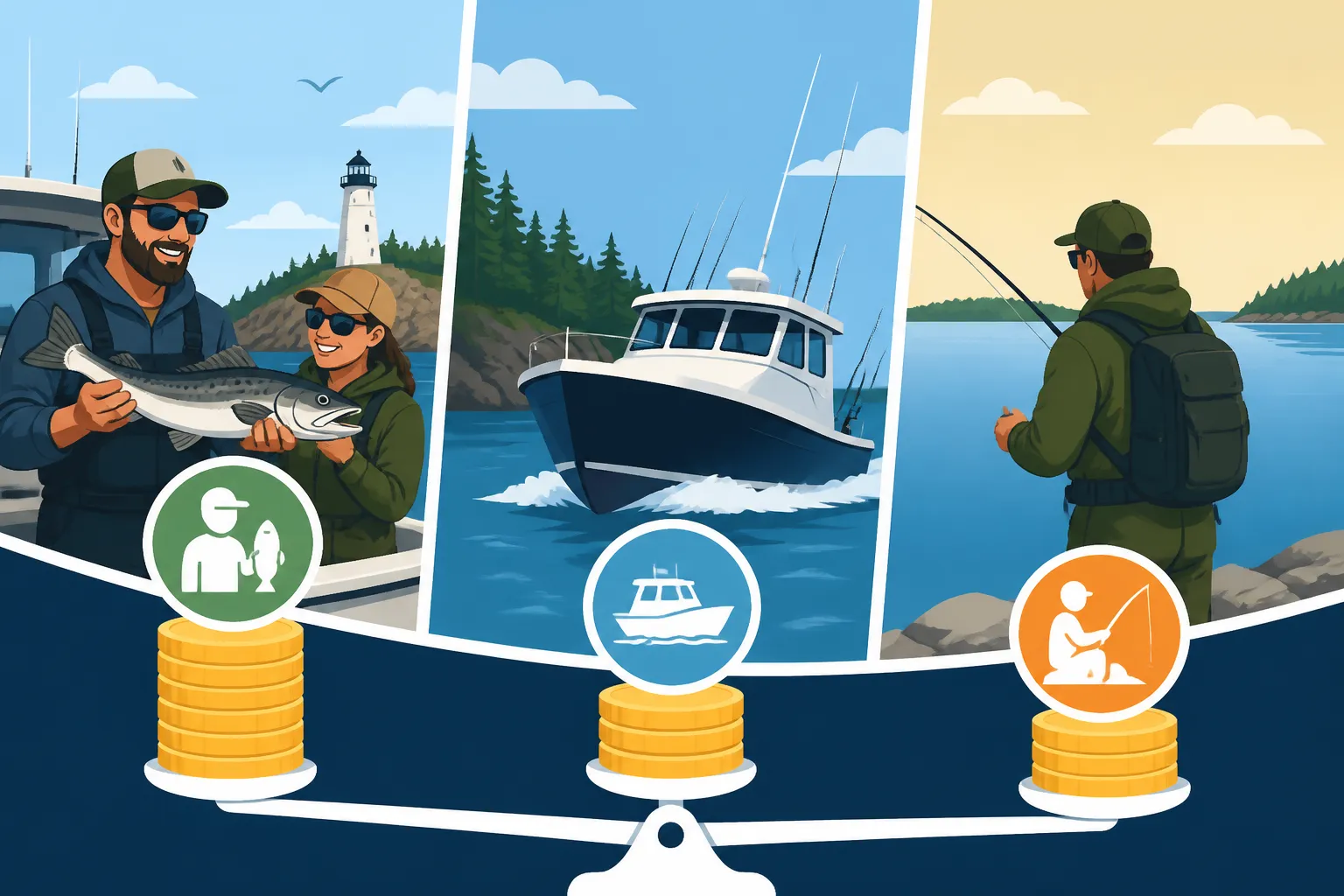
Here's a quick comparison of the three options:
| Feature | DIY Fishing | Guided Fishing Trip | Fishing Charter |
|---|---|---|---|
| Typical Cost | Lowest initial cash outlay (if gear owned) | Moderate to High | High to Highest |
| Included Gear | None (your own) | Usually all gear, tackle, bait | All specialized gear, tackle, bait |
| Expertise | Your own research & experience | High: Local knowledge, instruction, fish-finding | High: Captain & crew expertise, advanced electronics |
| Convenience | Low (all planning on you) | High (logistics handled, often includes lunch/drinks) | Very High (everything handled, often includes fish cleaning) |
| Flexibility | Highest (choose anything) | High (within trip scope, guide sets initial plan) | Moderate (fixed schedule, route) |
| Primary Focus | Independence, personal discovery | Learning, targeted species, remote access, efficiency | Big fish, offshore access, comfort, group experience |
| Best For | Experienced, budget-conscious, independent | Beginners, skill-building, specific species, remote | Groups, offshore species, comfort, hassle-free ocean trip |
| Hidden Costs | Gear, fuel, lodging, food, time, frustration | Tipping | Tipping, extra provisions if not included |
Disclaimer
This article is for general informational purposes only and does not constitute professional advice. Laws, prices and regulations vary by location and change over time. Consult a qualified professional for guidance on your specific situation.