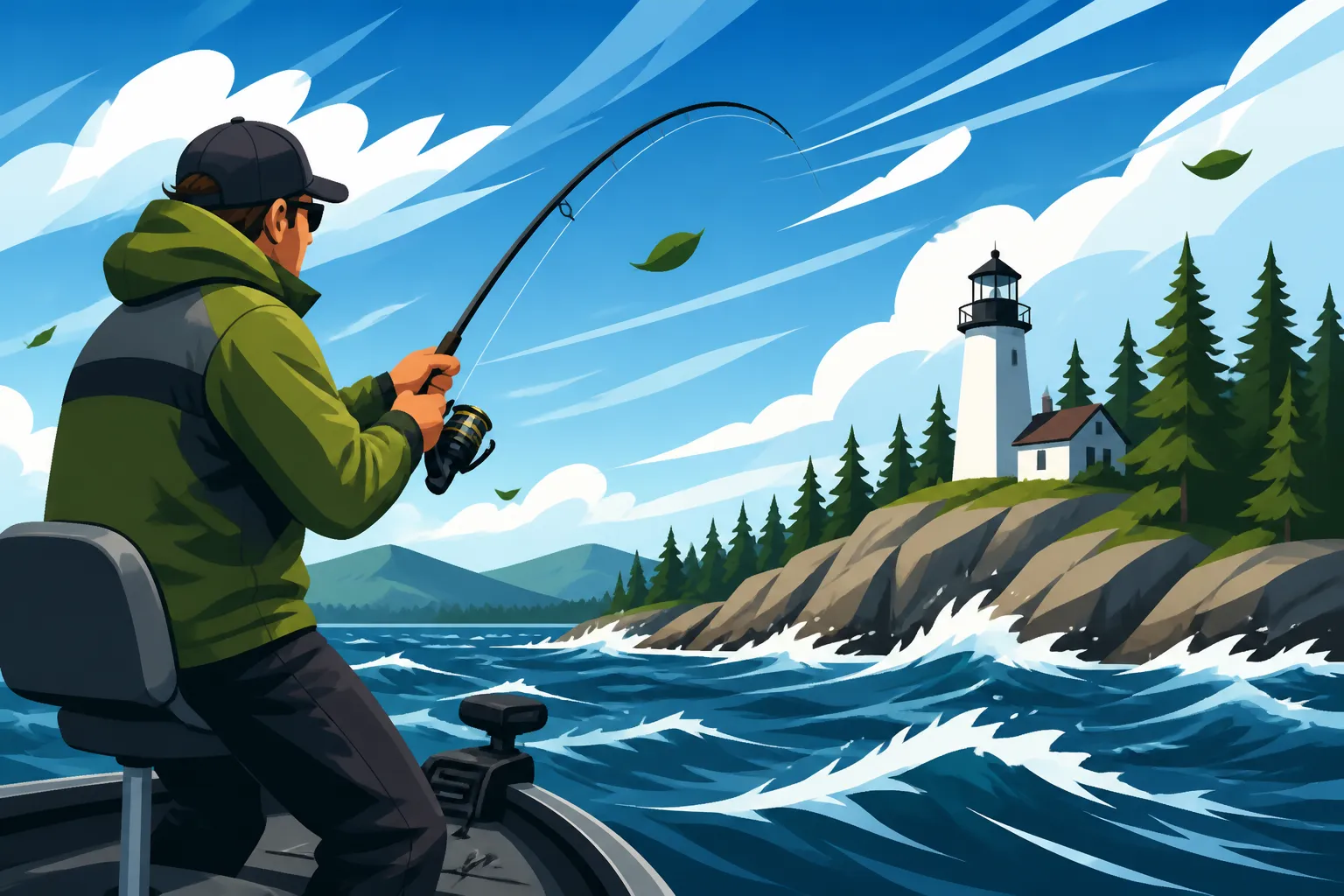
How to Fish Windy Days on Big Lakes
There are few things more frustrating than planning a long-awaited fishing trip to one of Maine’s magnificent big lakes, only to wake up to a forecast calling for blustery winds. That churning water and white-capped expanse can look downright intimidating, making you wonder if it’s even worth putting the boat in. But don't despair! With the right mindset, preparation, and techniques, a windy day on a big lake doesn't have to mean a wasted day; it can actually lead to some incredibly productive fishing. This guide will help you understand how to approach these challenging conditions safely and effectively.
Understanding the Impact of Wind on Big Lakes
Wind isn't just an annoyance that makes casting difficult; it's a powerful force that completely reshapes the underwater environment, influencing everything from water temperature to baitfish movement and, crucially, where the game fish are holding.
How Wind Affects Water and Fish Behavior
When the wind really starts to howl across a large body of water like Sebago Lake or Moosehead Lake, it kicks up a commotion that travels deep into the water column. This surface disturbance creates currents, even in lakes, pushing warm surface water and stirring up nutrients. This churning also reduces light penetration, making the water a bit more turbid and often giving game fish a sense of security to move and feed more aggressively than they might on a calm, bright day.
Think of it from a fish's perspective: on a calm day, they might be more cautious, hiding in cover or deeper water. But when the wind whips up, the surface noise and chop break up their silhouette against the sky, making them feel less vulnerable to predators from above. This often draws them shallower, or at least makes them more willing to chase bait. The wind also concentrates baitfish, pushing them against a specific shore or into a cove, and where the bait goes, the predators often follow. These wind-driven currents can also activate oxygen-rich areas, which are especially appealing to fish when temperatures are warm. Understanding this fundamental shift in fish behavior is the first step toward turning a challenging day into a successful one.
Safety Concerns and Preparing Your Boat for Wind
Before you even think about casting, safety has to be your absolute priority on a windy day, especially on expansive lakes where conditions can change rapidly. These aren't small ponds where you can just row to shore if things get dicey. Large waves can swamp a boat, and strong winds can quickly push you far from your intended fishing spot or even a safe harbor. Always check the marine forecast before heading out, not just the general weather. Wind speed and direction are critical.
Make sure your boat is in prime condition. Double-check your bilge pump, ensure all your safety gear—life jackets, throwable cushions, horn, fire extinguisher—is easily accessible. Wear your life jacket; don't just have it on board. Secure everything that isn't bolted down: tackle boxes, coolers, extra rods, and any loose items can become dangerous projectiles in rough water or simply get washed overboard. If you're using a smaller boat, or if the wind speeds are predicted to be consistently high, sometimes the safest and smartest decision is to reschedule or stick to more sheltered, smaller bodies of water. Even for experienced anglers, there's a point where the risks simply outweigh the rewards. If you're ever in doubt, err on the side of caution. Safety Tips for Fishing Alone in Maine can offer additional insights for solitary anglers.
Strategic Approaches for Windy Conditions
Once you've assessed the conditions and ensured your safety, it's time to adapt your fishing strategy. You can't just fish the same way you would on a calm day; you need to leverage the wind to your advantage.
Finding Sheltered Water and Productive Areas
One of the most effective strategies for fishing in wind is to find locations where the wind's direct impact is mitigated, either by natural features or by the wind itself concentrating fish. This doesn't mean hiding from the wind entirely, but rather finding areas where you can comfortably cast and control your boat.
Look for "lee" shores – these are the shorelines on the downwind side of the lake or a large island. The landmass acts as a buffer, blocking the direct force of the wind and creating calmer water. These areas can be goldmines because the wind often pushes baitfish and plankton into them, attracting larger predators. Coves and inlets on the downwind side are also excellent targets. Don't be afraid to explore areas you might usually overlook on a calm day. Points, reefs, or islands that break the wind are also worth investigating. The "wind-blown side" of a point can be productive, too, as it gets oxygenated and bait-rich water, but you'll need better boat control to fish it effectively. If you're on an unfamiliar lake, understanding How to Find Drop-Offs on a New Lake will be invaluable in locating structure in these sheltered zones.
Adjusting Lure Selection and Presentation
Windy conditions demand adjustments to your tackle and how you present your bait. Light lures become nearly impossible to cast accurately or keep at the desired depth in chop and current. This is where heavier baits shine.
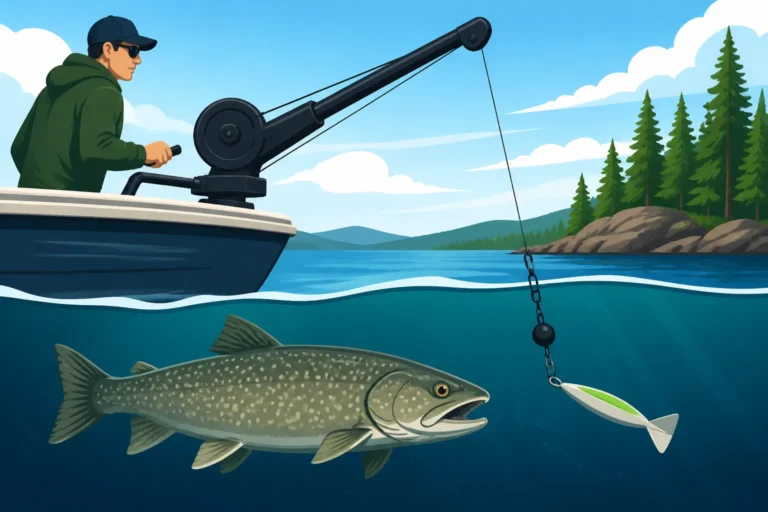
Consider using heavier jigs, crankbaits, or spinnerbaits that can cut through the wind during the cast and maintain depth or contact with the bottom. For bass fishing, a heavier jig or a Texas-rigged plastic with a heavier weight can be crucial for penetrating thick cover or maintaining bottom contact. If you're trolling for salmon or trout, you might need to increase your weight or use dive planes to get your lure down into the strike zone, especially if the wind is creating strong subsurface currents. Try experimenting with different retrieve speeds; sometimes a slower, more deliberate presentation is necessary in choppy water, as fish might be more focused on easy targets. Conversely, the increased water movement might trigger aggressive strikes from fast-moving baits. Don't forget color selection either; in more turbid water, brighter or more contrasting colors might be more visible to fish. For specific species, you might find useful tips in Trolling Techniques for Maine Lakes or Best Bait for Winter Togue Fishing in Maine (even in open water, heavier jigs can apply).
Mastering Boat Control in Wind
This is often the biggest challenge for anglers on windy days. Without proper boat control, you'll spend more time fighting the elements than actually fishing.
- Drift Socks (Sea Anchors): These are absolute game-changers. A drift sock deploys in the water and acts like a parachute, slowing your drift and helping keep your boat oriented properly. Deploying one or two off the bow or stern can significantly reduce your speed and allow for a more controlled presentation, especially when covering large flats or searching for scattered fish. You can find excellent quality drift socks on Amazon for various boat sizes.
- Trolling Motor Dominance: Your electric trolling motor, especially a bow-mount, GPS-enabled one, becomes your best friend. Use it constantly to counteract wind, hold position, or control your drift. Spot-lock features are invaluable for holding over a specific piece of structure. Learn to "feather" the throttle, making small, precise adjustments rather than large, sweeping ones.
- Strategic Anchoring: If you find a really productive spot, anchoring can be more effective than fighting the wind with your trolling motor. However, it requires care. Use two anchors – one off the bow and one off the stern – to prevent your boat from swinging wildly in the wind. This is often called a "fore and aft" anchor setup. Make sure your anchors are heavy enough for the conditions and you have plenty of anchor rode.
- Drifting with Purpose: Sometimes, instead of fighting the wind, you can use it. Position your boat upwind of a productive area (like a weed line, drop-off, or rocky point) and let the wind push you across it. Use your trolling motor and/or a drift sock to fine-tune your path and speed. This allows you to cover water effectively and present your lure naturally with the current. This technique is often discussed in Maine Open Water Fishing Techniques Guide.
Gear and Techniques for Windy Day Success
Having the right equipment can make all the difference when battling the elements. It's not just about comfort, but about effective presentation and ultimately, success.
Rods, Reels, and Line for Wind Penetration
Your standard ultralight combo might be a joy on a calm day, but it will quickly become a liability in a strong breeze. You need gear that can handle the increased resistance of the wind and the fighting power of fish in rougher conditions.
- Rods: Opt for a slightly heavier action rod than you might normally use for a given presentation. A medium-heavy or even heavy action rod will give you more backbone to cast heavier lures, set the hook decisively in choppy conditions, and control fish when they're running hard with the current. Longer rods (7-7.5 feet) can also help with line pickup and casting distance.
- Reels: Choose reels with smooth, reliable drag systems. Fish tend to fight harder and make more unpredictable runs in agitated water. A quality spinning reel or baitcasting reel with sufficient line capacity is crucial.
- Line: This is perhaps the most critical component. Braided line is often preferred in windy conditions because it has minimal stretch and a smaller diameter for its strength, which means less wind resistance on the cast and less "bowing" in the water. This allows for better feel and more direct hooksets. However, braid is highly visible, so always use a fluorocarbon or monofilament leader. Fluorocarbon leaders are also excellent because they are nearly invisible underwater and sink, helping your lure get down. Monofilament can be useful in certain topwater presentations as it floats, but its stretch can be a disadvantage in windy conditions. Understanding Best Line Weight for Bass Fishing can help you select the right test for your target species.
Essential Accessories for Angling in Wind
Beyond your rods and reels, a few key accessories can dramatically improve your comfort and success on windy days.
- Drift Socks: As mentioned, these are invaluable for boat control. Having a couple on board is a smart move.
- Heavier Anchors: If you plan to anchor, make sure your anchor is rated for your boat size and the conditions. A heavier anchor and plenty of rode (the rope connecting your anchor to your boat) will give you better holding power. You can also pick up a backup anchor or heavier chain from Amazon.
- Weather-Appropriate Clothing: Even if it's not raining, sustained wind on a big lake can kick up a lot of spray, leaving you soaked and cold. Quality waterproof and windproof outerwear is essential. Layering is key, as conditions can change. Don't forget a good hat that won't blow off and polarized sunglasses to cut through the glare, even when the water is choppy.
- Electronics: A reliable fish finder with GPS and mapping capabilities becomes even more important. It helps you navigate safely, identify sheltered areas, mark productive spots, and most importantly, locate fish and structure even when the surface is rough. Reading a Fish Finder on Maine Lakes is a great resource for maximizing your electronics.
- Casting Aids: Sometimes, a casting aid or even switching to a different casting technique (like a roll cast or a sidearm cast) can help you punch through the wind more effectively than an overhead cast.
| Tactic | Light Wind Day | Heavy Wind Day |
|---|---|---|
| Boat Control | Drift, gentle trolling | Drift socks, powerful trolling motor, double anchoring |
| Lure Weight | Lighter, finesse baits | Heavier jigs, crankbaits, weighted plastics |
| Line Type | Mono, fluoro often sufficient | Braided main line with fluoro leader preferred |
| Casting Technique | Overhead casts, delicate presentations | Low trajectory casts, roll casts |
| Fishing Location | Anywhere, focus on structure | Lee shores, wind-blown points, coves |
| Presentation Speed | Variable, often slower | Sometimes faster to attract attention, sometimes slower for fish to track |
| Safety Gear | Standard | All gear secured, PFDs worn, constant vigilance |
Specific Tactics for Different Species in Wind
How fish react to wind varies by species, but generally, the increased activity and reduced light penetration can make many game fish more active.
- Landlocked Salmon and Trout (Togue, Brook Trout): On big lakes, salmon and togue often move shallower and become more active on wind-blown points or rocky shorelines where baitfish are concentrated. Trolling with heavier lures or downriggers is effective, as is jigging vertically on deeper structure, allowing your boat to drift slowly. Brook trout in shallower lakes or river mouths can become very aggressive in choppy water, making flies or small spinners effective. Refer to Landlocked Salmon Fishing in Maine or Lake Trout and Togue Fishing in Maine for more species-specific tips.
- Bass (Smallmouth and Largemouth): Smallmouth bass absolutely love wind-blown points and rocky areas on big lakes like Sebago. The chop disorients baitfish and gives the bass cover. Throw crankbaits, spinnerbaits, or tube jigs. Largemouth will often move to the protected sides of weed beds or into shallow, wind-swept coves where food has gathered. Try pitching jigs or Texas-rigged plastics into heavy cover in these areas. Smallmouth Bass Fishing in Maine provides excellent strategies.
- Striped Bass (Coastal Rivers): While this article focuses on lakes, it's worth noting that striped bass along the Maine coast are highly responsive to wind and current, often feeding aggressively in choppy conditions, especially in river mouths and estuaries like the Kennebec. Heavier lures that can be cast into the current and worked effectively are key.
Common Mistakes and How to Avoid Them
Even with the best intentions, it's easy to fall into traps when fishing on windy days. Being aware of these common pitfalls can save you frustration and even prevent dangerous situations.
Not Prioritizing Safety
The single biggest mistake anyone can make on a windy day is underestimating the power of nature. Far too many anglers get focused on the fish and forget the fundamentals of safety. Never compromise on wearing your PFD, securing your gear, and having a communication plan. Before you leave, tell someone where you're going and when you expect to return. This isn't just for extreme conditions; it's basic good practice.
Don't push your luck. If the wind starts to really pick up beyond what you're comfortable with or your boat can safely handle, head for shore. No fish is worth risking your life or the lives of your passengers. Lakes can get surprisingly rough, surprisingly quickly. Be conservative with your judgment.
Being Too Stubborn with Your Usual Spots or Techniques
It's natural to have your favorite fishing spots or a go-to lure, but windy conditions demand flexibility. The biggest mistake you can make is trying to force your usual calm-day tactics into a windy environment. If your favorite calm-water cove is now a washing machine, the fish probably aren't there, or they're certainly not biting the same way.
Be willing to move to the lee side of the lake, explore new coves, or fish the wind-blown side of structure that might be unfishable on a calmer day. Be ready to switch from light finesse presentations to heavier, more aggressive baits. If your usual retrieve speed isn't working, try slowing down or speeding up. The fish's behavior has changed, so your approach must change too. Experiment with different depths, different lure colors, and different speeds. Sometimes the wind can be a blessing, pushing fish to unexpected places and turning on a bite that wouldn't exist otherwise. Don't let your stubbornness prevent you from discovering new, productive patterns in challenging conditions. The willingness to adapt is the hallmark of a successful angler in Maine.
Disclaimer
This article is for general informational purposes only and does not constitute professional advice. Laws, prices and regulations vary by location and change over time. Consult a qualified professional for guidance on your specific situation.