How to Fish a New Lake You Have Never Fished
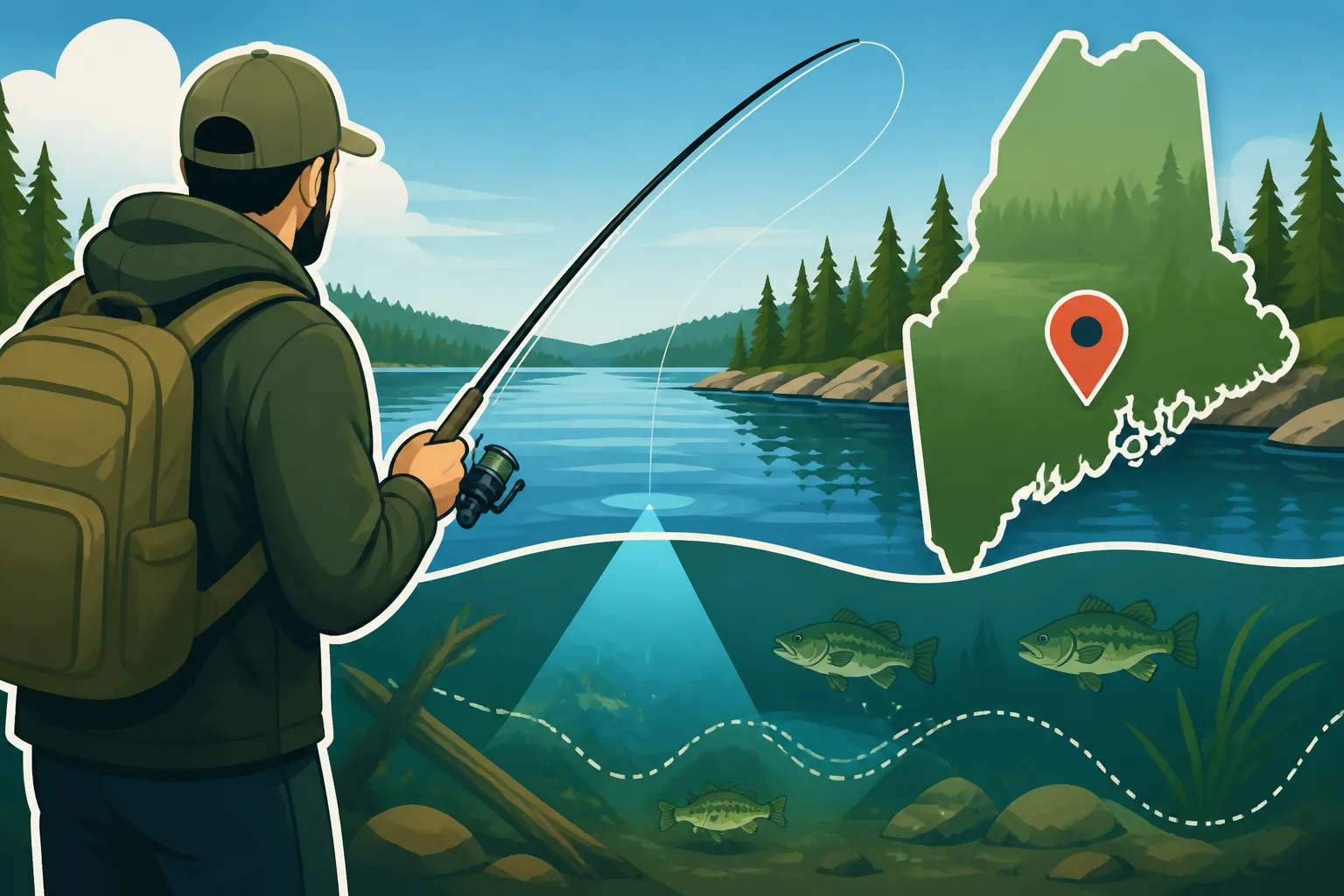
Stepping onto the shore or launching your boat onto a new lake for the very first time can be a mix of excitement and a little bit of apprehension. It’s like arriving in a foreign city without a map – you know there are amazing sights to see, but where do you even begin? Many anglers find themselves staring at a vast expanse of water, wondering where the fish hide, what they’re biting on, and if they'll even get a nibble. This guide is here to unravel that mystery, providing you with a systematic approach to tackle any unfamiliar Maine lake and turn those question marks into successful fishing adventures.
Pre-Trip Planning: Becoming a Desktop Detective
Before you even load your rods into the car, a significant chunk of your success on a new lake will be determined by the detective work you do from home. Think of yourself as an investigative journalist, gathering clues about your target water. This isn't just about finding fish; it's about understanding the entire ecosystem, the unique personality of that particular lake, and how its features might influence fish behavior. Skipping this step is like going grocery shopping without a list – you might get something, but it probably won't be what you need!
Decoding Topographical Maps and Lake Charts
One of the most powerful tools in your pre-trip arsenal is a good topographical or bathymetric map. These aren't just pretty pictures; they're detailed blueprints of the underwater world. When you first unroll that map, it might look like a spaghetti tangle of lines, but each line tells a story about depth. Look for tight groupings of lines – those indicate steep drop-offs, which are often highways for fish moving between shallow and deep water. Conversely, widely spaced lines mean gradual slopes, hinting at extensive flats where baitfish might congregate.
Pay close attention to structural elements like humps, points, and coves. A point extending into the lake, especially one with a sharp drop-off on its sides, can be a prime ambush spot for predators. Submerged humps, often invisible from the surface, act as underwater islands, attracting bait and game fish alike. Look for inlets and outlets of streams or rivers; these often bring in cooler, oxygenated water and food, making them magnets for fish. You might even find some really detailed bathymetric maps or specific regional fishing guides for sale on a platform like Amazon, which can provide an invaluable head start.
Researching Fish Species and Local Reports
Knowing what fish actually live in a particular lake is step one. There's no point in rigging for brook trout if the lake is known for its smallmouth bass. Check the Maine Department of Inland Fisheries and Wildlife (MDIFW) website; they often have detailed information on individual lakes, including stocking reports and dominant species. This will inform your tackle selection, lure choices, and even your fishing techniques. For instance, if you learn the lake is renowned for lake trout, you'll want to brush up on your Trolling Techniques for Maine Lakes If it's a bass haven, you'll be thinking about different strategies entirely.
Beyond official sources, scour local fishing forums, social media groups, and local bait shop websites. Anglers love to share their triumphs (and sometimes their frustrations!), and these anecdotal reports can provide current insights into what's biting, where, and on what. Remember to take these with a grain of salt – a "secret spot" might not be secret for long, and conditions change quickly. However, they can give you a vital directional nudge, especially regarding recent water temperatures or patterns. Don't forget to check the Maine Fishing Regulations Explained and specifically, How to Find Maine Fishing Regulations for a Specific Lake to avoid any unwelcome surprises.
Understanding Weather and Water Conditions
Fish are incredibly sensitive to their environment, and weather plays a huge role in their behavior. Before your trip, check the long-range and short-range forecasts. Is a cold front coming through? That might push fish deeper or make them less active. Has it been raining for days? High, muddy water from runoff can affect clarity and disperse fish. Is it going to be bright and sunny? Fish might seek shade or deeper cover.
Consider the water temperature, if you can find historical data or current estimates. Different species have optimal temperature ranges. For example, cold-water species like salmon and trout might be active closer to the surface in spring and fall, but dive much deeper to find cooler water during summer heatwaves. Even wind direction matters – wind can create currents that push baitfish, or it can concentrate warmer surface water on one side of the lake, creating a feeding zone. Understanding these variables allows you to anticipate where fish might be holding and what mood they might be in.
On-the-Water Reconnaissance: The First Cast Is Just the Beginning
Once you're actually on the water, the real detective work begins. Your goal for this first trip isn't necessarily to fill a cooler, but to gather as much information as possible. Think of it as a scouting mission. Every cast, every drift, every moment of observation contributes to building your understanding of this new fishery.
Starting with a Strategic Approach
When you first arrive, don't just pick a random spot and start casting. Divide the lake into manageable sections, especially if it's a large body of water. Focus on areas that looked promising during your map reconnaissance: points, coves, visible weed lines, and structures like submerged timber or rock piles. Instead of anchoring down, try moving around, covering water efficiently. Trolling is an excellent strategy for covering large areas and identifying productive depths and patterns, especially for species like landlocked salmon and togue. You'll want to review Maine Open Water Fishing Techniques Guide to ensure you're using appropriate methods.
Vary your presentation. Start with a few different lures or baits at varying depths until you get a strike or some indication of fish activity. If you're using live bait, consider different depths under a bobber or bottom-fishing rigs. If you're casting artificials, try different retrieve speeds and cadences. The idea is to present a variety of options until you discover what the fish are responding to on that particular day.
Observing and Adapting
Your eyes and ears are your most important tools on the water. Look for any signs of life: baitfish schooling on the surface, birds diving (indicating baitfish below), or even fish jumping. Notice subtle changes in water color, which might indicate a thermocline or an area where a stream is entering the lake. Pay attention to how the wind affects the surface and creates current. Often, the best fishing spots are dictated by these seemingly small environmental clues.
If you're not getting any bites in one area after a reasonable amount of time, don't be afraid to move. "Running and gunning" – moving from spot to spot quickly – can be very effective on a new lake. Each time you move, re-evaluate. Did the depth change? Is there more cover here? What does your fish finder tell you? Adapt your lure choice, depth, or technique based on what the lake is telling you. If you’re targeting bass, understanding Reading Lake Structure for Maine Bass can guide your adaptations. Make sure you've got good quality line and a variety of lures – you can easily stock up on different brands and types on Amazon before your trip, ensuring you have options for all scenarios.
Using Technology Wisely
Modern fishing technology can be a game-changer when exploring new waters. A good fish finder is invaluable for identifying depth, bottom structure, and even spotting individual fish or bait schools. Learning How to Read a Fish Finder on Maine Lakes will greatly increase your efficiency. GPS units (either standalone or on your phone/tablet) allow you to mark promising spots, track your troll lines, and find your way back to productive areas. This is especially helpful if you find a sweet spot and want to revisit it on a future trip.
Don't underestimate the power of a simple pair of polarized sunglasses. They cut glare, allowing you to see into the water and identify submerged structures, weed beds, or even cruising fish that would otherwise be invisible. Modern fish finders, portable GPS units, and even action cameras for documenting your adventure are all readily available on Amazon. Remember, technology is a tool to enhance your experience, not replace your instincts or observations.
| Information Source | What It Offers | Pros | Cons |
|---|---|---|---|
| Topographical/Bathymetric Maps | Depth contours, bottom structure, submerged features | Highly accurate physical layout, reveals hidden gems | Can be hard to interpret for beginners, static data |
| Online Forums/Social Media | Recent catches, local tips, current conditions | Real-time insights, community knowledge, current "hot" lures | Information quality varies, can be anecdotal, spots get crowded |
| Local Bait & Tackle Shops | Expert advice, bait recommendations, hot spots | Hyper-local, current, often enthusiastic help, reliable | May be busy, focus on selling specific products |
| State Fish & Wildlife Sites | Regulations, stocking reports, species information | Official, reliable regulations and data, conservation info | Less on technique or real-time fishing conditions |
| Fish Finder/Sonar | Real-time depth, bottom composition, fish arches | Shows immediate underwater activity and structure | Requires interpretation, can be distracting |
| GPS | Location tracking, marking waypoints, route planning | Essential for navigation and revisiting productive spots | Relies on battery, can be complex for new users |
Post-Trip Analysis and Future Success: Learning from Every Outing
Your fishing trip doesn't end when you pull the boat out of the water. The lessons learned on your first venture into a new lake are incredibly valuable, and processing them effectively will make your next trip even more successful. This is where you solidify your understanding and transform raw experience into actionable knowledge.
Logging Your Experience
One of the most overlooked, yet most powerful, habits an angler can develop is keeping a detailed fishing journal. Immediately after your trip, or even throughout the day, record as much information as possible. Note the date, time, weather conditions (temperature, wind, sky), water temperature, water clarity, and any significant observations you made. Crucially, log what worked and what didn't. What lure got a strike? What depth was it at? What type of structure were you fishing? Mark your successful (and even unsuccessful) spots on your map or GPS.
This journal becomes your personal fishing database. Over time, you'll start to see patterns emerge. You might notice that a particular lure works best on cloudy days, or that a specific point produces fish consistently in the spring. A good, waterproof fishing journal, or even a specialized app for your phone, can be found with a quick search on Amazon. This practice is vital for learning the unique characteristics of each new body of water you explore, building upon your knowledge with every visit.
Refining Your Approach
With your journal entries in hand, you can begin to refine your approach for subsequent trips. Look for correlations. If you caught fish on a particular type of structure (e.g., rocky bottom, deep weed line), make that your starting point next time. If a certain depth was productive, focus your efforts there. Review the Maine Fishing Season Calendar in conjunction with your notes – did you notice certain species were more active during specific months? This kind of iterative learning is what separates consistently successful anglers from those who rely purely on luck.
Consider what you learned about the fish species themselves. Were they shy? Aggressive? What did their behavior suggest about their feeding patterns? Maybe you need to experiment with different Best Bait for Maine Open Water Fishing or Best Lures for Maine Open Water Fishing. Each piece of the puzzle you gather helps you piece together a more complete picture of the lake and its inhabitants. Don't be afraid to adjust your entire strategy based on the data you collected.
Embracing the Journey
Ultimately, fishing a new lake is an adventure of discovery. There will be days when the fish just aren't biting, and that's perfectly normal. Don't get discouraged! Even on slow days, you're gathering information, honing your skills, and deepening your appreciation for Maine's incredible natural resources. The beauty of exploring new waters lies in the unknown, the challenge, and the eventual satisfaction of cracking the code.
Remember to always practice Catch and Release Best Practices in Maine when appropriate, ensuring the health of the fishery for future generations. Every cast into an unfamiliar lake is a step into a new classroom, and with a bit of planning, keen observation, and diligent post-trip analysis, you'll soon be fishing like a local, no matter where you drop your line in Maine.
Disclaimer
This article is for general informational purposes only and does not constitute professional advice. Laws, prices and regulations vary by location and change over time. Consult a qualified professional for guidance on your specific situation.