Best Line Weight for Bass Fishing
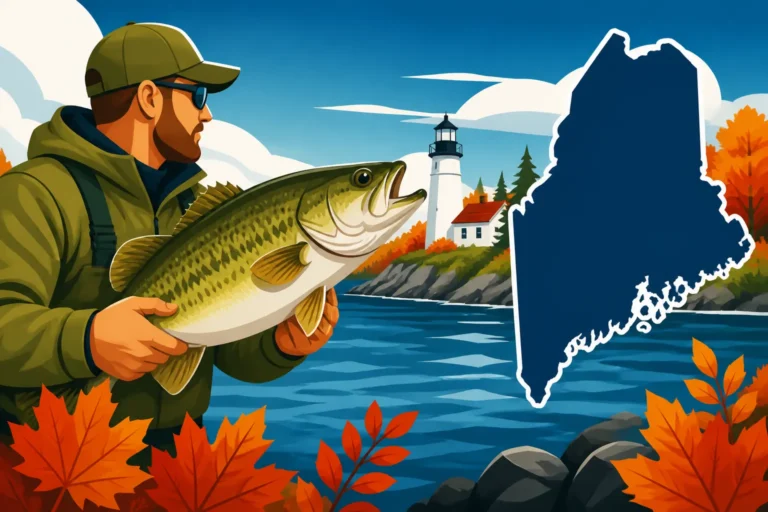
Ever stood in the tackle aisle, staring at dozens of fishing lines, wondering which one is really best for those feisty Maine bass? It's a common struggle, and picking the right line weight can feel like a guessing game. From the clear, rocky depths where smallmouth lurk to the weedy coves favored by largemouth, choosing wisely can make all the difference. This guide is here to untangle the confusion, helping you select the perfect line for both smallmouth and largemouth bass across Maine's diverse waters.
Understanding Maine Bass Behavior and Habitat
Before we even talk about line, it’s crucial to understand the fish you're targeting. Maine is blessed with both smallmouth and largemouth bass, and while they're both "bass," their preferred habitats and fighting styles are quite distinct. Knowing these differences will inform every aspect of your tackle choice, especially your fishing line.
Smallmouth Bass Preferences in Maine
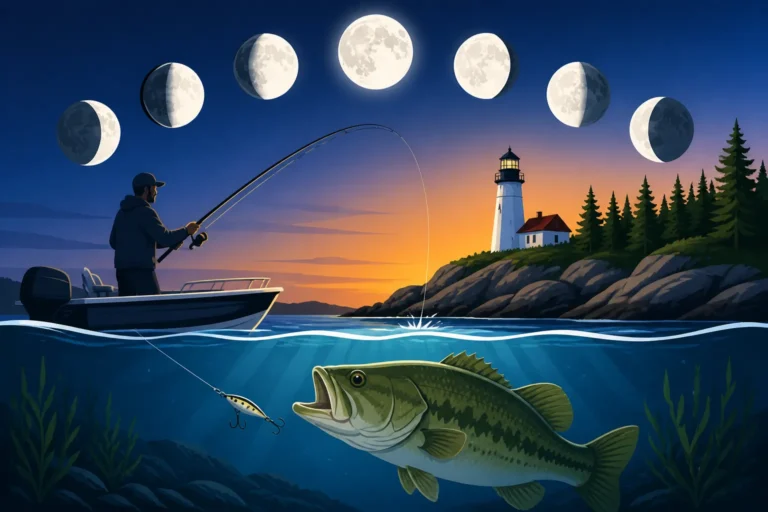
Smallmouth bass, often affectionately called "bronze backs," thrive in cooler, clearer waters. Think about those beautiful, rocky lakes and rivers that dominate much of Maine's landscape. Places like Sebago Lake and the middle sections of many rivers are prime smallmouth territory. They absolutely love structure, but it’s usually hard structure: rock piles, ledges, submerged timber, and gravel bars. You'll find them cruising these areas, often in deeper water during the heat of summer or when light penetration is high.
Their fight is legendary – acrobatic, jumping, and relentless. When a smallmouth hits, it's often a hard strike, and they immediately try to get airborne to shake the hook. This intense fight style means your line needs to handle sudden shock and provide enough stretch to prevent hooks from tearing out. Their preferred habitat also means you’re often fishing around abrasive rocks and mussel beds, which can quickly fray weaker lines. For more detailed insights into these feisty fish, check out our guide on Smallmouth Bass Fishing in Maine.
Largemouth Bass Preferences in Maine
Largemouth bass, on the other hand, are the kings of cover. They prefer warmer, shallower, and often murkier waters, rich with vegetation. If you’re fishing a pond or the slower sections of a river choked with lily pads, submerged weeds, fallen trees, and docks, you’re in largemouth country. They are ambush predators, often hiding deep within or at the edges of this thick cover, waiting for an unsuspecting meal to swim by. Southern Maine tends to have more of these classic largemouth habitats. If you're curious about where the big ones hang out, our article Is Largemouth Bass Fishing Good in Southern Maine? provides some excellent pointers.
When a largemouth strikes, it's often a violent explosion from the cover, and their immediate goal is to dive back into that same cover, trying to wrap your line around anything they can to break free. This aggressive, structure-oriented fight demands a line that is incredibly strong, abrasion-resistant, and has the power to literally winch a fish out of heavy vegetation. Visibility can be less of a concern in their often-stained environments, but strength and resistance to cutting are paramount.
Common Line Types and Their Bass Fishing Characteristics
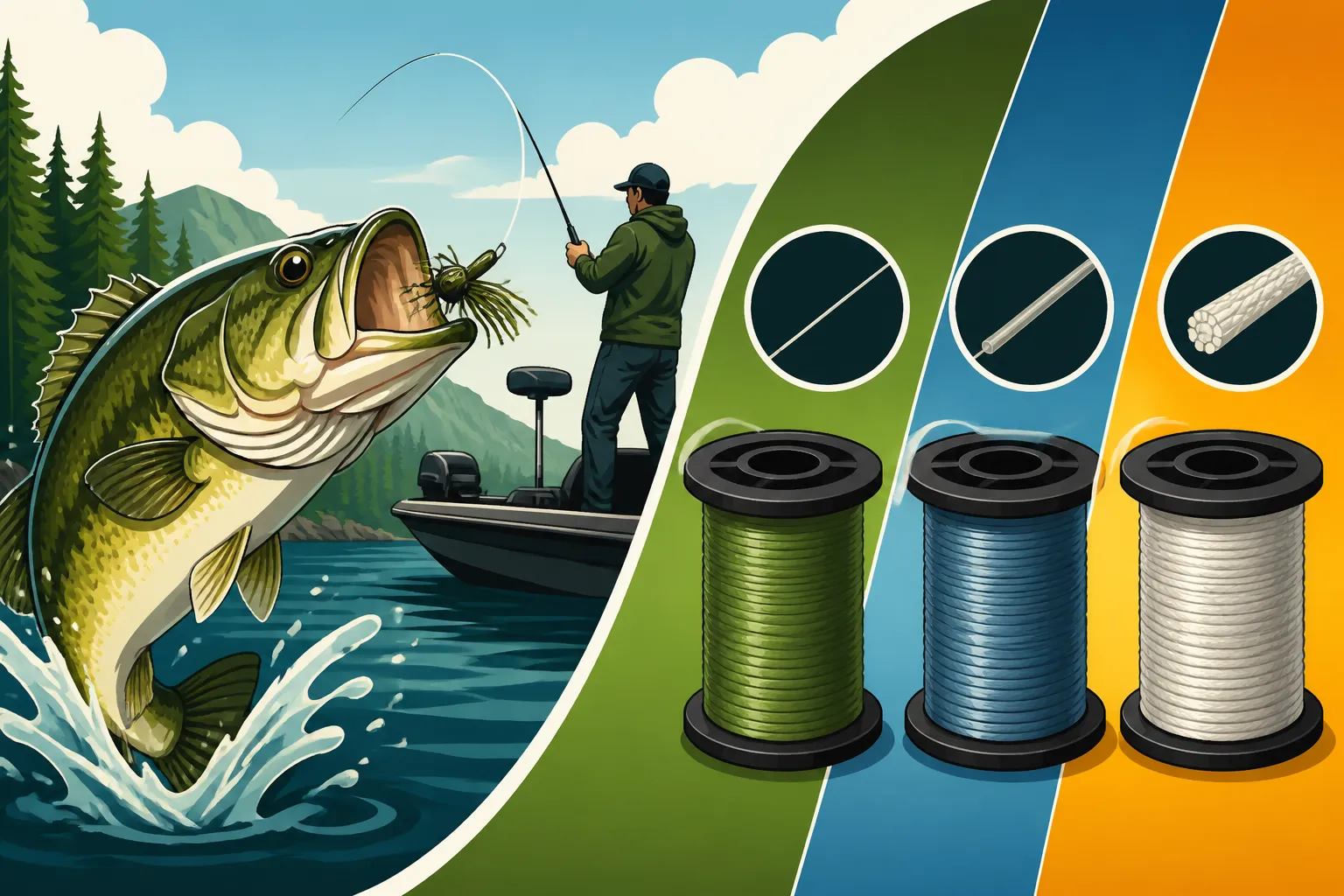
With a solid understanding of our finned adversaries, let’s dive into the lifelines that connect us to them: monofilament, fluorocarbon, and braided lines. Each has its unique strengths and weaknesses, making them suitable for different situations and techniques in Maine's diverse bass fisheries.
Monofilament Line for Bass
Monofilament, or "mono," is arguably the most traditional fishing line. It's made from a single strand of nylon, and it's celebrated for its stretch, knot strength, and affordability. For bass fishing in Maine, mono is a fantastic all-rounder, especially if you're just starting out or prefer a more forgiving line.
The inherent stretch in monofilament acts like a shock absorber. This is a huge benefit when a hard-hitting smallmouth slams your lure or a largemouth makes a sudden dash. It helps prevent hooks from tearing out of a fish's mouth and can save lighter rods from snapping under sudden pressure. Mono is also quite buoyant, meaning it floats. This makes it ideal for topwater lures like poppers, frogs, and buzzbaits, allowing them to perform optimally on the surface. However, its stretch can reduce sensitivity, making it harder to detect subtle bites or feel the structure at the bottom. It's also more visible in clear water compared to fluorocarbon. For general purpose spinning setups targeting either bass species, particularly with moving baits in open water, 8-12 lb test monofilament is a very reliable choice. You'll find a wide array of quality monofilament lines on Amazon, often bundled with other tackle essentials.
Fluorocarbon Line for Bass
Fluorocarbon line burst onto the scene as a game-changer, largely due to its near invisibility in water. Made from a polymer that has a refractive index very close to water, it essentially disappears underwater, making it incredibly stealthy – a massive advantage for wary bass in clear Maine lakes.
Beyond its low visibility, fluorocarbon boasts excellent abrasion resistance, which is a huge plus when fishing around rocky ledges, submerged stumps, or dock pilings, common hangouts for both smallmouth and largemouth. It's also much more sensitive than monofilament because it has very little stretch. This heightened sensitivity allows you to feel the most delicate bites and discern bottom composition with incredible clarity. Unlike mono, fluorocarbon sinks, which is advantageous for presentations that need to get down quickly, like Texas rigs, drop shots, or jigging for deeper smallmouth. However, it can be stiffer and more prone to memory, and some anglers find certain brands harder to tie knots with. For finesse presentations or any situation where stealth and sensitivity are key, 6-12 lb test fluorocarbon is perfect for smallmouth, while 12-20 lb test shines for largemouth in open or moderately heavy cover.
Braided Line for Bass
Braided line is a powerhouse, woven from multiple strands of synthetic fibers, typically Dyneema or Spectra. Its most defining characteristic is its almost complete lack of stretch. This zero-stretch property translates to unparalleled sensitivity and incredible hook-setting power, even over long distances or in deep water.
The strength-to-diameter ratio of braid is astounding; a 30 lb test braided line is often much thinner than a 10 lb test monofilament. This thin diameter cuts through the water with less resistance, allowing for longer casts and faster drops. Braided line floats, similar to monofilament, making it excellent for topwater applications, especially with heavy cover frogs or rats for largemouth. Its extreme abrasion resistance also makes it the line of choice for punching through thick lily pads or hauling largemouth out of dense weed beds. However, braid is highly visible, which can spook fish in clear water, and it can be difficult to cut. Many anglers mitigate the visibility issue by tying a fluorocarbon leader to their braided mainline, especially when targeting finicky fish. If you're fishing the heavy cover spots often frequented by largemouth, a 30-50 lb test braid is almost non-negotiable. For a deeper dive into the general rules that govern angling in our beautiful state, be sure to read our Maine Fishing Regulations Explained guide.
Matching Line Weight to Bass Species and Fishing Scenarios
Now for the practical application! Choosing the "best" line weight isn't about finding a single magic number, but rather selecting the right tool for the job. It's a dynamic decision based on the specific bass species, the water conditions, and the technique you plan to employ.
Smallmouth Bass: Finesse, Power, and Clear Water Considerations
When chasing smallmouth in Maine, you're often dealing with clear water and their keen eyesight. This usually pushes anglers towards lighter, less visible lines.
For finesse techniques like drop-shotting, Ned rigs, or small jigs, especially in clear lakes like Moosehead or Sebago, a 6-10 lb fluorocarbon line is often ideal. Its invisibility and sensitivity are unmatched, allowing you to detect those subtle "taps" that often indicate a smallmouth inhaling your bait. If you're using a spinning setup, you might consider an 8-10 lb braid mainline with a 6-8 lb fluorocarbon leader. This gives you the casting distance and sensitivity of braid, combined with the invisibility of fluoro at the business end.
When you transition to more aggressive presentations or slightly heavier cover for smallmouth, such as throwing jerkbaits, spinnerbaits, or small crankbaits around rocky points, bumping up your line strength is a good idea. A 10-12 lb fluorocarbon or even a 10-15 lb monofilament can provide a good balance of strength, castability, and shock absorption. The added stretch of mono can also be beneficial for keeping those trebled baits pinned during their violent head shakes. If you're fishing topwater for smallmouth, perhaps with a walking bait or a popper over a shallow flat, 10-12 lb monofilament is fantastic because it floats and allows the lure to work naturally on the surface. Remember, smallmouth love to jump, and a little give in your line can prevent them from throwing the hook. Our article on Maine Landlocked Salmon Bag Limits might also offer some relevant context on how regulations differ between species, emphasizing the importance of knowing your target.
Largemouth Bass: Heavy Cover Dominance and Power Fishing
Largemouth bass fishing in Maine is often a battle against thick cover. Your line needs to be a workhorse, capable of withstanding abuse and pulling strong fish out of challenging situations.
For punching through mats of lily pads, flipping jigs into dense brush, or frogging over matted vegetation, you'll want heavy braided line. A 40-65 lb test braid is not overkill; it’s essential. Its incredible strength and abrasion resistance mean you can set the hook hard and horse a bass out of the thickest nastiness without worrying about your line snapping. The zero-stretch also helps penetrate the fish's jaw, which can be tough. The visibility of braid is less of a concern in these stained, dark environments. When you buy fishing line, especially heavy-duty braid, checking reviews on Amazon can give you a good idea of its real-world performance.
For crankbaits, spinnerbaits, or chatterbaits around docks, submerged timber, or slightly lighter weed edges, a 12-20 lb fluorocarbon is a strong contender. It offers good abrasion resistance and sensitivity to feel the lure working, while still being relatively stealthy. The slight stretch in heavier fluorocarbon can also be helpful for those reaction strikes. If you're fishing buzzbaits or other topwater lures in more open water (but still near cover), 12-17 lb monofilament can be a great option. It provides the floatation needed for optimal lure action and enough shock absorption for aggressive strikes. To ensure you're always fishing within the rules, especially regarding specific zones and species, our guide on Maine Bass Fishing Limits by Zone is an invaluable resource.
A Comparative Look at Bass Fishing Line Selection
To make things a little clearer, here’s a quick overview of line recommendations for different scenarios:
| Scenario/Technique | Target Species | Preferred Line Type | Recommended Weight (lb test) | Key Benefit |
|---|---|---|---|---|
| Finesse (Drop-shot, Ned Rig) | Smallmouth | Fluorocarbon | 6-10 | Invisibility, Sensitivity, Sinks |
| Finesse (Spinning Rod) | Smallmouth | Braid to Fluoro Ldr | 8-10 (Braid) to 6-8 (Fluoro) | Castability, Sensitivity, Stealth Leader |
| Topwater (Open Water) | Both | Monofilament | 10-15 | Buoyancy, Stretch, Knot Strength |
| Topwater (Heavy Cover) | Largemouth | Braided | 30-50 | Strength, Abrasion Resistance, Zero Stretch |
| Crankbaits/Jerkbaits | Both | Fluorocarbon | 10-17 | Sensitivity, Less Stretch, Sinks, Abrasion |
| Jigging/Texas Rig (Cover) | Largemouth | Braided | 30-65 | Power, Abrasion Resistance, Zero Stretch |
| Jigging/Texas Rig (Open) | Both | Fluorocarbon | 12-20 | Sensitivity, Abrasion Resistance, Sinks |
| Spinnerbaits/Chatterbaits | Both | Monofilament/Fluoro | 12-17 | Versatility, Shock Absorption (Mono), Feel (Fluoro) |
This table provides a general starting point, but always be prepared to adjust based on the specific conditions you encounter on the water.
Tips for Choosing and Using Your Bass Fishing Line
Selecting the right line weight and type is just the first step. Proper care, maintenance, and knowing a few tricks can significantly improve your success rate and prevent frustrating break-offs on those prized Maine bass.
Spooling, Knots, and Maintenance
No matter how good your line is, if it's not spooled correctly, you're setting yourself up for trouble. Always ensure your line is spooled tightly and evenly onto your reel. For spinning reels, it’s often best to let the line come off the spool with the label facing up if winding onto the reel with the bail open, or off the end of the spool if winding with the bail closed, to match the natural twist. Overfilling your spool will lead to tangles and "wind knots," especially with braided line. Underfilling will reduce your casting distance.
Knots are the weakest link in your fishing system, so mastering a few strong, reliable knots is critical. For monofilament and fluorocarbon, the Palomar knot and the improved clinch knot are excellent choices that retain much of the line's strength. For braided line, the Palomar knot is still great, but a double uni knot or FG knot is often used to connect a fluorocarbon leader to the braid. Learning a few Fishing Knots Every Maine Angler Should Know will serve you well. Our article on How to Tie a Palomar Knot specifically breaks down this essential technique.
Regularly check your line for nicks, abrasions, or kinks, especially after fishing around heavy cover or rocky areas. Run a finger along the last few feet of your line; any rough spots indicate potential weak points. It's a good habit to cut off the last few feet of your line and re-tie your lure after every few fish or after getting snagged. Over time, UV light can degrade all types of fishing line, so it's wise to replace your mainline at least once a season, or more frequently if you fish often.
Considering Water Clarity and Cover Density
Maine offers a huge spectrum of water conditions, from crystal clear mountain lakes to stained, tannin-rich ponds. Your line choice should absolutely reflect this. In clear waters, like many of the deeper sections of Sebago Lake, line visibility becomes a huge factor. This is where fluorocarbon truly shines, or using a long fluorocarbon leader with braid. When fishing for smallmouth in these conditions, even a slight sheen on your line can make a difference.
Conversely, in dark, stained, or heavily vegetated waters, line visibility is much less of a concern. Here, you can lean into the strength and power of heavier braided lines, especially when targeting largemouth buried in the weeds. The objective shifts from stealth to raw pulling power. Also, think about the density of the cover. Is it sparse submerged grass, or a thick mat of lily pads? The thicker the cover, the heavier and more abrasion-resistant your line needs to be. You're not just fighting the fish; you're fighting the environment it lives in. Understanding how to "read" the water and identify likely bass holding spots, as discussed in Reading Lake Structure for Maine Bass, will make these line decisions much clearer.
Rod and Reel Pairing with Line
Finally, remember that your fishing line is part of a larger system. The rod and reel you're using should complement your chosen line type and weight. A heavy, stiff rod paired with light, stretchy monofilament might not give you the sensitivity or hook-setting power you need. Conversely, a light spinning rod designed for finesse might struggle to handle heavy braided line and the associated drag from fighting a large fish out of dense cover.
For heavier lines and power fishing for largemouth (e.g., 30-65 lb braid), you'll typically use a sturdy baitcasting reel and a medium-heavy to heavy action rod. This combination provides the backbone and winching power required. For lighter lines and finesse presentations for smallmouth (e.g., 6-10 lb fluorocarbon or braid with a fluoro leader), a sensitive spinning reel and a medium-light to medium action rod will give you the control and feel necessary. Many anglers like to purchase their entire rod, reel, and line setup together, and a quick search on Amazon for "bass fishing combos" can give you plenty of ideas for a balanced outfit.
Matching your line to your specific situation in Maine's incredible bass fisheries will not only increase your catch rate but also reduce frustration, making your time on the water more enjoyable. Tight lines!
Disclaimer
This article is for general informational purposes only and does not constitute professional advice. Laws, prices and regulations vary by location and change over time. Consult a qualified professional for guidance on your specific situation.