Spinning Reel vs Baitcasting Reel for Beginners
One of the biggest head-scratchers for anyone just dipping their toes into the wonderful world of Maine fishing is figuring out what kind of reel to use. It can feel like you need a degree in engineering just to pick one out, and trust me, I’ve been there – staring at rows of gleaming reels, utterly bewildered. But don't you worry, because this guide is all about breaking down the real differences between spinning reels and baitcasting reels, helping you understand which one will be your best companion on your journey to becoming a confident angler on our beautiful Maine waters.
Understanding the Spinning Reel: Your First Friend on the Water
Let's talk about spinning reels first, because for most folks starting out, this is where your angling adventure truly begins. These are the reels you've probably seen most often, and for good reason – they're incredibly user-friendly and forgiving, which is a huge plus when you're still getting the hang of things.
How a Spinning Reel Works
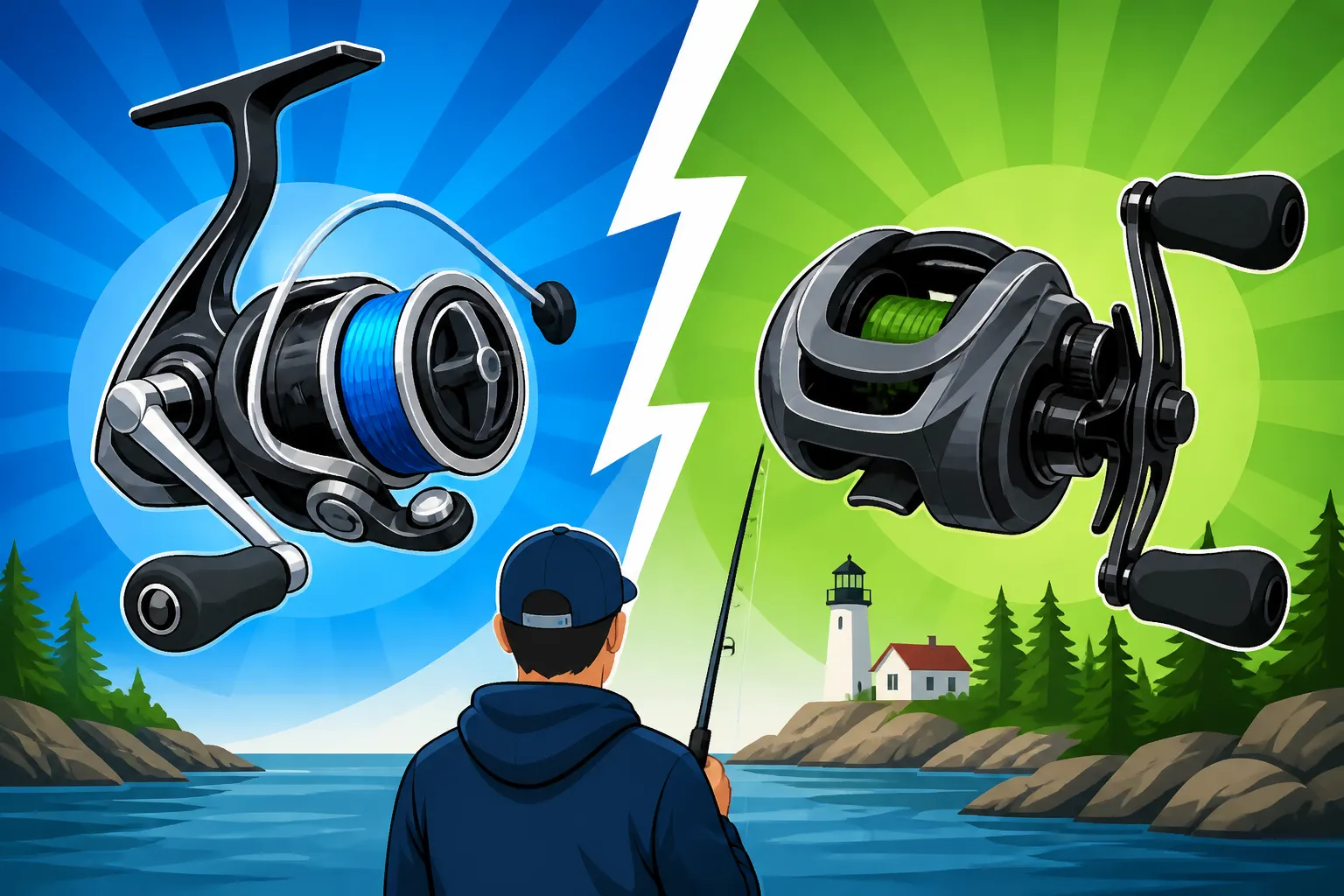
A spinning reel sits underneath your fishing rod. When you cast, you flip open a wire bail, which allows the line to unspool freely from the stationary spool. Once your lure or bait hits the water, you simply flip the bail back, and as you turn the handle, the bail arm rotates around the spool, winding the line back on. It’s a pretty straightforward mechanism, designed to minimize friction and make casting smooth and easy. The line comes off in coils, rather than rotating with the spool itself, which is a key differentiator from its baitcasting cousin.
This design is fantastic for handling lighter lines and smaller baits, which you'll encounter a lot when targeting species like brook trout in our smaller streams or even panfish in local ponds. The learning curve is much gentler, meaning you spend less time untangling frustrating bird's nests and more time actually fishing. Plus, modern spinning reels have come a long way, offering incredible drag systems and smooth retrieves that can handle surprisingly large fish.
Advantages for Beginners and Maine Waters
The biggest advantage of a spinning reel, hands down, is its ease of use. You don't need a PhD in casting mechanics to get a decent presentation. Just open the bail, bring the rod back, flick it forward, and let go of the line. It's almost intuitive. This translates directly to less frustration on the water, which is crucial for new anglers or those introducing kids to fishing. There’s nothing worse than spending a beautiful afternoon battling your gear instead of the fish!
For Maine anglers, spinning reels are incredibly versatile. They excel in situations where you might be casting lighter lures or live bait a fair distance, perhaps off a dock at a pond, or from the shore of a lake targeting smallmouth bass. They handle monofilament, fluorocarbon, and braided lines well, giving you flexibility depending on what you're fishing for and where. If you're looking to learn more about different fishing lines, you might find our guide on Best Line Weight for Trout Fishing and Best Line Weight for Bass Fishing helpful.
Ideal Scenarios for Spinning Reels in Maine
Think about those picturesque Maine scenes: casting a small spinner or a worm into a clear stream for brook trout, or flicking a soft plastic worm into a weed bed for largemouth bass on a calm lake. These are prime spinning reel territories. Because the line comes off the spool freely, you can cast very light presentations a good distance without much effort. This is particularly important when you need a delicate touch to entice wary fish.
They're also excellent for fishing from a kayak or canoe, where space might be limited, and you need quick, accurate casts into tight spots near shorelines or submerged structures. Many anglers even prefer spinning reels for light saltwater applications, like casting for mackerel or smaller striped bass from a pier or rocky outcrop along the coast. It’s truly a go-to reel for versatility, especially if you're exploring the varied fishing opportunities that Maine offers, from its vast lakes to its winding rivers.
Deciphering the Baitcasting Reel: A Step Up in Control
Now, if the spinning reel is your friendly tutor, the baitcasting reel is more like a demanding but ultimately rewarding mentor. It asks for more from you, but in return, it offers a level of precision and power that can elevate your fishing game significantly.
How a Baitcasting Reel Operates
Unlike a spinning reel, a baitcasting reel sits on top of the rod. When you cast, the spool itself rotates, allowing the line to peel off directly in line with the rod. This direct line path reduces friction, leading to potentially longer and more accurate casts with heavier lures. However, this rotating spool is also the source of the baitcaster's infamous learning curve: the dreaded "bird's nest" or "backlash." If the spool spins faster than your lure is pulling line, you end up with a tangled mess that can instantly ruin your day.
To combat this, modern baitcasting reels come equipped with braking systems (centrifugal and/or magnetic) and a tension knob, all designed to control the spool's rotation. Learning how to properly adjust these, along with developing a smooth casting stroke, is the key to mastering a baitcaster. It requires a bit more finesse and thumb control, as your thumb acts as an additional brake, feathering the spool during the cast.
The Learning Curve and Its Rewards
There's no sugar-coating it: learning to cast a baitcaster takes patience. Your first few outings will likely involve some frustrating moments spent picking out tangled lines. But don't let that deter you! Many anglers attest that once you "click" with a baitcaster, you unlock a new dimension in your fishing. The control it offers, especially for accuracy, is unparalleled. You can literally pinpoint your cast to a specific lily pad or a tiny opening in dense cover.
This improved accuracy can be a game-changer when targeting specific structures or tight spots where fish are holding. Moreover, the direct power transfer from the spool to the handle means baitcasters offer superior cranking power, making it easier to haul in larger, heavier fish or retrieve lures with significant resistance, like deep-diving crankbaits. It's a reel designed for efficiency and power, which becomes very appealing once you've gained confidence in your basic casting abilities with a spinning reel.
When a Baitcaster Truly Shines in Maine
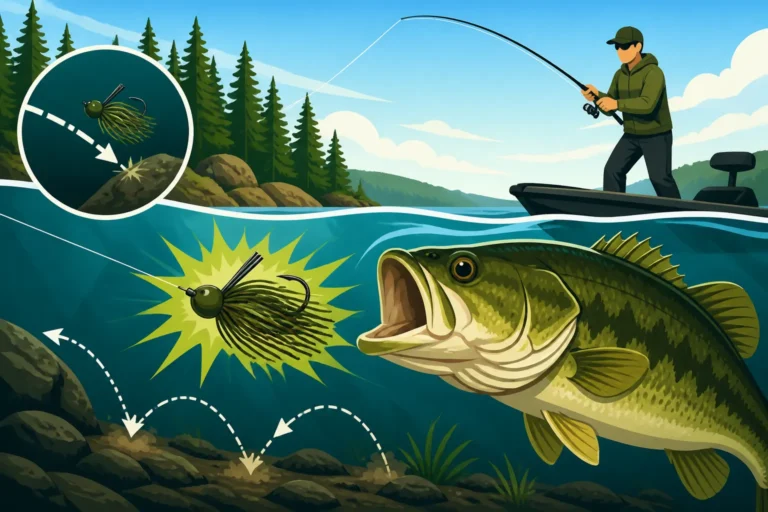
In Maine, a baitcasting reel really comes into its own when you're targeting bigger, harder-fighting fish or using specific techniques. Think about muscling a hefty largemouth bass out of thick cover with a jig, or accurately pitching a heavy spoon to a specific drop-off for lake trout. The increased power and torque of a baitcaster make these tasks much more manageable and efficient.
They are also fantastic for throwing heavier lures that spinning reels might struggle with, such as large swimbaits, substantial spinnerbaits, or even some topwater frogs that require precise placement. For those keen on Maine Bass Fishing Limits by Zone or exploring specific techniques like jigging, the baitcaster can give you the edge you need. You'll find experienced anglers often gravitate towards baitcasters for these applications, appreciating the blend of strength and precision they offer on the water.
Key Differences and Choosing Your First Reel
When you're standing in the aisle, trying to make that crucial decision, it helps to boil down the core distinctions and consider your personal fishing goals.
Side-by-Side Comparison: Spinning vs. Baitcasting
Let's lay out the key differences in a table to make it a bit clearer:
| Feature | Spinning Reel | Baitcasting Reel |
|---|---|---|
| Placement | Sits under the rod | Sits on top of the rod |
| Spool Action | Stationary spool, line peels off in coils | Spool rotates, line peels off directly |
| Casting Ease | Very easy, minimal backlashes | Requires practice, prone to backlashes (bird's nests) |
| Lure Weight | Excels with lighter lures/baits | Better for heavier lures/baits |
| Accuracy | Good, but less precise than baitcaster | Superior accuracy and pinpoint casting |
| Power | Decent, but less direct cranking power | Excellent cranking power and torque |
| Line Twist | More prone to line twist | Less prone to line twist |
| Best For | Beginners, light tackle, finesse fishing, panfish, trout | Experienced anglers, heavy cover, power fishing, bass, larger fish |
This table provides a quick overview, but remember, both types of reels are highly capable tools when used in their ideal situations. It's not about one being definitively "better" than the other, but rather which one is better for you and the type of fishing you plan to do.
Practical Considerations for Maine Anglers
When you're out on the Maine lakes and rivers, your choice of reel will heavily influence your experience. If you’re just starting out, or if you’re planning a relaxing day casting for panfish or small trout, a spinning reel is almost certainly the way to go. It reduces frustration and lets you focus on the joy of fishing. You can grab a decent spinning reel from retailers like Amazon without breaking the bank.
However, if you're aiming to consistently land those larger landlocked salmon or big smallmouth bass, or you're getting into more technical fishing situations like punching through heavy lily pads, a baitcaster will offer you the power and control you'll eventually crave. Many seasoned Maine anglers have both setups ready to go, swapping between them depending on the species, location, and fishing technique they're employing. If you're wondering about specific open water methods, our Maine Open Water Fishing Techniques Guide has more details.
When to Consider Both (or Upgrade)
The truth is, many avid anglers eventually own both types of reels. They each have their sweet spots. As you gain experience, you might find yourself wanting the finesse of a spinning reel for certain situations and the brute force and precision of a baitcaster for others. Don't feel pressured to buy the "best" or most expensive reel right away. Start with a solid, mid-range spinning reel from a reputable brand (you can often find great options on Amazon), learn the ropes, and then consider adding a baitcaster to your arsenal down the line.
An excellent way to upgrade your knowledge is to learn some Casting Techniques for Beginners, which will improve your success no matter which reel you choose. Sometimes, even after you've learned the basics, you might consider taking a guided trip. Guides often carry various setups, and it's a fantastic opportunity to try out a baitcaster under expert supervision before committing to a purchase.
Setting Up Your First Reel and Avoiding Common Pitfalls
Getting your reel ready for action is just as important as choosing the right one. A poorly spooled reel can lead to endless headaches, no matter how good the reel itself is.
Spooling Line Correctly for Each Reel Type
For spinning reels, the key is to avoid line twist. When spooling new line, lay the spool of line on the floor with the label facing up (or down, whichever allows the line to come off in the same direction it will be wound onto your reel). If you spool it incorrectly, the line will twist, causing tangles and frustrating loops when you cast. Fill your spool only to about an eighth of an inch from the rim – too much line, and it will jump off; too little, and you'll lose casting distance.
With baitcasting reels, spooling is a bit simpler in terms of direction, as the line comes off the bulk spool straight onto the reel spool. However, tension is crucial. You want the line to be spooled on tightly and evenly. Using a line winder or having a friend apply tension with a pencil through the spool is ideal. If the line is loosely spooled, especially braided line, it can dig into itself under pressure, leading to issues. Make sure to choose the right type of line for your reel and target species, perhaps by checking out our guide on Best Fishing Knot for Tying On Lures to get started with basic knots.
Practice Makes Perfect: Getting Comfortable on the Water
No matter which reel you choose, the most important thing is to get out there and practice. Start in an open area, perhaps your backyard or a local park, where there's plenty of room and no risk of snagging trees or power lines. Practice your casting motion without any bait or lure on the end of your line, just a small weight to give it some momentum. Focus on smooth, consistent movements.
For baitcasters, specifically, practice adjusting your braking system and tension knob. Start with higher brake settings to minimize backlashes, then gradually reduce them as your casting motion improves and your thumb control becomes more intuitive. A few hours of dedicated practice will save you countless frustrations later on the water. Many new anglers make common mistakes, so learning how to avoid these can greatly enhance your experience, as detailed in our article on Beginner Mistakes New Anglers Make in Maine.
Essential Gear Beyond the Reel
While the reel is a star player, it's just one part of your angling setup. You'll need a rod that's properly matched to your reel – they're designed to work in harmony. Spinning reels pair with spinning rods (which have larger guides and a reel seat underneath), while baitcasting reels need baitcasting rods (with smaller guides and a trigger grip on top). The rod's action and power should also match the type of fishing you're doing.
Don't forget about line, lures, hooks, sinkers, and a good pair of pliers or forceps for de-hooking. A net can also be a real lifesaver, especially when you land that first big fish! For specific fishing spots, you might want to read our guide on the Best Overall Lake in Maine for a First Fishing Trip. And of course, before you even think about casting a line, remember to get your Maine Fishing License Guide up to date – it’s a non-negotiable step for all anglers in Maine.
Ultimately, whether you choose a spinning reel or a baitcasting reel for your Maine adventures, the most important thing is to enjoy the process, learn from every cast, and appreciate the incredible beauty of our state's outdoors. Tight lines!
Disclaimer
This article is for general informational purposes only and does not constitute professional advice. Laws, prices and regulations vary by location and change over time. Consult a qualified professional for guidance on your specific situation.