Fly Fishing Techniques for Maine Rivers
Fly fishing in Maine's rivers can feel like trying to solve a complex puzzle, especially when you're standing on the bank, gear in hand, wondering why the fish aren't biting. The currents are swirling, the insect hatches seem elusive, and getting that perfect drift feels like an impossible dream. This comprehensive guide is here to untangle the complexities, offering you practical, real-world fly fishing techniques for Maine's diverse rivers, from the gentle freestone streams to the powerful runs of larger waterways, helping you cast with confidence and find success.
Understanding Maine's River Ecosystems
Maine's rivers are a magnificent tapestry, each with its own character, from the tumbling waters of the western mountains to the meandering flows closer to the coast. Successfully fly fishing here starts with truly understanding these unique environments and the species that call them home. It's not just about throwing a fly; it's about connecting with the rhythm of the river.
Types of Maine Rivers and Their Challenges
You'll encounter a fascinating variety of river types in Maine, and each demands a slightly different approach. The smaller, colder mountain streams like parts of the Kennebago or the Rapid River are classic brook trout havens. These waters are often freestone, meaning their beds are rocky with plenty of pockets, riffles, and small pools. They can be tight, requiring accurate, short casts and careful wading. Then you have the larger, more powerful rivers like the West Branch of the Penobscot or sections of the Kennebec, known for their landlocked salmon and larger brook trout. These rivers present challenges like strong currents, deeper pools, and wider expanses that demand longer casts and robust wading skills. Don't forget the coastal rivers and estuaries, where you might encounter anadromous species like striped bass or even sea-run brook trout, blurring the lines between fresh and saltwater techniques.
Navigating these different river types can be intimidating. A small, overgrown brook might make you feel like your casting arm is going to get snagged on every backcast, while the vastness of a larger river can leave you feeling overwhelmed, unsure where to even begin looking for fish. The key is adaptation: don't bring a cannon to a knife fight. Smaller streams call for lighter rods and stealth, while bigger rivers need more power and reach. The beauty is in the diversity, and with the right techniques, you can enjoy them all.
Key Fish Species to Target
When you're fly fishing in Maine, you're primarily going after a few iconic species, each with its own preferences and fighting style.
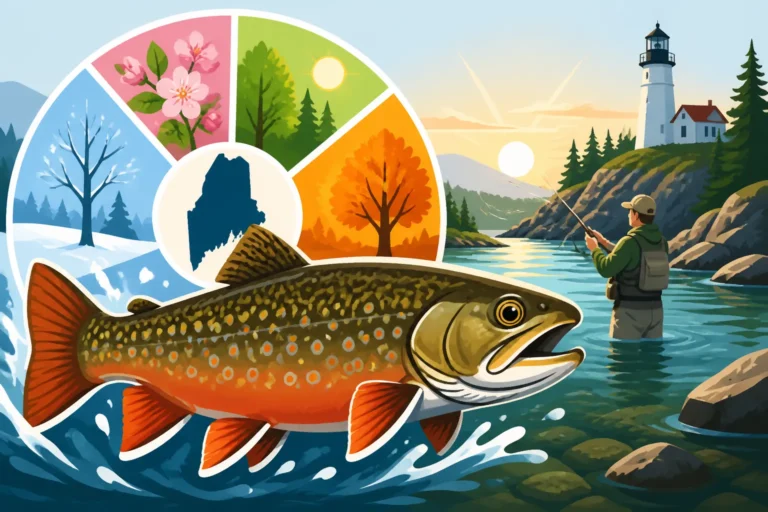
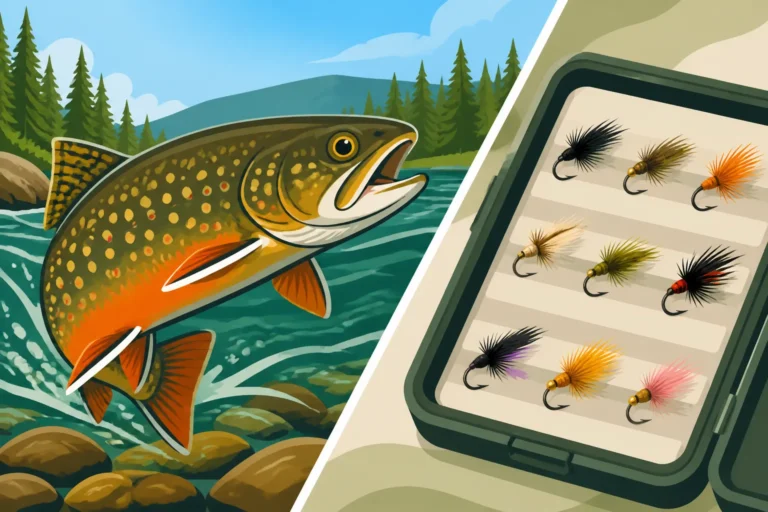
- Brook Trout: Ah, the native jewel of Maine. Brook trout thrive in cold, clean, oxygenated waters. You'll find them in abundance in the small, high-gradient streams and many of Maine's remote ponds. They're often eager to rise to a well-presented dry fly, especially during a hatch, but can also be found hugging the bottom in colder water. Learning about specific areas for them can be really helpful, like checking out where to find prime Brook Trout Fishing in Maine. They're not usually huge, but their vibrant colors and feisty fight make them a true prize.
- Landlocked Salmon: These are the acrobats of Maine's larger lakes and rivers. Found in rivers connected to major lakes like Sebago or Moosehead, landlocked salmon are strong fighters that often leap dramatically when hooked. They primarily feed on smelt and other baitfish, so streamer patterns imitating these forage fish are often highly effective. However, they'll also rise to large dry flies during prolific insect hatches. Targeting them can be a thrilling experience, especially if you're exploring Landlocked Salmon Fishing in Maine.
- Brown Trout: While not as widespread or native as brook trout, brown trout are stocked in some Maine rivers and can grow quite large. They're known for being a bit more elusive and wary, often preferring to feed under the cover of darkness or in low light conditions. They can be found in similar habitats to brook trout and salmon, especially in the slower, deeper sections of rivers, and respond well to streamers, nymphs, and larger dry flies.
- Smallmouth Bass: Often overlooked by trout purists, smallmouth bass offer incredible action on a fly rod, especially during the warmer months. They're aggressive, powerful fighters that love structure—rocks, submerged logs, and current breaks. You'll find them in many of Maine's larger rivers, and they'll readily strike poppers, large streamers, and weighted nymphs. Don't underestimate the thrill of catching a big smallmouth on a fly rod!
Common Insect Hatches and Their Significance
Understanding the insect life cycle is probably one of the most crucial elements of successful fly fishing. Maine's rivers, like all healthy freshwater systems, host a diverse array of aquatic insects, and knowing when and what they're hatching can make or break your day.
- Mayflies: These delicate insects are perhaps the most iconic for fly anglers. Their life cycle from nymph to dun (emerger) to spinner (adult) provides multiple stages for fish to feed on. Different species hatch throughout the season, from early Blue-Winged Olives (BWOs) in spring to larger Hendricksons, Sulphurs, and Green Drakes in summer, and back to BWOs in the fall. A good rule of thumb is to "match the hatch," meaning you try to use a fly that closely imitates the size, shape, and color of the insects currently emerging or on the water's surface.
- Caddisflies: Often more active and erratic than mayflies, caddisflies are another significant food source. Their larvae live in cases on the riverbed, and when they emerge, they often skitter across the water's surface, creating a commotion that attracts hungry fish. Imitating this "skittering" action with a dry fly can be incredibly effective. Different species hatch from spring through fall, and their abundance can lead to some truly memorable dry fly fishing.
- Stoneflies: These larger insects are often found in colder, well-oxygenated rivers. While their hatches aren't always as prolific as mayflies or caddis, their large nymphs are a staple food source for larger trout and salmon. Heavy stonefly nymph patterns fished along the bottom can be deadly, especially during periods when no surface activity is evident.
- Terrestrials: Don't forget the land-dwelling insects! Ants, beetles, grasshoppers, and crickets can accidentally fall into the river, becoming an easy meal for fish, especially during warmer summer months when aquatic hatches might be sparse. Carrying a selection of terrestrial patterns can save a slow day, particularly when fishing near grassy banks or overhanging vegetation.
Keeping an eye out for shucks on rocks, insects flying around, or fish rising to specific types of bugs will give you massive clues about what the fish are eating. A quick Google search on local hatch charts or simply asking at a local fly shop can provide invaluable real-time information.
Essential Gear for Maine River Fly Fishing
Getting equipped for fly fishing in Maine's rivers can feel like stepping into an overwhelming world of options. There's so much out there! But honestly, you don't need to break the bank to get started. The right basic setup, chosen for Maine's specific conditions, will serve you far better than a closet full of expensive, mismatched gear.
Rod and Reel Combinations
Choosing the right rod and reel is foundational to your fly fishing experience. For Maine's diverse rivers, versatility is key.
- For Smaller Streams and Brook Trout: A 3-weight or 4-weight rod, typically 7'6" to 8'6" in length, is ideal. This lighter setup allows for delicate presentations of smaller flies, protects light tippets, and makes even modest brook trout feel like champions. Paired with a matching lightweight reel that balances the rod, you'll have a delightful tool for precision casting in tight quarters. Brands like Orvis, Redington, or Fenwick offer excellent entry to mid-level options that won't feel like a toy but won't cost an arm and a leg either.
- For Medium to Larger Rivers and Landlocked Salmon/Bass: A 5-weight or 6-weight rod, usually 8'6" to 9' in length, is your workhorse. This is probably the most versatile setup for Maine. It has enough backbone to cast larger dry flies, heavier nymph rigs, and moderate streamers, and it can handle the stronger currents and bigger fish you'll encounter. A good 9-foot 5-weight is often recommended as a fantastic all-around option if you're only getting one rod. Your reel should be a reliable model with a smooth drag system, as landlocked salmon can make powerful runs.
- For Striped Bass or Heavy Streamer Fishing: If you're venturing into coastal river estuaries for striped bass or throwing truly large streamers in powerful currents, consider a 7-weight or 8-weight rod, 9 feet long. This heavier setup provides the power needed to cast big flies, fight strong fish, and handle windy conditions.
When considering a rod and reel, think about balance. The reel should feel comfortable on the rod, making the whole setup feel light and responsive in your hand. You can find excellent starter kits on platforms like Amazon that include a rod, reel, line, and leader, often at a very reasonable price, providing a convenient way to get everything you need in one go.
Fly Lines and Leaders
This is where the connection between you and the fish really happens. The right line and leader setup are critical for proper fly presentation.
- Weight-Forward Floating Line: For most Maine river fly fishing, a weight-forward (WF) floating line is the standard. The weight-forward design helps with casting distance and turning over heavier flies or indicators. A floating line is essential for dry fly fishing and most nymphing techniques where you want your fly to drift naturally in the upper water column. Match the line weight to your rod weight (e.g., a WF5F line for a 5-weight rod).
- Sinking-Tip or Full Sinking Line: If you plan on doing a lot of streamer fishing for salmon or bass in deeper, faster water, a sinking-tip or full sinking line can be invaluable. These lines help get your fly down to the fish quickly and keep it there, allowing for a more effective retrieve.
- Leaders: Leaders are tapered lines that connect your fly line to your fly. They're designed to transfer casting energy smoothly and present your fly delicately. For trout and salmon, a 7.5-foot or 9-foot tapered leader is common, ending in a tippet section.
- Tippet: Tippet is the thinnest, strongest part of your leader, which you tie your fly to. It's designed to be nearly invisible to fish and to break before your leader does, saving you money. Tippet size is denoted by an 'X' rating (e.g., 5X, 4X, 3X). A higher X number means a thinner diameter. For general trout fishing, 5X or 4X is common, while 3X or even 2X might be used for larger salmon or bass. Always carry a spool of tippet in a few sizes, as you'll constantly be re-tying and adjusting.
Waders, Boots, and Safety Gear
Staying comfortable and safe on the river is just as important as your fishing technique. Maine's rivers, even in summer, can be quite chilly.
- Waders: Chest waders are highly recommended for most river fishing in Maine. They allow you to safely enter the water, access prime fishing spots, and stay warm and dry. Breathable waders made from Gore-Tex or similar materials are a worthwhile investment, as they prevent you from overheating in warmer weather while still providing protection. Neoprene waders are warmer but less breathable, often preferred for colder conditions or Maine Ice Fishing Rules Guide if you're standing in slush.
- Wading Boots: Wading boots are worn over your waders (if they're stockingfoot waders) and provide crucial grip on slippery river bottoms. Look for boots with felt soles or rubber soles with studs for maximum traction. Good ankle support is also key to preventing sprains on uneven terrain.
- Wading Staff: This is a non-negotiable safety item, especially if you're new to wading or venturing into unfamiliar waters. A collapsible wading staff provides a third point of contact, helping you maintain balance in strong currents or over slippery rocks. It can prevent a nasty fall and potentially save your life.
- Polarized Sunglasses: These are not just for eye protection from stray hooks; they are indispensable for seeing into the water, spotting fish, and identifying underwater structure. They cut glare and allow you to "read the water" much more effectively.
- Fishing Vest or Pack: A vest, sling pack, or backpack is essential for organizing and carrying your fly boxes, tippet, leaders, nippers, hemostats, and other small accessories. Keeping everything easily accessible means less fumbling and more fishing. Many anglers opt for a small, comfortable backpack that can also hold a water bottle and a snack.
- Other Essentials: Don't forget bug spray (especially in late spring/early summer), sunscreen, a hat for sun protection, and a small first-aid kit. A pair of pliers or hemostats is critical for safely removing hooks.
Investing in quality wading gear pays dividends in comfort and safety. You can find great options for wading boots and waders on Amazon, and many local sporting goods stores in Maine, like L.L.Bean, also carry excellent selections with knowledgeable staff.
Mastering Basic Casting Techniques
Fly casting can look intimidating, almost like an art form, but at its heart, it's a very practical skill. You don't need to be a tournament caster to catch fish in Maine's rivers. What you do need is the ability to consistently deliver your fly accurately and delicately to where the fish are holding.
The Overhead Cast: Your Foundation
The overhead cast is the bread and butter of fly fishing. It's the most common and versatile cast you'll use, forming the basis for almost everything else. Think of it as painting with your rod.
- The Pickup: Start with a small amount of line (about 10-15 feet) on the water. With your rod tip low to the water, make a smooth, steady upward sweep, lifting the line off the water and letting it extend behind you. The key is to lift the line, not just yank it.
- The Backcast: As the line extends behind you, it will create a "loop." You want this loop to straighten out completely, just behind you, before you initiate your forward cast. The best way to achieve this is to stop your rod at about the 1 o'clock position (if 12 o'clock is straight up). It's a precise stop, not a continuous motion. This brief pause allows the line to load the rod.
- The Forward Cast: Once your line has straightened out behind you and the rod is loaded, begin your forward stroke. Accelerate smoothly, stopping your rod at around the 10 o'clock position. This "stop" is crucial; it allows the line to shoot forward, unrolling into a tight loop that carries your fly to the target.
- The Presentation: As the line unfurls forward, gently lower your rod tip towards the water. This helps the leader and fly land softly, minimizing splash and spooking potential fish. Think "paint the target" with your rod tip.
The biggest mistake beginners make is trying to use too much arm, or a "wristy" cast. Fly casting is primarily about the rod loading and unloading, not brute force. Practice in an open field, focusing on smooth acceleration and distinct stops. Consistency is more important than distance, especially when you're first learning.
The Roll Cast: Essential for Tight Spots
Maine's rivers, particularly the smaller streams, often have overhanging trees, thick brush, or steep banks that make a traditional overhead cast impossible. This is where the roll cast becomes your best friend. It's incredibly efficient because it allows you to cast without a backcast.
- Setting Up: Let your fly line lay out in front of you on the water. Raise your rod tip slowly, drawing the line closer to you until you have a D-shaped loop of line hanging beside your rod tip. Your rod should be angled slightly backward over your shoulder.
- The Forward Stroke: With a smooth, forward acceleration, push your rod tip forward and slightly downward. The key is to "roll" the D-loop forward, allowing the energy to unroll the line and propel your fly towards your target.
- The Finish: As the line unrolls, continue to lower your rod tip, guiding the line towards your target.
The roll cast is fantastic for fishing pockets and pools when you don't have room for a backcast. It's also an excellent way to pick up your line quietly and re-position it for another cast without disturbing the water too much. Practice this one a lot; it's a real game-changer on many Maine streams.
Accuracy and Presentation: Why It Matters
Once you've got the basic casts down, the next frontier is accuracy and presentation. It's one thing to get your fly out there, but it's another entirely to get it exactly where it needs to be, looking natural.
- Hitting the Target: Fish, especially trout and salmon, are often holding in very specific spots – behind a rock, at the edge of a current seam, under an overhanging branch. Your goal isn't just to cast far, but to cast precisely. Practice hitting small targets (like a leaf or a patch of foam) at various distances.
- Delicate Presentation (Avoiding "Plunk"): A heavy, splashy landing of your fly will often spook fish. You want your fly to land softly, like a natural insect drifting onto the water. This is achieved by smoothly finishing your forward cast and gently lowering your rod tip. A well-tied leader and proper tippet choice also aid in this.
- The Drag-Free Drift: This is arguably the most important concept in fly fishing. A natural insect floats downstream at the exact speed of the current. If your fly line pulls on your fly, causing it to skate unnaturally, that's called "drag," and fish will almost always ignore it. Techniques like mending (repositioning your fly line on the water upstream of your fly) are crucial for achieving a drag-free drift. Imagine your fly floating independently, not tethered to your line.
Mastering these casting fundamentals, along with a focus on accuracy and presentation, will significantly improve your success rate on Maine's rivers. Many local guides offer casting lessons, which can be an incredibly efficient way to learn and correct bad habits early on. For beginners, it's often a good idea to consider specific instruction on Fly Fishing for Beginners in Maine.
Reading the Water Like a Pro
One of the most valuable skills a fly angler can develop isn't about casting or fly selection, but about understanding the river itself. Learning to "read the water" means being able to look at a stretch of river and predict where fish are likely to be holding, feeding, and resting. It's a skill that comes with observation and experience, and it's absolutely crucial for fly fishing success in Maine.
Identifying Productive Holding Lies
Fish are not randomly distributed throughout a river. They seek out specific areas that offer a combination of food, cover, and reasonable current without expending too much energy. These are "holding lies."
- Current Seams: These are the lines where two different current speeds meet. Think of the calm water behind a large rock meeting the faster water flowing around it. Fish often sit in the slower water, waiting for food to be swept by in the faster current. These are prime feeding lanes.
- Eddies and Backwaters: Areas where the current slows down, or even reverses direction, offer fish a place to rest out of the main flow while still having access to drifting food. The downstream side of large boulders or log jams often creates excellent eddies.
- Riffles and Runs: Riffles are shallow, turbulent sections where the water flows quickly over rocks, creating oxygenation and dislodging insects. Runs are deeper, smoother sections of current. Fish will often hold at the head or tail of a riffle, or in the deeper parts of a run, feeding actively.
- Pools: Deeper, slower sections of the river. Pools provide cover from predators and strong currents, and often hold larger, more wary fish. The head of a pool (where the current enters) and the tail (where it exits) are often particularly productive, as food is concentrated there.
- Structure: Anything that breaks the current or provides cover is potential fish habitat. This includes large rocks, submerged logs, fallen trees, undercut banks, and even patches of aquatic vegetation. Fish use these areas for ambush points or safety.
When you approach a new stretch of river, take a moment to scan these features. Look for subtle changes in current, variations in depth, and any visible structure. This initial observation will guide your casting strategy.
Understanding Current Dynamics
The current is the lifeblood of a river, and understanding how it behaves is fundamental to effective fly fishing. It dictates where food travels, where fish position themselves, and how you need to present your fly.
- Varying Speeds: Even within a small section of river, the current will vary greatly in speed. Water moves fastest in the center and slowest near the banks and bottom. Fish leverage these variations, positioning themselves in slower water while facing upstream into faster currents to intercept food.
- Microcurrents: Don't just look at the big picture; notice the small changes in current around individual rocks or submerged features. These microcurrents create subtle feeding lanes and resting spots that fish exploit. Your job is to present your fly into these specific lanes.
- Influence on Drift: The current will pull your fly line at different speeds than your fly, leading to drag. Learning to mend your line – making small, upstream flips of your rod to reposition the line – is essential for achieving a natural, drag-free drift that fools selective fish. It’s like giving your fly a leash that doesn’t pull.
- Depth and Speed Correlation: Generally, deeper water tends to have slower currents at the bottom, offering a comfortable place for fish to hold. Shallower, faster water often indicates productive riffles where fish feed on dislodged nymphs.
By observing how the water moves, you'll gain insight into where fish are likely to be oriented and how best to present your fly to them. This might involve changing your casting angle, adjusting your leader length, or adding weight to your fly.
Reading Riffles, Runs, and Pools
Let's break down how to approach these common river features:
- Riffles: These are typically shallower, turbulent areas. They're oxygen-rich and excellent places for nymphs to get dislodged. Fish often hold in the slightly deeper pockets within the riffle, or just below them, where the current slows down a bit.
- Technique: Focus on nymphing through riffles. Use weighted nymphs or add split shot to your leader to get your fly down quickly. Cast slightly upstream and allow your fly to tumble naturally with the current, following it with your rod tip to maintain a direct connection. Keep an eye out for surface activity at the tail of a riffle during a hatch, where fish might rise to emergers.
- Runs: These are smoother, deeper sections with a consistent current. They can be incredibly productive, holding both feeding and resting fish.
- Technique: Runs are excellent for dry fly fishing during a hatch, especially if you can achieve a long, drag-free drift. For subsurface action, nymphing with an indicator can be very effective, allowing your flies to drift at the proper depth. Streamers can also be productive in runs, especially when swung across the current.
- Pools: These are the deep, slow sections. They provide excellent cover and comfort, and often hold larger, more cautious fish.
- Technique: Approach pools cautiously and quietly. Start by fishing the head and tail, as these are natural feeding zones. During a hatch, fish might rise throughout the pool, requiring long, delicate dry fly presentations. For subsurface fishing, weighted nymphs or streamers fished slowly along the bottom or near structure can entice reluctant fish. Sometimes, letting a streamer sink deep and then retrieving it with short strips can provoke a strike from a large, territorial fish.
Remember that fish often move between these different zones throughout the day, depending on light, temperature, and insect activity. Developing a keen eye for water features and understanding their dynamics is a journey, but it's one of the most rewarding aspects of fly fishing in Maine.
Effective Fly Selection for Maine's Seasons and Species
Choosing the right fly can feel like a guessing game, especially when you open your fly box and see hundreds of tiny, feathery creations. But it doesn't have to be overwhelming! For Maine's rivers, a solid understanding of a few key fly categories and their typical usage across seasons and for target species will put you miles ahead.
Dry Flies for Mayflies and Caddis
Dry flies are what many people picture when they think of fly fishing – that magical moment when a fish rises to sip your imitation off the surface. They are incredibly exciting to fish, especially during an active hatch.
- Mayfly Imitations: Mayflies are delicate insects that sit upright on the water's surface. Your dry fly patterns should reflect this.
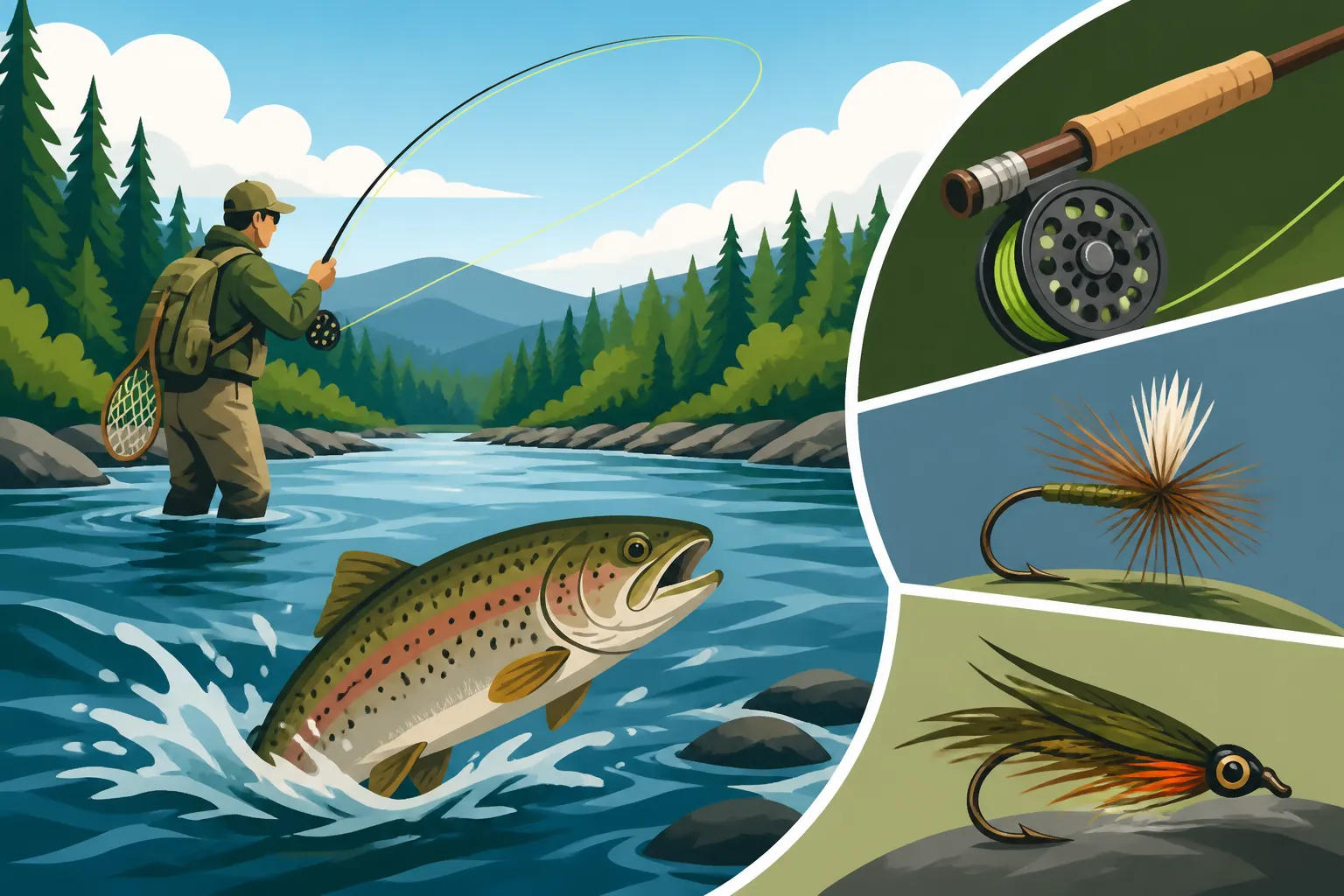
- Parachute Adams: This is arguably the most versatile dry fly out there. It imitates a wide variety of mayfly species, sitting low in the water film, making it highly effective when fish are somewhat selective. Carry it in sizes #12-20.
- Elk Hair Caddis: For caddis hatches, this fly is a powerhouse. It floats well, represents the skittering action of an adult caddis, and comes in various colors and sizes. Try it in tan, olive, or brown in sizes #10-18.
- Hendrickson/Sulphur/Green Drake patterns: As specific mayfly hatches become prominent in spring and early summer, having imitations of these larger, prominent species in the correct size and color (e.g., a "Hendrickson Dun" in size #12-14) will be critical for success, especially on rivers like the Aroostook or parts of the Penobscot.
- Terrestrial Flies: When aquatic hatches slow down in mid-summer, terrestrials become very important.
- Foam Hoppers/Griffith's Gnat/Ant Patterns: These flies imitate grasshoppers, ants, and other land insects that fall into the water. A foam hopper in sizes #8-12 can entice aggressive strikes, while smaller Griffith's Gnats or ant patterns (#16-20) are great for selective sippers. These are excellent choices for fishing near grassy banks or overhanging trees.
The key to dry fly fishing is presentation: a drag-free drift is paramount. If your fly isn't floating naturally with the current, fish will likely ignore it.
Nymphs for Subsurface Success
Most of a trout or salmon's diet comes from subsurface insects – nymphs and larvae. So, while dry fly fishing is visually thrilling, nymphing is often the most productive way to catch fish, especially when there's no visible surface activity.
- Weighted Nymphs: You need to get your fly down to where the fish are holding, near the bottom.
- Pheasant Tail Nymph: A classic for a reason, this simple yet effective pattern imitates many different mayfly nymphs. Carry it in sizes #12-20, often with a bead head for extra weight.
- Hare's Ear Nymph: Another versatile pattern, the Hare's Ear imitates a variety of caddis and mayfly nymphs. It has a buggy, natural appearance that fish find irresistible. Sizes #10-18, often bead head.
- Stonefly Nymphs (e.g., Prince Nymph, Pat's Rubber Legs): These larger, heavier nymphs are excellent for targeting bigger fish in faster, deeper water. Their size makes them a substantial meal. Sizes #6-12 are common.
- Emerger Patterns: These flies imitate insects as they transition from nymph to adult, often suspended just under or in the surface film.
- Soft Hackles: These patterns are incredibly effective as emergers or simply general subsurface attractors. They're often swung across or down-and-across the current, giving them a lifelike movement.
- CDC Caddis Emerger: The delicate CDC (Cul de Canard) feathers make these flies look incredibly realistic as they break through the surface tension.
Nymphing typically involves adding split shot to your leader, using an indicator (a small bobber) to detect strikes, and casting upstream to allow your flies to drift naturally along the bottom. The goal is to get your fly to drift at the same speed as the natural nymphs. For deeper dives into fly selection, especially for specific species, you might want to look into resources like Fly Selection for Brook Trout.
Streamers for Aggressive Fish
Streamers are designed to imitate baitfish, leeches, sculpins, or other larger prey items that trout and salmon actively hunt. They appeal to the predatory instincts of fish, often eliciting aggressive, hard-hitting strikes.
- Baitfish Imitations:
- Woolly Bugger: If you only had one streamer, this would be it. The Woolly Bugger can imitate almost anything—a leech, a baitfish, a large nymph. It's incredibly versatile and effective for brook trout, landlocked salmon, and smallmouth bass. Carry it in black, olive, and brown in sizes #4-12, often with a bead head or weighted eyes.
- Clouser Minnow/Muddler Minnow: These patterns are excellent for imitating various baitfish. The Clouser Minnow, originally designed for saltwater, is fantastic for aggressive salmon or bass, particularly in rivers with clear water. The Muddler Minnow is a classic that can be fished as a streamer, a surface skittering fly, or even a large dry fly.
- Flesh/Egg Patterns: During the fall spawning season, fish (especially brown trout and salmon) will often key in on the eggs or flesh of other spawning fish. Small, pink, or orange egg patterns can be surprisingly effective.
- Articulated Streamers: For targeting truly large trout or salmon, especially in powerful runs, articulated streamers (flies tied with multiple segments that provide incredible swimming action) can be devastating. They're typically larger and require heavier rods to cast effectively.
Streamers are often fished by casting across or downstream and retrieving them with various strips and pauses, mimicking the erratic movement of a wounded baitfish. They can also be swung across the current, letting the water impart action. This method is particularly effective for landlocked salmon in larger rivers.
Building a diverse fly box with a good selection of these patterns across different sizes and colors will prepare you for most situations you'll encounter on Maine's beautiful rivers. Don't forget that a local fly shop is an invaluable resource for current hatch information and specific fly recommendations for the area you're fishing.
| Fly Type | Purpose & Imitation | Key Species | Best Seasons | Common Sizes |
|---|---|---|---|---|
| Dry Flies | Mayflies (Parachute Adams, Sulphur Dun) | Brook Trout, Landlocked Salmon | Spring, Summer, Fall | #12-20 |
| Caddis (Elk Hair Caddis, Stimulator) | Brook Trout, Landlocked Salmon | Spring, Summer, Fall | #10-18 | |
| Terrestrials (Hopper, Ant, Beetle) | Brook Trout, Smallmouth Bass | Summer | #8-20 | |
| Nymphs | Mayfly Nymphs (Pheasant Tail, Copper John) | Brook Trout, Landlocked Salmon, Brown Trout | Year-Round (Especially Cold Water) | #12-20 (Bead Head) |
| Caddis Larvae (Hare's Ear, Green Rock Worm) | Brook Trout, Landlocked Salmon, Brown Trout | Year-Round | #10-18 (Bead Head) | |
| Stonefly Nymphs (Prince Nymph, Pat's Rubber Legs) | Larger Brook Trout, Landlocked Salmon | Year-Round (Great for Cold Water) | #6-12 (Weighted) | |
| Streamers | Baitfish (Woolly Bugger, Clouser Minnow) | Landlocked Salmon, Smallmouth Bass, Large Brook Trout | Year-Round (Especially in Low Light) | #4-12 (Weighted) |
| Leeches (Zonker, Black Woolly Bugger) | Landlocked Salmon, Large Brook Trout | Year-Round | #4-10 (Weighted) |
Advanced Techniques for Tricky Maine Waters
Once you've got a handle on the basics, Maine's rivers will inevitably throw you some curveballs. Finicky fish, complex currents, or extremely low/clear water conditions often demand a more nuanced approach than a simple dry fly or nymph rig. This is where advanced techniques come into play, allowing you to adapt and find success when others are struggling.
High-Stick Nymphing (Euro Nymphing)
Traditional nymphing with an indicator can be effective, but high-stick nymphing, often associated with "Euro Nymphing," takes subsurface presentation to a whole new level of precision and sensitivity. This technique is incredibly effective for targeting trout and salmon holding deep in complex currents, riffles, and runs, which you'll frequently find in rivers like the Rapid River or sections of the West Branch of the Penobscot.
- The Setup: This method typically uses a longer, lighter rod (10-11 feet, 2-4 weight), a specialized level or very thin fly line, and a long, sensitive leader often with a bright "sighter" section for strike detection. Instead of a traditional bobber-style indicator, the sighter itself acts as your strike indicator. You might run two or three weighted nymphs in a "point-dropper" system.
- The Technique: The core idea is to keep as much of your fly line off the water as possible, using the long rod to "high-stick" your leader and flies through the current. You maintain a direct, tight-line connection to your flies, allowing them to drift naturally along the bottom. You lead the flies downstream with your rod tip, matching the speed of the current exactly.
- Strike Detection: Without a bobber, you're looking for subtle hesitations, twitches, or pauses in your sighter. Even a slight hiccup can indicate a fish mouthing your fly. The direct connection provides incredible sensitivity.
- Why it works in Maine: Maine's rivers often have highly variable currents and deep pockets. High-stick nymphing allows for incredibly precise depth control and drag-free drifts in these complex environments, fooling wary fish that would ignore a dragging fly. It's particularly useful for targeting large brook trout or brown trout that hold tight to the bottom structure.
This technique takes practice, but the increased sensitivity and control can drastically improve your nymphing success. Many videos and online resources can help you get started with "Euro Nymphing" principles.
Micro-Dry Fly Tactics for Selective Sippers
Sometimes, on a clear, calm summer evening, you'll see fish rising steadily, but they completely ignore your perfectly presented, average-sized dry fly. These are often selective sippers, keyed into very small, specific insects, and they demand a delicate touch and micro-dry fly tactics. This is a common scenario on many of Maine's gin-clear streams during low-water periods.
- Downsizing: This means using tiny flies, often in sizes #20-24, imitating very small mayflies (like Tricos or tiny BWOs) or midges. You also need to downsize your tippet, often to 6X, 7X, or even 8X, to ensure a stealthy presentation and a drag-free drift.
- Longer, Finer Leaders: A long, fine leader (12-15 feet, sometimes even longer) helps to keep the thicker fly line away from the fish's view and allows for a more delicate landing of the tiny fly.
- Accurate, Delicate Casts: Your cast needs to be feather-light. A heavy presentation of a tiny fly will spook fish instantly. Focus on soft landings and perfect, drag-free drifts over the rising fish. Cast well upstream of the fish to avoid lining it.
- Careful Observation: Watch the water intently. What size are the naturals? What color? Are they emergers, duns, or spinners? Try to match your tiny fly to what you observe. Sometimes, even a slight variation in size or color can make a difference.
- Why it works in Maine: On calm pools or slow runs in rivers like the Royal River or parts of the Narraguagus, trout can become incredibly selective, especially when midges or very small mayflies are hatching. Presenting a tiny, realistic imitation with a fine tippet is often the only way to get a strike.
It can be frustrating when fish are rising all around you but won't bite. Don't give up! By carefully observing the naturals and switching to micro-dry fly tactics, you can unlock some truly challenging but rewarding fishing.
Swinging Streamers in Powerful Currents
While stripping streamers is common, "swinging" them across powerful currents is another highly effective and often overlooked technique, particularly for larger landlocked salmon and aggressive brook trout in Maine's bigger rivers. This method capitalizes on the fish's instinct to ambush prey.
- The Cast: Cast your streamer across and slightly downstream. The exact angle depends on the current speed and the depth you want your fly to achieve.
- The Swing: As the current catches your fly line, it will naturally pull your streamer in an arc across the river. The key is to let the current do most of the work. Keep a tight line to your fly, but don't strip it in. Let the natural movement of the water impart action to the streamer. As the fly swings, it will present itself to fish from a different angle than traditional upstream casts.
- The Hang Down: As the streamer completes its arc and hangs directly downstream in the current, it often presents a vulnerable target to following fish. Many strikes occur during this "hang down" moment or as you begin to slowly retrieve it at the end of the swing.
- Why it works in Maine: Rivers with strong, consistent currents, like sections of the Kennebec or the West Branch of the Penobscot, are ideal for swinging streamers. This method allows the fly to cover a wide area, mimicking a baitfish that has lost its way and is being swept downstream. Landlocked salmon, in particular, often react violently to a well-swung streamer. Using a sinking-tip line or even a full sinking line will help get your streamer down to the fish in deeper, faster water.
This technique is a favorite of many experienced anglers targeting anadromous species. For specific guidance on which rivers are best for this, you could research Best Fly Fishing Rivers in Western Maine.
Ethical Angling and Conservation in Maine
Fly fishing in Maine is not just about catching fish; it's about connecting with the natural world and being a responsible steward of its precious resources. Ethical angling and a strong commitment to conservation are paramount to ensuring these incredible experiences endure for future generations. Maine's fisheries are a delicate balance, and our actions matter.
Handling Fish Properly for Release
The vast majority of fly fishing for trout and salmon in Maine involves catch and release, especially for wild or native fish. Proper handling is critical for ensuring these fish survive to be caught another day.
- Minimize Fight Time: While exciting, a prolonged fight can exhaust a fish, making it less likely to survive release. Use appropriate tackle (a rod that can handle the fish without being completely overpowered) to land fish efficiently but carefully.
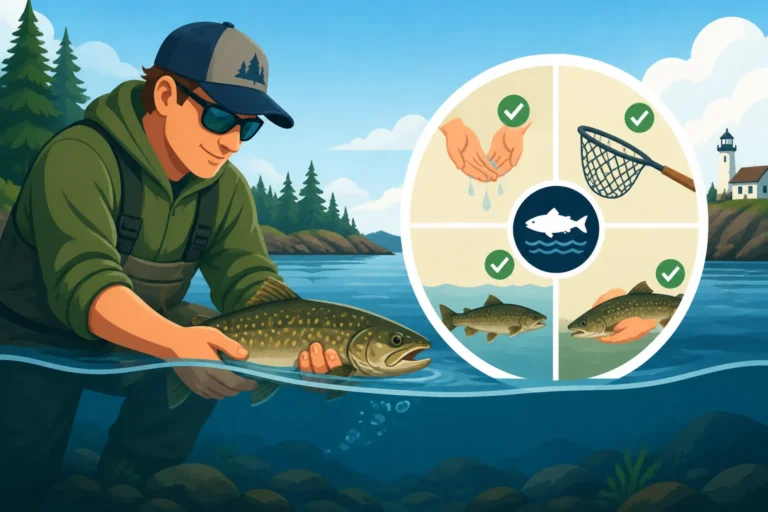
- Keep Fish in Water: This is the golden rule. Avoid lifting the fish out of the water as much as possible, especially larger fish. Their internal organs are not supported by air, and exposure to air can damage gills.
- Wet Hands Only: Always wet your hands thoroughly before touching a fish. Dry hands remove the protective slime coat, which is a fish's first defense against disease and parasites.
- Barbless Hooks: Crimp down the barbs on all your flies. Barbless hooks are easier to remove, cause less damage to the fish's mouth, and make catch and release much quicker and less stressful for the fish. Many specific regulations in Maine, like those outlined in Maine Fishing Regulations Explained, often mandate barbless hooks in certain waters.
- Gentle Hook Removal: Use hemostats or pliers to quickly and gently remove the hook. If the hook is deeply swallowed, cut the line as close to the hook as possible rather than tearing the fish's throat.
- Revive, Don't Just Release: Hold the fish gently in the current, facing upstream, supporting its belly if needed. Allow water to flow over its gills. When it regains strength and can hold itself upright, it will swim away. Don't rush this process; a proper revival can take a few minutes. If a fish swims off on its own but then turns belly up, try to revive it again.
These practices, especially those regarding Catch and Release Best Practices in Maine, are essential to support the health of Maine's fish populations.
Leave No Trace Principles
Beyond fish handling, responsible angling extends to how we interact with the entire river environment. "Leave No Trace" is a set of outdoor ethics that minimizes human impact on the wilderness.
- Pack It In, Pack It Out: This is simple: whatever you bring into the outdoors, take it back out with you. This includes all trash, broken leader, tippet scraps, and even organic waste like fruit peels (which take a long time to decompose and can attract wildlife).
- Stay on Trails: Where possible, stick to established paths to and along the river. This minimizes erosion and prevents damage to fragile streamside vegetation. If there are no trails, spread out to avoid creating new, visible paths.
- Respect Wildlife: Observe wildlife from a distance. Don't disturb birds, mammals, or other creatures. Be aware of your surroundings, especially in bear country.
- Minimize Campfire Impacts (if applicable): If you're on an overnight trip and building a fire is allowed, use existing fire rings. Keep fires small, and ensure they are completely extinguished before leaving.
- Respect Private Property: Many stretches of Maine's rivers run through private land. Always be aware of property boundaries and obtain permission if necessary. Access points are often designated for public use, but not all riverbanks are.
- No Introduction of Invasive Species: Clean your boots, waders, and boat (if applicable) thoroughly before moving from one body of water to another. This prevents the spread of invasive plants, animals, and diseases that can devastate native ecosystems.
Practicing Leave No Trace ensures that Maine's rivers remain pristine and wild for everyone to enjoy.
Supporting Maine's Fisheries Conservation
Anglers have a vital role to play in the long-term health of Maine's fisheries. Conservation isn't just about following rules; it's about actively participating and advocating for healthy ecosystems.
- Adhere to Regulations: Always know and follow the specific Maine Fishing Regulations Explained for the river or lake you are fishing. These regulations, which include Maine Fish Bag Limits Guide and size restrictions, are put in place by biologists to manage fish populations sustainably. Ignorance of the law is no excuse.
- Purchase Licenses: Your purchase of a Maine Fishing License Guide directly contributes to funding for fisheries management, stocking programs, habitat restoration, and enforcement by Maine Inland Fisheries and Wildlife (MDIFW). It's an investment in the future of fishing.
- Report Violations: If you witness poaching or other illegal activities, report them to a Maine Warden Service. Protecting our fisheries often falls to vigilant anglers.
- Get Involved: Consider joining or supporting conservation organizations that work to protect and enhance Maine's aquatic resources. Groups like Trout Unlimited, Maine Audubon, or local land trusts play crucial roles in habitat restoration, policy advocacy, and public education.
- Educate Others: Share your knowledge of ethical angling and conservation with fellow anglers, especially beginners. Lead by example. The more people who understand and practice responsible fishing, the healthier our rivers will be.
By embracing these ethical and conservation principles, we not only preserve the incredible fishing opportunities in Maine but also contribute to the overall health and beauty of its natural landscapes.
Seasonal Strategies for Maine River Fly Fishing
Maine's rivers transform with each passing season, offering distinct challenges and opportunities for the fly angler. What works brilliantly in spring might be completely ineffective in the height of summer or the chill of fall. Understanding these seasonal shifts is key to consistent success on the water.
Spring Runoff Tactics (April – Early June)
Spring in Maine can be a bit of a gamble, often characterized by cold, high water from snowmelt and rain. While challenging, it's a prime time for certain species if you know where to look and what to do. This period covers much of what is detailed in a comprehensive Maine Spring Fishing Guide.
- High Water Challenges: Rivers are often swollen and cloudy, making wading difficult and sight fishing nearly impossible. Fish tend to hug the banks or seek refuge in slower pockets and eddies where the current isn't as brutal.
- Targeting Hungry Fish: After a long winter, fish are hungry and looking for substantial meals. This is an excellent time for streamers and heavy nymphing.
- Streamers: Large, dark streamers (black, olive, brown Woolly Buggers, or large articulated patterns) fished slow and deep can be incredibly effective. Cast across current to the slower water near banks, log jams, or submerged structure, and let the fly swing or retrieve it slowly.
- Heavy Nymphs: Stonefly nymphs (like a Pat's Rubber Legs or Prince Nymph) are excellent choices. Use plenty of split shot or very heavy bead-head flies to get them down to the bottom where fish are holding. An indicator can help, but sometimes a high-stick nymphing approach is best to maintain contact.
- Emerging Insects: As water temperatures begin to warm, you might see the first significant hatches of larger mayflies (like Hendricksons) and caddis. Keep an eye out for rising fish in calmer eddies or slow pools.
- Safety First: High water demands extreme caution. Always wear your wading staff, use felt or studded boots, and never wade alone or in water that seems too swift or deep. Knowing when ice-out happens on specific lakes and rivers can also be crucial for safety.
Spring fishing is often about patience and adapting to the conditions. Focus on finding fish out of the main current, and present large, protein-rich flies.
Summer Low-Water Strategies (June – August)
Summer brings warmer weather, generally lower and clearer water, and a different set of challenges. Fish become more active, but also more wary.
- Clear Water, Wary Fish: With lower water levels, fish have less cover and can be easily spooked. Stealth becomes paramount. Approach spots quietly, stay low, and make accurate casts.
- Early Morning and Late Evening: The middle of the day, especially during heat waves, can be slow. Fish are often most active during the cooler parts of the day – dawn and dusk. This is often when major hatches occur, and terrestrial patterns are most effective.
- Terrestrials and Dry Flies: Mid-summer often sees fewer aquatic hatches, but ants, beetles, and grasshoppers (terrestrials) become significant food sources. Fishing hopper-dropper rigs (a large foam hopper on top, with a nymph tied off it) can be very productive near grassy banks. When aquatic hatches do occur (caddis, small mayflies), dry fly fishing can be excellent.
- Deep Nymphing/Streamers: During the heat of the day, fish will retreat to cooler, deeper water. Focus on deep pools, undercut banks, and spring-fed areas. Weighted nymphs or smaller streamers fished slowly along the bottom can pick up reluctant fish.
- Targeting Smallmouth Bass: Summer is prime time for smallmouth bass in Maine's rivers. They'll readily strike poppers, large streamers, and weighted crayfish patterns, often providing exhilarating topwater action.
- Where to find cooler water: On warmer days, seek out areas where tributaries flow in, or shady sections of the river. Fish often congregate in these cooler pockets.
Summer fishing is about precision, stealth, and adapting to the heat and low water. It can offer some of the most enjoyable dry fly fishing of the year.
Fall Spawning Runs and Aggressive Feeders (September – November)
Fall in Maine is arguably one of the most beautiful and productive times to be on the river. The foliage is stunning, the air is crisp, and many fish species become incredibly active. For a deeper dive, check out a dedicated Maine Fall Fishing Guide.
- Spawning Runs: This is when brook trout and landlocked salmon often begin their spawning migrations from lakes into their natal rivers and streams. These fish are often brightly colored and incredibly aggressive, making for some truly memorable fishing.
- Streamers and Egg Patterns: Fish that are spawning or pre-spawning are often very territorial and aggressive. Large, flashy streamers can provoke powerful strikes. Egg patterns (small, round, orange, or pink flies) can also be highly effective, as fish will key in on the eggs of other spawners.
- Active Nymphing: As water temperatures cool but remain comfortable, insect activity can still be strong. Nymphing with larger patterns (stoneflies, caddis pupae) can be very productive.
- Last Dry Fly Opportunities: While major hatches taper off, you can still find opportunities for dry fly fishing, especially on warmer days, with smaller mayflies (like Blue-Winged Olives) or midges. These can be short but intense periods of surface activity.
- Cooling Water, Active Fish: As the water cools, fish become more comfortable holding in open water and are less likely to be sluggish. They're also putting on weight for winter, making them aggressive feeders.
- Regulations and Conservation: Be extra mindful of regulations during spawning season. Many rivers have special closures or restrictions to protect spawning fish. Always avoid disturbing redds (spawning beds). These rules are often outlined in resources like Maine Fishing Season Dates Guide.
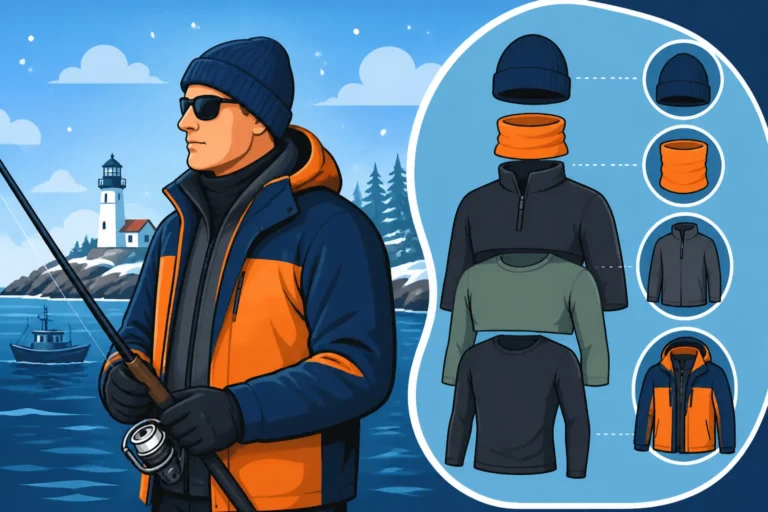
Fall fly fishing in Maine is a truly special experience, offering a combination of stunning scenery and some of the year's best fishing opportunities. Just be prepared for colder temperatures and remember to dress in layers.
Disclaimer
Fishing regulations in Maine can change. Always consult the latest Maine Department of Inland Fisheries and Wildlife (MDIFW) regulations book or their official website before heading out. This guide provides general information and should not be considered a substitute for official legal documents. Stay safe and fish responsibly.