Best Salmon Pools on the Penobscot for Catch and Release
There's a special kind of magic in casting a line into a river that's seen the incredible return of wild Atlantic salmon. For many anglers, the dream of hooking one of these magnificent fish in their native waters, knowing the monumental efforts behind their comeback, is a powerful draw. If you're looking to experience the thrill of targeting Atlantic salmon on the Penobscot River with the utmost respect for conservation, this guide is for you. We'll explore the prime catch-and-release pools and share the insights you need for a successful and ethical fishing adventure.
Understanding the Penobscot River's Salmon Comeback
The Penobscot River represents one of the greatest conservation success stories in North America, a true testament to what dedicated efforts can achieve. For generations, the dreams of catching a wild Atlantic salmon in Maine were just that — dreams. But thanks to strategic dam removals and ongoing restoration, these majestic fish are returning in greater numbers, making the Penobscot a premier, albeit strictly catch-and-release, destination.
A Historic Restoration Effort
For over two centuries, dams blocked the Penobscot River, preventing Atlantic salmon and other sea-run fish from reaching their ancestral spawning grounds. Think about that for a moment – these incredible creatures, driven by instinct, hitting an insurmountable concrete wall year after year. It's heartbreaking to imagine. The Penobscot River Restoration Project, an unprecedented collaboration between conservation groups, tribal nations, state and federal agencies, and utility companies, changed everything. The removal of the Veazie and Great Works dams, coupled with improved fish passage at other facilities like the Milford Dam, reconnected over 1,000 miles of vital habitat. It's not just a feel-good story; it's a living, breathing example of ecosystem recovery right before our eyes. The river is literally pulsing with new life, a powerful reminder that our actions truly can make a difference. This monumental undertaking has allowed these federally endangered fish to migrate further upstream, bringing them back to stretches of river they haven't seen in over 200 years. For more on the bigger picture, you might be interested in the article on Penobscot River Atlantic Salmon Restoration.
The Importance of Catch and Release
Given the endangered status of Atlantic salmon, every single fish caught on the Penobscot River must be released unharmed. This isn't just a rule; it's a moral imperative and a critical component of the species' recovery. These fish are too precious to risk. We're not talking about filling a cooler here; we're talking about experiencing a connection to a wild creature that has overcome incredible odds, and then ensuring it has the best possible chance to continue its journey and spawn. Proper catch and release techniques are paramount. This means using appropriate gear, minimizing handling, and ensuring the fish is revived before being released. It's about respecting the future of the fishery as much as the thrill of the present moment. Every angler becomes a steward of this precious resource.
Prime Penobscot Salmon Pools for Catch and Release
While the entire main stem of the Penobscot below the remaining dams offers potential, certain areas concentrate fish due to water flow, structure, and cold-water refuge. Finding these spots is key to a rewarding catch-and-release experience.
The Veazie Dam Site and Downstream Reaches
Where the Veazie Dam once stood, just upstream from Bangor, is now a dynamic and productive stretch of river. With the dam gone, the river has reclaimed its natural flow, creating new runs, riffles, and pools. Salmon moving upstream from the ocean often hold in these re-formed areas as they adjust to the freshwater environment and seek resting spots. The current patterns here can be complex, offering varied lies where salmon might hold. Access is available from public lands, and wading can be productive in some sections, though caution is always advised due to varying depths and currents. Downstream from this former dam site, towards Bangor and even further down to the confluence with the Kenduskeag Stream, the river offers broader runs and deeper channels. Fish will move through these sections, pausing in deeper pools or along current breaks. Scouting these areas during lower water can reveal excellent structure for future fishing.
The Milford Dam Bypass
Further upstream, the Milford Dam presents a different kind of fish passage solution. While the dam itself remains, a state-of-the-art fish lift helps salmon navigate past it. More importantly for anglers, the bypass channel around the dam and the immediate tailwater sections below it can be exceptional. These areas often have highly oxygenated water and concentrated flows, which are attractive to migrating salmon. Fish will stack up below the fish lift, waiting for passage, or rest in the turbulent waters. This area can see significant fish activity, especially during peak migration periods in late spring and early summer. It's a prime location to observe the success of the restoration efforts firsthand and offers excellent opportunities for catch-and-release angling. Just remember, these spots are well-known, so expect company, and always be respectful of fellow anglers and their space.
Key Tributaries and Coldwater Refuges
As water temperatures rise in the main stem of the Penobscot during summer, Atlantic salmon will actively seek out colder water. This often means congregating near the mouths of cold-water tributaries or in deep, spring-fed pools within the main river itself. Tributaries like the Piscataquis River or the Sebec River, while not typically thought of for salmon, can provide crucial thermal refugia where fish will hold before continuing their migration. Identifying these confluence zones or deep pools in the main river system becomes vital for summer angling. Local knowledge or consulting with a guide from a platform like FishingBooker can be incredibly valuable in pinpointing these specific, often less obvious, holding areas. Understanding Maine Fishing Season Dates Guide will help you anticipate when these temperature-driven movements are most pronounced.
Essential Techniques and Ethics for Penobscot Salmon Fishing
Successfully landing and safely releasing an Atlantic salmon requires a blend of appropriate gear, precise techniques, and an unwavering commitment to the fish's well-being. This is not about brute force, but finesse and respect.
Recommended Gear and Flies
For Atlantic salmon on the Penobscot, most anglers opt for fly fishing gear. A 9 to 10-foot fly rod in the 7 to 9-weight range is typically ideal, offering the backbone needed to handle a powerful fish while still protecting light tippets. A reliable large-arbor reel with a smooth drag and plenty of backing is non-negotiable. Floating lines are common, but interchangeable sink-tip lines can be incredibly versatile for probing different depths. When it comes to flies, traditional Atlantic salmon patterns like the Green Highlander, Blue Charm, Black Bear Green Butt, or Thunder and Lightning are always good starting points. Streamer patterns that imitate baitfish can also be effective, especially if you're looking for Best Streamer Patterns for Landlocked Salmon that might also attract migrating Atlantic salmon. Remember to focus on fly sizes appropriate for river conditions – smaller flies in low, clear water, and larger, more visible patterns in higher, darker flows. For detailed guidance on specific patterns and techniques, consider checking out resources on Fly Fishing Techniques for Maine Rivers.
Best Practices for Catch and Release Success
Your priority, beyond hooking a fish, must be its safe release. Here's how to ensure it:
- Fight the Fish Efficiently: Don't prolong the fight. Use appropriate tackle to bring the fish to hand as quickly as possible without overstressing it.
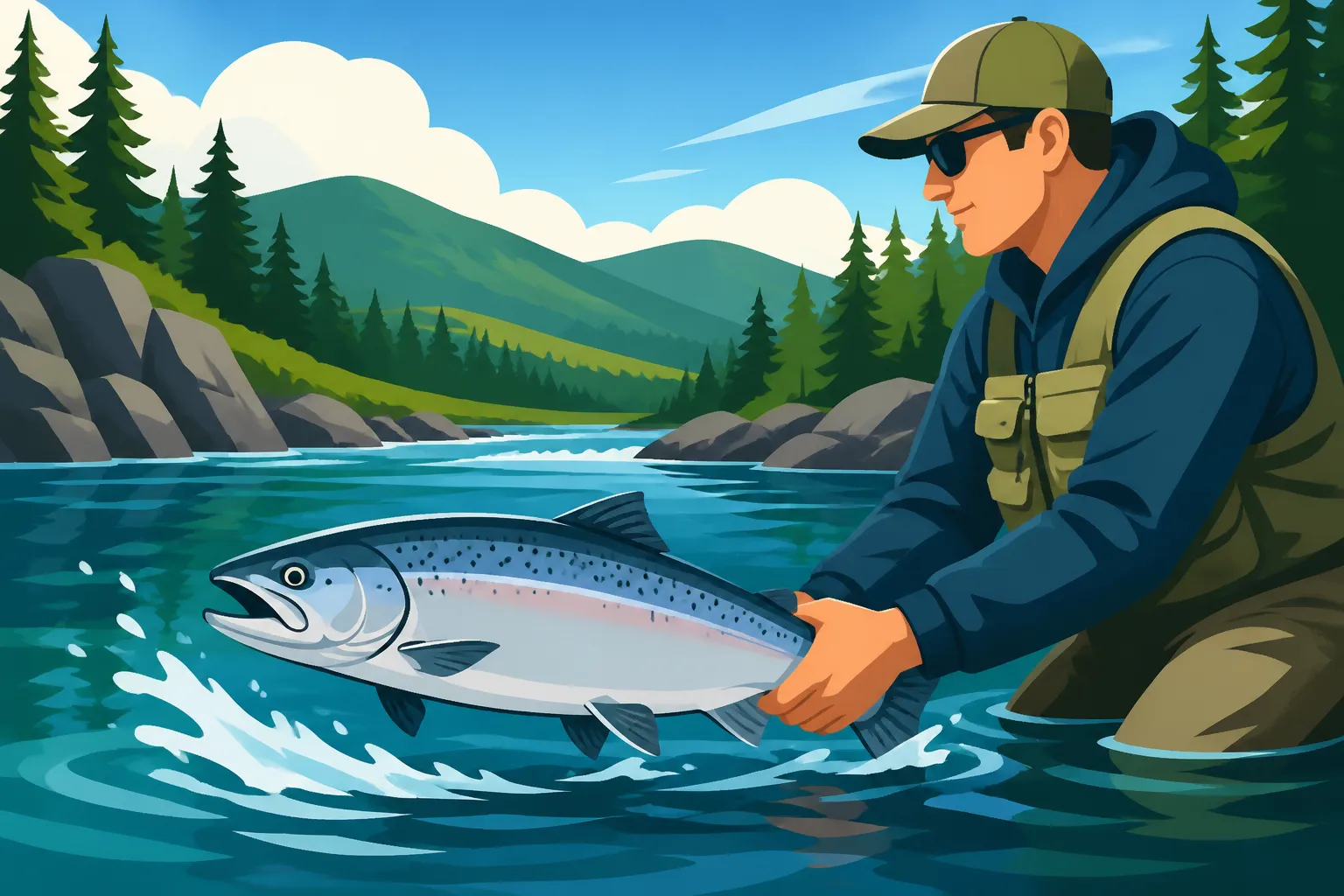
- Keep the Fish in the Water: Avoid removing the fish from the water entirely. If you need a photo, do it quickly with the fish partially submerged. Air exposure can cause severe damage to gills and internal organs.
- Wet Your Hands: Always wet your hands before touching a salmon to protect its delicate slime coat, which is crucial for disease prevention.
- Use Barbless Hooks: This is often a regulation for Atlantic salmon and always a best practice. Barbless hooks minimize tissue damage and make hook removal much easier and faster.
- Gentle Hook Removal: Use hemostats or pliers to quickly and gently remove the hook. If the fish is deeply hooked and cannot be removed without causing further harm, cut the line as close to the hook as possible.
- Revive the Fish: Hold the fish gently in the current, supporting it until it regains its strength and can swim away on its own. Watch for strong tail movements and its ability to maintain equilibrium before letting it go. Never push it forward or backward against the current.
Adhering to these guidelines is not just about legality; it's about ethical angling and safeguarding the future of these magnificent fish. Understanding Maine Fishing Regulations Explained will give you a deeper insight into all the rules for fishing this precious species.
Seasonal Considerations and Water Levels
The timing of your trip to the Penobscot is crucial. Atlantic salmon begin their upstream migration in late spring, typically from May into June, and continue through the summer. Early season can offer opportunities with fresh-run fish, while summer fishing often means targeting fish holding in cooler water. Fall can also be productive as salmon prepare for spawning. Water levels significantly impact where fish hold and how they behave. High water can spread fish out and make wading difficult, while low, clear water can make them skittish but concentrate them in deeper pools. Always check current river conditions before heading out. Local resources, online river gauges, and conversations with experienced anglers or guides can provide invaluable, up-to-the-minute information. For general rules, you'll always want to consult the Maine Fishing Laws for Beginners.
Planning Your Penobscot Salmon Adventure
A successful catch-and-release Atlantic salmon trip on the Penobscot isn't just about showing up with a rod. It involves planning, understanding local nuances, and sometimes, seeking expert assistance.
Access Points and Local Resources
While the Penobscot River is large, public access for fishing can be found at various points along its length, particularly in the sections impacted by the dam removals. Near the former Veazie Dam site, there are areas where anglers can park and access the riverbank. Further upstream, opportunities exist around Milford, often near the fish lift facilities. It’s always wise to consult local maps, the Maine Department of Inland Fisheries and Wildlife (MDIFW) website, or inquire at local fly shops in towns like Old Town or Orono for specific access points and any current restrictions. These shops are goldmines of information, offering real-time updates on water conditions, fly patterns, and fish activity. Don't forget that a valid Maine Fishing License Guide is absolutely essential before you even think about casting a line. You can easily find out Where to Buy a Maine Fishing License online or in person.
Considering a Guided Experience
For a species as elusive and regulated as the Atlantic salmon, especially in a system as dynamic as the Penobscot, hiring a Registered Maine Guide can dramatically increase your chances of success and ensure you're fishing ethically and legally. These guides possess intimate knowledge of the river, understanding subtle current breaks, hidden pools, and the behavior of migrating salmon. They can provide expert instruction on casting and presentation, help with fly selection (perhaps even teach you to How to Match the Hatch on Maine Rivers), and most importantly, ensure the safest catch-and-release practices are followed. This isn't just for beginners; even experienced anglers can benefit from a guide's local expertise. Platforms like FishingBooker can help you find reputable Maine fishing guides who specialize in fly fishing for Atlantic salmon on the Penobscot. While the investment might seem significant, the insights gained and the memories made are often priceless. If you're planning a trip to a new area, using a service like FishingBooker to scout out potential guides and get an idea of availability can streamline your planning process immensely. A guide can also help you understand the nuances of Maine Fish Bag Limits Guide even for catch and release species where special rules might apply.
Here’s a quick overview of some key areas for your Penobscot salmon quest:
| Location / Pool Name | Primary Access/Features | Best Season | Key Considerations for C&R Salmon |
|---|---|---|---|
| Former Veazie Dam Site | Public access points, reformed runs and pools | Late Spring – Early Summer | Dynamic water, good resting spots for fresh-run fish |
| Below Milford Fish Lift | Public access near the fish lift | Late Spring – Mid-Summer | High oxygenation, fish congregate before passage |
| Confluence w/ Cold Tributaries | Varies by tributary (e.g., Piscataquis mouth) | Mid-Summer – Early Fall | Thermal refugia, fish seeking cooler water |
| Deeper Mid-River Pools | Accessible via boat or specific shore points | All Seasons | Holding water for resting and staging fish |
Remember, fishing for Atlantic salmon on the Penobscot is a privilege, and strict adherence to regulations and catch-and-release ethics ensures this incredible resource remains viable for generations to come. Planning your trip, whether solo or with a guide from FishingBooker, with this mindset will lead to a truly memorable and impactful experience.
Disclaimer
Please remember that fishing regulations, conditions, and fish populations can change. Always consult the latest Maine Department of Inland Fisheries and Wildlife (MDIFW) regulations before planning your trip to ensure compliance with all current laws and to protect Maine's precious natural resources.