How to Find Cold Water Pockets for Trout
There’s nothing quite as frustrating as heading out to your favorite Maine trout stream or lake, only to find the fish have seemingly vanished with the summer sun. You cast your lines, try your usual spots, and come up empty, wondering if the trout packed their bags and moved to cooler climes. The truth is, they kind of did – they moved to cooler waters. Finding those elusive cold water pockets where trout retreat when temperatures rise is the key to successful summer fishing here in Maine, and this guide will help you uncover their secrets.
Why Cold Water is Crucial for Maine Trout
Understanding why trout seek out cold water is the first step to figuring out where to find it. Trout, particularly species like our native brook trout and the beautiful landlocked salmon, are cold-blooded creatures. This means their body temperature is dictated by their environment. Unlike us, they can’t just sweat when they get hot or shiver to warm up. Their metabolism, oxygen intake, and overall well-being are incredibly sensitive to water temperature.
When water temperatures climb above their preferred range – typically below 65 degrees Fahrenheit for brook trout and often even cooler for salmon and lake trout (togue) – they start to get stressed. Their oxygen levels drop, their metabolism speeds up uncomfortably, and they become lethargic and vulnerable. It’s not just about comfort; it’s about survival. They need that cool, oxygen-rich water to thrive, feed, and stay healthy. This is why you'll often hear us talking about the importance of Reading Water Temperature for Maine Trout. They aren't just being picky; they're trying to stay alive.
In the height of summer, those surface waters that get warmed by the sun can become real deathtraps for trout. They'll actively seek out areas where the water remains consistently cool, even if it means sacrificing easy access to food or cover for a while. Knowing this fundamental need is what drives our search for those vital cold water havens.
The Science Behind Temperature Stratification
Ever noticed how a lake can feel warm on top but icy cold when you dive down deep? That’s temperature stratification at play, a natural phenomenon that creates those critical cold water pockets. In warmer months, bodies of water like lakes and even deeper river sections divide into distinct layers based on temperature and density.
The uppermost layer, called the epilimnion, is where the sun's rays penetrate and warm the water. This is the layer that feels great for swimming, but it's often too warm for trout. Below that lies the thermocline, a transitional zone where the temperature drops rapidly with increasing depth. This is a prime hunting ground because it can offer a perfect balance of cooler water and still enough light or oxygen for trout to be active. Finally, at the bottom is the hypolimnion, the coldest, densest layer, which remains largely unaffected by surface heat. This deep, cool water is often a sanctuary for species like lake trout (togue) when surface temps become intolerable. Understanding this layering, especially in our larger bodies of water like Moosehead Lake or Sebago Lake, can be a game-changer for your fishing strategy.
Key Locations Where Trout Seek Refuge
Trout aren't just going to randomly find cold water; they'll gravitate towards specific features in their environment that naturally provide it. If you know what to look for, you can narrow down your search considerably. These locations are their summer sanctuaries, their relief from the heat.
Spring-Fed Inflows and Seeps
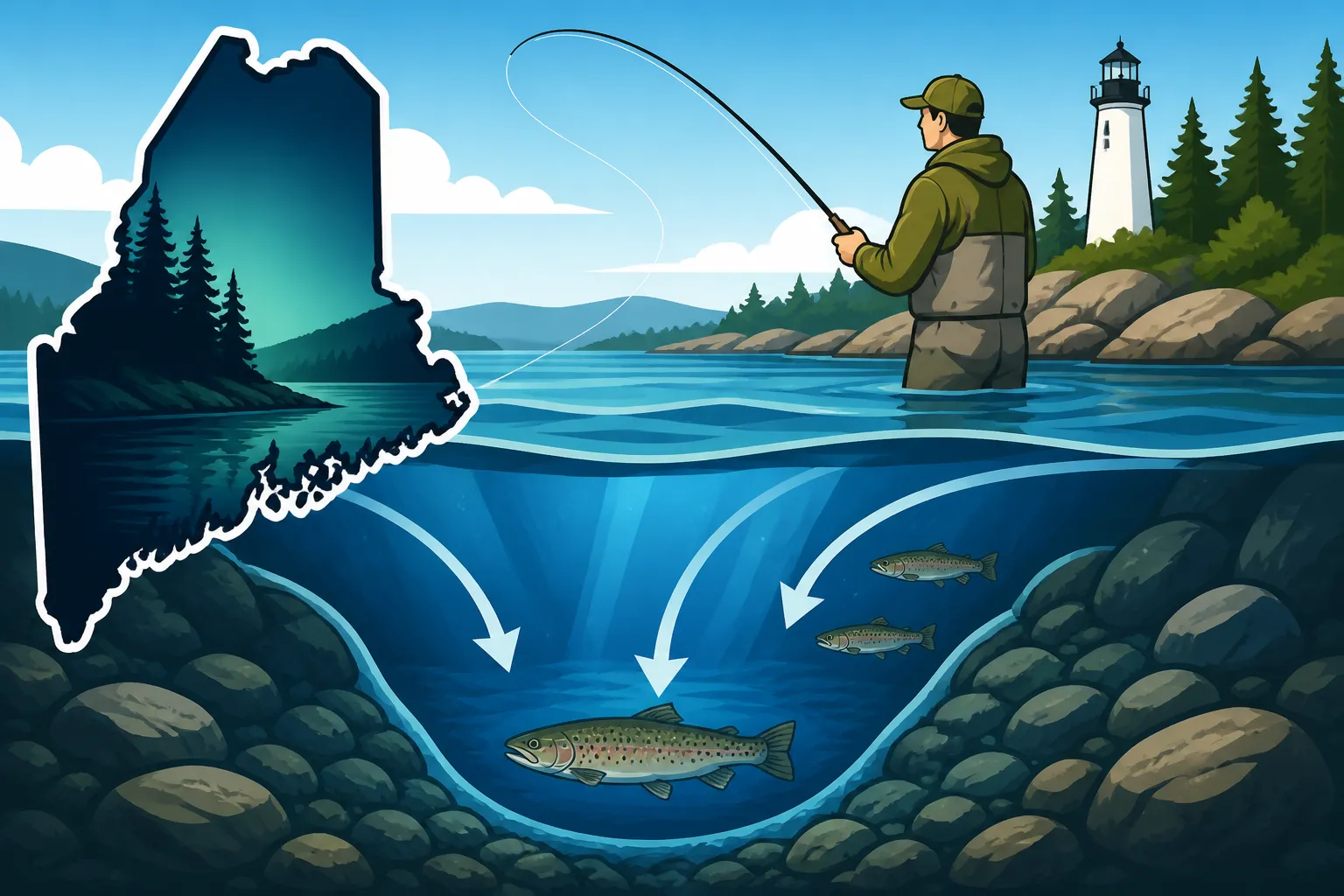
One of the most reliable sources of cold water, especially in streams and rivers, comes from springs and groundwater seeps. Maine has an abundance of pristine springs bubbling up from underground, and this water is consistently cold year-round. When these springs flow into a river or a lake, they create distinct plumes or pockets of much cooler water.
Imagine a small feeder stream, barely a trickle, entering a larger river. Even if the river itself is warm, that feeder stream can be a pipeline of cold, oxygenated water, creating a thermal refuge for trout. Similarly, in lakes, you might find springs bubbling up from the bottom or along the shore, creating small, localized areas of cold water. These spots are goldmines, often holding surprising numbers of fish even on the hottest days. Look for lush green vegetation around the edges of a lake that seems to thrive even when everything else is dry, as this can sometimes indicate an underground spring. You can often see these inflows on a topographical map or by simply observing the landscape when you're exploring new Best Maine Rivers for Fishing.
Deep Water Areas and Structured Depths
In larger lakes and even some deep river pools, trout will retreat to the cool embrace of deeper waters. As we discussed with stratification, the bottom layers stay much colder than the surface. This means that if your favorite lake has a significant deep section, that's where the trout are likely hanging out.
But it’s not just about depth; it's about structure within that depth. Trout, especially our landlocked salmon and lake trout (togue), are still predators, and they need places to ambush prey, find cover, or hold comfortably. Look for underwater humps, submerged rock piles, sudden drop-offs, old river channels, or even sunken timber in those deeper zones. These structures create micro-environments within the cold water, offering ambush points and resting areas. Using your electronics to scout these areas is invaluable, and we'll dive into that more later. These deeper areas are often where you'll find the best opportunities for Trolling Techniques for Maine Lakes targeting these species.
Fast-Moving Water and Oxygenated Rapids
While less common for pockets of cold water, fast-moving water in rivers and streams is inherently more oxygenated and tends to stay cooler than slow-moving sections or stagnant pools. The constant agitation and flow prevent the water from heating up as quickly, and the increased oxygen is vital for trout metabolism.
Rapids, riffles, and cascades act like natural air conditioners and oxygenators for a stream. Even if the ambient air temperature is high, the churning water can create cooler micro-climates. Trout will often hold in the deeper pools immediately downstream from a set of rapids, or in the seams and eddies alongside the main current. The faster flow brings food to them, and the cooler, oxygenated water keeps them happy. This is especially true for stream-dwelling brook trout, which thrive in these conditions. This is often where you'll be fly fishing, making your fly selection for Fly Selection for Brook Trout even more critical to tempt them out.
Tools and Techniques for Pinpointing Cold Water
Now that we know why and where trout seek cold water, let’s talk about the practical "how-to." You don't have to guess or rely solely on luck. There are several tools and techniques that can dramatically increase your chances of finding those sweet spots.
The Trusty Thermometer: Your First Line of Defense
This might sound overly simple, but a good quality water thermometer is perhaps your most essential tool for finding cold water pockets. You can't see temperature, but you can measure it. Carry a thermometer, whether it's a simple, inexpensive one you bought from Amazon or a more sophisticated digital model.
When you're out on the water, don't be afraid to take frequent temperature readings, especially when you encounter any of the potential cold water spots mentioned above. Cast it into a feeder stream, drop it down a few feet in a suspected spring area, or even troll it at different depths if you’re in a boat. A sudden drop of even a few degrees can indicate you've found a promising zone. Comparing surface temperatures to readings at 5, 10, or 20 feet down can quickly reveal the thermocline. A good digital thermometer will give you quick, accurate readings, allowing you to cover more water efficiently.
| Water Temperature (Fahrenheit) | Trout Activity Level | Recommended Action |
|---|---|---|
| Below 50°F | Very Active | Excellent fishing; target all depths. |
| 50-60°F | Highly Active | Peak feeding; focus on structure and current. |
| 60-65°F | Active but Seeking Cool | Fish deeper or near cold inflows. |
| 65-70°F | Stressed/Lethargic | Seek deep, cold pockets; limit fight time. |
| Above 70°F | Severe Stress | Avoid targeting trout; catch & release unlikely to succeed. |
This table provides general guidelines. Specific species may have slightly different optimal ranges.
Electronics: Fish Finders and Mapping
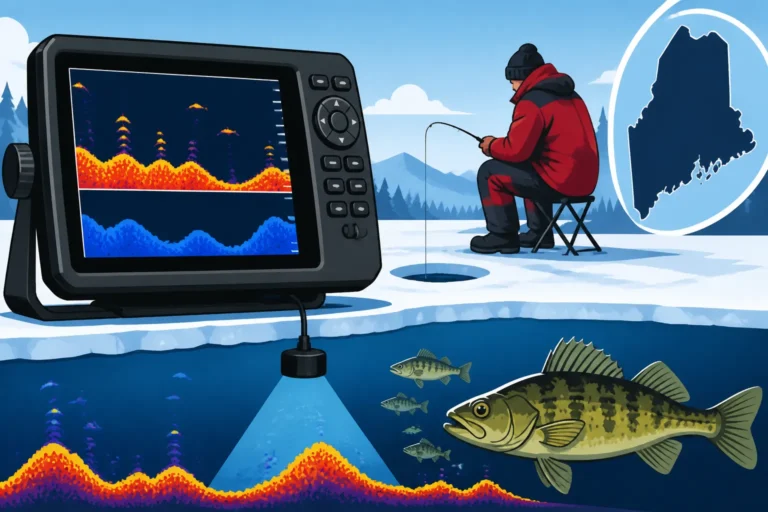
For boat anglers, modern marine electronics are incredibly powerful allies in the quest for cold water. A good fish finder or sonar unit, especially one with temperature sensors and detailed mapping capabilities, can be an absolute game-changer. These devices don't just show you fish; they can reveal the underwater world that creates those cold water havens.
Your fish finder can often display surface water temperature, and some advanced units can even show you temperature at different depths, effectively mapping out the thermocline in real-time. Look for contour lines on your GPS maps to identify drop-offs, humps, and submerged creek beds – all potential holders of colder water. Many mapping systems will also show you the locations of underwater springs if they are significant enough to be charted. When Reading a Fish Finder on Maine Lakes, pay attention not only to fish arches but also to depth contours and any temperature readings your unit provides. Some units, particularly higher-end models from brands like Garmin or Humminbird, offer side-imaging and down-imaging, which can help you pinpoint those subtle structural elements in deep water that hold fish.
Reading the Landscape and Local Knowledge
Sometimes, the best tools aren't electronic at all. Learning to "read" the landscape around a body of water can tell you a lot about where cold water might be.
- Topography: Look for steep hillsides or mountainsides directly adjacent to a lake or river. These can indicate deeper water nearby and also suggest areas where groundwater might be flowing into the system. Valleys and ravines often channel small streams, which could be cold inflows.
- Vegetation: As mentioned before, unusually lush or different types of vegetation along a lake shore can sometimes signal a spring.
- Mouths of Tributaries: Always pay attention to where smaller streams or brooks enter a larger body of water. These are prime spots for cold water infusions. Even if the stream looks small, it can make a big difference.
Beyond your own observations, never underestimate the power of local knowledge. Talk to bait shop owners, other anglers, or even people who live on the lake. They've spent years observing the water and often have invaluable insights into consistent cold water spots, historical spring locations, or traditional deep-water havens. This is especially true for uncovering Best Fishing Lakes in Maine or specific local nuances like Maine North Zone vs South Zone Fishing Rules that might impact water temperatures.
Strategies for Fishing Cold Water Pockets
Once you've identified potential cold water pockets, you need to adapt your fishing strategy to effectively target the trout holding there. They're often in a different mood and location than they would be in cooler conditions.
Go Deep, Go Slow
When trout are in cold water pockets, especially in lakes, they are often deeper than you might typically target them. This means adjusting your presentation to get your bait or lure down to their level.
- Weighted Lures and Baits: Use heavier jigs, spoons, or sinkers to get your offering down quickly.
- Trolling: This is a fantastic technique for covering deep water. Use lead core line, downriggers, or even simply heavier weights to get your lure into the thermocline or deep hypolimnion. Experiment with different depths until you find where the fish are holding. When trolling, your speed should generally be slower in colder water, as trout are often less active and need more time to react. If you're targeting landlocked salmon, remember that How Deep Should You Troll for Salmon in Summer? will be a critical question.
- Jigging: For suspended fish in deep water or those holding tight to structure, vertical jigging with spoons or soft plastics can be incredibly effective. Drop your jig to the bottom or to the depth where you're marking fish on your sonar, and work it with subtle lifts and drops.
Remember, trout in these cold water refuges might be conserving energy, so a slower, more deliberate retrieve is often more effective than an aggressive, fast-paced one.
Focus on the Edges and Transitions
While the cold water pocket itself is key, trout often position themselves on the edges of these pockets. Think of it as standing in an air-conditioned doorway: they can quickly dart into the warmer water to feed if an opportunity arises, but they have the security of knowing cold water is immediately available for retreat.
Look for the transition zones where the cold water meets warmer water. This could be where a spring-fed stream flows into a river, creating a seam of different temperatures. Or, in a lake, it might be the upper edge of the thermocline where the temperature starts to drop significantly, or along a deep drop-off that leads into the coldest depths. These transition zones are often ambush points where trout can intercept baitfish moving between different temperature layers. Using a sensitive rod and line can sometimes help you feel these subtle temperature changes in the water as you retrieve your lure.
Think About Time of Day and Season
While the article focuses on finding cold water pockets, it's also important to remember that the need for these pockets is most pronounced during certain times. In Maine, the heart of summer (July and August) is when trout are most reliant on these deep, cool havens. During these months, surface temperatures can easily climb too high, making those cold water retreats essential.
Early mornings, late evenings, and even night fishing can sometimes offer a brief reprieve from the heat, allowing trout to venture into shallower, warmer waters to feed before retreating again. If you're specifically targeting brook trout, understanding Best Time of Year to Catch Brook Trout in Maine means knowing that spring and fall can see them much more active across a wider range of habitats, as the water is cool everywhere. However, when the sun is high and the air is hot, those cold water pockets become critical, making mid-day fishing challenging outside of these specific zones.
By combining the knowledge of where to look, what tools to use, and how to adapt your techniques, you'll be well on your way to consistently finding and catching trout, even when the summer sun is beating down on our beautiful Maine waters. Tight lines!
Disclaimer
This article is for general informational purposes only and does not constitute professional advice. Laws, prices and regulations vary by location and change over time. Consult a qualified professional for guidance on your specific situation.