How to Fish for Togue Through the Ice
The frozen expanse of a Maine lake in winter can feel intimidating, especially when you're dreaming of hooking into a powerful togue beneath the ice. It's a common frustration for anglers to invest time and gear, only to come up short because they're not quite sure how to effectively target these deep-water dwelling fish. This guide will walk you through the precise strategies, essential equipment, and critical safety considerations you need to confidently and successfully fish for togue through the ice, turning those winter fishing dreams into a rewarding reality.
Understanding Togue Behavior Under the Ice
Catching togue, what many Mainers affectionately call lake trout, through the ice isn't just about drilling a hole and dropping a line. It's about understanding their habits and preferences when the water turns to a hard, cold lid. These fish are creatures of habit, and knowing where they tend to hold and what tempts them can drastically improve your odds.
Where Togue Go in Winter
As the surface of a lake freezes over, togue don't just disappear. Instead, they retreat to areas that offer them comfort, food, and stability. Think deep. While you might occasionally find them shallower, especially during low-light conditions or immediately after ice-in, their primary haunts are usually the deeper basins of large lakes. They prefer the colder, more stable water temperatures found at depth, typically around 40 to 50 feet, but they can be found even deeper in lakes like Moosehead Lake or Sebago Lake.
Beyond sheer depth, look for underwater structures. Togue are ambush predators, even in winter, and they love to patrol the edges of drop-offs, submerged humps, and reefs. These features act as natural highways and feeding grounds. Imagine an underwater island, a long point that extends far into the lake, or a sharp drop-off near a shallower flat—these are prime locations. Fish will often hold just off the structure, waiting for baitfish to swim by. If you can find these transition zones and understand the contours of the lake bottom, you're halfway to finding the fish.
Togue's Winter Diet and Activity
While togue are certainly less active in the colder water compared to their summer counterparts, they still need to eat. Their metabolism slows down, meaning they might not strike with the same aggressive abandon, but they remain opportunistic predators. Their winter diet is primarily made up of smelt, shiners, and other small baitfish that inhabit the same cold, deep environments. This is why understanding the baitfish presence in a lake is so crucial. If you can locate schools of baitfish using your electronics, you're likely to find togue close by.
During the deep winter, togue can be surprisingly subtle biters. You might not get a hard, rod-bending strike. Often, it's just a slight twitch of the line or a gentle bob of your tip-up flag. This is why patience and paying close attention to your gear are paramount. When they do decide to feed, it's often a slow, deliberate pursuit. Presenting your bait in a way that mimics an easy meal for a less-than-enthusiastic predator is key.
Essential Gear for Ice Fishing Togue
Having the right tools for the job can make all the difference, especially when you're battling the elements and a powerful fish like a togue through a small hole in the ice. Don't skimp on your gear; it's an investment in your success and comfort.
Choosing the Right Rods and Reels
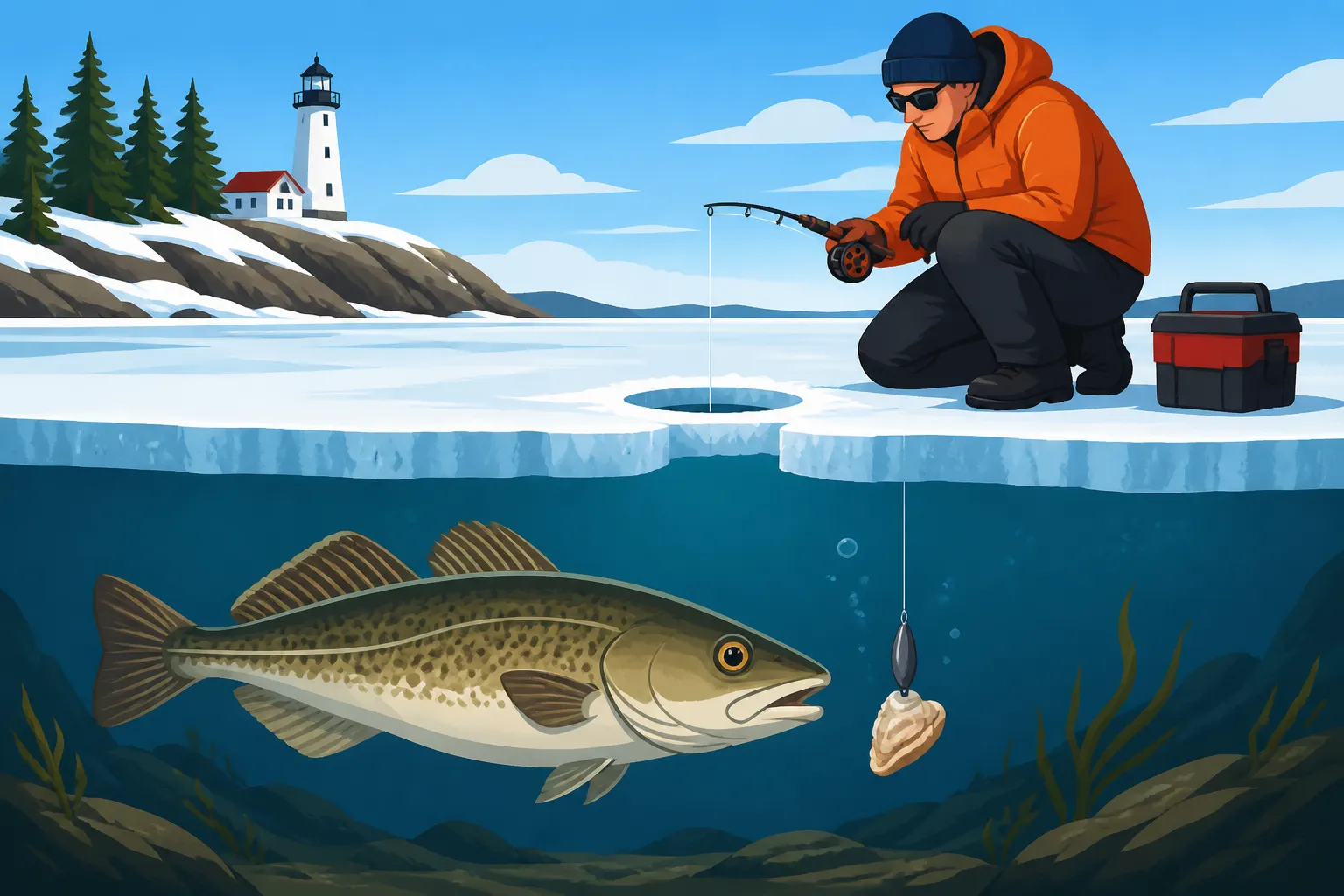
For active jigging for togue, you'll want a sturdy, medium-heavy to heavy ice fishing rod with a sensitive tip. This combination allows you to feel those subtle bites while having the backbone to handle a powerful fish. A rod length of 28 to 36 inches is usually ideal for working inside an ice shack or standing over a hole. Pair this with a reliable spinning reel, spooled with a good quality braided line of 10-20 lb test. The no-stretch nature of braid gives you excellent sensitivity, which is vital in deep water. Always add a fluorocarbon leader of 8-15 lb test, as it's nearly invisible underwater and helps prevent line breakage from sharp ice edges or a togue's abrasive mouth. If you need some ideas, a quick search on Amazon for "heavy ice fishing rod combos" will show you plenty of suitable options.
When it comes to tip-ups, which are indispensable for togue fishing, robust models are a must. You'll be setting these out, sometimes in harsh conditions, so durability is key. Spool your tip-ups with 20-30 lb test braided Dacron or nylon line, then attach a 10-20 foot section of 10-15 lb fluorocarbon leader. The heavy backing line allows for easy handling in cold weather and keeps the fish from spooling you, while the fluorocarbon leader provides stealth near the bait. Remember, according to the official Maine Ice Fishing Line Limits and other Maine Fishing Regulations Explained, you're limited to a certain number of lines, so make each one count!
Baits and Lures That Attract Togue
Togue are primarily piscivorous, meaning they eat other fish, so your bait selection should reflect this. Live bait is often king when it comes to tip-ups. Smelt are arguably the best choice if you can get them, as they are a natural part of a togue's diet in many Maine lakes. Shiners, dace, or even small suckers can also be highly effective. The key is to present them lively and naturally. Hook your live bait through the back, just behind the dorsal fin, being careful not to hit the spine, to allow for maximum movement.
For active jigging, a variety of lures can entice togue. Jigging spoons like the classic Swedish Pimple, Acme Kastmaster, or a Crippled Herring in silver, gold, or blue/silver patterns are excellent choices. These lures imitate fleeing or injured baitfish. Drop them to the bottom, reel up a few feet, and then impart a lift-fall action, pausing between each jig to allow the lure to flutter down. Tube jigs, especially in white or pearl colors, tipped with a piece of cut bait (like a smelt head or belly strip), can also be incredibly effective. Sometimes, a slow, methodical presentation with a scented soft plastic bait, like a Berkley Gulp! Minnow, on a lead head jig can trigger strikes from hesitant fish. Check out Best Bait for Maine Ice Fishing for more specifics on what works.
| Baits/Lures Type | Best Use Case | Presentation Tip |
|---|---|---|
| Live Smelt | Tip-ups, Finicky fish | Hook through back, just behind dorsal fin. Keep lively. |
| Jigging Spoons | Active jigging | Aggressive lift-fall, long pauses. Silver, gold, blue patterns. |
| Tube Jigs | Active jigging, Subtle | Tip with cut bait for scent. Slow, methodical hops. |
| Shiners/Dace | Tip-ups, Alternative bait | Similar to smelt, ensure they are active. |
| Soft Plastics | Active jigging, Scent | Scented plastics (e.g., Gulp!) on a jig head for slower presentations. |
Proven Techniques for Ice Fishing Togue
Once you have your gear and understand togue, it's time to put it all together on the ice. Success often comes down to a combination of strategic setup and active engagement.
Setting Up Your Tip-Ups for Success
Tip-ups are a cornerstone of togue ice fishing, allowing you to cover a wider area than a single jigging rod. When you're spreading out your lines, think about the underwater contours you identified earlier. Place some tip-ups directly on top of humps or along the edges of drop-offs, and others in the slightly deeper water nearby. A good strategy is to set a few at varying depths if you're unsure where the fish are holding, then adjust once you start getting flags. Typically, you'll want your live bait suspended anywhere from 5 to 15 feet off the bottom, but sometimes just a couple of feet off structure can be the ticket.
Ensure your bait is presented naturally. Use just enough weight (a small split shot or two) to get your bait down and keep it from swimming into the ice, but not so much that it restricts movement. The length of your leader is also crucial; a longer leader (5-10 feet) allows the bait to swim more freely and appear more natural to a wary togue. Don't forget to mark your holes with some sort of indicator if you're spreading them wide, especially on a busy lake. This helps you quickly identify which flag went up and saves precious seconds when a fish is on the line. For a complete walkthrough, refer to Setting Up Tip-Ups for Ice Fishing.
Active Jigging Strategies for Togue
While tip-ups passively wait for a bite, active jigging gives you direct control and can often entice strikes from fish that might ignore stationary bait. This is where your sonar comes into play. Drill a hole, drop your transducer, and watch your screen. Look for the bottom contour, any suspended baitfish, and most importantly, arcs or marks that indicate larger fish. When you see a fish, drop your jig down to their level or just above them.
The key to successful jigging is varying your retrieve. Start with an aggressive lift-fall, lifting your rod tip sharply and then letting the lure flutter down on a semi-slack line. Sometimes this triggers a reactionary strike. If that doesn't work, try a slower, more subtle approach: small twitches, short lifts, and longer pauses. Togue can be finicky. The pause is often when they hit, so be ready. Pay close attention to your line; a slight "tick" or a sudden slackening can indicate a bite. Many anglers find the information in Jigging Techniques for Togue incredibly helpful for refining their approach. Don't be afraid to experiment with different lure colors and sizes until you find what the togue prefer on that particular day.
Locating Togue Hotspots
Finding togue isn't always easy, especially on vast Maine lakes. This is where modern technology shines. A portable fish finder or flasher is an invaluable tool for ice fishing. As you drill holes, drop your transducer in and quickly scan the water column. You're looking for several things: the depth, the bottom composition (harder bottoms are often better), and any suspended marks indicating baitfish or larger game fish. The ability to "see" your lure relative to the fish is a game-changer. You can adjust your presentation in real-time to entice a bite. To learn more about utilizing these tools, check out guides like How to Read a Fish Finder for Ice Fishing.
Beyond electronics, traditional knowledge and scouting are still crucial. Talk to local bait shop owners, consult fishing forums, or check out local angling reports. They often provide insights into which specific lakes or even areas within lakes are producing fish. For instance, specific coves or deep holes in lakes such as Moosehead or Rangeley often hold good numbers of togue. Pay attention to structure and depth. Togue like clean, cold water, so focus your efforts on those areas. If you're using an ice auger, a good quality one, perhaps a Vexilar or Eskimo, which you can find on Amazon, makes drilling multiple holes for scouting much easier, saving you valuable time and energy.
Ice Safety and Best Practices
While the thrill of the catch is exciting, nothing is more important than ensuring your safety on the ice. Winter in Maine can be unforgiving, and conditions can change rapidly. Always prioritize safety over everything else.
Checking Ice Thickness and Conditions
Before you even step foot on the ice, you need to be absolutely sure it's safe. The general rule of thumb is a minimum of 4 inches of clear, solid ice for individual foot travel. For snowmobiles or ATVs, you need at least 5-7 inches, and for light vehicles, 8-12 inches. However, these are just guidelines. Ice thickness can vary dramatically across a single lake, especially near inlets, outlets, pressure ridges, or areas with current. Always check the ice as you go, especially on unknown waters. A spud bar or an ice auger is your best friend for this. Chop or drill a hole every few steps to confirm the thickness. For more detailed information on safety guidelines, read How Thick Should Ice Be Before Fishing On It?.
Beyond thickness, consider the quality of the ice. Clear, black ice is generally the strongest. Slushy, milky, or "honeycomb" ice, especially later in the season, can be much weaker, even if it appears thick. Always tell someone where you're going and when you expect to return. Carry essential safety gear: ice picks (worn around your neck for quick access), a throw rope, and a whistle. Dressing in layers, with waterproof outer shells, is also critical to prevent hypothermia if you do get wet.
Catch and Release vs. Keeping Togue
Knowing the regulations for the specific body of water you're fishing is non-negotiable. Maine Fishing Regulations Explained and specifically Togue Size and Bag Limits in Maine detail minimum lengths, slot limits, and daily bag limits, which can vary greatly from one lake to another. Always consult the current Maine fishing law book before heading out.
When you do decide to keep a togue, handle it quickly and ethically. If you're practicing catch and release, do so with care. Minimize the fish's time out of water, use de-hooking tools if necessary, and support the fish horizontally when unhooking. If the fish is bleeding or appears distressed, it's often best to keep it within legal limits. Releasing a fish properly ensures it has the best chance of survival and helps maintain healthy fish populations for future generations of anglers.
Fishing for togue through the ice in Maine is a challenging but incredibly rewarding pursuit. By understanding their winter habits, equipping yourself with the right gear, employing proven techniques, and always prioritizing safety, you'll be well on your way to enjoying some of Maine's most exhilarating winter fishing experiences. Good luck out there, and stay warm!
Disclaimer
Please remember that fishing regulations, ice conditions, and safety recommendations can change. Always consult the latest Maine Department of Inland Fisheries and Wildlife (MDIFW) regulations and local ice reports before heading out onto the ice. Safety is paramount, and your well-being should always be your top priority.