Maine Deep Sea Fishing Grounds Offshore
The vast, shimmering expanse of the Atlantic Ocean off the coast of Maine calls to many, but for those dreaming of truly epic catches, the sheer enormity of "offshore" can feel intimidating. Where do you even begin to look for the fish that don't just hug the coastline? This guide is designed to demystify Maine's deep sea fishing grounds, taking you beyond the sight of land and into the productive waters where the real giants roam.
Understanding Maine's Offshore Marine Environment
When we talk about "offshore" in Maine, we're not just talking about being a mile or two from the beach. We're venturing into waters where the bottom drops away dramatically, where currents sweep in from the open ocean, and where the ecosystems support entirely different kinds of fish. This is a world away from casting a line into Casco Bay or even a short trip out from Boothbay Harbor. It requires different knowledge, different gear, and a whole lot more planning.
The Gulf of Maine's Unique Topography
The Gulf of Maine is a semi-enclosed sea that is part of the larger Atlantic Ocean, stretching from Cape Cod to Nova Scotia. Its underwater topography is incredibly complex, featuring deep basins, shallow banks, and rocky ledges left over from glacial activity. These features create upwellings and current patterns that concentrate baitfish, which in turn attract larger predatory species. Think of it like an underwater mountain range with fertile valleys – perfect hunting grounds for big fish. Understanding this structure is paramount to finding success. You're looking for underwater canyons, seamounts, and ledges where fish congregate. These aren't just random spots; they are specific, recognized areas often named by generations of fishermen.
Currents, Temperature, and Marine Life Dynamics
Maine's offshore waters are heavily influenced by the Labrador Current, which brings cold, nutrient-rich water down from the north, and occasionally by the warmer Gulf Stream eddies that spin off from the south. This mix creates a highly productive environment. The temperature breaks where these currents meet are often hotspots for pelagic species like tuna, as they push baitfish together and create ideal feeding conditions. For groundfish, the cold, stable temperatures near the bottom of deep ledges and canyons provide a perfect habitat. Learning to read your electronics to identify these temperature changes, or even just keeping an eye on water color changes, can be a game-changer when you're miles offshore.
Key Deep Sea Species and Their Offshore Habitats
Stepping into the offshore realm means targeting species that simply aren't found in shallower, inshore waters. These fish are often larger, stronger, and offer an unparalleled fight, making deep sea fishing an unforgettable experience for many anglers. The thrill of hooking into something truly substantial, something that could be bigger than you are, is what draws people out to these distant grounds.
Giants of the Deep: Tuna and Sharks
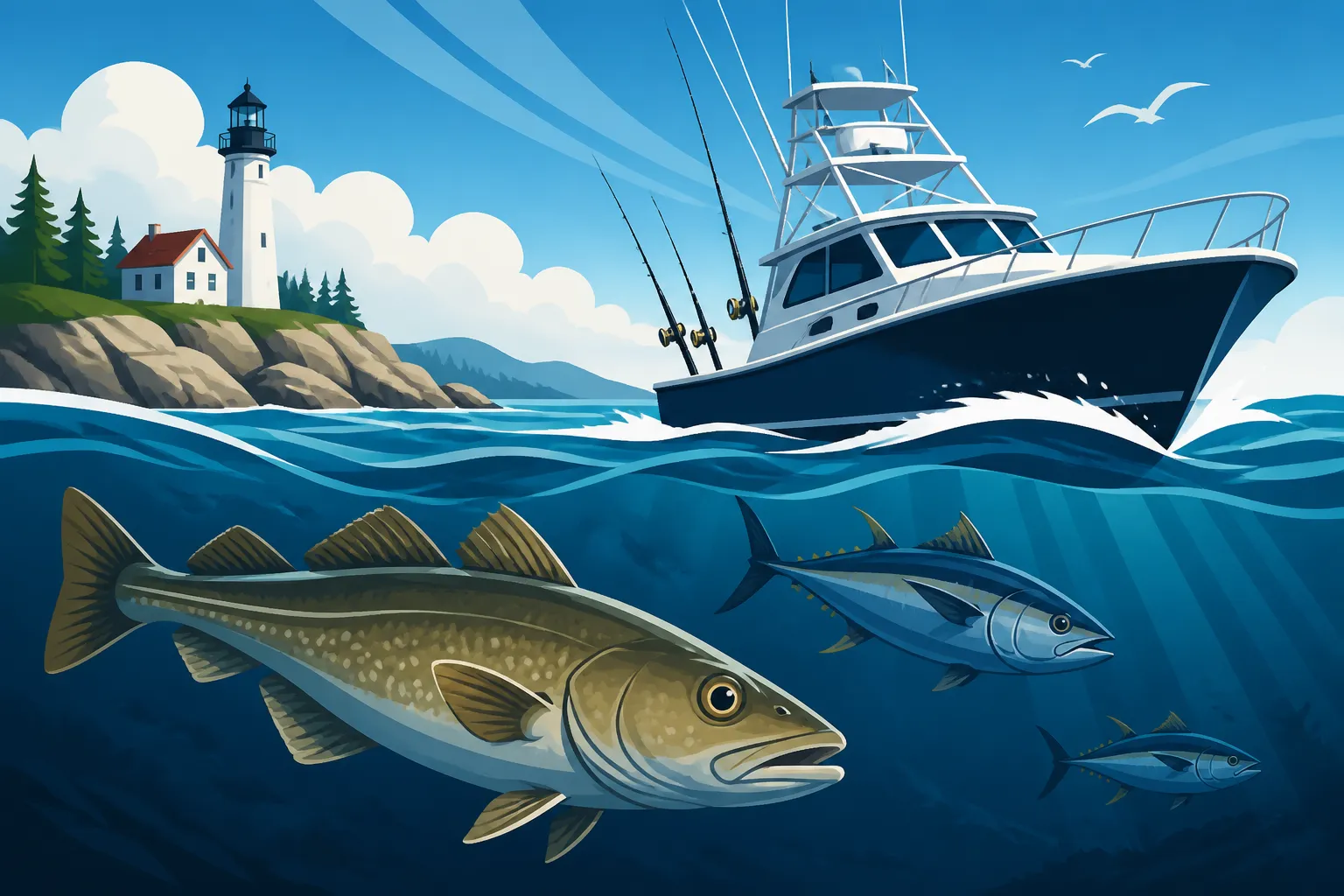
When most people think of deep sea fishing, they envision the mighty tuna. Maine is famous for its giant bluefin tuna, which migrate through these waters during the warmer months, feeding on mackerel, herring, and other baitfish. These incredible fish are found primarily over offshore banks and along temperature breaks, often many miles from shore. Areas like Platts Bank, Jeffreys Ledge, and the notoriously rich waters around the Northeast Canyons are prime hunting grounds. Trolling with large lures or natural baits like mackerel or even smaller tuna, or kite fishing, are common techniques. You might also encounter yellowfin tuna, though they are less common than bluefin in Maine's cooler waters, typically found further south or during unusually warm years.
Sharks are another formidable offshore species, offering a thrilling fight. Mako sharks, thresher sharks, and blue sharks are all common in Maine's deeper offshore waters. They often patrol the same areas as tuna, feeding on schooling fish and sometimes scavenging around fishing boats. Shark fishing typically involves chumming to attract them to the boat, then presenting large, baited hooks. Be prepared for an epic battle if you hook into a mako – they are incredibly strong and acrobatic.
Bottom Dwellers: Cod, Haddock, and Other Groundfish
While the pelagic species get a lot of glory, Maine's offshore grounds are also renowned for their abundant groundfish populations. These species, like Atlantic cod, haddock, pollock, and cusk, live on or near the seabed in deeper waters. They tend to congregate around structure – underwater ledges, rock piles, and wrecks. These spots, often 50 to 200 feet deep or more, hold vast quantities of fish. You might catch a cooler full of delicious haddock, known for their sweet, flaky white meat, or the larger, more powerful cod. Pollock, a fast-growing schooling fish, offers a great fight and can be found suspended over structure or closer to the surface. Fishing for groundfish typically involves bottom fishing with bait (clams, squid, or mackerel pieces) or jigging with heavy metal jigs. Knowing the specific depths and bottom contours where these fish prefer to hold is key to success. For those interested in deeper insights, checking out a guide on What Is Groundfishing and Does Maine Offer It? can provide invaluable context.
Navigating the Prime Offshore Fishing Grounds
Identifying productive deep sea fishing grounds off Maine involves a combination of local knowledge, advanced marine electronics, and understanding the behavior of target species. These aren't places you just stumble upon; they are well-known areas that attract both bait and predators consistently. Booking with a reputable charter, especially one found through services like FishingBooker, can be the easiest way to access these prime locations if you don't have your own offshore vessel.
Legendary Offshore Banks and Canyons
Maine boasts several legendary offshore fishing grounds, each with its own characteristics and target species.
- Jeffreys Ledge: Located southeast of Portland and Kennebunkport, Jeffreys Ledge is perhaps Maine's most famous offshore fishing spot. This vast submarine plateau rises from depths of over 300 feet to as shallow as 100 feet in some areas. It's a true ecosystem in itself, attracting massive schools of baitfish like herring and mackerel, which in turn draw in bluefin tuna, cod, haddock, pollock, and various shark species. The varied topography, with its ledges, humps, and rocky bottom, provides diverse habitats. Charters often spend full days here, targeting tuna by trolling or chunking, and then moving to specific spots for groundfish. It's a consistently productive area, making it a favorite for many experienced captains.
- Platts Bank: Further offshore and to the east of Jeffreys, Platts Bank is another highly productive area. It's deeper than Jeffreys in many spots but still offers significant relief from the surrounding seabed, creating similar conditions that attract pelagic and groundfish species. Tuna often move between Jeffreys and Platts, and it's a prime area for shark fishing as well. The journey to Platts Bank can be considerable, often requiring a larger, more capable vessel, but the rewards can be truly spectacular.
- Northeast Canyons and Seamounts: For the truly adventurous, the waters further offshore, towards the edge of the continental shelf, host the Northeast Canyons. These deep-sea trenches and adjacent seamounts are rich with marine life, supporting swordfish, bigeye tuna, yellowfin tuna, and even exotic species like mahi-mahi during warm water intrusions. This is expedition-level fishing, often involving overnight trips and requiring specialized gear and highly experienced crews. While not strictly "Maine" in the immediate sense, Maine-based charters do venture to these distant frontiers when conditions are right, representing the pinnacle of deep sea angling. Information on Best Tuna Fishing Grounds Off the Maine Coast often refers to these deeper, more distant waters.
Nearshore Offshore Transitions
Even closer to shore, but still considered offshore for many, are the transition zones where the bottom starts to drop significantly. These aren't the truly deep canyons, but they offer excellent fishing without the marathon run.
- Isles of Shoals (NH/ME Border): While technically straddling the New Hampshire border, the Isles of Shoals are easily accessible from southern Maine ports like Kittery and York. The waters around these islands offer excellent groundfishing for cod and pollock, especially on the deeper ledges and humps nearby. Striped bass are abundant closer to the islands, but venture a bit further out, and you're in groundfish territory.
- Offshore Ledges near Portland and Boothbay: Just a few miles offshore from major ports like Portland and Boothbay Harbor are numerous named and unnamed ledges and rockpiles. These areas, typically 5-15 miles out, can hold surprisingly good numbers of cod, haddock, and pollock, especially earlier in the season. These are fantastic options for shorter deep sea trips, providing a taste of offshore action without the full commitment of a run to Jeffreys or Platts. A good captain will know dozens of these smaller, productive spots. If you're wondering what you might catch closer to these major ports, articles like What Fish Do You Catch on a Portland Maine Charter? and What Fish Do You Catch on a Boothbay Harbor Charter? can give you a clearer picture.
Here's a quick look at some key characteristics of Maine's prominent offshore fishing grounds:
| Fishing Ground | Primary Target Species | Typical Depth Range (feet) | Distance from Shore (approx. miles) | Key Features | Best Season |
|---|---|---|---|---|---|
| Jeffreys Ledge | Bluefin Tuna, Cod, Haddock, Pollock, Mako/Blue Shark | 100 – 400 | 25 – 40 | Submarine plateau, ledges, humps, rocky bottom | Summer (Tuna), Spring/Fall (Groundfish) |
| Platts Bank | Bluefin Tuna, Cod, Haddock, Pollock, Thresher/Blue Shark | 200 – 600 | 40 – 60 | Deeper submarine bank, varied relief, strong currents | Summer (Tuna), Spring/Fall (Groundfish) |
| Northeast Canyons | Bluefin Tuna, Bigeye Tuna, Swordfish, Mahi-Mahi, Billfish | 1000+ | 80+ | Deep-sea canyons, seamounts, continental shelf edge | Late Summer/Early Fall (Warm water species) |
| Offshore Ledges (Portland/Boothbay) | Cod, Haddock, Pollock | 50 – 200 | 5 – 15 | Localized rockpiles, wrecks, smaller ledges | Spring, Summer, Fall (Year-round for some areas) |
| Isles of Shoals Vicinity | Cod, Pollock (also Striped Bass closer to islands) | 40 – 150 | 6 – 10 | Rocky ledges, island structure | Spring, Summer, Fall |
Essential Gear and Techniques for Offshore Success
Deep sea fishing isn't just a bigger version of freshwater angling. It demands specialized gear and techniques designed to handle powerful fish, deep water, and the unpredictable nature of the open ocean. Rigs, rods, and reels need to be robust and reliable.
Heavy-Duty Rods, Reels, and Line
For tuna and large sharks, you're looking at stand-up offshore rods rated for 50-80 lb or even 130 lb class lines. These are stout rods with heavy-duty roller guides or similar to handle immense pressure. Reels will be large conventional models, often two-speed, filled with braided line of 80 lbs test or more, backed by a significant amount of monofilament topshot for abrasion resistance and stretch. Brands like Penn, Shimano, and Accurate are popular choices among serious offshore anglers. For groundfish, while still heavy-duty compared to freshwater gear, you can get away with slightly lighter conventional setups, often 30-50 lb class rods and reels, spooled with 50-80 lb braid for maximum sensitivity and lifting power from the deep. Fluorocarbon leaders are essential for both, providing invisibility and abrasion resistance against sharp teeth or rocky bottom.
Specialized Rigs and Baits
The type of rig depends heavily on the target species.
- Tuna: For bluefin, trolling involves spreader bars, daisy chains, and large single lures like Green Machines or cedar plugs. Live bait such as mackerel, herring, or even small bluefish are often bridled and fished from kites or balloons, or simply drifted with chunked bait. Chumming is also a common tactic for attracting tuna to a specific area.
- Sharks: Large chunk baits of mackerel or bluefish are often deployed on heavy wire leaders under balloons or floats, often with a dedicated "chum slick" created from ground fish or mackerel to draw them in. Circle hooks are mandatory in many shark fisheries to promote safe release.
- Groundfish: The classic setup for cod and haddock involves a "two-hook rig" or "hi-lo rig" with heavy sinkers (8-24 oz, depending on current and depth). Baits include fresh clams (the preferred choice), strips of squid, or pieces of mackerel. Jigging with large metal jigs (e.g., Norwegian jigs, diamond jigs) is also incredibly effective, especially for pollock and cod, allowing for a more active fishing experience. Learning about Maine Deep Sea Trolling Techniques might give you a broader view of how these powerful boats approach different species.
Planning Your Deep Sea Adventure
Embarking on a deep sea fishing trip is a significant undertaking that requires careful planning, whether you're heading out on your own boat or booking a charter. Safety, regulations, and logistics are paramount.
Hiring a Reputable Maine Fishing Charter
For most people, the easiest and safest way to experience Maine's offshore fishing grounds is by booking a reputable charter. These vessels are specifically designed and equipped for offshore conditions, captained by experienced professionals who know the waters, the fish, and the regulations inside and out. They provide all the necessary gear, bait, and often even assist with filleting your catch. When choosing a charter, consider the captain's experience, the size and safety features of the boat, and what species they specialize in. You can often find a great selection of experienced captains through platforms like FishingBooker, which makes it easy to compare options and read reviews. Looking into a comprehensive Maine Fishing Charters Guide can help you understand what to expect.
Things to consider when booking:
- Cost: Deep sea charters are an investment. A full-day offshore trip to Jeffreys Ledge can range significantly. Be sure to understand what's included in the price – bait, tackle, licenses, and fish cleaning. A good resource for understanding this is the Maine Charter Fishing Cost Guide.
- Duration: Offshore trips are typically full-day affairs, often 8-12 hours, with significant travel time to and from the fishing grounds.
- What to Bring: Even on a charter, you'll need to bring appropriate clothing (layers are key!), food, drinks, sunscreen, sunglasses, and motion sickness medication if you're prone to it.
- Regulations: While your captain will be expert on this, it's good to be aware. The saltwater fishing registry is generally required, but often covered by the charter. Understanding Maine Fishing Regulations Explained is always a good idea.
Safety First: Weather, Equipment, and Communication
Safety is non-negotiable when heading offshore. The weather can change rapidly in the Gulf of Maine, and even a calm morning can turn into a rough afternoon.
- Weather Monitoring: Always check multiple marine weather forecasts before and during your trip. A good captain will prioritize safety and won't hesitate to cancel or reschedule if conditions are unfavorable.
- Essential Safety Equipment: On your own boat, ensure you have all required safety gear: life jackets for everyone, flares, a first-aid kit, a VHF radio, a satellite phone or EPIRB (Emergency Position Indicating Radio Beacon) for communication beyond cell range, and a well-maintained engine.
- Communication: Always let someone on shore know your float plan – where you're going, who's with you, and when you expect to return. This is standard practice for any offshore venture.
Seasonal Considerations for Offshore Fishing
Maine's deep sea fishing opportunities shift significantly with the seasons, largely dictated by water temperature and the migratory patterns of target species. Knowing when to go for what can drastically improve your chances of success.
Summer's Bounty: Tuna and Groundfish Peaks
Summer, particularly from July through September, is prime time for many offshore species in Maine. This is when the bluefin tuna arrive in force, following schools of mackerel and herring into the Gulf of Maine. The longer days and generally more stable weather make long runs offshore more feasible and enjoyable. Trolling for tuna or setting up a chum slick for sharks are popular pursuits during these months. Groundfishing for cod, haddock, and pollock is also excellent, as these fish are actively feeding in their deepwater haunts. Water temperatures are at their warmest, which can also occasionally bring in warmer water species like mahi-mahi to the offshore canyons, though this is less common than further south. For detailed information on year-round fishing, consider reviewing the Maine Fishing Season Dates Guide.
Fall's Farewell: Last Chance for Giants
As summer transitions into fall (October-November), the offshore bite can remain incredibly strong, and for some species, it even gets better. Bluefin tuna often feed aggressively before their migration south, and some of the largest tuna of the year are landed in the fall. The weather can be more challenging, with shorter days and increased chances of rough seas, but for those willing to brave it, the rewards can be immense. Groundfish also remain active, often schooling up in predictable locations as water temperatures begin to drop. This is a favorite time for many hardcore deep sea anglers seeking a trophy.
Spring's Awakening: Early Groundfish
While the true offshore tuna season hasn't begun, late spring (May-June) offers excellent groundfishing opportunities. Cod, haddock, and pollock are actively feeding after the cold winter, and conditions can be quite productive on the offshore banks and ledges. The waters are still cool, and baitfish are beginning to move in. This is a great time to target these delicious bottom dwellers before the full summer rush. The weather can be variable, but many beautiful, calm spring days provide perfect conditions for a deep sea outing.
Disclaimer: Fishing regulations and conditions are subject to change. Always consult the latest Maine Department of Inland Fisheries and Wildlife (MDIFW) regulations and NOAA Fisheries guidelines before heading out on any fishing trip. Be mindful of ethical angling practices and conservation efforts.