Landlocked Salmon Size Limit in Maine
Navigating the ever-changing landscape of fishing regulations can feel like trying to tie a fly in a hurricane, especially when you're targeting a prized fish like Maine's majestic landlocked salmon. Many anglers get frustrated trying to pinpoint the exact rules for different bodies of water, and nothing spoils a relaxing day on the lake faster than worrying you might be unknowingly breaking a law. This comprehensive guide is here to untangle the complexities of landlocked salmon size limits in Maine, helping you understand the general rules, special exceptions, and how to stay on the right side of conservation efforts.
Understanding Maine's Landlocked Salmon Regulations
Maine is a state renowned for its incredible fishing opportunities, and landlocked salmon are certainly a crown jewel. These powerful, silver-sided fish offer an exhilarating fight and are a favorite target for many, whether you're trolling the depths of a vast lake or casting flies in a cold river. However, the sheer number of lakes, ponds, and rivers, each with potentially unique rules, can make understanding the regulations a bit daunting. It's not just about what you can catch, but how big it has to be, or sometimes, not be, before you can legally keep it.
Why Size Limits Matter for Landlocked Salmon
Size limits aren't just arbitrary rules; they're critical tools used by fisheries biologists to manage fish populations sustainably. For landlocked salmon, these limits serve several vital purposes. Primarily, they're designed to protect the breeding stock. By setting a minimum length, anglers are encouraged to release younger, smaller fish, allowing them to grow to maturity and contribute to future generations. This ensures a healthy, self-sustaining population, especially for wild salmon runs.
Additionally, size limits can help protect larger, older fish that are often the most prolific spawners. In some cases, you'll see "slot limits," which dictate that fish within a certain size range must be released. This approach aims to protect both the very small and the very large, often focusing harvest on the middle-sized fish that are abundant and have already had a chance to reproduce. Without these carefully considered regulations, overharvesting could quickly deplete populations, leading to fewer fish and a less enjoyable fishing experience for everyone. These limits are part of the broader framework of Maine Fishing Regulations Explained, designed to ensure our natural resources thrive.
General Law vs. Special Waters
One of the biggest sources of confusion for anglers in Maine is the distinction between "General Law" and "Special Regulations." Think of General Law as the default rulebook – these are the statewide regulations that apply unless a specific body of water has its own, more tailored rules. Many smaller ponds and some rivers fall under General Law. However, Maine has an extensive list of lakes and ponds, particularly the larger, more popular fishing destinations, that operate under "Special Regulations."
These special rules are put in place by the Maine Department of Inland Fisheries and Wildlife (MDIFW) based on scientific assessments of individual water bodies. Factors like habitat conditions, natural reproduction rates, stocking programs, and fishing pressure all contribute to creating these unique regulations. For landlocked salmon, this means a lake like Moosehead Lake might have a completely different set of size limits and bag limits than a smaller, less-fished pond just a few miles away. It's crucial to understand that special regulations always override General Law for that specific water. This complexity is why the Maine Fishing Law Book Where to Get One is an essential piece of gear for any serious angler, as it details all these specific exceptions.
The Specifics: Landlocked Salmon Size Limits
Alright, let's get down to brass tacks. What exactly are the numbers you need to remember? It's important to stress again: always double-check the most current MDIFW regulations for the specific water body you plan to fish, as rules can and do change annually. You can usually find the updated law book online or pick up a physical copy from any license agent.
Statewide General Law Size Limits
Under Maine's General Law, the typical regulation for landlocked salmon is a 14-inch minimum length. This means any landlocked salmon you catch must measure at least 14 inches from the tip of its nose to the tip of its tail before you can legally keep it. If it's shorter than 14 inches, it must be immediately released back into the water with as little harm as possible.
This 14-inch minimum is a common standard across many waters that don't have highly specific management plans. It's designed to give the fish enough time to grow and contribute to the population before being harvested. Remember, even if a fish barely makes the 14-inch mark, it's a good practice to consider releasing it if you're not planning to eat it, giving it a chance to grow even larger. Every decision we make out on the water impacts the health of these precious fish populations. Don't forget to also consult the Maine Fish Bag Limits Guide for how many fish you can keep once they meet the size criteria.
Common Exceptions and Special Regulations
Now, here's where it gets interesting – and sometimes a little confusing. Many of Maine's premier landlocked salmon fisheries have special regulations that differ from the statewide General Law. These exceptions are put in place for very specific reasons, often to promote trophy fish, manage certain age classes, or address unique ecological conditions.
For example, Moosehead Lake, one of the Best Fishing Lakes in Maine and a truly iconic landlocked salmon destination, often has specific slot limits. While current rules can change, in the past, Moosehead has seen regulations like a 14 to 18-inch slot limit, meaning you must release any salmon that falls within that range. You might only be allowed to keep one fish under 14 inches and one fish over 18 inches, or similar variations. This kind of slot limit aims to protect the rapidly growing, sexually mature fish in the middle range, while allowing for harvest of smaller, younger fish and larger, older fish that may have already contributed significantly to spawning. If you're planning a trip to this specific body of water, you'll definitely want to check the detailed Moosehead Lake Fishing Guide for the most up-to-date information.
Another prime example is Sebago Lake, famed for its robust landlocked salmon population. Sebago has historically had its own distinct regulations, sometimes with different minimum lengths or bag limits designed to manage its unique strain of salmon, often referred to as "Sebago salmon." These specific rules might change seasonally or annually to address population dynamics. For instance, the regulations might specify that only one salmon over a certain length (like 25 inches) can be kept, or that there's a higher minimum length overall. If you're headed to Sebago, make sure to read up on the Sebago Lake Fishing Guide to avoid any surprises.
These are just two examples among many. Virtually every major lake and many rivers that hold landlocked salmon have their own specific rules. This is why it's so important to consult the official MDIFW regulation book for the current year, or visit their website, before you cast a line in any new water body. The section titled "Maine Landlocked Salmon Bag Limits" will be particularly useful here, as size and bag limits often go hand-in-hand.
Here’s a simplified table illustrating how these regulations can vary:
| Water Body Type | Minimum Length | Slot Limit (if applicable) | Daily Bag Limit Example | Notes |
|---|---|---|---|---|
| General Law Waters | 14 inches | N/A | 2 landlocked salmon | Applies statewide unless superseded by special regulations. |
| Moosehead Lake | Specific regulations vary seasonally, always check current rulebook | Often has slot limits (e.g., 14-18 inches to be released, 1 over 18 permitted) | 1 or 2 landlocked salmon, depending on size rules | Aimed at managing trophy fishery and protecting spawning stock. |
| Sebago Lake | Specific regulations vary seasonally, always check current rulebook | May have specific slot or trophy limits | 1 or 2 landlocked salmon, depending on size rules | Managed for its unique strain of landlocked salmon. |
| Smaller Ponds (Special) | Could be 12 inches | N/A | 2 landlocked salmon | Some smaller, productive ponds might have a lower minimum length. |
Disclaimer: This table provides examples and is not exhaustive or current for all waters. ALWAYS consult the official MDIFW regulations before fishing.
Measuring Your Catch Accurately and Legally
You've hooked a beautiful landlocked salmon, and you're pretty sure it's legal size. Now what? The way you measure your fish is just as important as knowing the limit. An inaccurate measurement, even an honest mistake, can lead to a violation.
The Proper Way to Measure a Fish
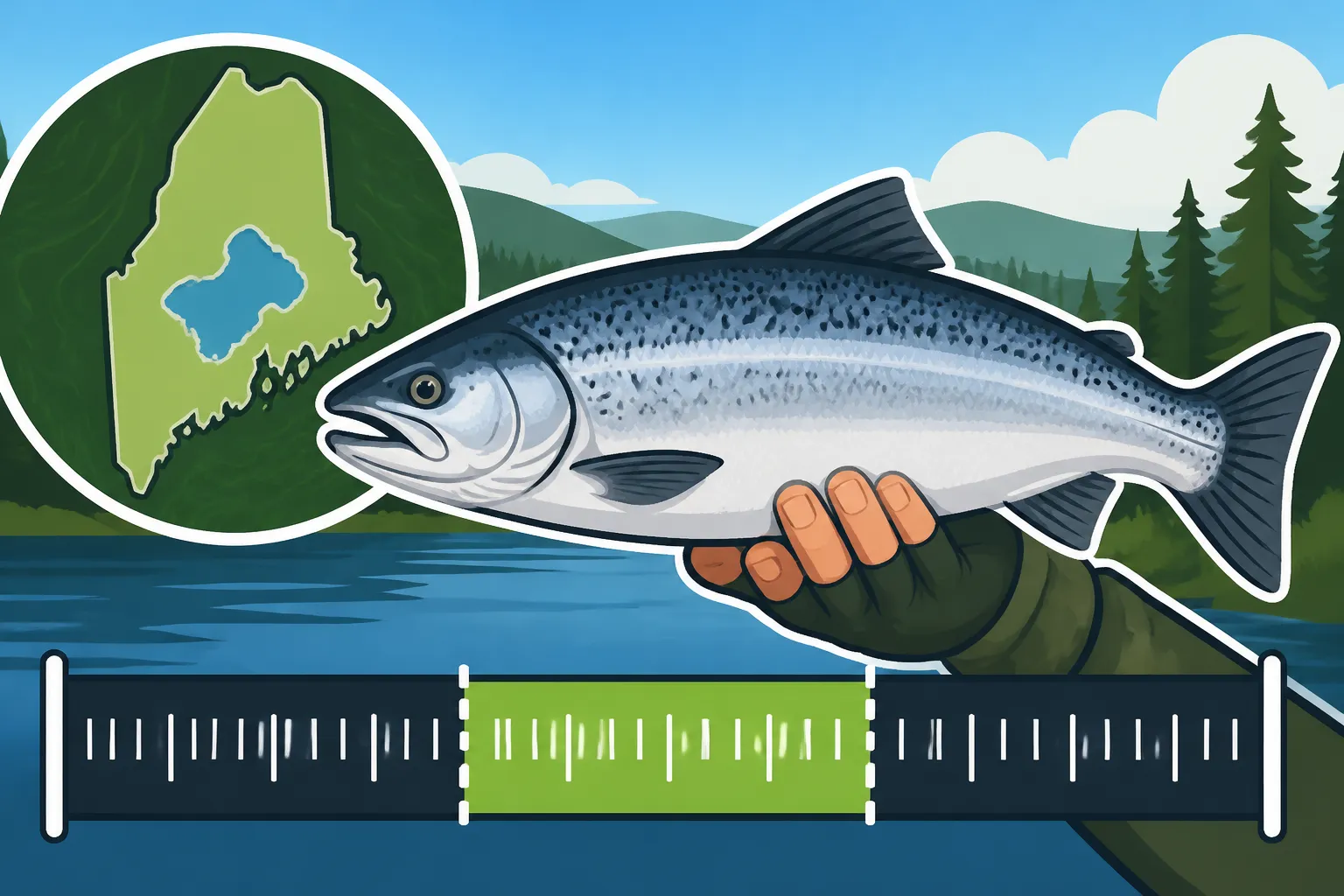
Measuring a fish for legal purposes is a straightforward process, but it requires precision. The official method for measuring length in Maine is from the tip of the nose to the tip of the tail, with the tail compressed (squeezed together). This is often referred to as "total length."
Here’s a step-by-step guide to doing it right:
- Lay the Fish Flat: Gently place the fish on a flat, hard surface, such as a measuring board or a cooler lid. Make sure it's as straight as possible.
- Nose to Zero: Align the tip of the fish's nose with the zero mark on your measuring device. This is the very front-most point of the fish.
- Compress the Tail: Gently squeeze the tail lobes together so they form a straight line. This eliminates any ambiguity from a naturally flared or damaged tail.
- Read the Measurement: Note the measurement at the very end of the compressed tail. That's your fish's legal length.
It's absolutely essential to be honest with yourself and to err on the side of caution. If it looks like it's right on the cusp of 14 inches, and you're unsure, it's always best to release it. A warden won't be as forgiving if your "almost legal" fish turns out to be short.
Essential Tools for Accurate Measurement
To ensure you're measuring your landlocked salmon accurately, you'll need the right tools. Eyeballing it is a recipe for disaster.
- Measuring Board or Tape Measure: A dedicated fish measuring board is ideal. These are usually plastic or aluminum, with a hard stop at one end for the fish's nose and clear, durable markings. Many come with ruler markings directly on them. A flexible tape measure or ruler can work in a pinch, but it's harder to get an accurate reading on a squirming fish without a solid surface to butt its nose against. You can find a good selection of these on Amazon or at any well-stocked sporting goods store like Kittery Trading Post or Cabela's.
- Camera (Optional but Recommended): While not for measuring, a quick photo of your fish next to your measuring device can be useful for documentation, especially if you plan to release a trophy-sized fish. It's a great way to capture the memory without keeping the fish.
- Release Tools: If you're releasing a fish that doesn't meet the size limit, or even a trophy you choose to let go, having tools like long-nosed pliers or a de-hooking tool can minimize stress and injury. These are critical for Catch and Release Best Practices in Maine.
Having these tools readily available and knowing how to use them will make your fishing trips much more enjoyable and stress-free, ensuring you comply with the Maine Fishing Regulations Explained.
Penalties and Conservation: Why Compliance Is Key
Fishing in Maine is a privilege, and with that privilege comes the responsibility to adhere to the regulations. Understanding and respecting size limits for landlocked salmon isn't just about avoiding a fine; it's about being a steward of Maine's incredible natural resources.
Consequences of Violating Size Limits
Fishing without a proper Maine Fishing License Guide or keeping a fish that doesn't meet the size requirements are serious offenses. Maine game wardens are dedicated professionals who work tirelessly to protect our fisheries, and they take violations seriously. If you're caught keeping an undersized or oversized landlocked salmon in violation of a slot limit, you could face significant consequences:
- Fines: The most immediate consequence is usually a monetary fine. These fines can vary depending on the severity of the violation, whether it's a first offense, and the specific regulation broken. Penalties for fishing violations can range from a few hundred dollars to much steeper amounts, especially for repeat offenders or egregious violations.
- Loss of Equipment: In some cases, game wardens have the authority to confiscate fishing equipment, including rods, reels, and even boats, particularly in cases of repeated or severe poaching.
- License Suspension: Your fishing license, and even other recreational licenses like hunting licenses, can be suspended or revoked for a period of time. This means you wouldn't be able to fish legally in Maine for a specific duration.
- Public Record: A violation can become part of your public record, which can have other unintended consequences down the line.
It's important to remember that ignorance of the law is generally not considered a valid excuse. The responsibility lies with the angler to know the rules for the specific waters they are fishing. Always check the official MDIFW regulations before heading out.
The Role of Anglers in Landlocked Salmon Conservation
Beyond avoiding penalties, every angler plays a crucial role in the long-term health and sustainability of Maine's landlocked salmon populations. Adhering to size limits is a fundamental aspect of conservation. By releasing undersized fish, you're directly contributing to the growth of future spawners and ensuring there are more fish for everyone to enjoy in the years to come.
Think about it: every small salmon you release has the potential to become a large, trophy-sized fish and contribute dozens or hundreds of thousands of eggs to the next generation. This mindset is especially important for species like landlocked salmon, which can be sensitive to environmental changes and fishing pressure.
Participating in responsible fishing practices means:
- Knowing the Rules: Always having a current copy of the Maine Fishing Season Dates Guide and understanding all relevant regulations for your chosen fishing spot.
- Careful Handling: When releasing fish, handle them gently, keep them in the water as much as possible, and use proper de-hooking tools.
- Reporting Violations: If you witness someone breaking fishing laws, reporting it to a game warden helps protect the resource for everyone.
Maine's landlocked salmon are a precious resource, drawing anglers from all over. By being informed and responsible, we can all do our part to ensure that these magnificent fish continue to thrive in our beautiful state for generations to come. Whether you’re learning How to Get a Maine Fishing License for the first time or are a seasoned pro exploring What Is a Maine Special Regulation Water?, your commitment to ethical angling makes all the difference.
Disclaimer
Please remember that fishing regulations, including size limits and bag limits, are subject to change. Always consult the most current Maine Department of Inland Fisheries and Wildlife (MDIFW) open water and ice fishing law books or visit their official website before heading out to fish. The information provided in this guide is for general informational purposes only and should not be considered legal advice or a definitive statement of current regulations.