What Safety Equipment Do Maine Charters Carry?
Venturing out onto the beautiful, unpredictable waters of Maine for a fishing charter can be an exhilarating experience, but for many, a nagging question often floats to the surface: "Is this boat truly safe? What happens if something goes wrong?" It's a valid concern, and one that every responsible angler should consider. This guide aims to clear up those worries by detailing the crucial safety equipment Maine fishing charters are required to carry, helping you feel more confident and prepared for your next angling adventure.
Navigating the Waters: Understanding Charter Safety Regulations in Maine
When you step aboard a fishing charter in Maine, you're not just getting on a fishing boat; you're boarding a vessel that operates under strict safety standards. These regulations are designed to protect everyone on board, from the seasoned captain to the first-time angler. Knowing what governs these operations can give you a lot of peace of mind.
The Coast Guard's Role in Ensuring Passenger Safety
The United States Coast Guard (USCG) is the primary authority overseeing the safety of commercial passenger vessels in U.S. waters, and that absolutely includes fishing charters in Maine. They set rigorous standards for vessel construction, stability, and the type and amount of safety equipment that must be on board. Charters carrying a certain number of passengers for hire must undergo regular inspections to ensure compliance with these federal regulations.
These inspections aren't just a quick once-over; they're comprehensive examinations of the vessel's structural integrity, machinery, electrical systems, and, of course, all required safety gear. A USCG-inspected vessel will have a Certificate of Inspection (COI) posted, indicating it meets these stringent standards. This gives passengers a high level of assurance that the boat is seaworthy and equipped for various emergencies. You can learn more about specific requirements in our Coast Guard License Requirements for Maine Charter Captains guide.
Maine State Regulations for Commercial Fishing Vessels
While the Coast Guard sets the federal baseline, individual states often have their own additional regulations that apply to commercial fishing vessels, particularly those operating closer to shore or within specific state waters. Maine is no exception. These state-level rules might cover things like specific fishing permits, additional environmental protections, or even further safety mandates that complement the federal guidelines.
Local enforcement, often handled by Maine Marine Patrol or other state agencies, ensures that charters adhere to both federal and state laws. This multi-layered approach to regulation means that charter captains and owners are accountable to several authorities, creating a robust safety net for passengers. It's a good idea to familiarize yourself with Maine Fishing Regulations Explained before heading out on any trip, charter or otherwise.
Essential Safety Gear You'll Find on a Maine Fishing Charter
Let's get down to the nitty-gritty: what actual equipment should you expect to see on a Maine fishing charter? This isn't just a random assortment of items; each piece has a specific purpose and is vital for different emergency scenarios.
Personal Flotation Devices PFDs – More Than Just Life Jackets
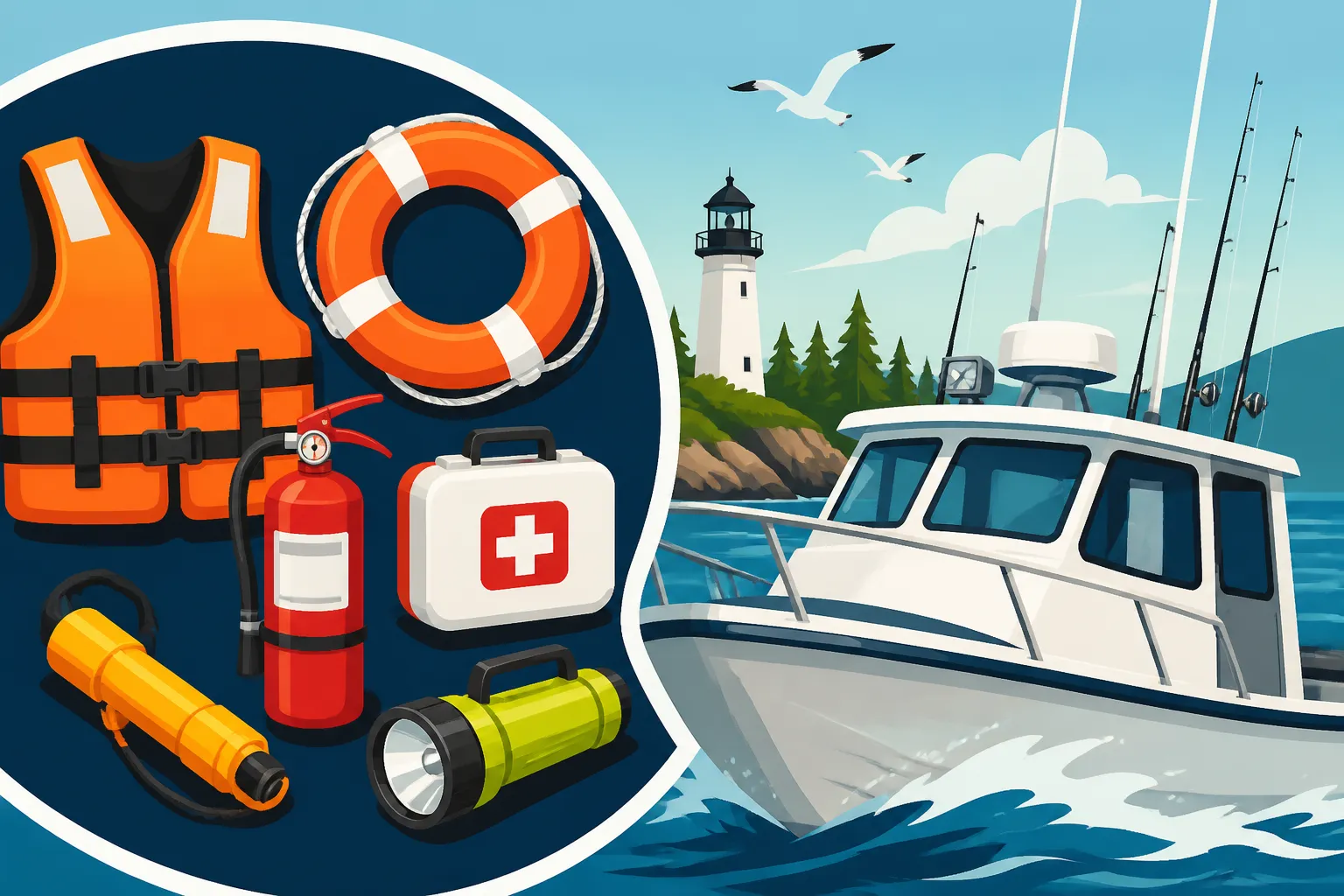
When we talk about PFDs, most people picture the bright orange vests they see in movies. While those are definitely part of the picture, PFDs come in various types, each designed for different situations. On a Maine fishing charter, you’ll typically find Type I, II, or III PFDs.
Type I PFDs are offshore life jackets, designed for rough or remote waters where rescue may be delayed. They are bulky but offer the most buoyancy and are designed to turn an unconscious person face-up in the water. Type II are near-shore buoyant vests, suitable for calm inland waters or where a quick rescue is likely. They also offer a degree of face-up turning. Type III are flotation aids, like vests worn for water sports, offering comfort and allowing for active participation, but they typically require the wearer to actively hold their face out of the water. Your charter will have an adequate supply of Coast Guard-approved PFDs for every person on board, including appropriately sized PFDs for children. Often, they'll encourage you to wear one if conditions get rough or if you're fishing in a particularly exposed area. It’s always smart to ask where they are stored during the safety briefing, and don't hesitate to ask for one that fits you comfortably.
Navigation, Communication, and Emergency Signaling Equipment
In an emergency, knowing where you are and how to call for help is paramount. Maine fishing charters are equipped with a range of sophisticated tools to ensure this. Every legitimate charter will have a reliable GPS system, often backed up with paper charts, to pinpoint their exact location on the water. This isn't just for getting to the best fishing spots; it's critical for relaying precise coordinates in an emergency.
Marine radios, specifically VHF radios, are standard communication tools. These allow the captain to speak directly with the Coast Guard, other vessels, and shore stations. Many vessels also carry satellite phones or other forms of communication for redundancy, especially if heading further offshore. For distress signaling, you'll find visual aids like flares (both aerial and handheld) and audible signals like whistles or horns. Many modern charters also carry an EPIRB (Emergency Position Indicating Radio Beacon) or PLB (Personal Locator Beacon). These devices, when activated, transmit a distress signal and your exact location to a satellite, which then relays it to rescue coordination centers. This technology is a game-changer for safety at sea.
Fire Safety and First Aid Provisions
Even on the water, fires can happen, and minor injuries are always a possibility. That's why Maine charters are meticulously prepared for both. You'll find multiple fire extinguishers strategically placed around the vessel, often in the cabin, engine room, and near the galley if there is one. These aren't just any extinguishers; they're marine-grade units designed to combat the types of fires most common on boats, like electrical or fuel fires. The crew is trained in their proper use.
Beyond fire, a comprehensive first aid kit is a non-negotiable item. These aren't just your basic band-aid kits; they're robust medical supplies capable of handling a range of injuries, from cuts and scrapes to more serious issues like severe bleeding or sprains. The captain and at least some of the crew will typically hold certifications in first aid and CPR, meaning they are trained to administer immediate care should the need arise. It's all part of the commitment to passenger well-being on any professional Maine Fishing Charters Guide.
Beyond the Gear: The Crew's Role in Your Safety
While having the right equipment is essential, it's only half the battle. The people operating the vessel—the captain and crew—are arguably your most important safety resource. Their training, experience, and adherence to protocols are what truly make a difference in an emergency.
Captain and Crew Certifications and Training
Every reputable Maine fishing charter is helmed by a captain who holds a valid U.S. Coast Guard license. This isn't just a fishing permit; it's a professional mariner's credential, proving they've met stringent requirements for sea time, navigation knowledge, seamanship, rules of the road, and emergency procedures. Depending on the vessel's size and passenger capacity, they might hold an Operator of Uninspected Passenger Vessels (OUPV) license, often called a "Six-Pack" license, or a Master's license, which allows for larger vessels and more passengers.
Beyond the license, most captains and crew members also undertake additional safety training, such as CPR, First Aid, and sometimes even advanced maritime medical emergency response courses. Their local knowledge of Maine's diverse waters, including tides, currents, weather patterns, and potential hazards, is also a critical, unwritten safety qualification. When considering Hiring a Maine Fishing Guide, always ensure they are properly licensed and experienced.
Pre-Trip Briefings and Emergency Procedures
Before the lines are even cast off, a good charter captain will conduct a thorough safety briefing. This isn't just a formality; it's your chance to learn vital information. They'll show you where the PFDs are stored, how to put them on, and when they should be worn. They'll point out emergency exits, the location of fire extinguishers, and explain how to use the marine head (bathroom) properly.
Crucially, they will outline emergency procedures: what to do in a "man overboard" situation, how to react to a fire on board, or what steps to take if the vessel needs to be evacuated. Pay close attention during this briefing. It might seem like common sense, but knowing the plan beforehand can make all the difference in a real emergency. This proactive approach to safety is a hallmark of professional operators, whether you're on a deep-sea adventure or a lake trip.
What to Look For When Booking a Safe Maine Fishing Charter
You want to make memories, not face worries. Choosing a safe charter begins long before you even arrive at the dock. Knowing what questions to ask and what signs to look for can help you pick the best, safest option for your trip.
Asking the Right Questions Before You Book
Before you commit to a charter, don't be shy about asking direct questions about their safety practices and equipment. A reputable charter will be happy to answer and proud of their safety record. Key questions include:
- "Are you a USCG-inspected vessel?" (For vessels carrying more than six passengers, this is mandatory. For smaller vessels, asking about their safety equipment and protocols is still very important.)
- "What type of safety equipment do you carry on board?"
- "Are your captain and crew CPR and First Aid certified?"
- "How often is your equipment inspected and maintained?"
- "What are your procedures for bad weather?" (It's always good to know What Happens If Weather Cancels a Maine Charter?)
Many online booking platforms, like FishingBooker, often provide detailed information about a charter's vessel and captain's credentials. While looking through options on FishingBooker, take the time to read their descriptions thoroughly and don't hesitate to use the platform's messaging system to ask follow-up questions directly to the captain. This due diligence ensures you're stepping onto a vessel that prioritizes your well-being.
Onboard Observations: Signs of a Well-Prepared Vessel
When you arrive at the dock and see the boat for the first time, take a moment to observe. A clean, well-maintained vessel is often a good indicator of a captain and crew who take pride in their operation, which usually extends to safety. Look for:
- Visible and Accessible Safety Gear: Are PFDs neatly stowed but easily reachable? Are fire extinguishers clearly marked?
- Overall Condition of the Boat: Does the boat look well-maintained, or are there obvious signs of disrepair? A tidy deck and organized tackle can suggest a meticulous approach to the entire operation.
- Professionalism of the Crew: A calm, confident, and knowledgeable crew instills trust. They should be welcoming and ready to answer any questions you have.
These visual cues, combined with the answers to your questions, should give you a clear picture of the charter's commitment to your safety. You're entrusting them with your day on the water, so it’s perfectly reasonable to expect a high standard of care. This is especially true whether you're embarking on Maine Deep Sea Fishing Charters or a calmer inland trip.
Here's a quick overview of essential safety equipment:
| Equipment Type | Primary Purpose | Key Features/Importance |
|---|---|---|
| Personal Flotation Devices (PFDs) | Keeps individuals afloat in the water | Appropriate sizes for all passengers, easily accessible, Coast Guard approved |
| VHF Marine Radio | Communication with Coast Guard, other vessels, shore | Essential for distress calls and routine communication |
| GPS Navigation System | Pinpointing location, plotting courses | Accurate positioning crucial for navigation and emergencies |
| Emergency Position Indicating Radio Beacon (EPIRB) | Transmits distress signal and location to satellites | Critical for alerting rescue authorities in remote areas |
| Flares (Visual Distress Signals) | Attracting attention in distress situations | Handheld and aerial flares for day and night use |
| Sound Producing Devices | Alerting other vessels, signaling distress | Horns or whistles for audible warnings |
| Fire Extinguishers | Combating onboard fires | Marine-grade, strategically placed, inspected regularly |
| First Aid Kit | Treating injuries and medical emergencies | Comprehensive, regularly stocked, crew trained in use |
| Throw Rope / Life Ring | Rescuing individuals from the water | Easily deployable, highly visible |
| Anchor and Rode | Holding position, emergency stopping | Sized appropriately for the vessel and anticipated conditions |
| Bilge Pumps | Removing water from the hull | Manual and electric pumps for dewatering in emergencies |
| Charts (Paper or Electronic) | Navigation, understanding waterways and hazards | Provides essential navigational context |
Before you head out, remember that understanding What to Bring on a Maine Fishing Charter yourself is also part of being a prepared angler.
Disclaimer
This article is for general informational purposes only and does not constitute professional advice. Laws, prices and regulations vary by location and change over time. Consult a qualified professional for guidance on your specific situation.