Where Is the Best Water Temperature for Brook Trout?
There's nothing quite like the thrill of chasing Maine's elusive brook trout, those vibrant gems of our cold-water streams and ponds. But let's be honest, sometimes you hit the water, your gear is perfect, your cast is spot-on, and… nothing. It can be incredibly frustrating to feel like you're doing everything right, yet the fish just aren't biting. More often than not, the unseen culprit is the water temperature. This guide is going to dive deep into exactly why water temperature is so critical for brook trout, what their ideal range is, and how you can use this knowledge to significantly improve your chances of a successful and responsible fishing trip here in Maine.
Understanding Brook Trout Thermal Preferences in Maine
Brook trout ( Salvelinus fontinalis ) are often called the "canary in the coal mine" for freshwater ecosystems, especially in Maine. Their very existence is deeply intertwined with cold, clean water. They aren't just a preference; it's a physiological necessity. If you want to find these beautiful fish, you absolutely have to understand their relationship with water temperature. It dictates their comfort, their feeding habits, and even their survival.
The Ideal Temperature Range: A Sweet Spot for Brookies
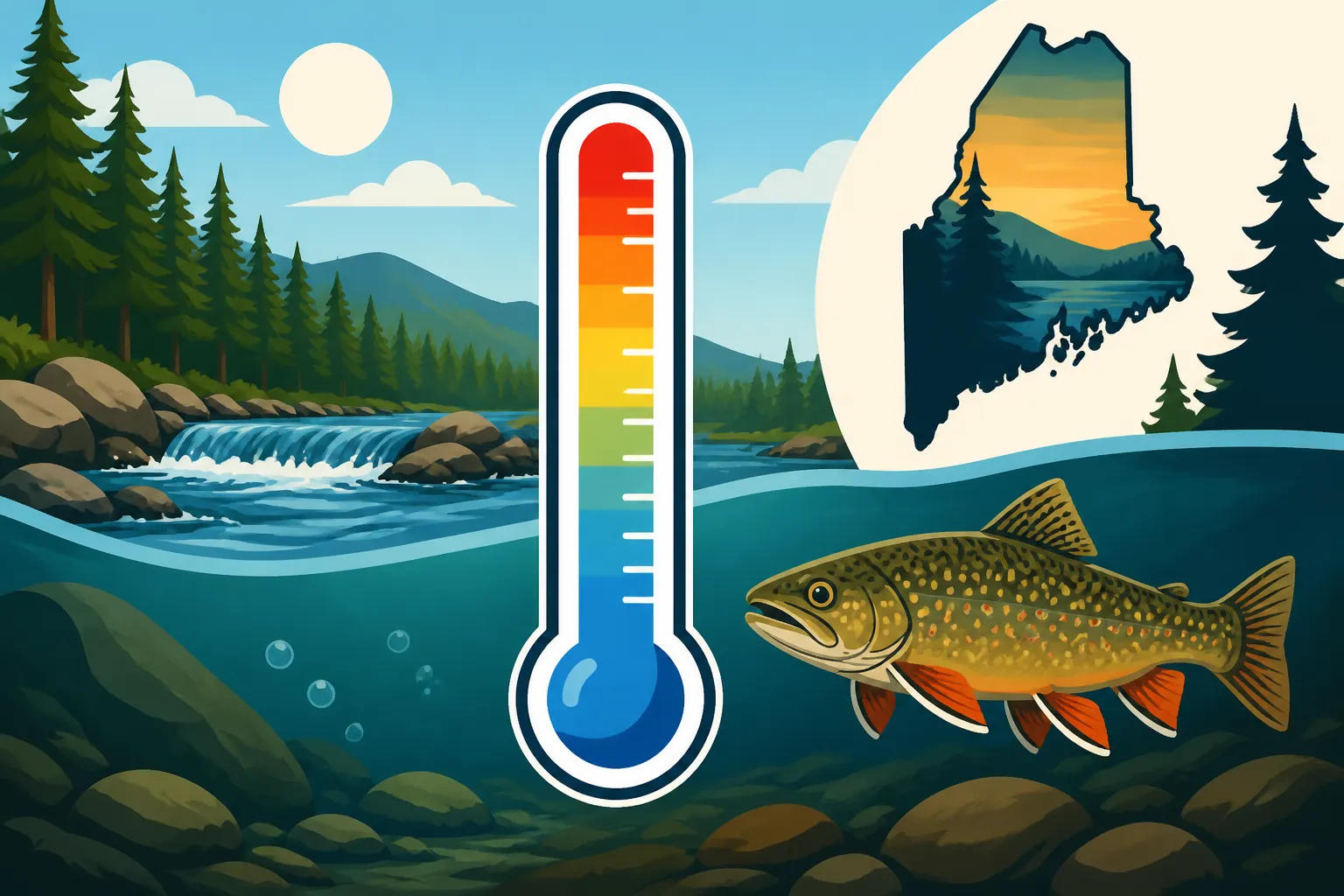
For brook trout, there's a Goldilocks zone when it comes to water temperature – not too cold, not too hot, but just right. Generally speaking, their preferred range for active feeding and overall health sits between 45°F and 65°F (7°C to 18°C). Within this band, their metabolism is humming along efficiently, they're digesting food well, and they're actively seeking out meals. This is when you'll find them most aggressive and willing to strike a fly or lure.
When the water dips below 45°F, say in late fall or throughout the winter under the ice, brook trout become much more lethargic. Their metabolism slows way down, and they don't need to feed as often or as aggressively. They'll still eat, of course, but you'll need a much slower, more subtle presentation to entice a bite. On the flip side, once water temperatures climb above 65°F, brook trout start to experience stress. As it approaches 70°F and beyond, it becomes life-threatening. Oxygen levels drop in warmer water, and the fish simply can't get enough to breathe properly, leading them to seek cooler refuges or perish.
Why Temperature Matters So Much for Brook Trout
It’s not just about comfort; water temperature has profound biological impacts on brook trout. These fish are cold-blooded, meaning their body temperature mirrors that of their environment. This directly affects their metabolic rate – how quickly they process food, grow, and consume oxygen. In their ideal temperature range, their bodies are working optimally.
When the water gets too warm, several critical things happen. First, dissolved oxygen levels in the water decrease significantly. Think of it like trying to run a marathon in thin air – it's incredibly taxing. Second, the brook trout's own metabolic rate actually increases with rising temperature, demanding more oxygen at the very time there's less available. This creates a dangerous double-whammy, putting immense stress on the fish. Their immune systems can weaken, they become more susceptible to disease, and their energy reserves are quickly depleted. This is why a few degrees can literally mean the difference between a healthy, active brook trout and one struggling to survive.
Maine's Unique Challenges: Cold Water and Wild Trout
Maine is truly special for brook trout enthusiasts because it boasts some of the most robust populations of wild, native brook trout in their natural range. Unlike many other states where brook trout populations are sustained primarily through stocking, Maine has countless wild trout ponds and streams. These wild fish are often even more attuned to, and dependent upon, cold, pristine water conditions than their stocked counterparts. They've evolved over millennia to thrive in these specific thermal environments.
The challenge in Maine, however, comes from its diverse geography and seasons. While northern Maine's remote ponds and streams often stay reliably cold throughout the summer, waters further south, or larger, shallower lakes, can warm up quickly. This means that successful brook trout angling in Maine isn't a "one size fits all" endeavor; it requires a keen awareness of local conditions and how different waters respond to air temperature changes. Understanding the Brook Trout Daily Limit in Maine North Zone versus the Brook Trout Daily Limit in Maine South Zone also highlights how different regions are managed, often due to their differing thermal characteristics and fish populations.
Seasonal Shifts and How Water Temperature Dictates Brook Trout Behavior
The best water temperature for brook trout isn't a static number; it's a dynamic range that changes with the seasons, and so does their behavior. Knowing what to expect when you hit the water throughout the year can make all the difference. Think of it as tuning into their natural rhythm.
Spring: Warming Waters and Active Feeding
Ah, spring in Maine! After the long winter, as the ice finally leaves our lakes and ponds (you can often find the Ice-Out Date for Moosehead Lake Most Years to get a sense of when things open up), the water slowly begins to warm. Initially, when the water is in the low 40s°F, brook trout are still a bit sluggish. They've been conserving energy all winter. But as temperatures climb into the high 40s and 50s°F, their metabolism kicks into gear.
This is a fantastic time for brook trout fishing. The fish are hungry, having burned through winter fat reserves, and they're eager to feed. Insect hatches start, providing abundant food. You'll often find brook trout spread out, cruising shallower areas of ponds and streams, taking advantage of the warming water and new food sources. They're less concentrated in deep pockets and more willing to chase a fly or lure. This is prime time for aggressive strikes and active fishing.
Summer: The Quest for Cold Water Refuges
Summer can be a challenging time for brook trout anglers, especially in the warmer months when air temperatures soar. As water temperatures climb above 65°F, brook trout begin to get stressed and will actively seek out colder water. This is when understanding thermal refuges becomes absolutely critical. You won't find them happily cruising the shallows anymore.
During summer, look for brook trout in:
- Deep Pools: The deepest parts of ponds and rivers will naturally stay cooler.
- Spring Holes: Areas where cold groundwater seeps or flows into a lake or stream create localized pockets of much cooler water. These are goldmines.
- Mouths of Feeder Streams: Smaller streams that flow into a larger body of water often carry cooler, oxygenated water, attracting heat-stressed trout.
- Heavy Shade: Overhanging trees, fallen logs, or undercut banks that block direct sunlight can keep water temperatures a few degrees cooler.
- Near Dams or Obstructions: Sometimes, the churning water below a dam can be slightly cooler and more oxygenated.
If the water temperature is too high, it's often best to avoid fishing for brook trout altogether, or at least practice extreme caution with catch and release, as the stress can be fatal. This is also when understanding specific rules, like those found in the Maine Fishing Season Calendar, can guide you to waters with special regulations designed to protect fish from warm-water stress.
Fall: Spawning Runs and Cooler, Stable Conditions
As autumn leaves begin to turn and the air chills, water temperatures in Maine's ponds and streams start to drop, bringing immense relief to brook trout. Once temperatures fall back into that ideal 45-60°F range, brook trout become incredibly active again. This is another prime fishing season, often considered by many to be the best.
The cooler water invigorates the fish, and they're driven by the instinct to spawn. Brook trout will move into shallower gravel beds in streams and the tributary mouths of ponds to reproduce. Their colors become incredibly vibrant during this time, making for stunning catches. They're also actively feeding to build up energy reserves for spawning and the coming winter. You'll find them aggressive and willing to chase larger streamers or lures. It's a fantastic time to pursue a trophy brook trout, often in relatively stable and comfortable conditions.
Winter: Under the Ice and Slow Metabolism
When the harsh Maine winter truly sets in and our waters freeze solid, brook trout settle into a slower pace. Under the ice, water temperatures hover just above freezing, typically in the high 30s to low 40s°F. In these frigid conditions, their metabolism slows significantly, and they become much less active. They still feed, but often less frequently and with less enthusiasm.
Ice anglers targeting brook trout often need to employ subtle tactics like small jigs tipped with bait, or slow-moving tip-ups. While they're not chasing vigorously, they will often inspect a bait presented right in front of them. Understanding Maine Ice Fishing Techniques Guide can be incredibly helpful here. They tend to congregate in certain areas, often near structure or in slightly deeper sections, conserving energy. Though less active, the winter season can still yield some fantastic brook trout if you know where to look and how to adapt your presentation to their cold-water lethargy.
Practical Tips for Finding Brook Trout Based on Water Temperature
Knowing the ideal temperature range is one thing, but actually applying that knowledge on the water is where the magic happens. A little preparation and observational skill can turn a slow day into a memorable one.
Essential Tools for Temperature Tracking
You absolutely cannot consistently find brook trout without knowing the water temperature. This isn't guesswork; it's a measurable factor. The most fundamental tool you'll need is a fishing thermometer. These come in various forms:
- Basic Water Thermometers: Often on a cord, you simply lower them into the water for a few minutes. Reliable and affordable.
- Digital Thermometers: Offer quick, precise readings, some even with memory functions.
- Infrared Thermometers: Useful for quick surface readings, though not as accurate for subsurface temperatures where fish often hold.
Beyond a simple thermometer, a good fish finder with a temperature gauge is invaluable, especially when fishing from a boat. It can tell you not only the depth but also the temperature at various points in the water column, allowing you to pinpoint thermal breaks or colder currents. Even in a canoe or kayak, a portable fish finder can offer huge advantages. You can easily find quality options for these tools on platforms like Amazon, making them accessible to any angler.
Identifying Thermal Refuges
When water temperatures are creeping up, your mission is to find those cooler hideouts. Here's how to think like a brook trout and locate those vital thermal refuges:
- Look for Inflow: Trace small feeder streams and brooks back to where they enter a larger pond or river. These smaller tributaries often run colder, especially if they are shaded or fed by springs. Casting near these junctions can be highly productive.
- Seek Out Shade and Structure: Any area offering prolonged shade – overhanging banks, large boulders, dense tree cover – will keep the water beneath it cooler. Undercut banks also provide shade and a physical refuge.
- Probe Deeper Water: In ponds and wider river sections, the coolest water will usually be found at depth. If you're fishing a lake, explore drop-offs and the edges of channels. Use your fish finder if you have one to identify temperature changes with depth.
- Underwater Springs: While harder to spot, some areas have cold springs bubbling up from the bottom. Look for patches of unique vegetation or areas where your thermometer consistently reads colder than the surrounding water. Anglers who frequent specific Best Fishing Lakes in Maine or Best Maine Rivers for Fishing often learn where these localized spots are.
Adjusting Your Strategy
Once you've got a handle on the water temperature, it's time to adapt your fishing strategy.
- Time of Day: In warmer months, avoid the midday sun. Fish early morning or late evening when air and water temperatures are at their coolest. Conversely, in cold spring or fall, midday might be when the water is most hospitable.
- Depth and Location: If the water is warm, focus your efforts in deeper water or identified thermal refuges. If it's ideal or cool, brook trout might be more spread out and willing to come to the surface or cruise shallower areas.
- Lure and Bait Presentation:
- Cold Water (Below 45°F): Think slow and subtle. Small jigs, tiny spoons, or natural bait (worms, minnows) presented very slowly are effective.
- Ideal Water (45-65°F): This is when brook trout are most aggressive. You can use a wider variety of lures: spinners, spoons, small crankbaits, and a full range of flies (dry flies, nymphs, streamers). More active retrieves often work well.
- Warm Water (Above 65°F): If you must fish, present your offerings very gently and slowly in known cold-water pockets. Avoid aggressive retrieves that might over-stress the fish. Small nymphs or tiny worms might be your best bet, but again, caution is advised.
Reading the Water: Beyond the Thermometer
While a thermometer gives you hard data, learning to "read the water" provides crucial context. Pay attention to environmental cues:
- Sunlight and Shade: Areas consistently in direct sunlight will warm faster. Notice where shadows fall throughout the day.
- Current: Stronger currents in a stream can indicate more oxygenated, often cooler water, especially in rapids or riffles. Slower-moving pools might be warmer.
- Color and Clarity: Very clear, dark-bottomed water will absorb more sunlight and warm faster than turbid or very light-bottomed water.
- Aquatic Vegetation: Lush, green growth can indicate slightly warmer, more fertile water, while sparse, tougher vegetation might be in colder, less productive areas. Also, patches of thick aquatic plants can provide shade and cover, creating cooler micro-habitats.
- Wind: On open lakes, a strong wind can mix surface waters, potentially cooling them slightly, but also pushing warmer surface water into coves.
By combining direct temperature readings with these visual cues, you develop a much more comprehensive understanding of where brook trout might be holding. This holistic approach is essential for successful Maine Open Water Line Limits fishing.
Conservation and Ethical Angling in Temperature Extremes
As passionate anglers, we have a responsibility to protect the very fish we love to catch. This is especially true for brook trout, given their sensitivity to water temperature. Ethical angling isn't just a suggestion; it's a vital practice.
The Impact of High Water Temperatures on Catch and Release
When water temperatures climb above 65°F, and certainly above 70°F, catching and releasing brook trout becomes incredibly risky for the fish. Even if a trout appears to swim away strongly, it might be suffering from severe physiological stress. The exertion of the fight, combined with low oxygen levels in the warm water, can lead to what's known as "delayed mortality." The fish might die hours or even days later from exhaustion, lactic acid buildup, or an inability to recover.
This is a critical concern, particularly in Maine's hotter summer months when many popular Best Fishing Ponds for Fishing can see their water temperatures rise significantly. A fish that fights hard and then struggles to swim off is likely experiencing this stress. Therefore, if you're out and your thermometer reads above 65°F, it's often best to put away your brook trout gear and either switch to warm-water species like bass (which tolerate higher temperatures much better) or simply enjoy the scenery.
Best Practices for Ethical Angling
To ensure the health and future of Maine's brook trout populations, especially when dealing with varying water temperatures, embrace these ethical angling practices:
- Know Before You Go: Always check the forecast and have a reliable water thermometer. If temperatures are consistently high, consider fishing for other species or at a different location known for colder water.
- Minimize Fight Time: Use appropriate tackle that can bring the fish in quickly. Prolonged fights in warm water are extremely detrimental.
- Handle Fish Gently: Keep the fish in the water as much as possible. Wet your hands before touching them to protect their protective slime coat. Avoid squeezing them.
- Use Barbless Hooks: Barbless hooks (or hooks with the barb pinched down) make hook removal much easier and quicker, reducing stress and injury. This aligns with Catch and Release Best Practices in Maine.
- Consider Hook Placement: If possible, try to use lures or flies that are less likely to be swallowed deep, which makes for easier and safer unhooking.
- Revive Carefully: If a fish seems lethargic after being unhooked, hold it gently upright in the water, facing into a gentle current (if available), until it can swim away under its own power. Don't push it or throw it back.
- Avoid Overfishing: Even in ideal conditions, practice moderation. The goal is enjoyment and connection with nature, not just quantity.
- Respect Regulations: Always adhere to Maine Fishing Regulations Explained and specific water body rules, which are designed to protect fish populations.
By being mindful of water temperature and practicing these ethical guidelines, we can all contribute to healthy brook trout fisheries for generations to come. It’s about being a steward of these incredible natural resources.
| Season | Water Temperature Range | Brook Trout Behavior | Recommended Fishing Strategy | Conservation Notes |
|---|---|---|---|---|
| Spring | 45-58°F (7-14°C) | Actively feeding, spread out in shallows, coming out of winter lethargy. | Aggressive presentations, various lures/flies, focus on shallower areas and inflows. | Generally safe for C&R, but avoid colder, slower fish. |
| Early Summer | 58-65°F (14-18°C) | Still active, but beginning to seek deeper or shaded areas as temps rise. | Focus on deeper pockets, shaded banks, early/late fishing. | Good for C&R, but monitor temps closely. |
| Mid-Late Summer | 65°F+ (18°C+) | Stressed, seek cold water refuges (springs, deep pools, feeder streams), very lethargic. | Fish early/late in known cold-water pockets with subtle presentations; consider other species or stopping. | High risk for C&R mortality. Prioritize fish safety. |
| Fall | 45-60°F (7-16°C) | Very active, pre-spawning and spawning runs, vibrant colors, aggressive feeding. | Focus on spawning areas (gravel beds, stream mouths), active lures/flies. | Excellent for C&R, fish are robust. |
| Winter (Ice Fishing) | 35-42°F (2-6°C) | Lethargic, slow metabolism, holding near structure/depth. | Slow, subtle presentations; small jigs, bait. | C&R generally safe due to cold, oxygen-rich water. |
Disclaimer
This article is for general informational purposes only and does not constitute professional advice. Laws, prices and regulations vary by location and change over time. Consult a qualified professional for guidance on your specific situation.