Trolling Speed for Salmon on Moosehead Lake
Trying to dial in that perfect trolling speed for landlocked salmon on Moosehead Lake can feel like a guessing game sometimes, can't it? One day they're hitting everything you throw at them, the next it's crickets, and you're left wondering if you're too fast, too slow, or just plain off. This guide is here to break down the nuances of trolling speed, helping you understand not just what speed to use, but why it works, so you can increase your chances of hooking into those elusive, hard-fighting salmon in Maine's largest lake.
Understanding Landlocked Salmon Behavior on Moosehead Lake
Before we even talk about specific speeds, it's crucial to understand what makes a landlocked salmon tick, especially in a vast, deep, and dynamic environment like Moosehead Lake. These fish are true predators, constantly on the hunt for baitfish like smelt. Their behavior is heavily influenced by water temperature, light conditions, and the presence of their food source. Getting your trolling speed right is all about presenting your lure in a way that mimics natural prey and triggers that instinctive strike.
Why Speed Matters for Salmon
Landlocked salmon are ambush predators with incredible eyesight and speed. When they're actively feeding, they're looking for something that either looks like an easy meal or something that's trying to escape. The speed at which you troll directly dictates how your lure moves, flutters, dives, or darts through the water. A lure moving too fast might appear unnatural or simply be too quick for a salmon to react, especially if they're a bit sluggish. Conversely, a lure trolled too slowly might not have the right action to entice a strike, appearing lifeless or uninteresting.
Think about it from the salmon's perspective: if a school of smelt is moving at a certain pace, a lone, injured fish struggling to keep up is often the first to be targeted. Your trolling speed, combined with your lure choice, aims to replicate that vulnerability or urgency. The subtle variations in speed, often created by boat turns or brief accelerations, can be the critical trigger that makes a salmon commit to a strike. It's not just about covering water; it's about presenting an irresistible invitation.
Seasonal Movements and Depth
Moosehead Lake is a deep, cold-water fishery, and the landlocked salmon here follow pretty predictable patterns based on the seasons. Understanding these movements is fundamental because where the salmon are dictates how you should be trolling for them. You wouldn't troll at the same speed or depth in May as you would in August, for instance.
In the spring, after ice-out, the entire lake is cold, and salmon can be found relatively shallow, often near tributary mouths or along shorelines where baitfish congregate. The water is still cool, and salmon are actively feeding after a long winter. As summer progresses, the surface waters warm significantly, and salmon retreat to deeper, cooler, more oxygenated waters, often holding in the thermocline (that distinct layer where water temperature changes rapidly) or even deeper. For a comprehensive look at the year-round fishing opportunities, check out our guide on the Maine Fishing Season Dates Guide. Knowing these seasonal shifts means you'll adjust your depth first, and then fine-tune your speed to match their activity level in that specific depth range. A slower, more deliberate troll might be effective when they're deeper and potentially less active in mid-summer, while a faster pace might be great for aggressive spring fish.
Ideal Trolling Speeds for Moosehead Lake Salmon
Now that we've laid the groundwork, let's talk numbers. While there's no single "magic" speed that works every time, there are definitely sweet spots and ranges that experienced anglers swear by on Moosehead Lake.
The "Sweet Spot" for Landlocked Salmon
For landlocked salmon on Moosehead Lake, a general trolling speed "sweet spot" usually falls between 1.8 to 2.8 miles per hour (mph). This range tends to give most common salmon lures their best action, allowing them to swim, dart, and flash enticingly without spinning out or appearing unnatural.
However, it's crucial to remember this is a starting point. Within this range, small adjustments can make a huge difference. Sometimes, bumping it up to 3.0 mph can trigger a more aggressive bite, especially if the fish are highly active and chasing bait. Other times, slowing down to 1.5 mph might be necessary when the salmon are lethargic, perhaps due to a recent cold front or high-pressure system, and you need a more subtle presentation. Constant experimentation within this window is key. Pay attention to what's happening around you – what are other boats doing? Are you seeing baitfish on your sonar? These clues can help you narrow down the ideal speed for that particular day.
Adjusting Speed Based on Lure Type
Your chosen lure plays a significant role in determining the optimal trolling speed. Different lures are designed to perform best at specific speeds, and ignoring this can lead to a lot of unproductive hours on the water.
- Spoons (e.g., Mooselook Wobblers, DB Smelt, Suttons): These are classic salmon lures for a reason. Spoons often have a beautiful, erratic wobble and flash at speeds generally between 2.0 to 2.8 mph. If you troll them too fast, they can spin or "wash out," losing their enticing action. Too slow, and they might just drag lifelessly. Brands like Mooselook Wobblers, a local favorite, are designed to mimic the injured baitfish movement at these moderate speeds.
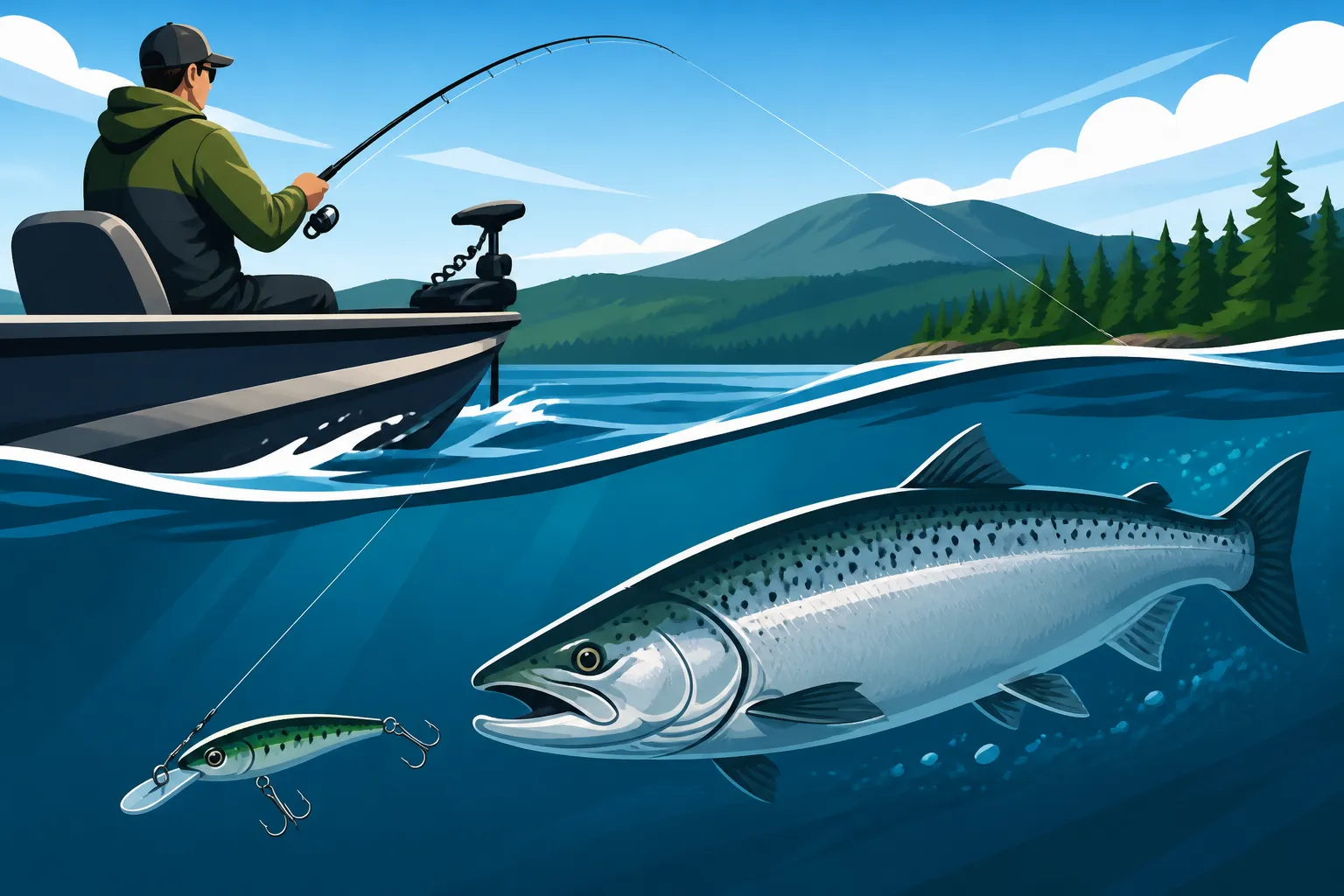
- Stickbaits (e.g., Rapalas, Yo-Zuris): Diving stickbaits excel at slightly faster speeds, often in the 2.5 to 3.0 mph range. Theirリップ (lip) is designed to create a tight wiggle and dive at these speeds, imitating a fleeing baitfish. Some longer, thinner stickbaits can even handle speeds up to 3.5 mph, particularly when targeting aggressive salmon.
- Flasher/Dodger Combos with a Fly or Hoochie: When you're running a flasher or dodger ahead of a fly (like a traditional Maine streamer fly) or a small hoochie, the flasher itself provides the primary attraction, creating vibration and flash. The trailing fly or hoochie then dances erratically behind it. For these setups, you often want a slower speed, perhaps 1.5 to 2.2 mph. This allows the flasher to work its magic without overpowering the more delicate action of the fly behind it. Learning more about Best Lures for Early Spring Salmon Fishing can help you choose effectively.
- Live Bait (e.g., Smelt): If you're trolling live smelt, which is a fantastic natural bait for Moosehead salmon, your speed should be much slower, often between 0.8 to 1.5 mph. The goal here is to let the smelt swim naturally, occasionally struggling, to attract the salmon. Trolling too fast will drown the bait and make it look unnatural.
Speed Variations for Strikes
Here’s a little secret that can dramatically improve your success: don't maintain a perfectly constant speed. Salmon are often triggered by a change in pace. As your boat turns, the lures on the inside of the turn will slow down, while those on the outside will speed up. These subtle changes can be incredibly effective at drawing a strike.
Many anglers will deliberately weave their boat or make gentle S-curves while trolling to create this effect. You can also manually vary your throttle slightly, speeding up by 0.2-0.5 mph for 30 seconds, then slowing back down. This mimics a baitfish struggling or making a sudden escape attempt, which often provokes a reaction strike from a following salmon. Remember, these fish are opportunists, and a sudden change in a lure's behavior can be all it takes.
Factors Influencing Trolling Speed on Moosehead Lake
Beyond just the fish's natural behavior and your lure choice, environmental factors on Moosehead Lake play a huge role in determining the most effective trolling speed. It's like trying to bake a cake without adjusting for altitude – you need to factor in the conditions.
Water Temperature and Oxygen Levels
Water temperature is arguably the most critical factor for cold-water species like landlocked salmon. As we discussed, they're constantly seeking their preferred temperature range, typically between 45-60°F.
- Cooler Water (Spring/Fall): In spring and fall, when the entire water column is cool, salmon are generally more active and widely dispersed. They're feeding aggressively to put on weight or prepare for spawning. In these conditions, you can often get away with, and even benefit from, slightly faster trolling speeds (2.5-3.0 mph). The fish are willing to chase, and a fast-moving lure can effectively cover more water and elicit a reaction strike.
- Warmer Water (Summer): During the heat of summer, surface temperatures on Moosehead Lake can soar, forcing salmon deep into the thermocline or even to the very bottom where cold, oxygenated water remains. In these deeper, cooler haunts, salmon tend to be less active and more lethargic. Their metabolism slows down. Here, a slower, more deliberate trolling speed (1.5-2.2 mph) is usually more effective. You want to present the lure right in front of them, giving them ample time to inspect it and commit without having to expend too much energy chasing. Understanding How Deep Should You Troll for Salmon in Summer? is directly related to these temperature considerations.
You might find guides or articles recommending specific depths for fishing based on the time of year; this is directly linked to the salmon's pursuit of comfortable water temperatures and sufficient oxygen.
Forage Base and Presentation
Moosehead Lake is renowned for its healthy population of landlocked salmon, largely due to its abundant smelt population – the primary forage fish. When you're trolling, you're trying to imitate these smelt.
- Matching the Hatch: If you can identify the size and color of the baitfish salmon are currently feeding on (sometimes visible in regurgitated stomach contents or on your fish finder), you can choose lures that closely mimic them. The trolling speed then becomes about making that lure act like a real, distressed smelt. For example, a small, silver spoon trolled at 2.0 mph might perfectly replicate a struggling smelt.
- Aggressive vs. Finicky Fish: If salmon are actively busting bait on the surface or showing up aggressively on your sonar, a faster, more erratic retrieve might signal an easy meal amidst the chaos. If they're tightly schooled and hugging structure, a slower, more deliberate presentation might be needed to avoid spooking them and allow them to make a calculated strike. It's about adapting to their feeding mood.
Weather Conditions and Time of Day
Weather patterns and light conditions can also dictate how fast you should troll.
- Bright Sun, Clear Skies: On calm, sunny days with high pressure, salmon often go deeper and can be more finicky. Their eyesight is excellent, and they can be easily spooked. In these conditions, a slightly slower troll (1.8-2.5 mph) with more subtle lures can be more effective. You want a more natural, less aggressive presentation.
- Cloudy, Overcast, or Choppy Water: Low light conditions or a bit of chop on the water can actually make salmon more aggressive. The reduced light gives them a sense of security, and the chop breaks up the surface, making lures appear more natural. On these days, you can often bump up your speed (2.5-3.0 mph) and use lures with more flash or vibration. The fish are more willing to chase.
- Dawn and Dusk: These low-light periods are prime feeding times for landlocked salmon. They often move shallower and become more active. Again, slightly faster speeds can be productive, as salmon are more prone to chase. As the sun rises higher or sets lower, you might need to adjust your depth and speed accordingly. If you're looking for the best window, our article on the Best Time of Year to Catch Landlocked Salmon in Maine can offer additional insights.
Essential Gear and Techniques for Effective Trolling
Having the right gear and knowing how to use it is just as important as knowing the right speed. Moosehead Lake is vast, and effective trolling requires a systematic approach.
Rods, Reels, and Line Selection
For landlocked salmon on Moosehead Lake, you'll want gear that can handle strong runs and the constant tension of trolling.
- Rods: Medium-light to medium action trolling rods, typically 7-8.5 feet long, are ideal. These rods have enough backbone to fight a strong salmon but enough flexibility in the tip to telegraph lure action and absorb head shakes. A softer tip helps keep the fish hooked during vigorous runs.
- Reels: Level-wind baitcasting reels are popular for trolling due to their line capacity and ease of use. Look for models with a smooth drag system, which is critical for preventing break-offs when a salmon makes a powerful initial run. A line counter reel can be invaluable for consistently repeating successful depth presentations.
- Line: Monofilament line in 8-12 lb test is a common choice for its stretch, which acts as a shock absorber. Fluorocarbon leaders (6-10 lb test) are often used for their low visibility and abrasion resistance. Some anglers opt for braided line with a mono or fluoro leader, as braid offers excellent sensitivity and strength. However, braid's lack of stretch means a smoother rod and a well-tuned drag are even more important. Understanding Maine Open Water Line Limits might also be helpful.
- Specialty Lines: Copper and lead core lines are also widely used on Moosehead to get lures down to specific depths without the need for downriggers. Each color of lead core line typically puts your lure down 5-7 feet at a trolling speed of 2 mph, allowing for precise depth control once you learn its characteristics.
Using Electronics for Speed and Depth Control
Modern electronics are game-changers for trolling effectively on a lake like Moosehead.
- GPS and Speed Control: A good GPS unit, integrated into your fish finder or standalone, is essential for maintaining precise trolling speeds. Many newer electric trolling motors also have GPS-controlled speed settings, allowing you to set a specific speed (e.g., 2.3 mph) and have the motor automatically adjust for wind and current to keep you on course and at your desired speed. This frees you up to focus on other aspects of the troll.
- Fish Finders/Sonar: Your fish finder is your window into the underwater world. It helps you identify the thermocline, locate schools of baitfish (like smelt), and spot individual salmon or suspended fish. Knowing the depth of the bait and the fish allows you to adjust your lure depth using lead core, copper, or downriggers, ensuring your lures are presented in the strike zone. You can also monitor your actual trolling speed over ground, which can differ from your boat's speed through water due to wind or currents.
- Downriggers: For targeting salmon consistently at deep, precise depths, especially in summer, downriggers are incredibly effective. They allow you to set your lure at an exact depth, completely independent of line type or boat speed, until a fish strikes and releases the line from the clip. This precision is invaluable when salmon are holding in a narrow depth band.
Setting Up a Trolling Spread
A "trolling spread" refers to the arrangement of multiple lines at different depths and distances behind the boat. This allows you to cover more water, present various lures, and experiment with different depths simultaneously.
- Varying Depths: On Moosehead, you might run one line shallow (e.g., a stickbait on flat line), another at an intermediate depth (e.g., a spoon on lead core), and a third deep (e.g., a flasher and fly on a downrigger). This strategy maximizes your chances of finding where the salmon are holding.
- Staggering Distances: Run lures at different distances behind the boat to prevent tangles and allow for wider coverage. A common approach is to run shorter lines in the middle and longer lines on the outside.
- Using Planer Boards: For even wider coverage, especially with multiple anglers, planer boards can be used to pull lines out to the sides of the boat, allowing you to present lures in undisturbed water away from the boat's wake. This is particularly effective in clear water conditions. When you're considering a fishing trip on Moosehead Lake, researching Moosehead Lake Fishing Guides or even checking FishingBooker for available charters can give you a professional's insight into effective spreads and techniques. They often have highly refined methods for targeting these fish.
- Following Regulations: Always be mindful of the Maine Fishing Regulations Explained, including the number of lines you are allowed to fish with at one time. On open water in Maine, you are generally allowed two lines per person, so plan your spread accordingly.
Remember, mastering trolling speed for salmon on Moosehead Lake is an ongoing learning process. Every day on the water presents new conditions and challenges. By understanding salmon behavior, experimenting with speeds, adjusting for environmental factors, and utilizing proper gear and techniques, you'll be well on your way to more successful and rewarding fishing trips on this magnificent Maine lake.
Disclaimer
Please note that fishing regulations, including license requirements, bag limits, and specific rules for certain waters like Moosehead Lake, can change. Always consult the latest rules and regulations published by the Maine Department of Inland Fisheries and Wildlife (MDIFW) before heading out on your fishing trip. This guide is for informational purposes only and should not be considered a substitute for official regulations.