Best Streamer Patterns for Landlocked Salmon
Streamer patterns imitating rainbow smelt help anglers catch predatory landlocked salmon in Maine lakes and rivers during spring runs.
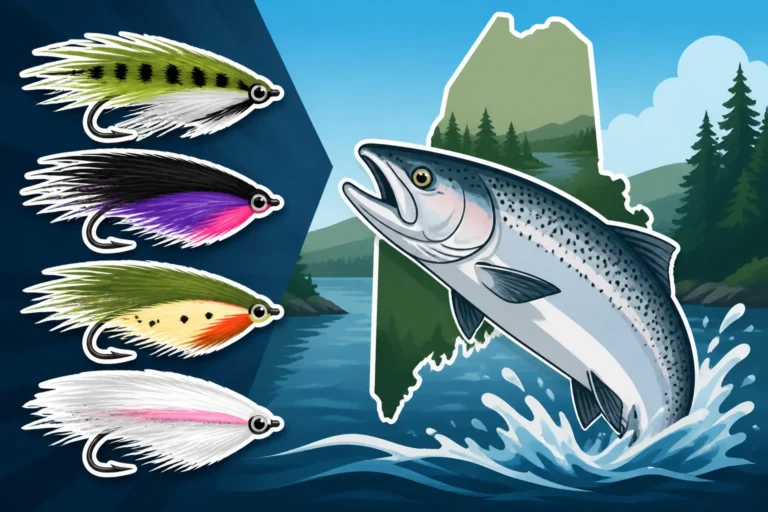
Streamer patterns imitating rainbow smelt help anglers catch predatory landlocked salmon in Maine lakes and rivers during spring runs.
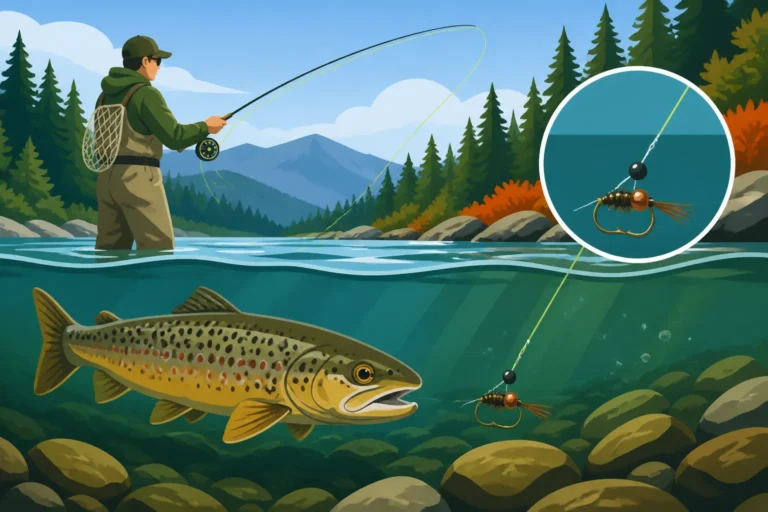
Nymph fishing for trout in Maine explains how to present subsurface aquatic insects like caddisflies, mayflies, and stoneflies in rivers.
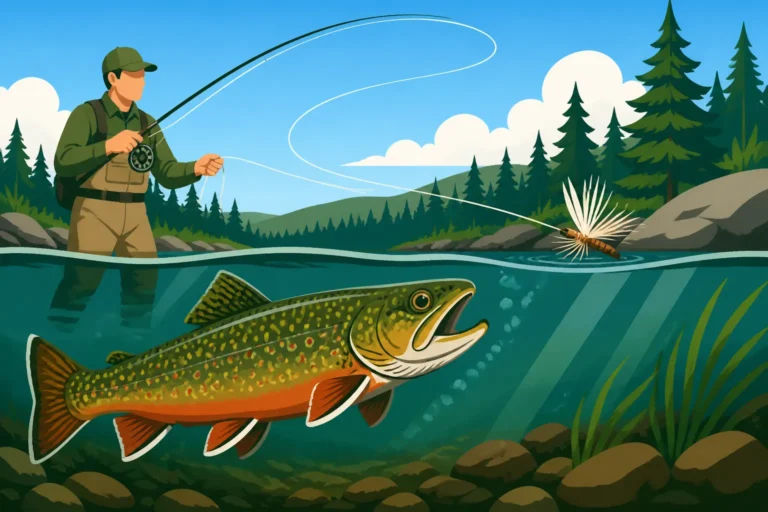
Maine brook trout in cold streams and spring-fed creeks rise to surface mayflies, caddisflies, and beetles during spring.

Timing in fly fishing determines success in Maine rivers by aligning daily fish activity with insect hatches and light conditions.
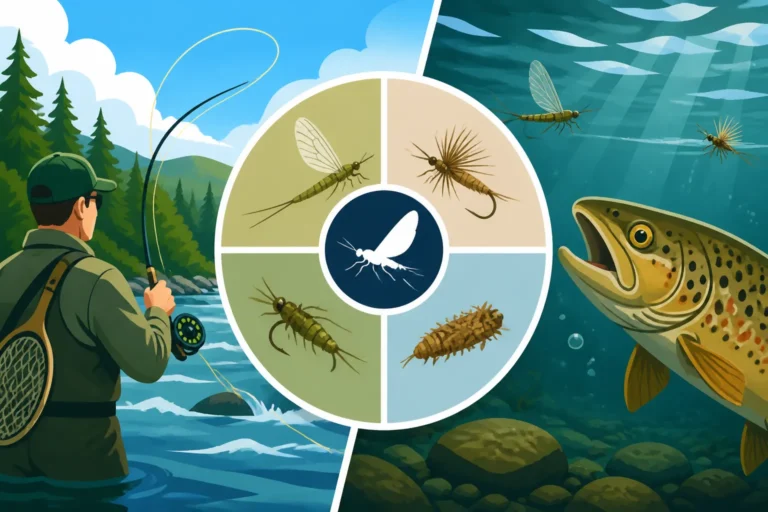
Matching the hatch on Maine rivers explains how aquatic insects emerge so anglers can imitate trout and salmon food sources.
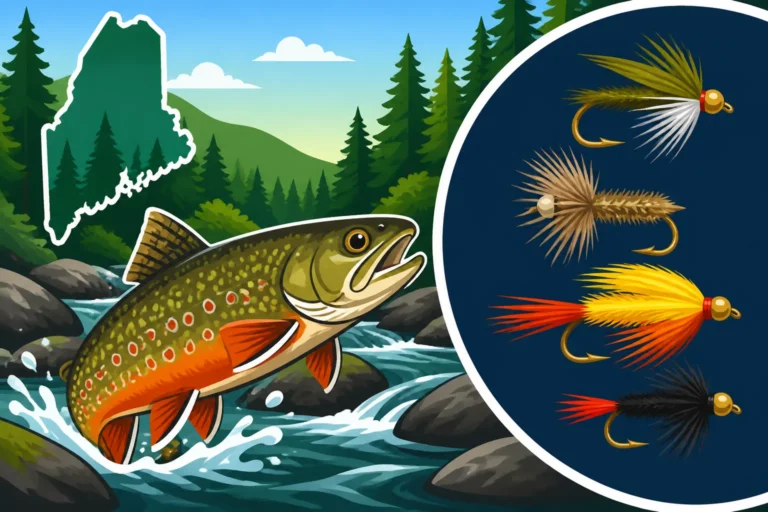
Elk Hair Caddis and Adams dry flies consistently entice wild brook trout feeding on caddisflies and mayflies in cold Maine streams.
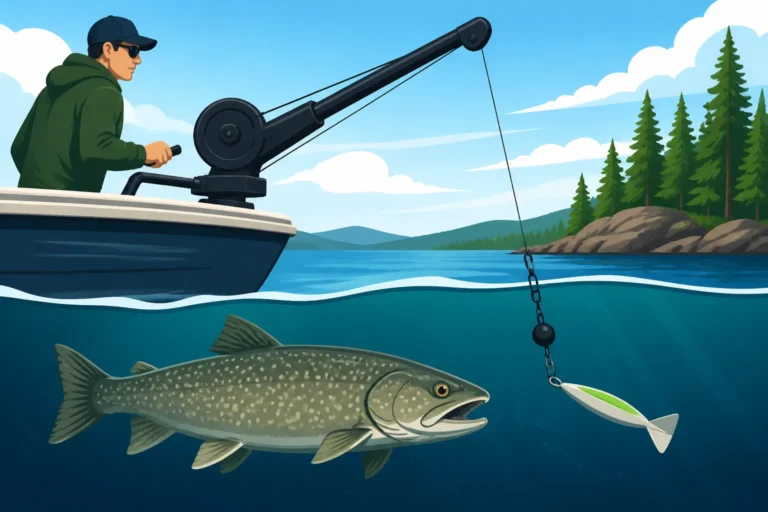
Downrigger precision control places bait at depths of forty to over one hundred feet to target Maine lake trout in deep waters.
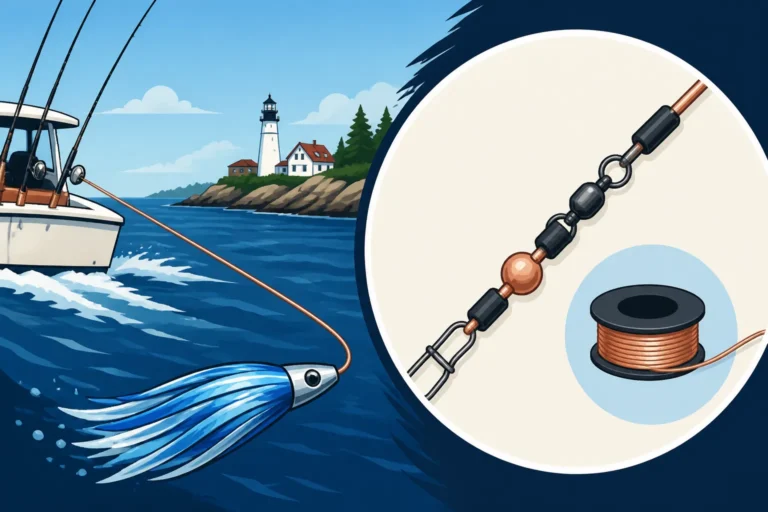
Copper line rigging for Maine lake trolling helps anglers reach landlocked salmon and trout at specific depths.
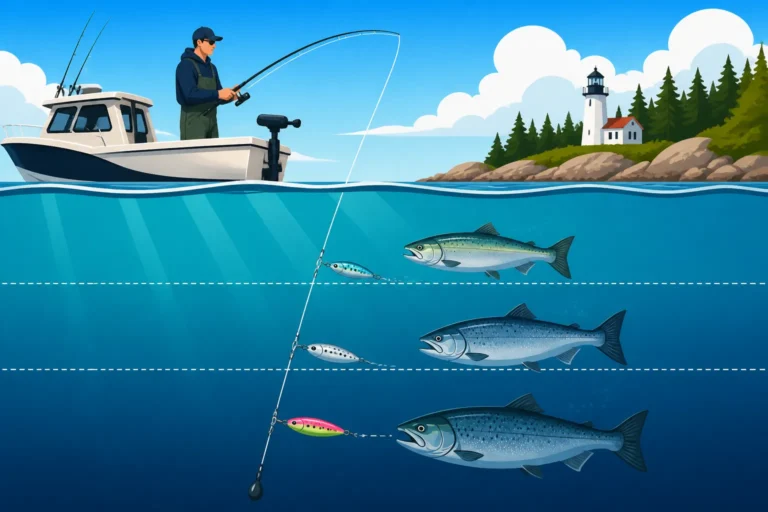
Summer trolling depth for landlocked salmon depends on the thermocline, water temperature, oxygen levels, and baitfish locations.
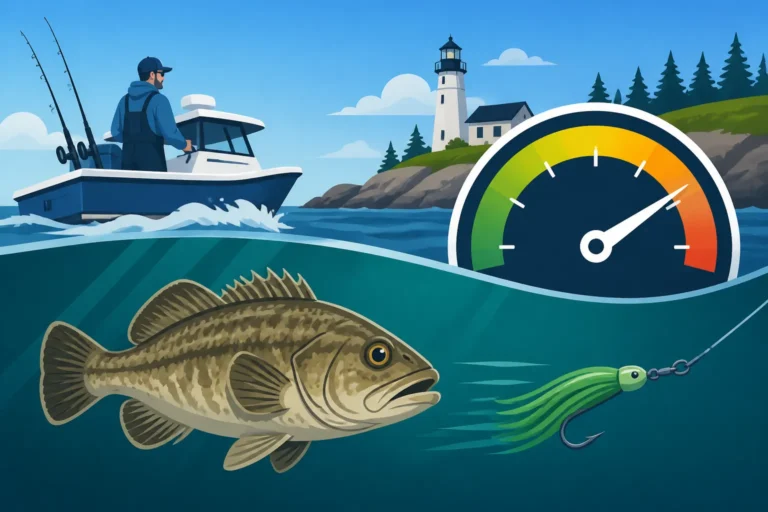
Proper trolling speed for togue on Maine lakes ranges from 1.8 to 2.5 miles per hour to trigger strikes from deep water predators.