Fishing After a Cold Front
Cold fronts in Maine cause drops in temperature and rising barometric pressure, making fish sluggish and difficult to catch.
Match the method to the moment.
Seasonal patterns, proven tactics, rigging and presentation basics, bait choices, and how to adapt as conditions change.
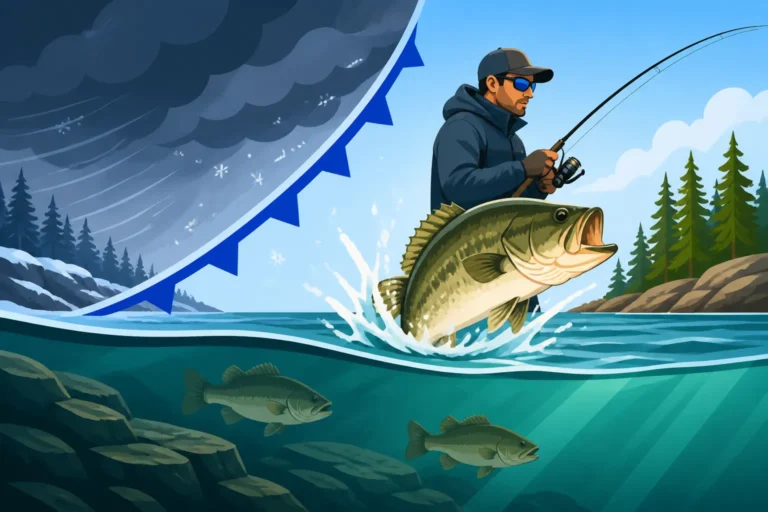
Cold fronts in Maine cause drops in temperature and rising barometric pressure, making fish sluggish and difficult to catch.

Pre-front fishing science, barometric pressure shifts, and changing weather help anglers catch active fish in Maine waters.
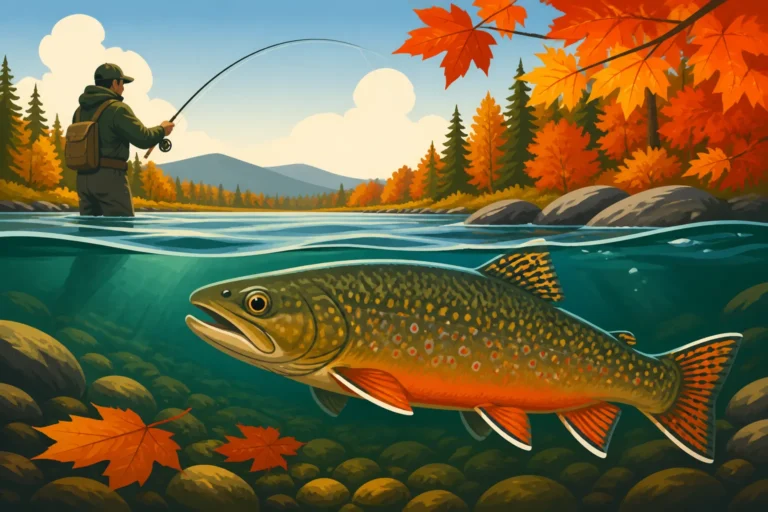
Maine brook trout fishing improves in autumn because cooling waters trigger intense feeding frenzies and seasonal spawning migrations.
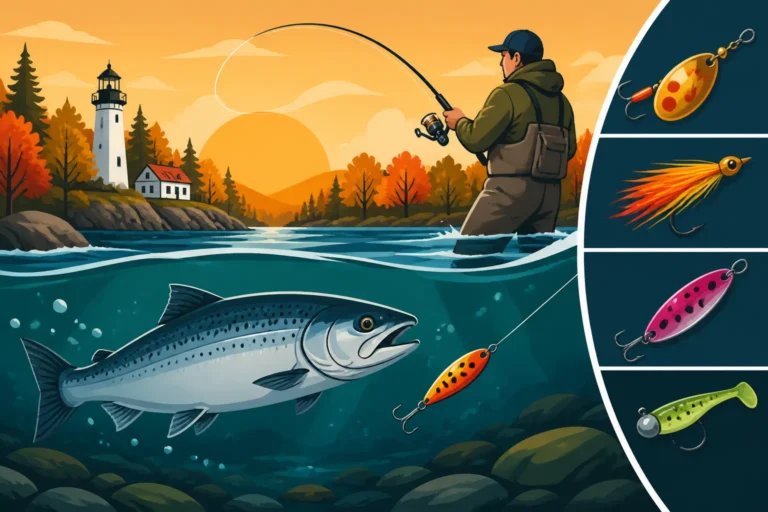
Fall fishing techniques for landlocked salmon in Maine explain trolling methods and seasonal spawning behaviors on lakes.
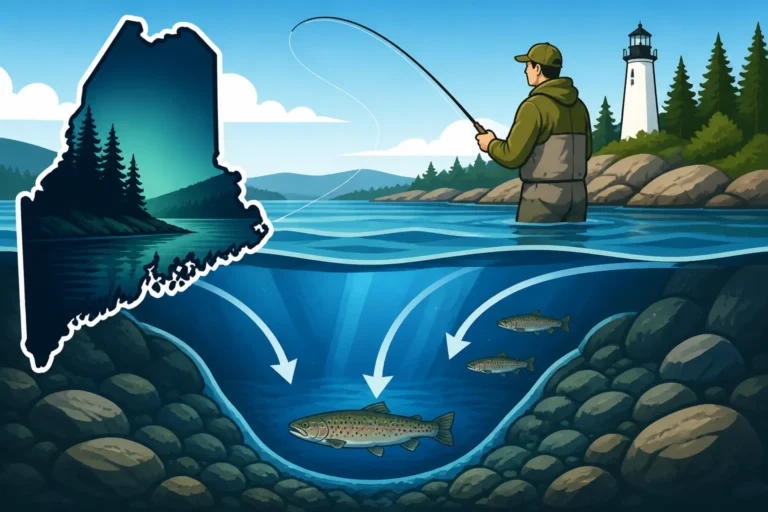
Cold water pockets in Maine lakes and streams provide brook trout and salmon summer refuge when surface temperatures rise above sixty-five degrees.
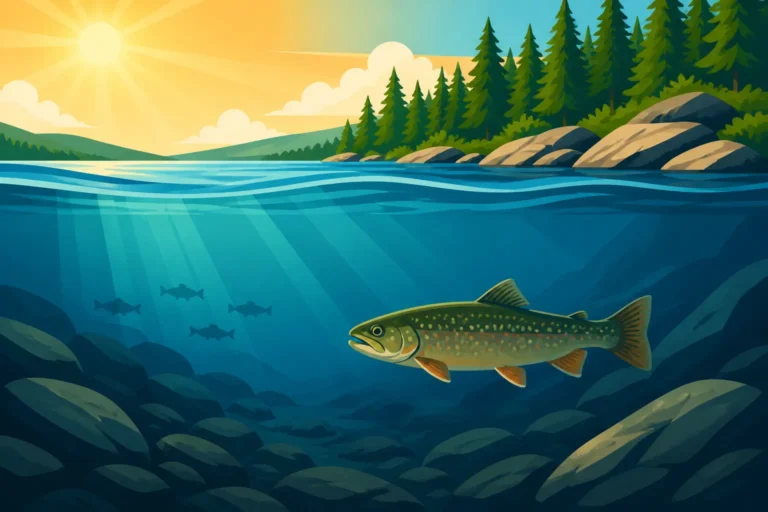
Maine trout move to deeper, cooler water in summer because warm surface temperatures reduce dissolved oxygen levels and cause stress.
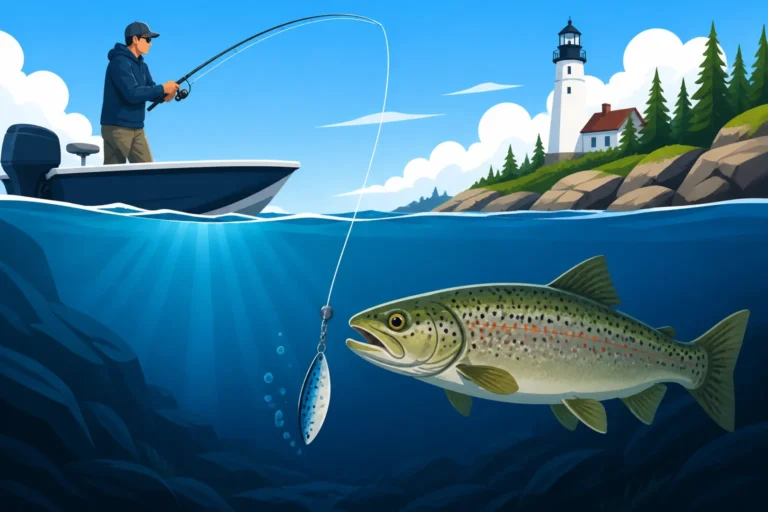
Summer heat pushes brook trout, landlocked salmon and togue into the cold deep layers below the thermocline, where oxygen can run low in shallow lakes.
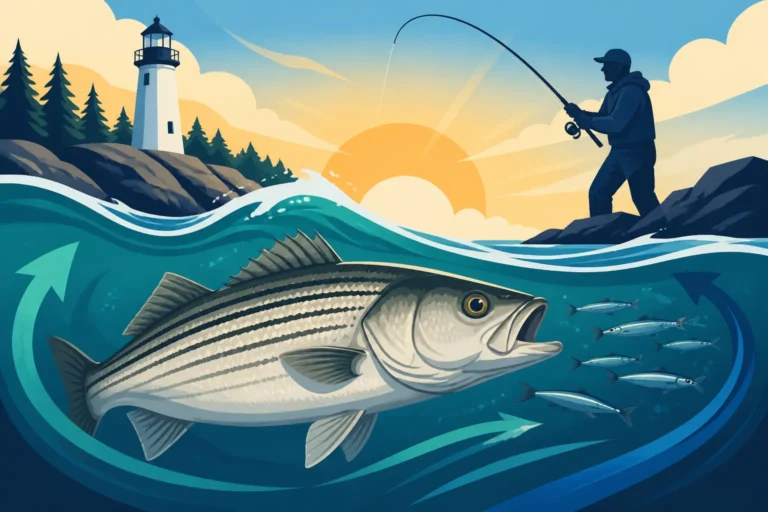
Maine striped bass fishing strategies depend on tidal movement, explaining how incoming and outgoing currents drive feeding patterns.
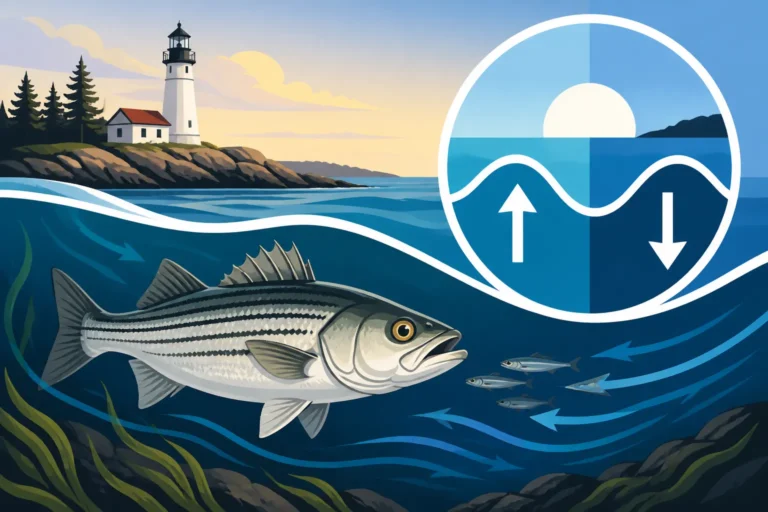
Maine tides and tidal charts dictate striped bass feeding patterns, helping anglers find fish during optimal water movement periods.
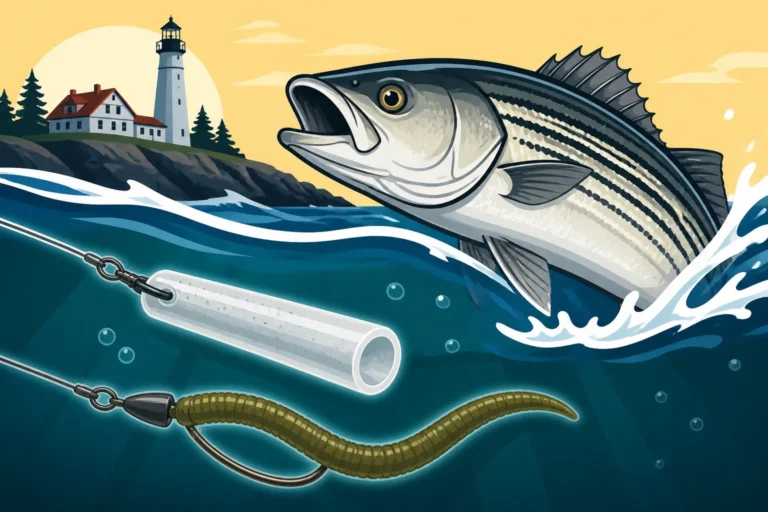
Trolling tube and worm rigs for Maine striped bass helps anglers catch elusive fish using natural bait and visual lures.