Maine Bass Fishing Techniques by Season
Maine bass fishing can feel like a complete mystery sometimes, can't it? One week you're catching them left and right, and the next, it's like they've vanished into thin air. The truth is, bass behavior changes dramatically with the seasons here in Maine, and what worked in May will likely leave you empty-handed in August. This guide is all about unraveling that seasonal puzzle, giving you the techniques, lures, and mindset you need to consistently put bass in the boat (or on the ice!) no matter the time of year.
Spring Bass Fishing in Maine: The Pre-Spawn and Spawn Frenzy
Ah, spring in Maine! It's that magical time when the ice finally leaves our lakes and ponds, and anglers eagerly anticipate the explosion of activity. For bass, spring is all about reproduction, a period broken down into pre-spawn, spawn, and post-spawn phases, each demanding slightly different approaches. Understanding these transitions is key to a successful spring fishing season.
Early Spring Tactics: Cold Water & Pre-Spawn Bass
When the ice first recedes and water temperatures are still hovering in the 40s to low 50s Fahrenheit, bass are lethargic but starting to think about food. They're recovering from winter and building energy for the upcoming spawn. This is a time when slower presentations and specific locations really shine. Don't expect aggressive, fast-paced bites. Instead, focus on areas that warm up fastest. Think shallow, dark-bottomed coves, north-facing banks, and any areas with emergent vegetation that can absorb sunlight. These spots act like natural solar panels, drawing in baitfish and, consequently, hungry bass.
For lures, something subtle and easy for a cold-blooded fish to ambush is best. Jerkbaits, like a classic suspending Rapala, fished with long pauses can be absolutely deadly. Cast it out, twitch it a few times, and then let it sit motionless for 5-10 seconds. Many strikes happen on that pause. Blade baits or lipless crankbaits, retrieved slowly along the bottom or yo-yo'd, can also entice a bite. Another fantastic option is a jig and trailer, slowly dragged or hopped along rocky points or transition areas. The key here is patience; don't rush your retrieve. Sometimes, the slowest retrieve is the fastest way to get a bite in cold water. You might want to stock up on a variety of colors and weights on Amazon to be ready for any condition.
Navigating the Bass Spawn: Beds and Bites
As water temperatures climb into the mid-50s and low-60s, the bass spawn begins in earnest. This is when smallmouth and largemouth bass move into very shallow water to build and guard their nests. Identifying these "beds" is often the most direct route to catching bass during this period. Look for lighter, circular patches on the bottom, usually in sandy or gravelly areas, often near submerged logs, rocks, or weed lines that offer protection. Bass, particularly the males, will aggressively defend these nests from anything they perceive as a threat.
Flipping and pitching soft plastics into or near these beds is a classic and highly effective technique. Creature baits, tubes, or senko-style worms in natural colors like green pumpkin or black and blue are excellent choices. Cast beyond the bed, retrieve it slowly until it's right in the zone, and let it sit. Twitch it occasionally. The bass might not eat it out of hunger, but out of pure territorial aggression. Be mindful of fishing regulations during the spawn; some waters in Maine have special catch-and-release rules for bass during this sensitive period. Always check the current Maine Fishing Regulations Explained to ensure you're in compliance.
Post-Spawn Recovery and Feeding Patterns
Once the spawn is complete, typically when water temperatures are firmly in the mid-60s and climbing, bass enter a post-spawn phase. This can be a tricky time as bass are often exhausted and recovering. They'll generally move slightly deeper than their spawning grounds but remain relatively close, seeking structure like submerged humps, weed edges, and transition zones where they can rest and ambush prey without expending too much energy.
During post-spawn, bass are still feeding, but not always as aggressively as in pre-spawn or late summer. Lures that mimic small baitfish or crawfish are excellent. Spinnerbaits, chatterbaits, and medium-diving crankbaits can cover water effectively and trigger reaction strikes. Soft plastic jerkbaits, fished weightless or with a light Texas rig, are also fantastic for enticing wary, post-spawn bass hovering around cover. Think about a slow, deliberate retrieve that gives them an easy meal. This is a great time to experiment with presentation; sometimes a subtle twitch is all it takes, while other times a little more erratic action can get their attention. Pay attention to "Reading Lake Structure for Maine Bass" as they will be holding near points and drop-offs.
Summer Bass Fishing in Maine: Deep Water and Topwater Thrills
Maine summers are absolutely gorgeous, and the bass fishing can be fantastic, but it requires adjusting your strategy. As water temperatures soar, especially during those long, hot July and August days, bass will seek refuge in deeper, cooler waters, often congregating around specific structures. However, don't rule out the exhilarating topwater bite during the low-light hours.
Targeting Deep Structure During Summer Heat
When the sun is high and the air is sweltering, the majority of the bigger bass will retreat to cooler, deeper parts of the lake. This means focusing your efforts on offshore structure: submerged humps, rock piles, deep weed lines, points that extend far out into the lake, and even sharp drop-offs. These areas offer both cooler water and ambush points for passing baitfish. A good fish finder is invaluable here for locating these underwater features and identifying schools of bait or individual fish.
Heavy jigs with bulky trailers, Carolina rigs, or deep-diving crankbaits are your best friends in the summer depths. For jigs, target vertical cover like standing timber or rock faces. For Carolina rigs, use a long leader and slowly drag it across flats and humps, letting the bait float tantalizingly above the bottom. Deep-diving crankbaits, especially those that "dig" into the bottom, can provoke aggressive reaction strikes from bass lurking on deep contours. Remember that Maine Bass Limits by Zone may vary, so always be aware of the specific rules for the water you are fishing. Sometimes, simply finding the right depth is more important than the exact lure, so understanding "How Deep Should You Troll for Salmon in Summer?" (even if for bass) can give you insight into where to start looking.
Early Morning and Evening Topwater Action
While the midday sun drives bass deep, the low-light hours of early morning and late evening can bring them shallow for explosive topwater action. This is arguably one of the most exciting ways to catch bass. As the sun rises or sets, bass will often move up to hunt baitfish that are also venturing into the shallows. Look for calm water, shaded areas, and around weed beds or docks.
Classic topwater lures like poppers, walk-the-dog baits (e.g., Heddon Super Spook Jr.), and prop baits can deliver heart-stopping strikes. Frogs are also phenomenal when fished over thick lily pads or matted vegetation. The key to topwater is often a retrieve that mimics struggling prey. For poppers, a "pop-pause-pop" retrieve works wonders. For walk-the-dog baits, a rhythmic twitching of the rod tip makes the lure sashay back and forth, driving bass wild. Don't be too quick to set the hook; wait until you feel the weight of the fish, as they often "slurp" the bait before fully committing. Having a good selection of Topwater Lures for Maine Bass Fishing readily available can make all the difference.
Adapting to Midday Lulls and Thermoclines
The midday summer lull is a real thing, and it can be frustrating. When the sun is high, and the bite slows down, bass often become extremely passive or retreat to specific, hard-to-reach areas. This is where understanding thermoclines can be incredibly beneficial. A thermocline is a distinct layer within a body of water where the temperature changes more rapidly with depth than it does in the layers above or below. Often, bass will suspend right above or within the thermocline, as it offers the coolest, most oxygenated water during periods of stratification.
During these lulls, finesse techniques are paramount. Drop-shot rigs, shaky head jigs, and wacky-rigged worms are excellent choices. These presentations are subtle, mimicking a natural, easy meal and are less likely to spook wary bass. Cast to shaded areas, under docks, or along deep weed lines where bass might be seeking cover. Sometimes, simply presenting a bait slowly and repeatedly to a suspected holding area is what it takes. Don't be afraid to lighten your line and downsize your baits; sometimes less is definitely more when the bite gets tough. For finding the right depth, a portable fish finder purchased from Amazon can be a game-changer for identifying both fish and the thermocline itself.
Fall Bass Fishing in Maine: The Feeding Frenzy Before Winter
As the vibrant colors of autumn begin to paint the Maine landscape, a new phase of bass fishing emerges: the fall feeding frenzy. Bass know that winter is coming, and they need to pack on the pounds. This period is often considered one of the best times to catch big, aggressive bass. The cooling water temperatures re-energize them, and they become highly active feeders.
Capitalizing on the Fall Feed: Baitfish Migration
The most significant factor influencing fall bass behavior is the baitfish migration. As lakes and ponds cool, baitfish like alewives, shiners, and perch begin to school up and move from deeper summer haunts to shallower bays and coves, often congregating near main lake points, creek channels, and the backs of coves. Bass follow these schools relentlessly, creating incredible opportunities for anglers. Finding the bait is often synonymous with finding the bass.
Lures that effectively imitate schooling baitfish are incredibly productive. Crankbaits, especially those with tight wobbles and realistic baitfish patterns, excel at covering water and triggering strikes. Large spinnerbaits and bladed jigs (ChatterBaits) also create significant vibration and flash, making them irresistible to bass actively hunting bait balls. Don't shy away from larger profile baits either; fall bass are looking for a substantial meal. Keep an eye on any surface activity like schooling baitfish or diving birds, as these are tell-tale signs of a feeding frenzy below. Understanding "How Wind Affects Lake Fishing" can also play a huge role in finding these bait schools as wind can push them towards certain shores.
Locating Fall Bass: Structure and Schools
In the fall, bass tend to school up much more tightly than in summer or spring. Once you find one bass, there are likely many more in the immediate vicinity. Focus your search on channel swings, main lake points, humps, and the edges of expansive weed beds that are still healthy. Bass will use these areas as ambush points to intercept migrating baitfish. Vertical jigging can also be very effective when you locate schools of bass on your fish finder.
Pay close attention to changes in depth and bottom composition. A rocky point that drops off into a deep channel can be a magnet for both bait and bass. Look for areas where different types of structure meet, such as a weed line transitioning to a rock pile. These "transition zones" are often prime real estate for schooling bass. When you locate a school, try various retrieve speeds and depths. Sometimes a fast, erratic retrieve works best, while other times a slower, more methodical approach is needed to entice the most wary fish. "Reading Lake Structure for Maine Bass" becomes absolutely crucial during this season.
Adjusting to Cooling Waters and Shorter Days
As fall progresses and water temperatures continue to drop, eventually falling into the 50s and even 40s by late autumn, bass will become less active, though still eager to feed when the opportunity arises. The days are shorter, and the feeding windows might become more condensed. This means capitalizing on prime times like midday sun when the water is at its warmest, or during prolonged periods of stable weather.
When the water gets colder, slow down your presentation again, much like early spring. Jerkbaits with long pauses remain effective, as do jigs and slow-rolled spinnerbaits. The bass are still aggressive, but their metabolism is slowing, so they need a bait that's easy to catch. Consider throwing a deeper diving crankbait if the fish have moved to deeper breaks. Focus on the deepest cover and structure you can find in the main lake basin, as bass will eventually settle into these areas for the winter. This is also a good time to review Maine North Zone vs South Zone Fishing Rules, as season closures or specific regulations might be approaching for certain areas.
Winter Bass Fishing in Maine: Ice Fishing for Largemouth and Smallmouth
Many anglers hang up their rods once the lakes freeze over, but in Maine, winter offers a unique and often productive opportunity to target bass through the ice. Both largemouth and smallmouth bass can be caught, though their behavior and preferred locations differ, requiring distinct approaches.
Ice Fishing Strategies for Largemouth Bass
Largemouth bass in winter tend to gravitate towards shallower, weedy areas. Look for lakes with extensive weed beds (even if dormant), standing timber, brush piles, or old submerged docks in 5 to 15 feet of water. These areas offer cover and often hold residual baitfish, giving largemouth an easy ambush point.
For largemouth, live bait under tip-ups is a fantastic strategy. Small shiners, suckers, or even large minnows are excellent choices. Set your tip-ups along weed edges, near drop-offs into deeper water, or right over submerged structure. Another effective method is jigging with small spoons, lipless crankbaits, or even bass jigs tipped with a grub or a piece of plastic. Work these lures slowly, with subtle lifts and drops, trying to entice a lethargic bass into striking. The key is often patience and paying attention to subtle bites – they might just feel like a slight weight on your line rather than an aggressive tug. For the best selection of durable ice fishing jigs, check out Amazon.
Ice Fishing Strategies for Smallmouth Bass
Smallmouth bass, on the other hand, typically prefer deeper, rocky structures in winter. Think main lake humps, deep points, rock piles, and sharp drop-offs into basins of 20 to 50 feet or more. They often suspend in schools off the bottom, so a good understanding of how to use a flasher or fish finder is crucial for locating them. While jigging for smallmouth, you might be surprised to find some bigger Togue Minimum Length Limit in Maine in these same depths!
Vertical jigging is the primary technique for ice fishing smallmouth. Blade baits, heavier jigging spoons (like Swedish Pimples or Do-Jiggers), or drop shots rigged with small soft plastics are highly effective. Once you mark fish on your electronics, present your lure just above them. Experiment with the retrieve: sharp snaps, subtle jiggles, or long pauses can all trigger a strike. Sometimes, dropping the lure quickly past the fish will provoke a chase and a bite. Live bait (minnows) on tip-ups can also work for smallmouth, particularly if they are suspended off a deep structure.
Safety and Essential Gear for Winter Bass Angling
Ice fishing in Maine, while incredibly rewarding, demands a strong emphasis on safety. Always prioritize ice safety. "How Thick Should Ice Be Before Fishing on It?" is a question every angler needs to answer responsibly. A general rule of thumb is at least 4 inches of clear, solid ice for individual foot travel, but more is needed for groups or vehicles. Always go with a buddy, tell someone where you're going, and carry essential safety gear: ice picks, a spud bar (to test ice thickness), a throwable flotation device, and extra warm, waterproof clothing.
Beyond safety, having the right gear makes a huge difference. A good ice auger (either hand, power, or electric) is a must. A portable shelter can make a cold day much more enjoyable, especially when "How to Stay Warm While Ice Fishing" becomes a serious consideration. Invest in quality ice fishing rods, reels, and a flasher or fish finder. A portable heater for your shelter, a comfortable seat, and a reliable headlamp for early mornings or late evenings round out the essentials for a successful and safe winter bass fishing experience in Maine.
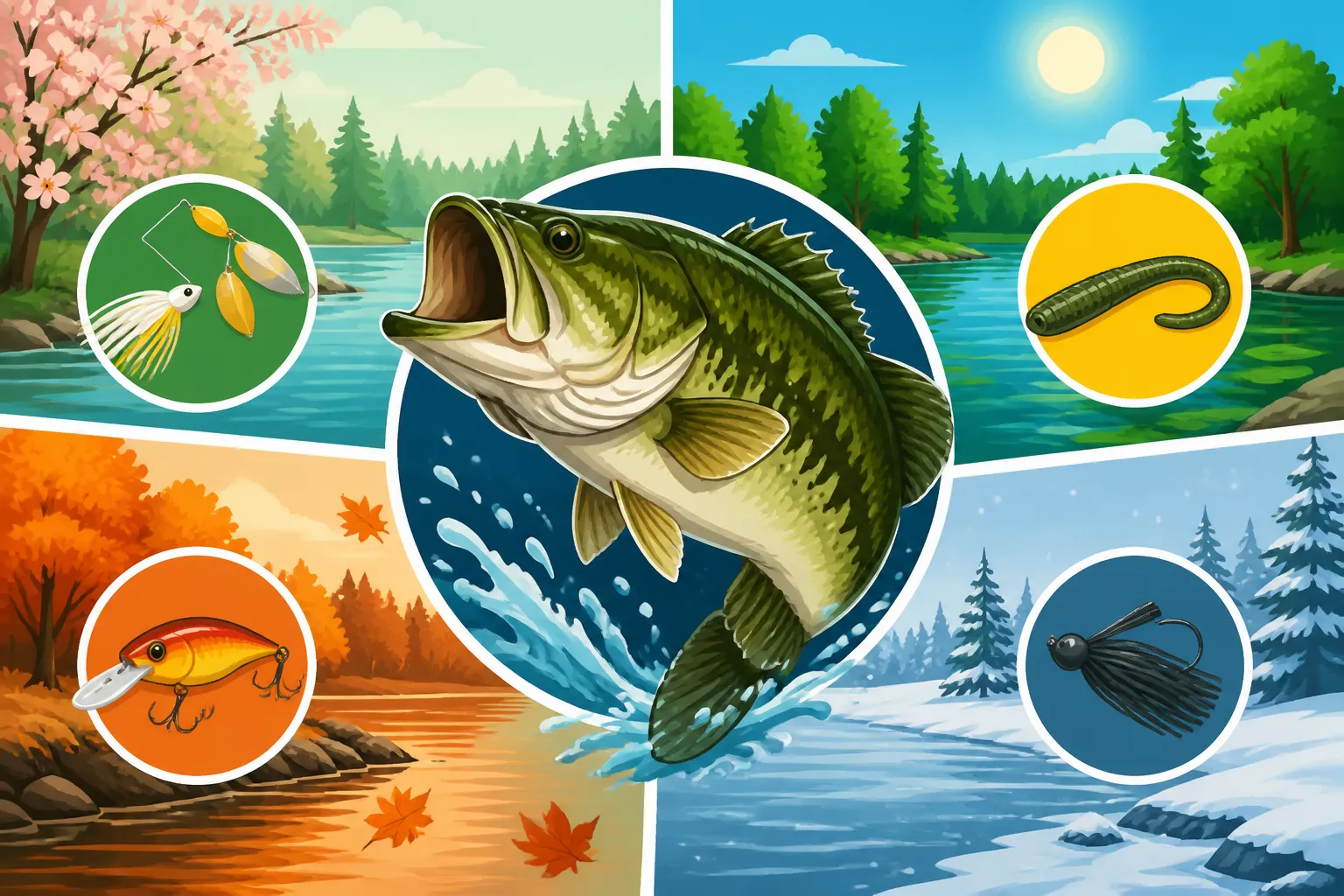
Maine Bass Fishing Techniques by Season Summary Table
Here's a quick overview of the key techniques, locations, and lures to consider for bass fishing throughout the Maine seasons:
| Season | Primary Water Temp Range (F) | Key Locations | Recommended Techniques | Go-To Lures | General Behavior |
|---|---|---|---|---|---|
| Spring | 40s – Low 60s | Shallow coves, dark bottoms, spawning beds, transition zones | Slow retrieve, flipping & pitching | Jerkbaits, jigs, soft plastics (senkos, tubes), lipless crankbaits | Pre-spawn lethargy, spawning aggression, post-spawn recovery |
| Summer | Mid 60s – 80s | Deep humps, rock piles, weed edges, main lake points, docks | Deep jigging, Carolina rigs, topwater | Deep-diving crankbaits, heavy jigs, topwater poppers/walkers, drop shots | Retreat to cool depths, active at dawn/dusk, midday lulls |
| Fall | Low 60s – 40s | Channel swings, main lake points, healthy weed edges, baitfish schools | Covering water, vertical jigging | Crankbaits (baitfish patterns), spinnerbaits, bladed jigs, swimbaits | Aggressive feeding frenzy, schooling behavior |
| Winter | 30s (under ice) | Largemouth: Weeds, timber, brush (5-15ft); Smallmouth: Deep humps, rock piles (20-50ft) | Tip-ups (live bait), vertical jigging | Small spoons, blade baits, jigs, drop shots, live minnows | Lethargic, suspend (smallmouth), ambush (largemouth) |
Final Thoughts on Mastering Maine's Bass Seasons
Maine bass fishing is a journey, not a destination. Each season presents its own set of challenges and rewards, but by understanding the seasonal patterns and adapting your techniques, you can enjoy fantastic fishing opportunities year-round. Don't be afraid to experiment, keep a detailed log of your outings, and always respect the unique ecology of Maine's beautiful waterways. Whether you're chasing that trophy largemouth or a feisty smallmouth, the Pine Tree State offers an incredible bass fishing experience.
Disclaimer
The information provided in this guide is for general informational purposes only and is not intended as legal advice regarding fishing regulations. Anglers are solely responsible for understanding and complying with all current Maine fishing laws, including licensing, bag limits, and specific water body regulations. Always consult the official Maine Department of Inland Fisheries and Wildlife (MDIFW) regulations before heading out on the water. Fishing can be dangerous; always prioritize safety and wear appropriate personal flotation devices.