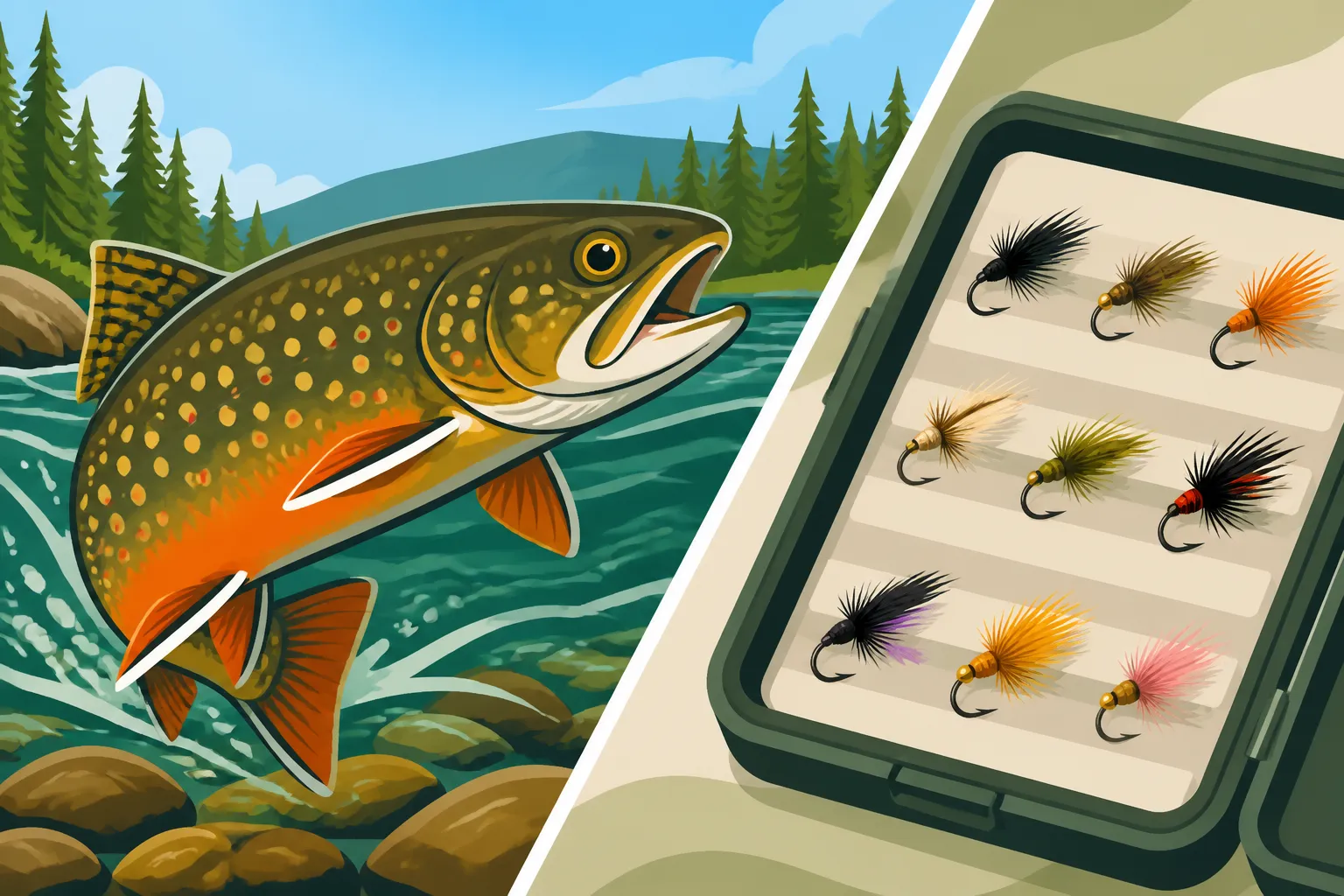
Fly Selection for Brook Trout
There’s nothing quite like the feeling of watching a beautiful Maine brook trout rise to your perfectly presented fly. But let’s be honest, there’s also nothing quite like the frustration of seeing fish actively feeding and having absolutely no idea what fly to tie on next. You've cast everything in your box, from tiny midges to bulky streamers, and still, nothing. That feeling of being totally out of sync with the fish is something every angler knows well. This guide is here to untangle that mystery, giving you the confidence to pick the right fly for brook trout in Maine's incredibly diverse waters, no matter the conditions.
Understanding Maine's Brook Trout Habitats and Behavior
Before we even get to specific fly patterns, it's crucial to understand where Maine's brook trout live and how they behave. These incredible native fish are highly adapted to their environment, and knowing their preferred haunts and feeding strategies is the first step toward effective fly selection.
The Diverse Waters of Maine
Maine is truly a brook trout paradise, but it’s far from a monolithic fishing experience. You’ll find brook trout thriving in an astonishing array of waters, each with its own unique characteristics that influence what flies you should be throwing. From the smallest, coldest headwater streams tucked deep in the woods of Aroostook County to the sprawling, remote ponds of the North Woods, and even some of the small, clear lakes in the western mountains, these fish call a huge variety of places home.
Imagine a tiny, crystal-clear mountain brook, barely a foot wide, where the water is so cold it makes your teeth ache. Here, brookies might be smaller, but they’re feisty and often less selective, willing to pounce on whatever drifts by. Contrast that with a larger, slower-moving river, perhaps one flowing into a lake, where the trout are larger and might have a wider variety of food sources available, making them pickier. Then there are the countless remote ponds, often spring-fed and teeming with insect life, where big, wild brook trout can grow to impressive sizes, feasting on both aquatic insects and unfortunate terrestrials. The water temperature in these different environments plays a huge role; colder water means less active fish and slower metabolisms, while warmer (but still cool enough for trout!) water can mean explosive feeding. Understanding these subtle differences is paramount to success.
Brook Trout Feeding Habits
Brook trout are, by nature, opportunistic feeders. This means they'll munch on whatever is available and seems like a good meal, whether it’s a tiny nymph drifting along the bottom, an unsuspecting ant falling from an overhanging branch, or a plump minnow darting through the weeds. However, while opportunistic, they can also become incredibly selective, especially when a significant "hatch" of a particular insect is underway.
This is where the frustration often sets in. You see fish rising steadily, dimpling the surface, or even leaping clear of the water, and you know they're eating something. But what? Are they keying in on tiny emergers just below the surface film? Are they gorging on fully adult mayflies floating on top? Or are they slurping up drowned terrestrials that drifted into the current? Their diet can shift dramatically based on the time of day, the season, and the specific insect activity around them. They'll actively "key in" on a dominant food source, sometimes ignoring everything else. In murky water after a rain, they might respond better to larger, more visible patterns, while in gin-clear waters, a tiny, perfectly matched fly might be the only thing that gets a strike. Observing their behavior and surroundings before tying on your first fly will give you a significant advantage, helping you decode their menu of the moment.
Essential Dry Flies for Maine Brook Trout
When brook trout are actively looking up, there's nothing more exhilarating than presenting a dry fly and watching a native brookie slurp it from the surface. These patterns are designed to imitate insects either floating on the water or falling onto it.
Imitating Aquatic Insects
The life cycle of aquatic insects like mayflies, caddisflies, and stoneflies provides a consistent food source for brook trout throughout much of the open water season in Maine. Knowing the general timing of these hatches and having the right imitations in your fly box is absolutely crucial.
One of the most universally effective dry flies for Maine brook trout is the Adams and its various iterations. This grey, bushy pattern imitates a wide range of mayflies and caddisflies, making it a fantastic "searcher" pattern when you're not sure what's hatching. It floats well, is visible to both you and the fish, and simply catches trout. In the early season, when the water is still cold, patterns like the Blue-winged Olive (BWO) in smaller sizes (18-22) are fantastic for imitating those little, dark mayflies that often emerge on overcast days. Later in spring, the Hendrickson hatch can be significant on many Maine rivers, prompting fish to feed aggressively on these larger, reddish-brown mayflies. For caddisflies, you can't go wrong with an Elk Hair Caddis in various sizes and colors, especially olive, tan, or natural grey. When you see caddisflies skittering across the surface at dusk, an Elk Hair Caddis twitched gently can be deadly. And don't forget the more robust Stimulator, which can imitate larger stoneflies or caddis, especially in faster water where brook trout need a bigger, more visible meal. Having a diverse selection of these patterns, ranging from size 12 down to 20, is essential for any serious Maine fly angler.
Terrestrial Offerings for Warmer Months
As the dog days of summer arrive and the aquatic insect hatches become less predictable, brook trout often turn their attention to terrestrials – land-based insects that accidentally fall into the water. This is where your fly box should have some bigger, buggier patterns.
From late June through September, especially near grassy banks, overhanging trees, or any vegetation close to the water's edge, brook trout will eagerly gorge on ants, beetles, and grasshoppers. Small, black or cinnamon Ant patterns (size 14-18) can be incredibly effective when twitched subtly or allowed to drift naturally under branches. Beetles, particularly Foam Beetles or Japanese Beetles, are another summer staple. These patterns are dark, chunky, and float well, making them irresistible to hungry brookies. They represent a substantial meal and can often entice larger fish. And then there are the hoppers! A well-tied Dave's Hopper or Charlie Boy Hopper can trigger aggressive strikes, particularly in meadows or along river stretches with tall grass. These larger patterns often work best when "plopped" down near the bank, imitating an insect that just fell in. If you're struggling to get a strike on a tiny dry fly in mid-summer, don't be afraid to size up and switch to a terrestrial; it often makes all the difference, particularly if you're exploring Best Fishing Rivers in Aroostook County or the smaller streams of Western Maine where insect populations can be dense.
Productive Nymphs and Wet Flies
Not all brook trout feeding happens on the surface. In fact, a vast majority of a trout's diet consists of subsurface insects, particularly nymphs. This means that having a good selection of nymphs and understanding how to fish them is just as important, if not more so, than carrying dry flies.
Subsurface Aquatic Imitations
Nymphs are typically fished below the surface, weighted to sink to the depth where trout are feeding. They imitate the immature stages of mayflies, caddisflies, and stoneflies before they emerge into adults.
Generalist nymph patterns are absolute workhorses in a Maine fly angler's arsenal. The Pheasant Tail Nymph and the Hare's Ear Nymph, both in various sizes (12-18) and with or without beadheads, are excellent choices. They imitate a wide variety of mayfly and caddisfly nymphs and are often productive even when you don't know what specific insect is present. The beadhead versions sink faster and can be fished deeper, which is often crucial when brook trout are hugging the bottom in colder water or faster currents. For imitating larger stoneflies, especially in swifter sections of rivers, the Prince Nymph or a heavier Pat's Rubber Legs can be incredibly effective. These patterns are more substantial and can entice larger brook trout looking for a bigger meal. Nymphing can be done under an indicator (a small bobber) to detect subtle strikes, or using tight-line nymphing techniques which give you a direct connection to your fly. When trout aren't rising, but you know they're there, a well-fished nymph rig is often the answer.
Wet Flies for Traditional Angling
Wet flies are a bit of a forgotten art form for some modern fly anglers, but they can be incredibly effective for brook trout, especially in streams and rivers. Unlike nymphs which are typically fished deeper, wet flies are often fished just below the surface or allowed to swing in the current.
Traditional wet flies, often tied with soft hackles that pulse and breathe in the water, imitate emerging insects or drowned adults. Patterns like the Partridge and Orange or Greenwell's Glory can be deadly, particularly when fished in a "swing" across the current at the end of a drift. They have a subtle, lifelike action that brook trout find hard to resist. Maine also has its own classic wet fly patterns that have stood the test of time, such as the Leadwing Coachman and the Hornberg. The Hornberg, in particular, is a versatile pattern that can be fished wet as an emerger or even greased and fished as a dry fly in a pinch. The beauty of wet flies is their versatility; they can be fished upstream, downstream, or across, and often trigger a strike as they rise through the water column on the swing. If you're looking to explore more traditional angling methods and find success, adding a few wet flies to your selection is a smart move, especially when fishing for Brook Trout in Maine.
Streamers and Attractor Patterns for Aggressive Brook Trout
Sometimes, brook trout aren't interested in a delicate sip or a subtle nymph. Sometimes, they want to chase something down. This is where streamers and attractor patterns come into play, designed to provoke a more aggressive, predatory strike.
Mimicking Baitfish
Larger brook trout, especially those in ponds and lakes, will actively hunt and feed on smaller baitfish like minnows and smelt. Streamer patterns are tied to imitate these forage fish, and they can produce some of the most exciting and memorable strikes.
The Woolly Bugger is arguably the most versatile streamer pattern ever created. Available in countless colors (black, olive, brown, white are all excellent choices for Maine), and with or without beadheads, it can imitate everything from a leeches to baitfish to large aquatic insects. It has a fantastic, pulsating action in the water that brook trout find irresistible. Another classic for Maine waters, especially those with populations of smelt, is the Muddler Minnow. This pattern, with its distinct deer hair head, pushes water and creates a commotion, often eliciting vicious strikes from larger brookies. For a more classic Maine feel, you can't go wrong with traditional Maine streamer patterns like the Grey Ghost and Black Ghost. These patterns, often tied with bucktail and flashy materials, are designed specifically to imitate smelt, a primary food source for larger salmonids in many Maine lakes. When fishing these, a strip-and-pause retrieve often works best, mimicking a darting baitfish trying to escape. Casting streamers along drop-offs, near submerged structure, or into deeper pools can often turn up trophy-sized brook trout.
Flashy Attractors
Sometimes, the trout aren't focused on any specific food item, or conditions might be off (e.g., heavily overcast, choppy water, or slightly murky). This is when attractor patterns shine. These flies don't necessarily imitate anything specific but are designed to grab a fish's attention through their color, flash, or general buggy profile.
On the dry fly side, while often seen as an imitation, the Royal Wulff acts as a fantastic attractor. Its bold white wings, peacock herl body, and red band make it highly visible to both angler and fish, often triggering a strike even when no hatch is present. It’s a great searcher pattern for broken water. In the nymph realm, patterns like the Red Tag or the Copper John are excellent attractors. The Copper John, with its flashy copper body, catches light and often prompts an inquisitive strike. These patterns can be fished alone or as part of a tandem nymph rig. When the fish are being particularly uncooperative or when you're exploring new water and don't know what's active, don't hesitate to tie on an attractor. Sometimes, a little bit of "bling" or a bolder profile is all it takes to get that first strike and unlock the bite.
Matching the Hatch and Beyond: Practical Fly Selection Tips
Successfully choosing flies for brook trout involves more than just knowing a few patterns. It requires observation, preparation, and an understanding of seasonal nuances.
Observational Skills for Fly Choice
One of the most valuable tools in your fly selection arsenal isn't in your fly box; it's your eyes and ears. Developing keen observational skills will vastly improve your success rate.
When you arrive at the water, don't just immediately start casting. Take a few minutes to observe. Are there any fish rising? If so, what do the rises look like – a gentle dimple for small emergers, a splashy jump for caddis, or a deliberate gulp for a larger mayfly? Look for insects in the air, on the water, or clinging to streamside vegetation. Are there any shucks (the shed exoskeletons of nymphs) floating in the current? These are clues to what might be hatching. The "match the hatch" philosophy suggests that if you can identify the natural insect, you should try to match it with a fly pattern of similar size, color, and profile. However, this can be incredibly difficult with tiny insects, and let's face it, trying to identify a minuscule mayfly while standing knee-deep in a cold Maine stream can be incredibly frustrating. Sometimes, a good generalist pattern that roughly matches the size and color is enough. Remember, it's not always about a perfect match, but a "close enough" match that the trout finds appealing.
Essential Gear and Fly Box Organization
You can have the best flies in the world, but if they're disorganized or you don't have the right accessories, you'll struggle. A well-stocked and organized fly box is a game-changer.
Carry a variety of sizes and colors for your most effective patterns. For example, don't just have one size of an Elk Hair Caddis; have it in 12, 14, 16, and 18. The same goes for color – different shades of olive, tan, or black can make a huge difference. Consider investing in a high-quality fly box that protects your flies and keeps them accessible. Brands like Amazon offer a wide selection of durable, waterproof fly boxes that can stand up to the rigors of Maine fishing. Beyond the flies, your leader and tippet selection are crucial. Always carry a range of tippet sizes, from lighter (e.g., 6X, 7X) for delicate presentations with tiny dry flies, to heavier (e.g., 3X, 4X) for streamers or nymphing in fast water. A good pair of nippers, forceps for hook removal, and a floatant for your dry flies are also absolute essentials. Being prepared means you can adapt quickly to changing conditions without fumbling through a disorganized mess. For more on getting set up, check out our guide on Maine Fly Fishing Techniques Guide.
Seasonal and Regional Considerations
Maine's fishing seasons bring distinct changes to brook trout behavior and their diet. What works in spring might not work in fall, and what’s effective in a remote northern pond might be different from a river in southern Maine. For comprehensive planning, consult the Maine Fishing Season Calendar and our Best Time of Year to Fish in Maine guide.
Spring (Ice-out through early June): This is often a time of high water and cold temperatures. Brook trout are focused on emerging nymphs. Look for early season mayfly hatches like Blue-winged Olives and Hendricksons, along with active caddis. Nymphing is often highly effective, particularly with beadhead patterns. Streamers can also be productive as trout shake off winter lethargy and aggressively feed. See our Maine Spring Fishing Guide for more details.
Summer (June through August): As water temperatures rise (but remain in the brook trout's comfort zone), terrestrials become increasingly important. Ants, beetles, and grasshoppers falling into the water are eagerly consumed. Evening hatches of caddis and some larger mayflies (like Isonychia or Sulphurs) can provide fantastic dry fly action. Fishing early mornings and late evenings often yields the best results during the heat of summer.
Fall (September through October): This is a magical time for brook trout, especially as they enter their stunning spawning colors. While some hatches persist, many fish become more aggressive and territorial. Streamers and larger, darker nymphs can be very effective, imitating baitfish or larger aquatic insects as trout try to put on weight for winter. During the spawn, ethical anglers target pre-spawn staging areas or post-spawn feeding lanes to avoid disturbing redds. Our Maine Fall Fishing Guide has more insights.
Regionally, a remote pond known for its wild brook trout might see less fishing pressure and more naive fish, possibly falling for more general patterns. Conversely, a popular river stretch might have fish that are highly educated and require more precise presentations and exact fly matches. For example, you might find different insect populations and therefore different fly preferences in the Moosehead Lake Fishing Guide region compared to the Sebago Lake Fishing Guide area, even though both hold excellent trout.
| Fly Category | Best Time of Year | Target Conditions | Key Patterns (Examples) | Notes |
|---|---|---|---|---|
| Dry Flies | Spring, Summer, Fall | Rising fish, hatches, calm water | Adams, Elk Hair Caddis, Dave's Hopper, BWO | Imitates insects on surface, visually exciting. |
| Nymphs | Year-round | Subsurface feeding, no rises | Pheasant Tail, Hare's Ear, Prince Nymph, Copper John | Imitates immature insects, often most consistent. |
| Wet Flies | Spring, Fall | Emerging insects, subtle strikes | Partridge & Orange, Leadwing Coachman, Hornberg | Fished just below surface, classic technique. |
| Streamers | Year-round | Aggressive fish, baitfish prey | Woolly Bugger, Muddler Minnow, Grey Ghost | Imitates baitfish, leeches; for larger fish. |
| Attractors | Any time | Off-color water, no specific hatch | Royal Wulff (dry), Red Tag (nymph) | Designed to grab attention, not mimic. |
Advanced Strategies and Troubleshooting Your Fly Selection
Even with a well-stocked box and a keen eye, there will be days when the brook trout simply refuse your offerings. This is when you need to dig a little deeper into your bag of tricks and troubleshoot your approach.
Size and Color Nuances
It’s not always about the pattern itself; sometimes, it's the subtle details of size and color that make all the difference. Trout can be incredibly particular, and understanding these nuances can turn a slow day into a successful one.
Imagine you're seeing small, dark mayflies hatching, and you're casting a size 16 dark grey dry fly. No bites. What's next? Try going down a size or two to an 18 or even a 20. Sometimes, trout will ignore a fly that's just slightly too big. Conversely, if you're fishing in a heavy, fast current or slightly off-color water, sometimes sizing up to a larger, more visible pattern can make the fly stand out more and be easier for the fish to spot. Color is another critical factor. On bright, sunny days, more muted, natural colors often work best. On overcast days or in lower light conditions (early morning, late evening), darker patterns can provide a stronger silhouette against the sky. Water clarity also plays a role; in very clear water, color needs to be precise, while in slightly turbid water, a bolder or flashier color might be more effective. Don't be afraid to experiment with slight variations in size and shade within the same pattern type; sometimes, that minor adjustment is all it takes to trick a wary brook trout.
Presentation Over Pattern
This is a truth universally acknowledged in fly fishing: a perfectly drifted "wrong" fly will often catch more fish than a poorly presented "right" fly. While fly selection is important, how you present that fly to the fish is often even more critical.
Consider a delicate dry fly floating downstream. If your fly line drags or creates unnatural currents, that fly will skate or pull, looking completely artificial to the trout. This is known as "drag," and it's the enemy of dry fly fishing. Learning to mend your line, make accurate casts, and achieve a truly "dead drift" is paramount. Similarly, with nymphs and streamers, the retrieve needs to be natural and enticing. A consistent swing of a wet fly, a natural drift of a nymph along the bottom, or an erratic strip-and-pause retrieve of a streamer can make the difference between a refusal and a strike. Validate the frustration here: learning to manage your line and achieve a perfect drift takes practice, and it’s one of the hardest parts of fly fishing. But when you get it right, the results speak for themselves. Focus on making your fly move in the water as naturally as the insects or baitfish they imitate. For more on this, check out our guide on Maine Open Water Line Limits.
When All Else Fails – Go Bold or Go Home
There are those days, we've all had them, where it seems nothing is working. You've tried every pattern, every size, every color, and every retrieve. The fish are there, but they're just not interested. This is when you need to be willing to take a risk and try something completely different.
Sometimes, if trout are being incredibly finicky, going to an "indicator" or "confidence" pattern can work. This might be a fly you have an inexplicable trust in, even if it doesn't perfectly match any known hatch. Or, it could be a small, unassuming midge pattern (size 22-26) fished subtly, as midges are almost always present and often overlooked by anglers. Conversely, if subtle isn't working, try going completely bold. Switch from a tiny dry fly to a large, flashy streamer and fish it aggressively. The sudden change in presentation and profile can sometimes trigger an opportunistic or territorial strike from a fish that was previously ignoring your delicate offerings. And remember, sometimes the "fly change" you need isn't a fly at all, but a change in location. If a particular spot isn't producing, despite your best efforts, move to a different type of water or even a different body of water. Perhaps the trout in that remote pond are just not on the bite today, but a nearby stream is teeming with active fish. A great starting point for exploring new areas would be our guide to Best Fishing Lakes in Maine. Don't be afraid to leave fish to find fish, especially when your fly box seems to be failing you.
Disclaimer
Fishing conditions and regulations in Maine can change rapidly. Always consult the latest Maine Department of Inland Fisheries and Wildlife regulations before heading out. This guide is for informational purposes only and does not replace official state guidelines.