Rangeley Lake Trolling Depths
One of the most common frustrations for anglers hitting Rangeley Lake is figuring out just how deep to run their lures. It's a vast, deep, and complex body of water, and if you're not putting your bait in front of the fish at the right depth, you might as well be fishing in a bathtub. This comprehensive guide will pull back the curtain on the art and science of Rangeley Lake trolling depths, helping you understand the nuances so you can consistently put fish in the boat.
Understanding Rangeley Lake's Unique Characteristics
Rangeley Lake isn't just any lake; it's a gem of the western Maine mountains, known for its cold, clear waters and incredible fishing opportunities. But its very nature—deep basins, rocky structures, and varying temperatures—means you can't just throw out a line and expect results. Understanding these fundamental characteristics is the first step to mastering your trolling depths.
Depth and Structure Overview
Rangeley Lake boasts significant depths, with some areas plunging over 100 feet. This deep water is crucial for cold-water species like landlocked salmon, brook trout, and especially lake trout (togue), which seek out the colder, oxygen-rich zones. The lake also features numerous islands, underwater humps, and steep drop-offs, all of which create prime feeding and holding areas for fish. Learning to read these contours on your sonar and understanding how fish relate to them at different times of the day and year is paramount. You might find fish suspended over deep water, or tucked right against a submerged rock pile, and your trolling depth needs to match.
Anglers often get overwhelmed by the sheer size and depth of Rangeley, feeling like they're searching for a needle in a haystack. But it's these structural elements that act as signposts. For instance, finding a deep saddle between two humps, or a sharp break in depth, can often concentrate baitfish, and where the baitfish are, the predators will follow. Pay close attention to your charts, whether on a dedicated fish finder or a navigational app, to identify these promising structures.
Water Temperature and Thermocline
Water temperature is arguably the single most important factor determining fish depth, especially for cold-water species in Rangeley. As the seasons progress, the lake stratifies, forming distinct layers of water at different temperatures. The thermocline, a rapid change in temperature over a small depth range, is a critical zone for trolling. This layer often concentrates baitfish and, consequently, the game fish that prey on them, because it offers a comfortable temperature range and ample oxygen.
In spring, before the thermocline fully sets up, fish might be found shallower as the entire water column warms. But by summer, the thermocline becomes well-defined, and salmon and trout will typically be found either just above, within, or just below this transition layer, often in the 45-55 degree Fahrenheit range. Carrying a good temperature probe is invaluable for finding this sweet spot. Ignoring water temperature means you're just guessing, and in a lake as deep as Rangeley, guesswork can lead to a very slow day.
Forage Base and Prey Movement
The primary forage fish in Rangeley Lake are smelts and various smaller baitfish species. The movement and depth of these baitfish directly influence where the predatory game fish will be. Smelts, for instance, are known to move up into shallower water during low light conditions (dawn, dusk, cloudy days) and descend into deeper, darker waters during bright daylight. Understanding the smelt cycle and their typical depths is like having an insider's tip on where to find the big ones.
If your fish finder shows dense schools of bait at 30 feet, that's a strong indicator that you should be trolling your lures at or just above or below that depth. The bigger fish won't be far off. Sometimes, fish will suspend high in the water column if bait is there, even if the water temperature isn't ideal, simply because the food source is too good to pass up. Always be on the lookout for signs of bait, whether on your electronics or by observing surface activity like diving birds, which often indicate baitfish pushed to the surface.
Target Species and Their Preferred Depths
Rangeley Lake is a premier destination for several cold-water species, each with its own preferred depth ranges that shift with the seasons. Knowing what you're targeting and their typical habits is key to successful trolling. When planning your trip, consider checking out local guide availability on services like FishingBooker, as their expertise can often save you hours of searching for the right depths.
Landlocked Salmon Depths
Landlocked salmon are perhaps the most sought-after species in Rangeley, known for their powerful fights and acrobatic jumps. Their preferred depths vary significantly throughout the year. In early spring, shortly after ice-out, salmon can often be found cruising the top 10-20 feet of the water column, especially near spawning inlets or areas where smelts are congregating. As the water warms, they'll retreat deeper, often seeking out the cooler water just above or within the thermocline.
During the peak summer months, you'll typically find salmon suspended anywhere from 25 to 60 feet deep, sometimes even deeper on bright, sunny days when they push down to find their ideal temperature. Trolling at these depths often requires specialized gear like downriggers or lead core line to ensure your lures get down to where these magnificent fish are holding. Remember, these fish are constantly moving, chasing bait, so finding the optimal depth on any given day can involve some experimentation, but starting around the thermocline is always a good bet. For a deeper dive into targeting these fish, read our comprehensive guide on Landlocked Salmon Fishing in Maine.
Brook Trout Depths
Rangeley Lake is famous for its large, wild brook trout, some of the biggest you'll find anywhere. While brook trout are generally associated with rivers and streams, the lake's cold, pristine waters allow them to thrive. Similar to salmon, brook trout will be found shallower in the spring, often in the top 15-25 feet, frequently near shorelines, stream mouths, or rocky points where insect hatches might occur. They’re often more structure-oriented than salmon.
As summer progresses and surface waters warm, brook trout will also move deeper, typically holding in depths ranging from 20 to 50 feet. They tend to prefer areas with good cover, like submerged timber or rocky ledges, even when suspended over deeper water. Look for them around underwater contours where they can ambush passing baitfish. While you might occasionally hook a brook trout while trolling for salmon, specifically targeting them might involve slightly different lure choices and slower trolling speeds. You can learn more about where to find these beautiful fish by reading our guide to Brook Trout Fishing in Maine.
Lake Trout (Togue) Depths
Lake trout, or "togue" as they're affectionately known in Maine, are true deep-water specialists. These powerful fish can grow to impressive sizes in Rangeley and are often found in the coldest, deepest parts of the lake. In the spring, just after ice-out, togue might briefly venture into shallower waters (20-40 feet) as they opportunistically feed on returning baitfish. However, their true domain is the abyss.
Throughout the summer, togue will almost exclusively inhabit the deepest basins of Rangeley, often holding anywhere from 50 to over 100 feet deep. Locating these fish requires robust electronics and gear capable of reaching such profound depths. Downriggers are almost essential for consistent togue success during the warmer months, allowing you to present large spoons, dodgers, and bait rigs precisely where these bottom-dwelling predators lurk. Trolling very slowly near the bottom, or just off structure in the deep, is a common and effective tactic. For advanced strategies specifically for these deep-water giants, check out Lake Trout and Togue Fishing in Maine.
Essential Trolling Gear for Rangeley's Depths
Getting your lure to the right depth in Rangeley Lake isn't just about guessing; it requires the right tools. From the line on your reel to the device that plunges your bait into the abyss, your gear plays a monumental role in depth control. Don't skimp here, or you'll be fighting your equipment instead of landing fish.
Choosing the Right Line and Leader
The type of fishing line you use can significantly impact your trolling depth. Monofilament line, with its inherent stretch and buoyancy, tends to run higher in the water column, especially with lighter lures. If you're targeting fish in the top 20 feet, monofilament might suffice. However, for deeper applications, it becomes less efficient. Dacron or lead core line is a fantastic option for reaching moderate depths (20-50 feet) without the need for additional weights. Each color segment (typically 10 yards) of lead core generally drops your lure about 5-7 feet, depending on speed and lure type. This allows for precise depth control once you learn its characteristics.
For truly deep trolling, or when you need minimal line stretch for better bite detection, braided line with a fluorocarbon leader is excellent. The thin diameter of braid cuts through the water with less resistance, allowing you to achieve greater depths with less weight. However, braid itself won't take your lure deep; it needs assistance from weights or divers. Fluorocarbon leaders, being nearly invisible underwater and denser than monofilament, are ideal for connecting your main line to your lure, providing a stealthy presentation in Rangeley's clear waters.
Using Downriggers and Dipsy Divers
When precision depth is paramount, especially for landlocked salmon and togue in the summer, downriggers are indispensable. A downrigger uses a heavy cannonball weight to carry your fishing line, attached by a release clip, down to a specific, electronically controlled depth. Once a fish strikes, the line releases from the clip, allowing you to fight the fish directly without the weight. This level of control means you can place your lure exactly at the thermocline or just above a known structure, often allowing you to target fish displayed on your fish finder with pinpoint accuracy.
For those who don't have downriggers or are looking for a more portable solution, Dipsy Divers or similar planers are another excellent option. These devices attach to your main line and use water pressure to dive to specific depths, with adjustable settings that allow them to pull your line out to the side, covering a wider trolling spread. While not as precise as downriggers in terms of exact depth, they are very effective for getting lures down to 20-60 feet and are easier to manage for some anglers. Learning how to properly set up a downrigger for Lake Trout can be a game-changer for deep-water species.
Lures and Baits for Specific Depths
The type of lure you use also impacts how effectively you can reach and maintain a specific depth. Deep-diving crankbaits have a lip designed to dig into the water and descend. The larger the lip and the faster you troll, the deeper they'll go. Spoons, which are popular for salmon and trout, have a natural flutter that can be controlled with weight. For very deep presentations, heavy spoons or those paired with dodgers or flashers (which also add depth and attraction) are often used.
Live bait, particularly smelts or shiners, can be exceptionally effective in Rangeley. When trolling live bait, it's often presented on a plain hook or small jig, requiring the use of additional weight, lead core, or downriggers to reach target depths. Understanding the action of your chosen lure at different trolling speeds is crucial. Some lures perform best at slower speeds, while others need a bit more pace to dive properly and exhibit their intended action. Experimentation is key to matching the right lure with the right depth and speed. If you’re unsure which lures to bring, check out our guide on the Best Lures for Rangeley Lakes Salmon.
Seasonal Adjustments to Trolling Depths
Fishing in Rangeley Lake is a year-round affair, with each season presenting unique challenges and opportunities for anglers. What works in May won't necessarily work in August, and knowing how to adjust your trolling depths with the changing seasons is fundamental to success. This adaptability is what separates a consistently successful angler from someone who just gets lucky now and then.
Spring Trolling Strategies
Spring in Rangeley, particularly after ice-out, is a magical time. The water is uniformly cold from top to bottom, and fish are often found in shallower waters, actively feeding after a long winter. This is when you can find landlocked salmon and brook trout cruising the top 10-25 feet of water, often near shorelines, points, and river mouths where baitfish like smelt are congregating. Trolling flat lines or using a small amount of lead core or snap weights to get down 10-20 feet is often all that's needed.
Focus your efforts on areas that warm up slightly faster, like northern shorelines or shallow bays. The fish will be aggressive, responding well to spoons, stickbaits, and even streamers trolled behind a fly rod. As the spring progresses into early summer and the surface water starts to warm, fish will begin to transition to deeper areas, signaling the impending formation of the thermocline. Pay attention to water temperature readings – once they start to differentiate significantly, it's time to think about going deeper.
Summer Deep Water Tactics
Summer is when Rangeley Lake truly becomes a deep-water game. As surface temperatures climb, landlocked salmon, brook trout, and especially togue will retreat to the cooler, oxygenated waters below the thermocline. This typically means targeting depths from 25 feet all the way down to 100+ feet for togue. Downriggers become essential tools for precisely placing your lures in the productive thermal zones. You can learn more about finding ideal water conditions in our guide on Reading Water Temperature for Maine Trout.
Look for suspended fish on your fish finder, often concentrated at or just below the thermocline, or for togue, tight to the bottom in the deepest parts of the lake. Long copper lines or lead core setups (7-10 colors or more) can also get your offerings down, but downriggers offer the most control. Trolling speed is often critical in summer; sometimes a slower presentation is needed to entice lethargic deep-water fish, while other times a faster speed can trigger a reactionary strike. This is often the time when booking a local guide through platforms like FishingBooker can provide immense value, as they know the specific summer haunts of Rangeley's fish.
Fall Pre-Spawn Runs
As autumn colors paint the hillsides around Rangeley, the lake's water temperatures begin to cool, and fish activity can see a resurgence. Landlocked salmon and brook trout, in particular, become more active as they prepare for their spawning runs. Water temperatures become more uniform again, allowing these fish to move into shallower areas, similar to spring conditions. You might find them in the top 15-40 feet, often near river and stream inlets where they will eventually stage for spawning.
Togue also become more active in the fall, feeding heavily before their own spawning cycle, which typically occurs later in the fall. While they might still hold deep, they can also be found cruising over deep flats or along deeper points, more willing to chase a trolled lure. This period can offer some of the most exciting fishing of the year, with aggressive fish. Again, pay attention to the exact water temperature; as the lake cools down, fish will spread out more across the water column, making them accessible to various trolling methods. The Best Time of Year to Fish in Maine often includes these fantastic fall days.
Reading the Water and Your Electronics
The best gear in the world won't do you much good if you don't know how to interpret what the lake is telling you. Modern electronics have revolutionized how we fish, but they're just tools. Learning to read both your fish finder and the subtle signs on the water surface will dramatically improve your ability to pinpoint productive trolling depths in Rangeley.
Interpreting Your Fish Finder
Your fish finder is your most valuable asset for determining trolling depths. It's not just for spotting fish; it's also for identifying bait schools, understanding bottom contours, and locating the thermocline. Look for arches or marks that indicate individual fish, but also pay close attention to dense clouds or "bait balls" on the screen. Where there's bait, predatory fish are often nearby. Your fish finder can also show you structure like submerged humps, ledges, and drop-offs, which are key holding areas.
Once you identify fish or bait at a certain depth, you can then adjust your downriggers, lead core, or weights to place your lures precisely in that zone. Don't just glance at your screen; learn what different colors and densities mean. A hard, thick bottom return means rock, while a softer, broader return indicates mud. Even the tiny suspended particles can tell you about the water clarity and how light is penetrating. Regular practice and observation will turn your fish finder from a mysterious black box into a reliable guide. Our guide on Trolling Techniques for Maine Lakes delves deeper into using these tools.
Understanding Water Current and Wind Drift
While Rangeley Lake is large, it does experience subtle currents, especially near inlets, outlets, and along deeper channels. These currents can subtly affect your lure's depth and action. More significantly, wind drift can play a huge role. When trolling, wind can push your boat faster or slower than your engine's speed, changing the effective speed of your lure through the water, which in turn affects its running depth. A headwind might make your lure run shallower than expected, while a tailwind could make it dive deeper.
Learning to compensate for wind and current is crucial for maintaining consistent depth. You might need to adjust your boat speed, add or remove weight, or even change the angle of your troll to stay in the strike zone. Sometimes, trolling directly into or with the wind offers the most consistent depth control. Other times, quartering the wind can help you maintain a slower, more deliberate presentation. Observing other boats on the lake can sometimes give you clues about prevailing currents or productive trolling patterns.
Spotting Subtle Signs on the Surface
Not all clues are on your screen. The surface of Rangeley Lake can offer subtle hints about what's happening beneath. Keep an eye out for diving birds, especially loons or gulls, which often indicate schools of baitfish being pushed to the surface by predatory fish below. While rare, a sudden boil or splash might signal a salmon or trout chasing bait. Even the presence of insects on the surface can sometimes hint at a hatch, which might bring brook trout closer to the top.
Water color and clarity can also be indicators. While Rangeley is generally clear, localized turbidity from recent rains or wind can affect fish behavior and visibility, influencing how deep fish hold. Cloudy or overcast days might encourage fish to rise higher in the water column compared to bright, sunny days when they seek deeper, darker retreats. Paying attention to these surface cues, combined with your electronics, creates a more complete picture of the fishing conditions. For those looking for local expertise, guides listed on platforms like FishingBooker are masters at reading both the surface and subsurface conditions.
Common Trolling Depth Mistakes to Avoid
Even experienced anglers can fall into traps when it comes to trolling depths. Rangeley Lake demands attention to detail, and a few common errors can make the difference between a memorable day and a frustrating one. Avoiding these pitfalls will put you on a faster track to success.
Sticking to One Depth Too Long
One of the biggest mistakes anglers make is setting their gear at a specific depth and then stubbornly leaving it there, even when not getting bites. Rangeley's fish are constantly on the move, influenced by light, temperature changes, and baitfish movements. If you're not getting action, change something. This often means adjusting your trolling depth by 5-10 feet in either direction, or even experimenting with a much deeper or shallower presentation.
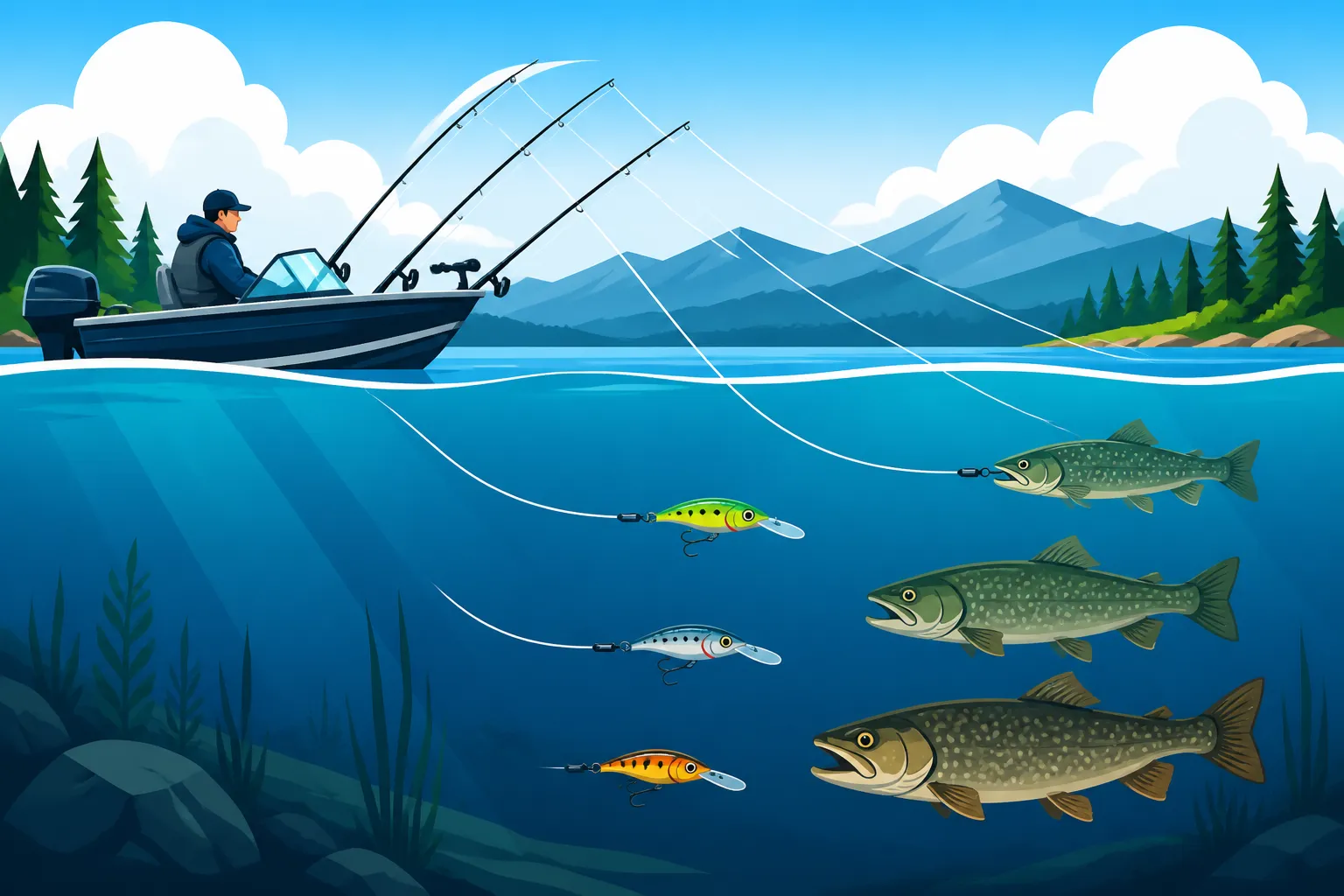
Think of it as actively searching. If you're marking fish on your sonar but they're not biting, it could be that your lure is just a few feet too high or too low. Make small, incremental adjustments. Try running one rod shallower and another deeper, creating a "spread" of depths to cover more of the water column. Once you get a bite, note the depth and try to replicate that for your other lines. The fish will tell you where they are, but only if you're willing to listen and adapt.
Ignoring Water Temperature
As discussed, water temperature is paramount, especially in a cold-water fishery like Rangeley. Ignoring your temperature probe or simply assuming the fish are at a "typical" depth can be a fatal flaw. The thermocline's depth can shift daily due to weather, wind, and even time of day. What was 40 feet yesterday might be 30 feet today. Without actively monitoring the water temperature, you're fishing blind.
Fish will always seek out their preferred temperature range, and if your lure isn't in that zone, your chances of success plummet. Invest in a good thermometer that can read temperatures at depth, or pay close attention to your fish finder's temperature gauge if it has one. Constantly cross-referencing your temperature readings with fish marks on your screen will help you dial in the productive depth zone and keep your lures in the "comfort zone" of the fish.
Overlooking Structure and Contours
It's easy to get fixated on open water trolling, especially for salmon, but neglecting Rangeley's rich underwater structure is a missed opportunity. While fish do suspend, they also relate heavily to features like drop-offs, submerged islands, rock piles, and deep channels. These structures provide cover, ambush points, and often hold baitfish. Trolling over flat, featureless bottoms without marking fish is usually a low-percentage game.
Use your GPS and sonar to identify and then actively troll along the edges of these structures. For example, instead of just trolling randomly in a deep basin, try to follow a contour line that drops from 30 feet to 60 feet. Fish will often be positioned along these breaks, waiting. Even slight changes in depth or bottom composition can concentrate fish. Many successful Rangeley anglers have spent countless hours mapping out and memorizing these key underwater features. For those planning a trip, a local Rangeley Lakes fishing guide can offer invaluable insights into these specific structural hotspots.
Rangeley Lake Trolling Depth Summary by Species and Season
To help you get started, here's a general guideline for typical trolling depths in Rangeley Lake. Remember, these are starting points, and conditions can change daily!
| Species | Season | Typical Depth Range (Feet) | Key Considerations |
|---|---|---|---|
| Landlocked Salmon | Spring | 10-25 | Surface warmer, actively feeding near inlets |
| Landlocked Salmon | Summer | 25-60+ | Follow thermocline, deeper on sunny days |
| Landlocked Salmon | Fall | 15-40 | Pre-spawn activity, widespread as water cools |
| Brook Trout | Spring | 10-25 | Near shorelines, structure, stream mouths |
| Brook Trout | Summer | 20-50 | Deeper structure, cooler water pockets |
| Brook Trout | Fall | 15-40 | Actively feeding, near spawning areas |
| Lake Trout (Togue) | Spring | 20-40 | Brief shallower feeding after ice-out |
| Lake Trout (Togue) | Summer | 50-100+ | Deepest basins, tight to bottom, require downriggers |
| Lake Trout (Togue) | Fall | 40-80 | Active feeding before spawn, still prefer deep water |
This table is a good quick reference, but nothing beats actual on-the-water experience and adapting to real-time conditions.
Final Thoughts on Mastering Rangeley's Depths
Trolling on Rangeley Lake is an art form, one that requires patience, observation, and a willingness to adapt. It’s not about finding one magical depth that works every time; it’s about understanding the complex interplay of fish behavior, water temperature, forage, and structure, and then using your gear and electronics to present your lure effectively. Don't get discouraged if you're not immediately successful; every trip is a learning experience.
Remember to keep detailed notes—what depths you fished, what lures worked, the water temperature, time of day, and weather conditions. Over time, you'll start to see patterns emerge, and you'll become more intuitive about where to set your lines. Whether you're a seasoned veteran or just starting your journey to explore this magnificent fishery, hopefully, this guide provides the foundational knowledge you need to start unlocking Rangeley Lake's legendary potential. It's a truly special place, and with a bit of dedication to understanding its depths, you'll be well on your way to some incredible catches. For a broader overview of the fishing here, don't miss our comprehensive Rangeley Lakes Fishing Guide.
Disclaimer
Please note that fishing regulations, including bag limits, season dates, and specific rules for certain waters, are subject to change. Always consult the most current Maine Department of Inland Fisheries and Wildlife (MDIFW) regulations before heading out on your fishing trip. The information provided in this guide is for general informational purposes only and should not be considered a substitute for official legal guidance.