Are Life Jackets Provided on Maine Charters?
There's a natural concern when you're planning a fishing trip, especially one that takes you out on the open waters of the Maine coast or onto our vast inland lakes, about safety. You might be wondering if you need to bring your own personal flotation device (PFD) or if the charter will have them. It's a completely valid question, and I'm here to tell you, with absolute certainty, that reputable Maine fishing charters are legally required to and will indeed provide life jackets for everyone on board. This guide will walk you through exactly what to expect regarding life jackets on your next Maine fishing adventure.
The Non-Negotiable Reality: Life Jackets on Maine Fishing Charters
Let's cut right to it: when you book a fishing charter in Maine, whether you're heading out into Casco Bay for striped bass or onto Moosehead Lake for some monster togue, life jackets are part of the deal. They aren't an optional add-on; they are a fundamental component of marine safety, mandated by law, and upheld by every responsible charter captain. It’s a huge relief to know you don’t have to worry about this detail when you’re packing your gear and getting ready for a fantastic day of fishing.
Legal Requirements and Coast Guard Regulations
The provision of life jackets on a commercial fishing charter in Maine isn't just a courtesy; it's a strict legal obligation. The U.S. Coast Guard, which governs vessel safety and operations in both coastal and many inland waters, has clear regulations regarding personal flotation devices. Any vessel operating as a commercial charter, carrying paying passengers, must comply with these rules.
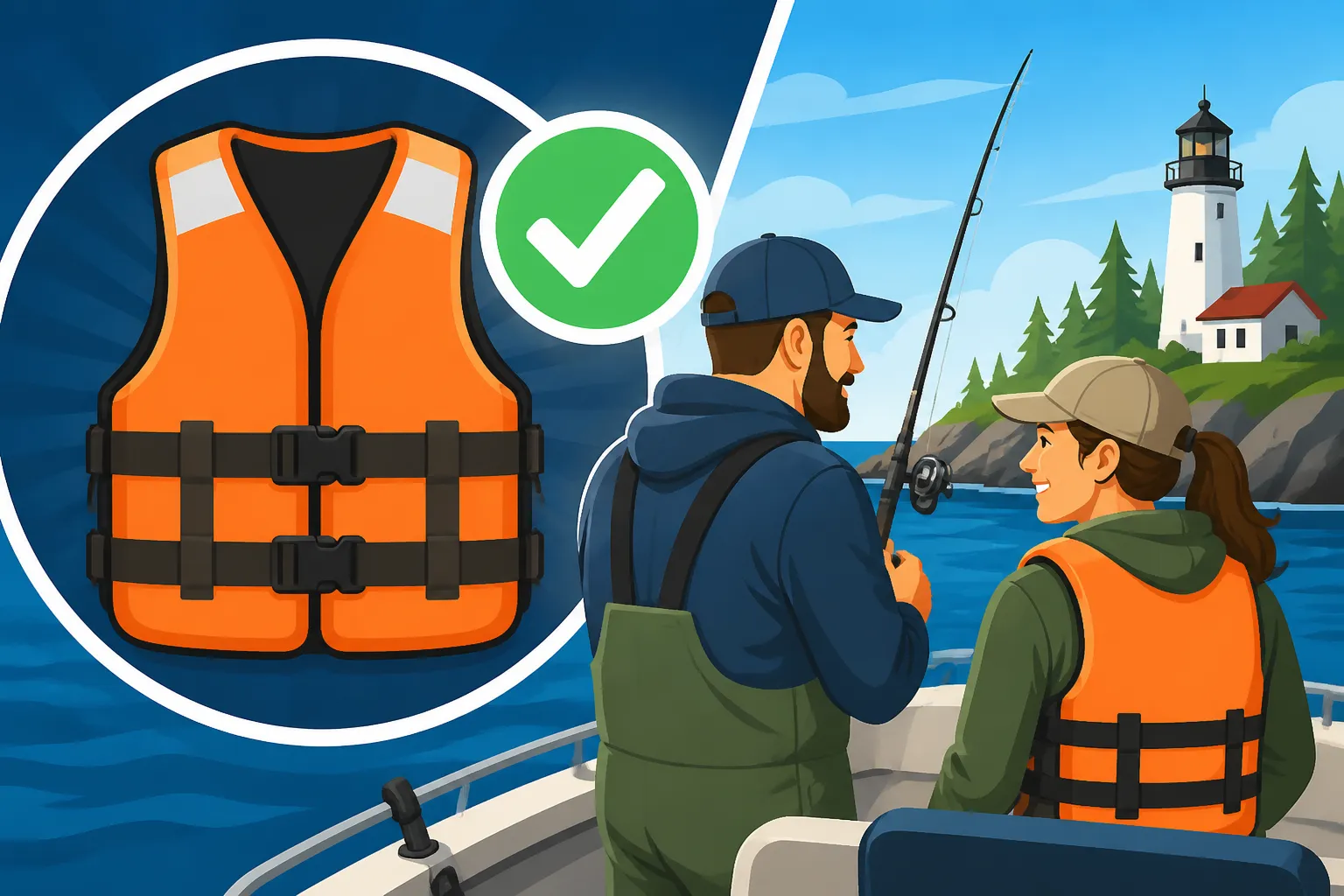
Specifically, for most charter boats, this means having a sufficient number of Coast Guard-approved PFDs for every single person on board. Not just enough for the maximum capacity of the boat, but enough for every soul who steps foot on deck, from the seasoned angler to the youngest child. These PFDs must be readily accessible, in good condition, and of the appropriate type. For instance, offshore vessels typically carry Type I PFDs, which offer maximum buoyancy and turn an unconscious person face-up in the water, while inshore or lake charters might carry Type II or Type III, which are more comfortable for continuous wear. Your captain will know exactly what is required for their specific vessel and area of operation. For an overall look at what to expect, check out our guide on Maine Fishing Charters Guide.
Captain's Responsibility and Passenger Safety
Beyond the letter of the law, every licensed and experienced Maine charter captain has a deep-seated commitment to the safety and well-being of their passengers. Their reputation, their livelihood, and their moral compass all point to making sure everyone on their boat is safe. Providing life jackets is central to this. They understand that while fishing is about fun and catching fish, it's also about returning everyone safely to shore.
This responsibility extends to more than just having the PFDs on board. A good captain will also conduct a brief safety orientation before leaving the dock. This will include showing you where the life jackets are stored, how to properly put them on, and when they might be required to be worn. They'll ensure there are PFDs in various sizes, especially if children are part of the group, and they will make sure everyone knows how to locate and use them in an emergency. It's this level of professionalism and care that makes booking a charter through services like FishingBooker such a great option, as they often list reputable operators who prioritize safety.
Understanding Different Types of Life Jackets and When to Wear Them
While all life jackets serve the same primary purpose – to keep you afloat – there are actually different types designed for different situations. Your charter will carry the appropriate types, but it's good for you to have a basic understanding.
Adult vs. Child-Sized PFDs and Fit
One of the biggest concerns for families is always whether there will be appropriate life jackets for children. Rest assured, reputable Maine charters will absolutely have child-sized PFDs. The Coast Guard regulations are very specific about having PFDs that fit. A life jacket that is too big can ride up and not provide proper flotation, while one that is too small might be uncomfortable or impossible to secure.
When you board, especially with kids, the captain or crew will often ask about ages and sizes to ensure everyone gets a PFD that fits snugly and correctly. For children, proper fit is paramount. It should not be loose enough to slip over their chin or ears when they are picked up by the shoulders. Don't be shy about asking for help with sizing or demonstrating how to wear it. Ensuring a proper fit for kids before leaving the dock means one less thing to worry about if conditions change on the water. This attention to detail is something we always highlight in our advice for Maine Family-Friendly Fishing Charters.
When Wearing is Mandatory vs. When Stored is Sufficient
The question of when you actually have to wear a life jacket is a common one. On most charter boats, adults are generally not required to wear their PFDs at all times unless specific conditions warrant it. Instead, they must be "readily accessible," meaning they are within easy reach, not buried under a pile of gear.
However, there are crucial exceptions and circumstances when wearing a life jacket becomes mandatory:
- Children: Typically, children under a certain age (often 12 or 13, depending on state and local regulations) are legally required to wear a PFD at all times while the vessel is underway. Your captain will inform you of the exact age requirement for Maine waters.
- Rough Weather/Conditions: If the seas get choppy, or if there's heavy rain or fog, the captain might strongly advise or even require everyone to put on their life jackets. This is for your safety and should always be heeded without question.
- Specific Activities: If you're going out in a smaller skiff or dinghy as part of the charter experience, or engaging in activities like kayak fishing from the main vessel, wearing a PFD will almost certainly be mandatory.
- Vessel Type: On very small boats or open boats, it might be required for all passengers to wear them at all times.
It's always best to clarify the specific rules with your captain at the beginning of your trip. They are the experts on the water and their word on safety is final.
Here’s a quick overview of common PFD types you might encounter on a charter:
| PFD Type | Description | Buoyancy & Usage | Typical Location/Use |
|---|---|---|---|
| Type I | Offshore Life Jacket (often orange, bulky) | Most buoyant, designed for rough or remote waters where rescue may be delayed. Turns unconscious wearer face-up. | Offshore charters, deep sea fishing, larger vessels |
| Type II | Near-Shore Buoyancy Vest (vest-style, less bulky than Type I) | Good for calm, inland waters or where quick rescue is likely. May not turn an unconscious person face-up quickly. | Inland lakes, calm coastal waters, general use |
| Type III | Flotation Aid (vest or jacket style, comfortable for continuous wear) | Designed for conscious users in calm waters. Not designed to turn an unconscious person face-up. | Kayaking, watersports, active fishing, some lake charters |
| Type IV | Throwable Device (cushions, rings) | Not worn. Designed to be thrown to a person in the water. | Required on most vessels in addition to wearable PFDs |
| Type V | Special Use Device (e.g., work vests, inflatable PFDs) | Approved for specific activities or conditions. Inflatables must be worn to count as a PFD. | Specialized activities, specific working conditions (often commercial) |
Beyond the Basics: What to Expect and How to Prepare
Knowing that life jackets are provided is the first step, but being prepared also means knowing how to interact with your charter captain about safety and understanding your own preferences.
Discussing Safety with Your Charter Captain
Before you even step on the boat, it's perfectly fine, and even encouraged, to have a brief chat with your captain or the booking agent about safety protocols. Questions you might consider asking include:
- "Are there enough life jackets for everyone, including children, on board?"
- "What type of PFDs do you carry?"
- "At what age are children required to wear a life jacket on your vessel?"
- "What are your general safety procedures in case of an emergency?"
A professional charter operator, whether you've found them through word-of-mouth or a platform like FishingBooker, will appreciate your proactive approach to safety and be happy to answer any concerns. They want you to feel comfortable and confident on your trip, knowing that all precautions are in place. This kind of open communication is part of a great charter experience, as detailed in our guide Hiring a Maine Fishing Guide.
Personal Preferences and Bringing Your Own (When Applicable)
While charters provide all necessary safety equipment, some anglers simply prefer to wear their own life jacket. Perhaps you have a specific fishing vest-style PFD that's comfortable, has lots of pockets, or is an inflatable model that you're used to. This is generally acceptable, but there are a few things to keep in mind:
- Coast Guard Approval: Any PFD you bring must be Coast Guard-approved. Look for the approval stamp on the inside label. If it's not approved, it cannot be counted as one of the required PFDs for the vessel.
- Inflatable PFDs: If you bring an inflatable PFD, make sure it's in good working order, with a fresh CO2 cartridge, and that you understand how to activate it. Many inflatable PFDs are only considered "approved" when worn.
- Inform Your Captain: Always let your captain know if you plan to bring and wear your own PFD. They'll appreciate knowing that you're prepared and can confirm that your PFD meets safety standards for their vessel.
For most people, the PFDs provided by the charter will be perfectly adequate and comfortable enough for the duration of the trip. The most important thing is that a PFD is available and fits correctly, whether it's one you brought or one the charter provided. Regardless of where you're casting your line, whether it’s for Maine Striped Bass Fishing Techniques or Trolling Techniques for Maine Lakes, safety is always paramount. Knowing that life jackets are a given on any Maine fishing charter allows you to focus on the thrill of the catch and the beauty of our stunning Maine waters.
Disclaimer
This article is for general informational purposes only and does not constitute professional advice. Laws, prices and regulations vary by location and change over time. Consult a qualified professional for guidance on your specific situation.