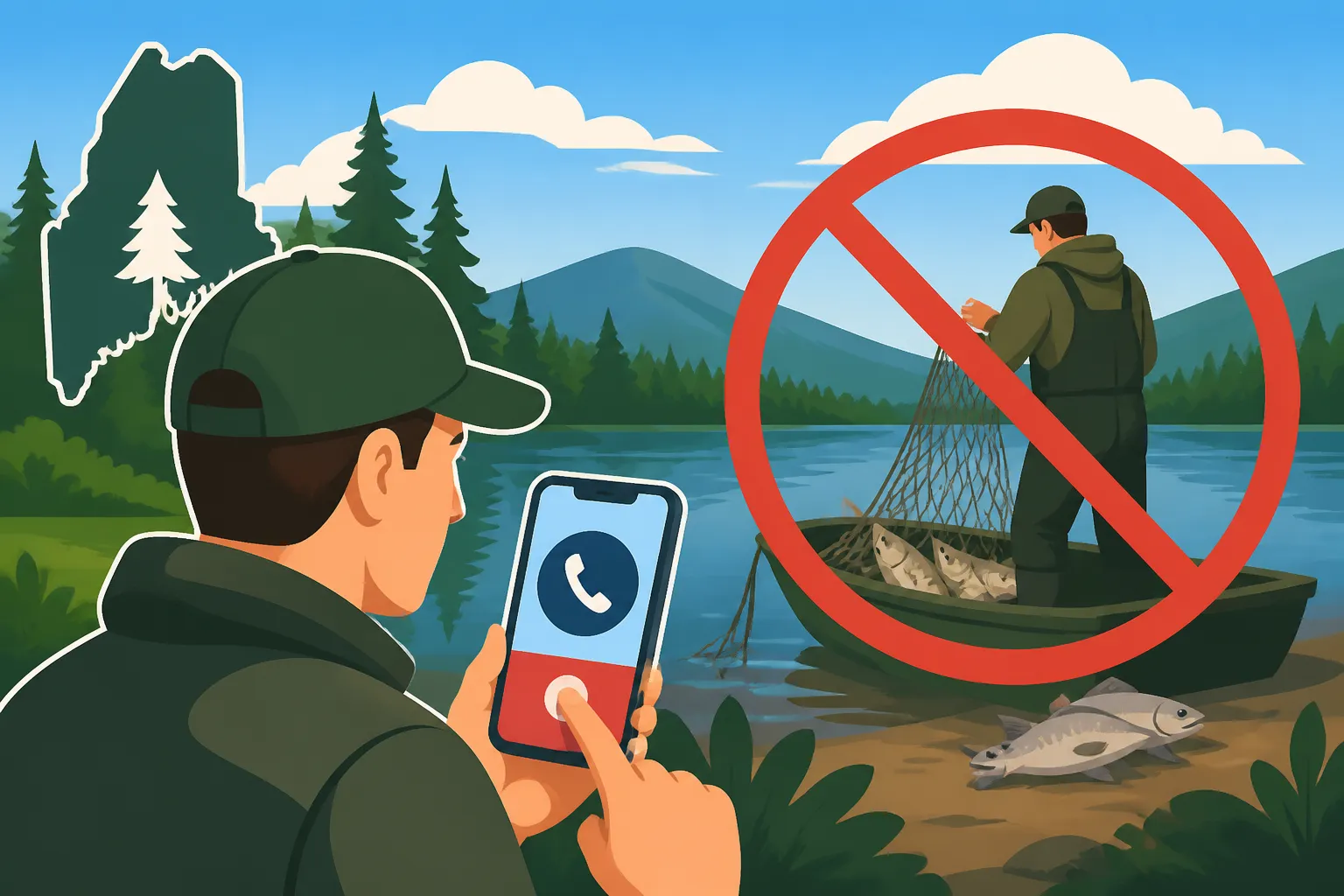
How to Report a Poacher in Maine
It's incredibly disheartening when you're out enjoying the pristine waters and wild landscapes of Maine, only to witness someone blatantly disregarding the rules. That feeling of frustration, seeing our natural resources exploited, is something many of us share. This comprehensive guide is here to empower you with the knowledge and steps needed to effectively report poaching in Maine, helping to protect the fish and wildlife we all cherish.
The Widespread Impact of Poaching on Maine's Natural Resources
Witnessing illegal fishing, or poaching, can be infuriating, and for good reason. It’s not just about a single fish; it's about the broader health of Maine's delicate ecosystems and the fairness for every law-abiding angler who respects our state's rich natural heritage. When someone flouts the rules, they're impacting everyone, from recreational anglers to commercial fishermen, and ultimately, the future generations who deserve to experience Maine's incredible outdoors.
Why Every Report Truly Matters
Poaching isn't just someone casually breaking a rule; it's a direct assault on the diligent conservation efforts that protect our fish and wildlife populations. The Maine Department of Inland Fisheries and Wildlife (MDIFW) works tirelessly, guided by scientific research, to establish sustainable fishing regulations, stocking programs, and habitat restoration projects. When individuals disregard these rules—whether by taking more than their legal limit, fishing out of season, or using prohibited methods—they undermine this entire system, siphoning off resources that are meant for everyone.
Every fish illegally harvested, every protected area violated, chips away at the careful balance conservationists strive to maintain. It can lead to depleted fish stocks in specific lakes or rivers, making it harder for honest anglers to find success, and in some cases, even threatening the long-term viability of certain species. Your seemingly small observation and subsequent report contribute to a larger intelligence picture for the Maine Warden Service, helping them identify patterns, deploy resources more effectively, and ultimately prevent larger-scale damage to our cherished fisheries. It's a collective responsibility, and your action is a vital part of safeguarding Maine’s natural treasures.
Validating Your Frustration: Poaching's Ripple Effect
It is completely understandable to feel a deep sense of frustration, and even anger, when you encounter poaching. You're out there, meticulously checking the Maine Fishing Regulations Explained, maybe even practicing diligent catch-and-release, only to see someone else brazenly breaking the law. This isn't merely about an unfair advantage; it strikes at the core of the shared community ethics that define responsible outdoor recreation. Poaching erodes trust among anglers and diminishes the collective sense of pride we have in maintaining healthy, productive waters.
The ripple effect of poaching extends beyond just the immediate loss of fish. It can lead to more stringent regulations for everyone, closures of popular fishing spots, or even the cessation of stocking programs if populations become too vulnerable. Imagine a situation where a beloved local pond known for its thriving brook trout population suddenly sees a sharp decline because a few individuals consistently exceed the Maine Fish Bag Limits Guide. This impacts not only the fish but also the local economy that relies on responsible tourism and the enjoyment of countless families who look forward to their annual fishing trips. Your willingness to report illegal activities acts as a crucial deterrent and helps ensure that the sacrifices and commitments made by the vast majority of anglers are not in vain.
Understanding What Constitutes Poaching in Maine
Before you make a report, it's helpful to have a clear understanding of what actually constitutes poaching in Maine. While some violations are obvious, others can be more subtle. Having a basic grasp of the regulations will help you differentiate between someone having a bad day and someone intentionally breaking the law. Remember, even seemingly minor infractions can contribute to significant ecological harm over time.
Common Forms of Illegal Fishing Activity
Poaching often manifests in common violations that, while sometimes appearing minor, have cumulative negative impacts. One of the most frequent is Fishing Without a License in Maine. Every angler over a certain age is required to possess a valid state fishing license, with specific rules for residents, non-residents, and various age groups. Another prevalent issue is exceeding the daily bag or possession limits for certain species. For example, specific regulations govern the number of landlocked salmon, brook trout, or bass you can keep, depending on the water body and zone.
Furthermore, fishing during a closed season or in waters that are specifically designated as closed for particular times of the year is a clear form of poaching. These seasonal closures are often critical for spawning fish or for allowing populations to recover. Using prohibited gear or methods is also common; this might include using multiple lines beyond the legal limit (especially during ice fishing, contrary to Maine Ice Fishing Line Limits or Maine Open Water Line Limits), employing illegal nets, or even using certain types of bait where only artificial lures are permitted. There are also specific regulations, such as the upcoming Maine Lead Jig Fishing Ban, that will make using certain types of tackle illegal. Understanding the nuances of these rules, which are detailed in guides like the Maine Fishing Regulations Explained, helps you spot violations more accurately.
Signs to Look For on the Water and in the Woods
Identifying potential poaching isn't about being overly suspicious of every angler, but rather observing behaviors and conditions that raise legitimate concerns. On the water, look for individuals who are overly secretive about their catch, perhaps immediately stuffing fish into a cooler or beneath a boat seat rather than displaying them openly. If someone is consistently catching an unusually high volume of fish, far more than appears reasonable, and quickly removing them from public view, it could be a sign of exceeding bag limits. Also, pay attention to the equipment they're using; seeing illegal nets, traps, or even the remnants of chemicals used to stun fish are unequivocal signs of poaching.
In the areas surrounding fishing spots, such as along shorelines or near boat launches, keep an eye out for tell-tale signs of illegal activity. This might include discarded fish carcasses that indicate over-harvesting, particularly if they are undersized or from protected species. Observe behavior that suggests an attempt to hide activity, such as fishing late at night or very early in the morning in areas known for strict regulations, or in places that are difficult to access, suggesting an avoidance of wardens. Be aware of the Maine Fishing Season Dates Guide for the specific area you're in; if you see someone actively targeting a species that is clearly out of season, that's a strong indicator. While it's important not to jump to conclusions, unusual secrecy, excessive harvesting, or the use of illegal methods are definite red flags that warrant a closer look and potentially a report.
The Maine Warden Service: How to Make Your Report
Once you suspect poaching, knowing how to effectively communicate your observations to the authorities is key. The Maine Warden Service relies heavily on the public as their "eyes and ears" in the vast wilderness and waterways of our state. Your report, even if it seems small, can provide a crucial piece of information that leads to an investigation and ultimately, the protection of our resources.
The Best Ways to Contact the Maine Warden Service
When you witness or suspect poaching, the absolute best course of action is to report it directly to the Maine Warden Service. For immediate concerns, especially if you observe an active violation or feel there might be a dangerous situation unfolding, your primary point of contact should be their statewide dispatch center. This number connects you directly to the regional communications center that can dispatch a warden quickly. The non-emergency dispatch number for the Maine Warden Service is 1-800-452-4664. It's a good idea to save this number in your phone.
For situations that are less urgent, or if you prefer to remain completely anonymous, Maine's "Operation Game Thief" program is an invaluable resource. This program provides a confidential way for citizens to report all manner of fish and wildlife violations. You can call their dedicated, toll-free hotline at 1-800-ALERT-US (1-800-253-7887). Alternatively, you can submit a report online through the Operation Game Thief website, which offers another discreet way to pass on information. This system is designed specifically to protect your identity while ensuring that wardens receive critical intelligence. Comprehensive contact details for various situations can be found in our guide on Maine Fish and Wildlife Warden Contact Information.
What Information to Provide for an Effective Report
Making an effective report means providing as much accurate and specific detail as you can. Think of yourself as a crucial witness; the more pertinent information you can gather safely, the better equipped the wardens will be to investigate. When you contact the Warden Service, try to have the following details ready:
- Who: Describe the individual(s) involved. What did they look like (age, hair color, height, build)? What were they wearing? Were there distinguishing features? If you know a name or have a vehicle description (make, model, color, license plate number), that is incredibly valuable.
- What: Clearly articulate the specific violation you observed. Were they over the limit for a particular fish, like those listed in the Maine Fish Bag Limits Guide? Were they Fishing Without a License in Maine? Using an illegal net, more lines than allowed per Maine Open Water Line Limits, or bait in a fly-fishing-only pond?
- When: Provide the exact date and time you witnessed the activity. If it was an ongoing event, state the duration. Even if it was hours or days ago, it's still worth reporting.
- Where: This is paramount. Be as precise as possible with the location. What body of water (lake, river, pond, coastal area)? Which side of the lake or river? Are there any nearby landmarks, road names, house numbers, or even GPS coordinates if you have the capability to capture them? Mention if it’s near a public boat launch, a specific bridge, or a recognizable camp.
If it's safe to do so, and you can remain completely unnoticed, discreetly taking photos or videos can provide compelling evidence. However, never put yourself or others in harm's way to obtain such evidence. Your safety is always the top priority. Even if you only have fragmented information, it’s always better to report what you know than to remain silent. Wardens are adept at piecing together information from multiple sources, and your small detail could complete a larger picture.
Here's a handy table to help you organize your thoughts before making a report:
| Information Type | Importance | Examples to Provide |
|---|---|---|
| Who | Critical | Number of individuals, physical descriptions, clothing, vehicle make/model/color/license plate, boat registration number |
| What | Essential | Specific violation (e.g., over-limit of brook trout, no valid license, illegal netting), species involved, methods used |
| When | Essential | Date, exact time (start/end if applicable), how long observed, if it's an ongoing activity |
| Where | Crucial | Water body name, specific location on water/shore, nearest road, GPS coordinates, access points, landmarks |
| Evidence | Helpful | Photos/videos (if safe and discreet), distinguishing features of individuals or gear, appearance of fish/carcasses |
After Your Report: What to Expect and Confidentiality
Once you've taken the courageous step to report a suspected poaching incident, it's natural to wonder what happens next. While the process is often discreet, it's important to understand how the Maine Warden Service operates and the measures they take to protect your identity. Your role as a responsible citizen is incredibly valuable, and understanding the follow-through can reinforce your confidence in the system.
The Warden Service Response Process
Upon receiving your report, especially through Operation Game Thief, you generally won't receive direct updates on the investigation's progress. This is primarily due to strict confidentiality protocols and the fluid nature of law enforcement work. However, rest assured that every credible report is taken seriously by the Maine Warden Service. Wardens are highly dedicated and skilled professionals who meticulously investigate leads, often prioritizing them based on the severity of the violation, whether it's an active event, and the potential impact on wildlife populations. A report of someone actively Fishing Without a License in Maine in a highly regulated area or exceeding limits on a vulnerable species would likely prompt a more immediate response than a historical observation.
The wardens will use the detailed information you provided to initiate their investigation. This might involve increased patrols in the area, setting up surveillance, or cross-referencing information with other reports or known offenders. They frequently combine multiple reports to build a more comprehensive case, which highlights why even a seemingly minor detail from your observation can be incredibly valuable in their overall intelligence gathering. They will also consider specific regulations, such as the Penalty for Keeping an Undersized Fish in Maine or the rules pertaining to specific gear types, as they assess the scope of the violation. Their objective is not just to issue a fine but to deter future illegal activity and protect the resource.
Protecting Your Identity and Encouraging Action
A significant concern for many individuals considering reporting a poaching incident is the fear of retaliation or having their identity exposed. This is precisely why programs like Operation Game Thief place such a high emphasis on confidentiality. Your identity is strictly protected; unless you explicitly choose to identify yourself for potential follow-up questions from a warden, your name and contact information will not be shared with the suspected poachers. This unwavering commitment to anonymity is fundamental to encouraging more people to come forward without fear of repercussions.
Remember, the vast stretches of Maine's wilderness and waterways make it impossible for wardens to be everywhere at once. They rely heavily on the vigilance and cooperation of responsible citizens like you to act as their extra sets of eyes and ears. By understanding Maine Fishing Regulations Explained and utilizing these established reporting channels, you become an active and essential participant in the conservation efforts that preserve Maine's natural beauty and its incredible fishing opportunities. Your willingness to speak up makes a tangible difference in the ongoing fight against poaching, ensuring that our shared outdoor heritage remains vibrant for generations to come.
Disclaimer
The information provided in this guide is for general informational purposes only and is not intended as legal advice. Fishing regulations and laws in Maine can change, and specific situations may vary. Always consult the official Maine Department of Inland Fisheries and Wildlife (MDIFW) regulations, laws, and official contact channels for the most current and accurate information. Reporting suspected violations should be done safely and without putting yourself in harm's way.