Do You Need a Coast Guard License to Run Maine Charters?
It’s a common question that pops up for anyone dreaming of running a fishing charter in the beautiful waters of Maine: "Do I need a Coast Guard license?" The short answer, for most saltwater charter operations carrying paying passengers, is a resounding yes. Navigating the world of federal and state regulations can feel like trying to untangle a particularly stubborn fishing knot, but understanding these requirements is absolutely crucial for safety, legality, and the success of your venture. This guide will help you understand precisely when a U.S. Coast Guard (USCG) license is necessary, what it entails, and how it differs from a Registered Maine Guide credential.
Understanding the Crucial Distinction: Federal vs. State Requirements
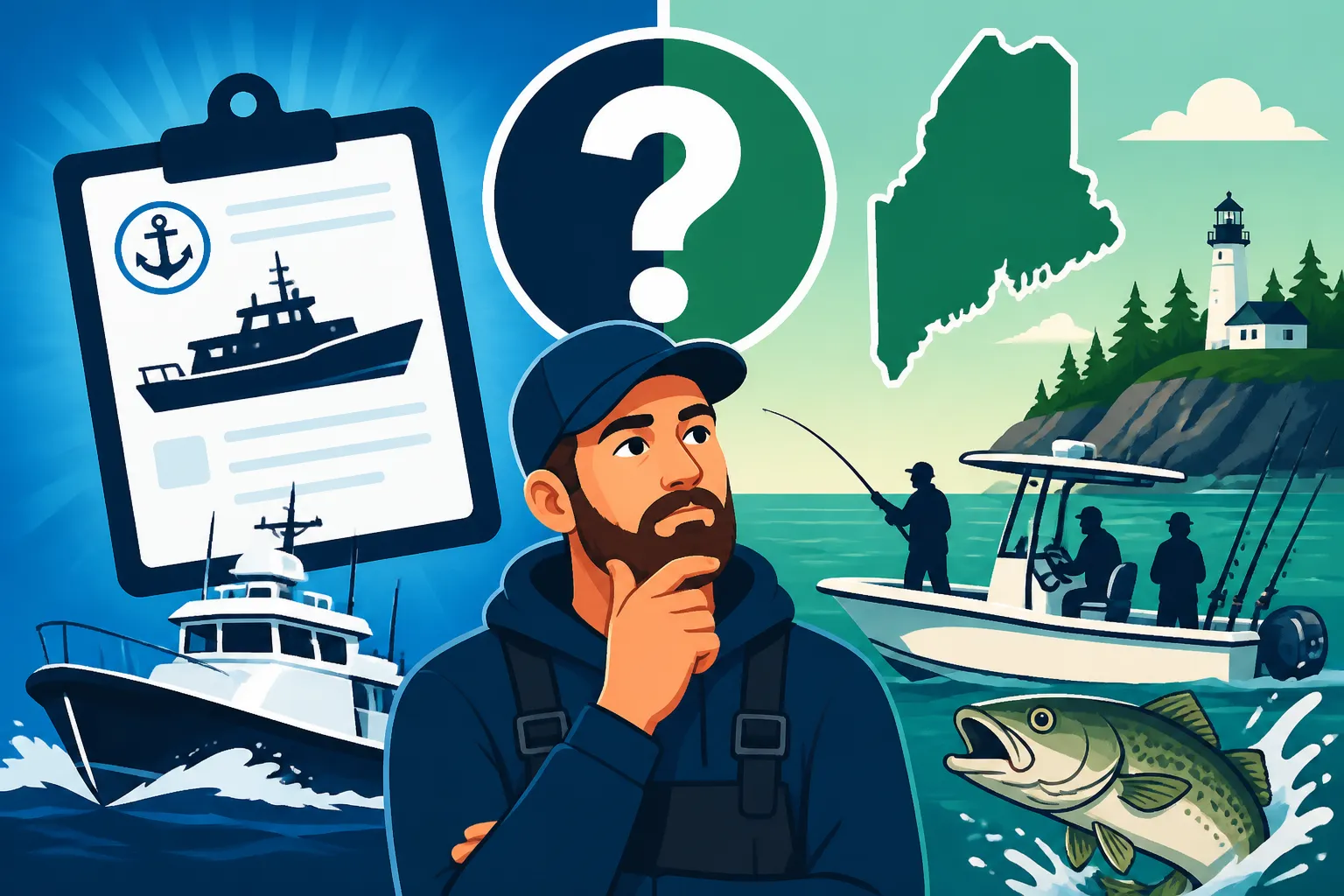
When you think about taking people fishing in Maine, two main types of licenses often come to mind: a U.S. Coast Guard (USCG) Captain's license and a Registered Maine Guide license. While both involve leading others on fishing excursions, they operate under very different jurisdictions and have distinct applications.
The Role of the U.S. Coast Guard for Maine Charters
The U.S. Coast Guard governs commercial vessel operations on what are considered "navigable waters of the United States." In Maine, this absolutely includes the vast majority of our coastal waters, bays, tidal rivers, and even larger interconnected lakes that serve as avenues for interstate commerce, like sections of Sebago Lake or Moosehead Lake if commercial operations were to span state lines or connect to federal waterways.
If you plan to take any paying passengers out on a boat for fishing, sightseeing, or any other activity on these navigable waters, you are operating a "vessel for hire." This immediately triggers USCG licensing requirements. The most common license for smaller charter operations is the "Operator of Uninspected Passenger Vessels," often called an OUPV or "6-pack" license, because it allows you to carry up to six paying passengers on an uninspected vessel. If you aim to carry more than six passengers or operate an inspected vessel, you'll need a higher-tier Master's license. The Coast Guard's primary concern here is the safety of those passengers, and their licensing process ensures captains have proven competence in navigation, safety, seamanship, and understanding federal regulations.
When a Registered Maine Guide License is Sufficient (and When it's Not)
A Registered Maine Guide license, issued by the Maine Department of Inland Fisheries & Wildlife (MDIFW), is a state-level certification that has a long and storied history in Maine. These guides are traditionally known for their expertise in hunting, fishing, and recreational activities in the state's wilderness and inland waters. If your dream is to lead clients on a multi-day canoe trip on the Allagash Wilderness Waterway, guide ice fishing excursions on a frozen pond, or take people fly fishing on a remote brook, then a Registered Maine Guide license specifically for "fishing" is exactly what you need. You can learn more about the specific criteria by checking out our guide on Maine Registered Guide License Requirements.
However, here's where the confusion often arises: a Registered Maine Guide license alone does not satisfy the federal requirements for operating a "vessel for hire" on navigable waters. If you're using a motorized boat on Casco Bay to chase striped bass, or even on a large tidal river like the Kennebec, a Registered Maine Guide credential won't cut it without the additional USCG license if you're carrying paying passengers. While a Maine Guide license is invaluable for inland and non-motorized trips, it doesn't give you the federal authority to be a "captain for hire" in federal waters. Many experienced saltwater fishing guides in Maine actually hold both a USCG OUPV or Master's license and a Registered Maine Guide license, allowing them the flexibility to offer a wider range of trips, from coastal charters to remote inland adventures. This dual certification can significantly broaden your guiding opportunities. For those looking to understand the journey to becoming a guide, our article How to Become a Registered Maine Guide offers detailed insights.
The Nuts and Bolts of USCG Licensing for Maine Charter Captains
Becoming a federally licensed captain involves a rigorous process designed to ensure that those in charge of passenger vessels are highly competent and knowledgeable. It's not a walk in the park, but it's a deeply rewarding achievement that directly translates to passenger safety and professional credibility.
Operator of Uninspected Passenger Vessels (OUPV or "6-Pack")
This is the entry-level commercial captain's license and the most common choice for small charter fishing operations in Maine. The OUPV license allows you to command an uninspected vessel (meaning it doesn't undergo annual USCG inspections like a ferry might) carrying up to six paying passengers. The "6-pack" refers to this passenger limit, not what you might be drinking on board!
To qualify for an OUPV license, you’ll need to meet several key criteria:
- Age and Citizenship: You must be at least 18 years old and a U.S. citizen or a permanent resident alien.
- Sea Time: This is often the biggest hurdle for aspiring captains. You need a minimum of 360 days of documented sea time (with at least 90 days accumulated in the last three years). A "day" is generally considered at least four hours of underway time. This time can be accumulated on your own vessel or by assisting on others, but it must be properly documented in a "Small Vessel Sea Service Form" or similar logbook.
- Physical Exam: You'll need to pass a comprehensive physical examination by a licensed physician, ensuring you're medically fit for duty. This includes vision, hearing, and general health.
- Drug Test: A DOT-approved drug test is mandatory.
- CPR/First Aid Certification: You'll need a valid certificate from an approved provider, such as the American Red Cross or American Heart Association. This is non-negotiable for handling emergencies on the water.
- Written Exams: These are comprehensive and cover several key areas:
- Rules of the Road: International and Inland Navigation Rules, which are critical for preventing collisions.
- Navigation General: Chart reading, plotting courses, understanding buoys and aids to navigation.
- Deck General: Seamanship, vessel handling, anchoring, proper knot tying, vessel maintenance, and emergency procedures.
- Safety: Firefighting, pollution prevention, emergency preparedness, and general safety protocols.
You can often find study guides, flashcards, and even online courses for these exams. Many aspiring captains find a wealth of resources on platforms like Amazon, from comprehensive textbooks to specialized practice test software that helps them prepare for the multiple-choice format. Understanding Maine Fishing Regulations Explained is also essential, even though it's state-level, as it complements the federal safety knowledge.
The Master's License and Endorsements
If your aspirations are bigger than a 6-pack charter, or if you plan to operate a vessel that is inspected by the Coast Guard, you'll need a Master's license. This credential has higher sea time requirements (often 720 days, with specific tonnage requirements depending on the license level) and more extensive exams. A Master's license allows you to command vessels carrying more than six passengers and often encompasses larger vessels.
You can also add various endorsements to your Master's or OUPV license, such as:
- Towing Endorsement: Required if you plan to tow disabled vessels for compensation.
- Sail Endorsement: If you want to operate a sailing vessel with passengers for hire.
- Assistance Towing: Often paired with OUPV, this allows you to assist recreational vessels, similar to a roadside assistance program on the water.
These endorsements require additional sea time, specific training, or specialized exams, further tailoring your license to your intended operations.
Additional Maine-Specific Considerations for Charter Operators
Even with a federal USCG license in hand, you’re not entirely done with state-level considerations for running a fishing charter in Maine.
- Maine's Saltwater Fishing Registry: While your passengers don't need a full Maine fishing license if they are fishing from a federally licensed charter boat (this is a common misconception, but the charter boat operator generally covers their fishing privilege under their commercial license), the boat itself and the operator still need to comply with Maine's regulations. Importantly, any individual fishing in Maine's saltwater from shore or a private vessel generally needs to register with the Maine Saltwater Fishing Registry. It's a key distinction. For further clarification, see our guide on Do Maine Charter Passengers Need Their Own Fishing License?.
- Commercial Vessel Registration: Your vessel will need to be properly registered as a commercial vessel with the State of Maine, distinct from a recreational registration.
- Local Permits and Harbor Master Rules: Depending on where you operate, individual towns or harbor masters might have specific rules, mooring regulations, or business licensing requirements. For example, operating out of a busy port like Portland or Boothbay Harbor might involve different rules than a more remote location. It's always wise to check with local authorities where you plan to dock and operate.
Understanding the full scope of operating a fishing charter is a journey. Our Maine Fishing Charters Guide delves deeper into the overall experience of finding and booking charters, but for the operator, the licensing details are paramount.
Navigating the Application Process and Maintaining Your Credentials
The path to becoming a USCG licensed captain is thorough and requires dedication. It’s not just about passing a test; it’s about demonstrating a holistic understanding of safe maritime operations.
Preparing for Your USCG Exams and Application
Once you've decided to pursue a USCG license, you have a couple of options for preparation:
- Maritime Training Schools: Many aspiring captains choose to attend a USCG-approved maritime training school. These schools offer structured courses that cover all the required exam topics, often including hands-on training and practice exams. Successfully completing a course at an approved school can waive the requirement to take the full battery of exams at a USCG Regional Exam Center (REC), as the school administers the tests. This can be a huge benefit for those who prefer a guided learning experience. Prices for these courses can vary, but they often provide comprehensive support.
- Self-Study: It is possible to self-study, gathering all the necessary textbooks, charts, and regulations on your own. Many candidates find study guides and practice test materials on
Amazonor through other online vendors invaluable for this approach. However, if you self-study, you will need to schedule and take all required examinations at a USCG Regional Exam Center.
Regardless of your chosen study method, a critical step is meticulously documenting your sea time. This often feels like navigating a dense fog bank for newcomers. Make sure every day you spend on the water as part of your experience is signed off by a licensed captain or documented with clear dates, vessel information, and location. This documentation is submitted with your application to the National Maritime Center (NMC), the USCG division responsible for issuing credentials. A well-organized logbook is your best friend here.
The Costs and Time Investment
Let's be realistic: obtaining a USCG license is an investment, both in time and money.
- Financial Costs: Expect to pay for application fees, exam fees (if taking them at an REC), the DOT drug test (typically $50-$100), the physical exam (varies widely, could be $100-$300), and CPR/First Aid certification (around $50-$100). If you opt for a maritime training school, course fees can range from $700 to $2,000 or more, depending on the school and license type. While the specific costs for a Maine Charter Fishing Cost Guide focus on what clients pay, the captain's investment in licensing directly influences the operational costs.
- Time Commitment: Accumulating 360 days of sea time can take years, especially if you're doing it part-time. The study period itself can range from a few weeks of intensive coursework to several months of self-study. The entire application process, from submitting paperwork to receiving your credential, can also take several weeks to a few months, so patience is key. Planning ahead is vital, as noted in our Maine Fishing License Guide for recreational anglers, but even more so for commercial operators.
Once you have your license, it's not a one-and-done deal. USCG licenses typically need to be renewed every five years. This renewal process usually requires updated physicals, drug tests, and a demonstration of continued sea service. Some renewals may also require refresher training.
The Serious Consequences of Operating Without Proper Licensing
This is perhaps the most critical point: operating a vessel for hire without the appropriate USCG license is a serious federal offense. The consequences can be severe:
- Fines and Penalties: The USCG can impose substantial fines, which can easily run into the thousands of dollars per violation. They don't mess around when it comes to passenger safety.
- Legal Action: Beyond fines, you could face criminal charges, especially if an incident occurs while you're operating illegally.
- Voided Insurance: Your commercial liability insurance, which is essential for any charter business, will almost certainly be void if you're operating without the required federal credentials. This means you would be personally liable for any accidents, injuries, or damages that occur on your watch.
- Reputational Damage: A run-in with the Coast Guard or operating illegally can permanently tarnish your reputation, making it impossible to attract clients in the future. Word travels fast in the tight-knit fishing community.
- Vessel Seizure: In severe cases, the USCG has the authority to seize your vessel.
It simply isn't worth the risk. For a full picture of legal repercussions, even on the state level, see What Happens If You Fish in Maine Without a License?. Compliance is the only way to operate a safe, successful, and stress-free charter business.
Finding the Right Path for Your Maine Fishing Charter Dream
Starting a fishing charter in Maine is a fantastic dream, offering the chance to share the beauty of our coast and the thrill of the catch with others. Taking the time to properly understand and obtain the necessary licenses is the bedrock of making that dream a sustainable reality.
Resources for Aspiring Captains
The journey to becoming a licensed captain can feel daunting, but you don't have to go it alone. Here are some invaluable resources:
- U.S. Coast Guard (USCG) National Maritime Center (NMC) Website: This is your official source for all forms, regulations, application guidelines, and updates. While the website can be a bit dense, it contains everything you need.
- Maine Department of Inland Fisheries & Wildlife (MDIFW): For those looking at a Registered Maine Guide license, their website provides detailed information on requirements, testing, and current regulations.
- Maritime Training Schools: Look for USCG-approved schools in Maine or neighboring states. Examples include The Captain's School in Brunswick, ME, or Northeast Maritime Institute in Massachusetts. These schools often have high pass rates and can simplify the process significantly.
- Local Captains and Guides: Don't be afraid to reach out to experienced captains and guides in the area. Many are willing to share advice, offer sea time opportunities, or point you towards good resources. Networking within the community can be incredibly beneficial.
- Online Resources and Study Aids: Beyond structured courses, there are many excellent online forums, Facebook groups, and commercial study aid providers. As mentioned, basic safety equipment like life rafts, EPIRBs, and high-quality first aid kits can be researched and purchased from large retailers like
Amazonas you prepare your vessel for commercial operation, ensuring you meet all safety requirements.
The Benefits of Being Fully Licensed
While the licensing process is a significant undertaking, the benefits of being fully credentialed far outweigh the challenges.
- Peace of Mind and Legal Compliance: You can operate your business knowing you are fully compliant with federal and state laws, free from the worry of fines or legal repercussions.
- Enhanced Safety for Clients: The rigorous training and examination process ensures you have the knowledge and skills to keep your passengers safe, respond effectively to emergencies, and navigate competently in various conditions. This isn't just a legal requirement; it's a moral one.
- Professional Credibility and Marketability: A USCG Captain's license is a symbol of professionalism and expertise. Clients looking to book a fishing charter, especially for Maine Deep Sea Fishing Charters or Maine Striped Bass Charters, will actively seek out licensed and insured operators. It builds trust and sets you apart from unauthorized operators. Being a legitimate business allows you to market yourself effectively and confidently. In the long run, this investment will pay dividends in client bookings and a stellar reputation, establishing you as one of the Best Maine Fishing Charter Companies.
The waters of Maine offer incredible fishing opportunities, and guiding others to experience them can be an incredibly rewarding career. By understanding and embracing the licensing requirements, you're not just complying with the law; you're investing in your future, your passengers' safety, and the continued integrity of Maine's vibrant fishing community.
Disclaimer
The information provided in this guide is intended for informational purposes only and does not constitute legal advice. While we strive to provide accurate and up-to-date information, regulations from the U.S. Coast Guard and the State of Maine can change. It is always the responsibility of the individual to consult the official U.S. Coast Guard National Maritime Center (NMC) website, the Maine Department of Inland Fisheries & Wildlife (MDIFW), and other relevant authorities to confirm all current requirements and regulations before operating a commercial fishing charter or guiding service.