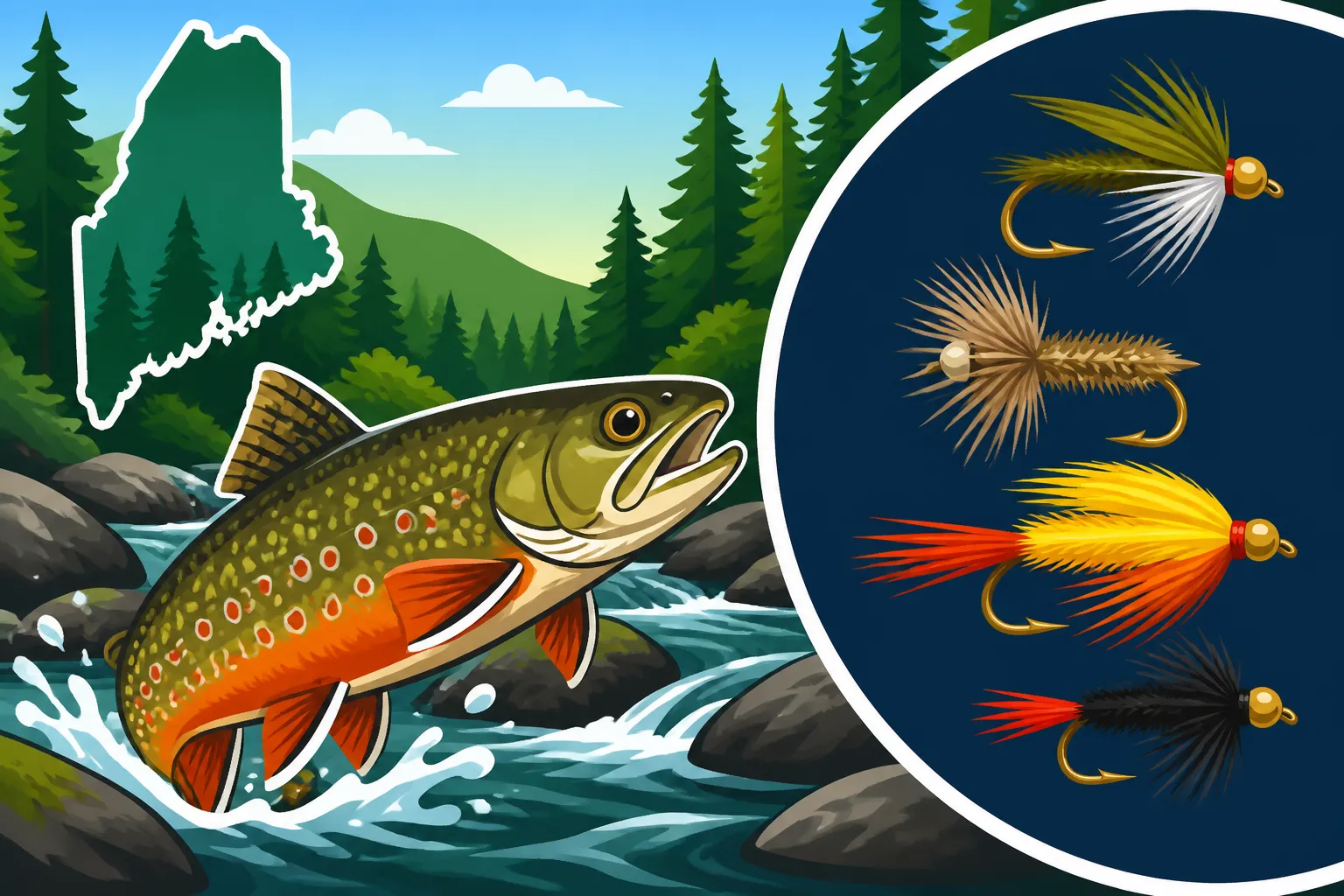
Best Flies for Brook Trout in Maine Streams
There’s nothing quite like the thrill of fly fishing for brook trout in a clear Maine stream, but if you’ve ever stood waterside, watching ripples without a single strike, you know the frustration. Sometimes it feels like you've thrown every fly in your box to no avail. This guide will help demystify the art of fly selection, focusing on the patterns that consistently entice Maine's beautiful and often finicky brook trout.
Understanding Maine Brook Trout and Their Diet
To truly master fly fishing for brook trout, you first need to understand the fish itself and its natural environment in Maine. These vibrant, colorful fish are a prized catch, not just for their beauty but for their spirited fight. They are also incredibly sensitive to their surroundings, which means paying close attention to what they're likely feeding on is paramount.
What Makes Maine Brook Trout Unique?
Maine's brook trout, often referred to as "brookies" or "squaretails," are iconic to our state's wild waters. They thrive in cold, clean, oxygenated streams, rivers, and ponds, making the vast network of waterways throughout Maine their ideal habitat. Unlike some other trout species that have been widely introduced, many of Maine’s brook trout populations are wild and native, particularly in the northern and western parts of the state. This natural heritage means they often exhibit more cautious feeding behaviors and are keenly attuned to natural food sources. Their diet shifts with the seasons and the specific insect hatches occurring around them. In spring, they might gorge on emerging caddis, while in summer, terrestrials like grasshoppers become prime targets. Understanding these subtle changes is the first step to knowing which fly to tie on.
The Importance of Matching the Hatch
"Matching the hatch" is a phrase you’ll hear constantly in fly fishing circles, and for good reason. It refers to the practice of choosing an artificial fly that closely imitates the species of aquatic insects or other prey that fish are currently feeding on. When you're fishing a Maine stream, paying attention to what's flying around, crawling on rocks, or drifting on the surface can be your biggest clue. If you see tiny olive-colored mayflies fluttering, an olive-bodied dry fly is a smart choice. If larger, darker stoneflies are present, mimicking those is key. Sometimes, the hatch isn't visible on the surface, but the fish are still feeding on nymphs beneath the water. This is where observation and knowing your fly patterns come into play. A keen angler will look for rising fish, insect shucks on rocks, or even net samples of the water to see what's active. For a deeper dive into insect patterns, you might find our guide on how to Match the Hatch on Maine Rivers incredibly useful.
Essential Dry Flies for Maine Brook Trout
Dry flies are arguably the most exciting way to catch brook trout. There's nothing quite like seeing a brook trout rise to the surface and engulf your floating imitation. These flies are designed to sit on top of the water, mimicking adult insects that have either fallen in or are emerging.
Classic Attractors and Imitators
When it comes to dry flies for Maine brook trout, a few patterns stand out as consistent producers. The Elk Hair Caddis is a non-negotiable in any fly box. It’s a versatile pattern that imitates many different caddisfly species, which are abundant in Maine streams. Its bushy deer hair wing keeps it floating high and visible, even in choppy water. Another essential is the Adams, a classic mayfly imitation that's effective throughout the season. Whether the naturals are olive, gray, or brown, the Adams seems to fool brook trout time and again due to its generalist profile. For those bright, sunny summer days, a Grasshopper or Hopper pattern can be deadly. Terrestrials, insects that live on land and accidentally fall into the water, become a significant food source for brookies when the water is warm. Larger hoppers in various colors can be particularly effective when fished near grassy banks. You can find a fantastic selection of these classic patterns and more on Amazon, often in convenient multi-packs.
If you’re looking to stock your box with reliable patterns, here are a few more must-haves:
- Parachute Adams: A variation of the classic Adams, this fly features a parachute post that makes it sit lower in the water, often appearing more natural to selective trout. Its visibility on the water is also excellent for the angler.
- Stimulator: This is an attractor pattern, meaning it doesn't precisely imitate any single insect but rather a general "buggy" profile. It’s bushy, floats well, and can suggest a large caddis, stonefly, or even a grasshopper. Great for prospecting new water or when fish aren't keying in on a specific hatch.
- Light Cahill: An excellent choice when lighter-colored mayflies are hatching. It's often effective from late spring through summer.
When to Use Dry Flies
The best time to fish dry flies for brook trout is when you observe fish actively feeding on the surface. This "rising" activity indicates they are looking up for their next meal. Hatches, when aquatic insects emerge from the water and take flight, are prime opportunities. This often occurs during late morning, afternoon, and especially in the evenings, particularly from late spring through early fall. However, don't be afraid to try a dry fly even if you don't see overt rising activity. A well-placed Hopper pattern near a grassy bank on a warm summer day, for example, can often coax a brook trout out from cover.
Consider the water conditions too. Dry flies perform best in calmer, clearer water where their profile is easily visible to the fish. In turbulent rapids, a dry fly might get washed out too quickly, though a large, bushy Stimulator can still be effective. Always apply floatant to your dry flies to keep them riding high on the water's surface; a waterlogged fly won't perform as intended.
Nymphs and Wet Flies: Beneath the Surface
Often, the majority of a brook trout's diet consists of insects and other aquatic creatures living beneath the water's surface. This is where nymphs and wet flies shine, imitating the larval and pupal stages of insects before they emerge.
Imitating Subsurface Prey
Nymphs are designed to sink, mimicking the immature stages of mayflies, caddisflies, and stoneflies. These are often weighted with lead wraps or tungsten beads to help them get down quickly to where the fish are feeding. A few essential nymph patterns for Maine brook trout include:
- Pheasant Tail Nymph: This is a classic, highly effective mayfly imitation. Its slender profile and subtle movement are irresistible to brook trout. It can be tied with or without a beadhead and in various sizes, often in olive or natural brown tones.
- Hare's Ear Nymph: Another versatile pattern that can imitate a wide range of aquatic insects. Its buggy, shaggy appearance suggests many different natural food sources, making it a reliable search pattern. You'll find these in natural and olive variations, often with a beadhead.
- Prince Nymph: A darker, more suggestive pattern with white biot wings and a peacock body. It’s a great attractor that works well when you're not sure what the fish are feeding on, or when stoneflies are present.
- Copper John: This nymph sinks like a rock and has an irresistible flash, mimicking various caddis pupae and general aquatic insects. Its effectiveness is undeniable, especially in faster currents where you need your fly to get down quickly.
- Green Weenie / Worm Imitations: While not strictly an insect imitation, simple green or red worm patterns can be incredibly effective, especially after rain when worms might be washed into the stream. These are often tied with chenille and are extremely easy to fish.
Wet flies, on the other hand, typically imitate drowned or emerging insects and are fished just below the surface with a slight swing or drift. Patterns like the Soft Hackle (often in partridge and orange/yellow) or the Woolly Worm can be highly effective when retrieved slowly or allowed to drift downstream on a tight line, imitating emerging insects or even small baitfish. Stocking up on these essential subsurface patterns in various sizes, perhaps from a trusted retailer like Amazon, will significantly boost your success rate.
Effective Nymphing Strategies
Nymphing can be an incredibly productive way to catch brook trout, especially when no surface activity is visible. The key is to get your fly down to the feeding zone and present it naturally.
One common technique is "tight-line nymphing" or "Euro nymphing," where you use a specialized leader and rod to maintain direct contact with your flies, feeling for subtle takes. This is particularly effective in pocket water and faster runs typical of many Maine streams. Another popular method is to use an indicator (a small bobber-like device) to suspend your nymphs at a specific depth. This allows for a more relaxed presentation and is great for longer drifts in slower to moderate currents. For more in-depth guidance on subsurface tactics, our article on How to Nymph Fish for Trout offers a complete breakdown.
When nymphing, remember to:
- Use appropriate weight: Ensure your nymphs are heavy enough to reach the bottom but not so heavy they constantly snag. You can add split shot to your leader if needed.
- Watch your line: Many takes are subtle. Look for any hesitation, twitch, or sudden movement in your indicator or fly line.
- Cover water thoroughly: Fish different depths and currents, fan casting across the stream to find where the fish are holding.
Streamers for Aggressive Brook Trout
Sometimes, brook trout aren't interested in delicate dry flies or subtle nymphs. Especially if you're targeting larger brookies or fishing in larger pools and deeper runs, streamers can be your secret weapon. These flies imitate larger prey, like baitfish, leeches, or even larger aquatic insects, and often provoke an aggressive, predatory strike.
Big Bites for Bigger Fish
Streamers are typically larger, bulkier flies designed to be retrieved actively, mimicking the movement of prey. They often feature materials like marabou, rabbit fur, or synthetic fibers that pulsate and swim enticingly in the water. For Maine brook trout, a few patterns are particularly effective:
- Woolly Bugger: This is arguably the most versatile streamer pattern ever invented. Available in countless colors, sizes, and weights, the black, olive, or brown Woolly Bugger is a brook trout magnet. It can imitate leeches, sculpins, or even crayfish. You can strip it, swing it, or dead-drift it, and it always seems to work.
- Muddler Minnow: Designed to imitate a sculpin (a small bottom-dwelling fish) or even a large stonefly, the Muddler Minnow has a distinctive deer hair head that gives it a unique profile and swimming action. It's a classic for a reason and highly effective in both streams and larger rivers.
- Grey Ghost: A traditional New England streamer pattern, often tied on a long shank hook. It imitates baitfish like smelt and is particularly deadly when landlocked salmon are present, but brook trout will also crush it, especially in larger stream sections where they might prey on minnows. You might consider checking out our article on Fly Patterns That Imitate Maine Smelt for more regional choices.
- Black-nosed Dace: Another excellent baitfish imitation, this streamer is simple yet highly effective, especially when small minnows are present in the stream.
These flies often come pre-weighted or can be tied with coneheads or beadheads to help them sink faster. Having a good selection of these patterns in various sizes and colors is crucial, and you can easily stock up on these versatile streamers by exploring options on Amazon.
Strip and Swing Tactics
Fishing streamers is a more active approach compared to dry fly or nymph fishing. The main idea is to impart movement to the fly, making it look alive and irresistible.
- Strip Retrieve: Cast your streamer across or slightly downstream and allow it to sink. Then, retrieve it with short, erratic strips of your fly line, making the streamer dart and pause like a fleeing baitfish. Vary your strip speed and length until you find what the fish prefer.
- Swing: Cast across the current, and as the line swings downstream, the current will animate the streamer. Let it swing all the way to the bank below you before retrieving. This often triggers strikes as the fly hangs in the current.
- Downstream Mend: In faster currents, you can cast upstream and mend your line downstream to allow the streamer to sink and tumble naturally before it starts to swing. This can give the impression of a helpless baitfish caught in the current.
Streamers are particularly effective in larger pools, runs with moderate current, and around submerged structure like logs or rocks where larger brook trout might ambush prey. Don't be afraid to fish them aggressively; often, the more movement you give, the more attention they attract.
Summary of Top Flies for Maine Brook Trout
Here's a quick overview of some of the most reliable fly patterns you should have in your box for targeting Maine brook trout, categorized by type:
| Fly Type | Pattern | Description | Best Use | Seasonal Effectiveness |
|---|---|---|---|---|
| Dry Flies | Elk Hair Caddis | Impersonates various caddisflies; high-floating and visible. | Active caddis hatches, general prospecting. | Spring, Summer, Fall |
| Adams / Parachute Adams | Versatile mayfly imitation; good generalist pattern. | When mayflies are present or fish are subtly rising. | Spring, Summer, Fall | |
| Stimulator | Attractor pattern, suggests large caddis/stonefly/grasshopper; bushy, floats well. | Prospecting, faster water, when fish are aggressive. | Summer, Fall | |
| Grasshopper/Hopper | Imitates terrestrial insects that fall into water. | Warm summer days, near grassy banks. | Summer | |
| Nymphs | Pheasant Tail Nymph | Slender mayfly nymph imitation; subtle and effective. | General nymphing, matching smaller mayfly nymphs. | Year-round (open water) |
| Hare's Ear Nymph | Buggy, shaggy nymph; versatile and imitates various aquatic insects. | General nymphing, when insect specifics are unknown. | Year-round (open water) | |
| Prince Nymph | Darker attractor nymph; peacock body and white wings. | Attracting aggressive fish, stonefly imitations. | Year-round (open water) | |
| Copper John | Heavy, flashy nymph; quick sinking, effective attractor. | Deep pockets, faster currents, when fish are deep. | Year-round (open water) | |
| Streamers | Woolly Bugger | Ultra-versatile, imitates leeches, baitfish, crayfish. Many colors/sizes. | Targeting aggressive or larger brook trout, prospecting. | Year-round (open water), especially Fall |
| Muddler Minnow | Imitates sculpins or large stoneflies; distinctive deer hair head. | Deeper pools, targeting larger fish, a classic. | Year-round (open water), especially Fall | |
| Grey Ghost | Traditional New England streamer; imitates smelt and other baitfish. | When baitfish are prevalent, larger stream sections. | Spring, Fall |
Remember, the goal isn't just to have these flies, but to understand when and how to present them. Maine’s diverse waterways, from the smaller trout ponds to the larger rivers, offer incredible opportunities for Brook Trout Fishing in Maine, but success often hinges on thoughtful fly selection and presentation. Consider the season too; our Maine Fishing Season Calendar will give you a good idea of what to expect throughout the year, influencing what insects might be active. Ultimately, the best flies for brook trout in Maine streams are those that you have confidence in and that you fish effectively.
Final Thoughts on Fly Selection for Maine Brook Trout
Embarking on a fly fishing trip to Maine for brook trout is an experience steeped in tradition and natural beauty. While having the "right" flies certainly helps, the most important aspect is often observation and adaptability. Don't be afraid to experiment! If fish aren't responding to a dry fly, try a nymph. If nymphs aren't working, strip a streamer. Sometimes, simply changing the size or color of a proven pattern can make all the difference.
Understanding the Maine Fishing Regulations Explained and specifically the Brook Trout Daily Bag Limits for the waters you're fishing is also crucial, ensuring you're compliant with local laws. Many of Maine's remote streams hold truly wild brook trout, and practicing good catch and release techniques is vital for preserving these precious resources. If you're just starting out, taking a guided trip with a Maine Fly Fishing Guides can provide invaluable hands-on experience and local insights, teaching you how to read the water and select the most effective flies for that particular day.
Ultimately, whether you're a seasoned angler or a beginner just learning Fly Fishing for Beginners in Maine, the quest for brook trout is a rewarding journey. Armed with a diverse fly box filled with these essential patterns, a keen eye for nature's cues, and a willingness to learn, you'll be well on your way to enjoying some unforgettable days on Maine's beautiful trout streams.
Disclaimer
The information provided in this guide is for general informational purposes only and is not intended as legal advice. Fishing regulations, season dates, and license requirements in Maine can change frequently. Always consult the official Maine Department of Inland Fisheries and Wildlife (MDIFW) regulations and local advisories before planning any fishing trip. The author and publisher are not responsible for any actions taken based on the information presented herein.