How Deep Should You Troll for Salmon in Summer?
There's nothing quite like a crisp summer morning on a Maine lake, the sun just starting to kiss the water, but if you're targeting landlocked salmon, those sunny days can also bring a unique challenge: finding where they've gone. As the surface waters warm, these elusive beauties dive deep in search of colder, oxygen-rich havens and their preferred baitfish. This comprehensive guide is designed to take the guesswork out of summer salmon fishing, helping you master the art of trolling to effectively reach and entice those deep-dwelling salmon.
Understanding Summer Salmon Behavior in Maine
Summer can be a fantastic time to fish in Maine, but it requires a different approach, especially for cold-water species like landlocked salmon. These fish are incredibly sensitive to water temperature, and as the dog days of summer arrive, they become much harder to locate if you're not looking in the right places. Understanding their seasonal movements and preferences is the first step to successful deep trolling.
The Thermocline: Salmon's Summer Sanctuary
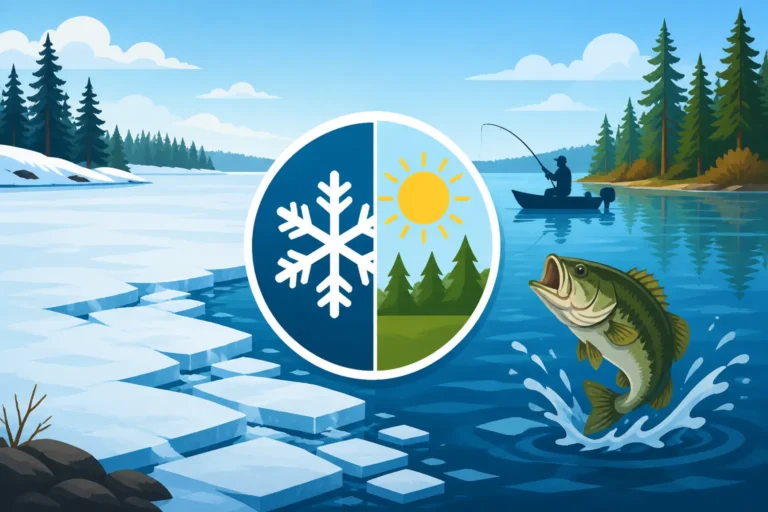
Perhaps the most critical concept to grasp for summer salmon fishing is the thermocline. Imagine a lake as a giant layered cake. In the summer, the sun heats the surface water, creating a warm upper layer. Deeper down, the water remains cold. The thermocline is that distinct transition zone, a boundary where the water temperature changes rapidly with depth. It's like finding a natural air-conditioned refuge for the salmon.
Salmon will actively seek out this thermocline because it offers their preferred water temperatures, typically in the range of 50-60°F (10-15°C). Above it, it's too warm and uncomfortable; below it, it might be cold enough, but often lacks sufficient oxygen or baitfish. Finding this "sweet spot" is paramount to your success, and it’s why just blindly dragging a lure behind the boat won't cut it once the summer heat sets in.
Forage Fish Movements: Following the Food
Salmon are predators, and like any predator, they go where the food is. In many of Maine's prominent salmon lakes, like Moosehead Lake or Sebago Lake, their primary forage consists of baitfish such as rainbow smelt. These baitfish also have their own temperature preferences and will congregate around the thermocline or in areas where food sources are plentiful.
So, when you're looking for salmon, you're often looking for schools of baitfish. These baitfish might be suspended in open water, or they might be relating to underwater structures like humps or deep points. Understanding their typical summer patterns in the specific lake you're fishing can give you a huge advantage in pinpointing salmon concentrations. If you can find the smelt, you’ll likely find the salmon nearby.
Oxygen Levels and Comfort Zones
While temperature is usually the main driver, oxygen levels also play a role, particularly in very deep or stratified lakes. As water stratifies in summer, the deepest parts can sometimes become anoxic, meaning they lack sufficient dissolved oxygen to support fish life. Salmon, needing cool, well-oxygenated water, will avoid these areas.
This means that while they go deep, they won't necessarily be on the very bottom in the deepest parts of the lake. Instead, they'll find that perfect band within or just above the thermocline where the temperature is ideal, and there's plenty of oxygen to keep them comfortable and active. Modern fish finders can sometimes give you clues about oxygen levels, or at least show you where fish are not holding, even if the temperature seems right.
Key Factors Influencing Trolling Depth
So, you know salmon go deep. But how deep, exactly? This isn't a fixed number; it varies day by day, lake by lake, and even hour by hour. Learning to read the water and adjust your strategy is crucial. You'll need to consider a few primary factors to dial in your trolling depth.
Water Temperature: The Golden Rule
As we've discussed, water temperature is the single most important factor. Landlocked salmon thrive in cooler waters. In Maine, this typically means they'll be found in water that's roughly 50-60°F. Anything warmer, and they get sluggish and stressed; much colder, and their metabolism slows down, making them less active.
To find this sweet spot, you'll need a water temperature gauge, preferably one that can read temperatures at different depths. Some advanced fish finders offer this capability, or you can use a separate probe. Once you locate the depth range where these temperatures exist, you've found the most likely zone for salmon. This zone often corresponds with the thermocline, which can vary in depth from 20 to 60 feet or even deeper, depending on the lake's size, depth, and the specific weather patterns of the summer. Consistently checking the water temperature will significantly increase your odds.
Baitfish Schools: Where the Meal Is
Salmon don't just hang out in cool water for the sake of it; they're there because that's often where their food is. Locating schools of baitfish, primarily smelt, is a huge indicator of where salmon will be feeding. Your fish finder will be your best friend here. Look for dense clouds or arches on your screen, indicating concentrations of bait.
When you see these bait schools, pay attention to their depth. If they're suspended at 40 feet, that's where you want your lures. If they're at 60 feet, adjust accordingly. Sometimes, you'll see larger, distinct arches or lines near these bait balls – those are likely the salmon themselves. Don't be afraid to circle back over areas where you mark significant bait; the salmon often cruise just below or on the edges of these schools, ready to strike. For more detailed information on specific fish, you might want to read up on where Landlocked Salmon Live in Maine Lakes.
Lake Structure: Hidden Depths and Drop-offs
Even when salmon are suspended in open water, they often relate to underwater structure. Deep points, submerged humps, underwater islands, old river channels, or significant drop-offs can act as ambush points or navigation aids for salmon. These structural elements also tend to hold baitfish, which are another reason for salmon to linger.
When trolling, don't just stick to the middle of the lake. Pay attention to contour lines on your bathymetric charts. Trolling along a deep contour line, especially one with sharp turns or variations, can be incredibly effective. Consider areas where a deep flat suddenly drops into a trench, or where a major point extends far out into the lake. These transition zones are prime real estate for cruising salmon. Remember, many of Maine's large lakes, like the Rangeley Lakes, have intricate underwater topographies that are worth exploring.
Trolling Techniques and Gear for Deep Salmon
Once you understand why salmon go deep and where to look, the next step is to master the how. Getting your lure down to the correct depth consistently can be a challenge, but modern gear and time-tested techniques make it possible.
Downriggers: Precision Depth Control
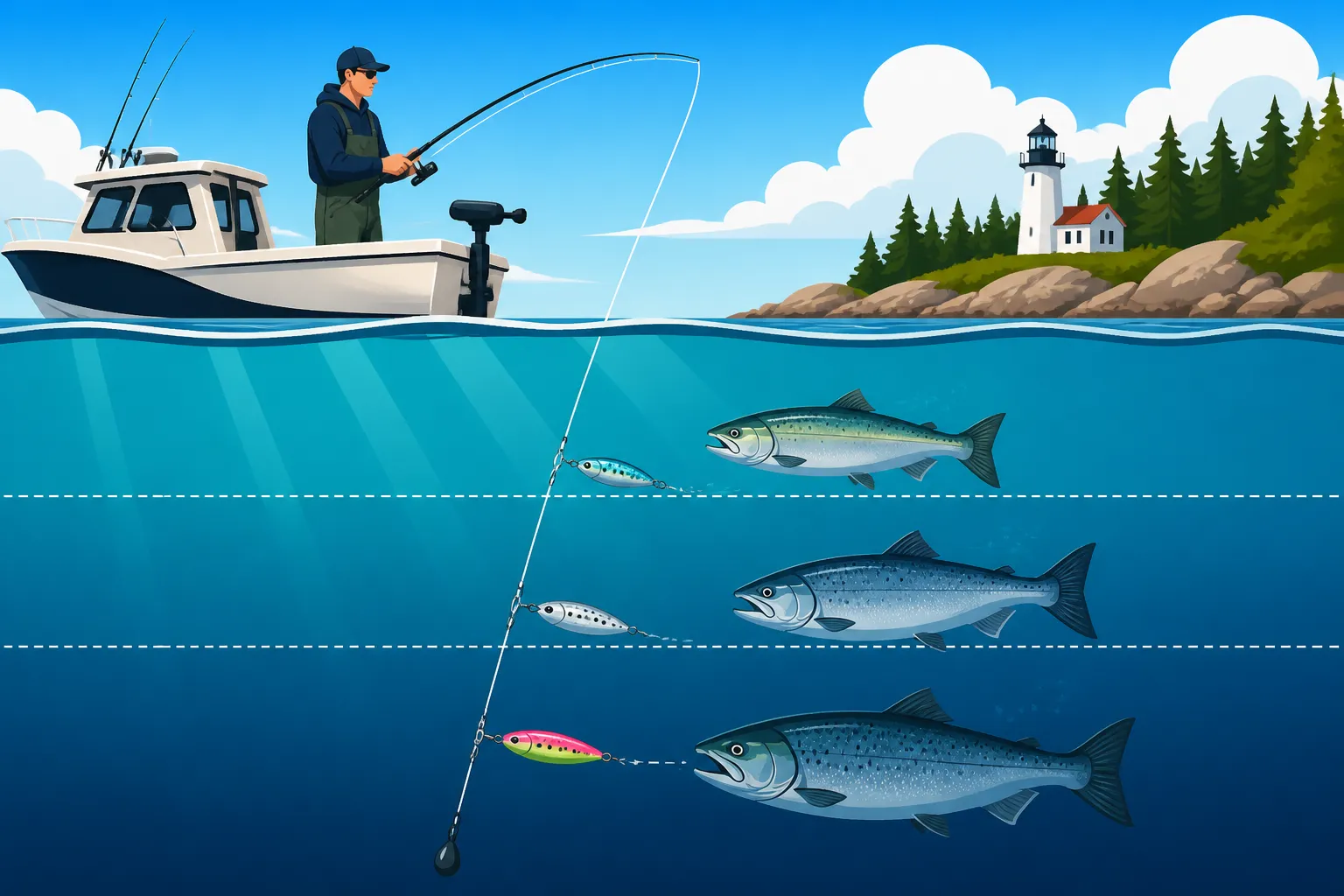
If you're serious about deep trolling for salmon in summer, downriggers are arguably the most effective tool. These devices allow you to send a heavy cannonball weight down to a precise depth, with your fishing line clipped into a release mechanism. When a fish strikes, the line pops free from the clip, allowing you to fight the fish directly on your rod and reel without the weight of the cannonball.
Downriggers offer unparalleled depth control, allowing you to place your lure exactly at the thermocline or amidst a bait ball. This precision is a game-changer. Brands like Cannon and Scotty are popular choices, and you can often find a good selection, along with spare parts and accessories, on Amazon. While they require an initial investment and some setup, the ability to fine-tune your depth and present a lure naturally on light line makes them incredibly efficient. You can learn more about how to use one by checking out guides like How to Use a Downrigger for Lake Trout, which applies well to salmon too.
Lead Core and Copper Line: Old-School Effectiveness
Before downriggers became widespread, anglers relied on weighted lines to get their lures deep. Lead core and copper line are still highly effective methods, especially if you prefer a simpler setup or are fishing without the expense and bulk of downriggers. Lead core line has a lead center wrapped in a braided sheath, with each "color" (typically 10 yards) sinking your lure a certain amount, usually around 5 feet per color at typical trolling speeds.
Copper line is a solid strand of copper wire that sinks even faster than lead core. The general rule of thumb for copper is about 20-25 feet of depth for every 100 feet of line out, but this varies significantly with lure weight and trolling speed. The advantage of these lines is their simplicity – no weights to manage, just pure line. The disadvantage is that they're less precise than downriggers, and fighting a fish on these heavy, less flexible lines can be a unique experience. However, many veteran anglers swear by them, especially for covering a wide range of depths, as covered in a comprehensive guide on Trolling Techniques for Maine Lakes.
Diving Planers and Weighted Lines
For a middle-ground approach between downriggers and full lead core/copper setups, diving planers and snap weights are excellent options. Diving planers, such as Dipsy Divers or Jet Divers, are small, buoyant devices that attach directly to your fishing line and dive to a predetermined depth as you troll. They come in various sizes and can be adjusted to dive deeper or run off to the side, covering more water.
Snap weights are simply lead weights that you clip onto your main fishing line at a certain distance in front of your lure. These are less precise but allow you to get a lure deeper with standard monofilament or braided line. They are a good choice for occasional deep trolling without investing in specialized reels or downriggers. Remember to consider the best lures for Maine Open Water Fishing when pairing them with these methods.
Best Lures for Deep Trolling
The type of lure you choose is just as important as the depth. For landlocked salmon in Maine, traditional spoons, stickbaits, and streamer flies are perennial favorites.
- Spoons: Classic flutter spoons like the Mooselook Wobbler, Sutton Spoon, or even smaller Little Cleos are highly effective. Their erratic action mimics injured baitfish. In deeper, darker water, bright colors like silver, gold, blue, green, and even glow-in-the-dark patterns can be very productive.
- Stickbaits: Trolling thin-profile stickbaits, such as Rapalas (Jointed or Original Floaters), Renosky Lures, or similar imitations, can also entice strikes. These lures often mimic smelt perfectly.
- Streamer Flies: Many anglers will troll classic streamer patterns like a Gray Ghost, Nine-Three, or Supervisor behind a dodger or flasher. The dodger creates attraction and imparts a swimming motion to the fly. This combination is deadly for salmon, especially if they are feeding heavily on smelt.
- Color Choice: In deep water where light penetration is limited, darker colors or those with UV finishes can often be more visible. Many anglers swear by silver, blue, green, or even black and purple in these conditions. When buying your gear, you can find a huge variety of options on Amazon, making it easy to experiment.
Practical Tips for Dialing In Your Depth
Knowing the theory is one thing, but putting it into practice on the water takes experience and a willingness to adapt. Here are some actionable tips to help you consistently find that salmon sweet spot.
Using Your Electronics: Fish Finders and Sonar
Your fish finder is the single most important tool for dialing in your depth. It's not just for finding fish; it's for reading the water column. Start by adjusting your sensitivity to clearly see the thermocline – it will often appear as a distinct horizontal line or band of denser returns on your screen. Below this line, you'll see cooler water; above it, warmer water.
Once you've identified the thermocline, actively look for baitfish schools and individual fish arches within or just above this zone. Pay attention to the depths where you mark these targets. If you're consistently marking fish at 50 feet, that's where you need your lures. Don't forget that many modern units also have side imaging or down imaging capabilities that can help you identify structure that salmon might be relating to, even if they're suspended off it. A good understanding of Reading a Fish Finder on Maine Lakes will dramatically improve your results.
Experimentation and Adjustments
Fishing, especially trolling for suspended fish, is often a game of trial and error. Don't be afraid to experiment. Start with a few different depths across your lines if you're running multiple rods. For instance, if you suspect salmon are at 45-55 feet, run one lure at 45, another at 50, and a third at 55. If one rod starts getting all the action, adjust the others to that depth.
Vary your trolling speed. A slight increase or decrease in speed can change a lure's action and its effective depth. Troll in S-curves rather than straight lines; the outside rod in a turn will speed up and rise slightly, while the inside rod will slow down and drop, sometimes triggering a strike. Pay close attention to current conditions, as even subtle underwater currents can affect your lure's depth and action. This active adjustment is part of the joy of Maine Open Water Fishing Techniques Guide.
Recording Your Successes (and Failures)
One of the most valuable habits you can develop as an angler is keeping a fishing log. It doesn't have to be anything fancy, just a small notebook. When you catch a salmon, or even just get a solid strike, quickly jot down the details:
- Date and Time: Essential for understanding seasonal and daily patterns.
- Location: Specific spot on the lake, GPS coordinates if you have them.
- Depth: The exact depth your lure was running.
- Lure/Bait: Type, color, and size of the offering.
- Trolling Speed: As precise as you can get it (e.g., 2.2 mph).
- Water Temperature: Both surface and at the depth of the strike if you have a probe.
- Weather Conditions: Cloud cover, wind, barometric pressure.
Over time, this log will reveal patterns and help you predict where and how salmon will be feeding in similar conditions. It takes the guesswork out of future trips and builds your confidence immensely. This practice ties into the broader concepts of Best Time of Year to Catch Landlocked Salmon in Maine, helping you build a personal fishing almanac.
| Trolling Method | Effective Depth Range (Approx.) | Pros | Cons | Ideal Application |
|---|---|---|---|---|
| Downrigger | 10 – 200+ feet | Precise depth control, light line | Requires specialized equipment, bulky | Targeting specific depths (e.g., thermocline) |
| Lead Core Line | 15 – 75 feet | No weights on rod, covers depth range | Less precise, bulky on reel, slower retrieves | Exploring a broader depth zone, simpler setup |
| Copper Line | 20 – 100+ feet | Sinks faster, no weights on rod | Very heavy, specific rod/reel needed | Reaching significant depths with fewer lines out |
| Diving Planers | 10 – 50 feet | Easy to use, no specialized reel | Less precise than downriggers | Covering side-to-side, moderate depth control |
| Snap Weights | Varies with weight | Flexible, inexpensive, use existing gear | Less precise, can create line twist | Quick depth adjustments, shallow to mid-depths |
Ultimately, successful summer salmon fishing in Maine is about adapting to the fish's behavior. The warming waters of July and August push these magnificent fish into specific, cooler zones, often dictated by the thermocline and the location of their food. By understanding these dynamics and employing the right gear and techniques, you can enjoy some truly memorable days on the water. Whether you're navigating the sprawling expanse of Moosehead Lake or the picturesque Sebago Lake, remember that patience, observation, and methodical adjustments are your greatest allies. Be sure to consult the latest Maine Fishing Regulations Explained and the Maine Fishing Season Dates Guide before heading out to ensure you're compliant with all local rules.
Disclaimer
Please remember that fishing regulations, conditions, and fish behavior can change. Always consult the official Maine Department of Inland Fisheries and Wildlife (MDIFW) regulations before heading out on the water. This guide is for informational purposes only and should not be considered a substitute for official sources or professional advice. Stay safe and enjoy your time fishing in Maine!