Maine Ice Fishing Techniques Guide
The biting cold, the stark beauty of a frozen lake stretching for miles, and the exhilarating anticipation of a fish tugging at your line—Maine ice fishing is an experience unlike any other. But let's be honest, for many, the idea of venturing out onto a frozen body of water can be intimidating. From navigating unpredictable ice conditions to understanding specialized gear and local regulations, mastering the art of ice fishing in Maine presents a unique set of challenges. This comprehensive guide will equip you with the knowledge and techniques to confidently embrace the winter angling season, ensuring both safety and success on Maine's frozen waters.
Understanding Maine's Ice Fishing Landscape
Maine's winters transform its vast network of lakes and ponds into an angler's paradise, offering a unique opportunity to target species that are harder to reach during open water seasons. However, this isn't just about punching a hole and dropping a line; understanding the nuanced environment and the specific challenges of winter is crucial for a rewarding experience.
The Allure and Challenges of Winter Angling
There's a quiet magic to ice fishing in Maine. The world feels hushed under a blanket of snow, and the camaraderie around an ice shack, sharing stories and coffee, is a cherished part of the culture. Beyond the social aspect, ice fishing provides access to parts of lakes that are inaccessible by boat or shore during warmer months. This opens up new fishing grounds, often leading to encounters with larger, less pressured fish. Anglers find themselves targeting deep-dwelling lake trout (or "togue" as we often call them here), robust landlocked salmon, and feisty brook trout, alongside plentiful populations of perch and pickerel. The clear, cold water of winter can make fish very active, offering some truly memorable battles.
However, the challenges are equally significant. The most paramount concern is always safety. Ice conditions can be deceptive, changing rapidly with temperature fluctuations, snow cover, and underlying currents. Staying warm and dry in sub-zero temperatures requires specialized clothing and shelters. The gear is different, too, from augers to cut holes, to tip-ups that signal a bite while you're tending other lines. Beyond the physical demands, there's a learning curve to understanding how fish behave in colder water, where they hold, and what they're willing to bite. But for those willing to learn, the rewards of pulling a glistening fish from beneath the ice are immense and deeply satisfying.
Key Regional Differences for Ice Fishing
Maine is a large state, and its diverse geography means that ice fishing experiences can vary significantly from one region to another. What works on a small pond in Southern Maine might not apply to a vast, deep lake in the North Woods. For instance, the fishing pressure tends to be higher in the more accessible lakes and ponds closer to population centers like Portland and Bangor. These waters might see more shacks and more competition, but they also offer easier access and often hold abundant populations of panfish and bass. You might find excellent opportunities for these species in places like Best Ice Fishing Ponds Near Bangor, Maine or Best Ice Fishing Lakes Near Portland.
Conversely, the remote lakes and ponds of Northern and Western Maine, such as those in the Moosehead or Rangeley regions, offer a more rugged, wilderness experience. Here, you'll often find yourself targeting trophy-sized brook trout, landlocked salmon, and togue. The ice season can also start earlier and last longer in these northern reaches due to consistently colder temperatures. Special regulations, known as "special waters," are more prevalent in these areas to protect wild fisheries, requiring anglers to be extra diligent about checking the rulebook. Understanding these regional variations is key to planning a successful trip, whether you're looking for a family-friendly panfish outing or a serious hunt for a trophy salmon.
Essential Gear for Maine Ice Fishing Success
Stepping onto the ice unprepared can quickly turn a fun day into a miserable one. The right gear isn't just about catching fish; it's about safety, comfort, and enjoying the unique environment that Maine's winter offers. Investing in quality equipment will make a world of difference.
Ice Augers and Power Drills
Without a way to get through the ice, you won't be doing much ice fishing! The ice auger is your primary tool. You have several options, each with its own benefits and drawbacks.
- Manual Augers: These are the simplest and most affordable. They consist of a sharp blade and a handle that you crank by hand. Manual augers are great for early and late ice when conditions are thinner (4-8 inches). They are lightweight, quiet, and require no fuel or batteries. However, once the ice thickens beyond a foot, they become a serious workout, especially if you plan to drill multiple holes. They are an excellent choice for solo anglers or those who only go out a few times a season on smaller bodies of water. You can often find decent manual augers on Amazon.
- Gas-Powered Augers: These are the workhorses of serious ice anglers. They feature a small gasoline engine that powers the auger blade, making quick work of even very thick ice (2-3 feet or more). They are incredibly efficient for drilling many holes, especially when exploring new areas or setting up a large spread of tip-ups. The downsides include their weight, noise, and the need for gasoline and oil. They also require more maintenance than manual augers. Gas models are perfect for those who spend a lot of time on the ice or fish large groups.
- Propane-Powered Augers: Similar to gas augers in power and efficiency, propane models run on small propane canisters. They are generally quieter and emit fewer fumes than gasoline engines, making them more pleasant to use, especially in an enclosed ice shack. They are also easier to start in extreme cold. However, propane canisters can be costly, and you'll need to carry several if you plan a full day of drilling.
- Electric Drills with Auger Attachments: This increasingly popular option uses a powerful cordless electric drill (often an 18V or 20V brushless model) paired with a specialized auger bit. They are remarkably quiet, lightweight, and efficient for moderate ice thickness (up to 2 feet). The main limitation is battery life, which can be affected by extreme cold and the number of holes drilled. Carrying spare batteries is a must. Many anglers appreciate the versatility of using their existing power tools for this setup. This combination is gaining traction for its convenience and environmental friendliness. Regardless of your choice, always ensure your auger blades are sharp, and consider carrying a blade guard for safety during transport.
Shelter, Warmth, and Safety Gear
Staying warm and safe is paramount when ice fishing in Maine. The elements can be unforgiving, and preparedness is key to an enjoyable and secure outing.
- Shelters: Ice fishing shelters come in various forms, from lightweight, portable flip-over shacks to larger, permanent shanties. Portable shelters, often pop-up style or flip-overs, are ideal for mobile anglers who move frequently to find fish. They offer excellent protection from wind and snow, and many have built-in seating and insulation. Larger, more permanent shacks provide ample space, often include heating, and can be quite comfortable for extended stays. Remember that Maine has specific regulations regarding Ice Fishing Shack Removal Rules and identification requirements for permanent structures. Many anglers find great deals on portable ice fishing shelters on Amazon.
- Warmth: Layering is critical for staying warm. Start with a moisture-wicking base layer, add insulating middle layers (fleece or down), and finish with a waterproof, windproof outer layer. Insulated boots, warm gloves or mittens, and a hat that covers your ears are non-negotiable. Chemical hand and foot warmers can be a game-changer on bitter cold days. A portable heater for your shack, whether propane or catalytic, provides a cozy refuge from the cold. Always ensure proper ventilation if using a combustion heater to prevent carbon monoxide buildup.
- Safety Gear: Never step onto the ice without proper safety equipment. Ice picks, worn around your neck, are crucial for self-rescue if you fall through. A throwable flotation device or rope can aid in rescuing others. A spud bar (ice chisel) is essential for checking ice thickness as you move, especially during early and late ice conditions. A fully charged cell phone, a first-aid kit, and a whistle are also vital. When venturing onto the ice, especially during uncertain conditions, it's always best to go with a buddy. Consult resources like Early Ice Safety Tips for Maine Anglers and Late Ice Safety Tips Before Ice-Out to understand safe ice thickness guidelines.
Rods, Reels, and Line Selection
Ice fishing requires specialized tackle designed for the unique challenges of fishing through a small hole in the ice. Your open water gear typically won't cut it.
- Ice Fishing Rods: These are significantly shorter than traditional fishing rods, typically ranging from 24 to 36 inches. This shorter length makes them easier to handle in confined spaces, like inside an ice shack, and allows for precise jigging motions right over the hole. They come in various actions, from ultra-light for panfish to heavy for large lake trout. A good quality ice rod will have a sensitive tip to detect subtle bites but enough backbone to handle a strong fish. Carbon fiber or fiberglass blanks are common, offering durability and sensitivity.
- Reels: While many ice anglers use small spinning reels, inline reels have gained popularity, especially for smaller jigs and light line. Inline reels prevent line twist, which can be a nuisance with spinning reels when jigging repeatedly. For larger species, a sturdy spinning reel with a smooth drag is perfectly adequate. Ensure your reel is rated for cold weather, as some lubricants can seize up in freezing temperatures. You can often find good quality ice fishing rods and reels from various brands on Amazon.
- Line Selection: Monofilament, fluorocarbon, and braided lines all have their place in ice fishing.
- Monofilament: Affordable and stretchy, which can be an advantage when a fish hits hard, preventing hook pulls. However, it can absorb water and freeze, and its stretch can make detecting subtle bites difficult.
- Fluorocarbon: Less stretch than mono, nearly invisible underwater, and more abrasion-resistant. It's an excellent choice for finesse presentations and clear water. However, it can be stiffer and more prone to memory in extreme cold.
- Braided Line: Offers incredible sensitivity, no stretch, and high strength-to-diameter ratio. This is ideal for detecting the lightest bites in deep water. However, braided line absorbs water readily and will freeze. To combat this, many anglers use a short fluorocarbon or monofilament leader (3-6 feet) tied to the braid. The leader provides invisibility and prevents the entire line from freezing stiff. The choice of line weight depends on your target species, but generally, 4-8 pound test is common for panfish and smaller trout, while 10-20 pound test might be used for large togue or salmon. Be mindful of Maine Ice Fishing Line Limits which dictate how many lines you can have in the water simultaneously.
| Species Targeted | Recommended Rod Action | Recommended Line Weight | Common Baits/Lures |
|---|---|---|---|
| Panfish (Perch, Crappie) | Ultra-light to Light | 2-4 lb test mono/fluoro | Small jigs, wax worms, maggots, tiny spoons |
| Brook Trout | Light to Medium-light | 4-6 lb test mono/fluoro | Small shiners, worms, small jigs, tiny spoons |
| Landlocked Salmon | Medium-light to Medium | 6-10 lb test fluoro/braid | Smelt, shiners, Swedish Pimples, Kastmasters |
| Lake Trout (Togue) | Medium to Medium-heavy | 10-20 lb test fluoro/braid | Large shiners, sucker meat, jigging spoons, tubes |
| Bass (Smallmouth/Largemouth) | Medium to Medium-heavy | 8-15 lb test fluoro/braid | Jigging spoons, blade baits, shiners, worms |
| Chain Pickerel | Medium-heavy | 10-20 lb test braid w/ leader | Large shiners, bright spoons, soft plastic swimbaits |
Mastering Ice Fishing Techniques for Maine Species
Once you're geared up, it's time to talk tactics. Ice fishing isn't just about waiting; it's an active and strategic pursuit, especially when targeting specific species found in Maine's diverse waters. Different fish require different approaches to entice them to bite through the ice.
Jigging for Lake Trout and Togue
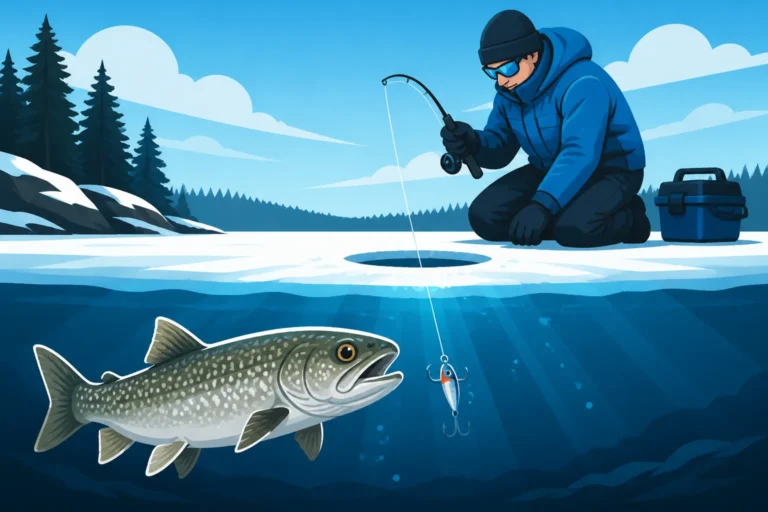
Lake trout, affectionately known as "togue" by many Mainers, are a prime target for ice anglers due to their size and fighting prowess. These fish typically inhabit the deeper, colder waters of Maine's larger lakes, so understanding their preferred depths and feeding habits in winter is crucial. Togue often hold near the bottom or suspend over deep water, particularly around underwater structure like humps, points, and drop-offs. Jigging is the most common and effective technique for them.
The setup usually involves a medium to medium-heavy ice rod paired with a spinning or inline reel spooled with 10-20 pound test braided line, often with a fluorocarbon leader for stealth. Popular lures include heavy jigging spoons (like Swedish Pimples, Kastmasters, or Crippled Herrings) in silver, gold, or glow colors, often tipped with a piece of cut bait (such as a smelt head or sucker meat) or a minnow. Tube jigs in white, black, or natural colors can also be very effective, mimicking baitfish. The technique involves dropping your lure to the desired depth, then lifting and dropping your rod tip to make the lure dart and flutter. Pay close attention to your sonar for fish approaching, and experiment with jigging cadence—sometimes a slow, methodical lift-and-drop works, other times an aggressive snap-jigging motion can trigger a strike. It's often helpful to keep your jig just above the fish you mark on your electronics, as togue tend to look up for prey. Remember to check Maine Togue and Lake Trout Limits to ensure you're compliant with local regulations.
Setting Up Tip-Ups for Brook Trout and Salmon
While jigging is active, tip-ups offer a more passive, hands-off approach, allowing you to cover more water and target multiple species simultaneously. This method is particularly effective for brook trout and landlocked salmon, which often cruise larger areas in search of baitfish. A typical tip-up consists of a spool of line positioned over a hole, with a flag that "tips up" when a fish takes the bait, signaling a bite. This allows you to spread out several lines and increase your chances of intercepting cruising fish.
For brook trout, which are Maine's state fish and highly prized, you'll want to target areas like shallow coves, points, and transition zones where weeds meet deeper water, especially in smaller ponds or the shallower areas of larger lakes. Small live bait, such as shiners or worms, fished a few feet off the bottom or suspended mid-water, works exceptionally well. For landlocked salmon, which are also often found cruising open water or near structure where baitfish congregate, smelt are the preferred bait. Rigging a live smelt under a tip-up, suspended anywhere from 5 to 20 feet below the ice, depending on the depth and fish activity, can be deadly. Ensure your tip-up spools have adequate line (at least 50-100 feet of 6-10 pound test monofilament) to allow the fish to run with the bait before you set the hook. When the flag goes up, approach slowly, pick up the line by hand, feel for the fish, and set the hook with a firm but gentle pull. Be aware of Maine Landlocked Salmon Bag Limits and Brook Trout Daily Bag Limits as they vary by water.
Targeting Perch and Pickerel Through the Ice
Don't underestimate the fun and consistent action that can be had by targeting panfish like perch and the aggressive chain pickerel. These species are often abundant, readily bite, and are excellent targets for beginners and families, providing continuous entertainment even when the trout or salmon are being finicky. Many of Maine's accessible lakes and ponds hold thriving populations of both.
Yellow perch are schooling fish, so where you find one, you're likely to find many more. They tend to congregate around weed beds, submerged structures, and gradual drop-offs. Small jigs, like teardrops or small spoons, tipped with a wax worm, a couple of maggots, or a piece of a Berkley Gulp! Alive minnow, are incredibly effective. A sensitive, ultra-light ice rod allows you to detect their often subtle bites. Jig these baits slowly, just off the bottom or suspended at various depths until you find the school. Chain pickerel, on the other hand, are ambush predators often found lurking in weed lines or around submerged brush. They are not picky and will hit anything from larger shiners under a tip-up to brightly colored jigging spoons or soft plastic swimbaits. Be sure to use a wire leader or heavy monofilament/fluorocarbon leader when targeting pickerel, as their razor-sharp teeth can easily cut through lighter lines. While not typically considered a prime table fare by all, smaller perch and pickerel can be quite tasty if properly filleted. Many anglers enjoy the fast-paced action they provide throughout the day, making them a fantastic option for a rewarding ice fishing trip.
Locating Fish Under the Ice
Finding fish is half the battle in ice fishing, and it's even more challenging when you can't see below the surface. Understanding underwater topography, utilizing technology, and knowing how fish behave in cold water are essential skills for any successful ice angler in Maine.
Reading Ice Structure and Depth
Just like in open water, fish relate to structure. The key to successful ice fishing is identifying these underwater features without being able to see them. This requires a bit of detective work and often relies on maps and a keen understanding of typical fish habitats. Start by consulting bathymetric (depth) maps of the lake or pond you're fishing. These maps, often available online or from local bait shops, will show you drop-offs, humps, points, and other contour lines that indicate changes in depth. Fish, especially predators like togue and salmon, will often patrol these depth changes, waiting for baitfish to move between shallow and deep water.
Once on the ice, paying attention to subtle clues can also help. Inflow and outflow areas of rivers or streams often attract fish due to current and potential food sources. Areas where different types of bottom transition (e.g., mud to rock) can also be productive. Don't be afraid to drill a series of test holes to determine depth changes and bottom composition. A systematic approach, drilling holes along a contour line or across a known drop-off, can quickly reveal productive zones. Remember that fish often hold slightly differently in winter than in summer, seeking out stable temperatures and oxygen levels, which often means deeper water or areas with thermal stratification.
Using Sonar and Fish Finders Effectively
Modern electronics have revolutionized ice fishing, turning guesswork into informed decisions. An ice-specific sonar unit, often called a flasher or a portable fish finder, is an invaluable tool for locating fish, determining depth, and understanding bottom composition. These units send out sonar waves that bounce off the bottom and any objects (including fish) in the water column, displaying them on a screen in real-time.
- Flashers: These traditional ice fishing units display returns as colored segments on a circular dial, indicating depth, strength of the return, and real-time movement. You can see your jig or bait in the water column and watch fish approach it—a truly exciting experience! Flashers like the Marcum or Vexilar brands are popular for their ruggedness and clarity.
- LCD Fish Finders: Many portable fish finders, similar to those used in kayaks or small boats, can be adapted for ice fishing. These offer a more detailed, graphic display, often showing historical data, water temperature, and GPS capabilities. Brands like Humminbird and Lowrance offer excellent portable options.
To use them effectively, place the transducer just below the surface of the water in your drilled hole. Adjust sensitivity to eliminate clutter but still pick up your lure. Watch for solid lines or arches indicating fish. Experiment with your lure's depth and movement relative to the fish you mark. If fish are suspended, present your bait just above them, as fish typically feed upwards. If they are on the bottom, keep your lure within a foot or two. Learning to interpret the signals from your sonar will dramatically increase your success rate, allowing you to quickly determine if a hole is productive and when to move on.
Understanding Fish Behavior in Winter
Fish behavior changes significantly once water temperatures drop and lakes freeze over. Their metabolism slows down, meaning they might not feed as aggressively or as frequently as in warmer months. However, they still need to eat, and understanding their winter patterns is key. In general, fish will seek out areas of stable temperature and adequate oxygen. For many species, this means moving to deeper water where temperatures are more consistent (typically 39 degrees Fahrenheit or 4 degrees Celsius at the bottom).
However, "deeper" is a relative term. In smaller, shallower ponds, fish might simply move to the deepest available basin. In large lakes, they might relate to deep structure like humps or sunken islands. Predatory fish will often follow schools of baitfish, so finding smelt or perch can often lead you to salmon and togue. During the dead of winter, fish activity can be concentrated around dawn and dusk, or during specific weather windows like a warming trend or before a storm. Pay attention to changes in barometric pressure, as these can influence fish feeding patterns. During periods of low activity, a more subtle, slower presentation might be necessary to coax a bite. Conversely, during peak feeding times, more aggressive jigging or larger baits can trigger strikes. Patient observation and adapting your tactics to the fish's mood are hallmarks of a successful Maine ice angler.
Bait and Lure Strategies for Maine Ice Fishing
Even with the best gear and knowledge of fish locations, you still need to present something enticing enough to get a bite. The world of ice fishing baits and lures is diverse, offering options for every species and fishing style.
Live Bait Tactics and Considerations
Live bait is a cornerstone of Maine ice fishing, particularly effective on tip-ups and often irresistible to many game species. The scent and natural movement of live bait can entice even the most lethargic fish in cold water.
- Minnows (Shiners, Smelt): These are arguably the most popular live baits. Small shiners are excellent for brook trout, crappie, and perch, while larger shiners and smelt are deadly for landlocked salmon, lake trout (togue), and bass. Smelt are particularly favored for salmon due to their natural presence in salmon diets. When rigging minnows, you can hook them through the back just behind the dorsal fin, being careful not to hit the spine, or lightly through the lips. This allows them to swim naturally, attracting attention. For salmon and togue, suspended live bait under a tip-up is a classic method.
- Worms: Nightcrawlers or smaller garden worms are great for panfish and smaller brook trout. They are easy to come by and often produce consistent action.
- Maggots/Wax Worms: These small, wiggly baits are ideal for tipping tiny jigs when targeting perch, crappie, and even smaller trout. Their subtle movement and scent are perfect for finesse presentations.
When using live bait, always ensure it's lively and healthy. Keep minnows in a proper bait bucket with an aerator, especially on longer trips. Keep worms and maggots in cool, moist conditions. Be mindful of regulations regarding live bait, as some waters may have restrictions on what types of bait can be used, or if live bait is even allowed. For instance, some trophy trout waters may be "artificial lures only" to protect wild populations. Always check the Maine Fishing Regulations Explained before you head out.
Popular Artificial Lures for Ice Fishing
Artificial lures offer versatility, durability, and a wide array of colors and actions. Many anglers prefer them for active jigging, allowing them to impart specific movements that trigger strikes.
- Jigging Spoons: These metal lures, like the ever-popular Swedish Pimple, Kastmaster, and Crippled Herring, are designed to flutter and flash on the drop, mimicking injured baitfish. They come in various sizes and weights for different depths and species. Common colors include silver, gold, copper, and glow-in-the-dark. Tipping a spoon with a minnow head, a wax worm, or a small piece of cut bait can significantly increase its effectiveness. A rapid lift and fall, followed by a pause, is a common technique that can provoke an aggressive strike.
- Tube Jigs: Soft plastic tube jigs, often 2-4 inches long, imitate various baitfish and aquatic invertebrates. They are particularly effective for togue, smallmouth bass, and even larger perch. White, black, chartreuse, and natural baitfish colors are popular. Rigged on a lead head jig, they can be slowly jigged or aggressively snapped.
- Blade Baits: Lures like the Sebile Vibrato or Rapala Rippin' Rap vibrate intensely as they are lifted, creating a lot of commotion and flash. These are excellent search baits, covering the water column quickly and calling in aggressive fish, particularly bass and larger perch. They work well with a sharp lift and fall.
- Small Jigs and Tungsten Jigs: For panfish and finesse trout fishing, tiny jigs (1/32 to 1/8 ounce) are essential. Tungsten jigs are heavier than lead for their size, allowing them to sink faster and providing more sensitivity in light line applications. Tipped with a single maggot, wax worm, or a tiny soft plastic, these are deadly for enticing finicky eaters.
- Hard Baits (Rattling Raps, Jigging Raps): These lipless crankbaits or specialized jigging lures from companies like Rapala are designed to be fished vertically. They dart erratically when jigged, imitating a distressed baitfish. They are very effective for targeting aggressive lake trout, salmon, and bass.
The key with artificial lures is experimentation. Vary your retrieve, color, and size until you find what the fish are responding to on a given day. Don't be afraid to switch it up frequently.
Adapting Bait to Target Species
Knowing what a particular fish species prefers to eat is a significant advantage. While there's always overlap, tailoring your bait or lure choice to your target will greatly improve your chances.
- Landlocked Salmon: These powerful game fish primarily feed on smelt and other forage fish. So, live smelt are king for tip-ups. For jigging, lures that mimic smelt, such as silver jigging spoons or white tube jigs, are highly effective.
- Lake Trout (Togue): Togue are apex predators in many Maine lakes, feeding on larger baitfish like smelt, suckers, and cusk. Larger live shiners or sucker meat on tip-ups are excellent. Heavy jigging spoons and tube jigs are also very popular, presented deep.
- Brook Trout: While they will hit minnows, brook trout in many Maine waters also feed heavily on aquatic insects, worms, and small crustaceans. For tip-ups, small shiners or worms are excellent. For jigging, tiny jigs tipped with maggots, wax worms, or even small ice flies can be incredibly productive, especially in shallower water.
- Smallmouth Bass: Bass are opportunistic predators. Live shiners on tip-ups are great, but they also respond very well to aggressive jigging spoons, blade baits, and tube jigs.
- Perch and Crappie: These panfish are less selective. Small jigs tipped with maggots or wax worms are almost always a winner. Small spoons or even just a plain hook with a piece of worm will often get bites.
Understanding the specific diet and feeding habits of the fish you're targeting, combined with an understanding of what forage is present in the specific lake you're fishing, will allow you to make the most informed bait and lure choices. This adaptive approach, moving beyond a "one-size-fits-all" strategy, is what truly elevates an ice angler's success.
Safety First: Navigating Maine's Frozen Waters
Ice fishing is an incredible winter sport, but it carries inherent risks. The most crucial aspect of any ice fishing trip in Maine is safety. Being prepared, knowledgeable, and cautious is not just advisable; it's absolutely essential.
Assessing Ice Thickness and Conditions
The number one rule of ice fishing is: No ice is 100% safe. Ice conditions can be deceiving and vary widely even on the same body of water. Always check ice thickness as you go, and be aware of factors that can weaken ice.
-
Minimum Safe Thickness: General guidelines for new, clear, solid ice:
- 2 inches or less: STAY OFF.
- 4 inches: Safe for ice fishing on foot. (Always check as you go with a spud bar).
- 5-7 inches: Safe for a snowmobile or ATV.
- 8-12 inches: Safe for a car or small truck.
- 12-15 inches: Safe for medium trucks.
These are general guidelines only. Always consult local conditions and err on the side of caution.
-
Factors Affecting Ice Strength:
- Snow Cover: Snow acts as an insulator, slowing ice formation and often masking weak spots. It can also cause slush, which weakens the ice underneath.
- Currents: Areas near inlets, outlets, rivers, streams, or narrows can have strong currents that thin the ice from below, even in bitter cold. Always be extra cautious around these spots.
- Bubblers/Aerators: Many docks use bubblers to prevent ice formation. These areas are extremely dangerous and should be avoided entirely.
- Pressure Ridges: These are cracks or seams in the ice where sheets have pushed together or apart. They can be unstable and dangerous.
- Color of Ice: Clear blue ice is generally the strongest. White or opaque ice (snow ice) is about half as strong as clear ice. Gray or dark ice indicates water saturation and extreme weakness.
- Temperature Fluctuations: Warming temperatures can quickly degrade ice, especially during late winter. Even a few days of above-freezing temperatures can significantly weaken ice that was previously safe.
Always use a spud bar or auger to frequently test ice thickness as you venture out. Never assume the ice is safe because others are out there; they might be taking unnecessary risks or know something about specific localized conditions. For more detailed guidance, refer to resources like Early Ice Safety Tips for Maine Anglers and Late Ice Safety Tips Before Ice-Out.
Dressing for Extreme Cold and Emergency Preparedness
Maine winters can be brutal, with temperatures plummeting well below zero, especially with wind chill. Proper attire is not just about comfort; it's about survival.
- Layering is Key: Dress in multiple layers, starting with a moisture-wicking base layer to draw sweat away from your skin. Add insulating middle layers (fleece, wool, or down) and a waterproof, windproof outer layer. This allows you to adjust your clothing as activity levels or temperatures change.
- Protect Extremities: A warm hat that covers your ears, insulated and waterproof gloves or mittens (and spares!), and insulated, waterproof boots are critical. Your body loses a significant amount of heat through your head, hands, and feet.
- Flotation Suit: An insulated flotation suit (often called an ice fishing suit) is an excellent investment. These suits are designed to provide warmth, be waterproof, and offer buoyancy if you fall through the ice, significantly increasing your chances of survival.
- Emergency Gear:
- Ice Picks: Worn around your neck, these are your primary tool for self-rescue.
- Spud Bar: For checking ice thickness as you walk.
- Rope/Throw Bag: A length of sturdy rope (50+ feet) with a floatable end can be thrown to someone who has fallen through.
- First-Aid Kit: Stocked with basics, including bandages, pain relievers, and any personal medications.
- Fire Starter/Matches: In a waterproof container, for emergency warmth or signaling.
- Whistle: For signaling if you get lost or need help.
- Fully Charged Cell Phone: In a waterproof case, and ideally, also a portable power bank.
- Headlamp/Flashlight: With spare batteries, as daylight hours are short.
- Warm Drinks/Food: Thermos with hot chocolate or coffee, and high-energy snacks.
Never go ice fishing alone, especially on larger or unfamiliar waters. Always tell someone where you are going and when you expect to return. Being prepared for the worst allows you to enjoy the best of Maine's ice fishing.
Maine Ice Fishing Shack Rules and Regulations
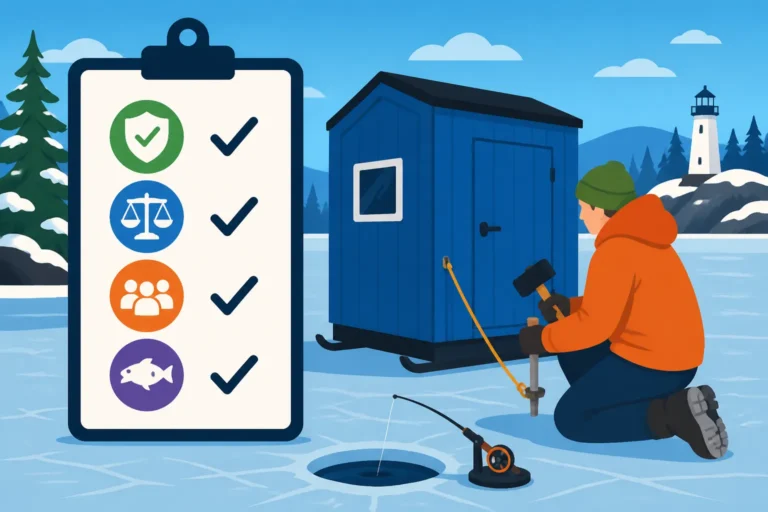
If you plan to use an ice fishing shack, whether a portable shelter or a more permanent structure, you need to be aware of Maine's specific regulations. These rules are in place to ensure public safety, prevent environmental issues, and manage debris on the lakes.
- Registration and Identification: All ice fishing shacks that are left unattended overnight must be clearly marked with the owner's name and address. This helps wardens identify ownership and contact information, especially crucial for enforcement of removal deadlines.
- Removal Deadlines: One of the most critical rules is the mandatory removal of shacks. Generally, all ice fishing shacks must be removed from the ice by March 31st of each year. However, this deadline can be earlier in certain regions or on specific bodies of water if ice conditions deteriorate rapidly. It's imperative to check the annual Maine Fishing Regulations booklet or the Maine Department of Inland Fisheries and Wildlife (MDIFW) website for the exact dates each season and for specific waters. Failure to remove a shack by the deadline can result in fines, and the shack may be removed by the state at the owner's expense. For detailed information, see Ice Fishing Shack Removal Rules.
- Litter and Debris: It's illegal to leave any litter or debris on the ice. This includes everything from broken equipment to discarded bait containers and food wrappers. Pack out everything you pack in, and leave the ice cleaner than you found it. This practice protects the environment and ensures the beauty of Maine's waters for future generations.
- Location and Access: While shacks provide comfort, be mindful of where you place them. Avoid blocking public access points, boat launches, or private property access. Respect landowner rights and give other anglers ample space.
Understanding and adhering to these rules not only keeps you compliant with the law but also contributes to a positive and sustainable ice fishing culture in Maine.
Advanced Tips and Seasonal Nuances
Once you've got the basics down, you can start refining your approach to ice fishing. Understanding how fish behavior and tactics change throughout the winter season, as well as optimizing your overall experience, can lead to even greater success and enjoyment.
Early Ice vs. Late Ice Strategies
The beginning and end of the ice fishing season often offer some of the most exciting fishing, but they also demand distinct strategies and heightened caution.
- Early Ice (First few weeks after safe ice forms): This is often a fantastic time to target a wide variety of species. Fish are typically still active and less pressured, having not seen many anglers yet.
- Location: Fish tend to be shallower during early ice, often relating to green weed beds, rocky points, and shallow flats where baitfish and invertebrates are still abundant. Targeting these areas, especially near the first drop-offs from shore, can be very productive for brook trout, salmon, bass, and panfish.
- Activity: Fish metabolism is still relatively high, so they might be more willing to chase and hit aggressive presentations. Fast-paced jigging with spoons, blade baits, or even small swimming lures can trigger strong strikes.
- Safety: Crucially, early ice is also the most dangerous time. Ice can be inconsistent, with varying thickness even across short distances. Always check ice thickness every few steps with a spud bar, and never go alone. Stick to known safe areas and follow guidelines like those in Early Ice Safety Tips for Maine Anglers.
- Late Ice (Weeks leading up to ice-out): As spring approaches and the ice begins to degrade, fish often experience a surge of activity, preparing for spawning or increased feeding before open water.
- Location: Fish may move back into shallower areas, especially near incoming streams, inlets, and shorelines, seeking warmer water, oxygen, and staging for spawning. Focus on these areas, as well as the mouths of feeder creeks where nutrient-rich water might be flowing in.
- Activity: Many species, particularly pike, perch, and some trout, can become incredibly aggressive as the ice starts to melt. This can be a time for large catches. However, other species, like salmon, might be more sluggish as they conserve energy. You might need to experiment with both aggressive and subtle presentations.
- Safety: Late ice is arguably as dangerous as early ice, if not more so. The ice deteriorates rapidly from the edges and from below due to warming water and currents. Watch for dark spots, slushy areas, and soft ice. Always be aware of the daily temperature and forecast. Many anglers use ATV's or snowmobiles during mid-winter, but late ice means parking them on shore and walking, as vehicle weight becomes increasingly risky. Be aware of the Ice Fishing Shack Removal Rules and get your shelters off the ice well before the deadline.
Group Dynamics and Best Practices
Ice fishing is often a social activity, and going out with friends or family can enhance the experience. However, there are some best practices to ensure everyone has a safe and enjoyable time.
- Spread Out, But Not Too Far: While it's good to spread your holes out to cover more water, especially with tip-ups, don't get so far apart that you can't hear or see each other if someone needs help. Maintain visual contact, especially on large lakes or in remote areas.
- Share Knowledge: Experienced anglers can mentor beginners, sharing tips on rigging, knot tying, and fish behavior. A group dynamic is perfect for learning new techniques.
- Designated Roles: If you're using multiple tip-ups, establish who is responsible for checking which flags. This prevents confusion and ensures quick responses to bites.
- Shared Responsibility for Safety: Everyone in the group should be aware of ice conditions, carry safety gear, and understand emergency procedures. A group is only as strong as its weakest link when it comes to safety.
- Respect Others: If another group is already set up in an area, give them ample space. Don't crowd their fishing holes or drill new ones right on top of their lines. Maine's waters are vast enough for everyone to enjoy.
- Keep it Clean: Designate a trash bag for all waste. Nothing ruins a beautiful day on the ice like finding litter left by others. Leaving no trace is fundamental.
Embracing these group dynamics makes the experience safer and more enjoyable for everyone involved, fostering a strong sense of community on the ice.
Staying Comfortable and Extending Your Day
Comfort is directly linked to enjoyment and how long you can stay out on the ice. Maine's cold can be relentless, but with some smart planning, you can significantly extend your fishing day.
- Strategic Layering (Revisited): The ability to add or remove layers is critical. Don't overdress when actively drilling holes or walking, as sweating can lead to hypothermia once you stop moving. Peel off layers during exertion and put them back on when sedentary.
- Portable Heat: A small, safe propane or catalytic heater in your ice shack (with proper ventilation!) can make a huge difference. Stepping into a warm shelter for a few minutes can rejuvenate frozen fingers and toes. Companies like Mr. Heater offer portable options.
- Warm Food and Drink: A thermos full of hot coffee, cocoa, soup, or even a hot meal can be a game-changer. These provide internal warmth and a morale boost. High-energy snacks keep your body fueled and help generate heat.
- Dry Gear: Have extra gloves, socks, and possibly a hat. If your hands or feet get wet, changing into dry replacements immediately is crucial to prevent frostbite. Keep these spares in a dry bag or container.
- Comfortable Seating: A good portable chair or bucket with a padded lid will make sitting for hours much more pleasant. Many ice fishing buckets on Amazon come with comfortable padded swivel seats.
- Protection from Wind: Wind is the enemy. Even on a relatively mild day, a strong wind can make it feel much colder. Position your shack strategically, or use a windbreak. A good quality windproof outer layer is essential even without a shelter.
- Breaks and Movement: Don't be afraid to take breaks. Walk around, stretch, or do a few jumping jacks to get your blood flowing. If you start to feel numb or overly cold, head for your shelter or even your vehicle to warm up completely before returning to the ice.
By prioritizing comfort and planning for the long haul, you'll be able to enjoy Maine's stunning winter landscapes and the thrill of ice fishing for much longer, turning a short outing into a full day of memorable angling.
Disclaimer
The information provided in this guide is for general informational purposes only and is not intended as a substitute for professional advice. Ice conditions are unpredictable and can change rapidly. Always exercise extreme caution, assess ice thickness yourself, and never take unnecessary risks. Consult the official Maine Department of Inland Fisheries and Wildlife regulations and local authorities for the most up-to-date and specific rules and safety guidelines before venturing onto any frozen water body. Your safety is your responsibility.