Best Spots for Mackerel Fishing in Maine
For many anglers, the idea of fresh, fast-fighting mackerel instantly brings a smile. These vibrant, silver-sided fish offer an exhilarating experience that’s accessible to just about everyone, from seasoned veterans to families with young kids. But while Maine's coast is teeming with possibilities, figuring out where exactly to cast your line for the best mackerel action can feel like searching for a needle in a haystack. This guide is here to cut through the guesswork, showing you the absolute best spots to find mackerel in Maine, alongside the techniques and tips to make your trip a smashing success.
The Allure of Mackerel Fishing in Maine's Coastal Waters
There’s something truly special about mackerel fishing in Maine. It’s not just about the catch; it’s about the crisp sea air, the stunning coastal scenery, and the sheer joy of a bending rod. Mackerel are voracious eaters, often schooling in massive numbers, which means when you find them, the action can be non-stop.
Why Mackerel Are a Maine Favorite
Let's be honest, mackerel aren't the biggest fish in the ocean, nor do they typically represent a trophy catch for most anglers. Yet, they hold a special place in the hearts of many Maine fishermen. For one, they are incredibly accessible. You don't always need a fancy boat or expensive gear to get in on the action. Many of the best spots are easily reached from public piers, docks, and rocky shorelines, making it a fantastic option for a spontaneous afternoon trip or a family outing.
Beyond accessibility, mackerel are feisty fighters for their size. Hook into a school, and you'll experience a thrilling tug-of-war on light tackle that can be addictive. Plus, they make excellent table fare. Freshly caught and grilled, smoked, or pan-fried, their rich, oily flesh is a culinary delight that rivals many more "glamorous" species. And let's not forget their role as prime baitfish for larger predators like striped bass. Knowing where to find a good supply of live mackerel can be a game-changer if you're targeting bigger fish, as outlined in our guide on Maine Striped Bass Fishing Techniques.
Understanding Mackerel Migrations and Seasons
Mackerel are migratory fish, and their presence in Maine's coastal waters is largely dictated by water temperature. Generally, you can expect to see Atlantic mackerel start arriving in late spring, usually around May or early June, as the waters warm up along the Gulf of Maine. They'll stick around through the summer months, often peaking in July and August, when the schools are at their largest and most active. As fall approaches and water temperatures begin to drop, typically around September and October, the mackerel will start their southward migration.
This seasonal pattern means that summer is your prime window for consistent mackerel action. During these months, they'll congregate in harbors, bays, and around rocky headlands, actively feeding on smaller baitfish and plankton. Their movements can also be influenced by tides and local bait concentrations, so staying observant of environmental cues, like diving seabirds or nervous baitfish, is key. If you're planning a trip, checking the Maine Fishing Season Dates Guide can give you a general idea of when different species are most active, although mackerel often operate on their own warming-water schedule.
Prime Coastal Hotspots for Mackerel in Maine
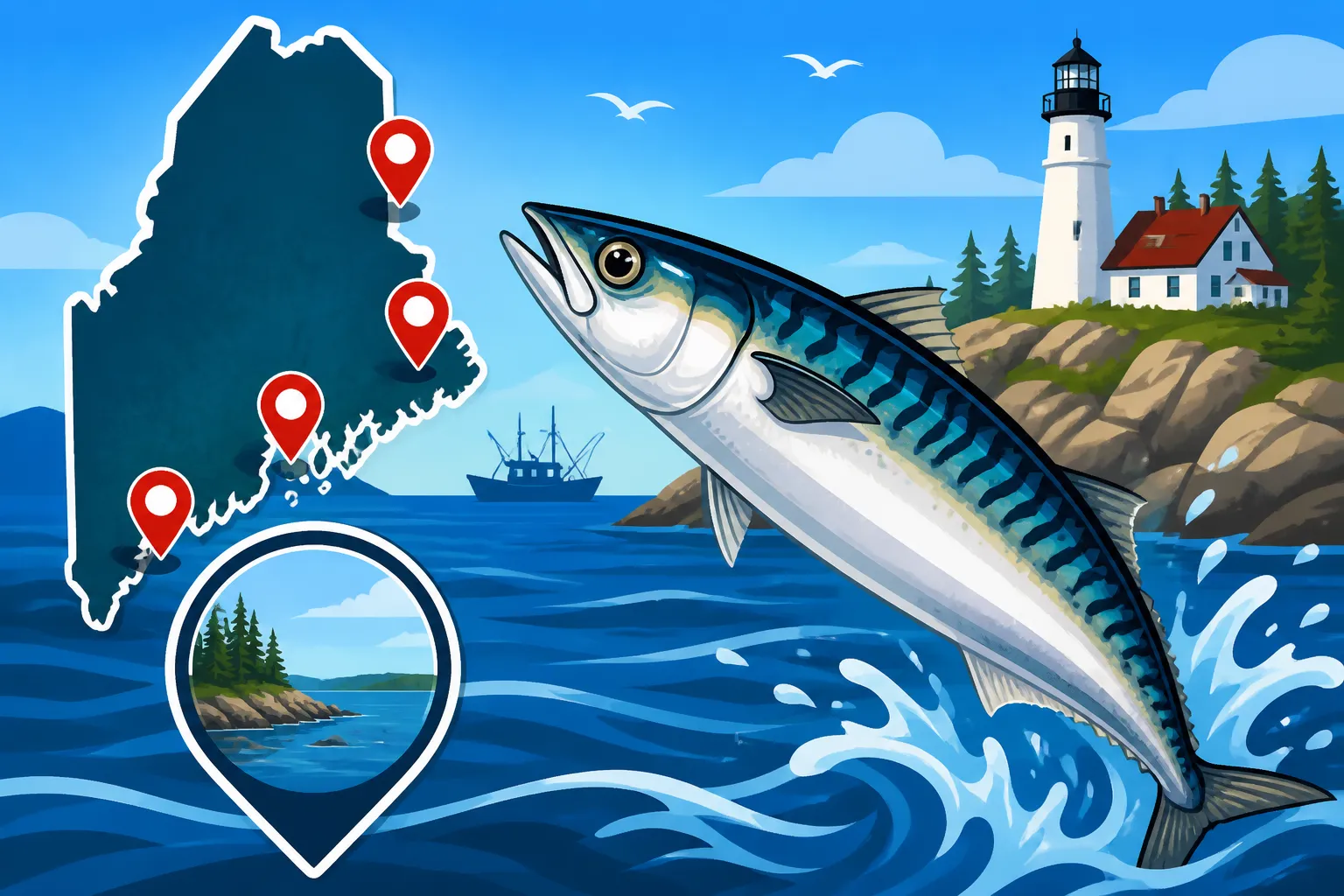
Maine's extensive coastline offers countless nooks and crannies where mackerel love to hang out. From the bustling harbors of Southern Maine to the more remote Downeast regions, opportunities abound if you know where to look.
Southern Maine's Bustling Harbors and Piers
Southern Maine, with its picturesque towns and accessible coastline, boasts some of the most reliable mackerel fishing spots. These areas often have developed infrastructure like public piers and jetties, making them ideal for shore-bound anglers.
- Portland Harbor: This is hands-down one of the most consistent mackerel hotspots. The deep waters of Portland Harbor, especially around the Eastern Promenade, offer excellent access from shore. Anglers can often find success casting from the public docks and rocky areas along the Prom. The harbor's nutrient-rich waters attract schools of bait, which in turn draw in mackerel. Many local fishing charters also operate out of Portland, and even if you plan to fish from shore, researching local conditions or potential charter options through services like FishingBooker can give you a better sense of prime mackerel activity. Just be mindful of boat traffic and give commercial vessels plenty of space.
- Kennebunkport: The area around Kennebunkport, including the docks in Dock Square and along the Kennebunk River, can be fantastic for mackerel. The jetties and rocky points that line the entrance to the river are also productive. These spots offer excellent current and structure, which mackerel use as ambush points for bait. It's a charming location to fish, often bustling with activity, both human and piscine.
- Perkins Cove, Ogunquit: This iconic fishing village is not just for postcard photos; it can also be a great spot for mackerel. Fishing from the footbridge or seawalls within Perkins Cove, particularly near the entrance to the open ocean, can yield good results. The deeper channels here funnel bait, making it a natural magnet for mackerel schools.
Midcoast Gems for Productive Mackerel Runs
Moving up the coast, Maine's Midcoast region offers a more rugged charm, with plenty of natural features that appeal to schooling mackerel.
- Boothbay Harbor: Another classic Maine harbor, Boothbay is an excellent location to target mackerel, especially from the public docks and the East Boothbay area. The rocky shorelines and inlets around the larger Boothbay region also hold significant potential. Mackerel often school up in the deeper parts of the harbor and near the mouths of rivers and coves that empty into it. This area is also a popular spot for charters, and many smaller local charters, often found through resources like FishingBooker, specialize in these types of quick, productive trips that are perfect for mackerel.
- Camden Harbor: While perhaps more famous for its schooners, Camden Harbor offers decent mackerel fishing, particularly from the public docks near the harbor park. The mouth of the Penobscot Bay, just a short boat ride away, can also be incredibly productive. The strong currents and abundant baitfish here create ideal conditions for mackerel.
- Rockland Harbor: Similar to Portland and Boothbay, Rockland Harbor provides excellent shore access for mackerel fishing. Casting from the public piers or the breakwater can put you right in the action. The harbor’s strategic location near the open ocean and its industrial activity can often concentrate baitfish, leading to good mackerel runs.
Downeast's Untapped Mackerel Opportunities
For those willing to venture further north, the Downeast region offers a wilder, less crowded mackerel fishing experience. The pristine waters and dramatic coastline here are teeming with marine life.
- Mount Desert Island (Bar Harbor/Bass Harbor): Around Mount Desert Island, especially near Bar Harbor and Bass Harbor, you can find excellent mackerel fishing opportunities. The public docks in Bar Harbor and the quieter waters of Bass Harbor provide good access. Fishing around the many islands and rocky ledges that dot the coastline here, either from shore or a small boat, can be highly productive. The deep, cold waters of this region are perfect for mackerel during the summer.
- Eastport and Lubec: Right on the Canadian border, Eastport and Lubec offer some truly unique mackerel fishing. The incredibly strong tides of Passamaquoddy Bay concentrate baitfish, making it a prime feeding ground for mackerel. Fishing from the public piers in both towns, particularly during the incoming or outgoing tide, can lead to fast action. Be aware that the currents are exceptionally strong here, so heavier tackle might be needed if fishing from the bottom.
Here's a quick overview of some top mackerel spots:
| Location | Best Access | Key Features | Peak Season |
|---|---|---|---|
| Portland Harbor | Eastern Prom Public Docks, Fort Allen Park | Deep water access, abundant bait, good structure | July – August |
| Kennebunkport | Dock Square Piers, River Jetties | Strong currents, rocky points, scenic location | June – September |
| Perkins Cove, Ogunquit | Footbridge, Seawall | Deep channel entrance, sheltered cove, easy access | June – August |
| Boothbay Harbor | Public Docks, East Boothbay Shoreline | Numerous inlets, deep harbor, charter availability | July – September |
| Camden Harbor | Harbor Park Docks | Access to Penobscot Bay, good currents | July – August |
| Rockland Harbor | Public Piers, Breakwater | Deep water, bait concentration, robust infrastructure | July – September |
| Bar Harbor, MDI | Public Docks | Island fishing, rocky ledges, cooler waters | July – Mid-September |
| Eastport/Lubec | Public Piers | Strong tidal currents, remote feel, abundant marine life | July – September |
Essential Techniques and Gear for Successful Mackerel Angling
Mackerel fishing isn't complicated, which is part of its charm. However, having the right approach and gear can significantly increase your success rate and make the experience even more enjoyable.
Mastering the Sabiki Rig and Jigging Methods
When it comes to mackerel, the undisputed champion rig is the Sabiki rig. If you’ve never used one, it’s essentially a string of small, shiny flies or artificial baits, usually 4-6 on a single leader, with a swivel at the top and a snap swivel at the bottom for attaching a weight or jig.
Here’s how to use it effectively:
- Attach Weight/Jig: At the bottom snap swivel, clip on a small jig (like a Kastmaster, Swedish Pimple, or similar metal spoon) or a lead weight. The weight helps cast the rig and get it down to the fish. A 1/2 oz to 1 oz weight is usually sufficient, depending on current and depth.
- Cast and Retrieve: Cast your Sabiki rig out into the water. Let it sink for a few seconds, or all the way to the bottom if you suspect fish are deep.
- Jigging Action: The key is to impart action. Gently lift your rod tip up about 1-2 feet, then let it fall, taking up slack as it descends. This jigging motion makes the little flies "swim" and flash, mimicking a school of baitfish.
- Feel for the Bite: Mackerel bites are often sharp taps or sudden jerks. Since you have multiple hooks, it’s common to hook more than one fish at a time, sometimes even a full stringer! When you feel a bite, continue the jigging action or retrieve slowly, as multiple fish might be hitting the other flies.
- Steady Retrieve: Once you've hooked fish, maintain steady pressure and reel them in. Avoid wild jerking, which can pull hooks or tangle the rig.
Beyond the Sabiki, simple jigging with a single small metal lure (like a 1/2 oz or 3/4 oz Kastmaster, Deadly Dick, or even a basic diamond jig) can be incredibly effective, especially if mackerel are higher in the water column or you prefer a single-hook approach for easier unhooking. Cast the jig out, let it sink, and retrieve it with a series of jerks and pauses. The flash and erratic movement often trigger aggressive strikes. For more versatile lure options, our guide on Best Lures for Maine Open Water Fishing offers excellent suggestions that can also be adapted for mackerel.
Recommended Tackle for Light-Tackle Fun
Mackerel don't require heavy-duty gear, which makes them a perfect target for light-tackle enthusiasts and beginners alike.
- Rod: A 6 to 7.5-foot light to medium-light spinning rod is ideal. Look for a rod with a sensitive tip to detect subtle bites but enough backbone to handle multiple fish. A fast action rod will give you good casting distance and hook-setting power.
- Reel: Pair your rod with a reliable spinning reel in the 2000-3000 size range. It should have a smooth drag system, as even small mackerel can put up a surprising fight. Brands like Penn, Shimano, or Daiwa offer excellent options in this category.
- Line: Spool your reel with 6 to 10-pound test monofilament or fluorocarbon line. Braided line in a similar breaking strength (e.g., 10-15 lb braid with a fluorocarbon leader) is also a fantastic choice, offering superior casting distance and sensitivity. A short leader (18-24 inches) of 10-15 lb fluorocarbon can be helpful for abrasion resistance if you're fishing around rocks or piers.
- Terminal Tackle:
- Sabiki Rigs: Keep a good supply of Sabiki rigs in different hook sizes (size 6 to 10 are common for mackerel).
- Jigs/Weights: Assorted metal jigs (1/2 oz to 1 oz) in silver, blue/silver, or chartreuse patterns. Lead weights of similar sizes.
- Swivels: Small, high-quality barrel or ball-bearing swivels to prevent line twist.
- Pliers/Dehooker: Essential for quickly and safely removing hooks, especially if you're catching multiple fish.
Navigating Regulations and Maximizing Your Mackerel Experience
Fishing in Maine, even for a common species like mackerel, comes with its own set of rules. Being informed about these regulations ensures a smooth and legal fishing trip.
Maine Saltwater Registry Requirements and Exemptions
One of the most common questions from anglers is about licensing for saltwater fishing. In Maine, you generally do not need a traditional fishing license for saltwater fishing. Instead, you need to register with the state's Maine Saltwater Fishing Registry. This registry is typically free for Maine residents and non-residents alike, and it helps the state track fishing effort and gather important data for fisheries management.
There are, however, some key exemptions:
- Under 16: Children under 16 years of age are usually exempt from the registry requirement.
- Licensed Freshwater Anglers: If you already possess a valid Maine freshwater fishing license, you are exempt from the saltwater registry. This is a great perk if you enjoy both freshwater and saltwater pursuits. Our Maine Fishing License Guide details all the options.
- Charter Boat Passengers: If you are fishing aboard a state-licensed for-hire vessel (like a charter boat), you are covered under the captain's license and do not need to register yourself. This is a common arrangement, and many of the captains you might find on platforms like FishingBooker will handle all the necessary licensing for their clients.
- Federal Permit Holders: Anglers holding a valid federal permit from another state that is recognized by NOAA Fisheries are also exempt.
It's always a good idea to confirm the latest regulations before you head out, as rules can change. You can usually find the most up-to-date information on the Maine Department of Marine Resources website.
Planning Your Trip for Optimal Catch Rates
Beyond knowing where to go, understanding when and how to approach mackerel fishing can significantly improve your results.
- Tides, Time of Day, and Weather: Mackerel, like many other marine species, are influenced by tidal movements. Often, the hours around an incoming or outgoing tide can be particularly productive as currents stir up baitfish. Early mornings and late afternoons, when light levels are lower, can also be prime feeding times. However, if a school of mackerel is actively feeding, they can often be caught throughout the day. Keep an eye on the weather; calm days are generally easier for fishing from shore, but a slight chop can sometimes stimulate feeding. Understanding Reading Tides for Striped Bass Fishing can also indirectly help with mackerel, as these baitfish will follow similar patterns.
- Spotting Schools: One of the most exciting parts of mackerel fishing is encountering an active school. Look for signs of surface activity: diving seabirds are often a dead giveaway that baitfish (and hungry mackerel) are below. You might also see mackerel breaking the surface, creating ripples or splashes. Sometimes, they'll show up on a fish finder if you're in a boat.
- Chumming: While not strictly necessary, a little chum can draw mackerel closer to your fishing spot. Simple ground fish, oats, or even mashed up stale bread can be effective. Toss small amounts into the water periodically to create a scent trail that attracts the fish.
- Respecting the Resource: Mackerel often school in large numbers, and it's easy to catch a lot very quickly. Be mindful of how many fish you truly need for eating or bait. Practice catch and release with any excess fish to ensure a healthy population for future trips. Quickly unhooking and releasing fish carefully is important for their survival.
Before you go, it's always smart to check local reports or even browse available trips on sites like FishingBooker to get a feel for what's biting and where. This can give you invaluable real-time information to fine-tune your plans. Good luck, and tight lines out there on the beautiful Maine coast!
Disclaimer
Please remember that fishing regulations, including bag limits, size restrictions, and registry requirements, can change. Always consult the latest rules and advisories from the Maine Department of Marine Resources before heading out on your fishing trip. Stay safe and be mindful of local conditions and private property.